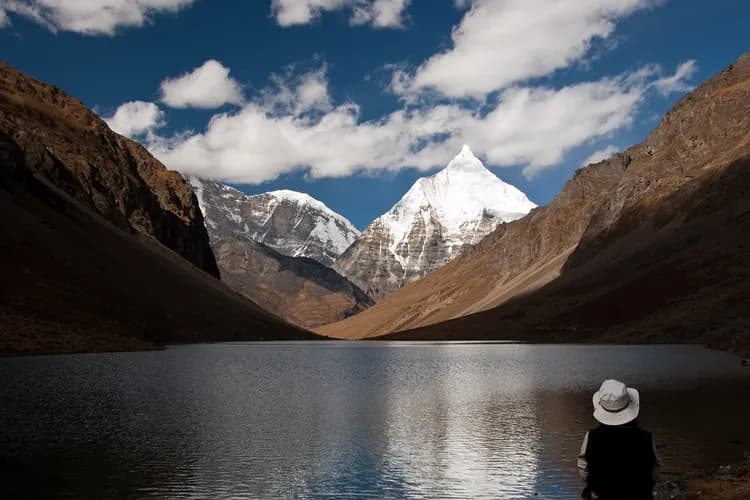
TWO WEEKS AT ALTITUDE UNDER THE COUNTRY'S SACRED PEAK
Bhutan Chomolhari Trek — The Chomolhari Base Camp trek, paced for the autumn window.
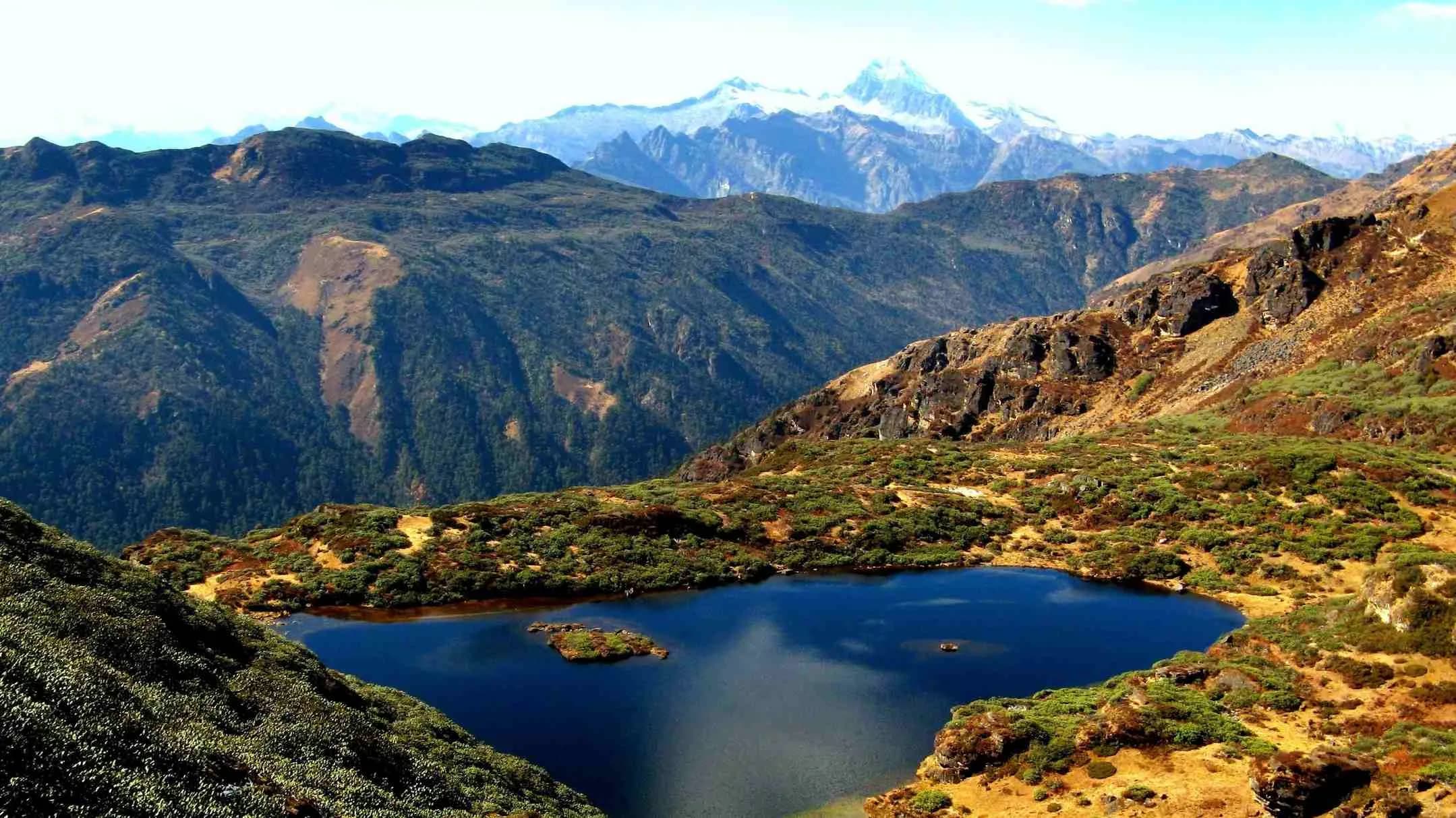
Fourteen nights — five at altitude, the rest in the lodges — taking the classic Bhutanese trek to the 4,080-metre meadow under Chomolhari and Jichu Drake, with the clear October light that the country's photographers wait the whole year for.
14 nights · Signature tier · from USD 22,000 per traveller
- Nights
- 14
- From
- USD 22,000per traveller
- Tier
- Signature
- Best season
- Autumn
- Suits
- Small group
- Departing
- Worldwide
Why October, and why this trek
The Chomolhari Trek to Jangothang base camp at 4,080 metres is the classic Bhutanese trek — five days at altitude, two of the country's sacred peaks (Chomolhari at 7,326m and Jichu Drake at 6,989m) immediately above you at high camp, and the only window when the weather supports the route is October's clear-sky autumn. We pace the trek across fourteen nights: three at the lodges in Paro and Thimphu to acclimatise, five at altitude with the trekking team, three at the lodges coming down, three for the descent back to the country's principal sites and the flight home.
The mountain people, the route, the team
From Drugyel ruins at the head of the Paro valley, the route climbs the Pa Chhu for two days to Jangothang at 4,080 — the meadow camp under the south face of Chomolhari. A high-camp day for acclimatisation; the optional Nyile La crossing at 4,890; the descent via Lingshi, the small dzong at 4,000m where the path back toward Thimphu begins. The trek team — a head guide, an assistant guide, a cook, two camp staff, the horsemen and their pack horses — is one to two clients per crew member. Substantial overstaffing by international trek standards; the Bhutanese pattern.
What goes right, what to be ready for
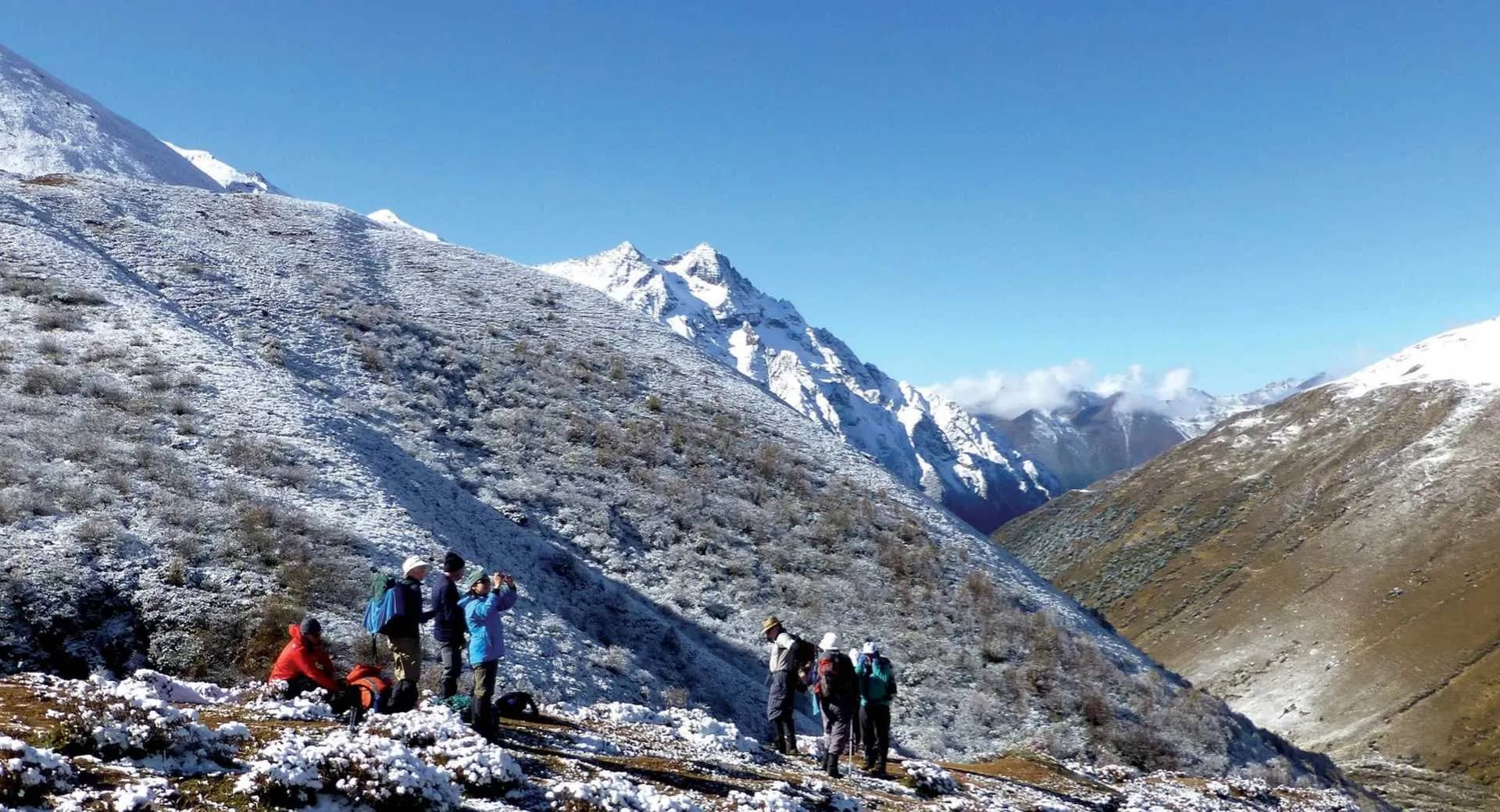
Five thousand metres of cumulative ascent in the high-altitude section; the cold at high camp (nights below freezing through October); the wind on the Nyile La crossing on a bad day; the substantial joy of the peaks at first light from Jangothang. The peaks themselves cannot be climbed — Bhutan's 1994 moratorium keeps the 6,000m+ summits closed, by design and by the religious tradition of the sacred mountains. We are at base, looking up. That is the point.
The route
A sample shape of the week
DAY 01
Arrival in Paro
Met in the arrivals hall, twenty minutes to the lodge, a slow afternoon and an early supper.
DAY 02
Paro valley acclimatisation
A short walk up to Drugyel ruins and the head of the valley; gear check; a kit shakedown with the trek team in the afternoon.
DAY 03
Tiger's Nest — the warm-up climb
The Taktsang pilgrimage, slowly, with the trek guide watching for altitude response; back to the lodge for the long sleep.
DAY 04
Trek day 1 — Sharna camp (2,890m)
Drive to the Drugyel trailhead, the long valley climb through pine forest, six hours' walk to Sharna.
DAY 05
Trek day 2 — Soi Thangthangkha (3,610m)
The long valley day; first views of Chomolhari; six to seven hours' walking.
DAY 06
Trek day 3 — Jangothang (4,080m)
Three to four hours up to the base camp meadow; afternoon to acclimatise; the south face of Chomolhari directly above.
DAY 07
Jangothang rest day
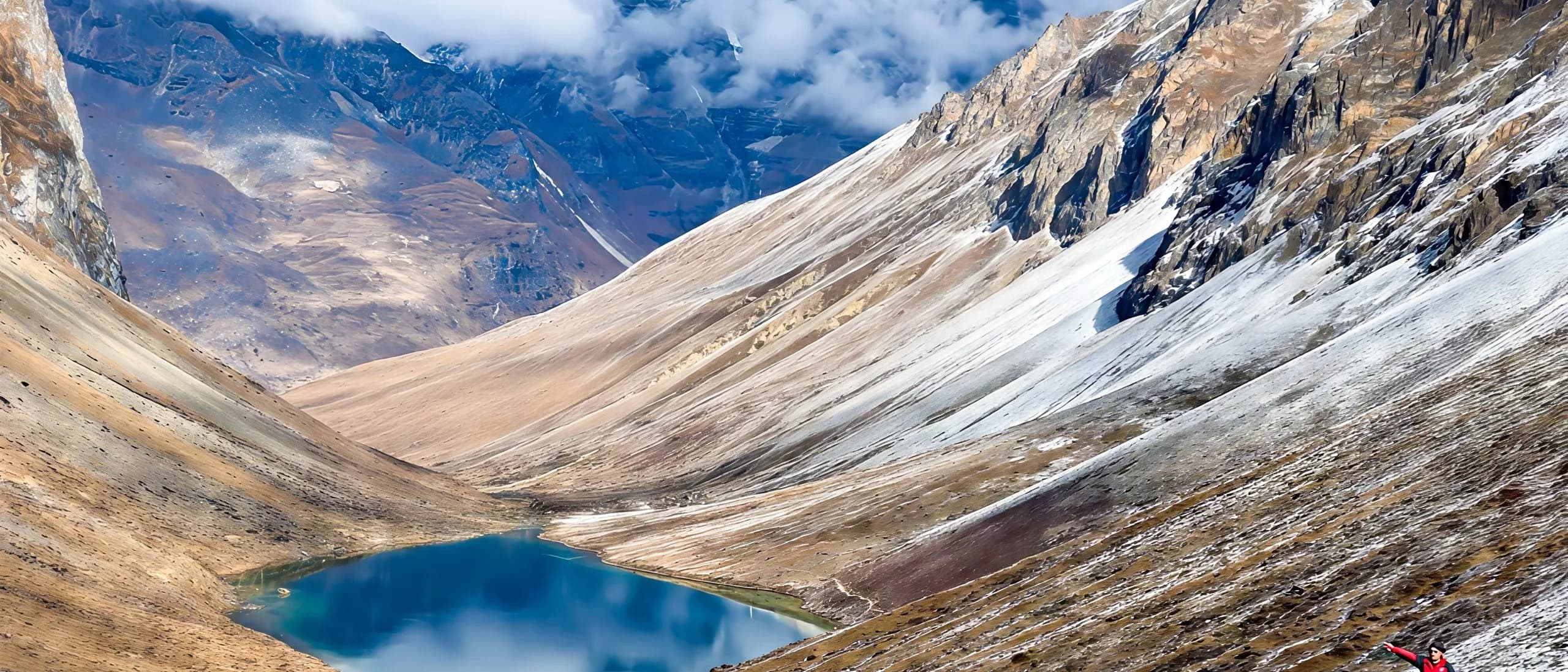
An optional acclimatisation walk to the high lake; the meadow camp through the afternoon; alpenglow on Jichu Drake at sunset.
DAY 08
Trek day 5 — over Nyile La to Lingshi
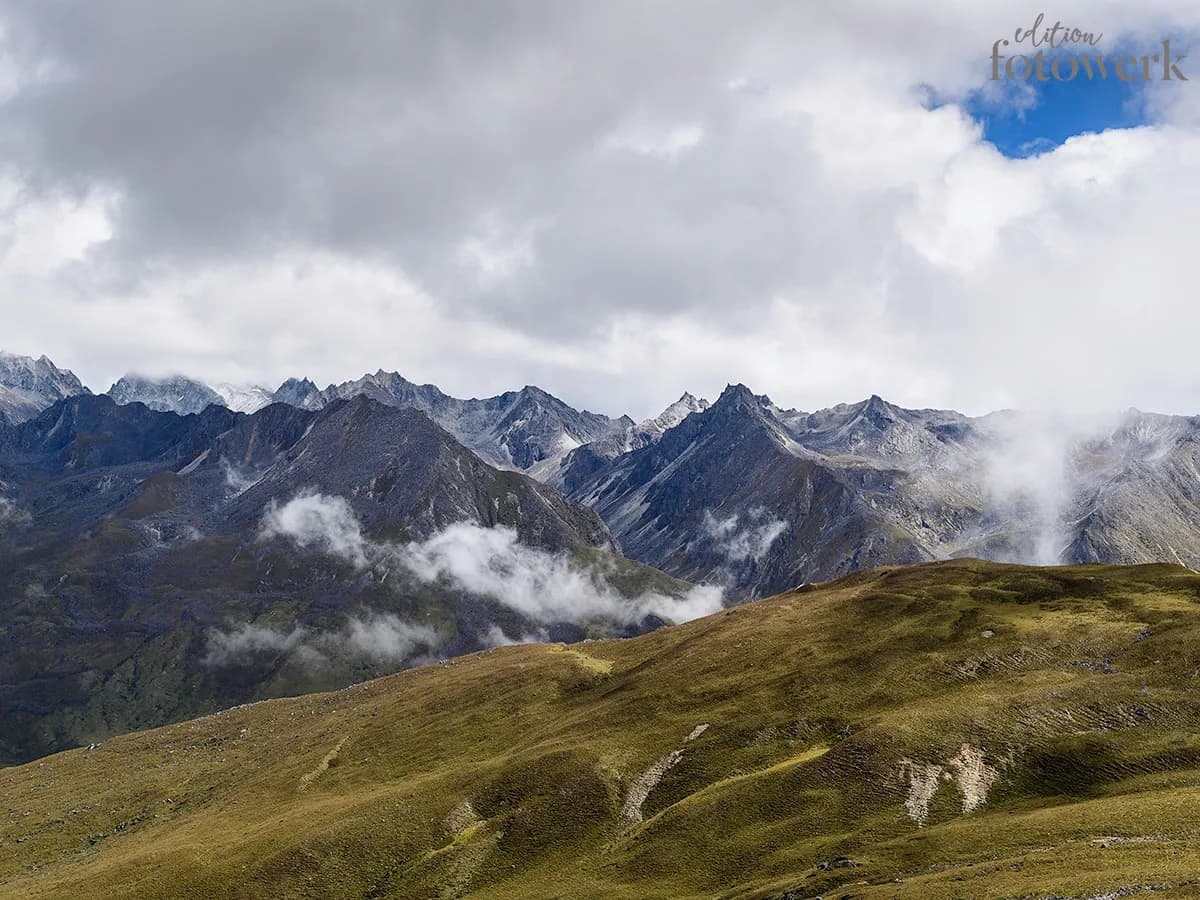
The 4,890m pass crossing; six to seven hours of substantial trekking; the descent into the Lingshi valley.
DAY 09
Trek day 6 — Lingshi to Shodu
Down the Mo Chhu valley through alpine pastures; substantial elevation loss; five hours' walking.
DAY 10
Trek day 7 — Shodu to Barshong, finish at Dolam Kencho
The last full trek day; six hours; the road head reached in the late afternoon.
DAY 11
Back to Paro — recovery day
Drive back to Paro, hot stone bath, the long slow dinner the trekking team has earned.
DAY 12
Thimphu day — the cultural
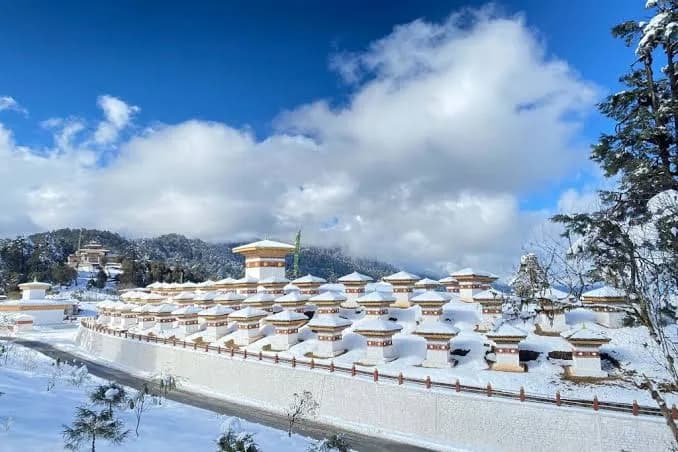
Across to the capital; the Memorial Chorten, the Folk Heritage Museum, Centenary Farmers' Market.
DAY 13
Back to Paro — the last day
Kyichu Lhakhang in the afternoon; an early supper; bags packed for the dawn flight.
DAY 14
Departure from Paro
Breakfast at the lodge; the guide walks you back to the terminal; the team writes a fortnight later.
The day-by-day above is illustrative. The proposal you receive is built around your dates, your pace and your interests, not this template.
Frequently asked
- What level of fitness is required?
- Substantial. Five days at altitude with six-to-seven-hour walking days; cumulative ascent above 5,000 metres; one pass crossing at 4,890. Trekkers should be comfortable with multi-day high-altitude walking and previous exposure to 4,000m+ recommended. The trek team monitors altitude response daily; we route a client off the high camp if the response is wrong.
- Can the peaks be climbed?
- No. Chomolhari (7,326m) and Jichu Drake (6,989m) are sacred mountains and closed to summit attempts by the 1994 Bhutanese mountaineering moratorium (extended in 2003). The trek goes to base camps; the rewards are at base.
- When else is the trek possible?
- The clear-weather windows are October–early November and April–early May. May has the rhododendron bloom and slightly warmer nights; October has the clearest skies. The monsoon (June–September) closes the route; the winter (late November to March) is technically possible but very cold and snow on the passes is unpredictable.
- What about the Sustainable Development Fee?
- Included in the per-night basis — USD 100 per night per international visitor — across the full fourteen nights. The fee funds Bhutan's environmental conservation, free citizen healthcare, and free citizen education.
Journeys you might also weigh
- 01Bhutan east-to-west fortnightA one-way fortnight that takes you the length of the country — Paro, Thimphu, Punakha, Trongsa, Bumthang, Mongar, Trashigang — exiting at Samdrup Jongkhar with a three-hour Assam transfer to Guwahati. The full circuit, the quieter half, and no doubling back.14 nights
from $28,000 - 02How many days do you need in Bhutan?An honest guide to choosing the length of a first Bhutan journey. Five nights for a first taste, seven for the comfortable first visit, nine or ten to add the glacial Gangtey valley, twelve to fourteen to carry on over the passes into central Bhutan. We make the case for a week for most first visits, and explain plainly why more places means more road.7 nights
from $6,000 - 03Bhutan in two weeksA comprehensive Bhutan journey for couples with a fortnight to give it — Paro, Thimphu, Punakha, the glacial Gangtey valley, then over the passes to Trongsa and Bumthang's four valleys. The case for the extra week is depth, slowness, and the central heartland most weeks never reach.13 nights
from $15,000
Begin when you're ready.
A few questions, or a conversation in your own words. A bespoke draft either way.

