THE SHORTEST PREMIUM CONNECTION
Bhutan trip from Bangkok — Seven nights in Bhutan, on the easiest premium connection in Asia.
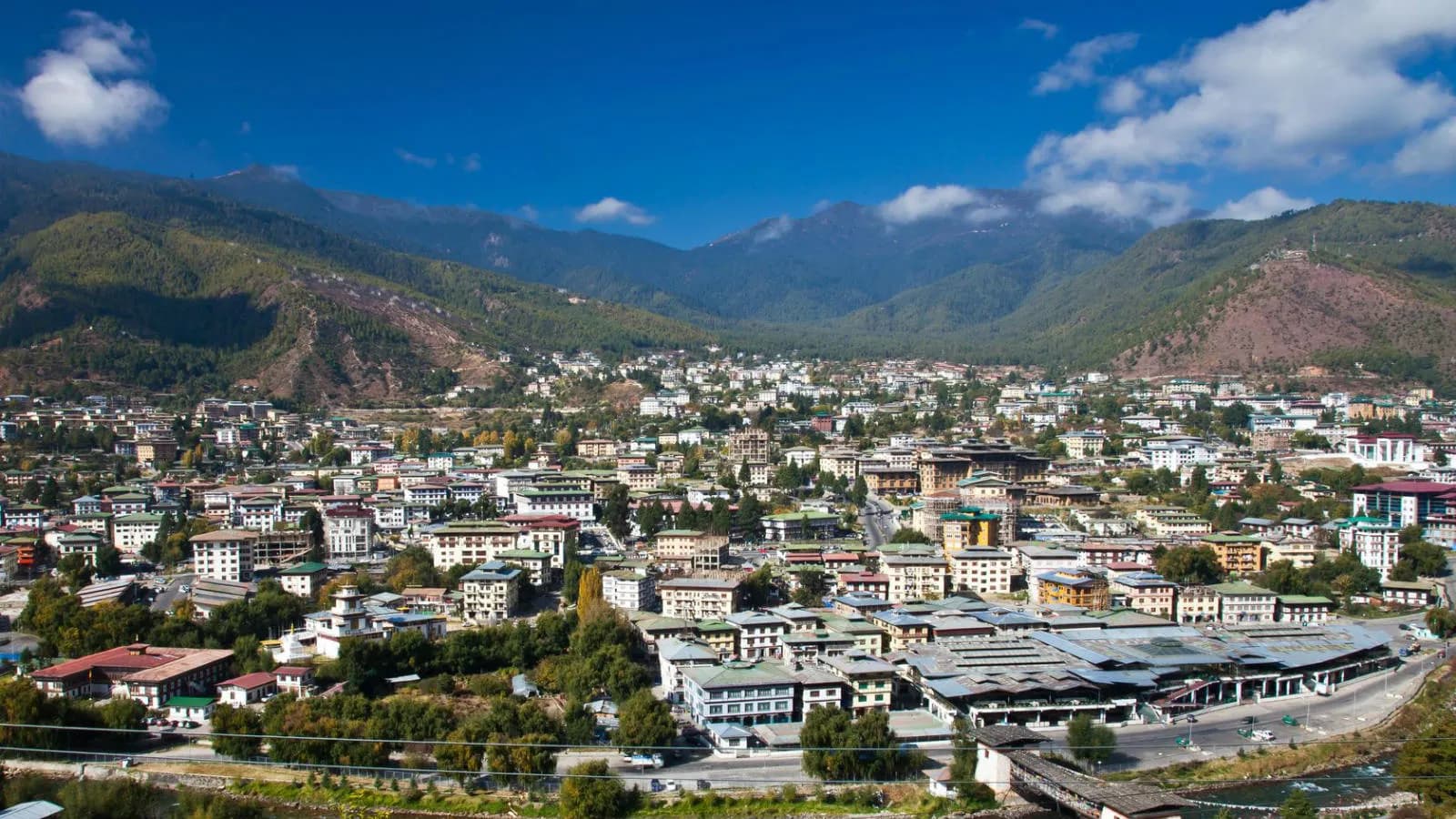
Bangkok to Paro is the single easiest premium connection to Bhutan in the world — direct on Drukair, four hours, morning departure. A Bhutan journey for couples flying from Bangkok — the long-haul fatigue absent, the week starts at full energy, and the cultural-Buddhist depth that Thai premium travellers (often with substantial Buddhist-tradition background) tend to find rewarding.
7 nights · Luxury tier · from USD 13,000 per couple
- Nights
- 7
- From
- USD 13,000per couple
- Tier
- Luxury
- Best season
- Autumn
- Suits
- Couple
- Departing
- Bangkok
Why Bangkok is the easiest connection in the world
Bangkok to Paro is direct on Drukair (KB153 most days; ~4 hours; morning departure). No long-haul fatigue, no hub overnight, no jet lag worth speaking of. For Bangkok-based couples — Thai premium travellers, expatriates, business travellers extending — this is the trip where the journey actually starts feeling like a holiday on Day 1 rather than Day 3. Most other source markets need a hub overnight; Bangkok travellers don't. The Drukair morning flight is a pleasant 4-hour leg with the Himalayan range visible on the descent.
What the week tends to look like
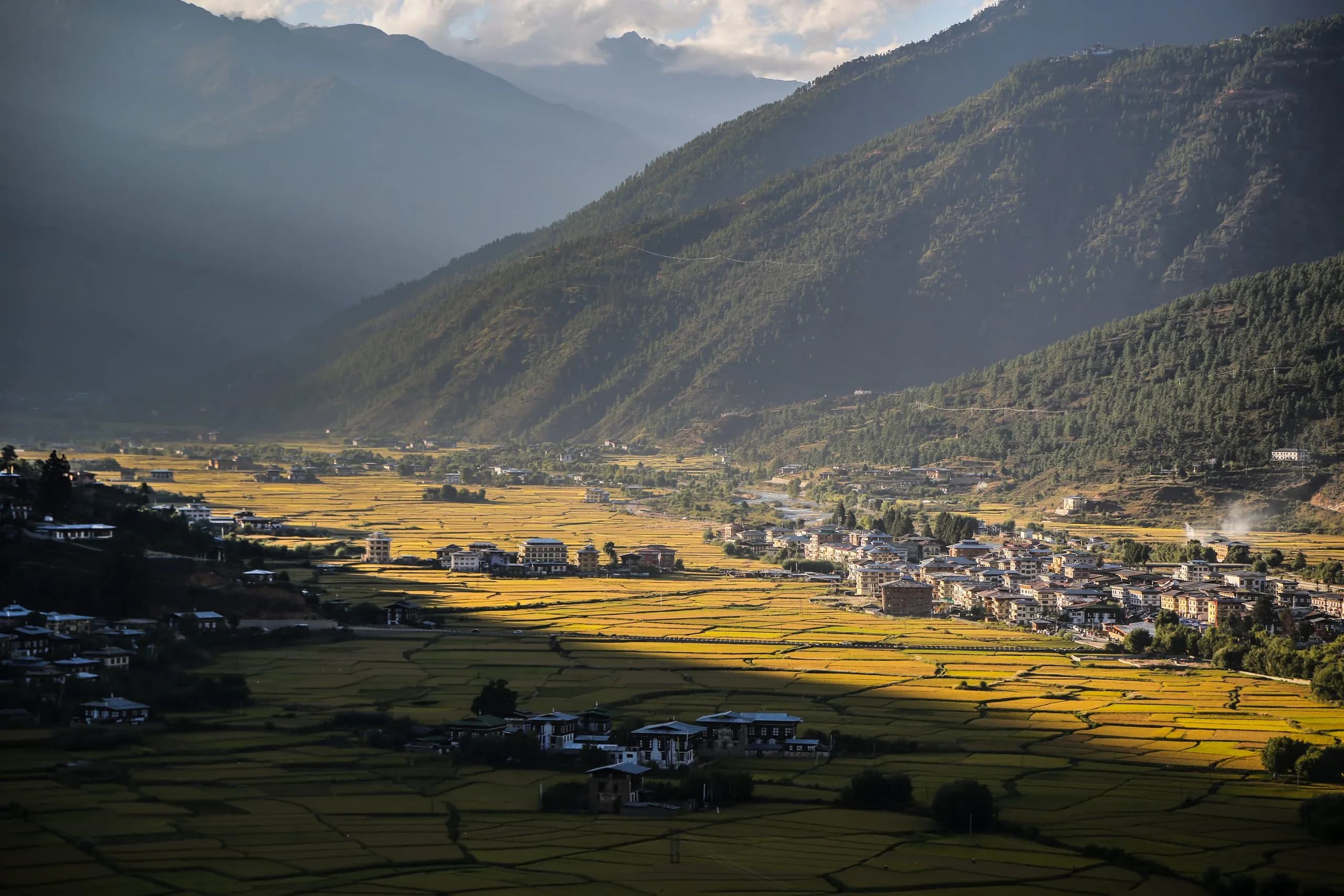
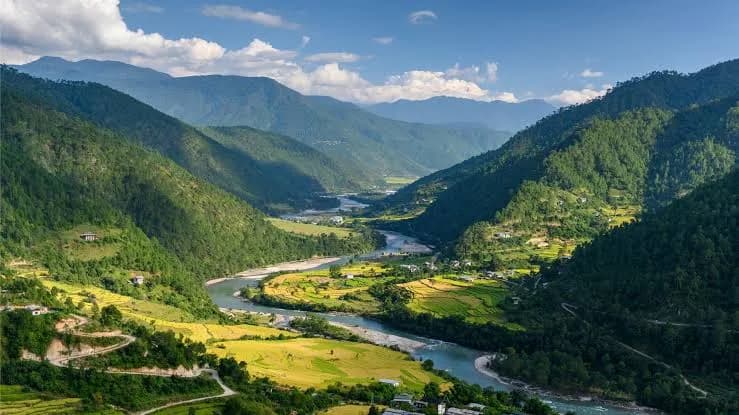
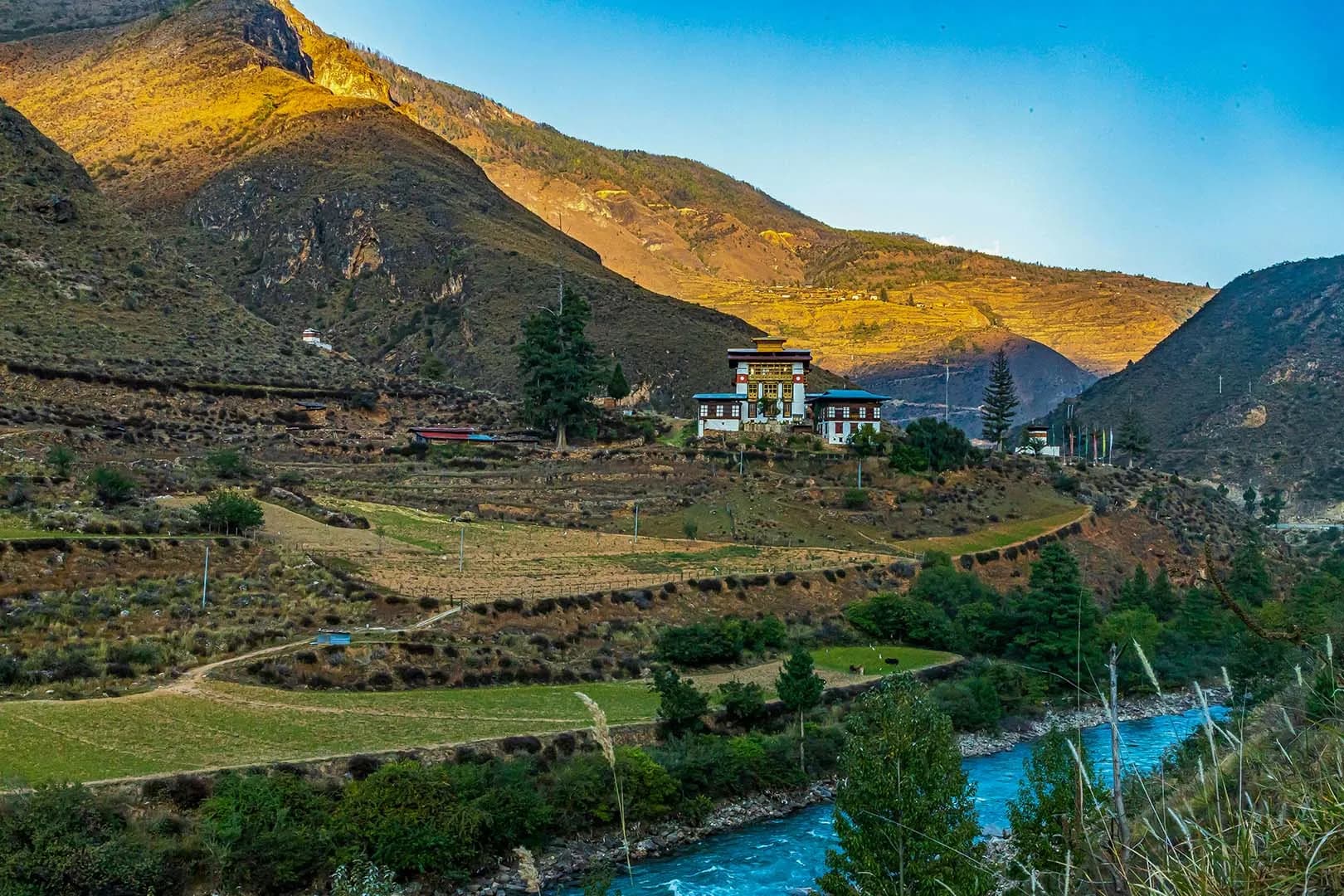
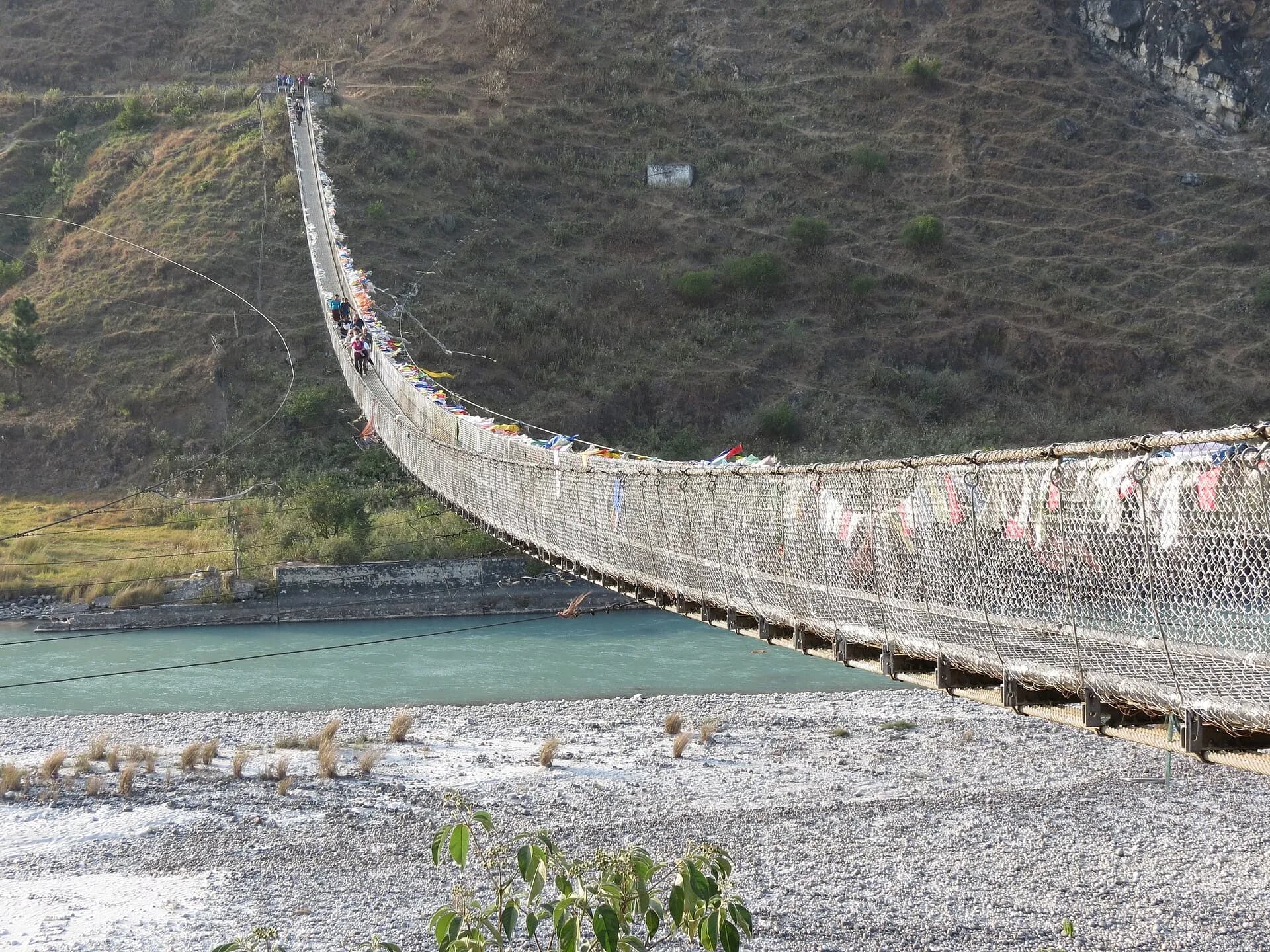
Because there's no long-haul recovery needed, the trip can start from the morning of arrival. Two nights in Paro for Rinpung Dzong and Kyichu Lhakhang at proper pace; two in Thimphu for the capital and the National Memorial Chorten in the right light; two over Dochu La in the warm Punakha valley with the dzong at the confluence; one last night in Paro before the Taktsang climb. The pacing is unhurried but the day count is efficient — Bangkok travellers tend to value the itinerary that doesn't waste days on jet-lag recovery.
The Thai-Bhutanese cultural-Buddhist register
Thai premium travellers — Thai nationals and long-term Bangkok-based expatriates — often arrive with substantial Theravada-Buddhist background. The Bhutanese tradition is Tibetan Vajrayana through the Drukpa Kagyu lineage; substantially different from Thai Theravada in iconography, ritual, and philosophical emphasis. For Thai-Buddhist travellers this is the comparative depth that makes Bhutan interesting; the matched guide is calibrated to speak across the two traditions where the conversation goes that way. Cuisine register: Thai travellers tend to enjoy the chilli-cheese of ema datshi (the Bhutanese national dish); the matched guide can introduce the Bhutanese cuisine on comparative terms with Thai.
The route
A sample shape of the week
DAY 01
Arrival in Paro — from the start
Met at PBH after the morning Drukair from BKK; twenty minutes to the lodge; an afternoon walk to Rinpung Dzong while the light holds.
DAY 02
Paro day — National Museum and Kyichu
The principal dzong revisited in morning light; Ta Dzong (the National Museum) in the late morning; Kyichu Lhakhang in the afternoon.
DAY 03
Across to Thimphu
The Pa Chhu valley to the capital; the National Memorial Chorten in the early evening; an unhurried supper.
DAY 04
Thimphu day
Tashichho Dzong in the late afternoon; the Buddha Dordenma on the southern ridge for dusk light; a Bhutanese-cuisine dinner with the ema datshi register.
DAY 05
Over Dochu La — into Punakha
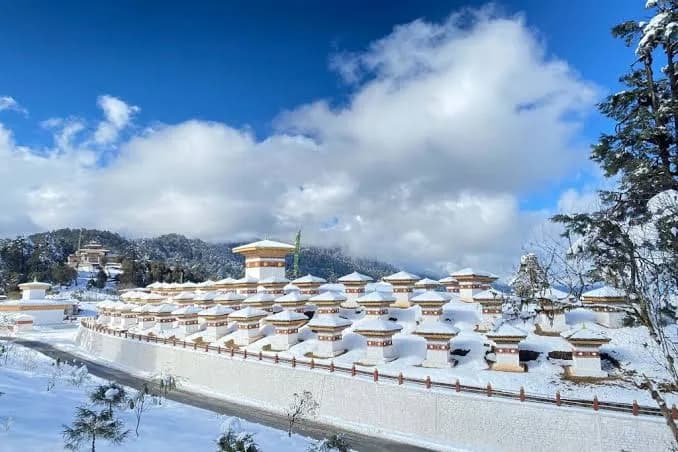
The 3,100m pass at dawn; the 108 chortens; Punakha Dzong in late-afternoon at the river confluence.
DAY 06
Punakha day
Chimi Lhakhang in the morning (a interesting site for Thai-Buddhist visitors — the Drukpa Kunley tradition is distinctive against the Theravada framework); the Mo Chhu walk; a long riverside lunch.
DAY 07
Back to Paro — ahead of Taktsang
The drive back; Kyichu Lhakhang in the afternoon; an early supper.
DAY 08
The Tiger's Nest — and the flight back
The dawn climb at your pace; lunch at the cafeteria; the descent; the afternoon Drukair direct to BKK.
The day-by-day above is illustrative. The proposal you receive is built around your dates, your pace and your interests, not this template.
Frequently asked
- How does the direct flight work from BKK?
- Drukair (KB) operates direct BKK–PBH flights ~5 days per week; ~4 hours block time; morning departure (typically 06:30-07:00 BKK time). Bhutan Airlines (B3) operates a similar pattern. Both airlines are accessible through the Drukair-Verteil NDC and the standard GDS. We ticket on your behalf at the prevailing fare or you book direct.
- Best window from Bangkok?
- Mid-October through late November is the principal window — post-monsoon clarity, the autumn light. December through February is the cold-and-clear winter window; cooler than Bangkok travellers may be used to but the lodges handle it gracefully. April–May is the spring window. We typically advise against deep monsoon (July–August) when Bangkok is rainy and Bhutan is wetter.
- Can the trip be longer?
- Yes — adding two nights at Phobjikha (the high glacial valley west of Punakha) gives you the cranes (late October onwards) and the substantial valley silence. The nine-night version is the autumn trip; the 11-night extends to Bumthang for the country's densest religious circuit.
- What is the Sustainable Development Fee?
- USD 100 per night per international visitor; included in the transparent price breakdown across all seven nights (USD 700 total per traveller). Thai nationals follow the standard international fee schedule (not the Indian regional rate).
Journeys you might also weigh
- 01Bhutan after a Bangkok business tripFor the international principal whose calendar has Bangkok in it already — a conference, a board, a partner week — and who would like to spend the next five nights somewhere quiet rather than the next flight home. Drukair operates BKK–PBH daily; the connection is the easiest premium routing into Bhutan in the world. A premium-tier five-night Bhutan, paced to land on arrival energy and to fly home rested.5 nights
from $8,500 - 02Bhutan trip from DubaiA Bhutan journey for couples flying from Dubai — the long-haul broken with a Bangkok overnight, then the week through Paro, Thimphu, and Punakha in the post-monsoon autumn light. A particular kind of trip for travellers who live in the heat and want the cold, the altitude, and the silence.7 nights
from $16,000 - 03Bhutan honeymoon from SeoulA Bhutan-plus-Phobjikha honeymoon for Korean couples flying from Seoul — the long-haul broken with a Bangkok or Singapore overnight, then eight unhurried nights through Paro, Thimphu, Punakha, and the high glacial Phobjikha valley. The cultural-Buddhist register that Korean honeymoon couples (often arriving with Asian-travel literacy) tend to find rewarding.8 nights
from $17,000
Begin when you're ready.
A few questions, or a conversation in your own words. A bespoke draft either way.

