EIGHT NIGHTS, GENTLY PACED, WITH THE CULTURAL DEPTH THAT ELDERLY TRAVELLERS CAME FOR
An eight-night Bhutan journey paced for travellers in their seventies and eighties — and for the adult children travelling with them.
A luxury-tier journey designed around the slower pace that elderly parents need and around the cultural depth they often value most. Fewer driving days, ground-floor villas where available, Tiger's Nest treated as an optional rather than the climax, and a matched guide who has spent two decades reading what an elderly Bhutanese pilgrim needs from a temple visit and is calibrated to read the same for an international one.
8 nights · Luxury tier · from USD 9,000 per traveller
- Nights
- 8
- From
- USD 9,000per traveller
- Tier
- Luxury
- Best season
- Autumn
- Suits
- Family
- Departing
- Worldwide
Why eight nights, and why this is the right shape
The standard week in Bhutan assumes a traveller who can walk for an hour without stopping, drive for three hours without breaking, and climb 700 metres of switchbacks on the Tiger's Nest day. For an elderly parent in their seventies or eighties — or for an adult child travelling with one — those assumptions need adjusting. Eight nights gives the same cultural register at a substantially gentler rhythm: three nights in Paro to settle without a transition day, two in Thimphu, two in Punakha, one last in Paro for the morning flight. Fewer driving days, more lodge afternoons, no climb mandated. The trip the children booked for the parents becomes the trip the parents actually wanted.
What we hold for the elderly traveller specifically
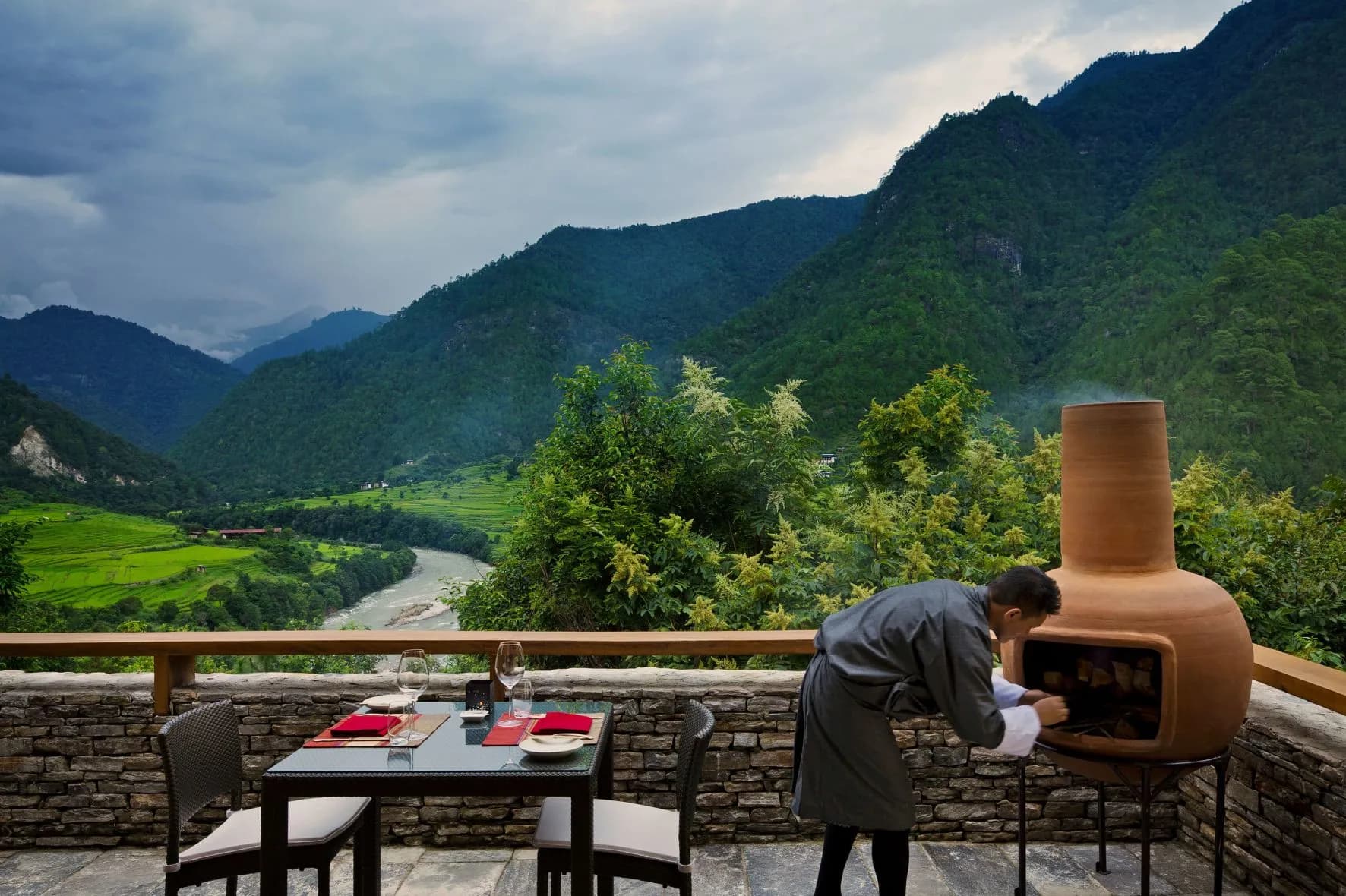
Ground-floor villas or elevator-equipped suites in every lodge (we filter the lodge inventory accordingly before the proposal arrives — the elevator-equipped wings at COMO Uma Paro, the ground-floor suites at Six Senses Punakha, the accessible rooms across the Amankora circuit). The matched guide is one of the network's most patient hands with experience in pacing for elderly travellers — Bhutanese guides who have walked their own parents through these valleys and who know the rest cadence elderly bodies need. Walking is held to thirty-minute stretches with seated tea breaks. The cushioned seating in the dzongs and lhakhangs is identified in advance; the longer climbs (the stairs at Punakha Dzong, the courtyards at Tashichho) are paced so the elderly traveller never feels the group is waiting. Medical considerations — heart, altitude, mobility, dietary — are gathered in the pre-arrival briefing; an oxygen canister rides in the lead vehicle on the [[dochu-la|Dochu La]] crossing as a matter of course.
Tiger's Nest as option, not climax
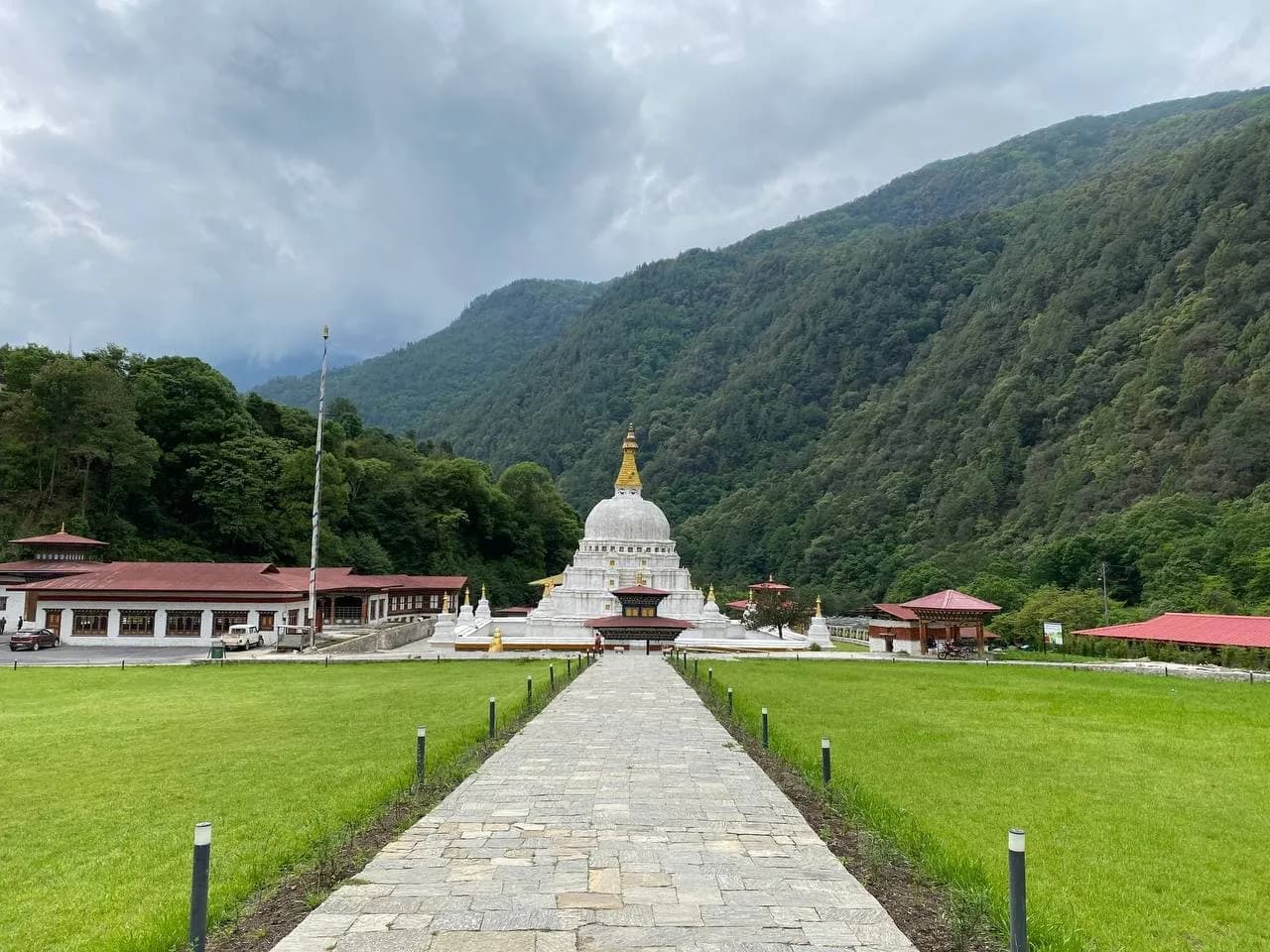
The [[paro-taktsang|Tiger's Nest]] climb is the central tension on most family Bhutan trips — the children want the photograph, the parents don't want to be the reason the children miss it, the parents are not going to do the climb. We resolve the tension by writing the trip with the climb as an option and the viewing as the default. The viewing platform at the Tiger's Nest base — reachable by a 15-minute walk from the trailhead car park — gives the photograph and the look at the temple from the angle that most photographs are taken from. Adult children who want to climb can do so in the morning with the second matched guide; the elderly parents read at the base, take an unhurried lunch at the [[paro-taktsang|Taktsang]] cafeteria (open to non-climbing visitors), and the family reconverges by mid-afternoon. Cultural moments that genuinely matter most — Kyichu Lhakhang, Punakha Dzong, the National Memorial Chorten at the prayer hour — are all reachable by short walks from the vehicle, and these are where the elderly traveller's cultural week is built.
The route
A sample shape of the week
DAY 01
Day 1 — arrival in Paro, settle without a transition day
Met at the arrivals hall by the matched guide. A quiet twenty-minute drive to the lodge in the upper valley. Ground-floor accommodation. Rest of the day at the lodge — unpacking, a slow lunch, an early dinner. The parents sleep at altitude (2,250 m) on a low-stakes first night.
DAY 02
Day 2 — Paro at the elderly traveller's pace
[[kyichu-lhakhang|Kyichu Lhakhang]] at 9 a.m. — Bhutan's oldest temple, reached by a short level walk, ample seating in the courtyard. Morning tea at the lodge afterwards. A long lunch. Afternoon at the lodge — the spa, the library, the room. An early supper.
DAY 03
Day 3 — the National Museum and a Paro lunch
Ta Dzong (Bhutan's National Museum) in the morning — a level-floor museum with seating throughout, accessible to elderly visitors and interesting. A long lunch in the Paro valley. The afternoon free. A walk in the Paro town high street if the energy says so.
DAY 04
Day 4 — Paro to Thimphu, the gentle drive
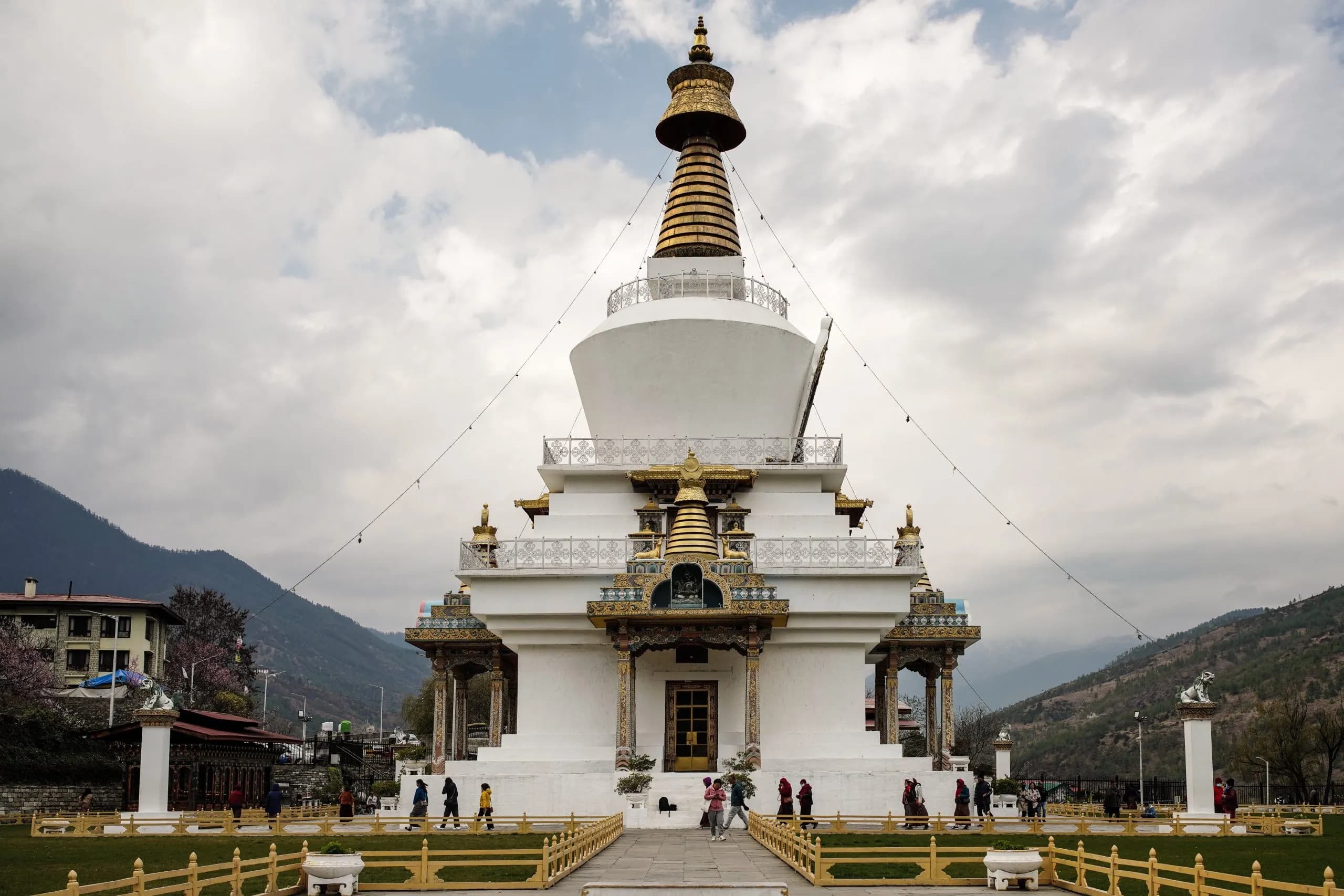
The Paro–Thimphu drive (54 km, ~1h 15m, along the river). Arrival at the Thimphu lodge in the upper city. National Memorial Chorten in the late-afternoon prayer hour — the principal Bhutanese cultural moment for an elderly traveller, with ample seating around the chorten and a reverent Bhutanese crowd to share the time with. A quiet dinner.
DAY 05
Day 5 — Thimphu, one moment per session
[[tashichho-dzong|Tashichho Dzong]] in the late afternoon at the prayer hour — short walk from the vehicle, courtyards level. Morning at the lodge or a brief stop at the Folk Heritage Museum (one floor, accessible). Afternoon rest. Early supper.
DAY 06
Day 6 — Thimphu to Punakha, the Dochu La crossing
The Thimphu–Punakha drive over [[dochu-la|Dochu La]] (3,100 m, ~3h with rest stops). Brief stop at the pass for the 108 chortens and the tea cafe; the matched guide reads the parents' altitude response. Descent into the warm valley. Arrival at the Punakha lodge by lunch — ground-floor villa, valley view. Afternoon at the lodge. A quiet dinner.
DAY 07
Day 7 — Punakha valley day, the dzong at the confluence
[[punakha-dzong|Punakha Dzong]] in the late-afternoon light — the principal Bhutanese dzong, reached by a short walk over the cantilever bridge. Ample seating in the courtyards; the principal chapels reached by stairs (which the matched guide briefs on; the parents see what they're up for). The Mo Chhu walk in the afternoon if the energy says so. A long lunch. An early supper.
DAY 08
Day 8 — back to Paro, the choice day
The Punakha–Paro drive in the morning. Lunch in the upper Paro valley. The afternoon is the choice — the climbing-age children walk the Tiger's Nest with the second matched guide; the elderly parents settle at the lodge or take the short walk to the Tiger's Nest viewing platform for the photograph and the unhurried lunch at the cafeteria. Family reconverges for the final dinner.
DAY 09
Day 9 — departure from Paro
Early-morning transfer to the airport. The matched guide and the lodge concierge see the family off. Onward Drukair.
The day-by-day above is illustrative. The proposal you receive is built around your dates, your pace and your interests, not this template.
Frequently asked
- What altitude considerations should I worry about for an elderly parent?
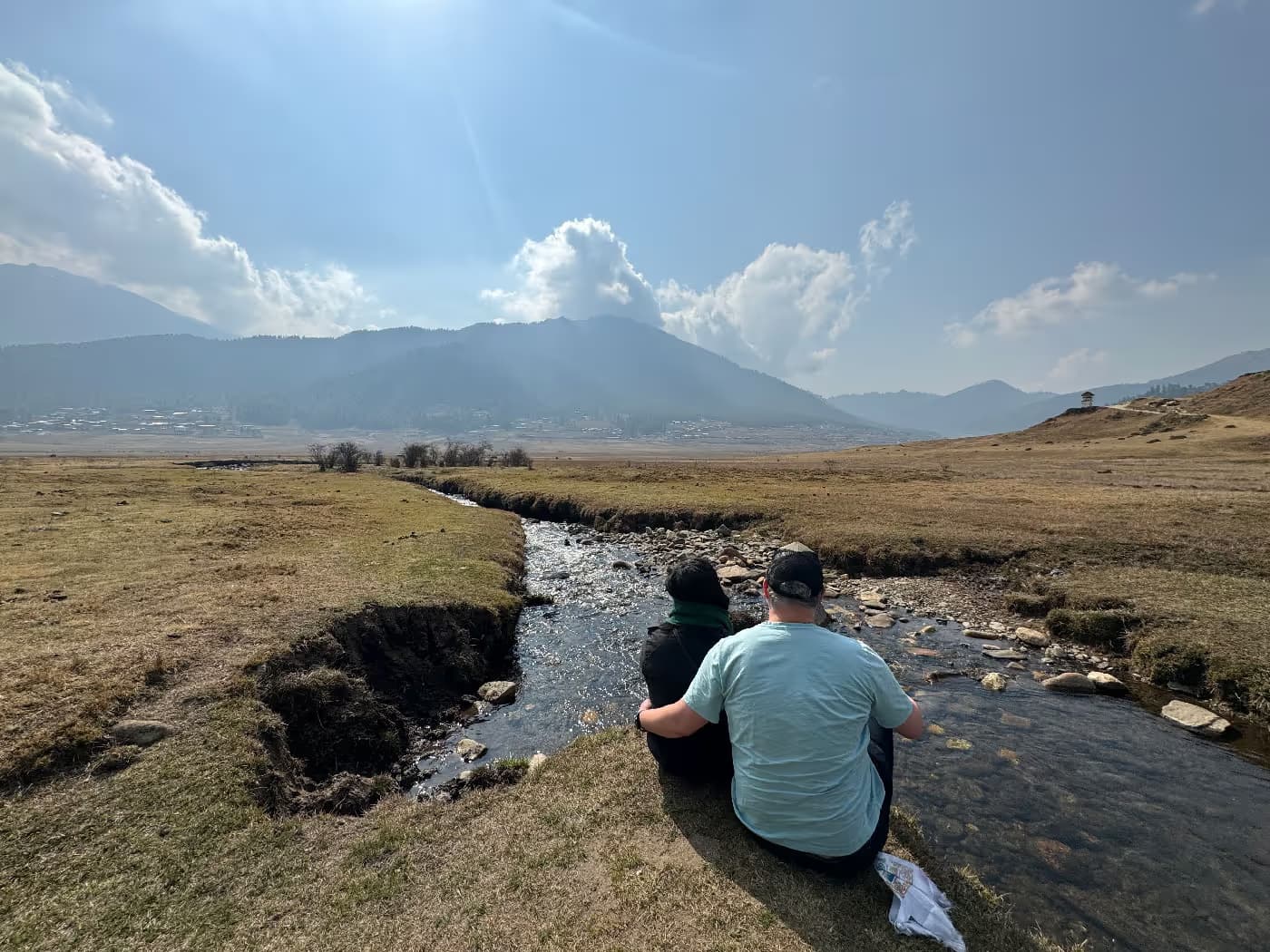
- Bhutan is mostly low to mid-altitude — Paro at 2,250 m, Thimphu at 2,320 m, Punakha at 1,280 m. The principal altitude exposure is the [[dochu-la|Dochu La]] pass at 3,100 m on the Thimphu–Punakha drive, which is a 20–40 minute stop rather than an overnight. For most elderly travellers in their seventies and early eighties without significant cardiopulmonary conditions, the exposure is manageable. The matched guide carries an oxygen canister and the lodge has a relationship with the [[paro|Paro]] district hospital if a consultation is needed. For travellers in their late eighties or with significant conditions, we recommend a pre-trip conversation with the family physician and a possible itinerary adjustment (overnighting in Punakha but driving back to Thimphu in a single day rather than building Phobjikha in).
- What about the Tiger's Nest — should the parents try?
- Generally no, and the trip is built so they don't have to. The Tiger's Nest climb is ~700 m of altitude gain on switchbacks at ~3,120 m max — demanding for any traveller, and not appropriate for most elderly travellers in their seventies or eighties. The viewing platform at the base gives the photograph and the look at the temple from the angle most photographs are taken from. Adult children and grandchildren who want to climb can do so with the second matched guide; the elderly parents read or rest at the base, take lunch at the cafeteria, and the family reconverges by mid-afternoon. The trip is not the climb.
- Which lodges have ground-floor accommodation or elevators?
- We filter the lodge inventory specifically for the elderly-traveller. [[amankora|Amankora]] across Bhutan has ground-floor suites in most lodges (the Paro and Thimphu lodges in particular). COMO Uma Paro has elevator-equipped accommodation. Six Senses Punakha and Six Senses Paro have ground-floor villas with valley views; the lodge concierge can pre-arrange the specific suite or villa. The proposal names the specific accommodation and confirms the ground-floor or elevator availability before you confirm.
- Will the matched guide know how to pace for an elderly traveller?
- Yes — we match accordingly. Several of our knowledgeable guides have walked their own elderly parents through these valleys (the Bhutanese family pilgrimage tradition is present in the network) and are calibrated to read the rest cadence elderly bodies need. The matched guide is named in the proposal before you confirm, with the matching rationale explained. We adjust the match if the trip benefits from a different read.
- What dietary register should we ask for?
- Bhutanese cuisine is hearty, often substantially chilli-forward (ema datshi, the national dish, is chilli-and-cheese) and meat-heavy. For elderly travellers we typically arrange a parallel register — the matched lodge chefs prepare unspiced or mildly spiced versions of the traditional dishes alongside the standard versions, plus international comfort food (clear soups, plain rice, grilled fish, steamed vegetables) on request. Most Bhutanese lodge kitchens handle this gracefully. Specific dietary requirements (low-sodium, diabetic, soft-food, vegetarian, vegan, gluten-free) are gathered in the pre-arrival briefing and arranged at every meal.
- What if a medical situation arises?
- The lodges have a working relationship with the [[paro|Paro]], [[thimphu|Thimphu]], and Punakha district hospitals. The matched guide carries a basic medical kit and is trained in first aid. For medical situations the standard recourse is the JDWNRH (the Jigme Dorji Wangchuck National Referral Hospital) in Thimphu or, for serious conditions, medical evacuation via Drukair to Bangkok or Delhi (the lodge concierge and our team coordinate the logistics). We strongly recommend pre-arranged international medical insurance with evacuation coverage for any elderly traveller; the matched guide can advise on the standard insurers we work with.
Journeys you might also weigh
- 01Bhutan for Indian HNI familiesFor Indian families who want Bhutan done well — grandparents, parents, the next generation, all together — on the daily Drukair connection from Delhi, Kolkata, Mumbai, or Bagdogra. The Indian-national framework is structurally favourable (Nu 1,200/night SDF, no transit-visa, visa-free entry on arrival), the cultural-religious depth meets serious Indian-Buddhist and Hindu interest, and the matched knowledgeable guide is from the network with the deepest experience of multigenerational Indian families.8 nights
from $14,000 - 02Bhutan signature-tierFor the principal who has done premium and luxury travel and wants the rare. Signature tier is not luxury with an extra zero — it is the considered framework that holds a senior international principal with the discretion, the cultural depth, and the operational ease that the distinctive Bhutanese hosting capacity can provide. By invitation. Eight nights typical. Around USD 14,000 to 60,000 per traveller depending on configuration.8 nights
from $22,000 - 03Bhutan babymoonA private, unhurried Bhutan journey for a couple expecting a baby — Paro, Thimphu, Punakha, and back — paced for rest, with short valley walks rather than climbs, long lunches by the river, and the Tiger's Nest ascent left entirely optional. We plan every day around your comfort and your doctor's guidance.7 nights
from $14,000
Begin when you're ready.
A few questions, or a conversation in your own words. A bespoke draft either way.

