SEVEN NIGHTS, SIGNATURE TIER, NO SCREENS, THE PHOBJIKHA SILENCE
Bhutan for founders — Seven nights in Bhutan for the founder who has not stopped for the right number of months.
A signature-tier seven-night journey for a single founder or a paired founder couple — built around the discipline of not being reachable, the Phobjikha valley as the destination instead of the side-trip, and the matched guide who has read this register often enough to hold it. The trip is not a holiday. It is the considered week away that lets the next year happen.
7 nights · Signature tier · from USD 32,000 per traveller
- Nights
- 7
- From
- USD 32,000per traveller
- Tier
- Signature
- Best season
- Autumn
- Suits
- Retreat
- Departing
- Worldwide
The reset that actually resets — why this is different
Most founder retreats are built around an external promise — a programme, a workshop, a curated set of conversations with other founders. This trip is built around the opposite. The promise is that for seven nights nothing is added to the calendar. The matched guide reads what the day asks for, the lodges hold the room with the discipline of a Bhutanese monastic kitchen, and the principal is not asked to perform a reset. The reset arrives by itself when nothing else is being added. The founder caps in the trip's pacing — Paro under three, Thimphu under three, Punakha at two, Phobjikha at two, Paro one — exist precisely so the rhythm stays slow enough for that arrival to happen.
Why Phobjikha is the destination, not the side trip
Most seven-night Bhutan trips treat [[phobjikha|Phobjikha]] as an optional extension — two nights tucked between Punakha and the return to Paro. We invert. Phobjikha is the destination. The valley sits at 2,900 metres in the central Black Mountains, a glacial U-shape closed at one end by [[gangtey-goemba|Gangtey Goemba]] (the principal Nyingma monastery of western Bhutan) and at the other by a long horizon of forested ridge. There is no town. There is no nightlife. There is no signal in most of the valley. From late October the black-necked cranes (Grus nigricollis, ~300 birds) wintering from the Tibetan plateau settle in the wet meadows; from January through March the valley is one of the quietest premium-lodge destinations in Asia. Two nights here recalibrates more than five nights in any working capital. The matched guide knows the morning monastery walks, the silent walks across the marsh, the long lunches at Gangtey Lodge, and when not to ask a question. The founder's job is to be there.
The signature-tier register — what is held in place around the principal
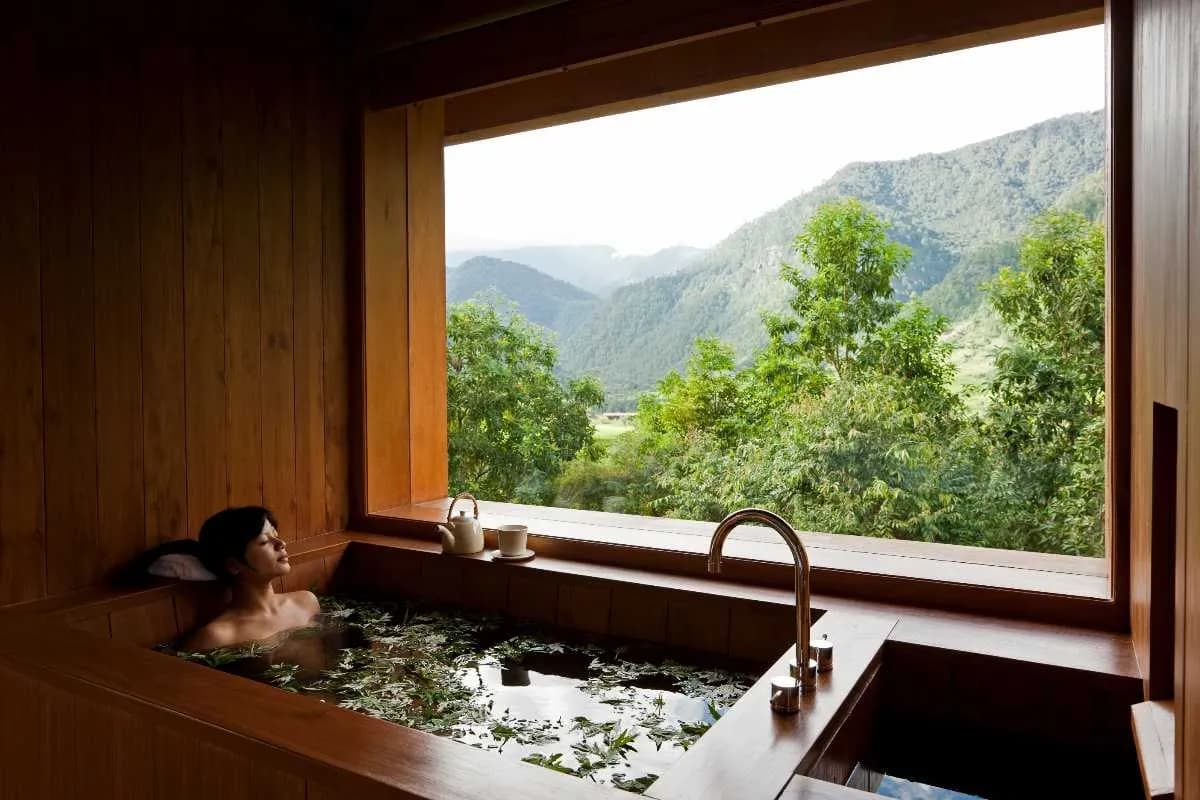
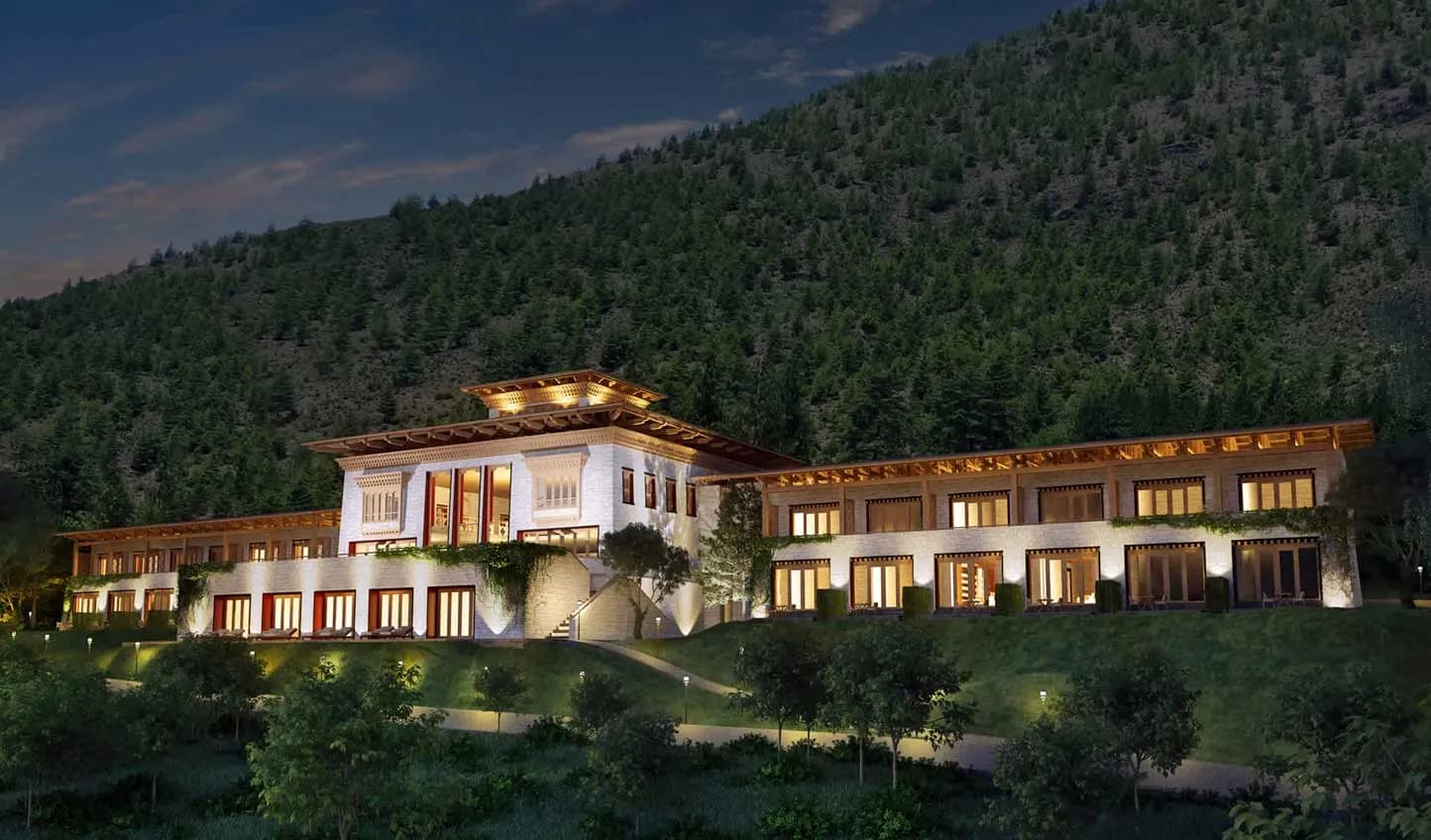
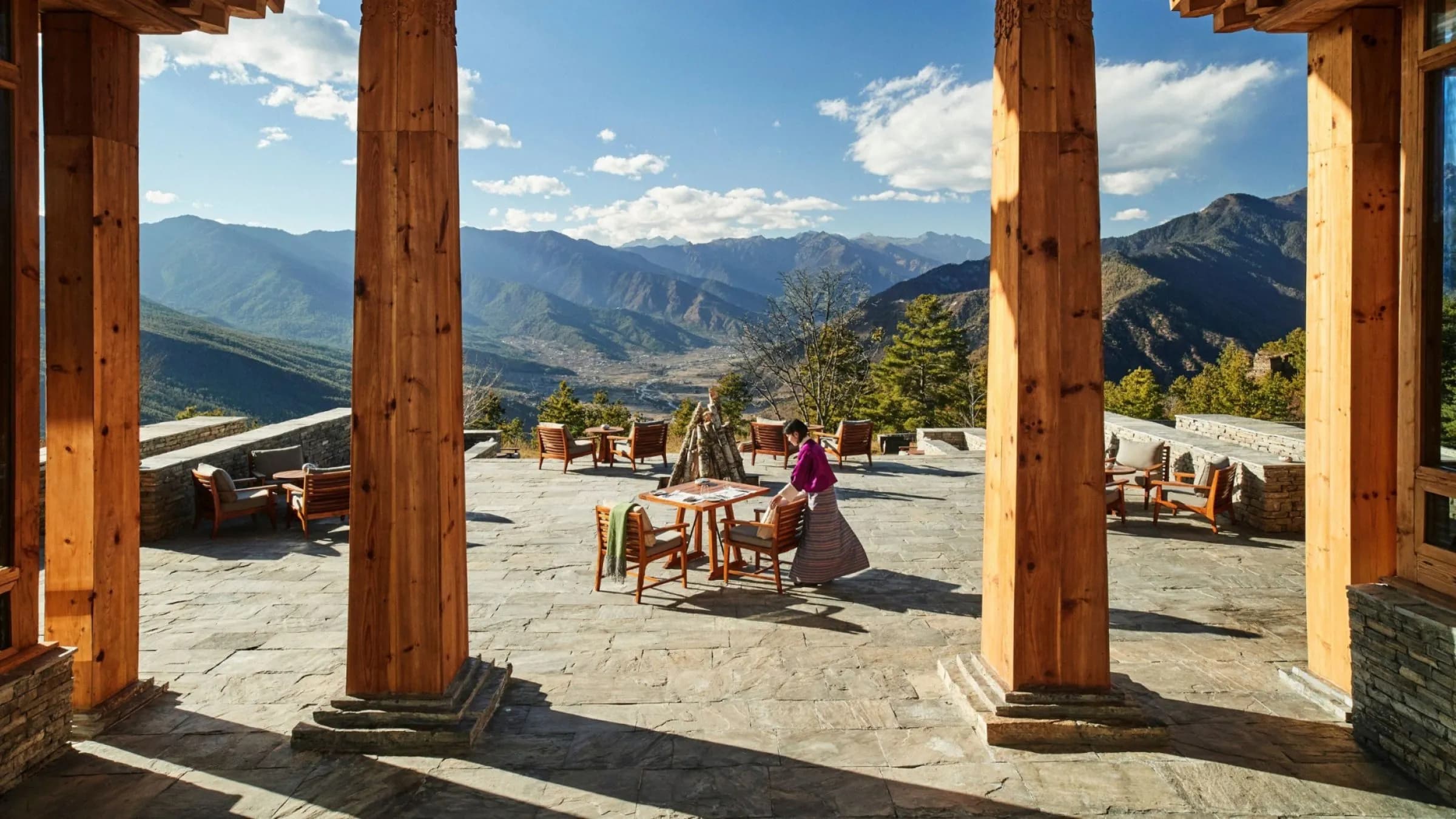
[[amankora|Amankora]] across the four valleys (Paro, Thimphu, Punakha, Phobjikha), or the Gangtey Lodge for Phobjikha if the senior team's preference reads there. The matched guide is one of the network's deep cultural reads — over two decades guiding, monastic-trained where the register asks for it, English-fluent with the cultural calibration to read what a founder needs from a temple visit (which is generally less explanation, not more). Private vehicle on every leg. Hot stone baths arranged at the lodge each evening. Bhutanese tasting menus at the founder's pace; long unhurried lunches; an early-morning monastery option on each day that is honoured if the principal wakes for it and quietly cancelled if not. The household pre-arrival briefing handles the dietary, the medical, the reachability defaults (the matched guide carries the principal's house-side coordinator's number for genuine emergencies; nothing else gets through). The [[paro-taktsang|Tiger's Nest]] climb on Day 7 is offered, not assumed; many founders skip it deliberately and keep the discipline of the calm.
The route
A sample shape of the week
DAY 01
Day 1 — arrival in Paro, the household coordinator's last call
Met at the arrivals hall by the matched guide. Twenty minutes to the Amankora Paro lodge. Hot stone bath. The principal's phone is handed to the household coordinator at the lodge or set to airplane mode; the matched guide carries the single emergency line. A small dinner in the lodge's private dining room. Sleep at altitude (2,250 m).
DAY 02
Day 2 — Paro, the slow first morning
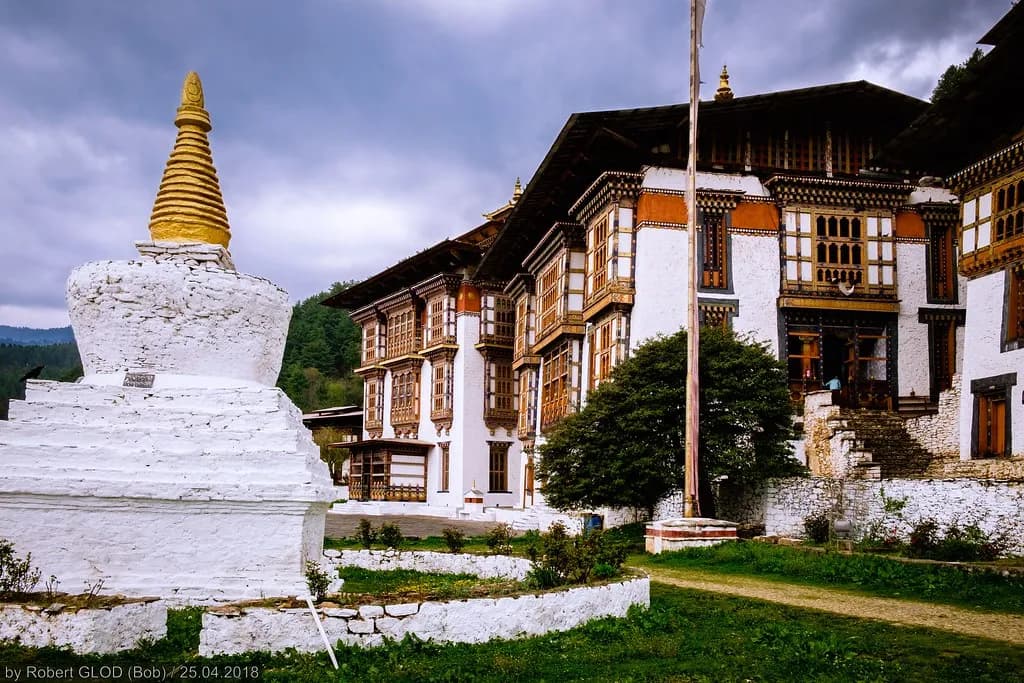
[[kyichu-lhakhang|Kyichu Lhakhang]] at 7:30 a.m. before the international visitors arrive — twenty minutes in the courtyard with the orange trees and the morning prayer. Breakfast at the lodge. An unhurried walk along the Pa Chhu. Long lodge afternoon. An early supper.
DAY 03
Day 3 — across to Thimphu, the capital seen briefly
The Paro–Thimphu drive at 54 km / ~1h 15m. Arrival at the Thimphu lodge. The National Memorial Chorten at the late-afternoon prayer hour — among the Bhutanese cultural moments. Tashichho Dzong as the day cools. A quiet dinner.
DAY 04
Day 4 — over Dochu La, into Punakha
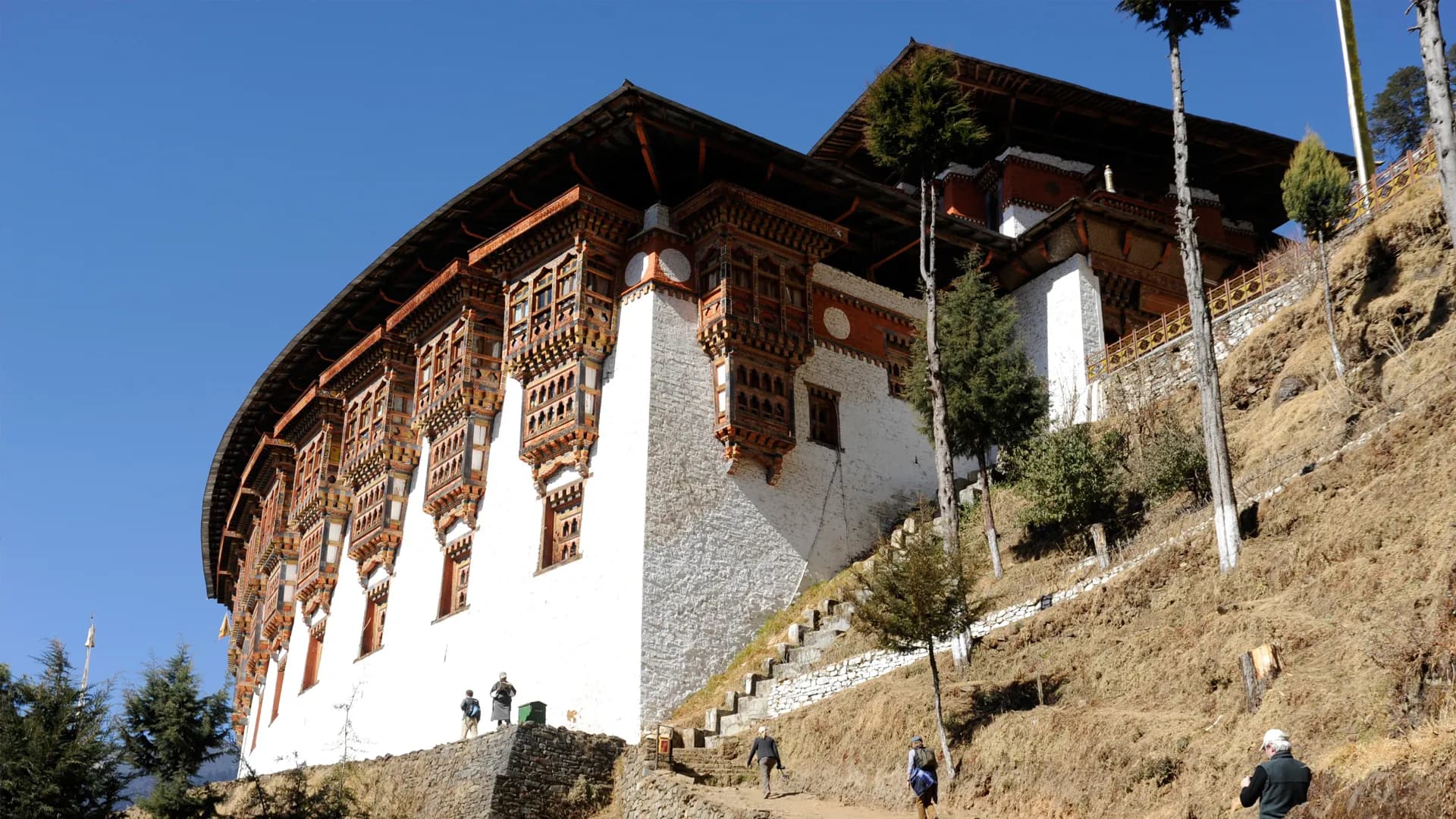
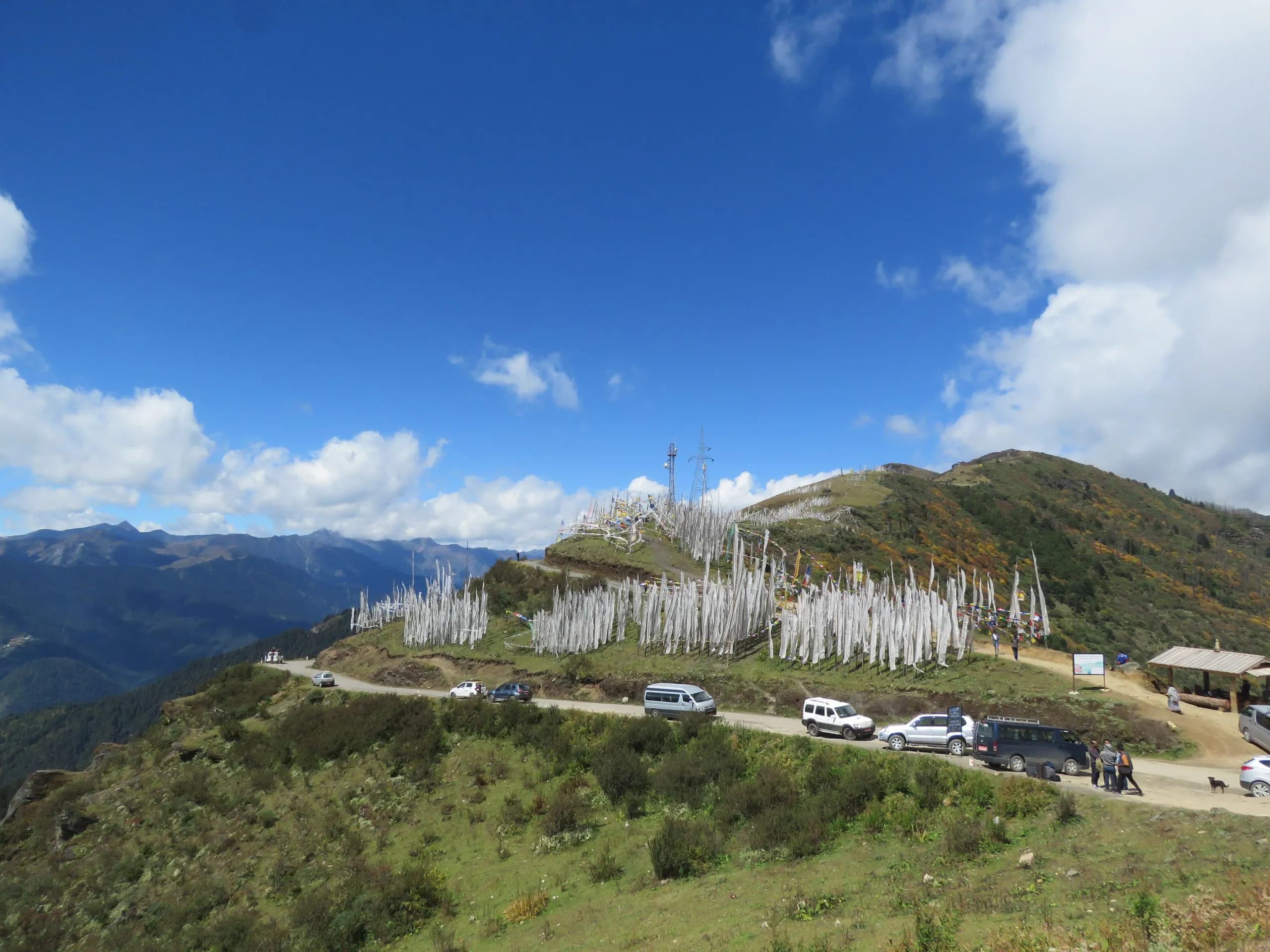
The Thimphu–Punakha drive over [[dochu-la|Dochu La]] (3,100 m); the 108 chortens; the tea cafe. Descent into the warm valley. Lunch at the lodge. [[punakha-dzong|Punakha Dzong]] at the confluence in late-afternoon light. An early supper.
DAY 05
Day 5 — Punakha–Phobjikha, into the silence
The Punakha–Phobjikha drive (80 km, ~3h, east into the glacial valley) in the morning. Arrival at the Phobjikha lodge by lunch. The afternoon is the first encounter with the valley — a thirty-minute walk to the marsh edge with the matched guide reading the cranes if the season holds. An early supper. The first night in Phobjikha.
DAY 06
Day 6 — Phobjikha, the day the trip is for
Dawn at [[gangtey-goemba|Gangtey Goemba]] for the morning prayer if the principal is awake for it; otherwise breakfast at the lodge. Late morning: the Gangtey Nature Trail across the valley floor — a 6 km level walk through the wet meadows, ~2 hours at the founder's pace, the cranes visible in season. A long lodge lunch. Afternoon: the founder reads, sleeps, or walks. Dinner at the lodge, the silence held.
DAY 07
Day 7 — back to Paro, the Tiger's Nest is held as an option
The Phobjikha–Paro drive (160 km, ~6h, broken at the Punakha lodge for lunch). Arrival at the Paro lodge by late afternoon. The Tiger's Nest is held as an option for the morning of Day 8 if the legs and the intention say so; for most founders, the discipline of the calm reads stronger and the climb is deliberately skipped. Final dinner at the lodge.
DAY 08
Day 8 — departure, or the Tiger's Nest, then departure
Either an early Tiger's Nest climb with the matched guide and the descent to lunch at the cafeteria, then the afternoon Drukair out; or a quiet final morning at the lodge and the morning Drukair. Either is correct. The reset has happened either way.
The day-by-day above is illustrative. The proposal you receive is built around your dates, your pace and your interests, not this template.
Frequently asked
- What does 'no screens' actually mean in practice?
- The matched guide carries a single emergency line to the principal's household-side coordinator; nothing else gets through. The lodge concierge holds incoming calls that are not from that line. The principal's phone is on airplane mode or held by the household coordinator at the lodge (the founder's choice; both work). Outbound, the principal can write at the lodge desk when the urge arrives — most don't. The discipline is held by the matched guide rather than by an app. Most founders find Day 3 is when the body recognises the calm and stops reaching for the device; Day 6 in Phobjikha is when it stops reaching at all.
- What about genuine emergencies — board crisis, family situation?
- The single emergency line through the household coordinator is the channel. The lodge concierge in Phobjikha and Punakha both have working satellite-phone backup for the rare situations where the valley signal is intermittent. The matched guide carries the line. We've held this register for senior principals across the years and the protocol has worked through several moments. If the principal's role requires hourly reachability for the seven nights, this is not the trip — see the corporate retreat shape for a different register.
- Is the Phobjikha silence really as quiet as you describe?
- Yes,. Phobjikha is a glacial valley at 2,900 m with no town, no electricity grid on the valley floor (the village uses underground cables to preserve the cranes' flight paths), a population of around 6,000 people across the valley, and a structural lack of commercial development. From late October the cranes arrive; the dawn calls across the valley are audible from the lodge terrace. The silence is the principal asset of the place. Most international travellers planning a Bhutan trip don't know about it; we treat it as the destination because it does the work that no other Bhutanese valley does at this scale.
- Is this trip appropriate for a founder couple, or just a solo founder?
- Both work. The trip is signature-tier whether one or two principals; the matched guide is held for the couple if travelling together. We've held this register for founders travelling solo (the most common shape), founders travelling with a co-founder or business partner (the matched guide reads the working register subtly), and founders travelling with a spouse who is on the trip for the trip (the matched guide reads the cultural). The seven-night shape works for all three; the no-screens discipline is held in the same way.
- What is the best time for this seven-night shape?
- Autumn (mid-October to late November) is the principal window — the cranes arrive in Phobjikha from late October, Bhutan is at peak visibility, the Himalayan range is visible from [[dochu-la|Dochu La]]. Clear-Sky Bhutan (December through February) is the second window — colder, the cranes still in residence through February, the lodges' fires lit by 4 p.m., the country at its quietest. Spring (March through May) catches the rhododendron and the jacaranda but the cranes have departed. We typically advise against deep monsoon (July and August) for the Phobjikha valley itself.
- What does the price band of USD 32,000 to 68,000 per traveller cover?
- The full in-country experience — Amankora across the four-valley circuit (or Gangtey Lodge for Phobjikha if preferred), the matched knowledgeable guide and the private vehicle on every leg, all meals and the curated dining, the Sustainable Development Fee (USD 100 per night, USD 700 total), the Bhutan visa, the in-country logistics, the pre-arrival household briefing, the post-trip recap. The upper end of the band reflects helicopter time between valleys (Paro–Punakha or Punakha–Phobjikha as preferred), exclusive-use lodge arrangements where the season allows, or signature-level dining curation. International flights are advised on; we coordinate timing with the Drukair rotation.
Journeys you might also weigh
- 01Bhutan anniversary journeyA five-night Bhutan journey for couples marking an anniversary — Paro, Punakha, back to Paro — with the third night reserved for whichever evening matters most. The signature tier sits comfortably here.5 nights
from $14,000 - 02Bhutan for the silver anniversaryA signature-tier Bhutan-plus-Phobjikha journey for couples marking the silver anniversary — twenty-five years together is a particular kind of milestone, and the trip that suits it is the sort. Nine nights at considered pace; matched knowledgeable guide; the kind of week you remember in the next twenty-five years.9 nights
from $38,000 - 03Bhutan trip from San FranciscoA private Bhutan journey for couples flying from San Francisco — Paro, Thimphu, Punakha, and back — with the long haul through a single Asian hub treated as the start of the trip rather than the cost of it. The distance is real, and so is the quiet on the other side of it.8 nights
from $18,000
Begin when you're ready.
A few questions, or a conversation in your own words. A bespoke draft either way.

