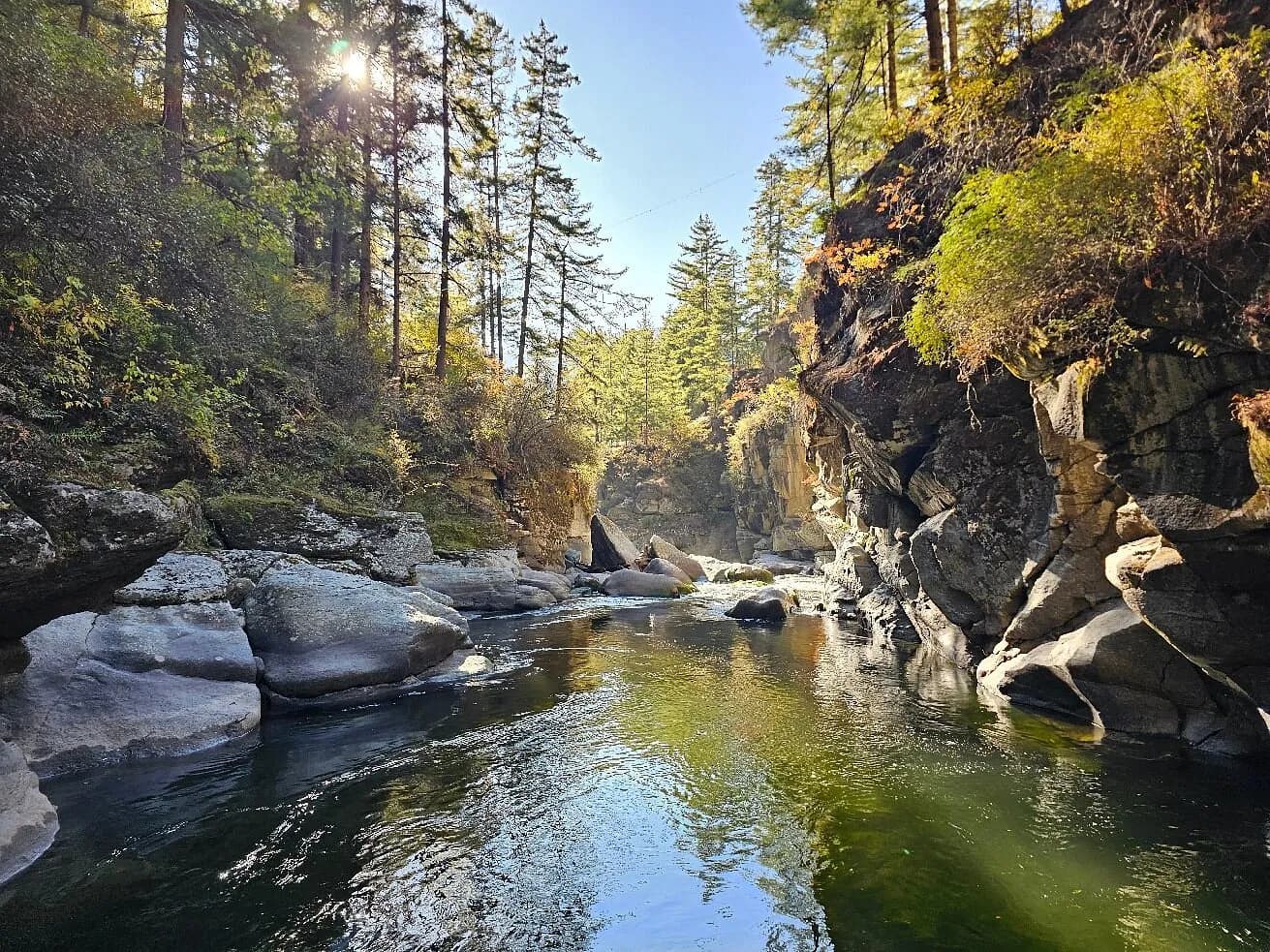
THE FAR SIDE OF THE WORLD, AND WORTH IT
Nine nights in Bhutan, from the other side of the world.
A private Bhutan journey for couples flying from São Paulo — Paro, Thimphu, Punakha, and back — with the crossing of two hubs treated as the opening of the trip rather than the price of it. It is the longest way most travellers will ever go to a single country, and the quiet that waits at the end of it is the reason the distance is worth keeping.
9 nights · Luxury tier · from USD 18,000 per couple
- Nights
- 9
- From
- USD 18,000per couple
- Tier
- Luxury
- Best season
- Autumn
- Suits
- Couple
- Departing
- São Paulo
Why the distance is the start of it
São Paulo to Paro is very nearly the longest journey there is — Brazil and Bhutan sit close to opposite sides of the world, and there is no short way across. From Guarulhos you fly a long-haul leg to a Gulf hub, most often Doha, Dubai, or Abu Dhabi, or else over Europe, and then a second leg east to an Asian hub — Bangkok, Singapore, or Kathmandu — for the morning flight up to Paro on Drukair (KB) or Bhutan Airlines (B3). We would not pretend it is anything other than a long way. What we would say is that the distance does something the trip needs. By the time the valley opens beneath the wing on the final approach, the desk you left in São Paulo is most of a planet behind you, and the nine nights ahead ask for none of it. The remove is not the cost of the journey. It is the point of it.
What the nine nights tend to look like
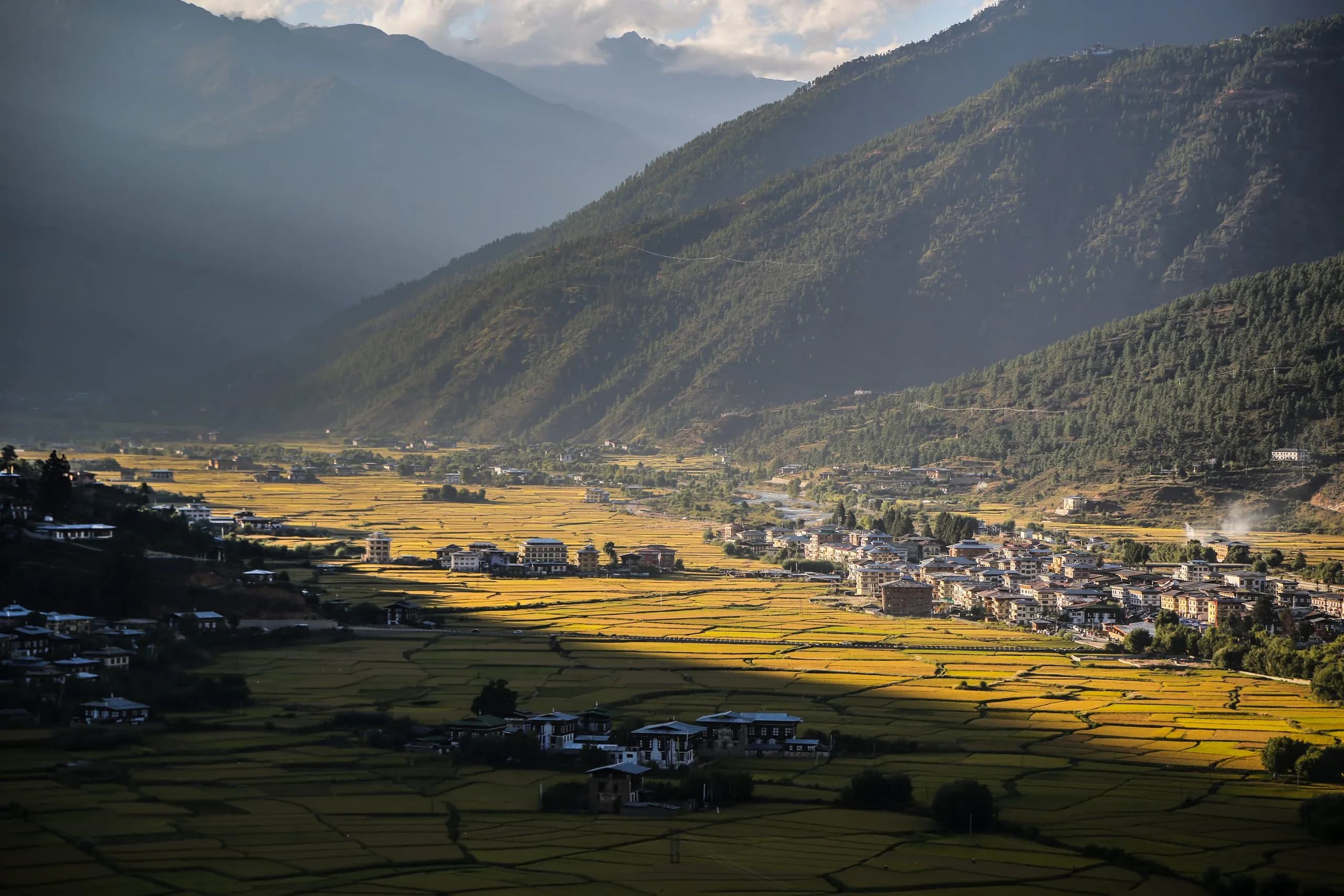
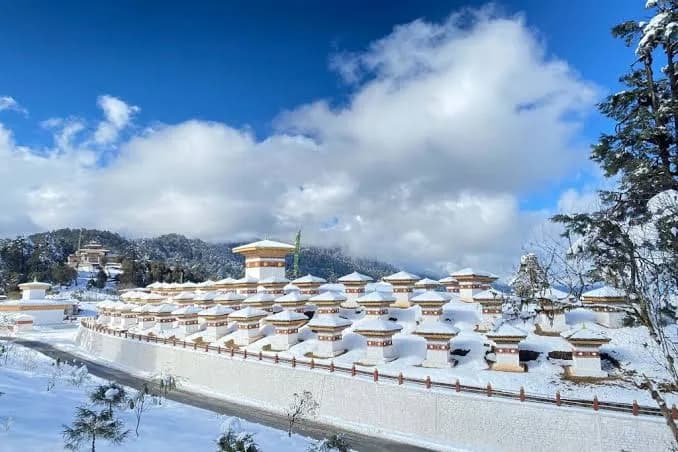
Three nights in Paro to land properly after two long legs and let the body find the hour — the walk along the Pa Chhu, Rinpung Dzong, Kyichu Lhakhang, and the climb to Taktsang held back until the legs are ready for it. Two nights in Thimphu, the capital taken at a walking pace, 54 kilometres and a little over an hour up the valley. Two over Dochu La into Punakha — 75 kilometres, roughly three hours, the pass at 3,100 metres with the eastern range laid out behind the 108 chortens on a clear morning, then the descent into the warm valley at the river confluence. Two last nights back in Paro, the first an easy day before the climb and the second the morning of Taktsang itself, before the early flight out. We adjust the whole of it to the way you actually travel, an hour either way, never to a template.
Who you'll travel with
One Bhutanese guide for the full nine nights, matched from a small and carefully kept network — chosen for the depth of conversation you would find worth having on the last evening, for an eye for the autumn light, and for the kind of steadiness that lets a long week genuinely slow down. For couples who have come this far, we lean towards guides who hold a silence as easily as they fill one, who know when a courtyard is better walked without commentary, and who read jet-lag without being asked. The guide is named in your proposal before you confirm anything, and we change the match if it does not feel right.
The route
A sample shape of the week
DAY 01
Arrival in Paro — two long legs end
Met in the arrivals hall after the second hub connection, twenty minutes to the lodge, an early supper and a long sleep with nothing asked of the morning.
DAY 02
Paro, slowly — the valley on foot
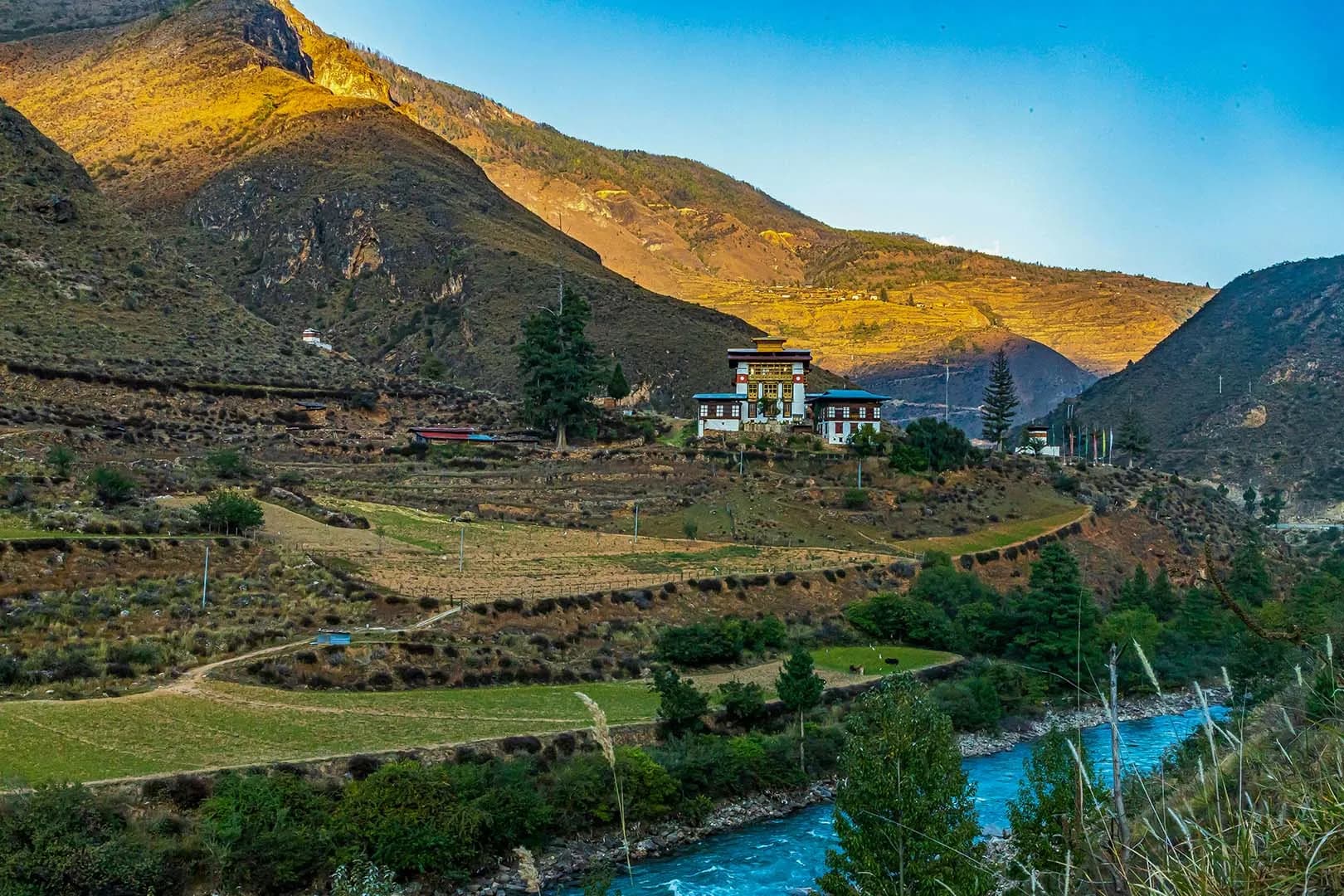
Rinpung Dzong in early light, Kyichu Lhakhang in the afternoon, a riverside walk along the Pa Chhu to let the time difference settle out of the body.
DAY 03
A second Paro day — and a hot stone bath
The National Museum at Ta Dzong, the paddies above the river, a long quiet afternoon and a traditional hot stone bath at the lodge.
DAY 04
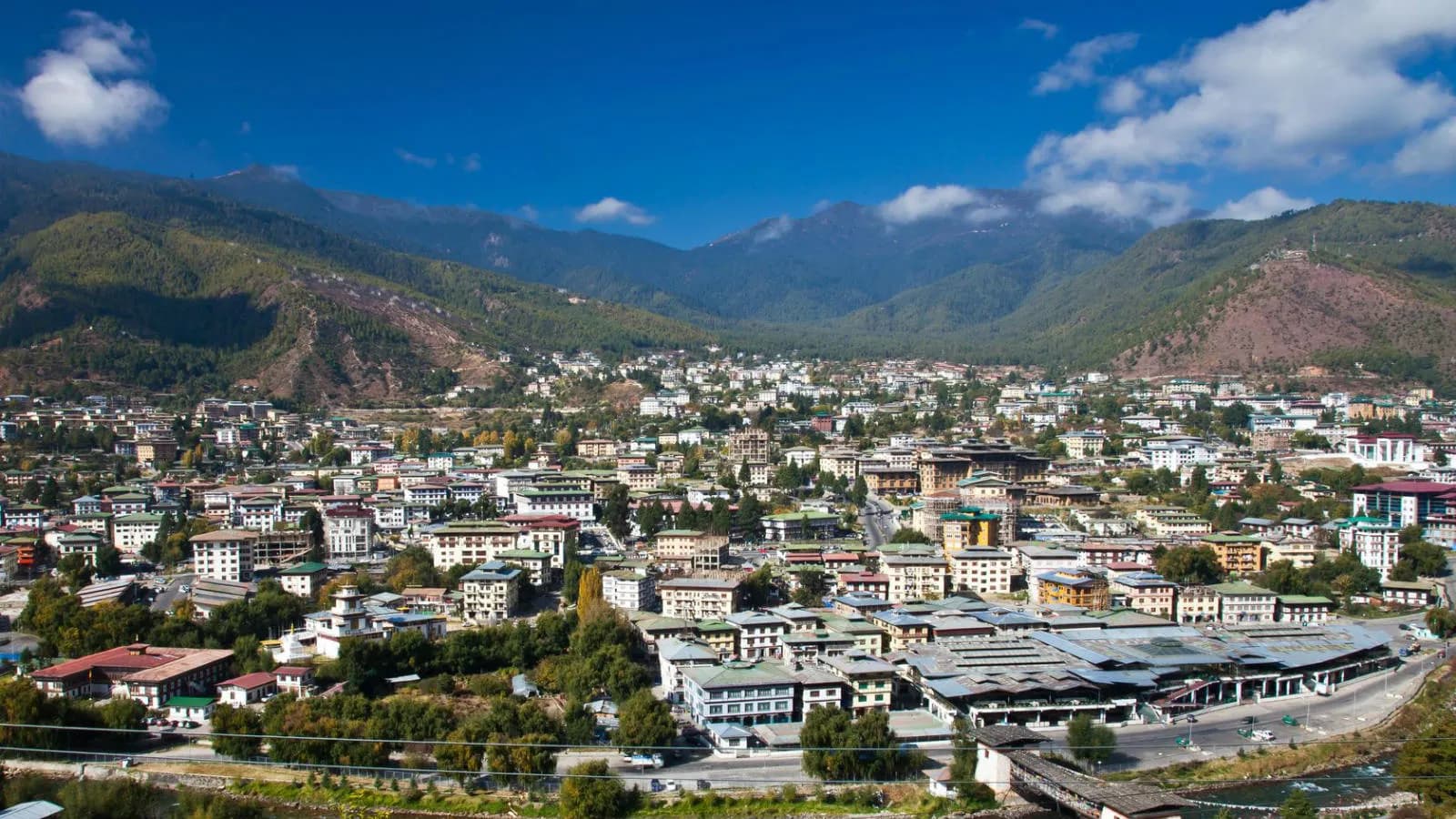
Across to Thimphu — the capital, taken slowly
The 54-kilometre valley road, a little over an hour; the National Memorial Chorten in the late afternoon; supper without a schedule.
DAY 05
Thimphu day — the city at a walking pace
Tashichho Dzong when the office workers leave and the courtyard empties; the Folk Heritage Museum; the Buddha Dordenma above the valley at dusk.
DAY 06
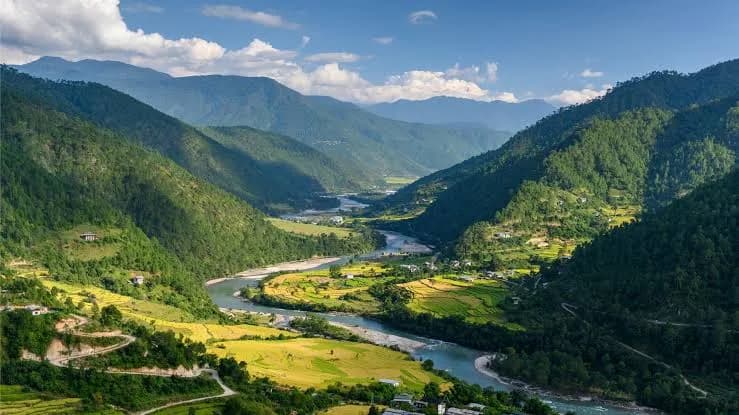
Over Dochu La — into Punakha
The 75-kilometre crossing, roughly three hours; the pass at 3,100 metres and the 108 chortens; Punakha Dzong in late-afternoon light at the confluence of the Mo and Pho Chhu.
DAY 07
A Punakha day — paddies, bridge, slow lunch
Chimi Lhakhang above the rice terraces at Lobesa, the long suspension bridge over the Pho Chhu when the wind has dropped, a riverside lunch with the afternoon left open.
DAY 08
Back to Paro — ahead of the climb
The drive back over Dochu La; an easy afternoon at the lodge; the walk to Taktsang briefed by your guide for an early start.
DAY 09
The Tiger's Nest, then a last Paro night
The climb to Taktsang at 3,120 metres at the pace your guide knows you can hold, lunch at the cafeteria below, the descent, and a quiet last evening before the early flight to the hub.
The day-by-day above is illustrative. The proposal you receive is built around your dates, your pace and your interests, not this template.
Frequently asked
- How does the flight work from São Paulo?
- There is no direct service to Bhutan from anywhere — Paro is the country's only international airport, and the approach into the valley is flown by a small number of certified pilots, which is why it carries a reputation as difficult rather than dangerous. From São Paulo the journey runs through two hubs: a long-haul leg to a Gulf hub — most often Doha, Dubai, or Abu Dhabi — or else over Europe, and then a second leg to an Asian hub. From that Asian hub you connect to Paro the next morning on Drukair (KB) or Bhutan Airlines (B3). We advise on the long-haul legs and the hub hotels and coordinate the timing so the morning into Paro is unrushed; those bookings are yours to make, on your own terms, while everything inside Bhutan is ours to arrange.
- Which Asian hub should we route through for the Paro leg?
- For a Brazilian or other non-Indian passport, we route the final leg through Bangkok (BKK), Singapore (SIN), or Kathmandu (KTM) — the three hubs Drukair and Bhutan Airlines serve that work cleanly for any passport. We would steer you away from Delhi or Kolkata on the way in: those connections are straightforward for Indian-passport-holders but carry an Indian transit-visa requirement for everyone else, and there is no reason to take that on when Bangkok, Singapore, and Kathmandu are right there. Which of the three we choose depends on your Gulf or European hub and the timing of the morning flight up to Paro, and we work it out with you in the consultation.
- What about the Bhutan visa for a Brazilian passport?
- Straightforward, and we handle it. As your licensed Bhutanese operator we arrange the visa for international visitors as a matter of course — it is part of the booking, not a separate errand for you. You send a clear scan of the passport's photo page; we lodge the application with the Department of Tourism once your dates are confirmed, and the approval is issued before you fly. The same applies to anyone in the party travelling on a non-regional passport. The only document you arrange yourself is any transit visa a connecting hub might require, which is exactly why we route you through Bangkok, Singapore, or Kathmandu rather than an Indian hub.
- Is it worth coming all that way for nine nights?
- We think so, and most couples who make the crossing say the same on the way home. Nine nights through Paro, Thimphu, and Punakha is a complete western circuit with room to breathe — three valleys, a high pass, the climb to Taktsang — and a ninth night that turns a settled week into one with no edges rushed. Given the distance from São Paulo, we would rather you came for nine than seven; the days are paced so the journey feels longer than it reads on paper. If your dates allow more still, a tenth and eleventh night opens the high glacial valley of Phobjikha to the east of Punakha, one of the quietest places to spend a night anywhere in the country.
- Should we break the journey with a night at a hub?
- Often, yes, and we will say so plainly in the consultation. With two long legs to make, a single night at the Gulf or the Asian hub on the way out lets the body clear before the early flight up to Paro, and turns a connection into a soft landing rather than a scramble. We recommend properties we know well and coordinate the timing; the hub hotel is your booking, our advisory. On the way home some couples prefer to fly straight through, and we plan the return around whichever you choose.
- What is the Sustainable Development Fee, and is it included?
- Yes, it is included and shown as its own line in your price breakdown. The fee is USD 100 per night for each international adult, set by the Royal Government of Bhutan, and it funds free healthcare and education for Bhutanese citizens alongside the country's conservation commitments. We never bury it; you see exactly what it is and where it goes.
- When is the best time to come from São Paulo?
- October and November are the clearest months — the post-monsoon air, the harvest in the fields, the Himalayan range sharp from Dochu La on a good morning, and the autumn festival season at its fullest. They also sit kindly against the Brazilian calendar, falling either side of the long Southern-Hemisphere spring. April is the second window, with rhododendron and cherry blossom and longer evenings. We would steer you away from the deep monsoon of July and August unless you specifically want the green valleys and the quiet that comes with them.
Journeys you might also weigh
- 01Bhutan trip from AmsterdamA private Bhutan journey for couples flying from Amsterdam — Paro, Thimphu, Punakha, and back — with the long haul through a single Asian hub treated not as the price of the trip but as the first of its days. The distance is real. So is the slowing-down that begins the moment Schiphol is behind you.8 nights
from $16,000 - 02Bhutan from ChennaiA private Bhutan journey for a Chennai couple — a connection through Kolkata or Delhi, then the whole week across the Paro, Thimphu, and Punakha valleys, paced so the days close with a hot stone bath, an unhurried dinner, and nothing left undone. As Indian nationals you travel on an entry permit rather than a visa, and the regional Sustainable Development Fee keeps a considered week comfortably within reach.6 nights
from $4,000 - 03Bhutan from DhakaA private Bhutan journey for a Dhaka couple — the short Drukair flight up from Dhaka to Paro, the whole week across the Paro, Thimphu, and Punakha valleys, paced so the days end with a hot stone bath, a slow dinner, and nothing left undone. As Bangladeshi nationals you travel on an entry permit rather than a visa, and the concessional Sustainable Development Fee keeps a considered week in Bhutan well within reach.6 nights
from $3,500
Begin when you're ready.
A few questions, or a conversation in your own words. A bespoke draft either way.

