THE VAJRAYANA REGISTER READ AGAINST THERAVADA, TENDAI, SHINGON, ZEN, SEON
A nine-night Bhutan Buddhist journey for travellers from Thailand, Japan, and Korea — the Vajrayana tradition read comparatively against your own school, the principal monasteries, the knowledgeable monastic-trained matched guide.
For travellers from the Asian Buddhist traditions — Thai Theravada, Japanese Tendai-Shingon-Zen-Pure Land, Korean Seon — who want the Bhutanese Vajrayana register read against their own. Nine nights. Luxury tier. The knowledgeable monastic-trained matched guide. The comparative-Buddhist conversations at the principal Bhutanese sites that no other Asian destination can offer at this register.
9 nights · Luxury tier · from USD 10,000 per traveller
- Nights
- 9
- From
- USD 10,000per traveller
- Tier
- Luxury
- Best season
- Autumn
- Suits
- Couple
- Departing
- Bangkok / Tokyo / Seoul
Why the Bhutanese Vajrayana register matters for Asian Buddhist travellers
Three reasons. First, the Bhutanese tradition is Tibetan Vajrayana through the Drukpa Kagyu lineage — distinct from the Asian Buddhist schools that visitors from Thailand, Japan, and Korea typically know (Theravada in Thailand; the Mahayana schools in Japan including Tendai, Shingon, Zen, Jōdo, Nichiren; the Seon tradition in Korea). The comparative reading — between the visitor's own tradition and the Bhutanese Vajrayana — is among the cultural rewards of the trip and is the registered intent of this journey. Second, the Bhutanese religious framework is still continuously lived — the dzongs are working religious-political administrative complexes, the monasteries are working training centres, the cham dances are working religious performances rather than staged re-enactments. The lived tradition is something most contemporary Buddhist destinations cannot offer. Third, the Bhutanese cultural protocol respects the visitor's own religious practice — the matched guide reads the comparative, the ritual moments are accessible without performative pressure, the principal sites accept visitor practice without disruption.
The Vajrayana register against Theravada (Thailand)
For Thai Theravada travellers — the Thai majority tradition, with its substantial Pali-canon textual emphasis, its monastic discipline, and its Sangha-centred religious life — the comparative reading against the Bhutanese Vajrayana is among the most-discussed cultural moments of the trip. The differences are substantive: Theravada's Pali canon vs Vajrayana's substantial Tibetan canon (Kangyur and Tengyur); Theravada's forest-monk tradition vs Vajrayana's treasure-revealer (terton) tradition; Theravada's meditation-and-discipline focus vs Vajrayana's tantric-ritual-and-deity-yoga. The shared ground is also substantial — the Buddhist core (Four Noble Truths, Eightfold Path, the Three Jewels), the Sangha respect, the monk-householder framework, the merit-making practice. A guide trained in the comparative can read the parallels and differences at Bhutanese sites in a way that turns each temple visit into cross-tradition cultural reward. The matched guide for Thai travellers is the knowledgeable network member with Thai-Buddhist contextual reading; conversational Thai may be supported in some cases.
The Vajrayana register against Japanese Buddhism (Tendai, Shingon, Zen, Pure Land)
For Japanese Buddhist travellers, the comparative reading varies by school. The closest parallel to Bhutanese Vajrayana is in the Japanese esoteric traditions — Tendai (天台) and especially Shingon (真言), which share the Vajrayana tantric framework, the mandala-based cosmology, the deity-yoga practice. A Shingon practitioner visiting Bhutan finds cultural and ritual parallels at every major site. The Zen (禅) tradition is further removed in ritual register but close in the meditation-and-monastic-discipline framework — Zen-practitioner visitors find the Bhutanese monastery retreat register familiar. Pure Land (浄土) and Nichiren traditions are further removed but the shared Mahayana framework still provides comparative depth. The closed network includes three Bhutanese knowledgeable guides with working Japanese — basic to conversational — and the most experienced of the three has guided Japanese principals for substantial decades. The Japanese-fluent matched guide is held on request.
The Vajrayana register against Korean Buddhism (Seon, Jogye)
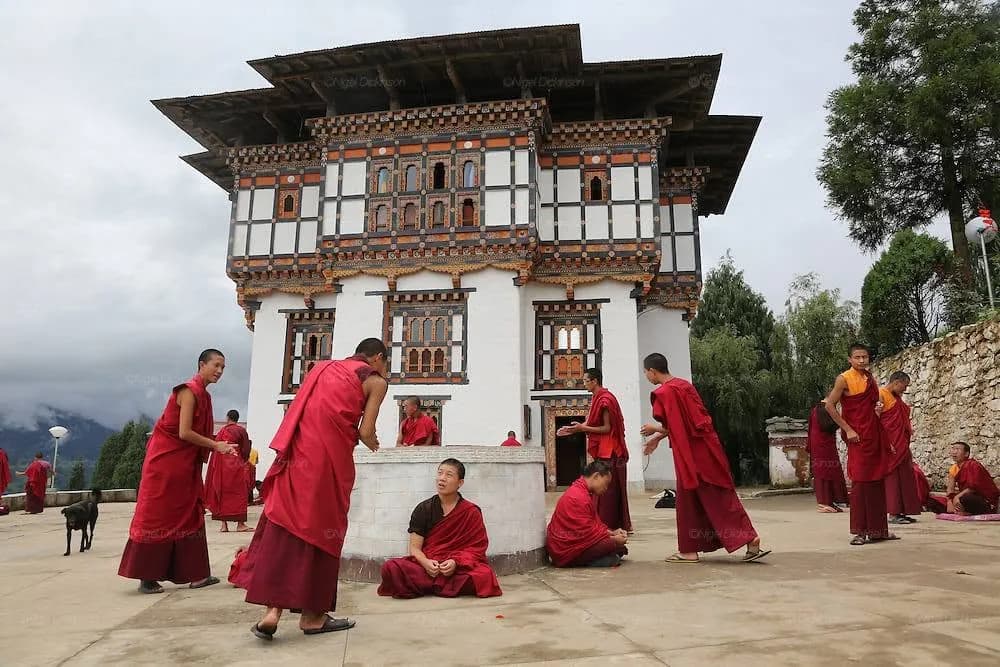
For Korean Buddhist travellers — the Seon (선) tradition through the Jogye Order, with its Hwadu (화두) meditation framework and its monastic-temple culture — the Bhutanese Vajrayana tradition is comparatively distinct but rewarding. The parallels: the monastery-as-living-institution framework, the senior-monk authority, the lay-householder relationship to the Sangha. The differences: the Korean Seon's emphasis on direct-realisation meditation versus the Vajrayana's elaborate ritual-and-deity-yoga framework. The Korean Buddhist visitor often finds the comparative register at the working monasteries (Tango, Cheri, Kurjey, Tamshing) most rewarding — these are the Bhutanese training centres where the contemplative-monastic tradition most parallels the Korean Seon experience. The matched knowledgeable guide is held for the; Korean-language support is more limited but available in some cases.
How the nine-night Buddhist journey is arranged
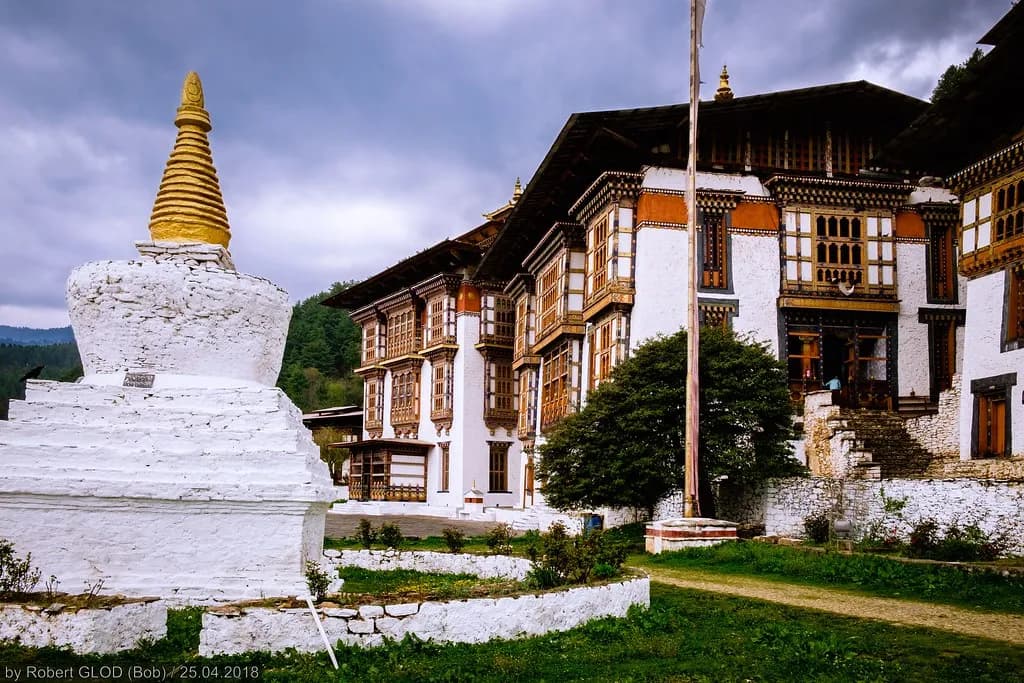
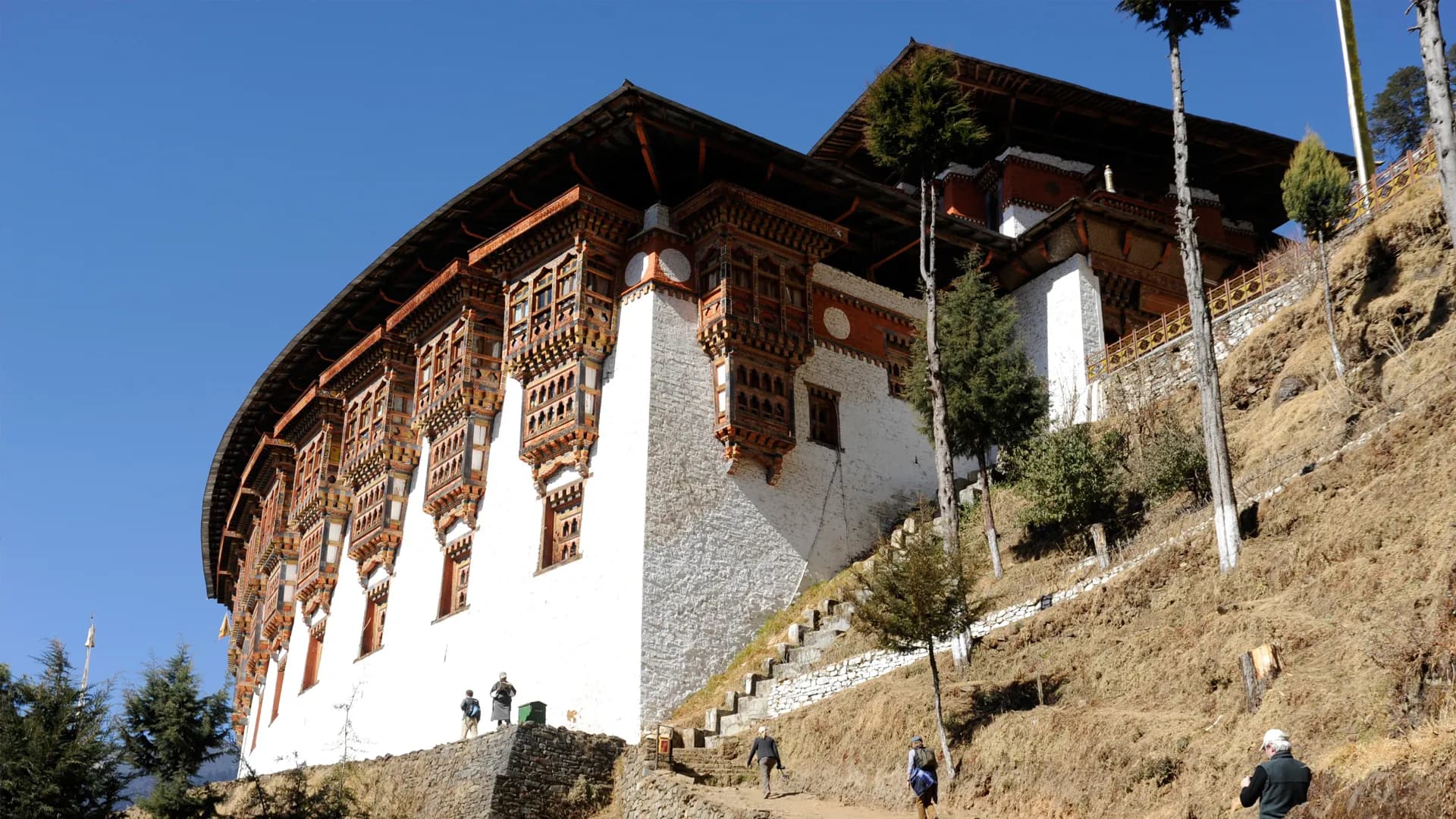
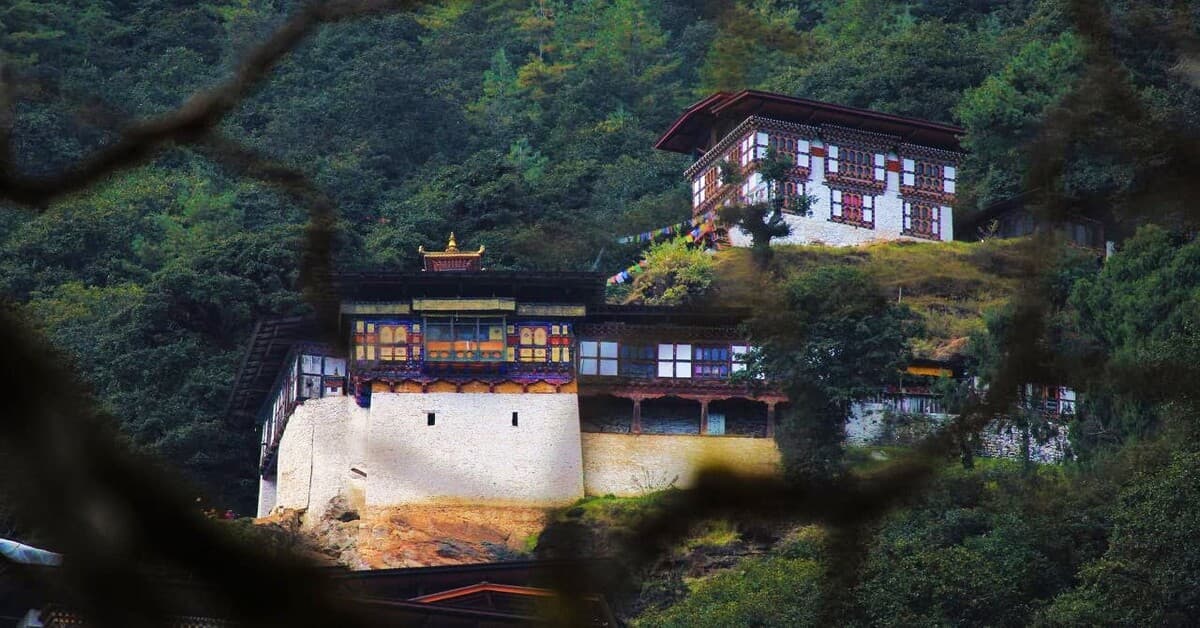
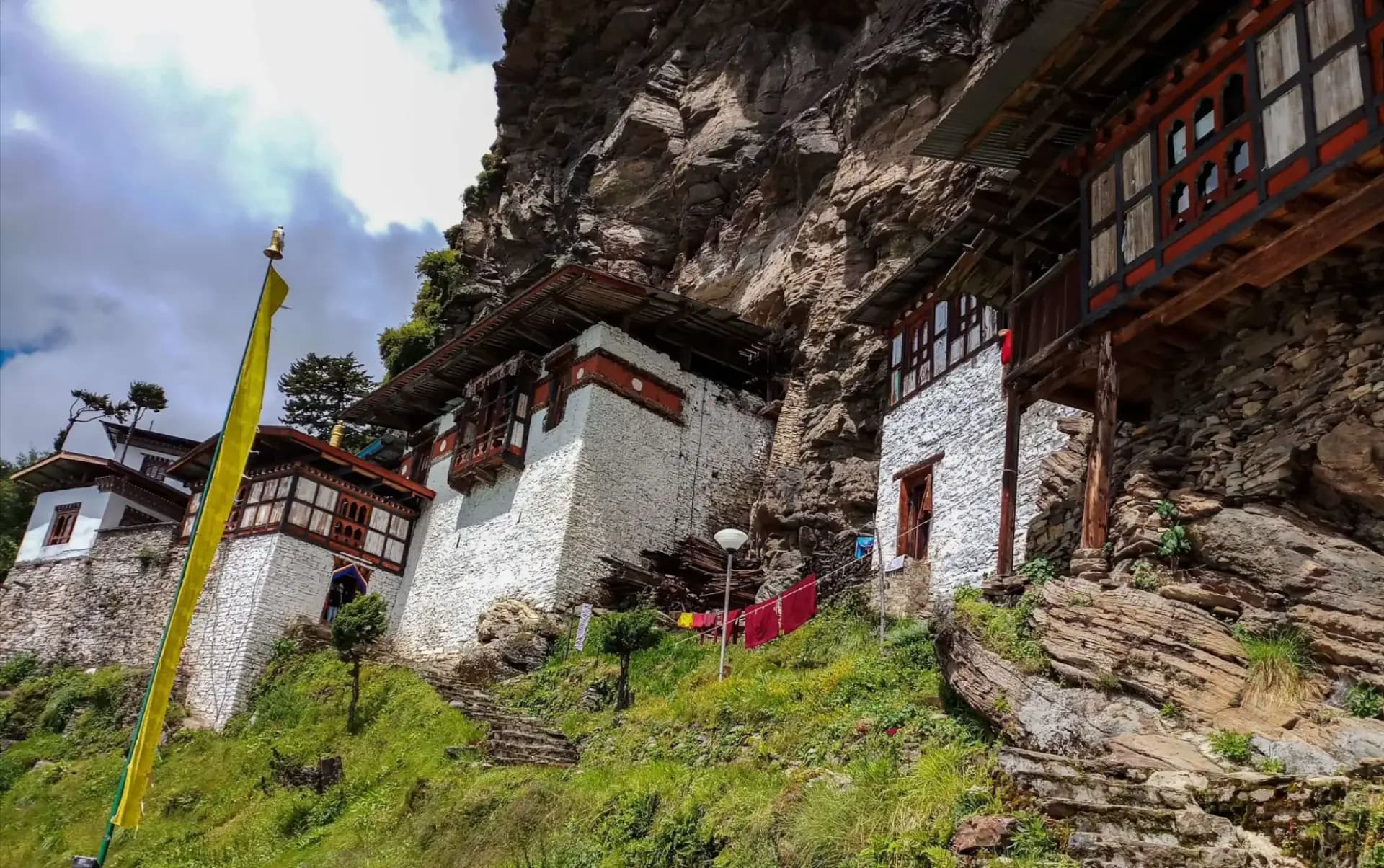
Two nights in Paro — Kyichu Lhakhang (founded 659 CE, the oldest temple in Bhutan; one of 108 temples built by Songtsen Gampo of Tibet, pinning the left foot of the cosmic ogress), Rinpung Dzong, the early-morning monastic option at Tango or Cheri Goemba above Thimphu. Two nights in Thimphu — the National Memorial Chorten at the prayer hour, Tashichho Dzong, the Buddha Dordenma. Two nights in Punakha — the Punakha Dzong (the religious-political capital, where the Zhabdrung Ngawang Namgyal's remains are interred at the Machhen Lhakhang), Chimi Lhakhang (the Drukpa Kunley site). Three nights in Bumthang — the religious heartland of Bhutan, with the Jambay Lhakhang (also founded 659 CE), Kurjey Lhakhang (Guru Rinpoche's 8th-century body-imprint cave), Tamshing Lhakhang (the Pema Lingpa monastery, the Bhutan-specific terton tradition), and the Mebar Tsho (Pema Lingpa's burning lake). The Tiger's Nest climb on the final Paro day.
The route
A sample shape of the week
DAY 01
Day 1 — Bangkok / Tokyo / Seoul to Paro
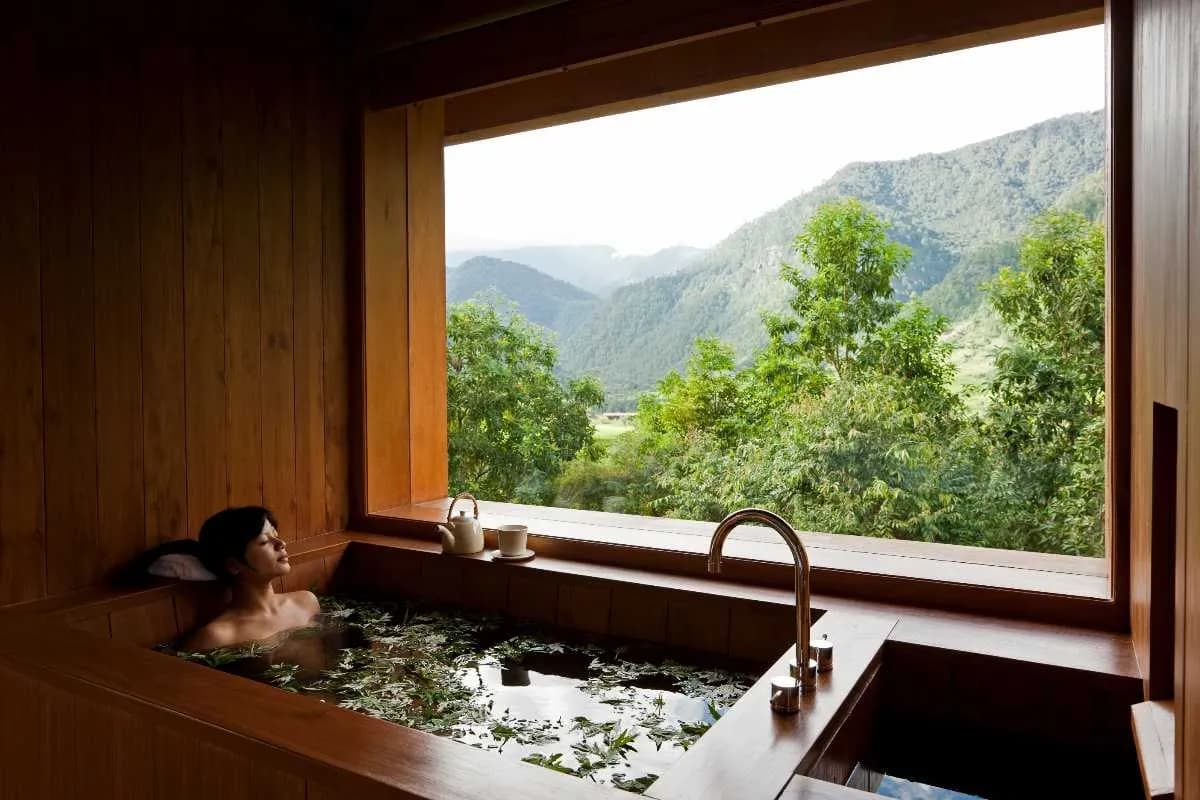
The Drukair / Bhutan Airlines arrival from BKK or via BKK (for Tokyo and Seoul travellers). Met at the Paro arrivals by the matched knowledgeable guide. Twenty minutes to the upper-valley lodge. Hot stone bath. A welcome dinner of Bhutanese tasting menu — the cuisine register introduced.
DAY 02
Day 2 — Paro: Kyichu Lhakhang and the 659 CE founding
Kyichu Lhakhang at 7:30 a.m. — the principal cultural moment of the trip's opening. The 659 CE founding (one of 108 temples Songtsen Gampo commissioned across the Himalayan landscape), the Jowo Sakyamuni image, the Guru Rinpoche 8th-century consecration. A long conversation with the matched knowledgeable guide on the Songtsen Gampo framework. Breakfast. Rinpung Dzong. Lunch. Afternoon at the lodge — the reading, the recalibration.
DAY 03
Day 3 — Paro–Thimphu, Tango and Cheri above the capital
The 54 km drive to Thimphu. Arrival at the lodge. The afternoon excursion: Tango Monastery (the Drukpa Kagyu training centre established by Phajo Drugom Zhigpo in the 13th century, expanded by the Bhutanese Drukpa Kagyu) and Cheri Goemba (the Zhabdrung Ngawang Namgyal's 1620 founding). The comparative-Buddhist register most active at Tango. Quiet dinner.
DAY 04
Day 4 — Thimphu: the working religious institutions
Morning at the National Memorial Chorten at the prayer hour. Tashichho Dzong in the late afternoon — the Je Khenpo's summer residence, the working seat of the central monastic body. Visit to the Choki Traditional Art School (where young Bhutanese train in the monastic painting tradition). Dinner at the lodge — comparative conversation with the matched guide.
DAY 05
Day 5 — over Dochu La to Punakha
The 75 km drive over the Dochu La pass at 3,100 metres. The 108 Druk Wangyel Chortens. Descent into the warm Punakha valley. Arrival at the lodge. Punakha Dzong at the confluence — the Zhabdrung's burial site, the Machhen Lhakhang containing his remains, the religious-political capital of the country. The most-religious moment of the trip for many visitors. Dinner at the lodge.
DAY 06
Day 6 — Punakha valley: Chimi Lhakhang and the Drukpa Kunley register
Chimi Lhakhang in the morning — the Drukpa Kunley (the 'Divine Madman') site, the fertility-pilgrimage, the distinctive Bhutanese tantric-folk tradition. A interesting site for the comparative-Buddhist visitor — the Drukpa Kunley tradition is distinctive even within the broader Vajrayana. The 20-minute walk through the Lobesa rice fields. Long riverside lunch. The Punakha suspension bridge at dusk. Dinner at the lodge.
DAY 07
Day 7 — Punakha to Bumthang, the central religious heartland
The long drive (or Royal Bhutan Helicopter Services flight) east to the Bumthang valley — the Bhutanese religious heartland, the 8th-century Guru Rinpoche site (Kurjey Lhakhang), the Pema Lingpa terton tradition (Tamshing). Arrival at the Bumthang lodge by late afternoon. A quiet dinner.
DAY 08
Day 8 — Bumthang: the Guru Rinpoche and Pema Lingpa sites
Morning at Jambay Lhakhang (founded 659 CE alongside Kyichu — the other Songtsen Gampo Bhutan temple). Kurjey Lhakhang in the late morning — the Guru Rinpoche body-imprint cave, the 8th-century Vajrayana foundation moment for Bhutan. Lunch at the lodge. Afternoon at Tamshing Lhakhang — the Pema Lingpa monastery, the Bhutan-specific terton tradition, the most-photographed religious frescos in the country. Dinner with the cultural conversation.
DAY 09
Day 9 — Bumthang to Paro, the Tiger's Nest preparation
The Mebar Tsho (Pema Lingpa's burning lake) on the way out of Bumthang. The long drive back to Paro (or helicopter direct, depending on the principal's preference and the operational window). Arrival at the Paro lodge by late afternoon. Quiet evening. Briefing for the Tiger's Nest climb.
DAY 10
Day 10 — the Tiger's Nest day, then departure
The Tiger's Nest climb at the principal's pace — the 8th-century Guru Rinpoche cave-foundation site (the most-photographed monument in Bhutan, 3,120 metres, 700 m altitude gain). For Buddhist-practitioner visitors the climb is itself part of the religious-cultural. The cafeteria turnaround held open. Final lunch. Afternoon Drukair departure (or PC-24 charter where preferred).
The day-by-day above is illustrative. The proposal you receive is built around your dates, your pace and your interests, not this template.
Frequently asked
- How does the comparative-Buddhist conversation work in practice?
- The matched knowledgeable guide leads the cultural reading at each site — but in the comparative rather than the introductory. The visitor's own Buddhist background (Theravada, Tendai, Shingon, Zen, Seon) is read as the baseline; the guide names the Bhutanese Vajrayana parallel or contrast. For a Shingon practitioner at Kurjey Lhakhang, the conversation is about the Guru Rinpoche / Kūkai parallels and the shared mandala framework. For a Thai Theravada practitioner at the National Memorial Chorten, the conversation is about the shared Sangha-respect framework and the Pali / Tibetan canon distinctions. The tradition is comparative depth, not introductory tourism.
- Do I need prior Buddhist study?
- For this specific journey, yes. The trip is designed for visitors with existing Buddhist background — whether practising lay (sutra reading, meditation practice, monastery engagement) or academic (Buddhist studies, comparative religion). The comparative register requires the baseline. For visitors with introductory or new interest in Buddhism, see [[bhutan-buddhist-pilgrimage-asian-markets]] for the introductory, or the broader [[bhutan-cultural-immersion-spring]] for the general cultural-religious framework.
- How does the monastic-access framework work?
- The principal Bhutanese monasteries (Tango, Cheri, Kurjey, Tamshing, the Zhabdrung's Machhen Lhakhang at Punakha) are accessible to international visitors with a guide, during published hours (typically 9 a.m. to 5 p.m.). For religious-practitioner visitors who want the early-morning or late-evening monastic-prayer access (the contemplative hours), the matched knowledgeable guide arranges where the relationship with the senior monks at each site allows it. The arrangement is not universal — some monasteries maintain the contemplative-hours tradition as closed; the matched guide reads the specific site relationships.
- How does Bhutan compare to a Tibet trip for Buddhist comparative interest?
- Bhutan is the only accessible Vajrayana state — Tibet's religious framework operates under constrained Chinese state oversight, with the contemporary monastic and lay practice limited compared to the 1950s pre-annexation baseline. Bhutan is the continuous Vajrayana civilisation that has never been constrained — the monastic body, the lay practice, the royal-religious framework are all continuous. For comparative-Buddhist interest, the Bhutanese tradition is the more option. See the [[bhutan-and-the-tibetans]] umbrella for the broader relationship context.
- What is the booking lead time?
- For the autumn (October-November) and spring (March-May) Buddhist windows, 8 to 10 weeks lead time. For festival-aligned versions (Paro Tshechu, Thimphu Tshechu, Punakha Drubchen, Jambay Lhakhang Drup with the Mewang fire ritual in October-November), 4 to 6 months. The Asian-market booking pattern is Asian-cultural-calendar-aware — Songkran in Thailand, Golden Week in Japan, Chuseok in Korea — and we coordinate the Asian-market windows specifically.
- What about Bumthang accessibility — is the long drive reasonable?
- Bumthang is the most religious of the Bhutanese valleys but is also the longest drive from Paro (8 to 9 hours via Trongsa, typically broken across two days). For visitors with religious priority, the drive is worth it — the Bumthang religious sites (Jambay, Kurjey, Tamshing, Mebar Tsho) are the heartland that the Paro-Thimphu-Punakha circuit alone cannot capture. The Royal Bhutan Helicopter Services flight (Paro–Bumthang 45 minutes) eliminates the drive days where the principal's preference and the operational window allow it.
Journeys you might also weigh
- 01Bhutan for a milestone birthdayA private Bhutan week for the couple marking a milestone birthday — a fiftieth, a sixtieth, the round number that asks to be spent somewhere it will be remembered. Paro, Thimphu, Punakha, and back to Paro for the climb to Taktsang; a blessing to mark the year, and the perspective the mountains give to a date that matters.7 nights
from $14,000 - 02Bhutan Buddhist pilgrimageA small-group pilgrimage journey for Asian-Buddhist travellers — from Singapore, Malaysia, Taiwan, Korea, Japan, Hong Kong, Vietnam — who want the Tibetan-Vajrayana religious circuit rather than the secular cultural-tourism version. Matched monastic-trained guides; access to working monasteries; the Bumthang religious circuit at its full depth.10 nights
from $18,000 - 03Bhutan for Indian HNI familiesFor Indian families who want Bhutan done well — grandparents, parents, the next generation, all together — on the daily Drukair connection from Delhi, Kolkata, Mumbai, or Bagdogra. The Indian-national framework is structurally favourable (Nu 1,200/night SDF, no transit-visa, visa-free entry on arrival), the cultural-religious depth meets serious Indian-Buddhist and Hindu interest, and the matched knowledgeable guide is from the network with the deepest experience of multigenerational Indian families.8 nights
from $14,000
Begin when you're ready.
A few questions, or a conversation in your own words. A bespoke draft either way.

