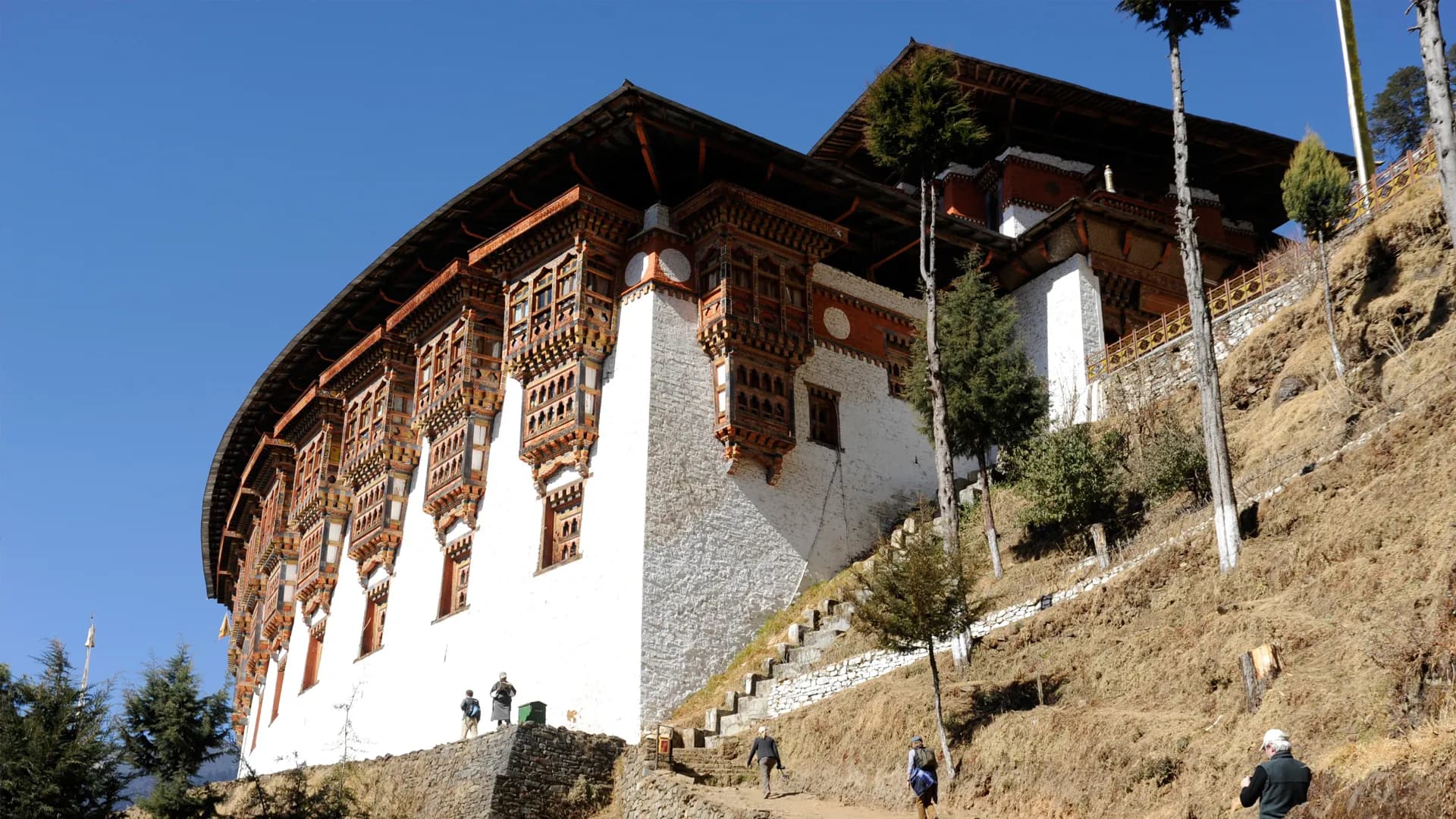
A PILGRIMAGE, PACED FOR PRACTICE
Ten nights for the Buddhist pilgrim — the principal sites, with monastic context.
A small-group pilgrimage journey for Asian-Buddhist travellers — from Singapore, Malaysia, Taiwan, Korea, Japan, Hong Kong, Vietnam — who want the Tibetan-Vajrayana religious circuit rather than the secular cultural-tourism version. Matched monastic-trained guides; access to working monasteries; the Bumthang religious circuit at its full depth.
10 nights · Luxury tier · from USD 18,000 per traveller
- Nights
- 10
- From
- USD 18,000per traveller
- Tier
- Luxury
- Best season
- Autumn
- Suits
- Small group
- Departing
- Worldwide
Who this is for
Asian-Buddhist travellers who already have substantial relationship with Buddhism — Chan / Pure Land / Tibetan Vajrayana from Chinese-speaking traditions; Theravada from Thai / Lao / Sri Lankan / Burmese; Zen / Pure Land / Shingon from Japan; Korean Seon. The route through Bhutan that we curate for these travellers is different from the secular cultural-tourism route — more time at working monasteries, more context from the matched guide (often monastic-trained themselves), and the Bumthang religious circuit at its full depth rather than the half-day sample most itineraries do.
What the ten nights cover
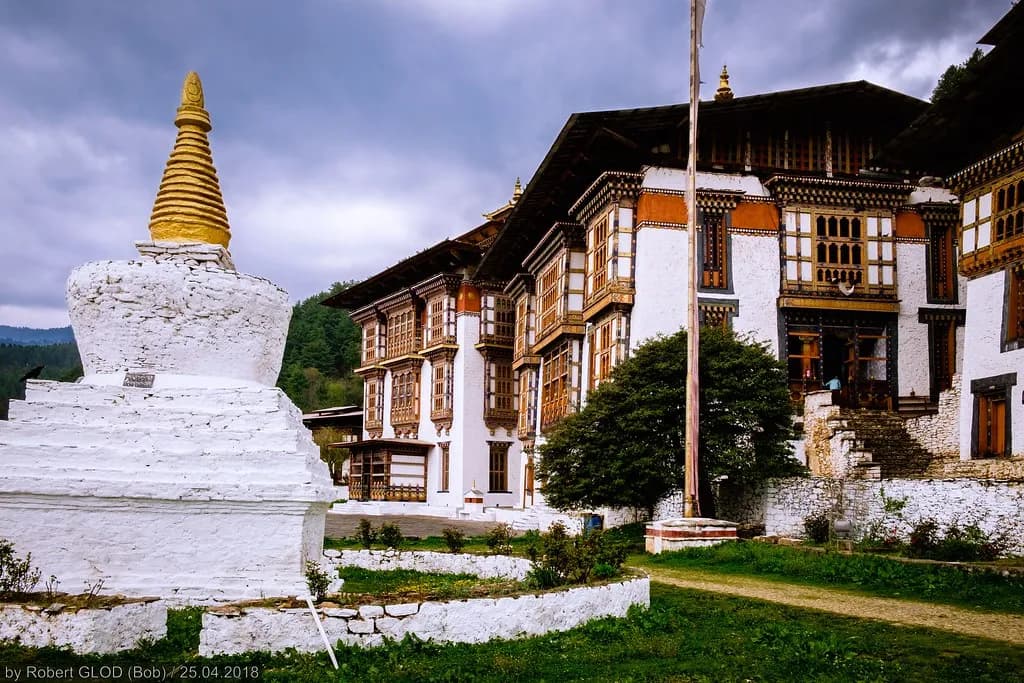
Two nights in Paro for Rinpung Dzong and Kyichu Lhakhang (one of the country's two oldest temples, founded 7th century by Songtsen Gampo); two in Thimphu for Tashichho Dzong, the National Memorial Chorten, and a morning at Cheri Monastery above the upper valley; two in Punakha for the principal dzong and Chimi Lhakhang (the Drukpa Kunley / Divine Madman temple); three nights in Bumthang for the full religious circuit (Jambay Lhakhang, Kurjey Lhakhang, Tamshing Lhakhang, the Pema Lingpa tradition at Mebar Tsho); one last night in Paro for Taktsang and the dawn flight back.
The matched guide — monastic-trained where possible
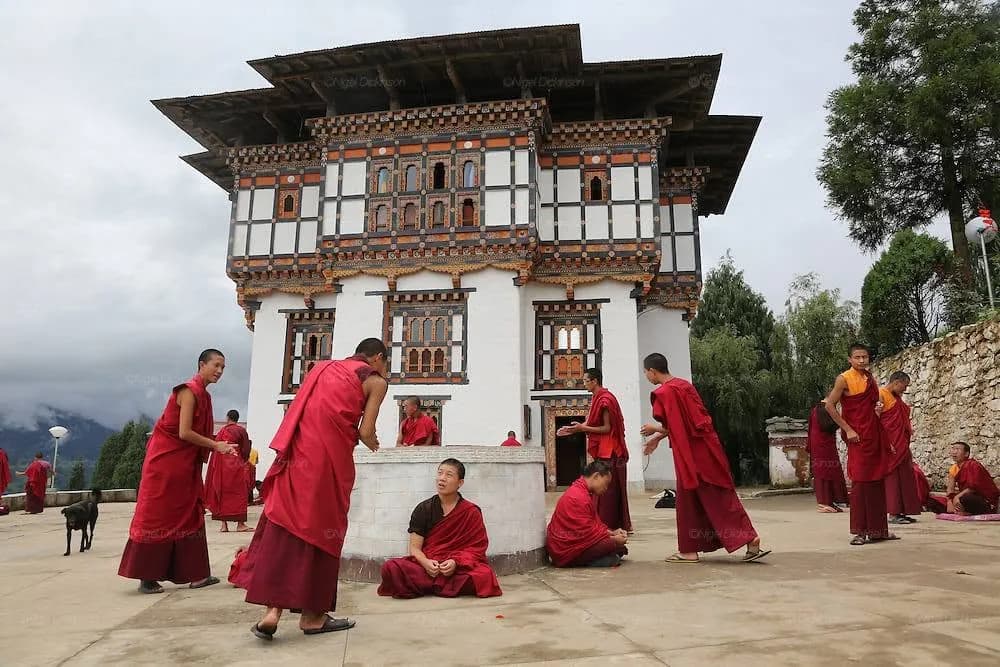
Our closed network includes four guides with substantial monastic-tradition training — typically three years of formal religious study in the Drukpa Kagyu or Nyingma traditions, with the depth of religious-philosophical conversation that Asian-Buddhist pilgrims tend to value most highly. For pilgrim-tier trips we match exclusively from this subset. The matched guide can speak across traditions (the parallels with Chan / Pure Land / Theravada / Zen are real and the matched guide brings the comparative depth); can introduce you respectfully at working monasteries; can sit with the meditation question if you want to take it that direction.
The route
A sample shape of the week
DAY 01
Arrival in Paro
Met at PBH; twenty minutes to the lodge; an early supper.
DAY 02
Paro day — Kyichu Lhakhang in particular
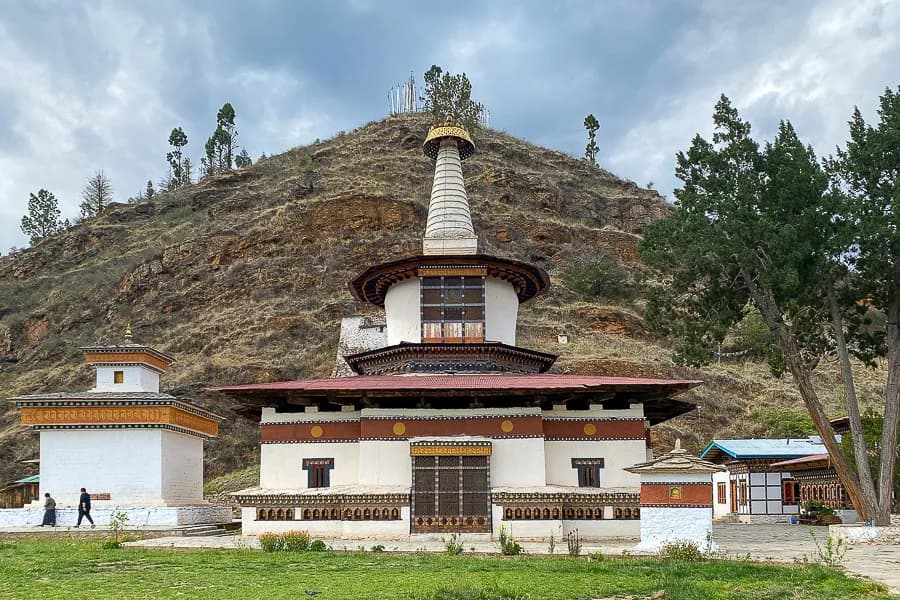
Rinpung Dzong in morning light; Kyichu Lhakhang in the afternoon at pace; the 7th-century temple deserves a full hour at least.
DAY 03
Across to Thimphu — Cheri Monastery
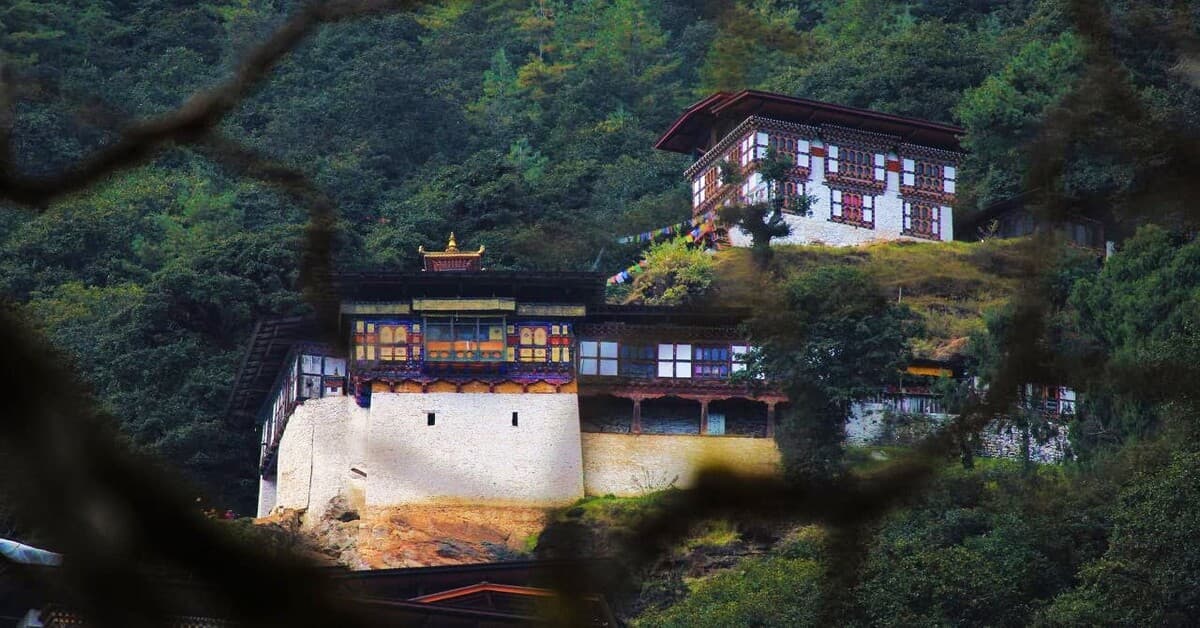
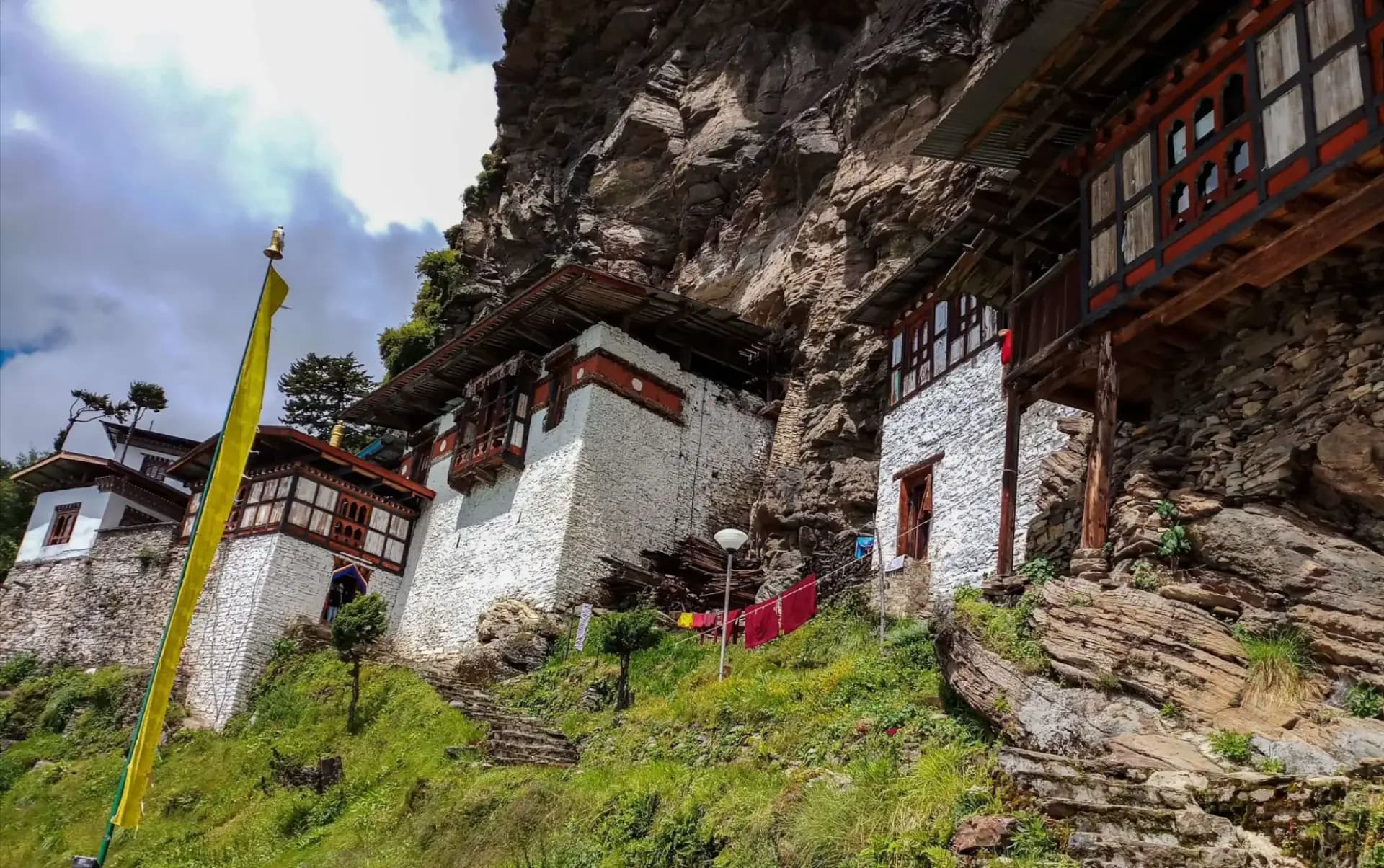
The valley to the capital; an afternoon climb to Cheri Monastery (the 17th-century retreat above the upper Thimphu valley); the National Memorial Chorten in the evening.
DAY 04
Thimphu day — Tashichho Dzong
Tashichho Dzong in the late afternoon when the office workers leave; time at the principal lhakhang; a quiet evening.
DAY 05
Over Dochu La — into Punakha
The 3,100m pass and the 108 chortens; Punakha Dzong in late-afternoon at the river confluence.
DAY 06
Punakha day — Chimi Lhakhang
The walk to Chimi Lhakhang (the Drukpa Kunley temple); the context that the matched guide brings on the Divine Madman tradition; a long lunch; the Mo Chhu walk.
DAY 07
Across to Bumthang — the long drive
The long mountain day east through Trongsa Dzong (the central seat); over the Yotongla into Bumthang's Choekhor valley; arrival at the Bumthang lodge in the late afternoon.
DAY 08
Bumthang religious circuit — Jambay and Kurjey
Jambay Lhakhang in the morning (one of the 108 temples Songtsen Gampo is said to have built in a single night); Kurjey Lhakhang on the cliff where Guru Rinpoche left his body imprint; time at both sites.
DAY 09
Bumthang day — Tamshing and Mebar Tsho
Tamshing Lhakhang (Pema Lingpa's principal monastery); an afternoon excursion to the Tang valley and Mebar Tsho (the Burning Lake — the principal Pema Lingpa treasure-revelation site); contemplative time at the lake.
DAY 10
Back to Paro — internal flight or the drive
Internal Drukair flight from Bumthang to Paro (time-efficient) or the two-day drive back. Kyichu Lhakhang one more time at Paro in the late afternoon.
DAY 11
The Tiger's Nest — the pilgrimage climb
The dawn climb at pace; the principal Bhutanese pilgrimage site; the flight back the following dawn.
The day-by-day above is illustrative. The proposal you receive is built around your dates, your pace and your interests, not this template.
Frequently asked
- What's the group size?
- Small. Typically 4–8 travellers per group. Pilgrim-tier trips are intentionally small to allow monastery access and the conversational depth that the matched guide can offer. For private pilgrimage trips (group of 2) with the same access and pacing, we quote separately as a signature-tier offering.
- Can we attend the morning rituals at the working monasteries?
- At specific monasteries, yes. The matched monastic-trained guide arranges access where it's appropriate — typically morning rituals at the principal Bumthang monasteries (Kurjey, Tamshing, Jambay) for pilgrim groups by prior arrangement. We brief specifics in your proposal; some sites permit attendance at certain rituals, others don't.
- Can we sit with the meditation question — formal practice during the trip?
- Yes if you want it. The matched guide can introduce you to meditation patterns in the Drukpa Kagyu tradition; we can arrange a half-day or full-day extension at Cheri Monastery or one of the Bumthang sites for practice with the resident monks (subject to availability and the monastery's discretion). We discuss specifics in the consultation.
- How does this differ from the standard cultural-tourism trip?
- The standard cultural-tourism trip visits the principal sites at brisk pace (45 minutes to an hour per site); the pilgrim version stays at each site longer (two to three hours often), with context from the monastic-trained guide, with prior arrangements at specific monasteries for ritual attendance or contemplative time. The price band reflects the guide-and-access work; the matched guides for pilgrim-tier trips are a small subset of our closed network.
Journeys you might also weigh
- 01Bhutan Buddhist journeyFor travellers from the Asian Buddhist traditions — Thai Theravada, Japanese Tendai-Shingon-Zen-Pure Land, Korean Seon — who want the Bhutanese Vajrayana register read against their own. Nine nights. Luxury tier. The knowledgeable monastic-trained matched guide. The comparative-Buddhist conversations at the principal Bhutanese sites that no other Asian destination can offer at this register.9 nights
from $10,000 - 02Bhutan for the solo travellerA private Bhutan journey for the traveller arriving alone — Paro, Thimphu, Punakha, and back, with a light walk in the hills and the Tiger's Nest at the end. One matched Bhutanese guide and a steady driver for the whole week, in a country that asks little of you and watches over you all the same.7 nights
from $6,500 - 03Bhutan for a milestone birthdayA private Bhutan week for the couple marking a milestone birthday — a fiftieth, a sixtieth, the round number that asks to be spent somewhere it will be remembered. Paro, Thimphu, Punakha, and back to Paro for the climb to Taktsang; a blessing to mark the year, and the perspective the mountains give to a date that matters.7 nights
from $14,000
Begin when you're ready.
A few questions, or a conversation in your own words. A bespoke draft either way.

