A CONSIDERED HIMALAYAN WEEK
Seven nights in Bhutan, on the routing from Osaka.
A Bhutan journey for Japanese couples flying from Osaka Kansai — the short Asian leg to Bangkok, the morning Drukair to Paro, then seven unhurried nights in the post-monsoon clarity. Vajrayana-Buddhist depth set against the Japanese Buddhist; Japanese-fluent matched guide where the dates align.
7 nights · Luxury tier · from USD 14,000 per couple
- Nights
- 7
- From
- USD 14,000per couple
- Tier
- Luxury
- Best season
- Autumn
- Suits
- Couple
- Departing
- Osaka
The Osaka routing
Osaka to Paro is one-stop via Bangkok. We recommend Thai Airways KIX–BKK (the principal route, around 6.5 hours) with Drukair BKK–PBH the following morning; or Japan Airlines KIX–BKK (codeshare with Thai) with the same Drukair connection. Singapore Airlines KIX–SIN works as an alternative with Drukair SIN–PBH on the Sun–Sat rhythm, but the BKK connection is typically the cleanest for an Osaka start. The Bangkok overnight is your booking on your terms; we recommend, brief the property, coordinate timing for the Drukair morning. Bangkok offers no transit-visa complication for Japanese passport-holders (visa-free entry).
The pacing — what works for the Japanese reader
Japanese premium-travel readers tend to value the considered preparation, the punctual rhythm, the cultural depth at each site, and the kind of guide who can hold a conversation about religious-philosophical context with the comparative-Buddhist register (Japanese Tendai, Shingon, Zen, Pure Land vs Bhutanese Vajrayana). The Bhutanese seven-night shape suits the Japanese working calendar — many Osaka principals work around the Golden Week (early May), Obon (mid-August), or year-end (early January) windows. We pace the week with two long days at Paro, two at Thimphu, two over the Dochu La at Punakha, one return to Paro for the Taktsang climb — without the optional Phobjikha extension which adds two nights.
Who you'll travel with
One Bhutanese guide for the full seven nights. The closed network includes a small number of guides with working Japanese — basic to conversational. The most experienced of these has guided Japanese principals for over a decade. For Japanese-speaking principals, we typically hold the most-experienced Japanese-fluent guide unless the dates or the specific match read otherwise; the matched guide is named in the proposal before you confirm, with the matching rationale explained. For Japanese principals comfortable in English, the wider guide network is available and the cultural match expands accordingly. Either tradition is held with the same care.
The route
A sample shape of the week
DAY 01
Arrival in Paro — recovery
Met at PBH after the Drukair morning from Bangkok; twenty minutes to the lodge; a slow afternoon and an early supper.
DAY 02
Paro day — Rinpung Dzong and the museum
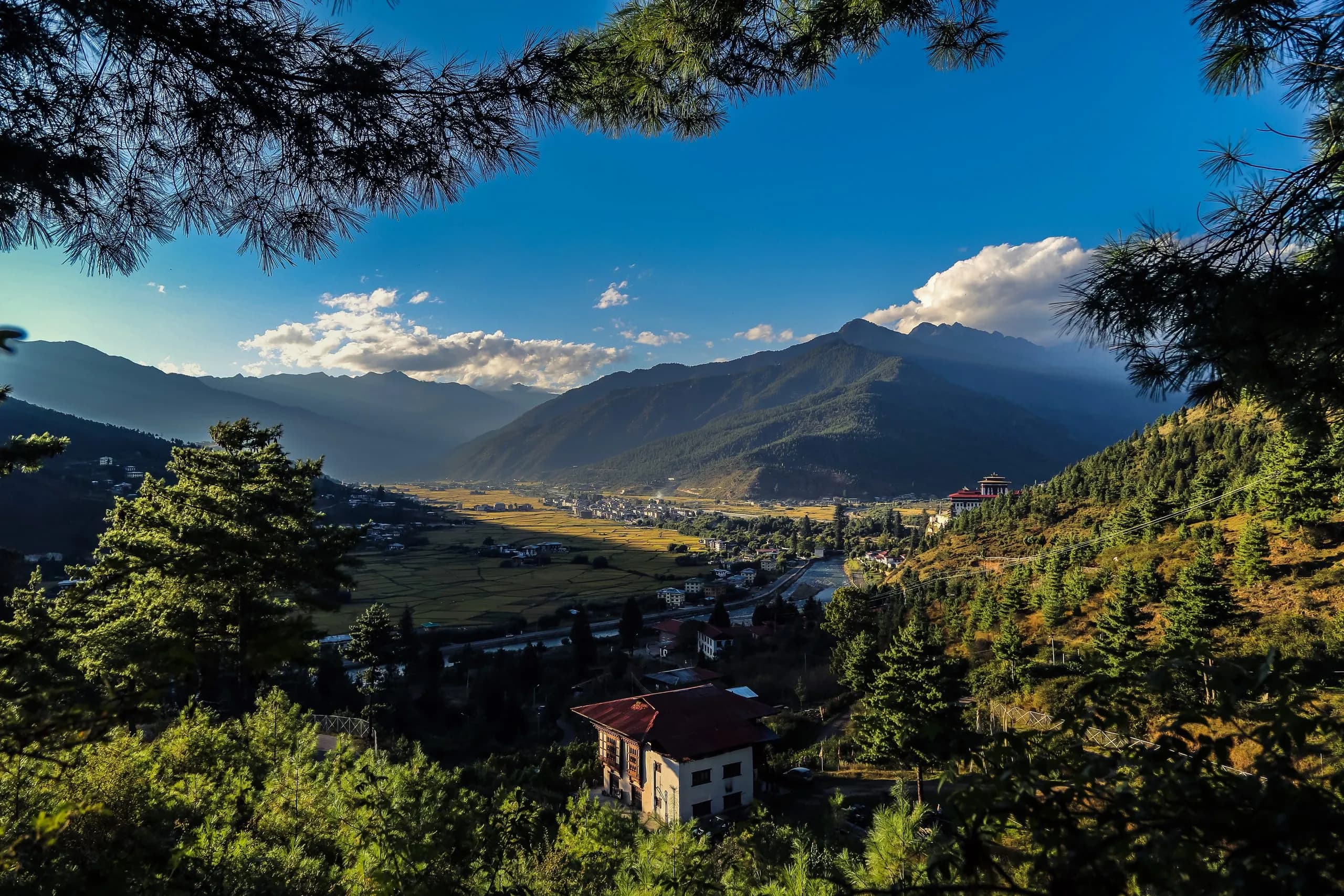
The principal Paro dzong in morning light; Ta Dzong (the National Museum) in the late morning; an afternoon at Kyichu Lhakhang with the comparative-Buddhist commentary.
DAY 03
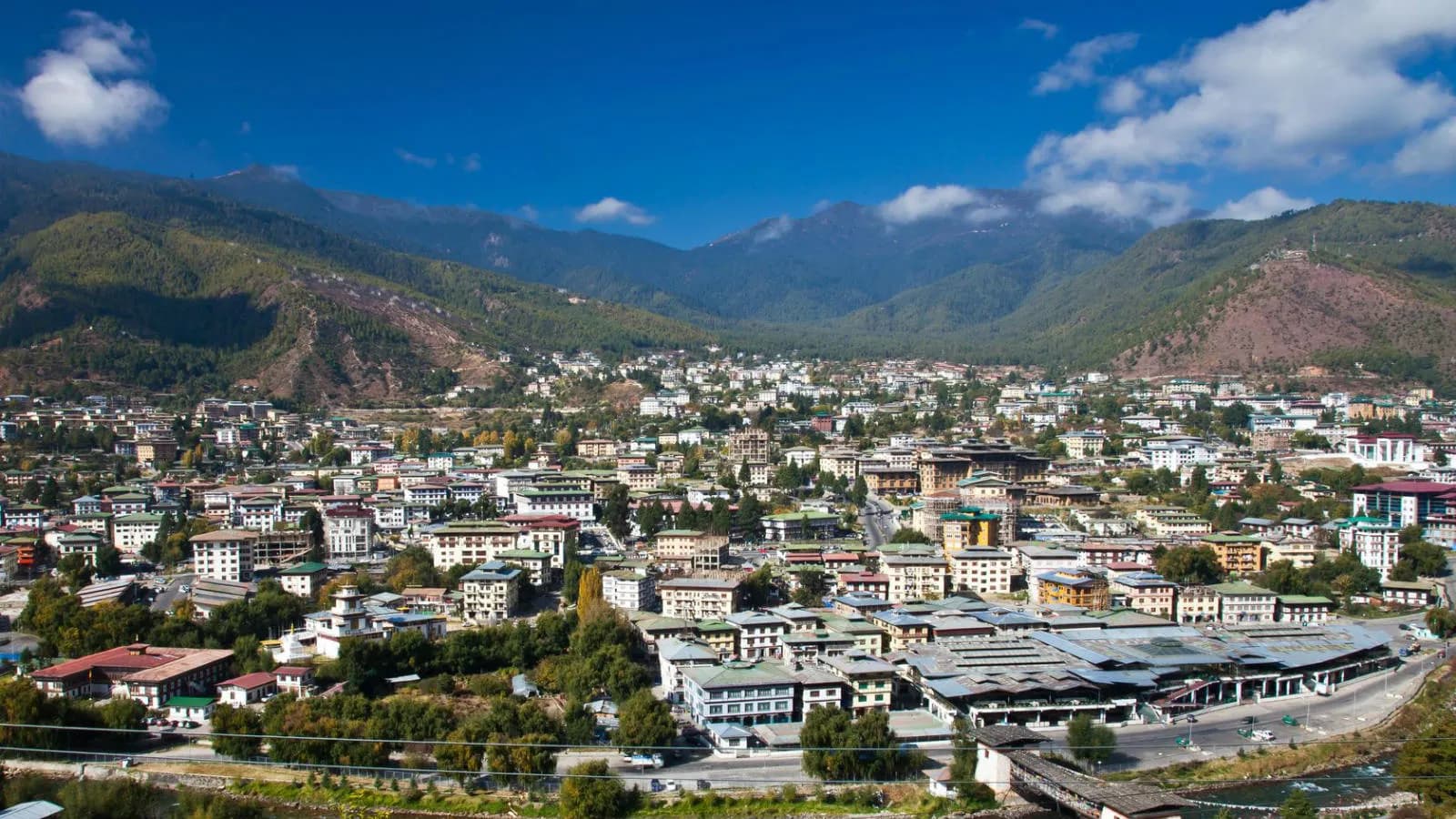
Across to Thimphu
The Pa Chhu valley to the capital; Tashichho Dzong in the late afternoon; an unhurried dinner.
DAY 04
Thimphu day
The National Memorial Chorten at the early-evening prayer hour (the Tendai parallel will be quietly remarked); the Folk Heritage Museum; the Centenary Market if it's the weekend.
DAY 05
Over Dochu La — into Punakha
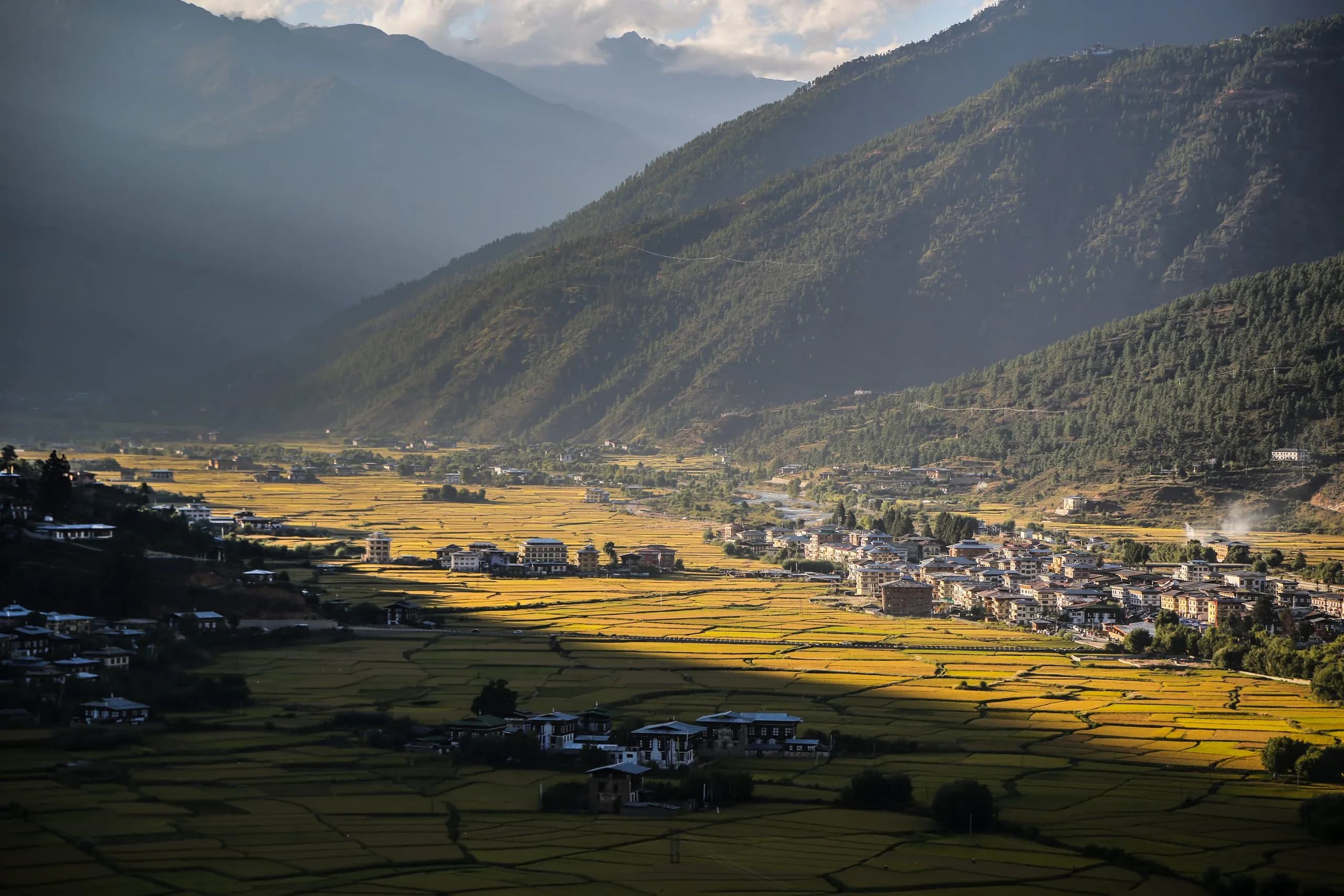
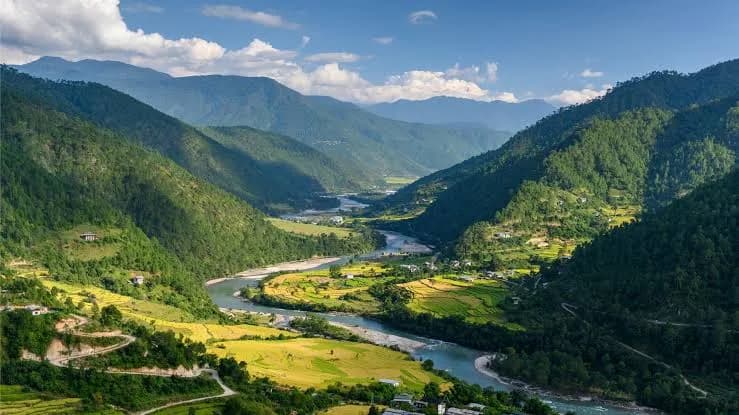
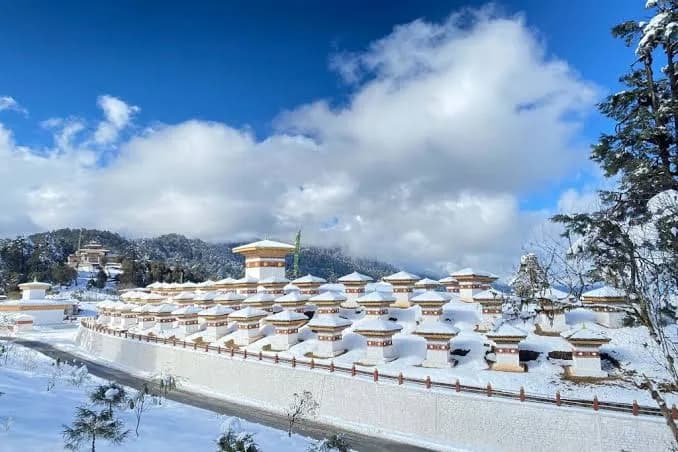
The 3,100m pass and the 108 chortens; Punakha Dzong in late-afternoon light at the river confluence.
DAY 06
Punakha day
Chimi Lhakhang in the morning (the Drukpa Kunley register — the Japanese reader often finds parallels to the Zen-eccentric tradition); the Mo Chhu walk; a long lunch.
DAY 07
Back to Paro
The drive back over the passes; an early supper; the climb briefed for the morning.
DAY 08
The Tiger's Nest — and the flight back
The dawn climb at your pace; lunch at the cafeteria; the descent; the dawn Drukair flight to BKK and the onward to KIX the following morning.
The day-by-day above is illustrative. The proposal you receive is built around your dates, your pace and your interests, not this template.
Frequently asked
- Best window for Japanese travellers specifically?
- Mid-October through late November is the principal autumn window — post-monsoon clarity, the autumn light. April–May is the spring window for cherry blossom and the Paro Tshechu. The Japanese Golden Week (late April–early May) overlaps the Bhutanese spring window cleanly. Obon (mid-August) aligns with the Bhutanese monsoon (typically advised against). Year-end New Year (early January) is the Bhutanese clear-sky window — cold but exceptionally clear; the Himalaya is visible from Dochu La on most clear-sky days.
- Is there a Japanese-fluent guide available?
- Yes — the closed network includes a small number of guides with working Japanese. The most experienced has guided Japanese principals for over a decade and holds conversational fluency suited to a working consultation about Bhutanese Buddhism, the local cuisine, or the trip pacing. We hold the Japanese-fluent matched guide on request when the dates allow; the matched guide is named in the proposal before you confirm.
- Can the trip be extended to include Phobjikha or Bumthang?
- Yes — adding Phobjikha (two nights) gives the high-glacial-valley register and the cranes if the date holds. Adding Bumthang (three to four nights) gives the densest religious circuit (Kurjey, Jambay, the Pema Lingpa sites). The 12-night version with both extensions is the comprehensive cultural-religious arc for Japanese readers who want depth over breadth.
- What is the Sustainable Development Fee?
- USD 100 per night per international visitor, set by the Royal Government of Bhutan. It funds environmental protection, free citizen healthcare, and free citizen education. Included in your transparent price breakdown across all seven nights (USD 700 total per traveller).
Journeys you might also weigh
- 01Bhutan as the trip after JapanA Bhutan journey for travellers who have substantially done Japan — Kyoto in cherry blossom, the Nakasendo, the temple stays at Mt Koya — and want the next step. Bhutan is what comes after; a quieter Asia-Buddhist register at altitude, with the cultural depth that Japan readers tend to value most.7 nights
from $15,000 - 02Bhutan trip from BerlinA Bhutan-plus-Phobjikha journey for German couples flying from Berlin — the long-haul broken with a Doha or Singapore overnight, then eight unhurried nights in the post-monsoon autumn light. Restrained pacing; cultural depth; the kind of trip the German premium-travel reader expects.8 nights
from $17,000 - 03Bhutan trip from Kuala LumpurA Bhutan journey for Malaysian couples flying from Kuala Lumpur — the short hop to Bangkok or Singapore, the morning Drukair to Paro, then seven unhurried nights in the post-monsoon clarity. The cultural-Buddhist register that Malaysian premium travellers (Chinese-Malaysian, Indian-Malaysian, and Malay families) typically find rewarding.7 nights
from $14,000
Begin when you're ready.
A few questions, or a conversation in your own words. A bespoke draft either way.

