A FAMILY WEEK, PLANNED AROUND THE CHILDREN
Bhutan family trip from Munich — Nine nights in Bhutan, for a German family flying from Munich.
A Bhutan-plus-Phobjikha family journey for German families with school-age children flying from Munich, paced for autumn half-term. Light treks for the children, the cultural depth for the parents, and a guide who reads a family room across three generations of an unfamiliar Asian context.
9 nights · Luxury tier · from USD 34,000 per family
- Nights
- 9
- From
- USD 34,000per family
- Tier
- Luxury
- Best season
- Autumn
- Suits
- Family
- Departing
- Munich
Why nine nights, and why autumn half-term
The German autumn half-term (typically late October to early November depending on the state) aligns substantially with the cleanest Bhutanese weather window — post-monsoon clarity, the harvest in, the cranes arriving at Phobjikha. For German families the long-haul + Drukair connection works without the school-week pressure that the Asian markets face. Nine nights is the right amount of time to cover Bhutan at child-appropriate pacing without rushing.
Pacing for children, depth for parents
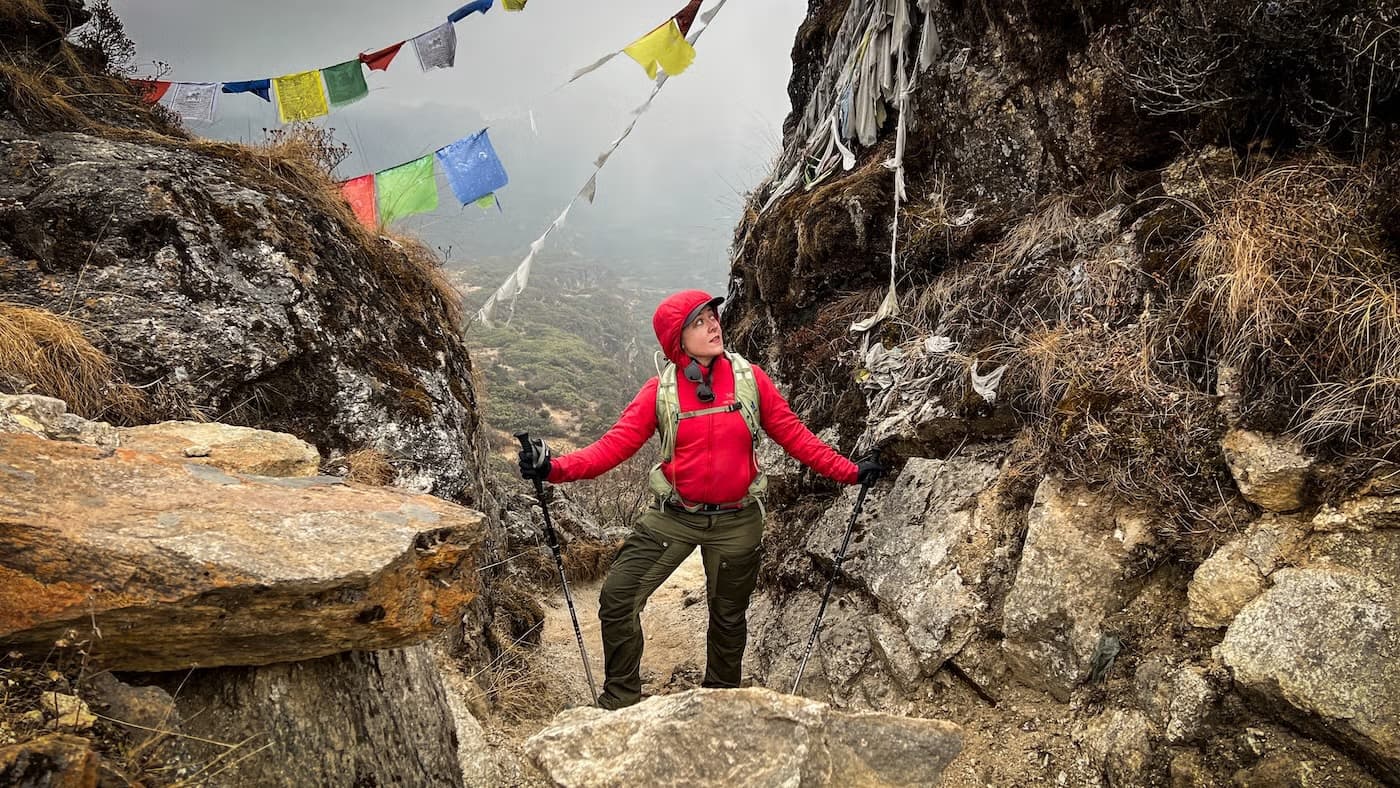
Family weeks in Bhutan reward a particular pacing. Substantial walks in the morning when the children have energy; lighter cultural sites in the afternoon when they don't; an early supper so the day ends before the meltdown. The teenagers get the Tiger's Nest climb (a genuine four-hour walk they'll remember), the riverside walks, and the suspension bridges. The parents get the cultural sites and the religious-historical depth. Everyone gets the hot stone baths in the evenings.
The children's specifics for the German context
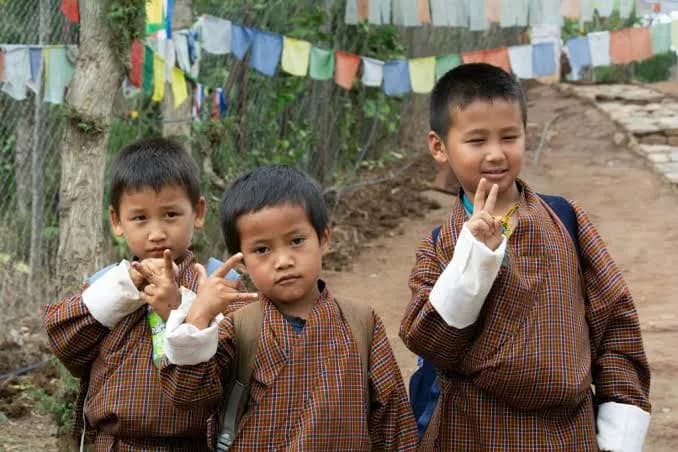
Most German children we host have prior experience of structured Asian travel — Japan, Thailand, Indonesia. Bhutan asks a slightly different. The altitude (Thimphu at 2,300m, Dochu La at 3,100m) is manageable for children seven and up; we adjust for younger children. Dietary specifics: the standard Bhutanese cuisine is chilli-heavy; the lodges accommodate German children's preferences (less spice; more bread and potato; standard breakfasts). Goggle-up for the cold autumn mornings — the lodges handle the cold gracefully but layered clothing matters.
The route
A sample shape of the week
DAY 01
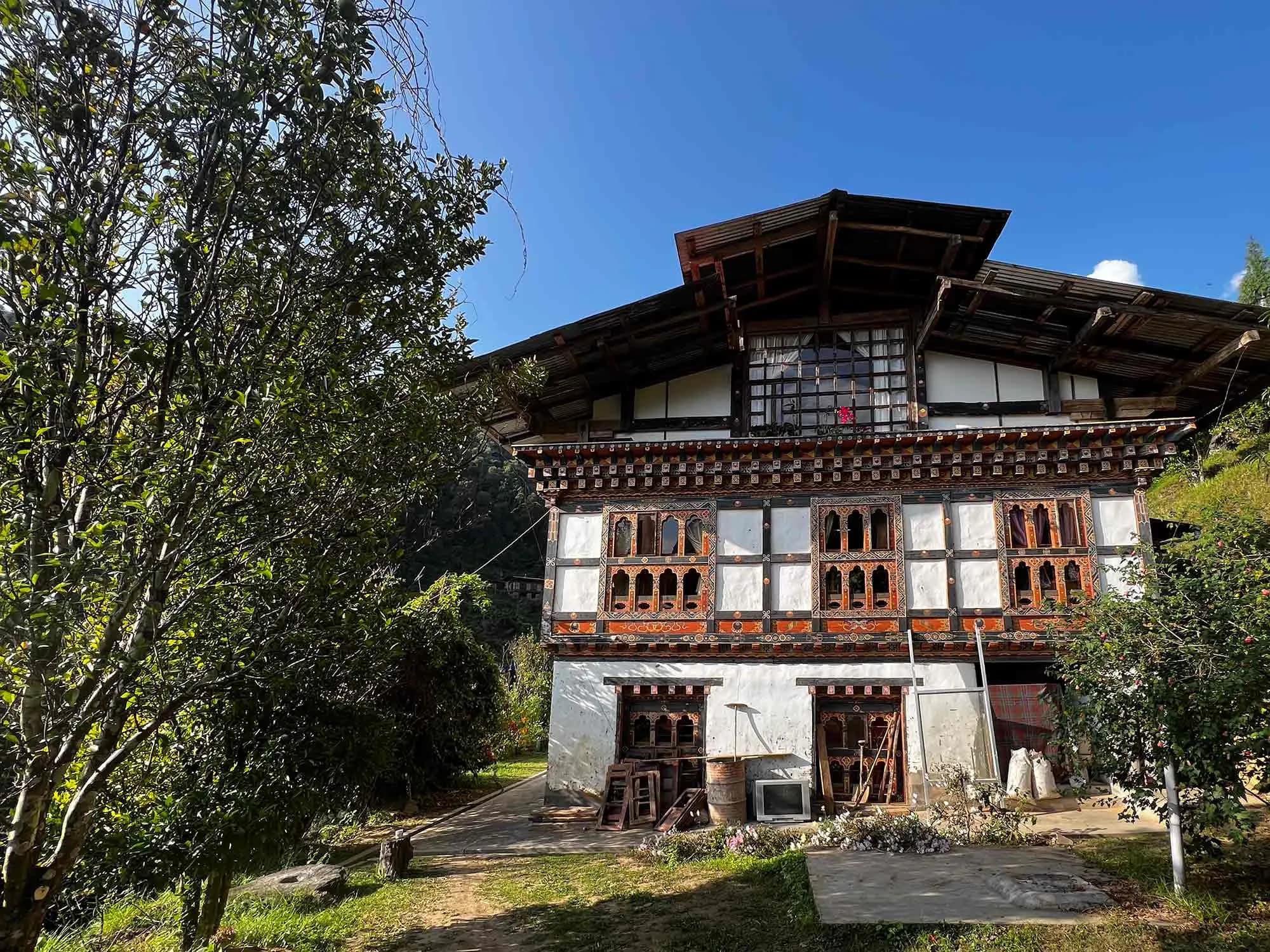
Arrival in Paro — settled by mid-afternoon
Met at PBH, twenty minutes to the lodge, a quiet first walk along the Pa Chhu and an early supper.
DAY 02
Paro day — dzong and museum
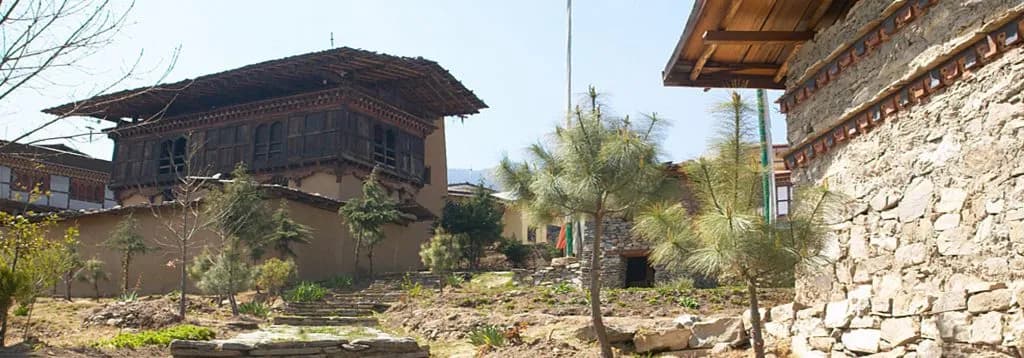
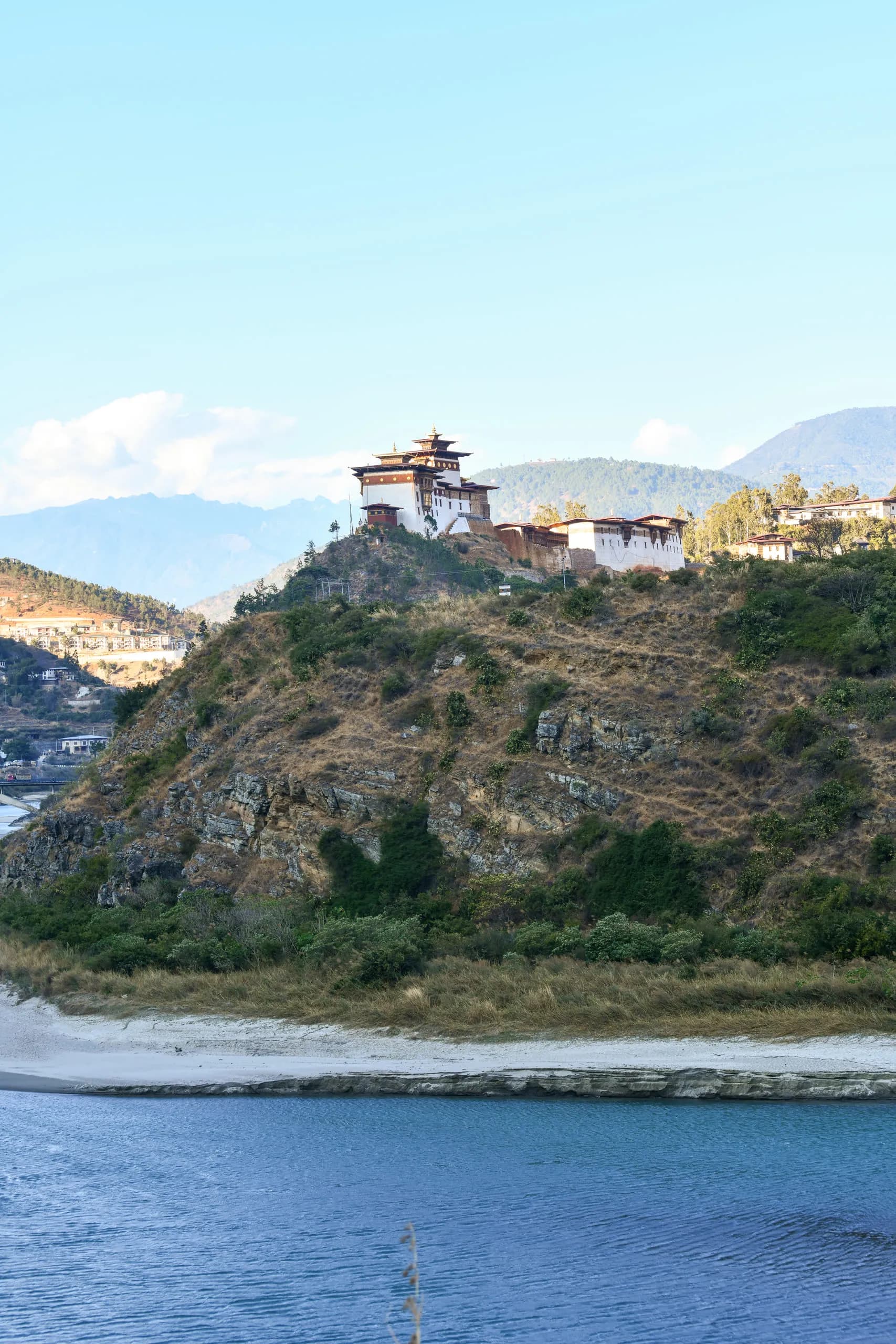
Rinpung Dzong in the morning; Ta Dzong (the National Museum) in the late morning; an afternoon at Kyichu Lhakhang.
DAY 03
Across to Thimphu — capital and takins
The Pa Chhu valley to the capital; the Motithang Takin Preserve in the late morning (the children's first encounter with the country's curious national animal); the National Memorial Chorten in the early evening.
DAY 04
Thimphu day — Buddha Dordenma + archery
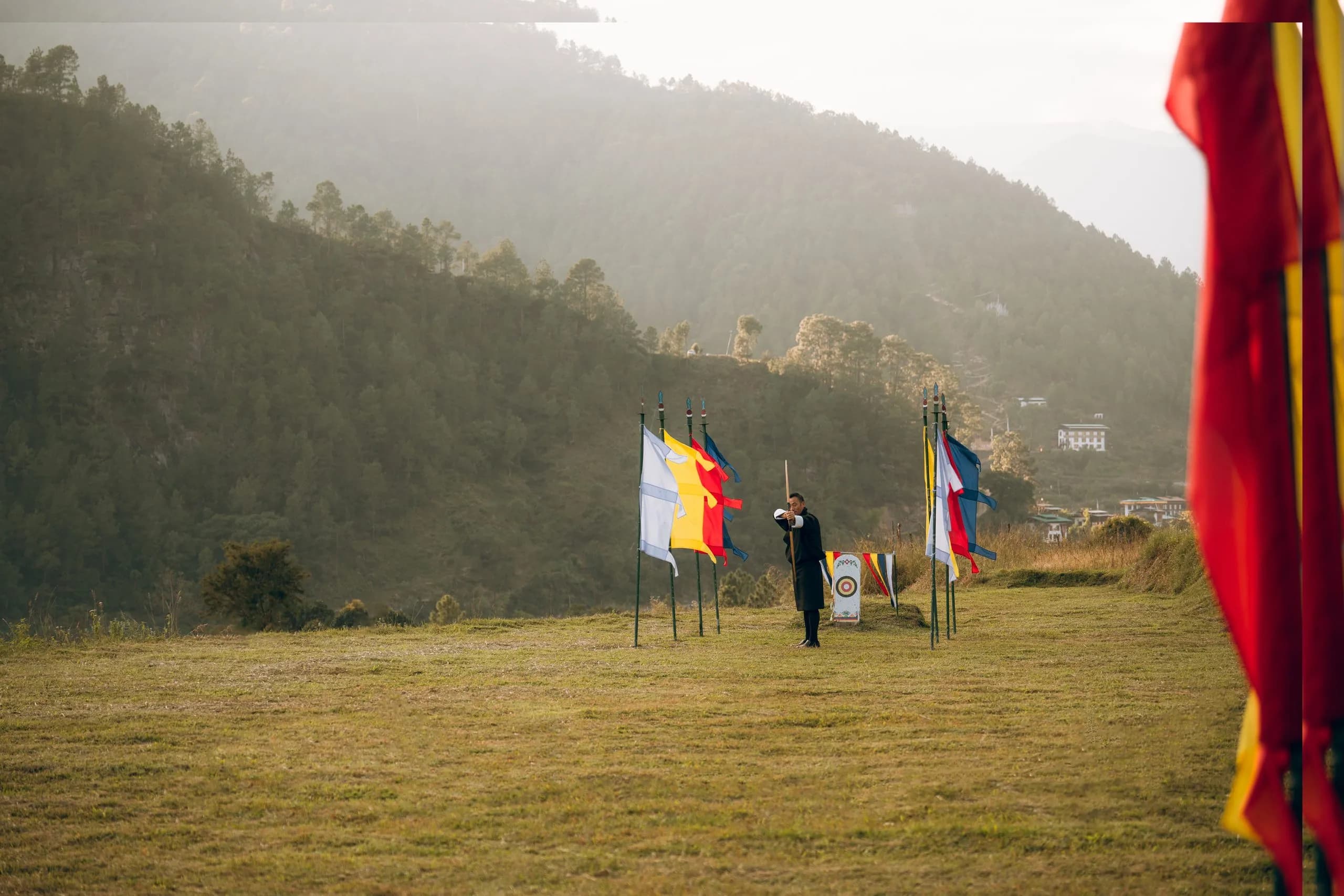
The giant Buddha statue on the southern ridge; an afternoon at the Changlimithang archery ground if a tournament is on; a Bhutanese-cuisine dinner with milder preparations for the children.
DAY 05
Over Dochu La — into Punakha
The 3,100m pass and the 108 chortens; Punakha Dzong at the river confluence; a riverside picnic.
DAY 06
Punakha day — Chimi Lhakhang and the bridge
The walk through the rice paddies to Chimi Lhakhang; the long suspension bridge across the Mo Chhu (the older children will run; the parents will photograph); a long lunch.
DAY 07
Up to Phobjikha — the high valley
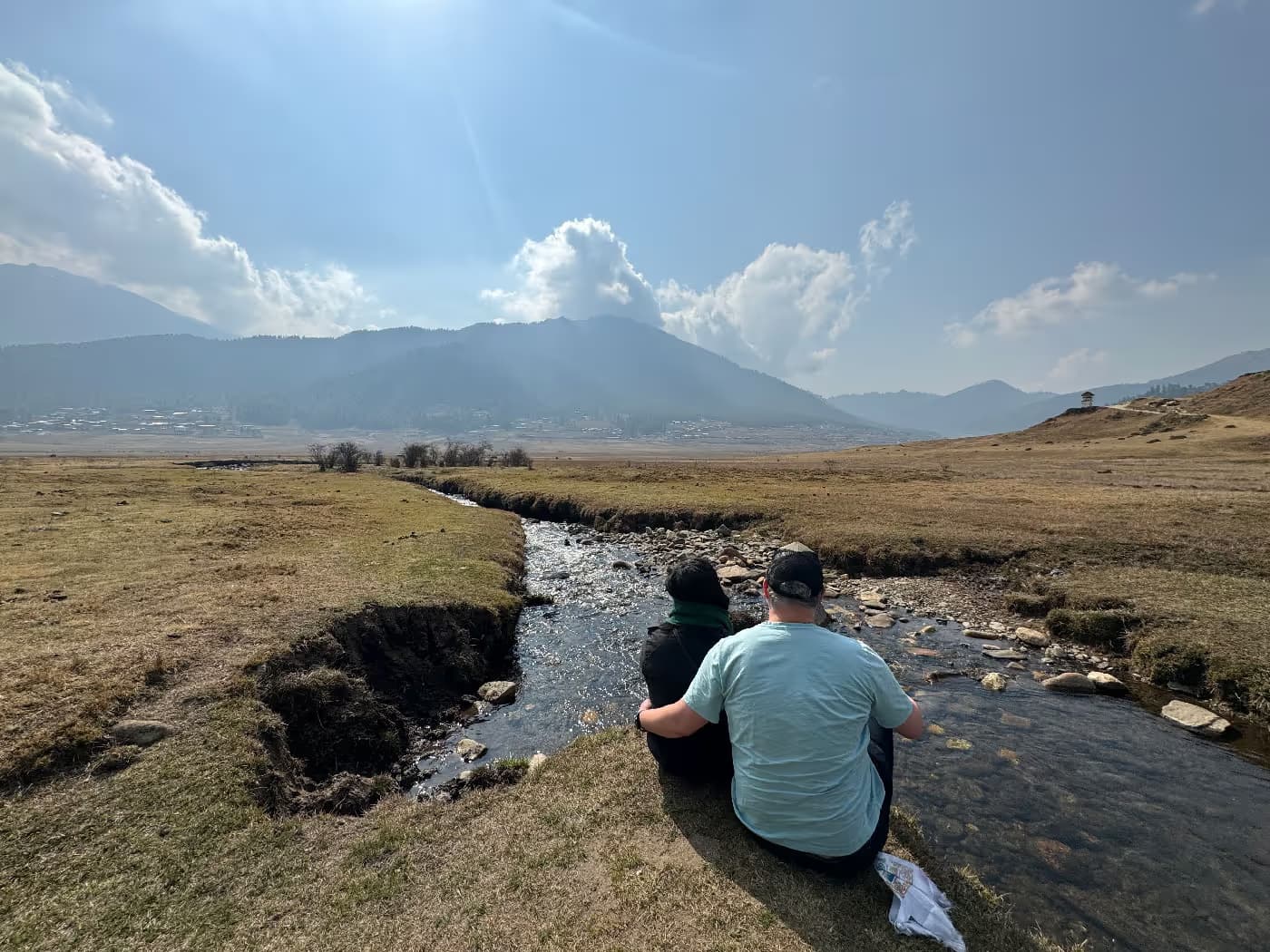
Over the Lawa La into the broad Phobjikha valley; Gangtey Monastery on the ridge; the late afternoon at the lodge with the valley silence.
DAY 08
Phobjikha day — cranes and the nature trail
The Gangtey Nature Trail in the morning (a gentle valley-floor walk, two hours); the RSPN Crane Centre; the cranes themselves in the fields below if late October.
DAY 09
Back to Paro — Tiger's Nest the next morning
The drive back over the passes; an early supper; the climb briefed for the morning.
DAY 10
The Tiger's Nest — the family climb
The dawn climb at the pace the youngest can hold; lunch at the cafeteria; the descent; the dawn flight back the following morning.
The day-by-day above is illustrative. The proposal you receive is built around your dates, your pace and your interests, not this template.
Frequently asked
- How does the Munich routing work?
- Munich to Paro is one-stop. Principal options: Lufthansa MUC–DEL with Drukair DEL–PBH the following morning (shortest overall); Lufthansa or Qatar MUC–DOH–DEL with Drukair (longer but more leisurely); Singapore Airlines MUC–SIN with Drukair SIN–PBH (the most premium hub experience). For families we usually recommend an overnight at the hub on the outbound to let the children sleep before the morning Drukair flight.
- What about food for German children?
- Every premium lodge in our network serves a substantial Western menu alongside the Bhutanese options — typically with German children's preferences accommodated (less spice, more bread and potato, standard breakfasts). The Bhutanese national dish (ema datshi — chilli-and-cheese stew) is served in a mild version on request. We brief the lodges on dietary specifics in your proposal.
- Suitable for what age range?
- Most comfortably for children seven and up. Younger children are workable — we've taken families with five-year-olds successfully — but the altitude and the walking lengths benefit from older children. Teenagers find the trip particularly rewarding; the Tiger's Nest climb becomes a defining memory.
- Is German-speaking guide available?
- Our closed network is principally English-speaking. We do not have German-speaking guides at this stage. For German families we recommend the matched guide be selected for substantial English clarity and the depth of cultural-religious conversation; the language match is universally English. Parents who want German-language interpretation for the children can usually handle this themselves at lodge dinners.
Journeys you might also weigh
- 01Bhutan family trip from LondonA Bhutan-plus-Phobjikha journey for families with school-age children flying from London, paced for the half-term window. Light treks for the teenagers, the right kind of cultural depth for the parents, and a guide who reads a family room as well as any room.9 nights
from $32,000 - 02Bhutan multigenerational family trip from SingaporeA signature-tier journey for the three-generation family — paced so that the grandparents are not exhausted, the parents are not refereeing, and the grandchildren are not bored. Two adjacent lodge suites at each stop, a guide who reads three generations of a family room, and a programme that works at altitude and at three different energy levels.10 nights
from $65,000 - 03Bhutan trip from MelbourneA Bhutan-plus-Phobjikha journey for Australian couples flying from Melbourne — the long-haul broken with a Singapore overnight, then eight unhurried nights in the post-monsoon clarity. The pacing that Australian premium-travel readers (often with substantial Asian-travel exposure) tend to value most.8 nights
from $19,000
Begin when you're ready.
A few questions, or a conversation in your own words. A bespoke draft either way.

