FOR THE SEOUL TRAVELLER
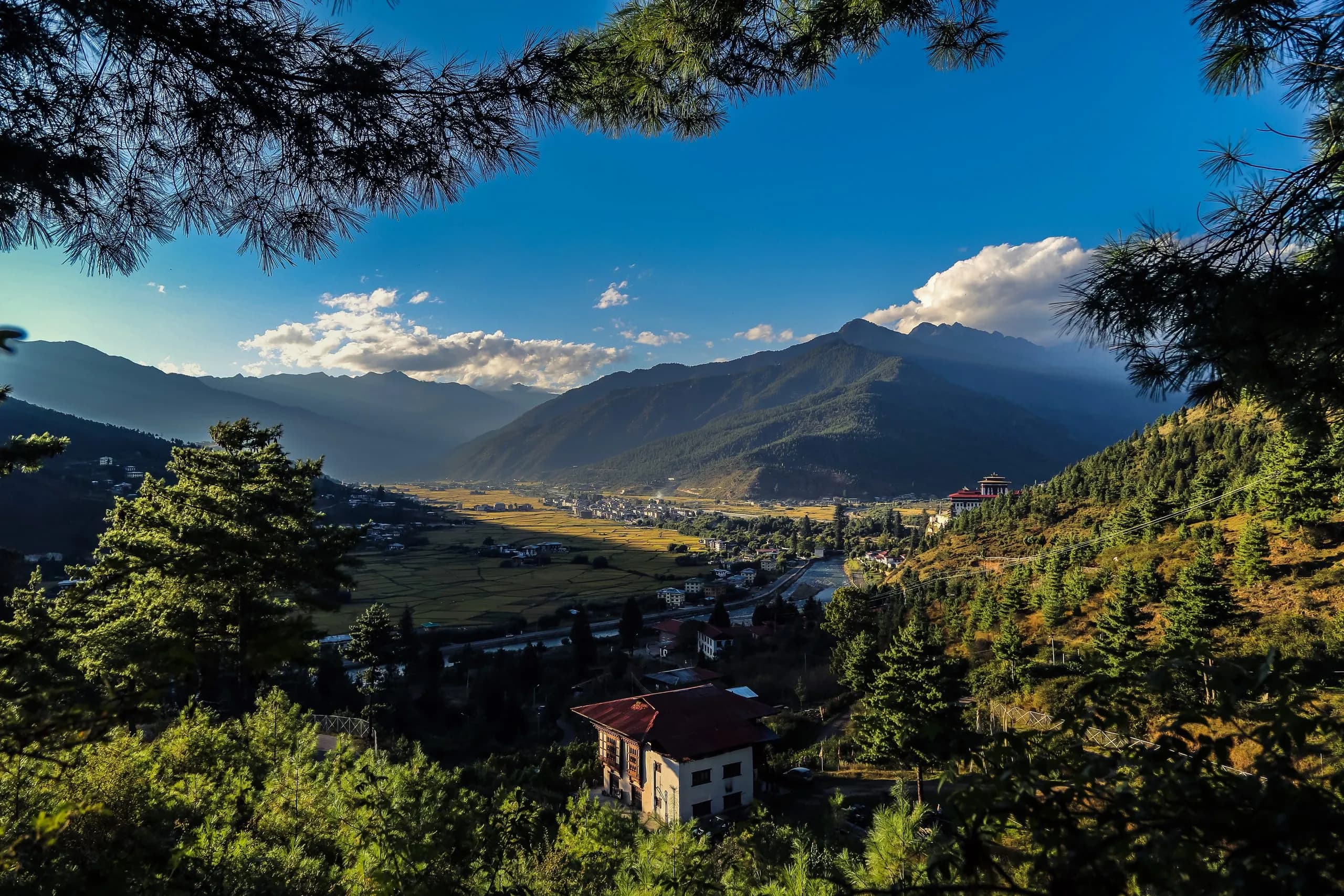
Bhutan, in autumn. From Seoul.
A private seven-night journey for a couple flying out of Seoul — Paro, Thimphu, Punakha, and the climb to Taktsang — routed by way of Bangkok, Singapore or Kathmandu, and paced so the days are long rather than full. The Buddhist heart of the country and the clear October light are an easy thing to want from Seoul.
7 nights · Luxury tier · from USD 13,000 per couple
- Nights
- 7
- From
- USD 13,000per couple
- Tier
- Luxury
- Best season
- Autumn
- Suits
- Couple
- Departing
- Seoul
Why this country, and why now
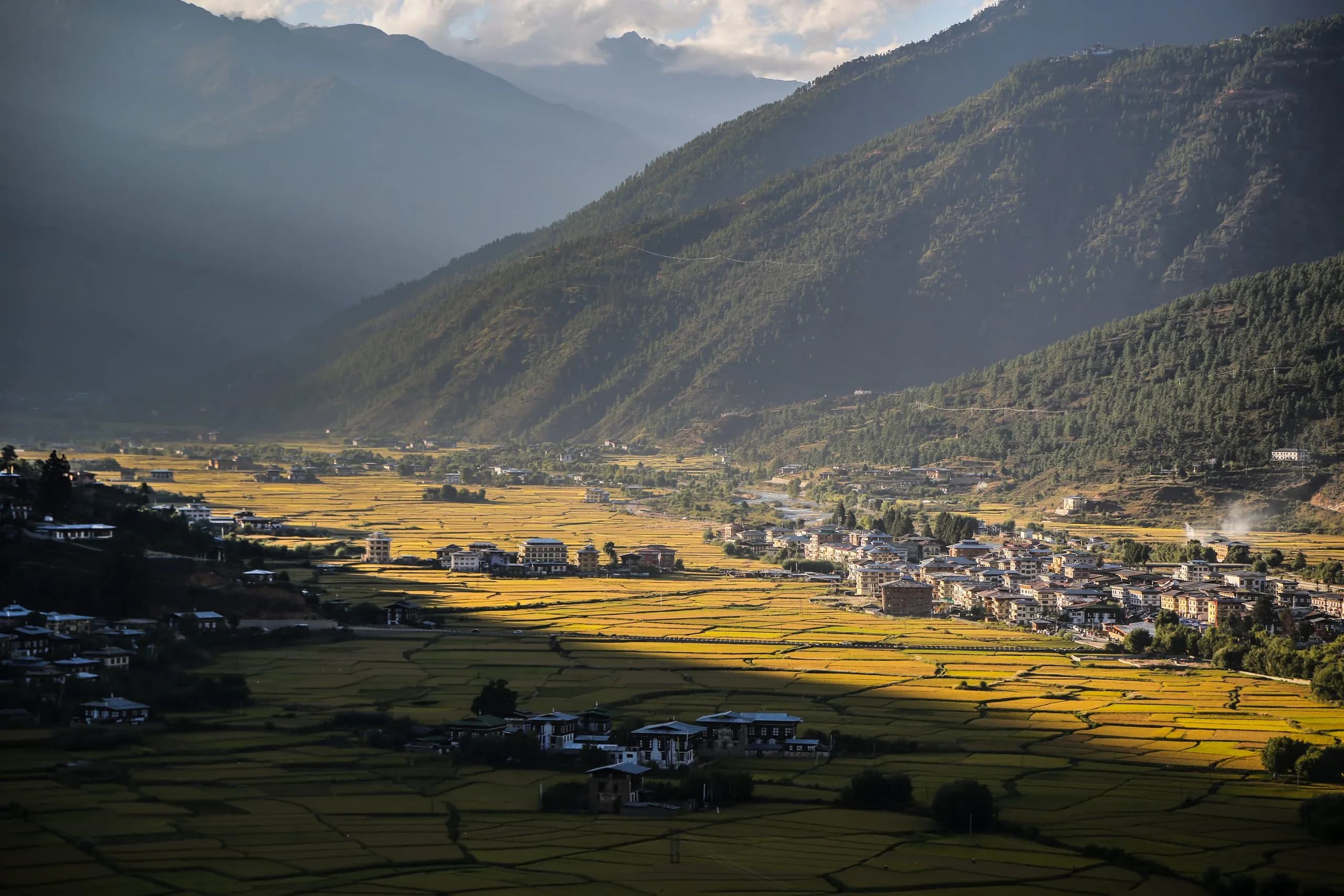
Seoul travellers who come to us tend to arrive already at ease with a Buddhist register — the temple morning, the quiet hall, the merit of a slow circumambulation are not foreign things. Bhutan offers that in a Himalayan key: Mahayana in its Vajrayana form, lived rather than preserved. We plan three valleys across seven nights — Paro, Thimphu, Punakha, and back to Paro for Taktsang — and hold the autumn for it, when the rice is gold below Punakha and the eastern range stands clear from Dochu La. The country does the work; we simply arrange the arriving.
What the week tends to look like
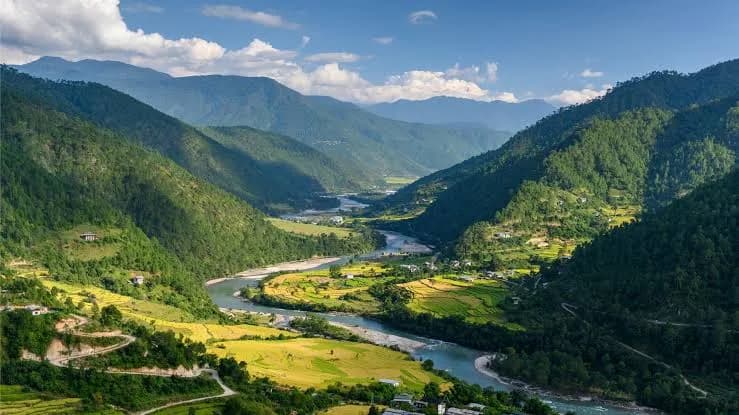
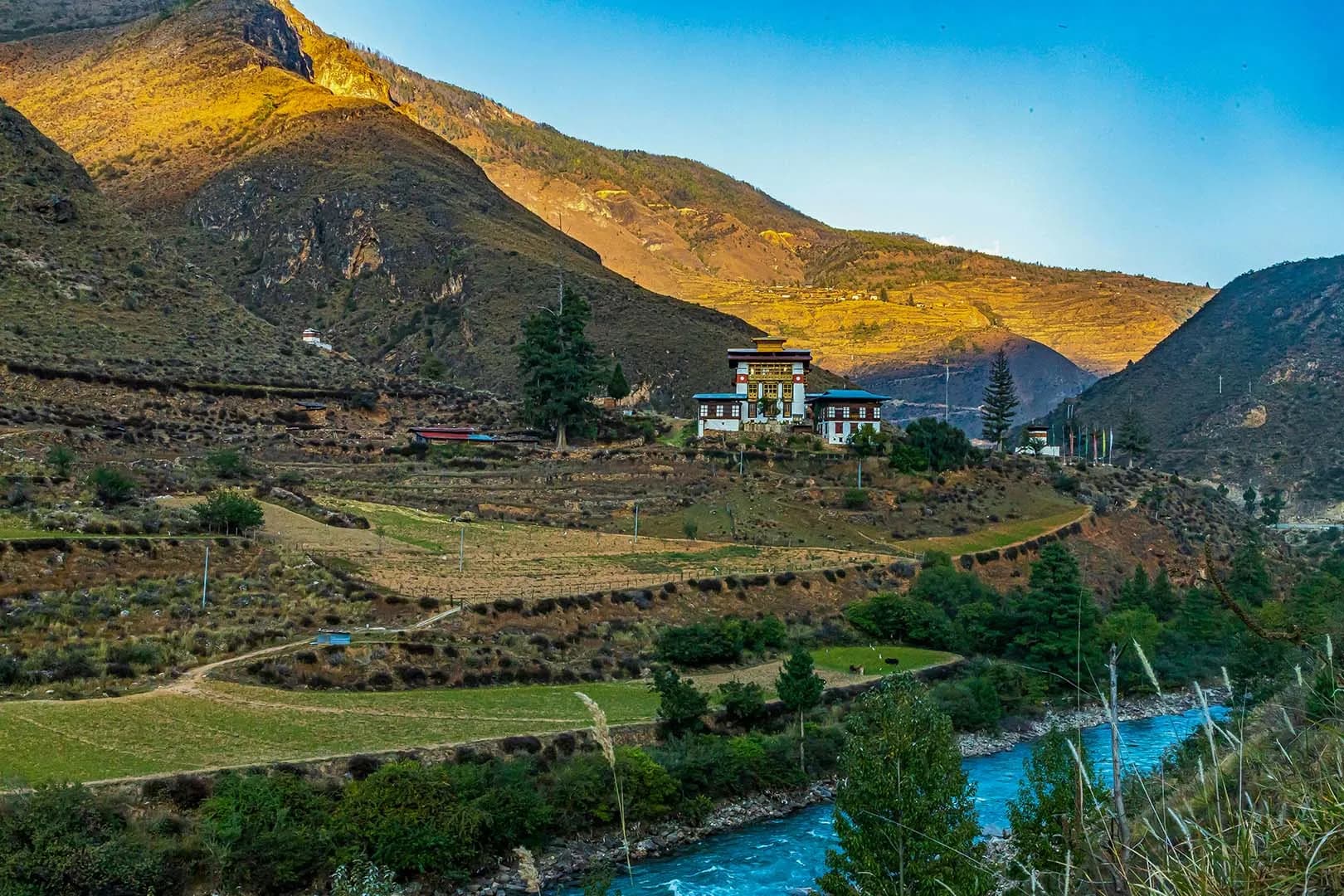
Two nights in Paro for the arrival and the temples; two in Thimphu for the capital taken at a walking pace; two over Dochu La in Punakha, at the confluence of the Mo and Pho Chhu; a last night back in Paro before the climb to the Tiger's Nest and the morning flight out. Paro to Thimphu is 54 km, an hour and a quarter; Thimphu to Punakha is 75 km and about three hours over the pass at 3,100 metres. We move these by an afternoon either way to suit how you actually travel — and if you would rather drop a day's driving for a day at the lodge, we say so plainly in the proposal.
Who you'll travel with
One Bhutanese guide for the full week, matched from a small and carefully kept network — chosen for pace, for the way they read a room, and for the kind of conversation you would find quietly worth the trip on the last evening. Most of our guides work in English; for travellers who would prefer the comfort of Korean, we will say honestly whether we can match for it on your dates rather than promise what we cannot. The guide is named in your proposal before you confirm, and we change the match if it does not feel right.
The route
A sample shape of the week
DAY 01
Arrival in Paro — an unhurried first evening
Met in the arrivals hall; twenty minutes to the lodge; a hot stone bath and an early dinner of seasonal dishes after the connecting flight.
DAY 02
Paro — Kyichu Lhakhang before the visitors
Early at one of Bhutan's oldest temples; breakfast; a long walk along the Pa Chhu; Rinpung Dzong in late-afternoon light.
DAY 03
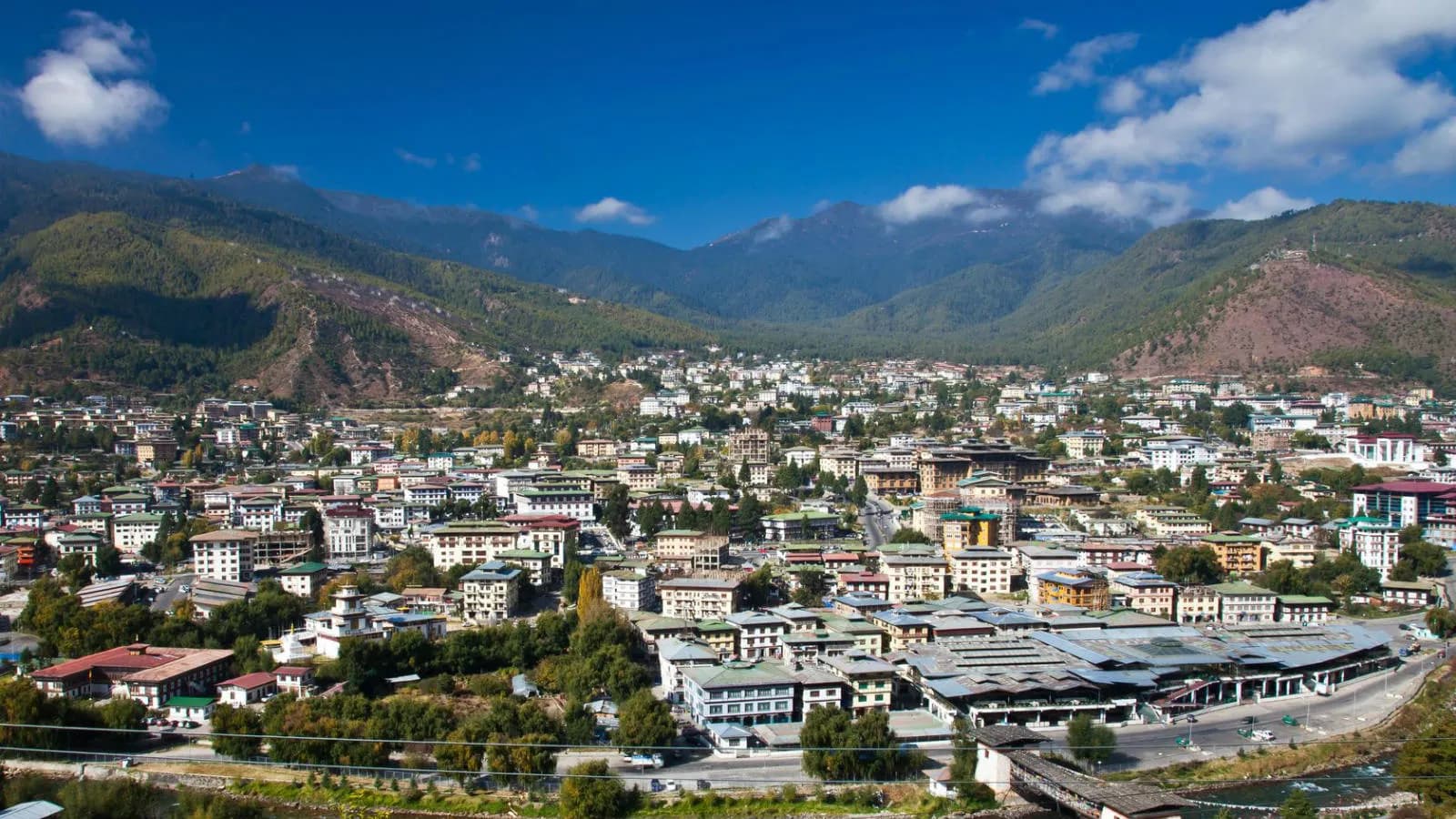
Across to Thimphu — the capital, slowly
The 54 km to the capital; the Memorial Chorten among the circling faithful in early light; the school of traditional arts at the right hour.
DAY 04
Thimphu — one walk, one workshop, one tea
The Buddha Dordenma above the valley; a short walk on Sangaygang; tea with time to talk, and nothing booked you cannot move.
DAY 05
Over Dochu La — Punakha for two nights
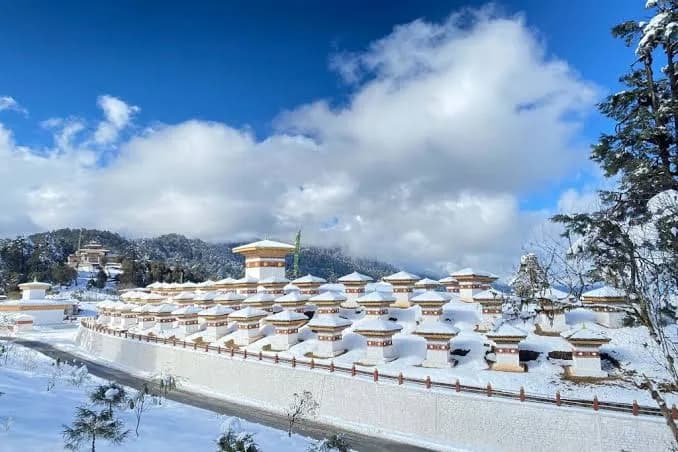
The 3,100-metre pass and its 108 chortens; the eastern Himalaya on a clear morning; Punakha Dzong at the confluence in late-afternoon light.
DAY 06
A day in Punakha — paddies and the long bridge
Lobesa's terraced rice; the walk to Chimi Lhakhang at your pace; a long riverside lunch; the suspension bridge once the wind has dropped.
DAY 07
Back to Paro — ahead of the Tiger's Nest
The drive back over the pass; the climb to Taktsang at 3,120 metres, paced by your guide; the descent, and the team writes a fortnight on.
The day-by-day above is illustrative. The proposal you receive is built around your dates, your pace and your interests, not this template.
Frequently asked
- How does the flight work from Seoul?
- There is no direct service from Seoul to Paro, and Paro is Bhutan's only airport — a visual approach flown by a small number of certified pilots, difficult rather than dangerous. From Incheon you connect through an Asian hub — Bangkok, Singapore or Kathmandu — and take the final leg into Paro on Drukair (KB) or Bhutan Airlines (B3). Bangkok is usually the most flexible, with the most frequent onward rotations; Kathmandu suits a Himalayan pairing. We hold a seat-block on the relevant Paro leg for confirmed bookings and ticket it on your behalf at the prevailing rate; the Incheon-to-hub flight you book, and we advise on the cleanest connection.
- Why not route through Delhi or Kolkata?
- For a Korean or other non-Indian passport, an Indian hub carries transit-visa friction: India can require a transit visa on certain itineraries even when you remain airside, and the e-Tourist Visa process is online but not immediate. We route non-Indian passports through Bangkok, Singapore or Kathmandu instead, where entry is straightforward, and keep the connection clean.
- Do you arrange the Bhutan visa?
- Yes. The Bhutan visa is arranged by the licensed operator as a matter of course, against your passport details once the journey is confirmed — there is nothing to queue for on arrival. The Sustainable Development Fee, USD 100 per night for each international adult, is set by the Royal Government of Bhutan and is shown openly in your price breakdown; it funds free health and education for Bhutanese citizens.
- Is October the right month, coming from Seoul?
- It is the photographer's autumn — the clearest skies of the year, the rice gold in the Punakha valleys, and the festival season at its height. The light from Dochu La over the eastern range is at its best in these weeks. April is the other window, for the rhododendron and the longer evenings. We would steer you away from the deep monsoon of July and August unless you specifically want the green valleys and the quiet that comes with them.
- Is the Tiger's Nest the hardest part of the week?
- It is the steepest. Taktsang sits at 3,120 metres and the walk up is genuinely so, taken in switchbacks at a pace your guide sets and with a pause at the cafeteria partway. Most travellers want it and remember it; some would rather a quiet final day in Paro instead. Either is a good week — we plan to whichever you choose.
- Could we add Phobjikha for a longer trip?
- For nine nights and beyond, yes — Phobjikha is a glacial valley about three hours east of Punakha, among the quietest places to spend a night anywhere in the country, and the black-necked cranes are there from late October into February. It rewards an unhurried two nights rather than a passing one, and we would shape the week around it.
Journeys you might also weigh
- 01Bhutan trip from MelbourneA Bhutan-plus-Phobjikha journey for Australian couples flying from Melbourne — the long-haul broken with a Singapore overnight, then eight unhurried nights in the post-monsoon clarity. The pacing that Australian premium-travel readers (often with substantial Asian-travel exposure) tend to value most.8 nights
from $19,000 - 02Bhutan from SydneyA private western-circuit journey for a Sydney couple — Paro, Thimphu, Punakha, and the climb to Taktsang — with one guide across the week and a pace set by the valleys rather than the calendar. The flight out, by way of Singapore or Bangkok, is where the slowing-down begins.8 nights
from $16,000 - 03Bhutan from TaipeiA private seven-night journey for a couple flying out of Taipei — Paro, Thimphu, Punakha, and the climb to the Tiger's Nest — routed through Bangkok, Singapore, or Hong Kong, and paced for the things a Vajrayana traveller actually comes for: the quiet hour in a lhakhang, the prayer flags on a high pass, the conversation that lasts the whole drive.7 nights
from $12,000
Begin when you're ready.
A few questions, or a conversation in your own words. A bespoke draft either way.

