A SINGAPORE CHINESE NEW YEAR TRIP
Bhutan from Singapore for Chinese New Year — six nights at the Punakha Drubchen window, the quieter sister to the principal tshechus.
Chinese New Year in Singapore typically gives a 4-day public holiday window, often extending to 8-12 days with school and bridge days. **The Bhutanese calendar puts the Punakha Drubchen + Tshechu pair in late February or early March most years** — and the cultural-and-religious depth of the Drubchen, with substantially less demand pressure than the Paro and Thimphu Tshechus, makes this the considered alternative for the Singapore CNY visitor. The Drukair Sun-Sat cycle fits cleanly; the 6-night trip puts you in Punakha for the Drubchen's principal days.
6 nights · Premium tier · from USD 5,200 per traveller
- Nights
- 6
- From
- USD 5,200per traveller
- Tier
- Premium
- Best season
- Clear sky bhutan
- Suits
- Couple
- Departing
- Singapore
Why the Punakha Drubchen for Chinese New Year
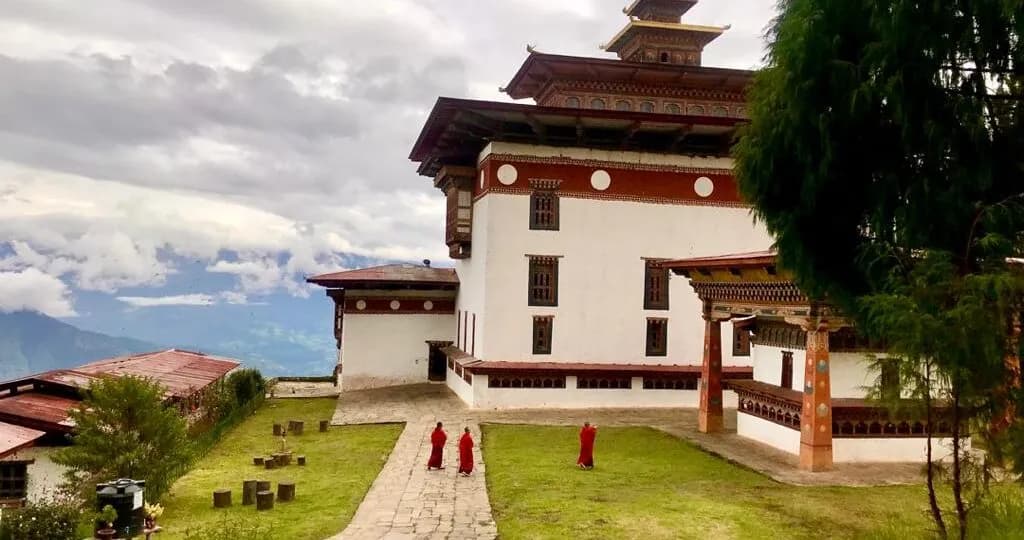
The Punakha Drubchen and Tshechu run as a six-day sequence at Punakha Dzong (5th–10th day of the 1st Bhutanese lunar month, typically late February or early March). The Drubchen opens with the **Serda procession** — a re-enactment of the 17th-century victory over the invading Tibetan army, the only historical military re-enactment in the Bhutanese festival calendar — and continues through the principal chams. The Tshechu closes with the pre-dawn unfurling of the thongdrel against the dzong's white walls at the confluence of the Pho Chhu and Mo Chhu. **The Punakha festival pair carries similar cultural weight to the Paro and Thimphu Tshechus but with substantially less demand pressure** — international visitor counts are perhaps a third, lodge availability is meaningfully better, and the atmosphere is closer to the Bhutanese-family register than the international-festival. **For the Singapore HNI segment** — particularly couples on anniversary trips or honeymoons aligning with CNY — this is increasingly our recommended cultural-festival alignment.
The Singapore Sun-Sat fit
Drukair operates the SIN-PBH route across the CNY window; the **6-night Sun-Sat cycle puts the visitor in Punakha for the Drubchen's principal days** with Bhutan framing around it. The festival typically falls 5-10 days into the lunar new year, which aligns well with Singapore's CNY school break extending into late February or early March. **Bookings 4-6 months in advance secure the better lodge configurations**; the Punakha lodges (Amankora Punakha, COMO Uma Punakha, Six Senses Punakha, Dhensa Boutique Resort, Zhiwa Ling Heritage if extending the Paro stay) fill faster around the Drubchen than other February dates.
What the trip gives the Singapore HNI couple
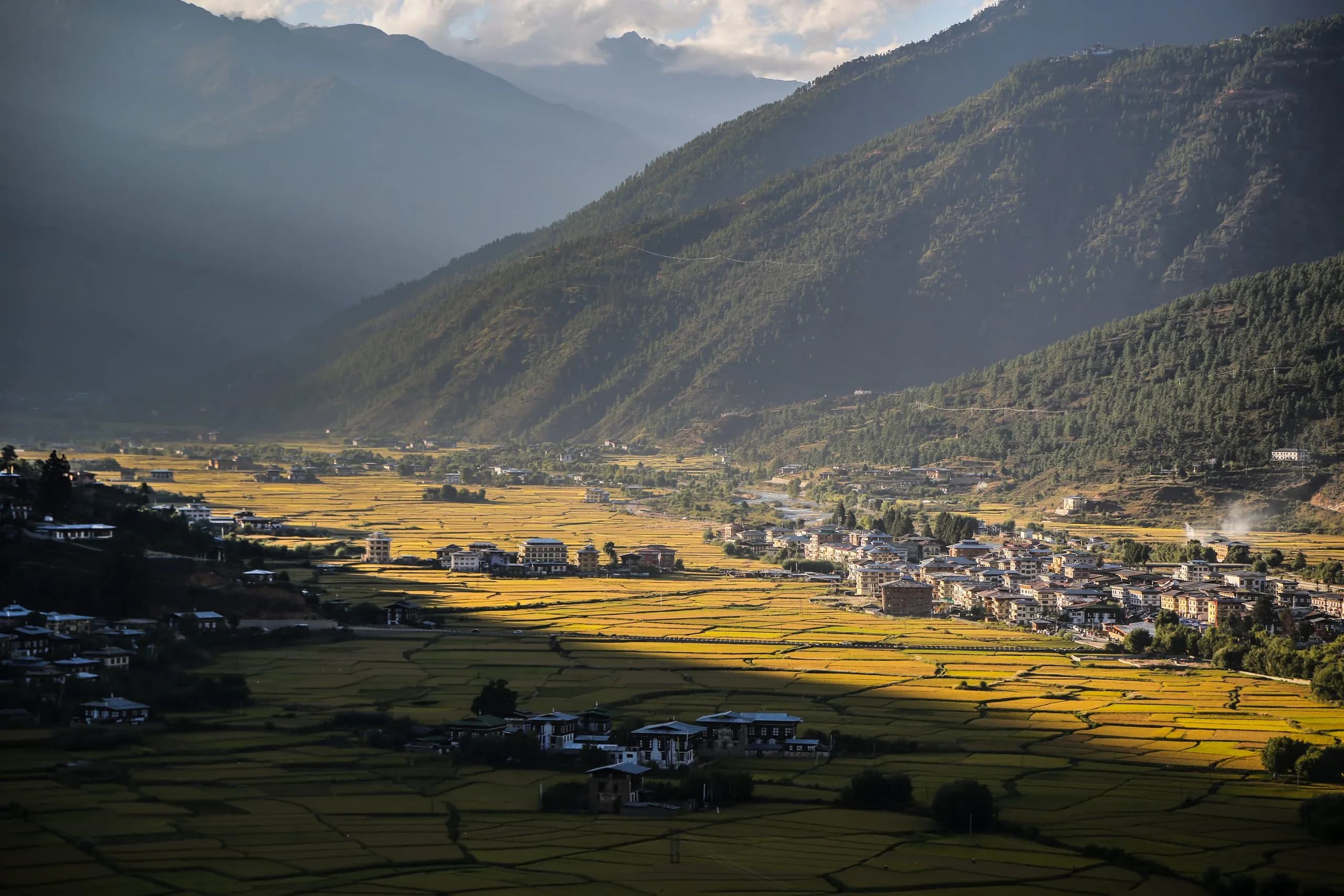
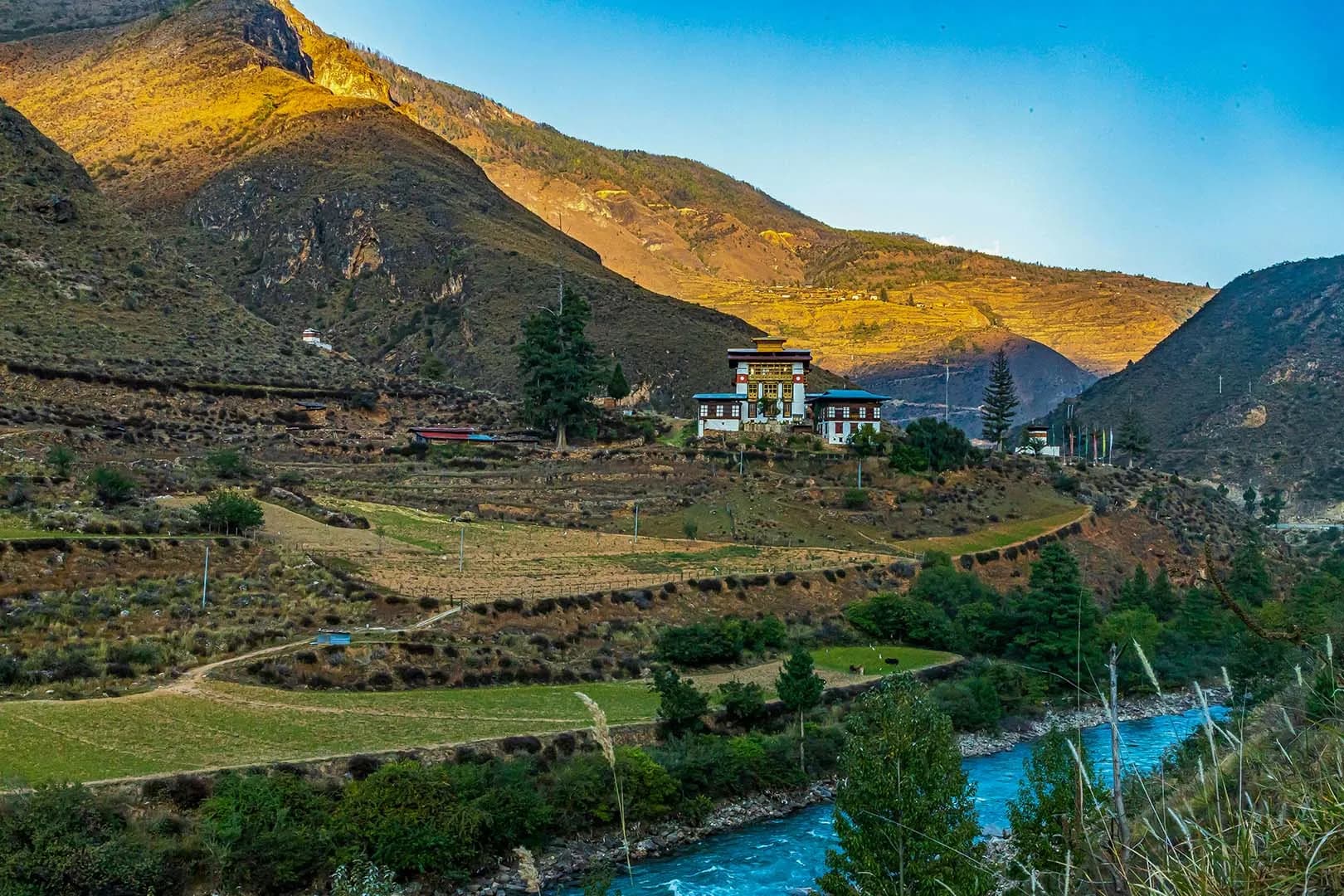
**The cultural depth of a substantial Bhutanese tshechu** without the festival-week pressure that affects Paro and Thimphu. **The Punakha Dzong at its photographic peak** — the late-February light, the river-confluence reflection, the jacaranda trees beginning to flower if the year is forward. **The contrast between Paro and Thimphu (cold deep-winter) and Punakha (warm at 1,200m)** — different sensory registers within the same 6-night trip. **The Bhutanese cultural-and-religious context at its richest** — a Drubchen attended by the Royal Family and senior Bhutanese government figures, the Serda procession in solemn earnest, the thongdrel viewing at dawn. **The considered alternative to the Maldives-or-Bali CNY trip** that the Singapore HNI segment increasingly seeks.
The route
A sample shape of the week
DAY 01
Sunday — Singapore to Paro, arrival
Drukair from Changi to Paro — effectively a direct flight with a brief 30-minute Guwahati stop where passengers continuing to Paro remain onboard, approximately 6 hours total elapsed. Arriving Paro in the late afternoon. Transfer to the Paro lodge for acclimatisation. Gentle valley walk in the early evening; dinner at the lodge.
DAY 02
Monday — Paro cultural circuit and Tiger's Nest preparation
Morning visit to Rinpung Dzong and the Ta Dzong / National Museum. Walk to Kyichu Lhakhang in the afternoon. Early dinner and early sleep for the Tiger's Nest hike the following morning.
DAY 03
Tuesday — Tiger's Nest hike, Paro lodge evening
Pre-dawn departure from the lodge for the Paro Taktsang trailhead. The 5-6 hour round trip including the monastery visit. Late afternoon return to the lodge; hot stone bath in the evening; quiet dinner.
DAY 04
Wednesday — Paro to Punakha via Dochu La, Drubchen first day
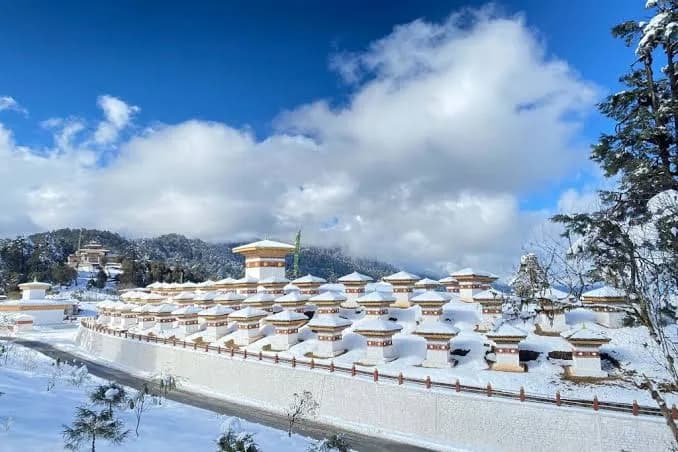
Morning drive over the Dochu La pass to Punakha (3 hours including stops). Afternoon arrival at Punakha Dzong for the Drubchen first day — the Serda procession if the lunar date aligns. Overnight at the Punakha lodge.
DAY 05
Thursday — Drubchen and Tshechu principal day
The festival's principal chams in the dzong's main courtyard; the Pholay Molay, the Drametse Ngacham, the Guru Tshengye sequence. Lunch in the dzong courtyard with the Bhutanese families (the festival picnic-and-community register). Afternoon walk to Chimi Lhakhang or riverside in the lower valley.
DAY 06
Friday — pre-dawn thongdrel, return to Paro
Pre-dawn departure for the Punakha Dzong gates by 4 am for the thongdrel unfurling at first light. The 30-40 minute viewing window before the thongdrel is rolled back. Lodge breakfast, then drive back to Paro via Dochu La. Overnight at the Paro lodge for the Saturday morning Drukair departure to Singapore.
The day-by-day above is illustrative. The proposal you receive is built around your dates, your pace and your interests, not this template.
Frequently asked
- Will my Chinese New Year dates align with the Punakha Drubchen?
- Most years, yes — the Punakha Drubchen falls on the 5th–10th day of the 1st Bhutanese lunar month, which typically lands within 2 weeks of Chinese New Year. Some years the alignment is precise (the Drubchen falls within the Singapore CNY school holiday); other years the Drubchen comes 1-2 weeks after CNY (still workable for visitors with bridge-day flexibility). Our concierge confirms the exact lunar dates against the Singapore CNY week for any specific year's planning.
- How does Punakha Drubchen compare to Paro or Thimphu Tshechu?
- Similar cultural weight, substantially less demand pressure. The Punakha festival pair includes the Serda procession (the historical military re-enactment, unique among Bhutanese festivals) and the principal chams cycle, with the pre-dawn thongdrel unfurling at the most-beautiful dzong in the country. International visitor counts are perhaps a third of the Paro or Thimphu peaks; lodge availability is meaningfully better; the atmosphere is closer to the Bhutanese family. For visitors choosing between the three principal festivals, Punakha is increasingly the considered alternative.
- Will it be cold?
- Cold in Paro and Thimphu (deep-winter mornings -2 to -5°C, days 10-16°C); warmer in Punakha (15-22°C daytime). The Punakha river-valley tradition is the warm pivot of the trip; the cold-clear Paro and Thimphu register frames it. Pack warm layers for Paro and Thimphu; lighter clothing for the Punakha days.
- Is this suitable for an anniversary couple?
- Particularly so. The CNY-Drubchen alignment gives the Singapore HNI couple a cultural-religious anchor for the trip, the Punakha Dzong setting carries the considered tradition that an anniversary moment rewards, and the festival's Bhutanese-family register places the visitor inside a meaningful cultural moment rather than at a distant viewpoint. We arrange a private blessing ceremony at one of the Punakha lhakhangs with the couple if of interest.
- How early should I book?
- 4-6 months in advance is the standard; 6 months for the Drubchen-week dates specifically. The Punakha lodges fill faster around the Drubchen than other February dates because of the festival demand, even with the lower visitor count than Paro Tshechu. For CNY 2027 (mid-February), plan on August-September 2026 inquiries.
Journeys you might also weigh
- 01Bhutan from Singapore for the year-endThe Singapore year-end school holiday lands precisely in Bhutan's most-reliable panoramic window. December delivers the clearest Himalayan visibility of the year, the lowest visitor count, the warmest welcome at the premium lodges, and — if your dates work — the 17 December National Day ceremony at Changlimithang in the presence of the Royal Family. The standard Sun-Sat Drukair cycle gives a 6-night trip that opens Bhutan at a considered pace.6 nights
from $5,000 - 02Bhutan from Singapore for the June school holidaySingapore's June school holiday is the longest of the year — four full weeks. For Bhutan, **early June (the first 2 weeks) is the pre-monsoon shoulder**: rain is present but not yet sustained, the country is at its most-vivid green, the visitor count is substantially lower than the spring or autumn peaks, and lodge availability is the most flexible of any Singapore-school-holiday window. **Late June onwards we discourage** (the heart of the Indian Monsoon arrives). For Singapore families committed to the June window, the early-June trip works — with the honest framing that this is the atmospheric Bhutan experience rather than the panoramic-clarity one.6 nights
from $4,500 - 03Bhutan from Singapore for the March school holidaySingapore's March school holiday is a single week, typically mid-March — falling just before the Paro Tshechu festival pressure peaks. The pre-Tshechu shoulder catches the country in early spring: the lower-valley rhododendron beginning to bloom, the Pa Chhu still cold, the Punakha jacaranda in early flower. We position the March-school-holiday trip as a quieter spring-shoulder family experience — the cultural depth of Bhutan with substantially less lodge pressure than the festival week itself.6 nights
from $5,000
Begin when you're ready.
A few questions, or a conversation in your own words. A bespoke draft either way.

