A PHOTOGRAPHER'S WEEK
Bhutan photography journey from Beijing — Nine nights for a serious photographer flying from Beijing.
A small-group photography journey for Chinese photographers in the autumn window — clear post-monsoon skies, the principal dzongs in late-afternoon light, the cranes at Phobjikha, and one of the cleanest light tables in the Himalaya. Mandarin-friendly guide where possible; the Beijing routing via Bangkok or Hong Kong.
9 nights · Luxury tier · from USD 15,000 per traveller
- Nights
- 9
- From
- USD 15,000per traveller
- Tier
- Luxury
- Best season
- Autumn
- Suits
- Small group
- Departing
- Beijing
The Beijing routing
Beijing to Paro is one-stop via Bangkok (Air China PEK–BKK, Drukair BKK–PBH) or Hong Kong (Cathay Pacific PEK–HKG, Drukair HKG–PBH; route operational as schedules permit). We recommend Bangkok for the hub-overnight experience and the early Drukair morning to Paro. Your booking on your terms; we recommend, brief the property, and coordinate timing.
Why autumn for the Beijing photographer specifically
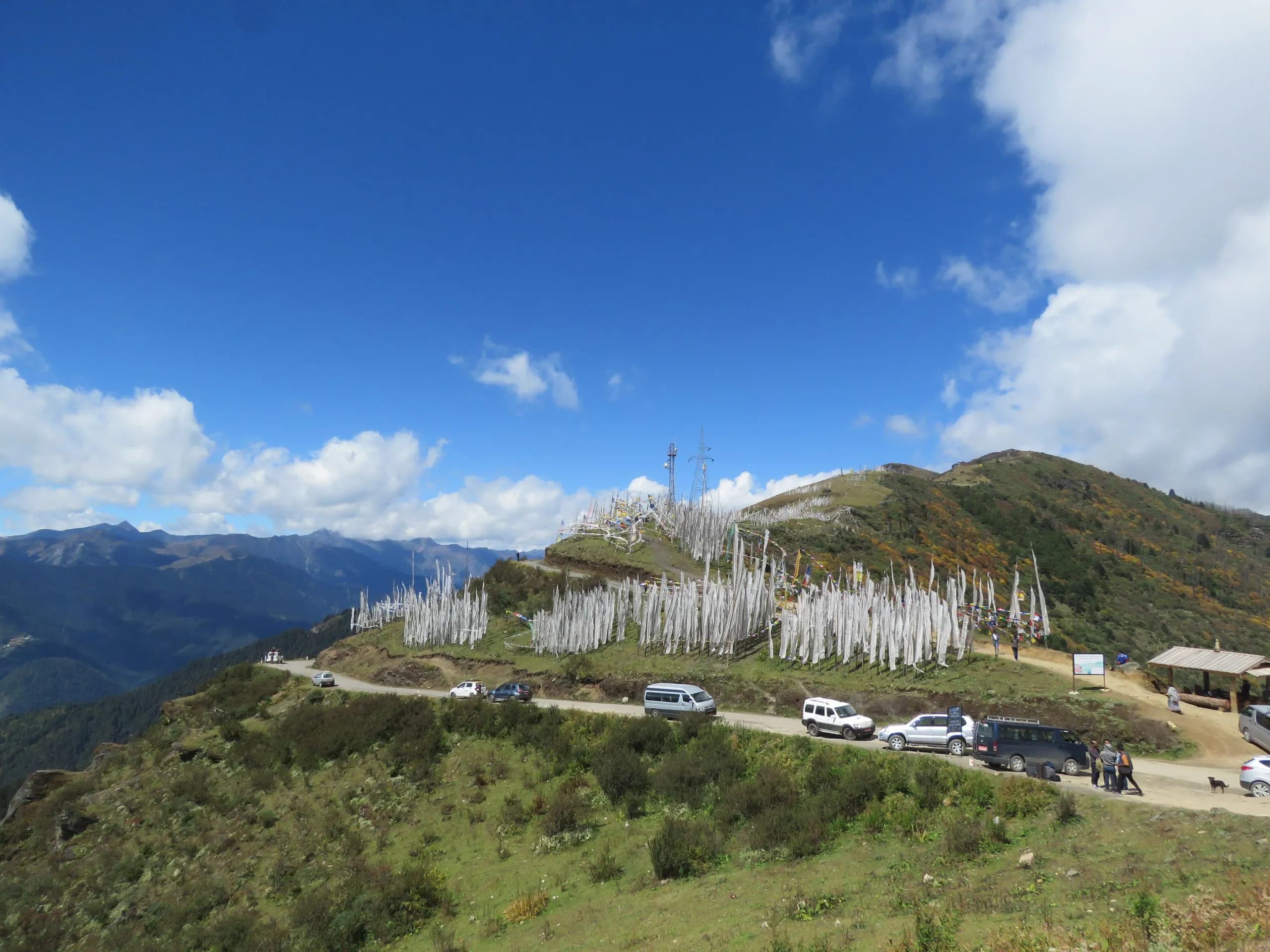
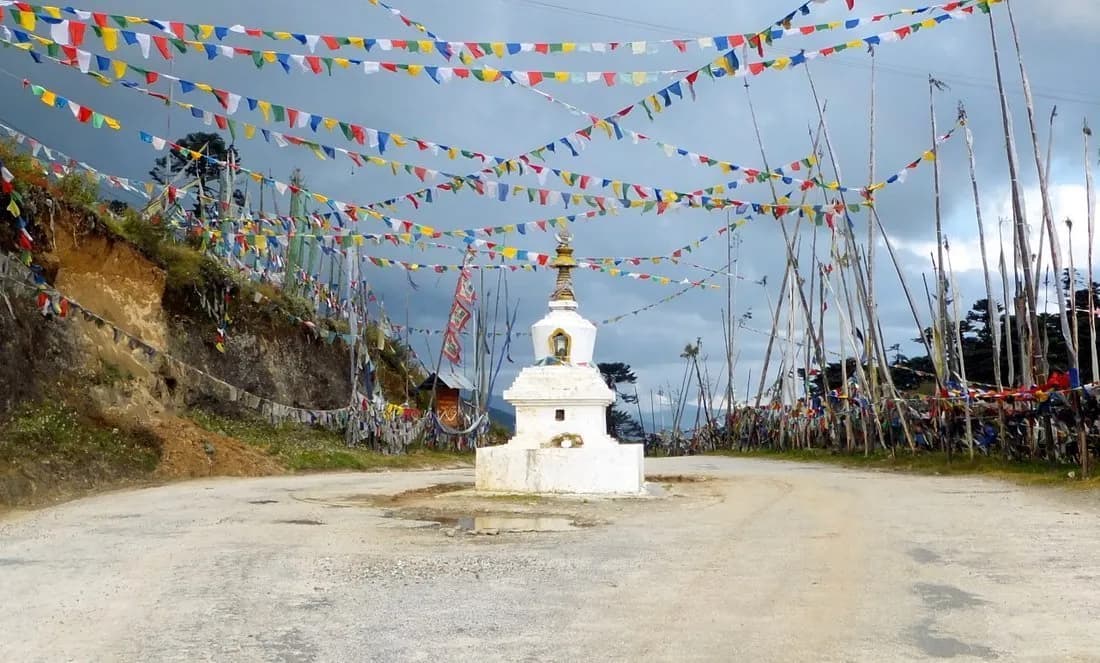
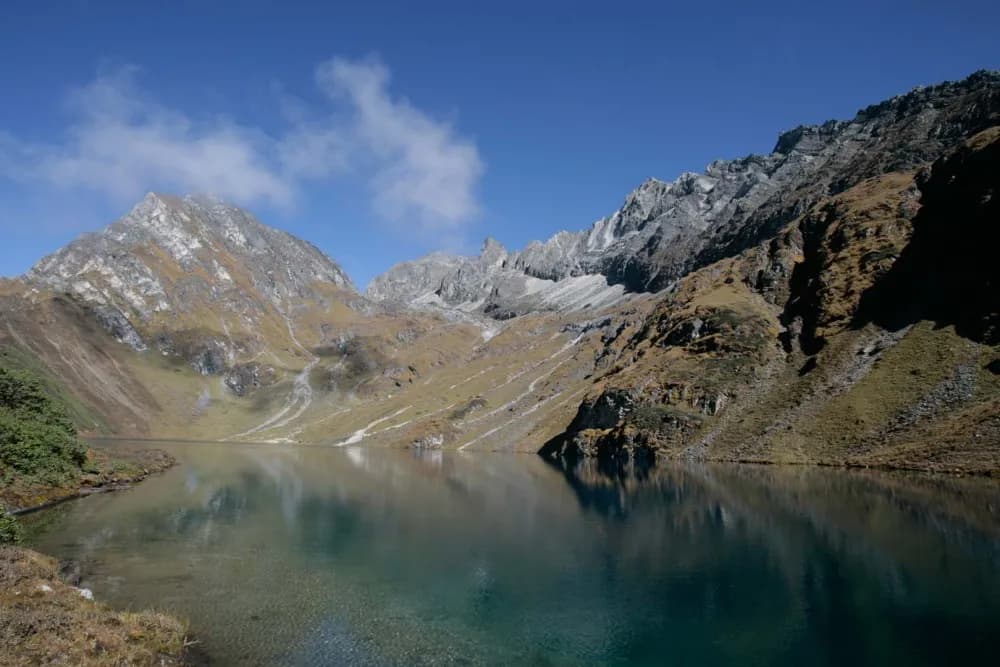
Mid-October through late November is the principal photographic window — post-monsoon clarity, the autumn light off the river valleys, the cranes arriving at Phobjikha from late October, the principal tshechus across the country. For photographers coming from Beijing's particular light register (clear winters, the dry-autumn northern Chinese aesthetic), the Bhutanese autumn light is recognisable but at substantially higher elevation and against a different colour palette — the russet of the harvested potato fields, the dzong reds, the prayer-flag blues, the substantial green of the surrounding ridges.
What we have done for the photographer
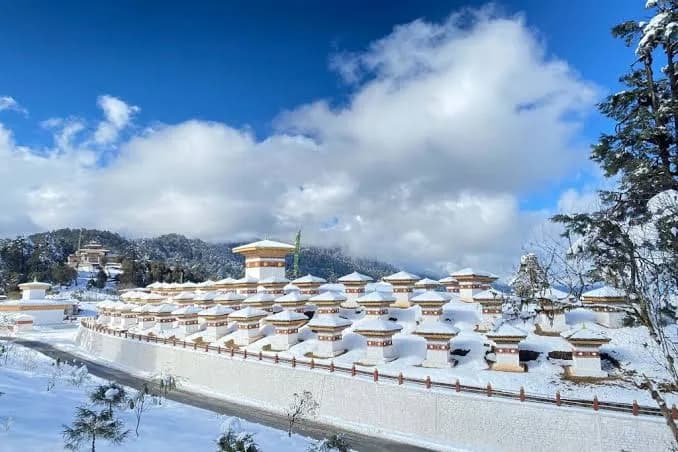
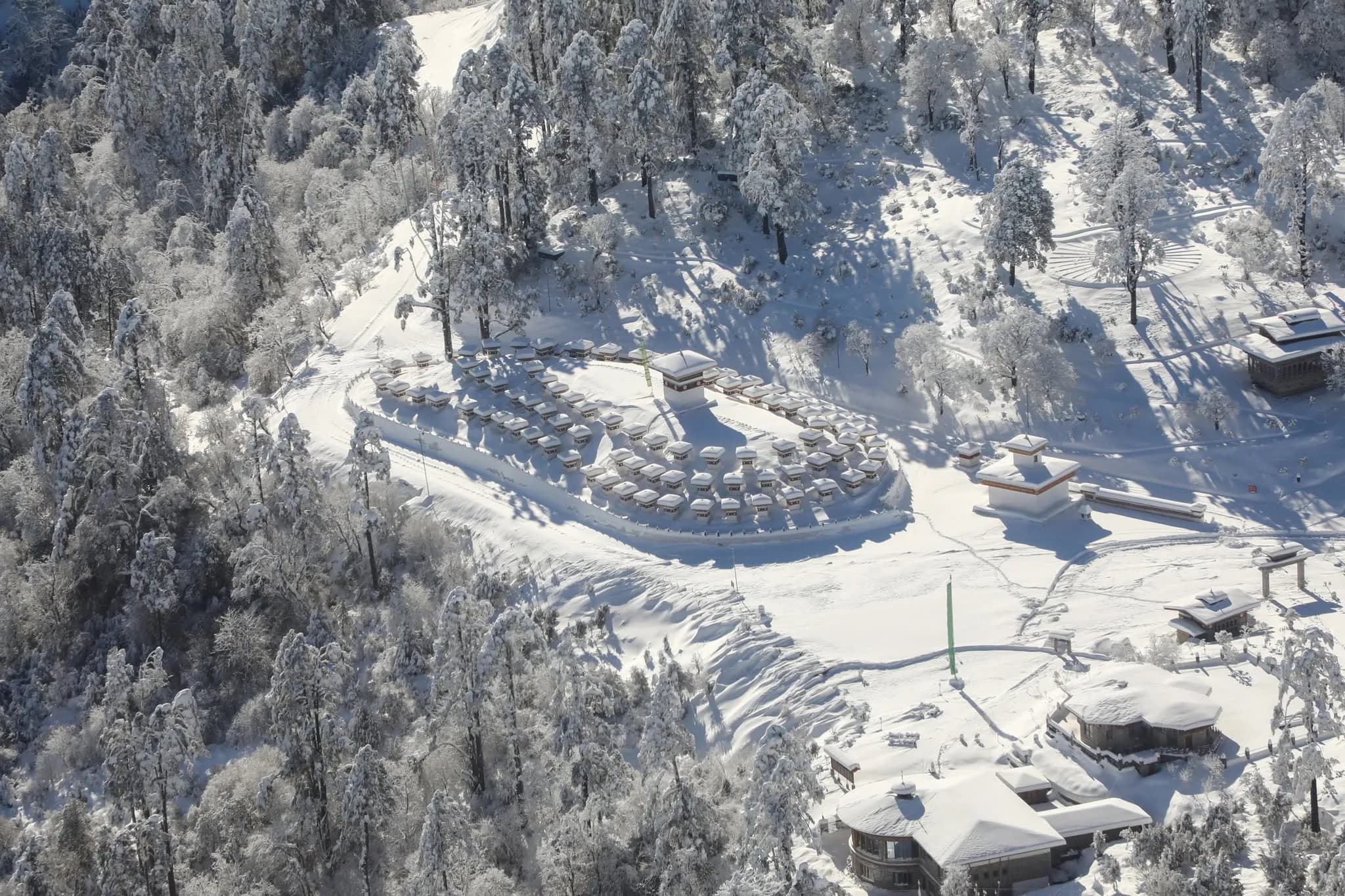
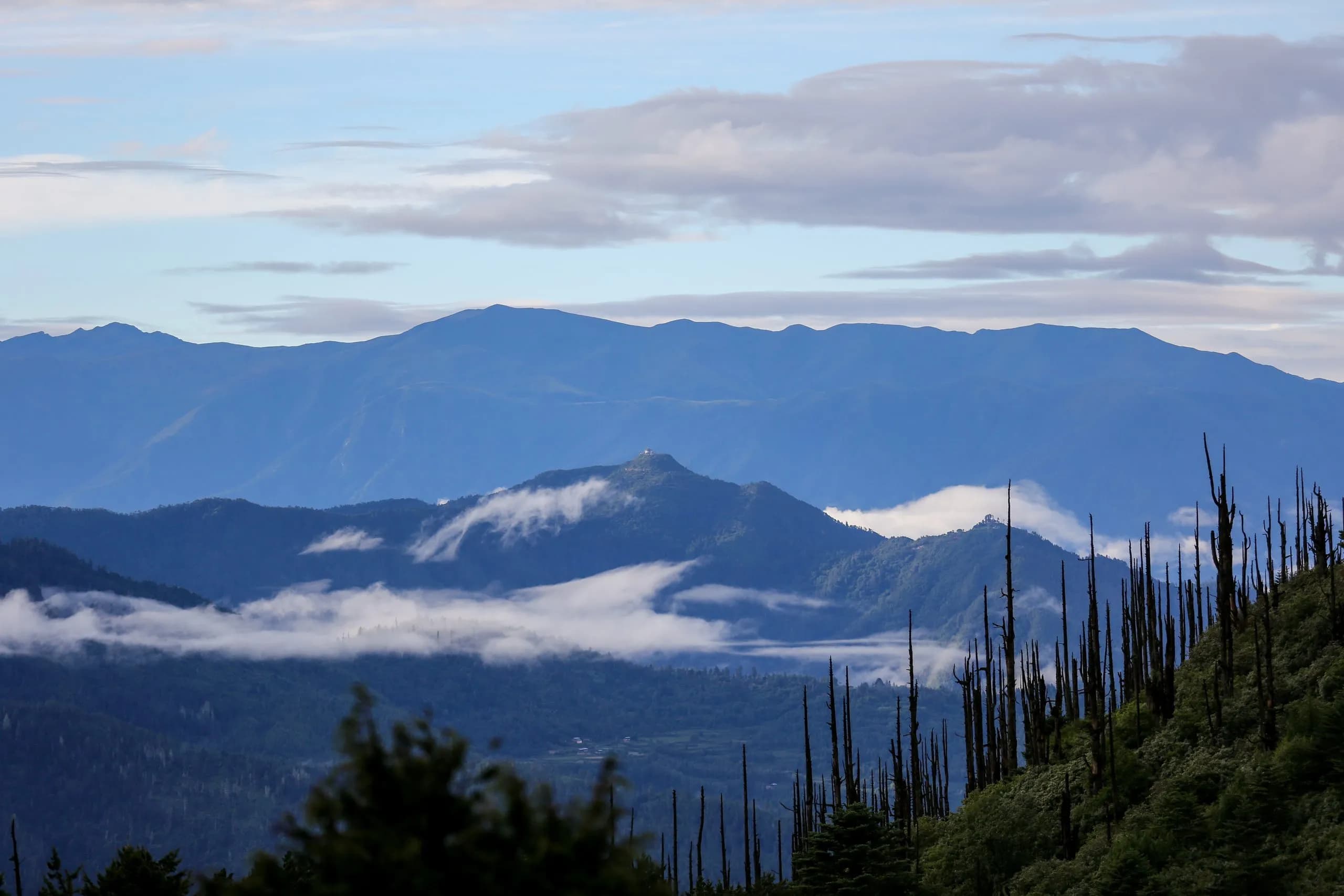
Reserved positions at the principal dzong courtyards for late-afternoon light when the public crowds have left; dawn access at the 108 chortens on Dochu La for the eastern Himalayan panorama; the RSPN access at Phobjikha for the crane viewing hides; the Tiger's Nest dawn climb for the most-photographed Bhutanese image. Small group — typically 4–8 photographers; a Mandarin-speaking guide where the match is available; substantial dedicated transport for tripods + long lenses + ND filters.
The route
A sample shape of the week
DAY 01
Arrival in Paro — first scout
Met at PBH; an afternoon walking Rinpung Dzong's exterior to plan angles for the next day's shoots; the Pa Chhu paddies at golden hour.
DAY 02
Paro day — dzong + Kyichu in best light
Rinpung Dzong in early-morning light; Ta Dzong (the National Museum) for the country's principal heritage collection; Kyichu Lhakhang in late afternoon.
DAY 03
Across to Thimphu — capital sites
The valley to the capital; the National Memorial Chorten in late-afternoon when the elderly pilgrims circumambulate; the Folk Heritage Museum.
DAY 04
Thimphu day — Buddha Dordenma and Tashichho
The Buddha Dordenma on the southern ridge in early morning; Tashichho Dzong at dusk when the office workers leave and the dzong empties of crowds.
DAY 05
Over Dochu La at dawn — into Punakha
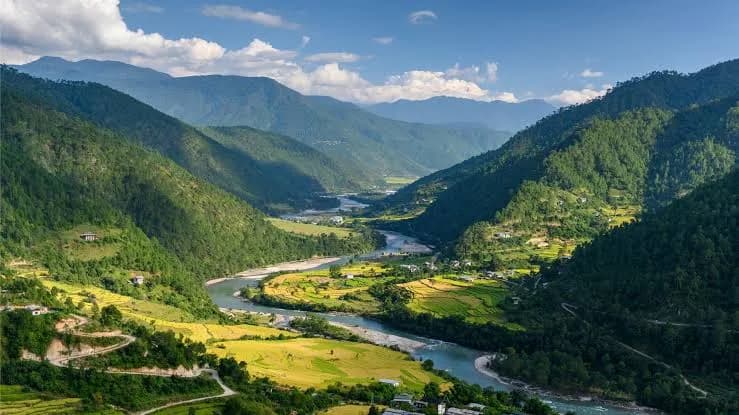
The 108 chortens at dawn (the eastern Himalayan range visible on clear days); the Druk Wangyal Lhakhang; Punakha Dzong in late-afternoon at the confluence.
DAY 06
Punakha day — Chimi Lhakhang and the river
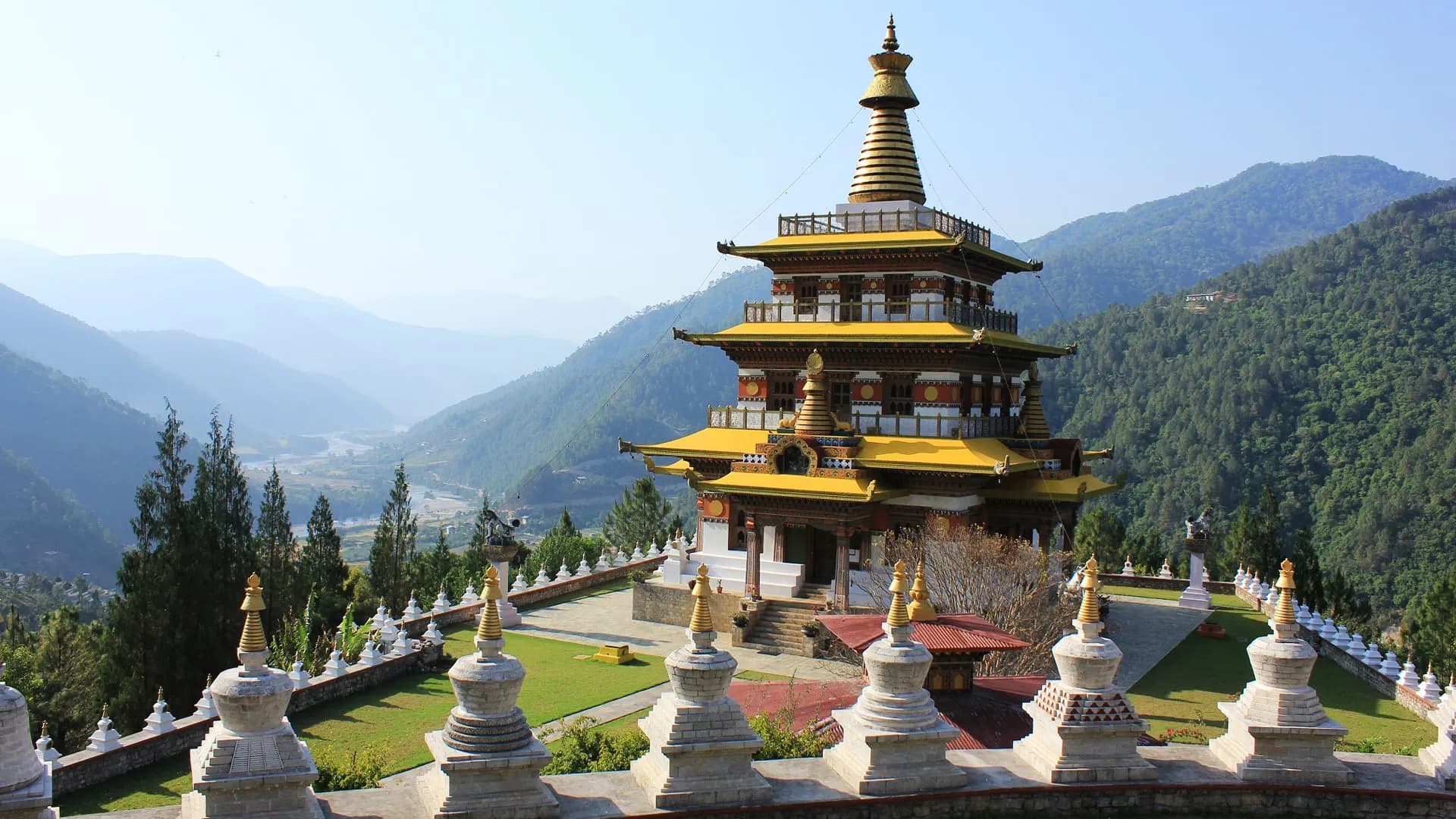
Chimi Lhakhang in the morning; the Mo Chhu walk to Khamsum Yulley Namgyal Chorten; the suspension bridge in late light.
DAY 07
Up to Phobjikha — the cranes
Over the Lawa La; the cranes at the principal feeding-field site in late-afternoon light; the Gangtey Monastery silhouette on the ridge.
DAY 08
Phobjikha day — cranes at dawn + the valley
Dawn at the principal crane site; the Gangtey Nature Trail in the late morning; the alpine ridge above the valley in late afternoon.
DAY 09
Back to Paro — Tiger's Nest the next morning
The drive back; an early supper; the climb briefed for the morning.
DAY 10
The Tiger's Nest — dawn climb
The dawn climb at the pace your shoot requires; multiple angles on the cliff; the cafeteria for lunch; the descent; the dawn flight back the following morning.
The day-by-day above is illustrative. The proposal you receive is built around your dates, your pace and your interests, not this template.
Frequently asked
- What's the group size?
- Typically 4–8 photographers per group. Smaller groups work better at the reserved-position sites and the crane hides; larger groups don't economise the lodge logistics. For private trips (group of 2) with the same access and pacing, we quote separately as a signature-tier offering.
- Can we shoot inside the dzongs and temples?
- Mixed. Most dzong courtyards permit photography; many temple inner sanctums do not. The matched guide knows which sites permit interior photography (with respectful protocol — no flash, no tripod typically inside) and which don't. We brief specifics in your proposal.
- Is equipment customs clearance an issue at Paro?
- For non-commercial photography (personal / hobby) with reasonable equipment (cameras, lenses, one tripod, ND filters), no — passes through Paro customs without issue. For commercial photography or substantial equipment (cinema cameras, drones, multiple tripods), pre-arranged paperwork is required; we handle this when relevant. Drones require explicit pre-approval and are typically restricted near dzongs and the airport.
- Mandarin-speaking guide — how does the match work?
- Our closed network has three guides with substantial Mandarin Chinese. We match on availability and on the depth of cultural-Buddhist conversation the group wants. The principal guide for the group is named in your proposal before you confirm; we change the match if it doesn't feel right.
Journeys you might also weigh
- 01Bhutan as the trip after JapanA Bhutan journey for travellers who have substantially done Japan — Kyoto in cherry blossom, the Nakasendo, the temple stays at Mt Koya — and want the next step. Bhutan is what comes after; a quieter Asia-Buddhist register at altitude, with the cultural depth that Japan readers tend to value most.7 nights
from $15,000 - 02Bhutan trip from BerlinA Bhutan-plus-Phobjikha journey for German couples flying from Berlin — the long-haul broken with a Doha or Singapore overnight, then eight unhurried nights in the post-monsoon autumn light. Restrained pacing; cultural depth; the kind of trip the German premium-travel reader expects.8 nights
from $17,000 - 03Bhutan trip from Kuala LumpurA Bhutan journey for Malaysian couples flying from Kuala Lumpur — the short hop to Bangkok or Singapore, the morning Drukair to Paro, then seven unhurried nights in the post-monsoon clarity. The cultural-Buddhist register that Malaysian premium travellers (Chinese-Malaysian, Indian-Malaysian, and Malay families) typically find rewarding.7 nights
from $14,000
Begin when you're ready.
A few questions, or a conversation in your own words. A bespoke draft either way.

