TWENTY-EIGHT NIGHTS THROUGH THE BHUTANESE HIMALAYAN FRONTIER
The Snowman — Laya to Lunana to Bumthang, on foot.
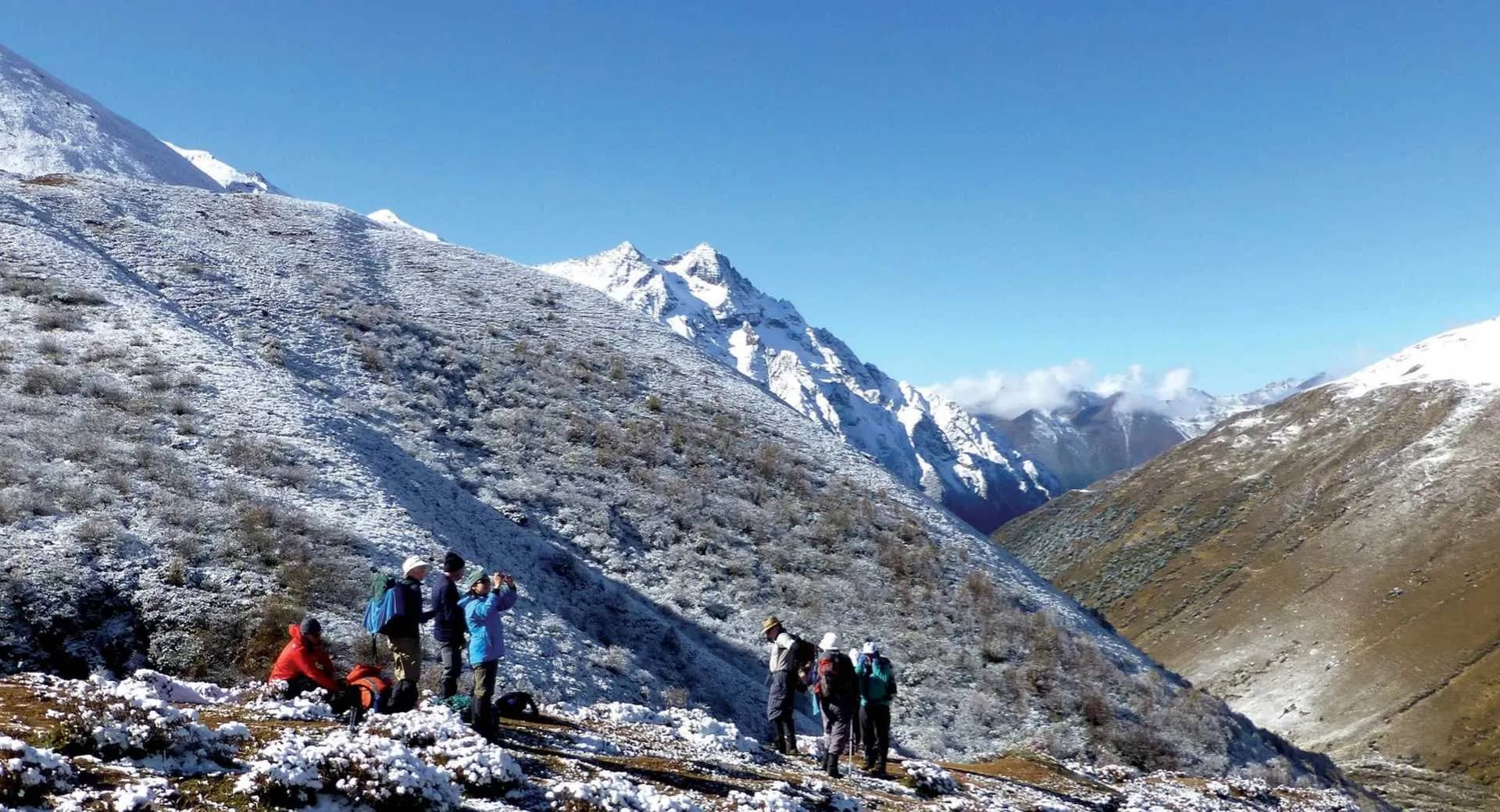
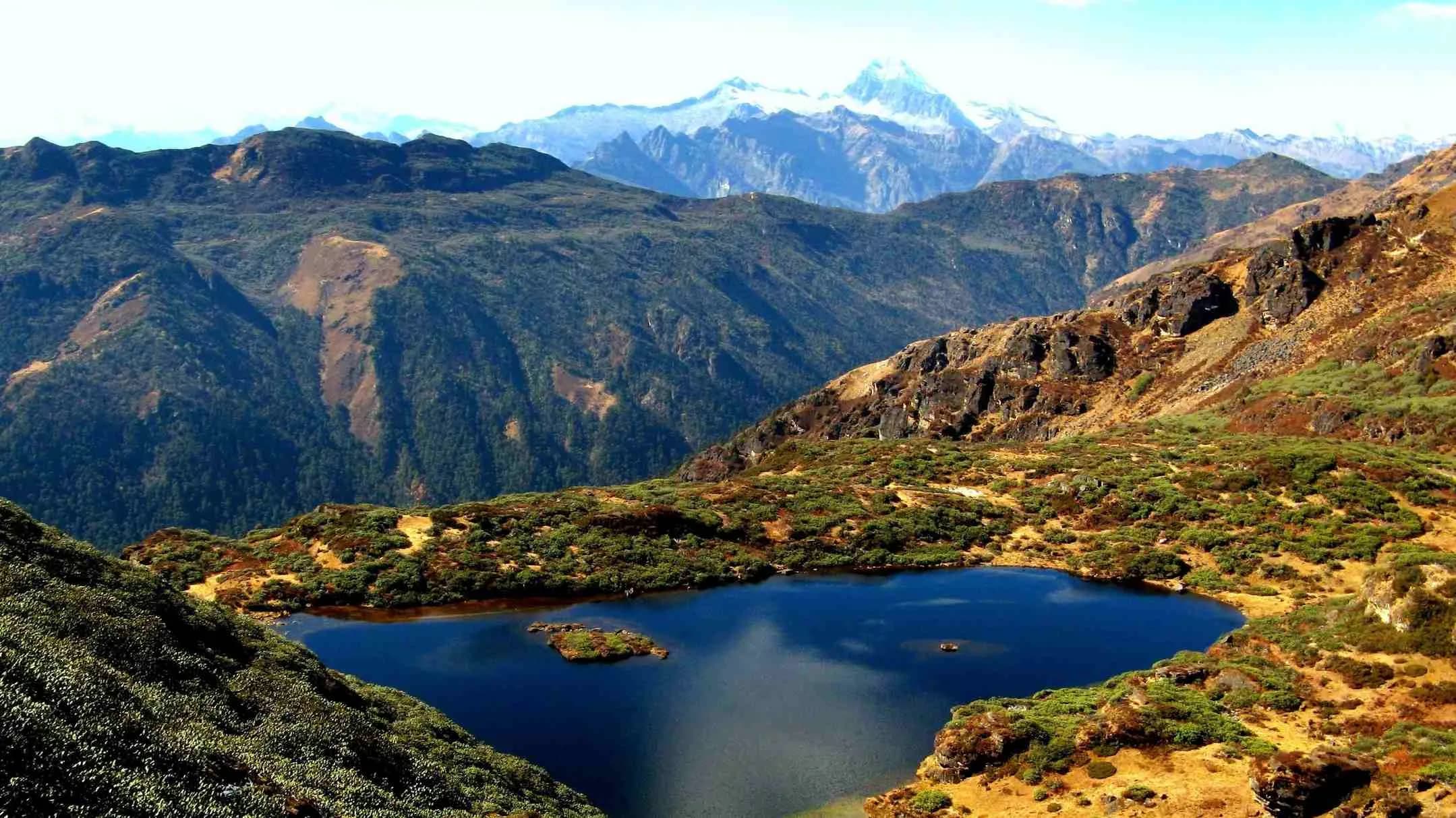
Twenty-eight nights, eleven 5,000-metre+ passes, the highest sustained-altitude trek anywhere in the world. The Snowman Trek is the country's most demanding multi-week traverse — through the Laya, Lunana, and Bumthang watersheds, almost entirely above tree line, with the Bhutanese highland communities as the rest stops.
28 nights · Signature tier · from USD 40,000 per traveller
- Nights
- 28
- From
- USD 40,000per traveller
- Tier
- Signature
- Best season
- Green bhutan
- Suits
- Small group
- Departing
- Worldwide
Why the Snowman, and why this is not an ordinary trek
The Snowman is one of the most demanding multi-week treks in the world. Eleven passes above 5,000 metres; sizable sustained time at 4,500m+; the only weather window is the country's monsoon (mid-June to mid-September) when the high passes are clear of snow but the lower-altitude approaches are wet and difficult. Approximately 50% of attempted Snowmans complete the full route. The trek is genuinely demanding and the team running it — head guide, two assistants, cook, four camp staff, ten horsemen with twenty-plus pack horses — reflects the substance of what the trek is.
The route, the rhythm, the highland communities
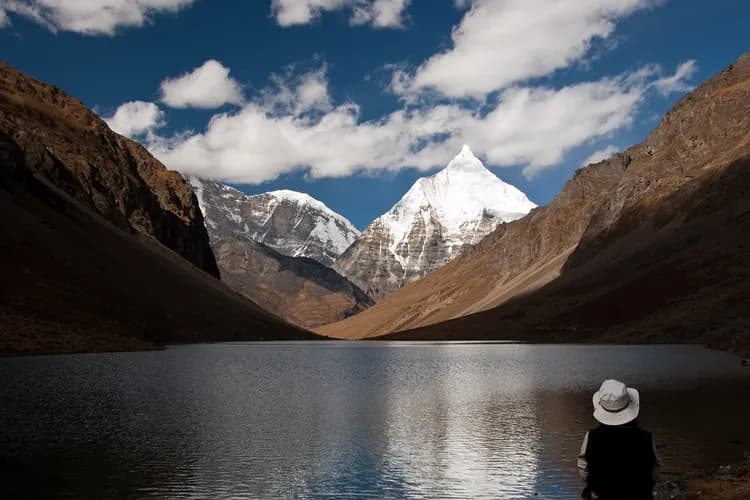
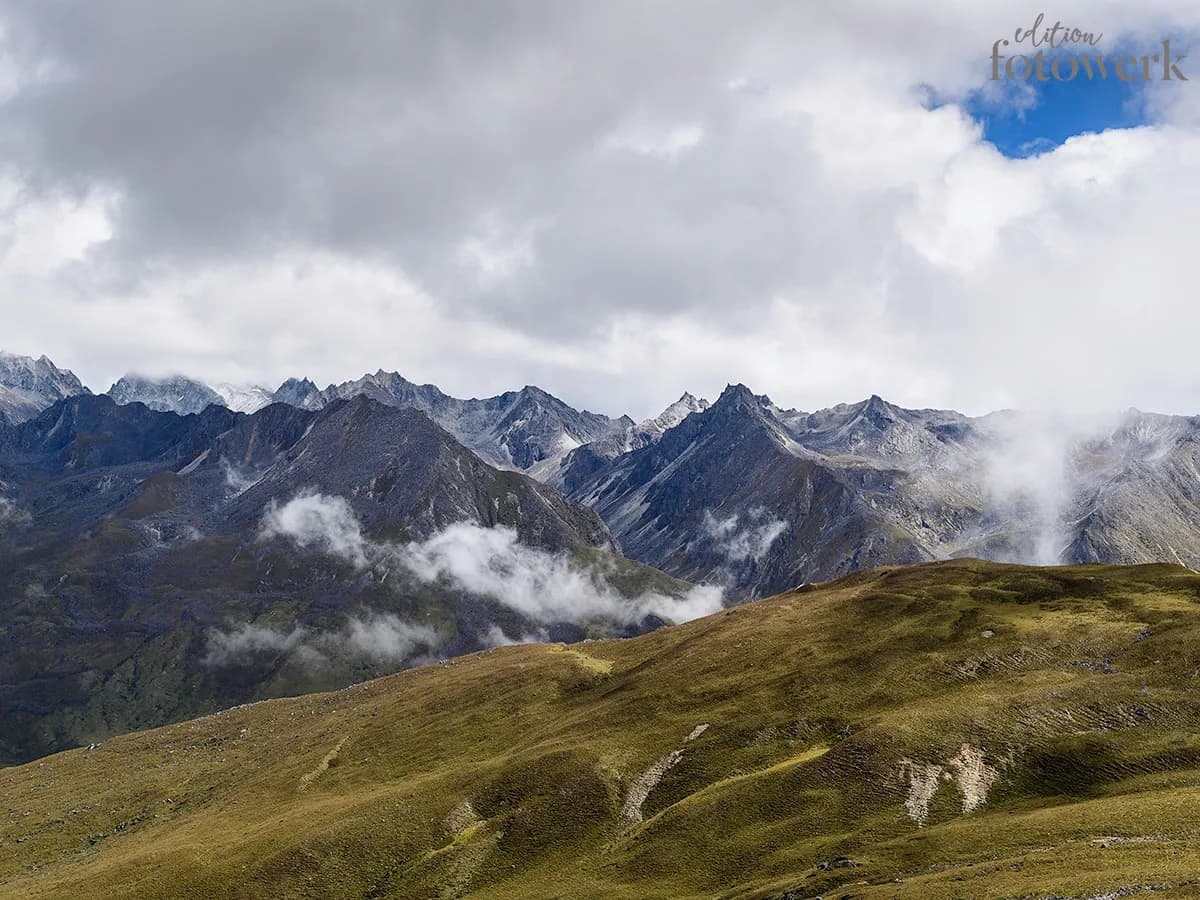
From Drugyel at the head of the Paro valley, the trek climbs through the Chomolhari area for the first week (five days at 4,000+), crosses into the Laya watershed and the Layap highland community (six days through the Laya village area and the principal yak-pastoral landscape), continues into the Lunana watershed and the Lunapa community (seven days through the highest-altitude section, including the principal pass crossings), and descends through the eastern Bumthang watershed to finish at the road head near Sephu (six days of high-altitude meadow and the long final descent). Pace is roughly six hours of walking daily; rest days are folded into the schedule at the principal high-altitude transitions.
Who attempts the Snowman, and who should not
The Snowman attracts experienced high-altitude trekkers with multi-week wilderness experience, ideally with previous exposure to 5,000m+ in the Nepalese, Indian, or Tibetan Himalayan ranges. Considerable fitness, significant commitment to the weeks involved, and substantial flexibility for weather days are non-negotiable. The trek is not appropriate as a first high-altitude experience; it is not appropriate for trekkers who cannot accept the genuine risk of weather-driven evacuation or the partial-completion outcome. For trekkers who fit, the Snowman is one of the most substantial expeditions available in any country.
The route
A sample shape of the week
DAY 01
Arrival in Paro
Met in the arrivals hall; lodge; an early supper, an early night.
DAY 02
Paro acclimatisation
Tiger's Nest as the warm-up climb; gear check; first dinner with the trek team.
DAY 05
Trek day 3 — into the Chomolhari area
Substantial valley climb; first sustained altitude; the south face of Chomolhari at end-of-day.
DAY 10
Trek day 8 — through the Laya village area
Through the Layap highland community; an afternoon at Laya village; the conical bamboo hats and the cultural.
DAY 15
Trek day 13 — into the Lunana watershed
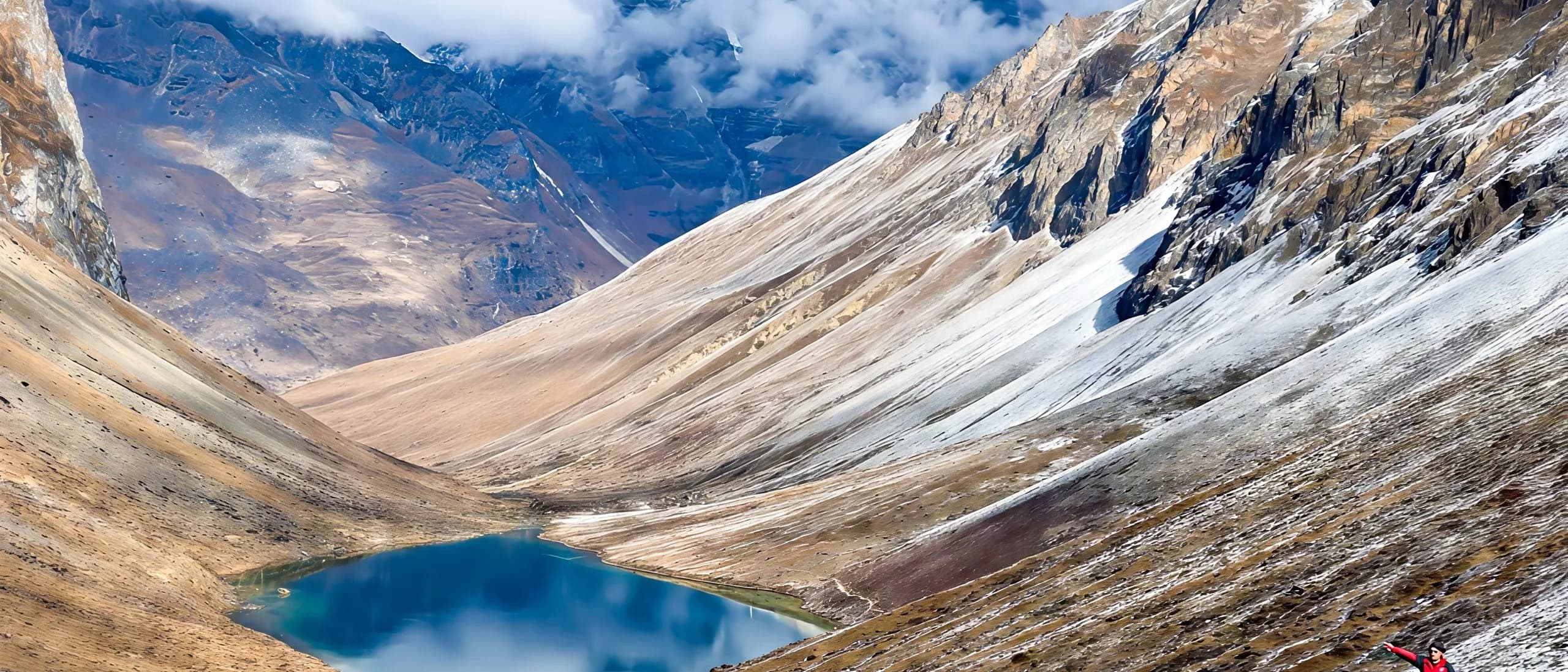
Pass crossing into the principal high-altitude section; the glacial-lake landscape; Lunapa community contact.
DAY 20
Trek day 18 — the highest pass crossings
Two consecutive 5,000m+ crossings; the trek at its most demanding; the principal expedition window.
DAY 24
Trek day 22 — descending the Bumthang watershed
Substantial elevation loss; the alpine meadow landscape; the trek beginning to wind down.
DAY 27
Trek day 25 — road head
The final descent to Sephu; the trek team's final dinner; relief and substantial joy.
DAY 28
Drive to Bumthang and lodge
Transfer to one of the Bumthang lodges; the long bath; the proper bed.
DAY 29
Bumthang day
Recovery; quiet visits to the principal Bumthang religious sites; the trek's slow conclusion.
DAY 30
Bumthang to Paro and departure
Internal flight from Bumthang to Paro; lodge for the final night or onward flight; the team writes a fortnight later.
The day-by-day above is illustrative. The proposal you receive is built around your dates, your pace and your interests, not this template.
Frequently asked
- What level of fitness is genuinely required?
- Substantial. Eleven 5,000-metre+ passes; sustained walking at 4,500m+ for three to four weeks; the conditioning required is comparable to a Himalayan mountaineering objective. Previous high-altitude experience (Annapurna Circuit, Everest Base Camp, Mt Kailash kora, or comparable) is required; experience above 5,500m strongly preferred. The trek team monitors altitude response continuously and routes a client off the trek if the response is wrong — this is a real possibility, not a formality.
- How predictable is completion?
- Approximately 50% of attempted Snowmans complete the full route. The principal reasons for non-completion are weather (snow on the highest passes blocking the route; bad weather days that cascade into a missed weather window for the next pass) and altitude response. Trekkers should approach the Snowman as a serious expedition with a genuine non-completion possibility; the partial-trek experience is still substantial.
- What about the monsoon window?
- The Snowman's only weather window is mid-June to mid-September — the country's monsoon. The high passes are clear of snow only in this window; the lower-altitude approaches are wet and demanding. The combination produces the trek's distinctive difficulty profile.
- What about the trek team and the logistics?
- The trek team is staffed: one head guide, one to two assistant guides, one cook, four camp staff, ten horsemen with twenty-plus pack horses for the full route. Sustainable Development Fee at USD 100/night/international visitor across the 28 nights. Food, camping equipment, oxygen reserves (for emergency use), and the medical kit are all team-supplied. The trekker brings personal gear and clothing only.
Journeys you might also weigh
- 01Bhutan Chomolhari TrekFourteen nights — five at altitude, the rest in the lodges — taking the classic Bhutanese trek to the 4,080-metre meadow under Chomolhari and Jichu Drake, with the clear October light that the country's photographers wait the whole year for.14 nights
from $22,000 - 02Bhutan east-to-west fortnightA one-way fortnight that takes you the length of the country — Paro, Thimphu, Punakha, Trongsa, Bumthang, Mongar, Trashigang — exiting at Samdrup Jongkhar with a three-hour Assam transfer to Guwahati. The full circuit, the quieter half, and no doubling back.14 nights
from $28,000 - 03How many days do you need in Bhutan?An honest guide to choosing the length of a first Bhutan journey. Five nights for a first taste, seven for the comfortable first visit, nine or ten to add the glacial Gangtey valley, twelve to fourteen to carry on over the passes into central Bhutan. We make the case for a week for most first visits, and explain plainly why more places means more road.7 nights
from $6,000
Begin when you're ready.
A few questions, or a conversation in your own words. A bespoke draft either way.

