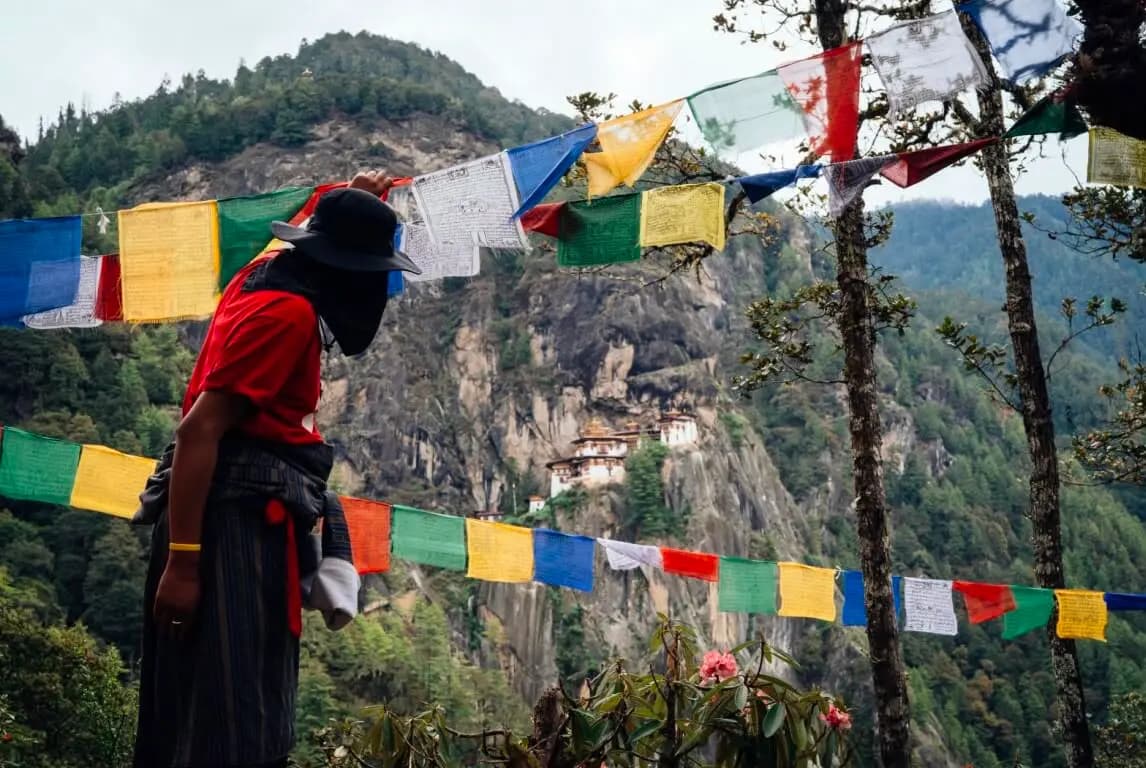
THE WALK EVERY VISITOR REMEMBERS
Six nights through Paro, Thimphu, and Punakha — ending at the cliff above the Paro valley.
A private western-circuit week for two, paced toward a single morning: the climb to Paro Taktsang, the monastery on the cliff face that has come to stand, more than any other image, for Bhutan itself. We build the days before it so that the walk is the natural close, not the first thing asked of you.
6 nights · Luxury tier · from USD 6,000 per traveller
- Nights
- 6
- From
- USD 6,000per traveller
- Tier
- Luxury
- Best season
- Autumn
- Suits
- Couple
- Departing
- Worldwide
The image, and what stands behind it
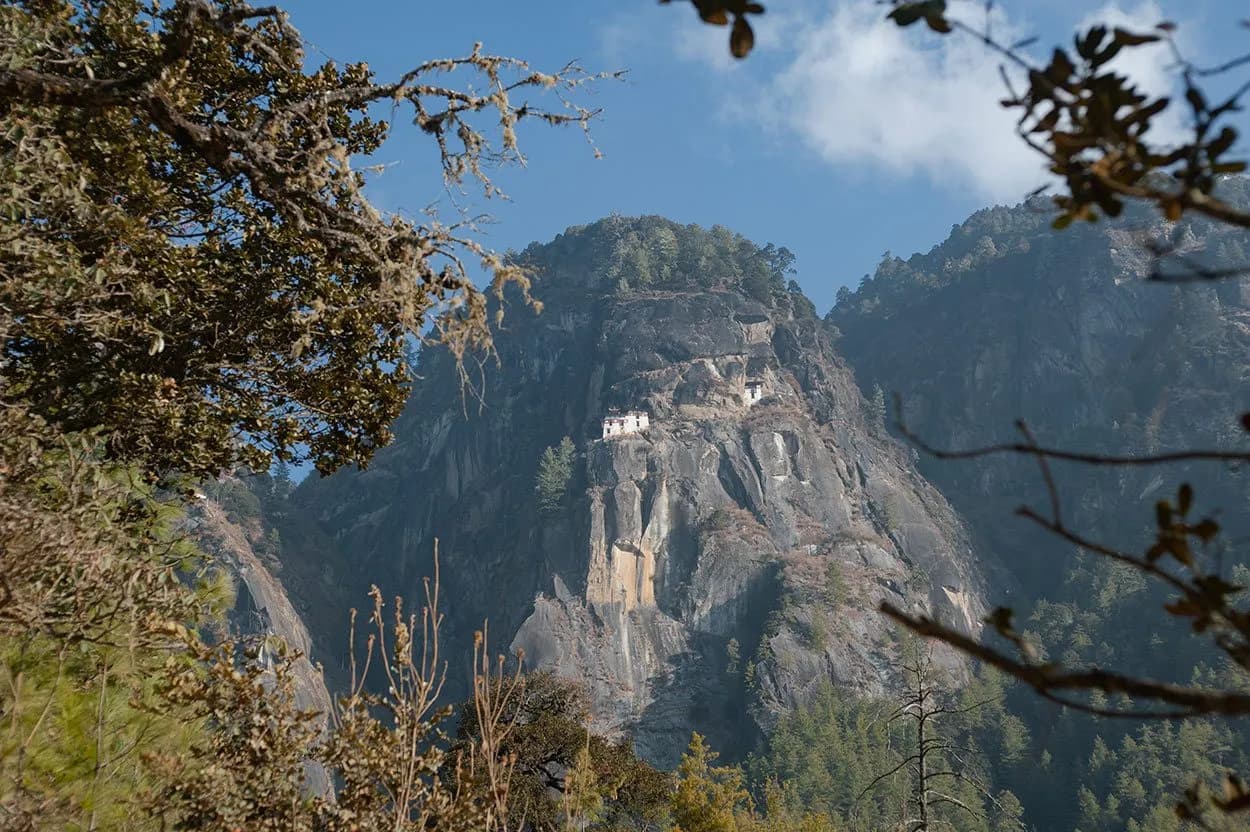
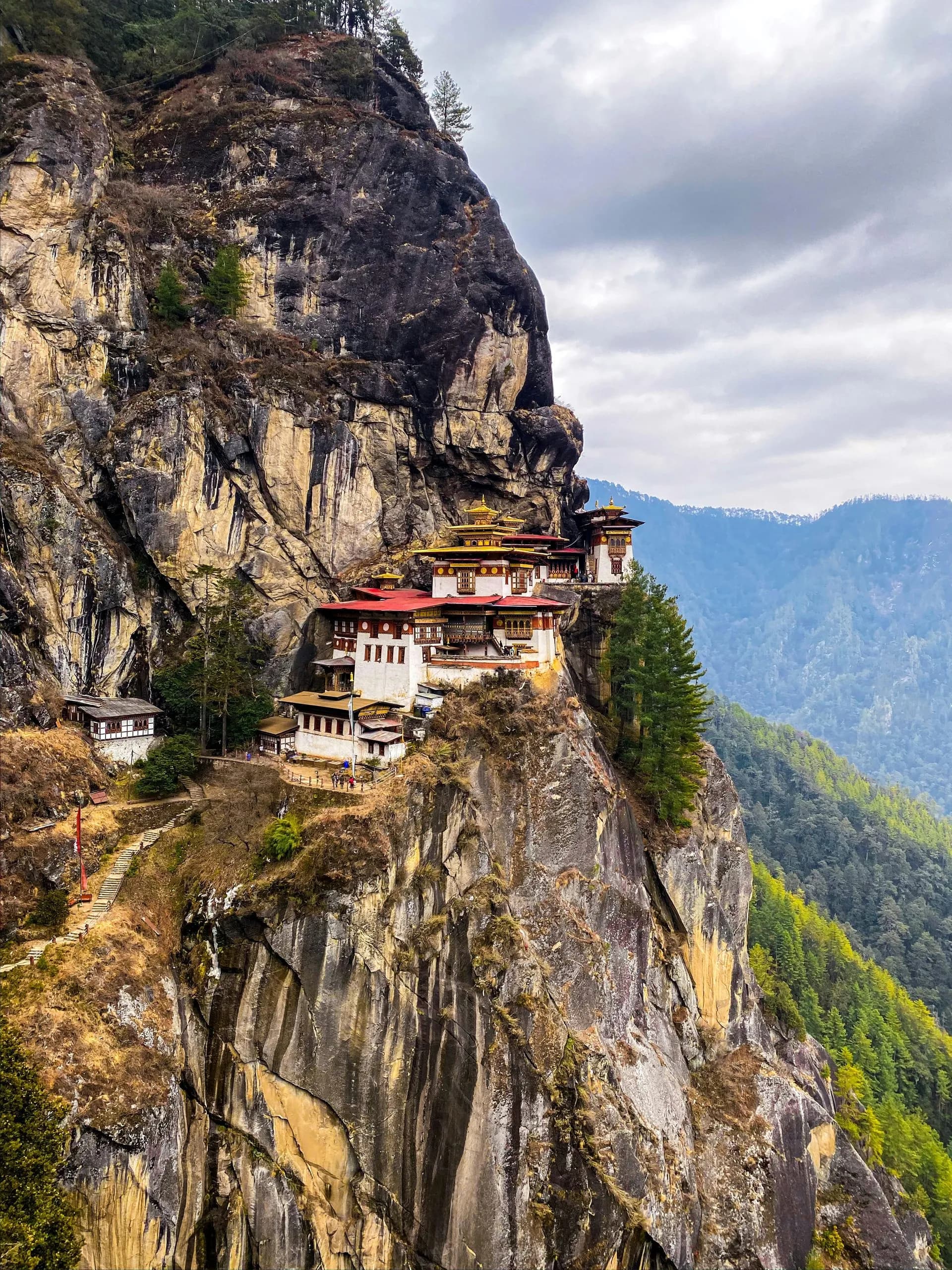
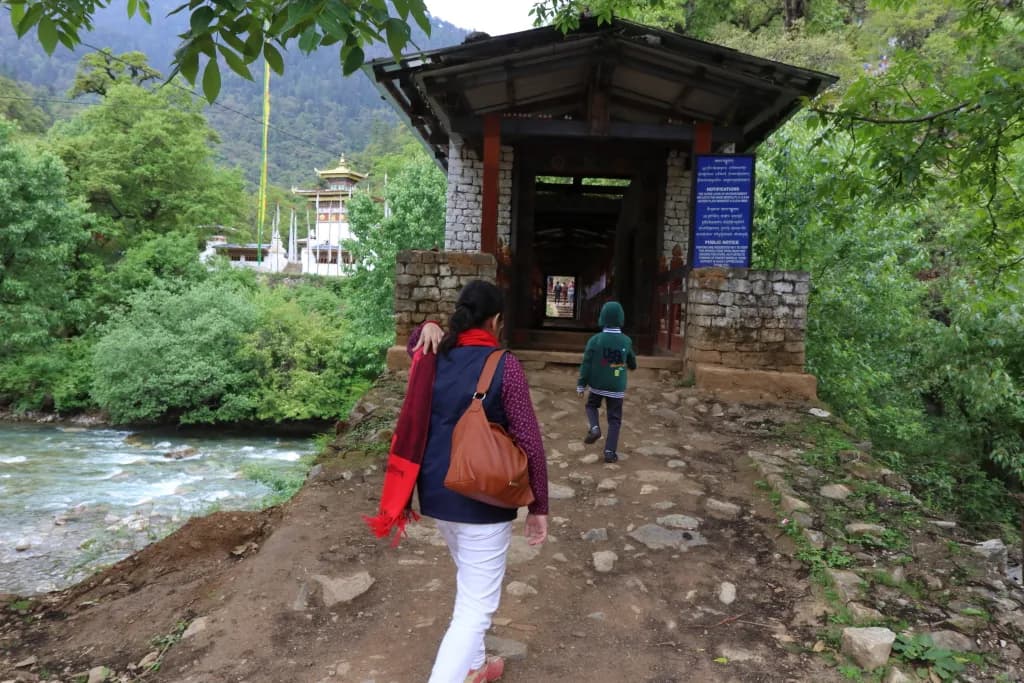
Paro Taktsang — Tiger's Nest — clings to a cliff face roughly 900 metres above the Paro valley floor, the buildings themselves at about 3,120 metres. The name comes from the founding: Guru Rinpoche, the eighth-century master who carried Vajrayana Buddhism across the Himalaya, is held to have flown to this rock on the back of a tigress and meditated in the cave behind the present monastery. Most visitors arrive with the photograph already in mind. What the photograph cannot carry is the quiet of the approach, the smell of pine and woodsmoke on the path, and the way the whole cliff comes and goes through the trees as you climb. That is the part we plan the week around.
Why six nights, paced this way
We give the climb a proper run-up rather than putting it on the first jet-lagged morning. The week opens gently in Paro and Thimphu, crosses Dochu La into Punakha for two nights at the river, and returns to Paro with the legs warmed and the altitude already familiar — so that Taktsang on the final full day is the culmination it ought to be. Three valleys, three lodges, one guide for the whole arc. The shape is steady on purpose; Bhutan rewards the unhurried.
Who you'll walk with
One Bhutanese guide for the full week, matched from a small, carefully chosen network — for languages, for pace, and for the kind of company you would want on a long morning uphill. The guide briefs the climb the evening before, sets the rhythm on the day, and knows the protocol inside the lhakhang as a matter of course. The guide is named in your proposal before you confirm, and we change the match if it does not feel right.
The route
A sample shape of the week
DAY 01
Arrival in Paro — settle, no agenda
Met in the arrivals hall, a short drive to the lodge, and an easy first afternoon — Rinpung Dzong or the riverside path if the light holds. The descent into Paro is a visual approach flown by a small number of certified pilots; difficult, not dangerous, and a memorable first sight of the valley.
DAY 02
Across to Thimphu — the capital, taken slowly
The 54 km to Thimphu, about an hour and a quarter. The Memorial Chorten in early light, the great Buddha Dordenma above the valley, an unhurried wander through the capital with the day shaped to your appetite, not a checklist.
DAY 03
Over Dochu La into Punakha
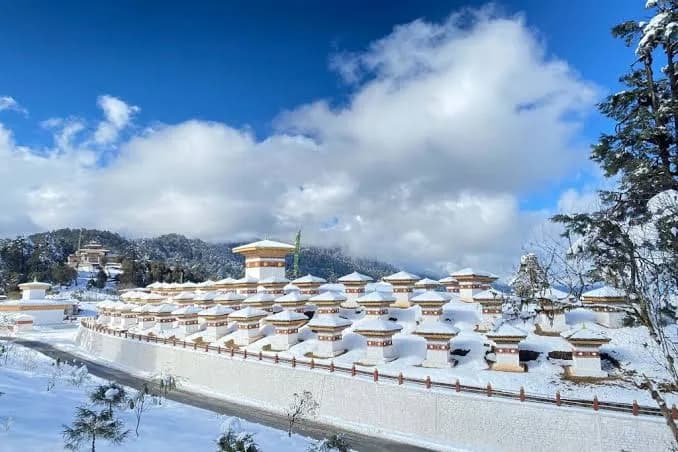
The 75 km to Punakha, roughly three hours over Dochu La at 3,100 metres, where 108 chortens stand against the eastern Himalaya on a clear day. Down into the warmer Punakha valley; Punakha Dzong at the confluence in late-afternoon light.
DAY 04
A day in Punakha — paddies and the long bridge
Terraced rice at Lobesa, the gentle walk to Chimi Lhakhang, a long riverside lunch, and the suspension bridge once the wind has dropped. A quieter day by design — and good for the legs before the return.
DAY 05
Back to Paro — ahead of Taktsang
The drive back over the pass to Paro; Kyichu Lhakhang, one of the oldest temples in the country, in the afternoon. An early supper, the climb briefed by your guide, and a proper night's rest.
DAY 06
The Tiger's Nest — slowly, the right way
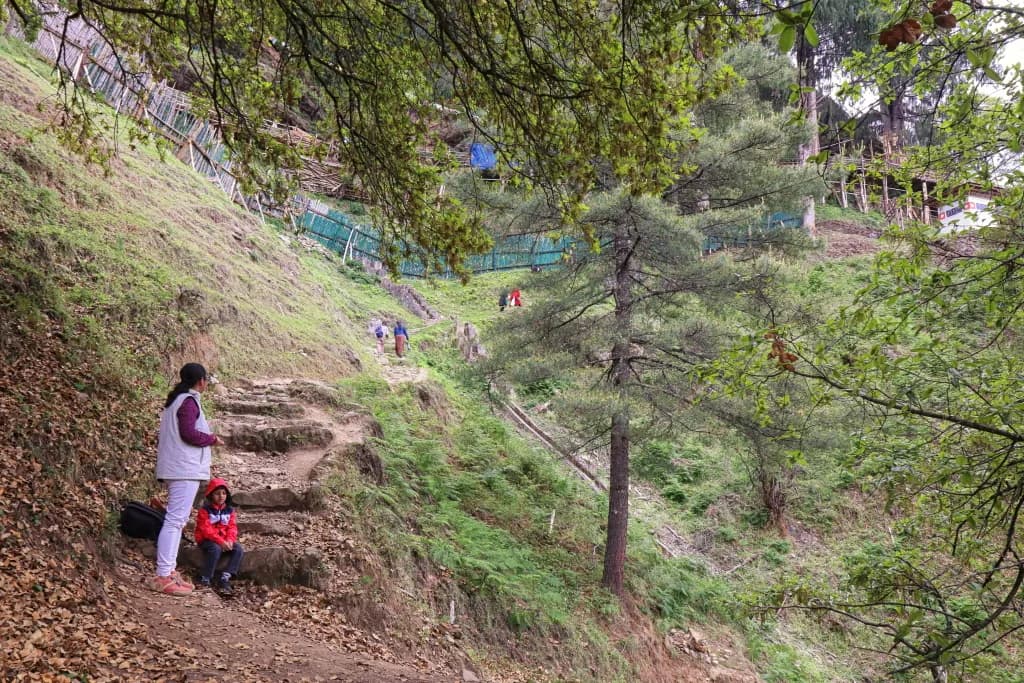
An early start for the best light. The walk up is roughly two to three hours on a good path, paced to you, with the cafeteria viewpoint partway where the valley opens and the monastery sits clear across the gorge. Time at the monastery itself, then the descent — and a hot stone bath waiting at the lodge.
DAY 07
Departure from Paro
Breakfast at the lodge, the guide walks you back to the terminal for the morning flight, and the team writes a fortnight later to hear how the week sat with you.
The day-by-day above is illustrative. The proposal you receive is built around your dates, your pace and your interests, not this template.
Frequently asked
- How hard is the Tiger's Nest hike?
- Moderate. The path is well-made but climbs steadily — roughly two to three hours up and a little less down, with the monastery at about 3,120 metres. The main demand is the altitude as much as the gradient, which is why we put it on the final full day, after the week has acclimatised you across Thimphu and Punakha. We pace it to you, with rests and the cafeteria viewpoint partway; the great majority of guests in reasonable health complete it comfortably and remember it as the morning of the trip.
- How high is the Tiger's Nest?
- The monastery buildings sit at about 3,120 metres, on a cliff face roughly 900 metres above the Paro valley floor. The trailhead is lower, so the walk is a continuous climb through pine and rhododendron forest. Because you will have crossed Dochu La at 3,100 metres earlier in the week and spent nights at altitude, the height is familiar by the time you make the ascent.
- Are ponies available on the way up?
- Yes, for part of the lower section — ponies can carry you up to around the cafeteria viewpoint, after which the final stretch to the monastery is on foot for everyone, on conservation grounds. Some guests ride the lower half and walk the rest; others walk throughout. Your guide arranges the ponies on the day, and there is no need to decide in advance.
- When is the best time to climb to Tiger's Nest?
- Set out early in the morning, both for the cooler air and for the light — the classic photograph from the cafeteria viewpoint is at its finest before midday, and the path is quieter. Across the year, autumn (September to November) and spring (March to May) give the clearest conditions; the trail is walked in any season, and your guide reads the day's weather and adjusts the start accordingly.
- What should we wear, and can we photograph the monastery?
- Long trousers and covered shoulders, with sturdy walking shoes rather than trainers; layers, as the morning starts cool and warms on the climb. Photography is welcome across the approach and from the viewpoints — the cliff-face context is at its best from the cafeteria and the final ridge — but is not permitted inside the lhakhang, where hats and shoes come off. The monastery is an active place of worship with resident monks, and the day is the better for being unhurried and quiet.
- What is the Sustainable Development Fee, and is it included?
- Yes. The SDF is USD 100 per night for each international adult, set by the Royal Government of Bhutan. It funds free health and education for Bhutanese citizens and conservation across the country, and it is itemised plainly in your price breakdown alongside everything else.
- How does the flight to Bhutan work?
- Paro is the only airport in the country, served by Drukair (KB) and Bhutan Airlines (B3) from a handful of regional hubs. We advise on the international legs and the hub stopover, and ticket the Paro flight on your behalf; the in-country logistics, lodges, guide, visa, and SDF we arrange in full. The right routing depends on where you are flying from, which we work through with you at the planning stage.
Journeys you might also weigh
- 01Bhutan or LadakhA gracious comparison for the couple drawn to both. Ladakh is one of the great high-desert landscapes on earth — a stark, luminous plateau of gompas and ochre ridgelines. Bhutan is its green counterpart: a self-contained Himalayan kingdom of forested valleys at a gentler altitude, where Vajrayana Buddhism is lived rather than visited and every guest travels privately with a guide. This page is here to help you choose — and, if it is Bhutan, to show what a representative week across Paro, Thimphu, and Punakha looks like.7 nights
from $7,000 - 02Bhutan or NepalA fair comparison for the couple choosing between two remarkable countries. Nepal is the great trekking heartland of the Himalaya; Bhutan is the quieter, guided, culture-first one. This page is here to help you work out which fits — and, if it is Bhutan, what a representative week across Paro, Thimphu, and Punakha looks like.7 nights
from $7,000 - 03Bhutan or SikkimA gracious comparison for the couple drawn to both. Sikkim is one of the loveliest corners of the eastern Himalaya — a green, mountainous Indian state of monasteries, rhododendron forests, and clear Kanchenjunga mornings, easy to fold into a wider trip through Darjeeling. Bhutan is its near neighbour and quiet counterpart: an independent Himalayan Buddhist kingdom of working dzongs and living festivals, travelled as one seamless private journey with a guide and a single permit handled for you. This page is here to help you choose — and, if it is Bhutan, to show what a representative week across Paro, Thimphu, and Punakha looks like.7 nights
from $7,000
Begin when you're ready.
A few questions, or a conversation in your own words. A bespoke draft either way.

