FOR THE TRAVELLER WEIGHING BOTH
Bhutan or Tibet — Bhutan or Tibet: which Buddhist Himalaya suits the journey you have in mind.
A gracious comparison for the couple drawn to both. Tibet holds some of the great monuments of the Buddhist world; Bhutan offers a living, freely practised tradition met at close range, with gentler altitude and the ease of a private guide. This page is here to help you choose — and, if it is Bhutan, to show what a representative week across Paro, Thimphu, and Punakha looks like.
7 nights · Luxury tier · from USD 7,000 per traveller
- Nights
- 7
- From
- USD 7,000per traveller
- Tier
- Luxury
- Best season
- Autumn
- Suits
- Couple
- Departing
- Worldwide
Two Buddhist Himalayas, asked to do different things
Travellers often weigh Bhutan and Tibet in the same breath, and it is easy to understand why — both are high, both are profoundly Buddhist, both have shaped the Vajrayana tradition that draws the thoughtful visitor in the first place. But they answer different questions. Tibet holds some of the most significant monuments in the Buddhist world: the Potala rising above Lhasa, the Jokhang at the heart of the old city, the great plateau monasteries that have been places of learning for centuries. Bhutan asks to be travelled more slowly and more closely — an independent Himalayan kingdom where Vajrayana Buddhism is lived rather than visited, where every guest travels with a licensed guide, and where the valleys sit at a moderate altitude that asks much less of the body. Neither diminishes the other. They suit different travellers, and frequently the same traveller at different moments of life.
What Bhutan does that is hard to find elsewhere
Bhutan's particular gift is that its Buddhism is current and unbroken. The dzongs are working seats of monastic and civil life; the tshechu festivals are danced for the community first and the visitor second; the monasteries you stand in are full of people at prayer rather than preserved as exhibits. Because the country keeps visitor numbers modest by design — the Sustainable Development Fee of USD 100 per night for international adult visitors funds free health care and education for Bhutanese citizens — you meet all of this without a queue and without a crowd. The valleys of the western circuit lie roughly between 2,200 and 3,100 metres, high enough to feel the mountains and low enough that most travellers acclimatise gently, with Dochu La at 3,100 metres the highest point most weeks reach. Bhutan is also carbon-negative, the only country in the world to absorb more than it emits. If what draws you is living practice met with ease, privacy, and a kinder altitude, this is the Himalaya that delivers it.
What Tibet offers, and why it asks more of you
Tibet's heritage is extraordinary, and we would say so without hesitation — the scale of the Potala, the devotion that fills the Barkhor at first light, the lineage of the plateau's great monasteries are among the wonders of the Buddhist world. What Tibet asks in return is more of the body and more of the planning. Lhasa sits at roughly 3,650 metres, and much of the wider plateau is higher still, so altitude is a serious and unavoidable part of the journey rather than a passing pass. Travel there is also more structured: visitors arrange the trip through organised group permits and set itineraries, and movement is more tightly controlled than in Bhutan, where a private guide and a planned arc shape the days around you. For the traveller set on the plateau's particular monuments and prepared for the height, Tibet rewards the effort. For the traveller who wants living Buddhist culture with privacy and a gentler ascent, Bhutan is the more forgiving choice.
So which one are you
A short test. If your heart is set on the Potala and the Jokhang, on the high plateau and its great monasteries, and you are content with serious altitude and a more organised, group-permit way of travelling, then Tibet is the journey to make. If you want a Buddhist culture that is lived and freely practised, far fewer people around you, the ease of a single guide on an itinerary built for two, and valleys at a moderate height that let you settle in rather than struggle, then Bhutan is the one we would point you towards — warmly, and without any wish to talk Tibet down. Many of our guests have admired Tibet from afar for years and come to Bhutan now for the version of that world they can step into quietly. The two are not rivals in our telling; they are different doors into the same tradition.
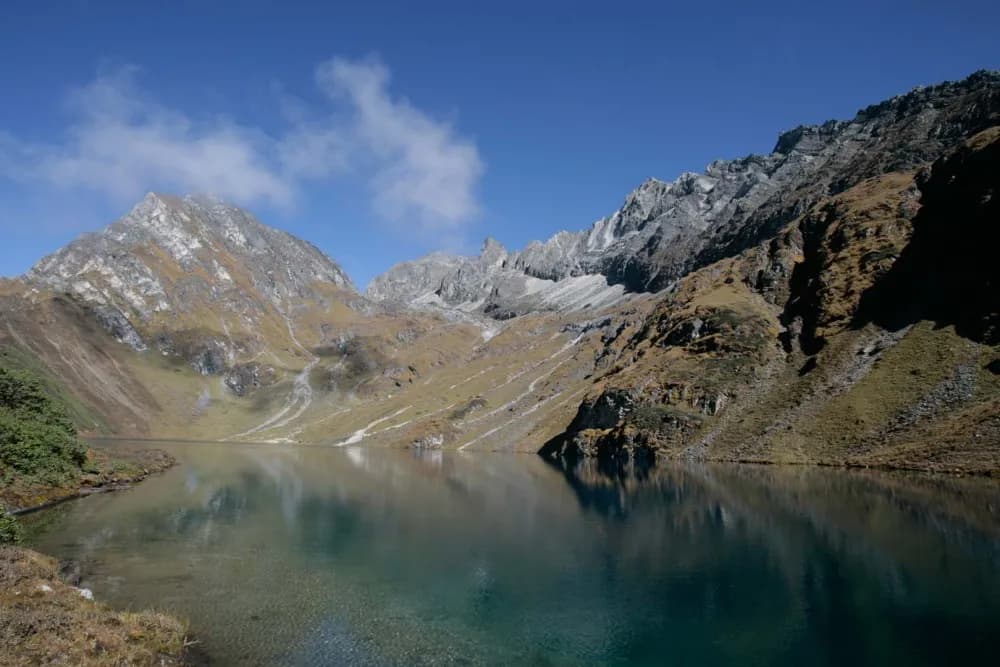
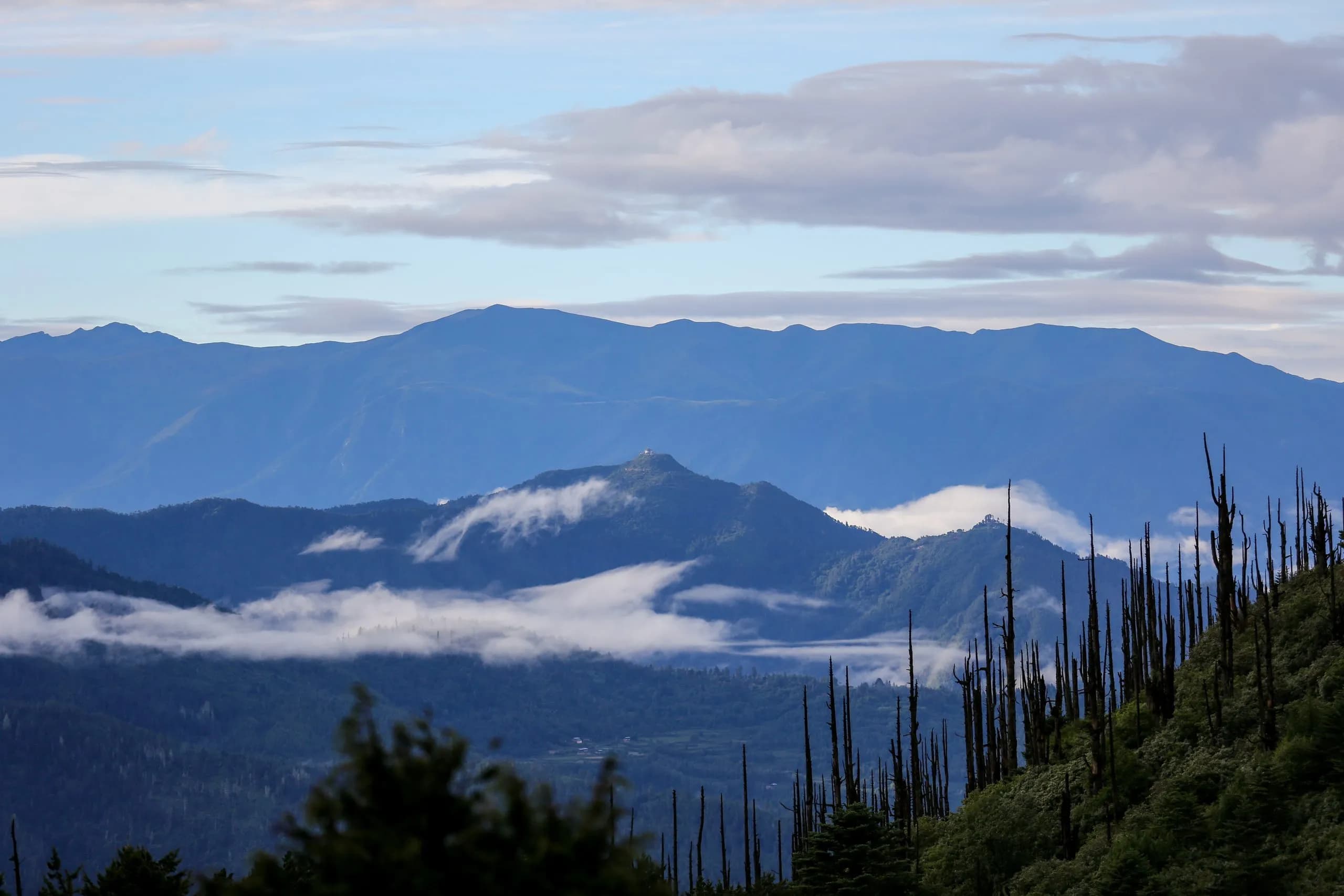
The route
A sample shape of the week
DAY 01
Arrival in Paro — the one gateway in
Paro is Bhutan's only airport, and the approach is a thing in itself — a visual descent flown by a small number of certified pilots, difficult but not dangerous. Met in the arrivals hall, a short transfer to the lodge at around 2,200 metres, and an unhurried first walk to Rinpung Dzong if the light is still up.
DAY 02
Across to Thimphu — the capital, slowly
The 54-kilometre road to Thimphu, about an hour and a quarter, following the Wang Chhu. The Memorial Chorten in early light with its circling pilgrims, the great Buddha Dordenma above the valley, and the Centenary Farmers' Market if the day is right.
DAY 03
Over Dochu La to Punakha — the valley opens
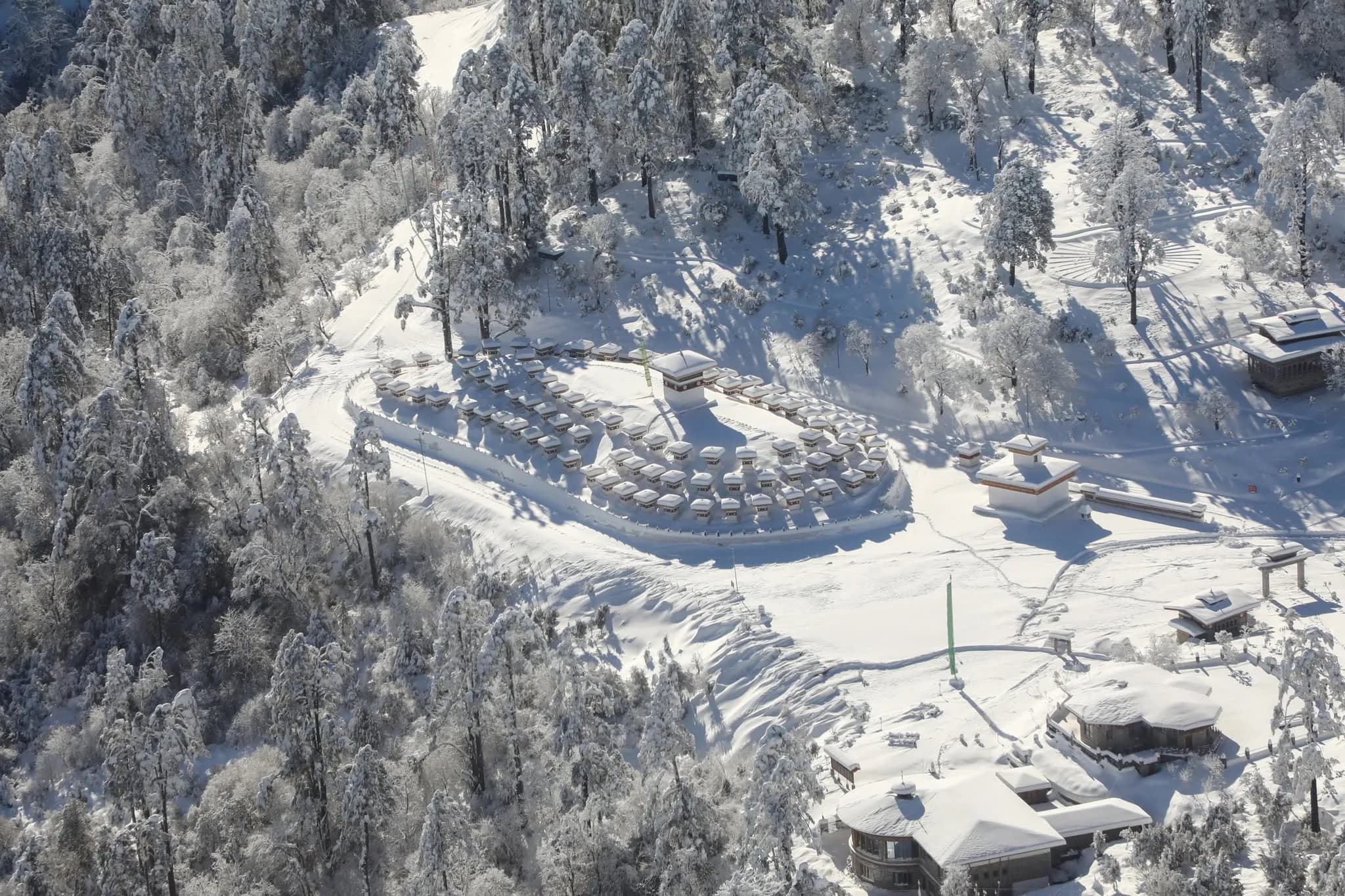
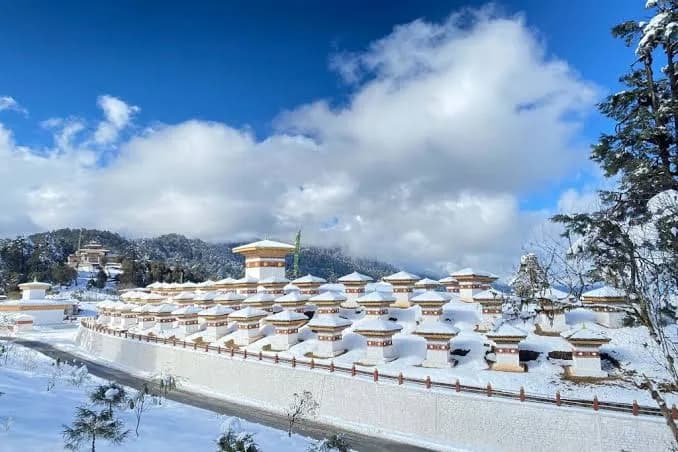
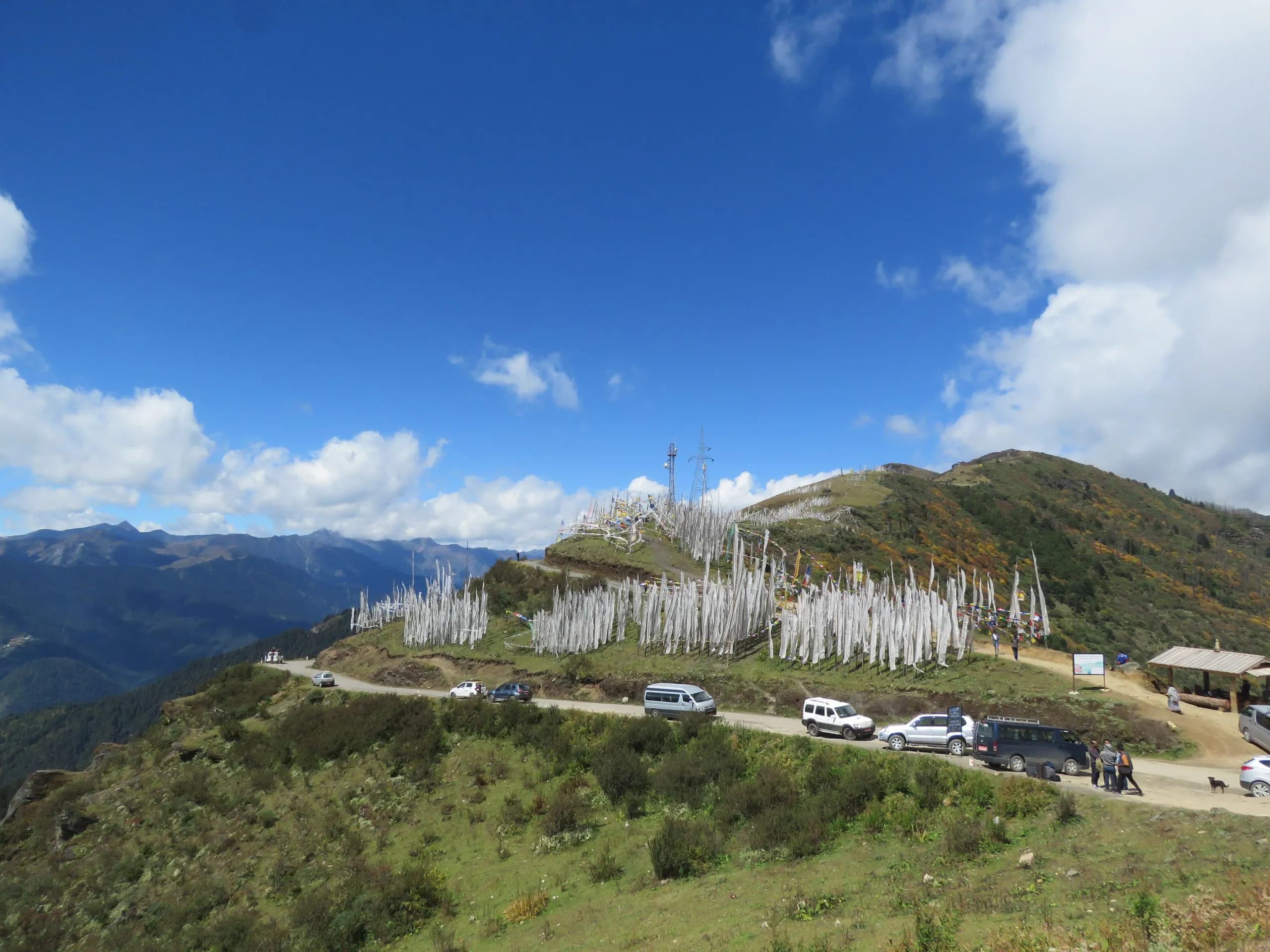
The 75-kilometre crossing to Punakha, about three hours, climbing to Dochu La at 3,100 metres — the highest point of the week — where 108 chortens stand against the eastern Himalaya on a clear morning. Down into the warmer Punakha valley and to Punakha Dzong at the confluence of the Mo and Pho Chhu in late-afternoon light.
DAY 04
A day in Punakha — paddies, bridge, slow lunch
The terraced rice of Lobesa, the gentle walk to Chimi Lhakhang through the fields, the long suspension bridge over the Pho Chhu once the wind has dropped, and a riverside lunch with nowhere else to be.
DAY 05
Back to Paro — ahead of the climb
The return over Dochu La with the range behind you. Kyichu Lhakhang, one of the country's oldest temples and a place of quiet living devotion, in the afternoon, and an early night with the next morning's walk briefed by your guide.
DAY 06
The Tiger's Nest — paced the right way
Taktsang clings to its cliff at 3,120 metres above the Paro valley. The switchbacks are walked at your own pace with the guide reading the altitude; lunch at the cafeteria across the gorge; a hot stone bath at the lodge for the descent.
DAY 07
Departure from Paro
Breakfast at the lodge, the guide walks you back to the terminal for the morning flight, and the team writes a fortnight on to hear how it settled.
The day-by-day above is illustrative. The proposal you receive is built around your dates, your pace and your interests, not this template.
Frequently asked
- Should I choose Bhutan or Tibet?
- It depends on what draws you, and both reward the traveller who comes for Buddhist culture. Choose Tibet if your heart is set on the great plateau monuments — the Potala, the Jokhang, the high monasteries of learning — and you are prepared for serious altitude and a more organised, group-permit way of travelling. Choose Bhutan if you want a living, freely practised Buddhist tradition met at close range, far fewer people around you, the ease of one private guide on a planned arc, working dzongs and tshechu festivals, and valleys at a moderate height that let you settle in gently. A useful rule of thumb: Tibet for the traveller set on the plateau's particular monuments and ready for the height; Bhutan for the culture-first traveller who values living practice, privacy, ease, and a kinder altitude. We recommend Bhutan warmly to most who ask — without any wish to diminish what Tibet holds.
- How do altitude and access differ between Bhutan and Tibet?
- These are the two practical differences that matter most. On altitude: Lhasa sits at roughly 3,650 metres and much of the wider Tibetan plateau is higher still, so the height is a serious part of any Tibet journey and worth preparing for properly. Bhutan's western circuit is gentler — Paro and Thimphu lie between about 2,200 and 2,400 metres, Punakha lower again, and Dochu La at 3,100 metres is the highest point most weeks reach, which suits travellers who would rather acclimatise slowly. On access: travel in Tibet is arranged through organised group permits and set itineraries, with movement more tightly controlled. Bhutan is reached on its own terms — international visitors travel with a licensed guide, but the journey itself is private and shaped around you, with the day adjusted to how you actually like to travel. For ease and privacy at a kinder altitude, Bhutan is the more forgiving of the two.
- Is the Buddhist culture really 'living' in Bhutan in a way it differs elsewhere?
- It is the heart of what sets a Bhutan week apart. The dzongs are working seats of monastic and civil life rather than monuments to walk through; the tshechu festivals are danced for the community first, with masked cham performed as an act of devotion the visitor is welcomed to witness; the temples you enter are full of people at prayer. Vajrayana Buddhism here is practised freely and as a matter of course, woven through ordinary life — the prayer flags on the passes, the chorten on the morning walk, the butter lamps at Kyichu Lhakhang. You are not looking at a preserved tradition behind glass; you are a quiet guest in one that is fully current. For many travellers that immediacy, met with a private guide who carries the context, is the reason Bhutan stays with them.
- What time of year is best for a culture-first week in Bhutan?
- October and November are the photographer's autumn — the clearest skies for the eastern Himalaya from Dochu La, the festival peak in many valleys, and crisp, settled days for the walk to Tiger's Nest. April is the second window: rhododendron and cherry blossom, longer evenings, and a green softness to the valleys. Both seasons read beautifully and acclimatise gently. We would steer you away from the deep monsoon of July and August unless you specifically want Green Bhutan — the quieter, rain-washed valleys with the rice at its most vivid — and are relaxed about cloud on the high passes.
Journeys you might also weigh
- 01Bhutan or LadakhA gracious comparison for the couple drawn to both. Ladakh is one of the great high-desert landscapes on earth — a stark, luminous plateau of gompas and ochre ridgelines. Bhutan is its green counterpart: a self-contained Himalayan kingdom of forested valleys at a gentler altitude, where Vajrayana Buddhism is lived rather than visited and every guest travels privately with a guide. This page is here to help you choose — and, if it is Bhutan, to show what a representative week across Paro, Thimphu, and Punakha looks like.7 nights
from $7,000 - 02Bhutan or NepalA fair comparison for the couple choosing between two remarkable countries. Nepal is the great trekking heartland of the Himalaya; Bhutan is the quieter, guided, culture-first one. This page is here to help you work out which fits — and, if it is Bhutan, what a representative week across Paro, Thimphu, and Punakha looks like.7 nights
from $7,000 - 03Bhutan or SikkimA gracious comparison for the couple drawn to both. Sikkim is one of the loveliest corners of the eastern Himalaya — a green, mountainous Indian state of monasteries, rhododendron forests, and clear Kanchenjunga mornings, easy to fold into a wider trip through Darjeeling. Bhutan is its near neighbour and quiet counterpart: an independent Himalayan Buddhist kingdom of working dzongs and living festivals, travelled as one seamless private journey with a guide and a single permit handled for you. This page is here to help you choose — and, if it is Bhutan, to show what a representative week across Paro, Thimphu, and Punakha looks like.7 nights
from $7,000
Begin when you're ready.
A few questions, or a conversation in your own words. A bespoke draft either way.

