THE HONEST FIGURE, AND WHAT SITS BEHIND IT
How much does a trip to Bhutan cost? — What a week in Bhutan costs, what is bundled into it, and what is not.
It is a fair thing to want settled before anything else, and we would rather set it out plainly than have you piece it together from a dozen half-answers. A Bhutan journey is priced as one figure that already carries the larger part of the trip — your private guide, your driver and vehicle, your lodging, most of your meals, monument and permit fees, and the Sustainable Development Fee of USD 100 per night for each international adult. International flights, any premium lodge upgrade, and personal spending sit outside it. Bhutan is not a budget destination and is not trying to be — that is a deliberate national choice, and below is what the choice buys, set against a representative western-circuit week.
7 nights · Luxury tier · from USD 6,000 per traveller
- Nights
- 7
- From
- USD 6,000per traveller
- Tier
- Luxury
- Best season
- Autumn
- Suits
- Couple
- Departing
- Worldwide
The figure, and the honest shape of it
Most of what you will spend in Bhutan is settled before you arrive, in a single quoted figure, and we set that figure out as a breakdown rather than a round number so you can see what each part is. A considered seven-night western-circuit week — Paro, Thimphu, Punakha, and back to Paro for Taktsang — sits, per traveller, in the band shown lower down this page. Where you land within it is a matter of which lodges you choose and how the days are shaped, not of any charge appearing later that you were not told about. We work across three broad tiers — premium, luxury, and signature — and the honest difference between them is the lodging and the degree of privacy, not the country you see. The dzongs, the passes, the guide who is yours for the week: those are constant across all three.
The Sustainable Development Fee, and where it goes
A daily levy sits inside the figure and is worth naming on its own, because it is a sovereign charge rather than a margin of ours: the Sustainable Development Fee, set by the Royal Government of Bhutan at USD 100 per night for each international adult. Indian nationals pay Nu 1,200 per night; Bangladeshi nationals USD 15. It is not a service fee dressed up — it funds free healthcare and free education for Bhutanese citizens, and the conservation work that keeps the country forested, carbon-negative, and uncrowded. This is the working mechanism of Bhutan's high-value, low-volume policy: deliberately fewer visitors, so the culture stays lived rather than staged. A portion of what you pay for a week here goes to a child's schooling and a forest ranger's wage. Few travel costs are as legible about what they support, which is why we show it as its own line rather than folding it away.
What the figure includes, and what it does not
Bundled into the quoted price: a private licensed guide for the full week, a private driver and vehicle, all in-country transport, your lodging, most meals, the monument and permit fees across the route, and the Sustainable Development Fee. What sits outside it, and why: international flights, on which we advise openly and which you book yourself, since fares move and we would rather you held the booking than paid a marked-up version of it; any premium lodge upgrade you choose beyond the tier we have quoted; and personal spending and gratuities. We separate the two deliberately. A figure that quietly absorbs the flights and the upgrades is harder to read, not easier, and reading it clearly is the point.
Why Bhutan is priced the way it is
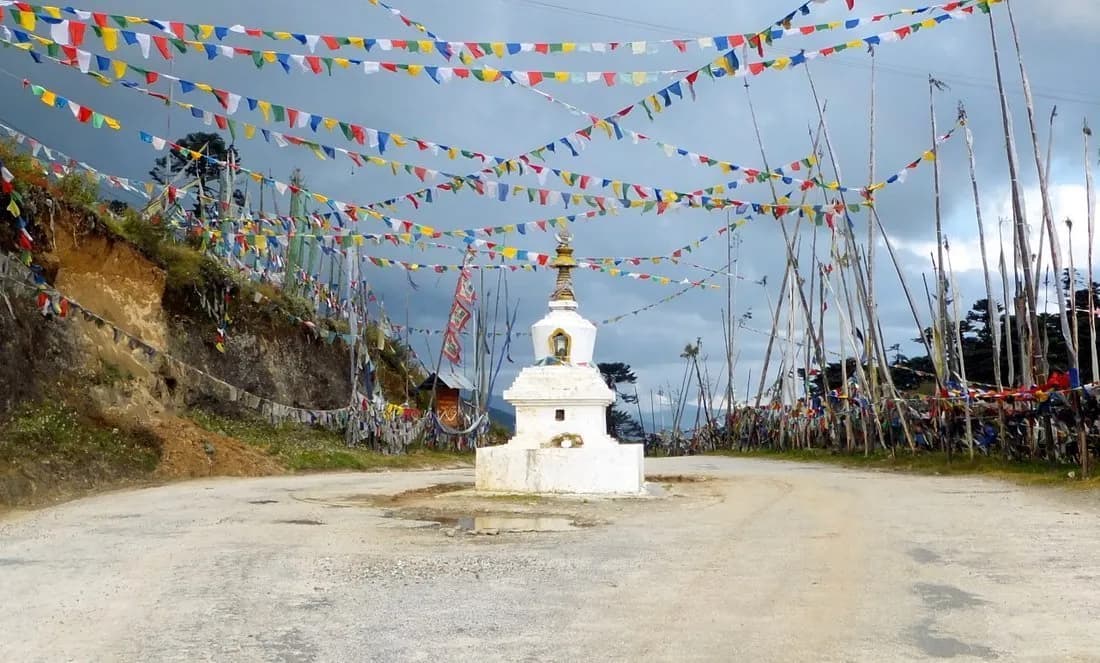
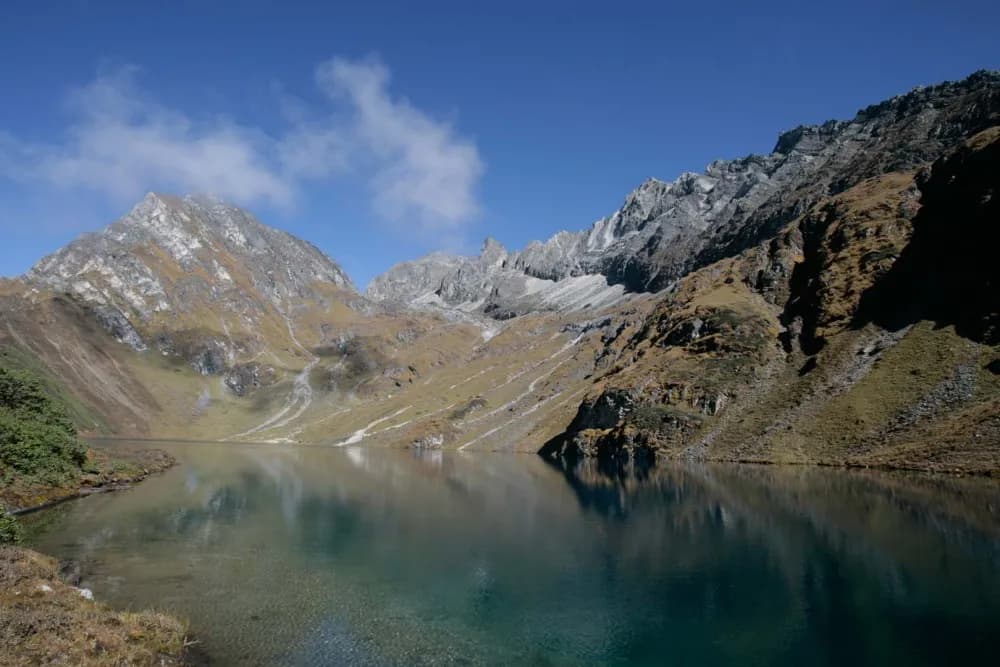
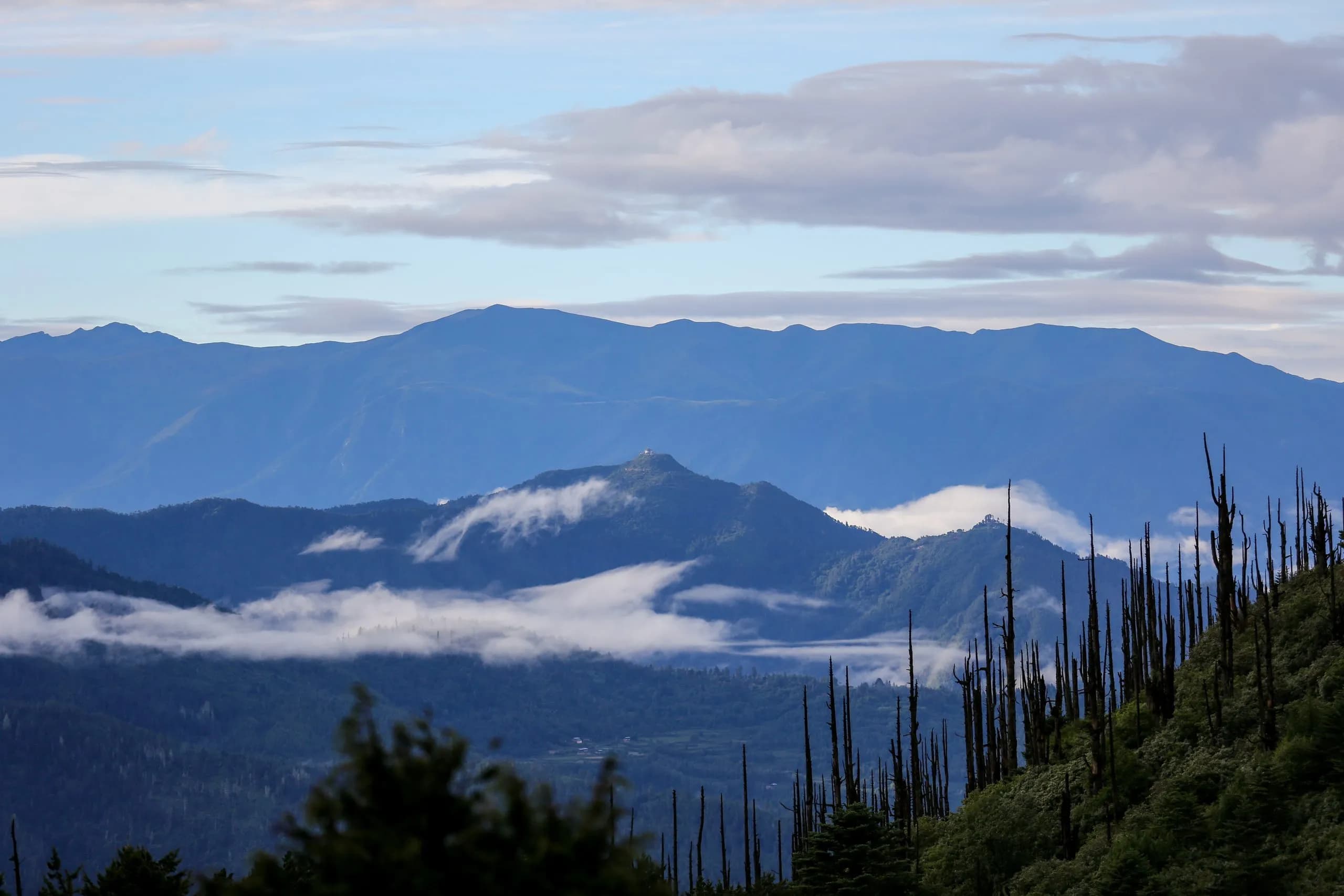
Bhutan is not built for the lowest possible daily cost, and that is the policy working as intended rather than an oversight. The country chose, decades ago, to receive fewer visitors at a higher value rather than many at a lower one — so the switchbacks below Taktsang are walked at your own pace rather than queued, Punakha Dzong at the river confluence is a place of worship you happen to be standing in rather than a thoroughfare, and the cham dances at a tshechu are danced for the community you are a guest among. The cost is the reason the country still reads the way the photographs promised. If the aim is the keenest per-day price or expedition trekking at the best daily rate, the high Himalaya has places better matched to it, and we would say so on a first call. The fee buys a particular kind of week — unhurried, private, and light on the country it moves through. If that is what you are after, it earns its place.
The route
A sample shape of the week
DAY 01
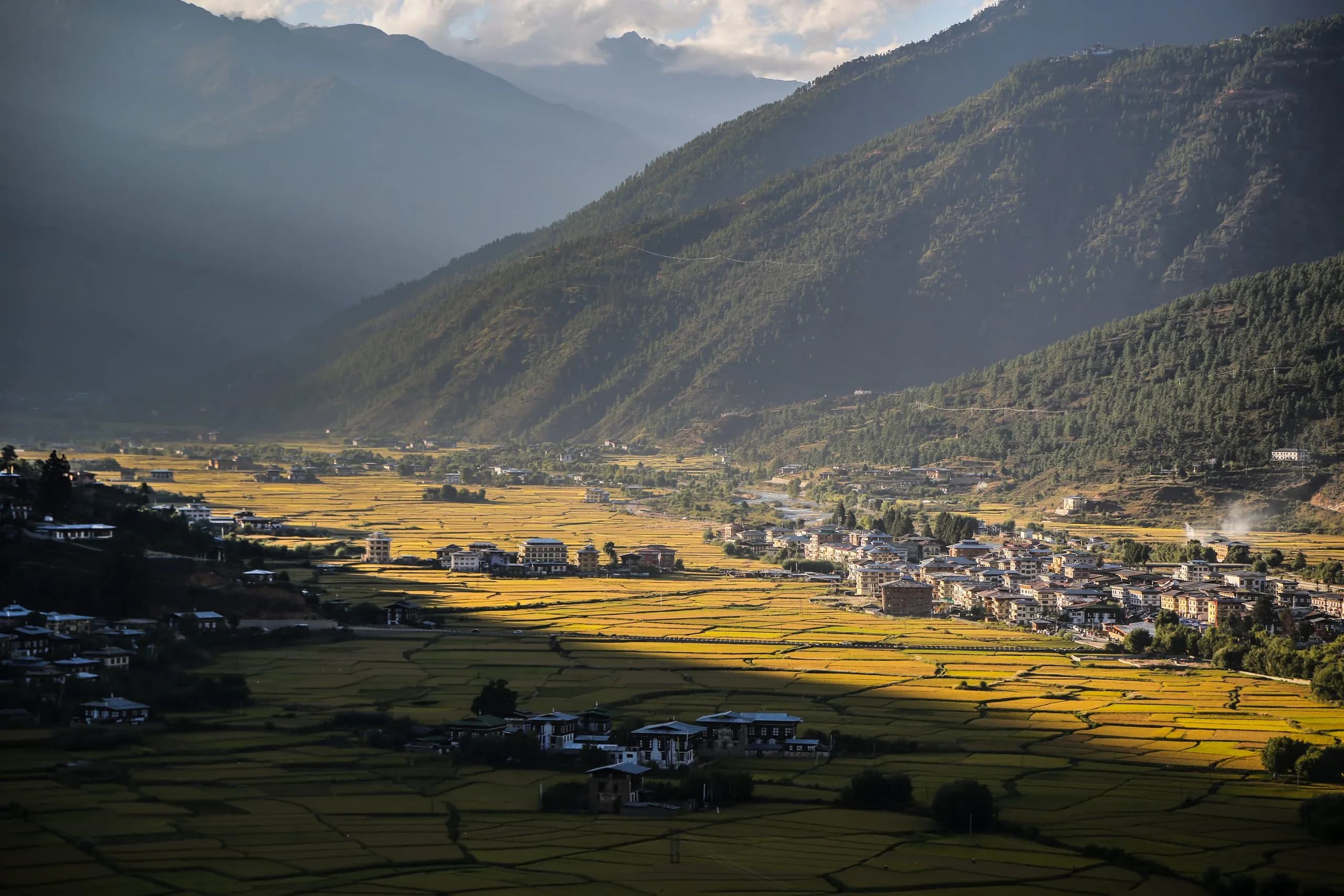
Arrival in Paro — the valley, unhurried
Met in the arrivals hall by your guide, a short drive to the lodge, and an easy first walk along the Pa Chhu to Rinpung Dzong if the afternoon light holds.
DAY 02
Paro — Kyichu Lhakhang and the valley floor
One of the country's oldest temples in the morning, the farmhouses and paddies of the valley taken at a walking pace, and the climb ahead briefed quietly over dinner.
DAY 03
Taktsang — the Tiger's Nest, at your own pace
The switchbacks taken slowly to the temple at 3,120 metres, the cliffside reached without a queue, lunch at the cafeteria on the way down, and a hot stone bath waiting at the lodge.
DAY 04
Across to Thimphu — the capital, slowly
The 54-kilometre road to Thimphu, the Memorial Chorten in early light, and the unhurried capital — the markets, the National Library, a craft workshop or two.
DAY 05
Over Dochu La to Punakha — the pass opens
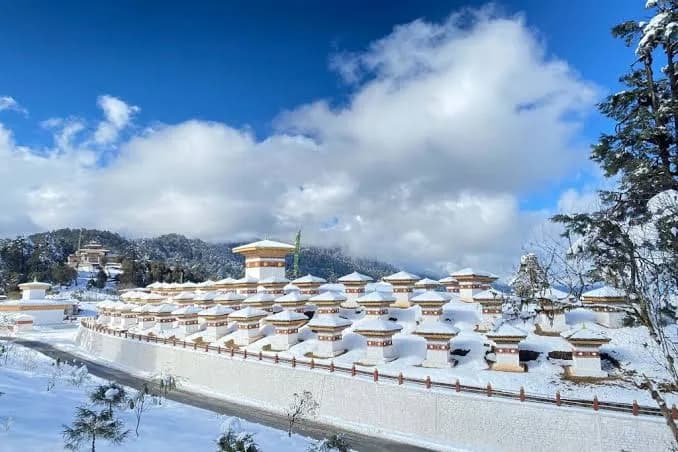
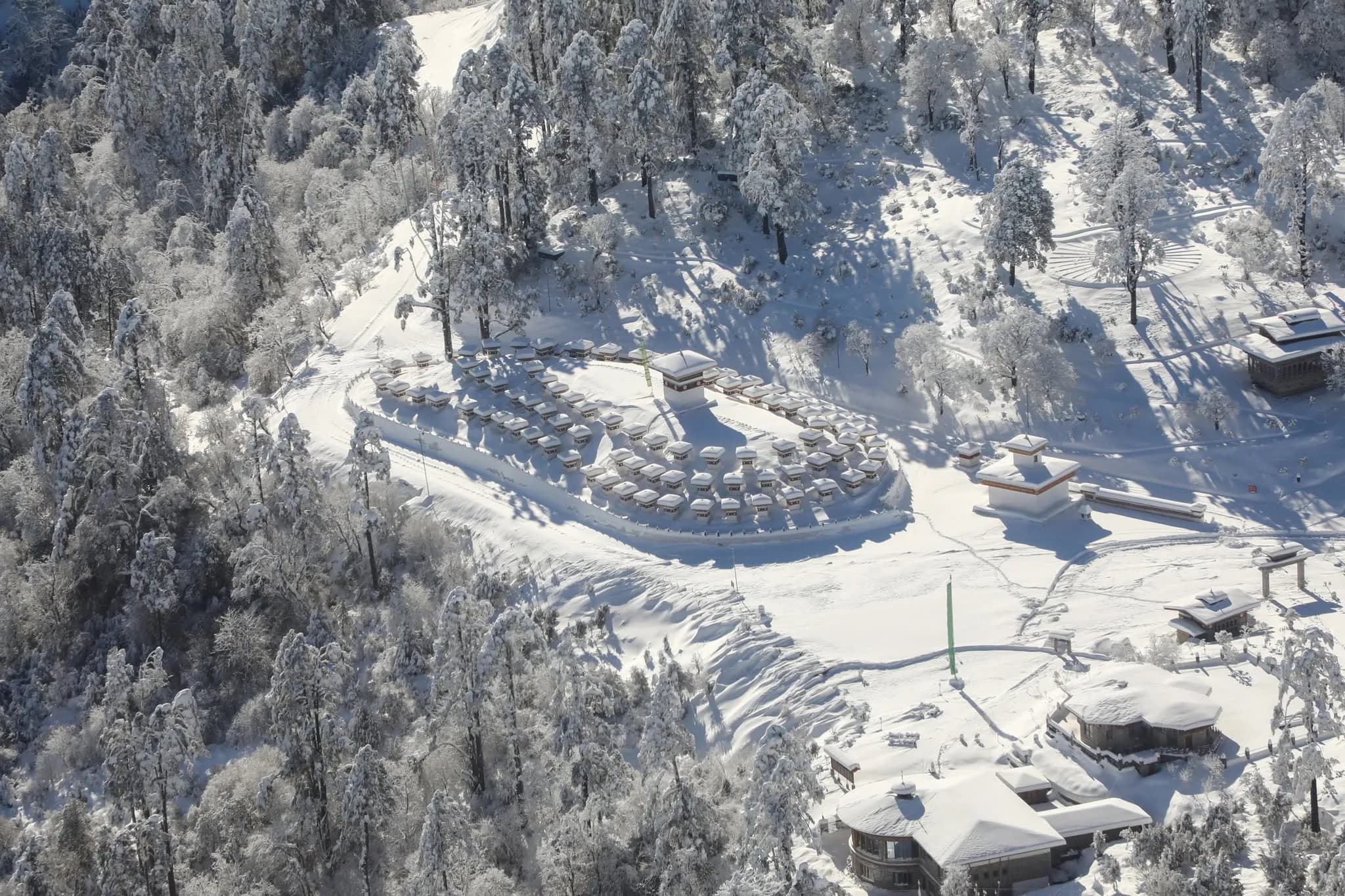
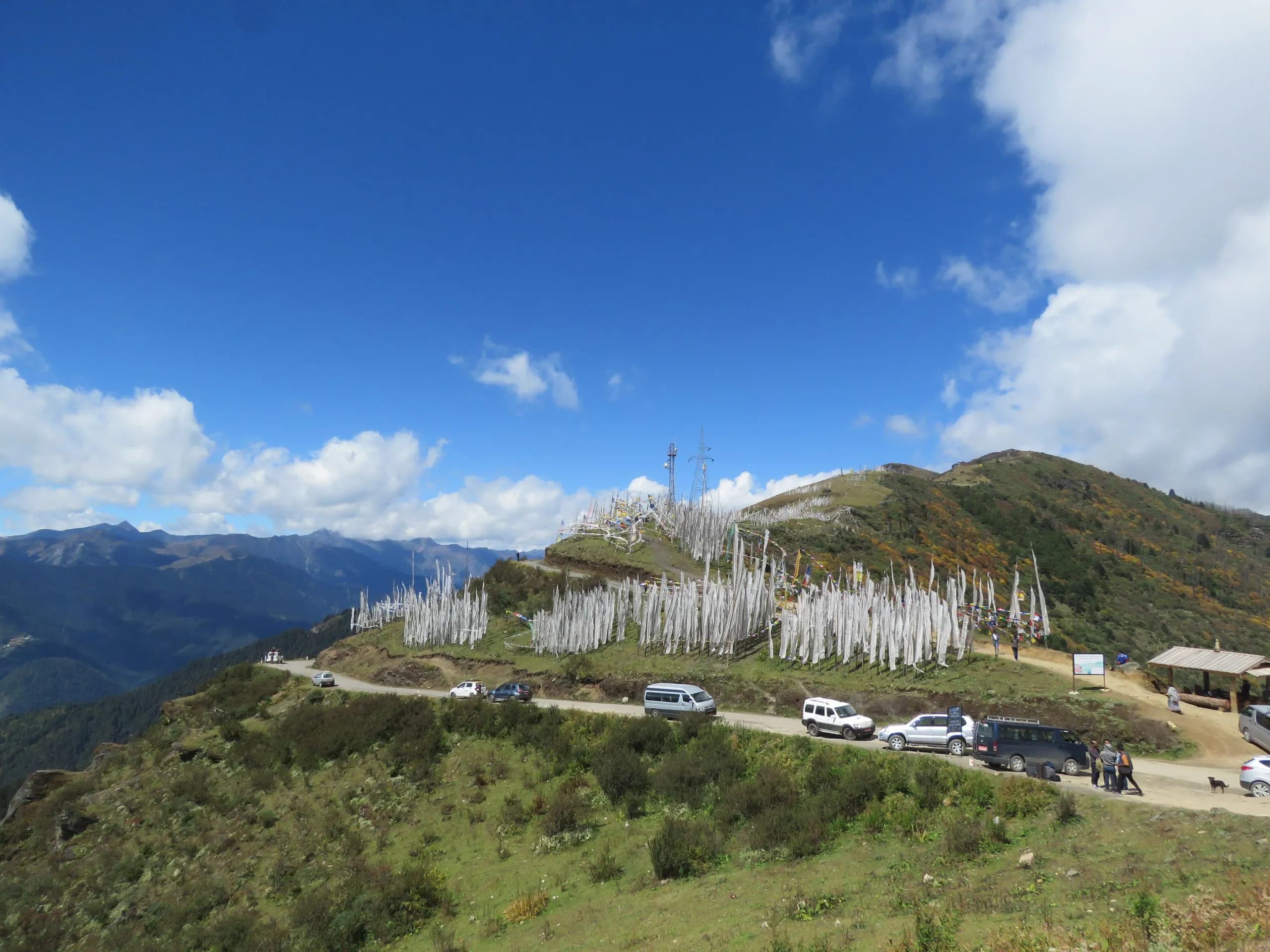
The 3,100-metre pass and its 108 chortens, the eastern range on a clear morning, and Punakha Dzong at the confluence of the Mo and Pho Chhu in late-afternoon light.
DAY 06
Punakha — paddies, a suspension bridge, a slow lunch
The terraced rice of Lobesa, Chimi Lhakhang reached on foot through the fields, a long riverside lunch, and the suspension bridge when the wind has dropped.
DAY 07
Back over the pass to Paro — departure
The return across Dochu La, a final evening in Paro before the early flight, and the guide walking you back to the terminal in the morning.
The day-by-day above is illustrative. The proposal you receive is built around your dates, your pace and your interests, not this template.
Frequently asked
- How much does a trip to Bhutan cost?
- A considered private seven-night western-circuit week — Paro, Thimphu, Punakha, and back — sits, per traveller, in the band shown on this page, with the figure carrying your guide, driver and vehicle, lodging, most meals, monument and permit fees, and the Sustainable Development Fee. Where you land within the band is a matter of which lodges you choose and how the days are shaped. International flights, premium lodge upgrades, and personal spending sit outside it. We quote as a breakdown rather than a round number, so the parts are legible and nothing appears later that you were not told about.
- What is the SDF and what does it cover?
- The Sustainable Development Fee is a daily levy set by the Royal Government of Bhutan: USD 100 per night for each international adult, Nu 1,200 for Indian nationals, and USD 15 for Bangladeshi nationals. It funds free healthcare and free education for Bhutanese citizens, together with the conservation work that keeps the country forested and carbon-negative. It is a sovereign charge rather than a fee of ours, which is why we set it out as its own line in the proposal. It is the working mechanism of Bhutan's high-value, low-volume policy — deliberately fewer visitors, so the culture stays lived rather than staged.
- What's included in the price?
- The quoted figure bundles a private licensed guide for the full week, a private driver and vehicle, all in-country transport, your lodging, most meals, the monument and permit fees across the route, and the Sustainable Development Fee. What sits outside it: international flights, on which we advise openly and which you book yourself, since fares move and we would rather you held the booking; any premium lodge upgrade beyond the tier we have quoted; and personal spending and gratuities. We separate the two on purpose, because a figure that quietly absorbs the flights and the upgrades is harder to read, not easier.
- Why is Bhutan expensive?
- Bhutan chose, decades ago, to receive fewer visitors at a higher value rather than many at a lower one — and the cost is that policy working as intended rather than an oversight. It is the reason the trails below Taktsang are walked rather than queued, the dzongs are working buildings rather than exhibits, and the country remains one of the few on Earth that takes back more carbon than it puts out. The Sustainable Development Fee is part of it, and it funds healthcare, education, and conservation for the people of Bhutan. The cost buys an unhurried, private week that is light on the country it moves through. If the aim is the keenest per-day price, the high Himalaya has better-matched options, and we would tell you so on a first call.
Journeys you might also weigh
- 01Is Bhutan worth the Sustainable Development Fee?The fee is the most reasonable thing to pause on before a Bhutan visit. It is USD 100 per night for each international adult — set by the Royal Government of Bhutan, confirmed through 31 August 2027 — and it is the reason the trails to Tiger's Nest are quiet, the dzongs are working buildings rather than exhibits, and the country remains one of the few on Earth that takes back more carbon than it puts out. Below: what the fee funds, what it underwrites for the people of Bhutan and for you, and a representative western-circuit week so the value is concrete rather than asserted.7 nights
from $6,000 - 02Do I need a guide in Bhutan?Every international visitor to Bhutan travels with a licensed Bhutanese guide, and on the road a driver as well — it is part of the Royal Government's framework, and the visa and permits are arranged through the licensed operator rather than by you. There is no provision for self-arranged backpacking. We could be defensive about that, but it would be the wrong instinct: the matched guide is the difference between seeing Bhutan and understanding it. Below: the honest answer, why the requirement reads as a privilege rather than a constraint, and a representative western-circuit week set firmly to your own pace.7 nights
from $6,000 - 03Bhutan trip from AmsterdamA private Bhutan journey for couples flying from Amsterdam — Paro, Thimphu, Punakha, and back — with the long haul through a single Asian hub treated not as the price of the trip but as the first of its days. The distance is real. So is the slowing-down that begins the moment Schiphol is behind you.8 nights
from $16,000
Begin when you're ready.
A few questions, or a conversation in your own words. A bespoke draft either way.

