A Bhutanese hilltop chorten
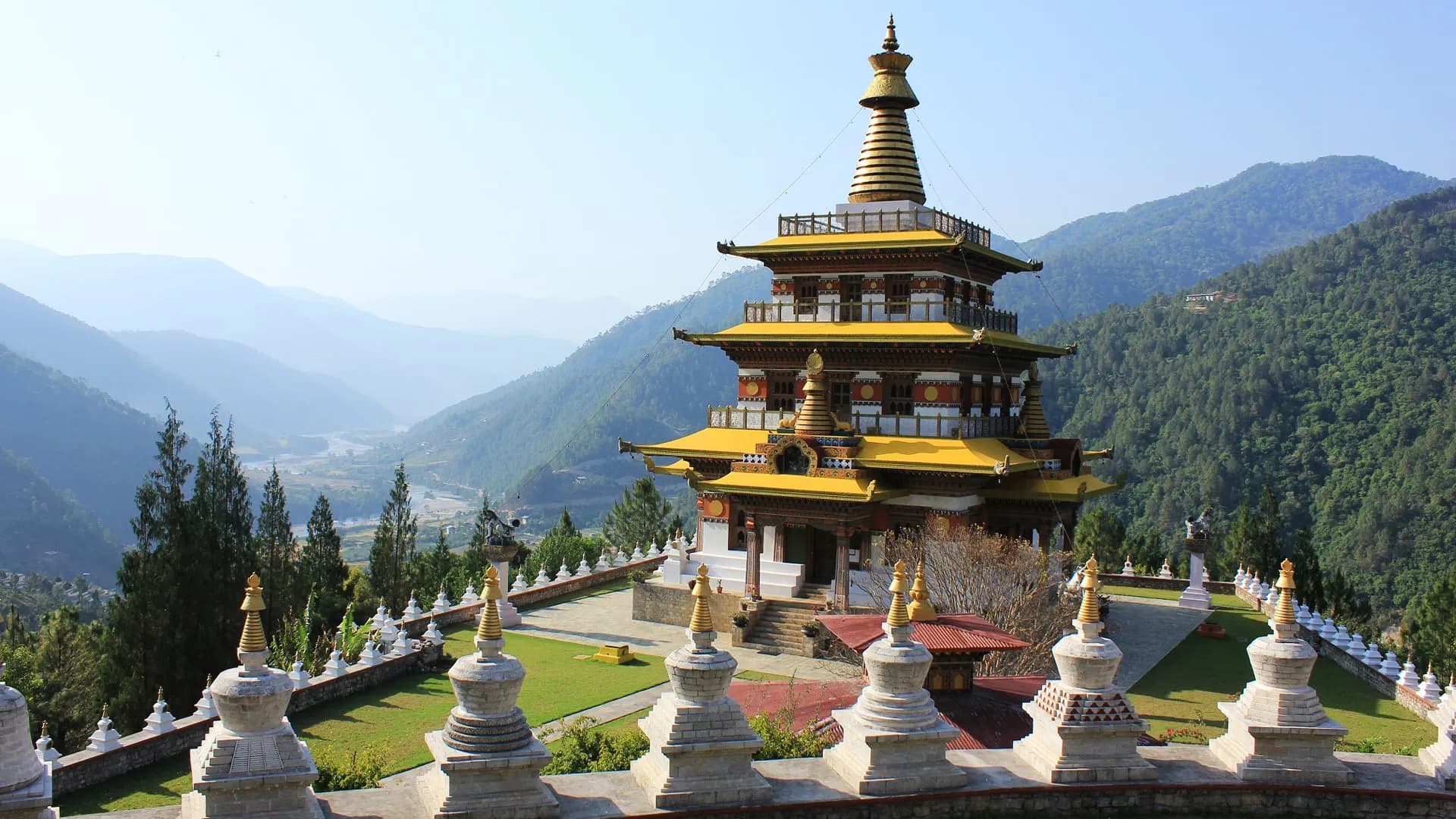
Khamsum Yulley Namgyal Chorten — the four-storey hilltop chorten with the panoramic Punakha valley view.
Khamsum Yulley Namgyal Chorten sits on a hillside above the Mo Chhu valley, north of Punakha town. The four-storey chorten was built between 1992 and 1999 by Her Majesty the Queen Mother Ashi Tshering Yangdon Wangchuck (one of His Majesty the Fourth Druk Gyalpo's queens) and is dedicated to the long life of His Royal Highness the then-Crown Prince Jigme Khesar Namgyel Wangchuck (now His Majesty the Fifth Druk Gyalpo). The walk up to the chorten takes about 45-60 minutes through rice paddies and pine-and-oak forest; the view from the top is one of the most-photographed Punakha valley panoramas.
Also known as Khamsum Yuelley Namgyal Chorten · Khamsum Yulley · Khamsum Yuelle
- Location
- Mo Chhu valley, north of Punakha town, Punakha
- Founded
- 1999
- Founder
- Her Majesty the Queen Mother Ashi Tshering Yangdon Wangchuck
- Elevation
- 1,500 m
- Kind
- stupa
The chorten and its dedication
Khamsum Yulley Namgyal Chorten is a four-storey traditional Bhutanese chorten built between 1992 and 1999 under the patronage of Her Majesty the Queen Mother Ashi Tshering Yangdon Wangchuck. The chorten was dedicated to the long life of her son, His Royal Highness the then-Crown Prince Jigme Khesar Namgyel Wangchuck (the present-day Fifth Druk Gyalpo). The construction took nearly nine years; the chorten was built using traditional Bhutanese construction techniques alongside the most-elaborate protective-deity iconography in contemporary Bhutanese chorten construction. The chorten is one of the more-significant royal-family religious patronage projects of the late-Fourth-Druk-Gyalpo era and is one of the principal contemporary religious monuments in the Punakha valley.
The four storeys and the protective deities
Each of the four storeys of the chorten houses a distinct set of protective-deity imagery. The first storey — the peaceful deities, the principal Vajrayana-Buddhist protective. The second storey — the wrathful deities, the principal protective imagery against external obstacles. The third storey — the principal teaching imagery, with the mandala and lineage paintings. The top storey — the principal viewing terrace, with the panoramic view of the Punakha valley northward toward the high Himalayan peaks. The chorten's principal religious significance is the protective-deity; the structure is held to confer substantial blessing on the royal-family tradition and on the country more broadly.
The walk up and the view
The walk to the chorten starts from the road on the eastern bank of the Mo Chhu, crosses the suspension bridge over the river, and climbs through rice paddies and pine-and-oak forest. The walk takes 45-60 minutes for the typical visitor; the gradient is moderate-and-sustained without steep sections. The Punakha valley view from the chorten's top terrace is among the most-photographed in the country — the Mo Chhu valley extending southward, the rice paddies, Punakha Dzong visible in the distance, and (on clear winter mornings) the high Himalayan peaks framing the northward view. The walk is one of the more-rewarding short-walk experiences in the Punakha valley.
Visiting
- Getting there
- Khamsum Yulley Namgyal Chorten is accessed from a road-head approximately 20 minutes' drive north of Punakha town along the Mo Chhu valley road. The walk to the chorten starts at the road-head; the matched guide arranges the trailhead transport and accompanies the walk.
- Opening hours
- The chorten is open during standard daylight hours (typically 8am to 5pm). Photography is permitted on the principal viewing terraces; some of the internal religious imagery requires shoes-and-hat-removed protocol and may be photography-restricted. The matched guide briefs visitors on the protocol.
- Dress and protocol
- The walk is moderate but substantial; appropriate hiking footwear is recommended. The chorten itself requires shoes removed and shoulders covered for entry to the principal religious storeys. The walk traverses traditional Bhutanese village landscapes; visitors should maintain the cultural-respect tradition.
- Best time to visit
- October-May for the principal visiting window. The morning (before 11am) typically gives the clearest panoramic view; afternoon clouds may obscure the Himalayan views. The walk is most-rewarding in the cooler months (October-April); spring (March-May) adds the rhododendron-and-magnolia context along the trail.
Festivals held here
Journeys featuring this site
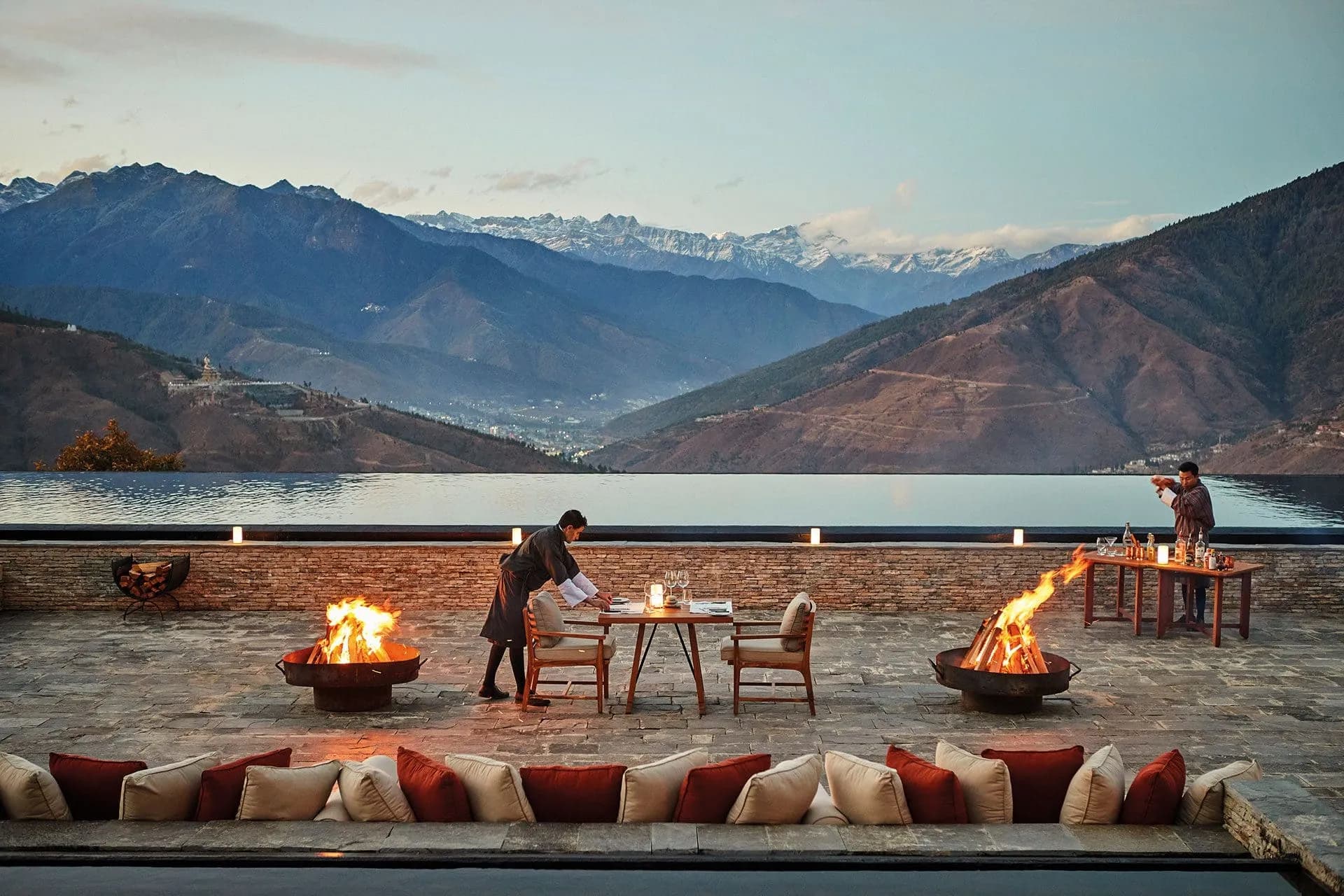 JourneyThe signature-tier Bhutan journey — private knowledgeable guide, the most considered lodge curation, helicopter or charter between valleys, exclusive-use arrangements where the season allows.The signature-tier Bhutan journey. Private knowledgeable guide, the most considered lodges, helicopter or PC-24 charter, exclusive-use arrangements. By invitation, from USD 14,000.
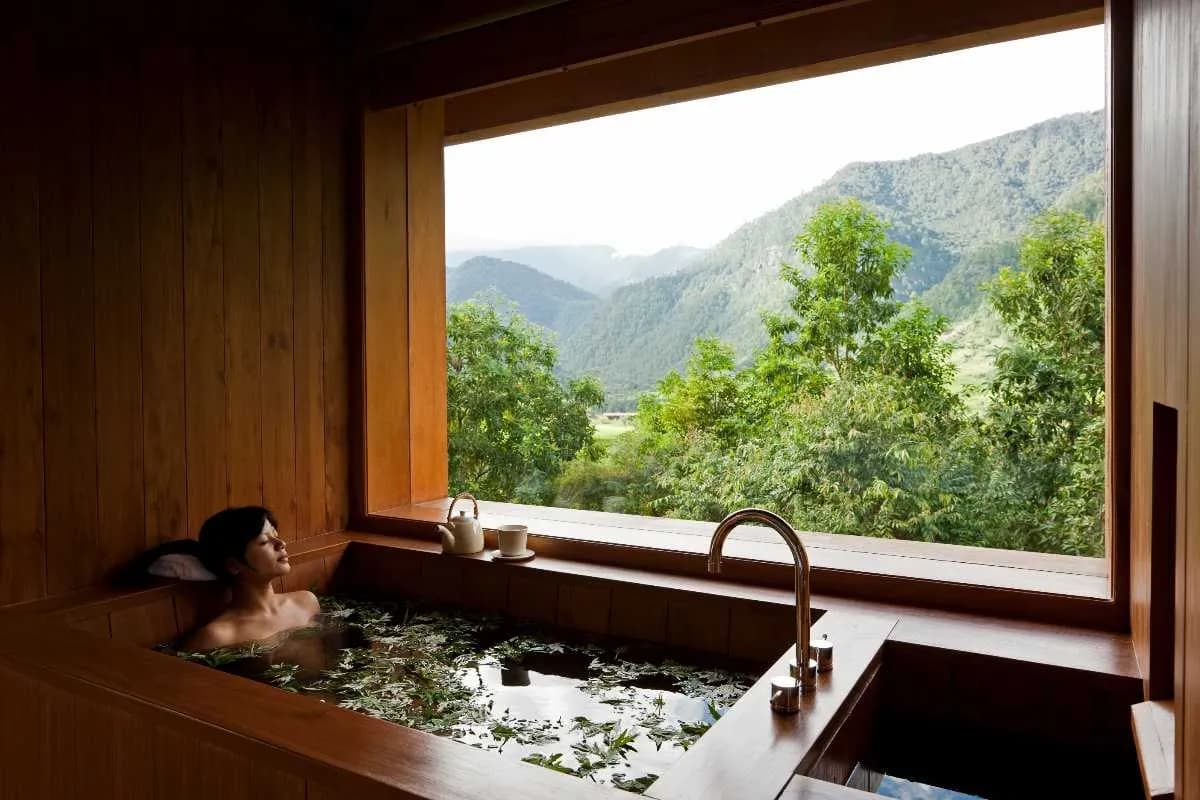 JourneySeven nights in Bhutan, on your terms.A private seven-night Bhutan honeymoon for couples flying from Singapore. Bhutanese lodges, a matched guide, transparent all-inclusive pricing.
 JourneySeven nights in Bhutan, on foot — light treks from Sydney.A seven-night Bhutan light-trek journey from Sydney — first half-day trails, comfortable lodges, a guide who paces the day to you.
Journeys that visit Khamsum Yulley Namgyal Chorten
Frequently asked
- How difficult is the walk?
- Moderate. The walk takes 45-60 minutes one way; the gradient is sustained-moderate-without-steep-sections. Most visitors find the walk rewarding rather than exhausting; the paddy-and-forest scenery is one of the more pleasant short-walk experiences in Bhutan. Visitors with mobility limitations may find the sustained gradient challenging; the matched guide briefs honestly on the trail.
- Why is the chorten dedicated to the Crown Prince?
- Her Majesty the Queen Mother Ashi Tshering Yangdon Wangchuck, the mother of His Majesty the Fifth Druk Gyalpo, commissioned the chorten as a religious patronage project for the long life and prosperity of her son. The Bhutanese royal-family tradition includes substantial religious-monument-patronage as part of the broader cultural-and-religious; the Khamsum Yulley project is the principal Mo Chhu valley example.
- Can I combine this with other Punakha valley visits?
- Yes — typically combined with the Punakha Dzong visit and Chimi Lhakhang (the Drukpa Kunley pilgrimage). A full-day Punakha valley programme accommodates all three with walking and the broader cultural-and-religious. The matched guide structures the Punakha day appropriately.

