A Bhutanese temple and bridge
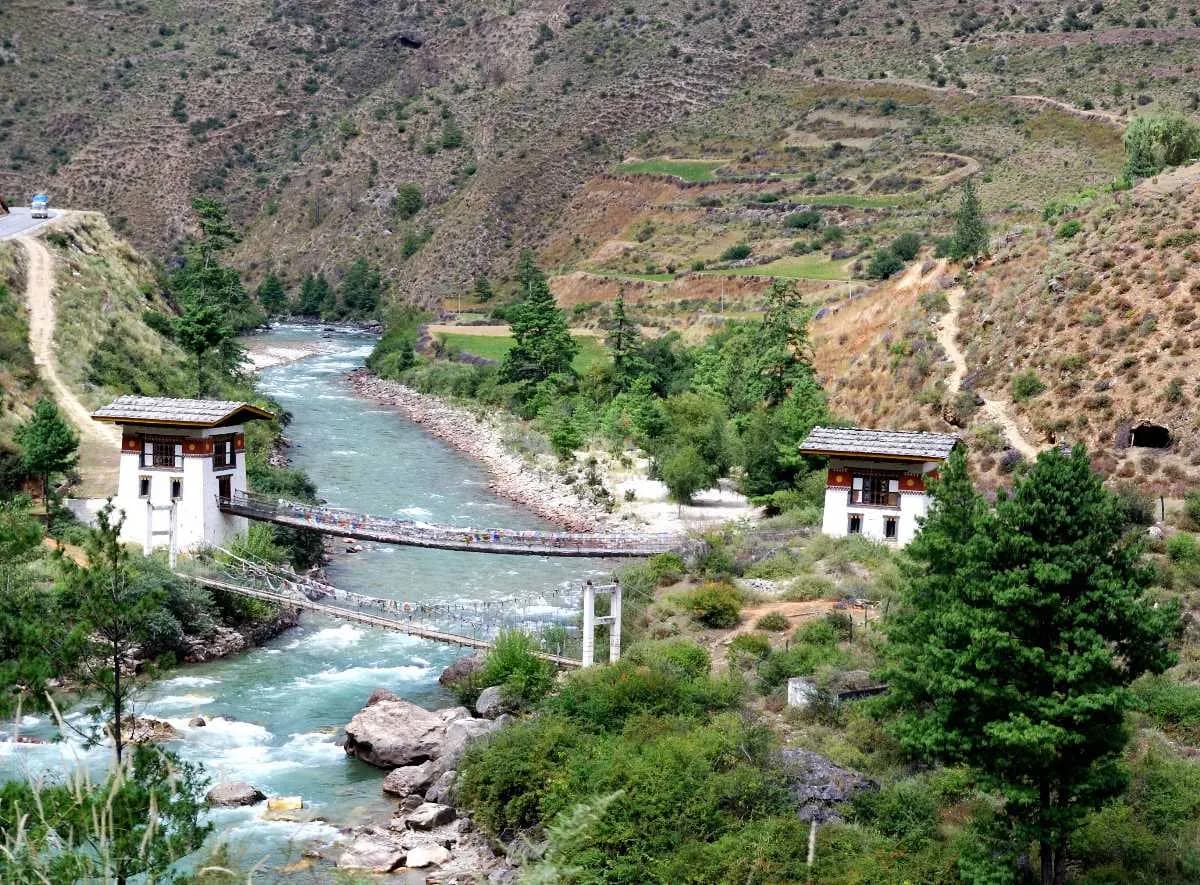
Tachogang Lhakhang — reached across an iron-chain bridge in the tradition of the saint Thangtong Gyalpo.
On the road between Paro and Thimphu, where the river runs in a gorge, an iron-chain suspension bridge hung with prayer flags crosses the water to the Tachogang Lhakhang on the far bank — a temple founded by Thangtong Gyalpo, the 15th-century saint, physician, and engineer who strung iron bridges across the rivers of the Himalaya. He is said to have raised the temple after a vision of Avalokiteshvara on a hill shaped like a horse, which gave the place its name. To cross the swaying chain bridge to the temple is to walk, in living form, into one of the most remarkable engineering and spiritual legacies in Bhutan.
Also known as Tachog Lhakhang · Tamchog Lhakhang · Tachogang iron bridge
- Location
- On the Paro–Thimphu road, across the Pa Chhu, Paro
- Founder
- Thangtong Gyalpo (15th century)
- Elevation
- 2,150 m
- Kind
- lhakhang
The horse-shaped hill
Tachogang — 'the temple on the hill of the excellent horse' — was founded by Thangtong Gyalpo (1385–1464), one of the most extraordinary figures of the Himalayan Buddhist world: a tantric adept, treasure-revealer, physician, pioneer of Tibetan opera, and above all an engineer who built dozens of iron-chain suspension bridges across the rivers of Tibet and Bhutan, earning the name Chakzampa, 'the iron-bridge maker'. He is said to have had a vision at this spot of Avalokiteshvara, the bodhisattva of compassion, mounted on the spiritual horse Balaha, on a hill shaped like a horse — and to have built the temple, and the bridge across the river to reach it, in response. The temple remains in the care of his descendants.
The iron bridge
What draws the visitor to Tachogang is the bridge: a suspension footbridge of iron chain, hung with prayer flags, slung across the Pa Chhu gorge to reach the temple on the far bank. It is built in the tradition of the chain bridges Thangtong Gyalpo strung across the Himalayan rivers six centuries ago — the original at this site fell to flood and time, and the present crossing carries his iron-chain design forward, some of the old links reputedly preserved within it. To cross it is to feel the gentle sway and to understand, physically, the saint's genius: he gave the river valleys of Bhutan a way to cross their fierce waters, fusing the practical and the sacred in a single span. Few experiences in the western valleys connect a visitor so directly to a historical figure.
The temple beyond
Across the bridge, the Tachogang Lhakhang sits against the hillside — a modest, atmospheric temple, kept by the descendants of its founder, with shrines to Avalokiteshvara and to Thangtong Gyalpo himself, often depicted as a white-haired, white-bearded yogi holding a length of iron chain. The temple is quiet and little-visited, off the rhythm of the busier Paro sights, which is part of its appeal: a place to pause on the drive between Paro and Thimphu, cross the chain bridge, and spend a contemplative half-hour with one of the country's most beloved saints. It pairs naturally with the chorten-shaped Dumtseg Lhakhang in Paro, also founded by Thangtong Gyalpo.
Visiting
- Getting there
- Tachogang stands beside the main Paro–Thimphu road, roughly halfway between the two, where the river runs in a gorge — an easy stop on the drive in either direction, no detour required. The matched guide pauses here, and walks the bridge with the visitor.
- Crossing the bridge
- The iron-chain footbridge sways gently underfoot, which is part of the experience; it is sound and regularly crossed, but worth knowing for anyone uneasy with movement or heights. The crossing takes a few minutes; allow 30–45 minutes for the bridge and the temple together.
- Dress and protocol
- Standard temple protocol at the lhakhang — shoulders and knees covered, shoes and hats removed before the shrine, no photography inside. The bridge, the river, and the prayer flags are freely photographable and the highlight for most visitors. A small offering at the temple, kept by the founder's descendants, is appreciated.
- Best time to visit
- Year-round — the site is at low elevation and comfortable in every season, and it is simply on the road. The river runs highest and most dramatic after the monsoon; the light on the gorge is best in the morning.
Journeys featuring this site
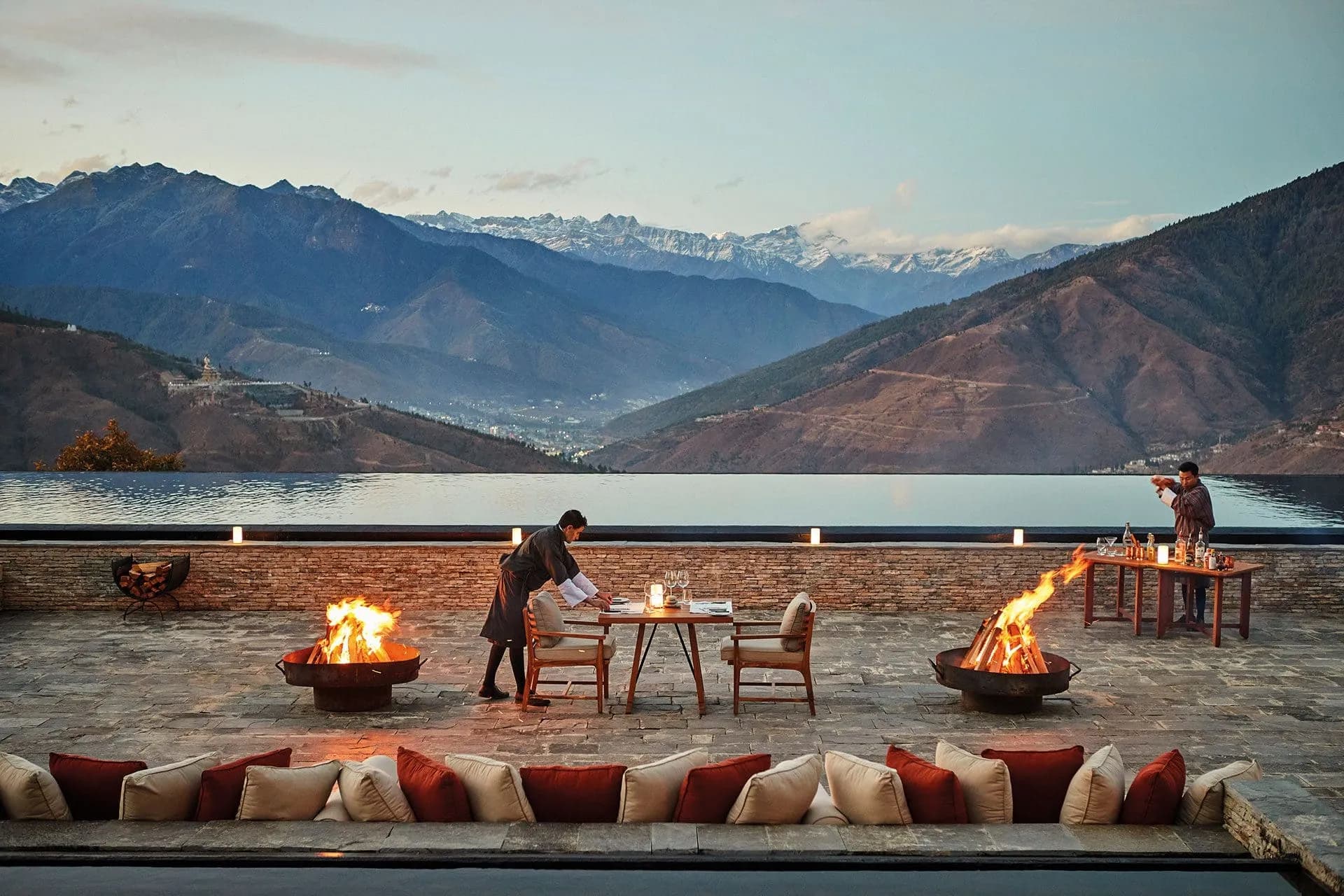 JourneyThe signature-tier Bhutan journey — private knowledgeable guide, the most considered lodge curation, helicopter or charter between valleys, exclusive-use arrangements where the season allows.The signature-tier Bhutan journey. Private knowledgeable guide, the most considered lodges, helicopter or PC-24 charter, exclusive-use arrangements. By invitation, from USD 14,000.
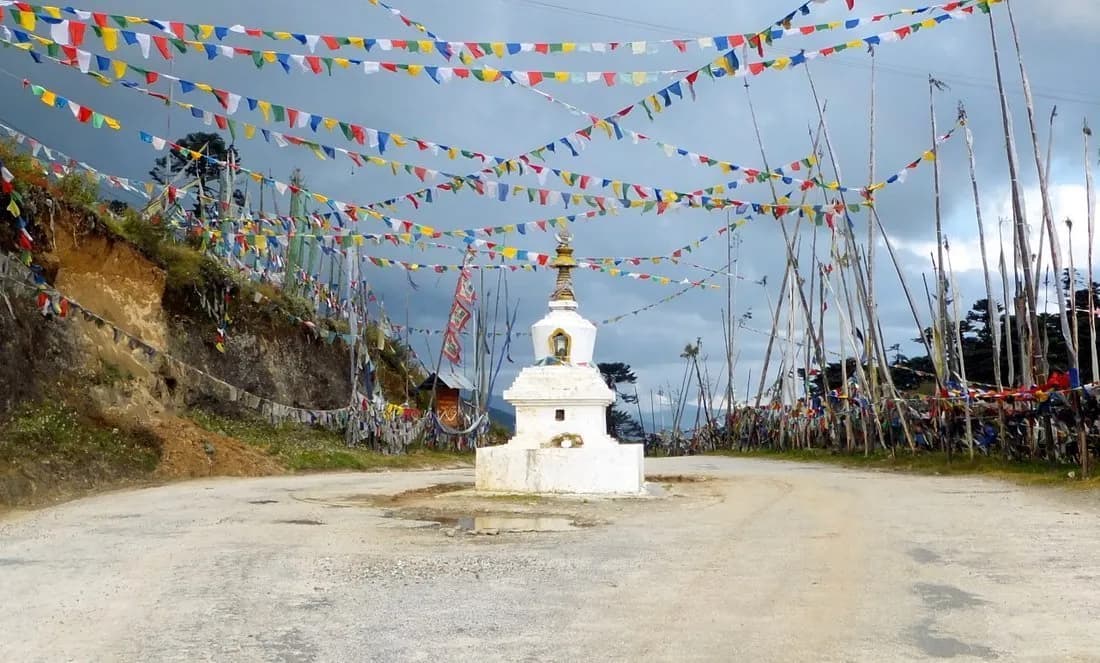 JourneyOctober light, Bhutan, a week.A seven-night Bhutan photography journey in October — Bhutan, golden-hour access at Punakha Dzong, a tripod-friendly guide, and transparent pricing.
Frequently asked
- Who built Tachogang Lhakhang?
- Thangtong Gyalpo (1385–1464), the 15th-century saint, treasure-revealer, physician, and engineer famous for building iron-chain suspension bridges across the rivers of the Himalaya — which earned him the name Chakzampa, 'the iron-bridge maker'. He founded the temple after a vision of Avalokiteshvara on a horse-shaped hill, and the temple is still kept by his descendants.
- What is special about the bridge?
- It is an iron-chain suspension footbridge in the tradition of the bridges Thangtong Gyalpo strung across the Himalayan rivers six centuries ago — some of the old iron links are reputedly preserved within the present crossing. To walk across the swaying, prayer-flag-hung chain bridge to the temple is to connect directly with one of Bhutan's most beloved historical figures and his fusion of engineering and devotion.
- Is it worth stopping on the Paro–Thimphu drive?
- Yes — it is right on the road, takes only half an hour or so, and offers something no other stop on that drive does: the iron-chain bridge of Thangtong Gyalpo and a quiet, atmospheric temple off the busier circuit. It pairs naturally with the chorten-shaped Dumtseg Lhakhang in Paro, also founded by the same saint.

