A Bhutanese village and monastery
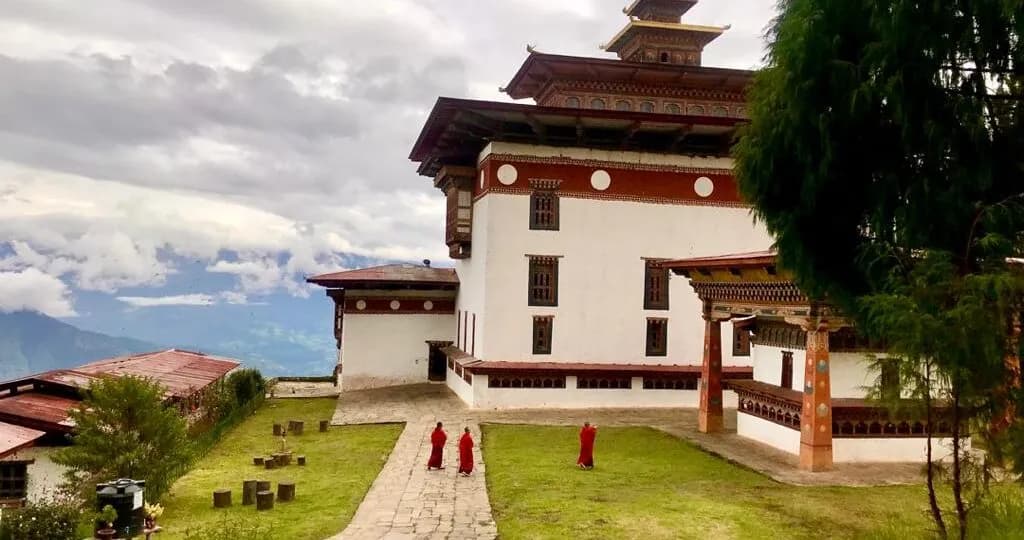
Talo — a terraced hillside village and its monastery, with one of the finest views over the Punakha valley.
Talo sits high on a terraced shoulder above the Punakha valley, at around 2,800 metres — a village long admired across Bhutan for its order and cleanliness, its houses and fields arranged in neat steps up the hillside, with the Talo Sangngacholing monastery crowning the ridge above. The air is cool and clear after the warm valley floor, the views run for miles down the Punakha and Wangdue valleys, and the pace is entirely rural. Talo is the quiet, pastoral counterpoint to the grand dzong below: a place to walk, to see ordinary Bhutanese hill life, and to take in one of the great valley panoramas.
Also known as Talo Goemba · Talo Sangngacholing · Talo village
- Location
- On the ridge above the Punakha valley, Punakha
- Elevation
- 2,800 m
- Kind
- monastery
The village on the terraces
Talo has a particular reputation in Bhutan as one of the country's most beautifully kept villages — its houses spaced along the contours of a terraced hillside, the fields stepping up the slope in neat order, the whole settlement giving an impression of calm and care. At around 2,800 metres it sits well above the warm Punakha valley floor, in cooler, clearer air, and the views from its terraces run for miles down the joined valleys of the Pho Chhu and Mo Chhu towards Wangdue Phodrang. A walk through Talo is a walk through ordinary Bhutanese hill life at its most settled and orderly — farmhouses, prayer flags, grazing cattle, the slow rhythm of the fields.
Talo Sangngacholing
Above the village, on the crown of the ridge, stands the Talo Sangngacholing monastery — the religious heart of the settlement, an active goemba whose monks set the rhythm of the village's spiritual year. Its position gives it command of the whole valley, and its annual festival, the Talo Tshechu, draws the surrounding villages together for the masked dances in the courtyard each spring — a smaller, more local, and more intimate tshechu than the great dzong festivals, and all the more rewarding for it. The monastery and the village belong to one another: the goemba above, the fields below, the festival joining them.
Why a visitor comes
Talo is not a headline monument but an atmosphere — the reason to climb up from the valley is the change of register: from the grandeur of Punakha Dzong to the human scale of a hill village, from the warm valley floor to cool clear ridge air, from the crowd to the quiet. It rewards the visitor with time, who wants to walk, to see the country away from its set-piece sights, and to stand on a terrace with one of the valley's great views opening below. For photographers, families, and anyone drawn to the pastoral side of Bhutan, it is a half-day well spent.
Visiting
- Getting there
- Talo is reached by a drive up from the Punakha valley floor — roughly 45 minutes to an hour on a winding hill road, climbing well above the dzong. The matched guide arranges the drive and a walk through the village and up to the monastery.
- What to do
- Walk the village lanes and terraces, climb to the Talo Sangngacholing monastery for the valley panorama, and simply take in the rural pace. Allow a half-day. Visitors who time their journey to the Talo Tshechu in spring can add the village festival — a smaller, more local masked-dance celebration than the great dzong tshechus.
- Dress and protocol
- Standard temple protocol at the monastery — shoulders and knees covered, shoes and hats removed before the shrines, no photography inside. In the village, the ordinary courtesy of a guest: ask before photographing people, and follow the guide's lead. The cooler ridge elevation means a layer is useful even when the valley is warm.
- Best time to visit
- Year-round, with spring (clear air, the Talo Tshechu, blossom) and autumn (harvest, the finest long views) the most rewarding. The ridge stays comfortable when the valley floor is hot, which makes Talo a good warm-season escape within the Punakha day.
Journeys featuring this site
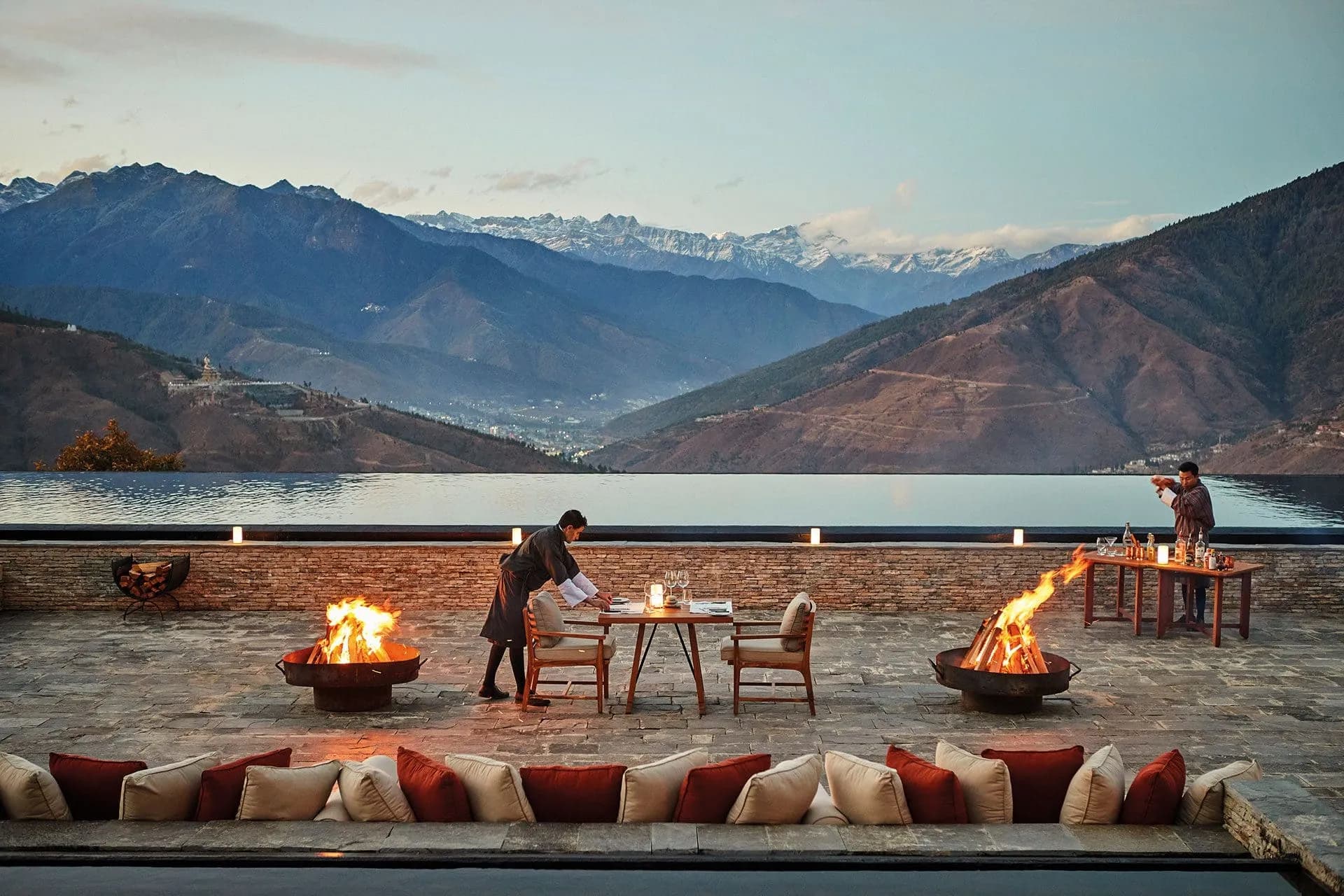 JourneyThe signature-tier Bhutan journey — private knowledgeable guide, the most considered lodge curation, helicopter or charter between valleys, exclusive-use arrangements where the season allows.The signature-tier Bhutan journey. Private knowledgeable guide, the most considered lodges, helicopter or PC-24 charter, exclusive-use arrangements. By invitation, from USD 14,000.
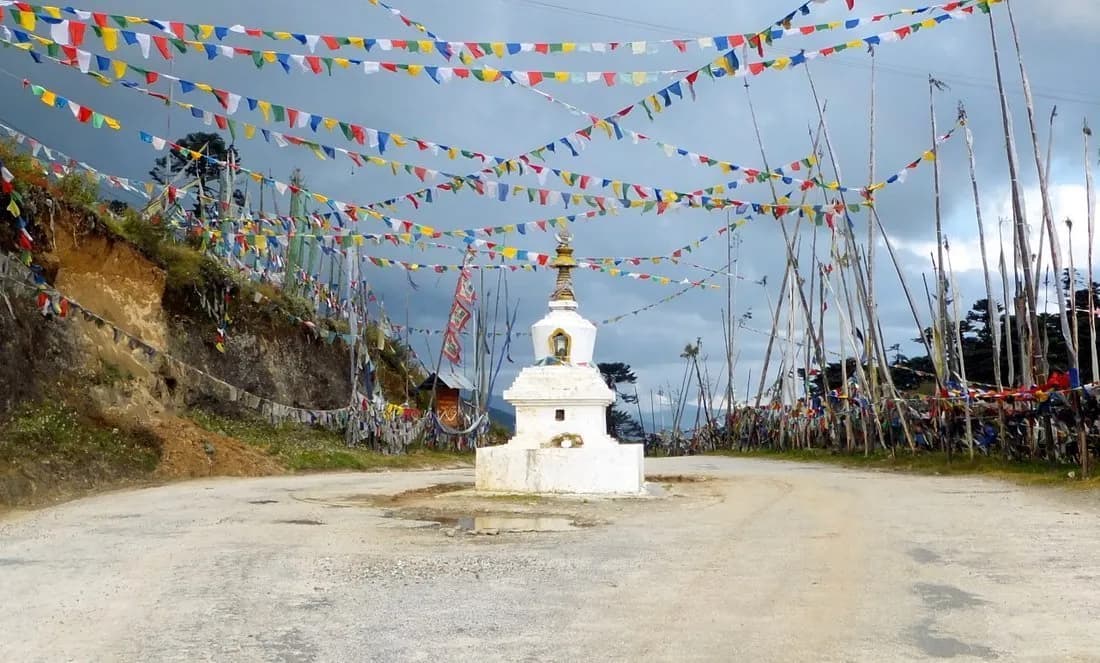 JourneyOctober light, Bhutan, a week.A seven-night Bhutan photography journey in October — Bhutan, golden-hour access at Punakha Dzong, a tripod-friendly guide, and transparent pricing.
Frequently asked
- Why is Talo worth the drive up from Punakha?
- For the change of register and the view. Talo is one of Bhutan's most admired hill villages — neatly terraced, calm, and orderly — sitting in cool clear air well above the warm Punakha valley, with sweeping views down towards Wangdue. After the grandeur of Punakha Dzong, it offers the human-scale, pastoral side of Bhutan: a half-day of walking, ordinary village life, and a great valley panorama.
- What is the Talo Tshechu?
- The annual masked-dance festival of the Talo Sangngacholing monastery, held in spring, which draws the surrounding villages together in the goemba courtyard. It is a smaller, more local and intimate tshechu than the great dzong festivals — rewarding for visitors who want a village celebration rather than a crowded set-piece. The matched guide can time a journey to it.
- Is Talo suitable for a relaxed visit?
- Yes — it is gentle and unhurried, with easy walking through the village and a short climb to the monastery. It suits families, photographers, and anyone who wants to see the quieter, rural side of Bhutan away from the headline monuments. The cooler ridge air is a pleasant contrast to the warm valley floor.

