Bhutanese historical events
The principal moments: coronations, treaties, openings, state visits.
The events that shape contemporary Bhutan: the 1865 Treaty of Sinchula, the 1907 founding of the hereditary monarchy, the 1949 Bhutan-India Treaty, the 1971 UN admission, the 1974 opening to tourism, the 2008 constitutional democracy. Ordered below by date, earliest first.
- Events
- 21
All events, alphabetical
state-event · 1616 · Western Bhutan (entry through the Paro region)
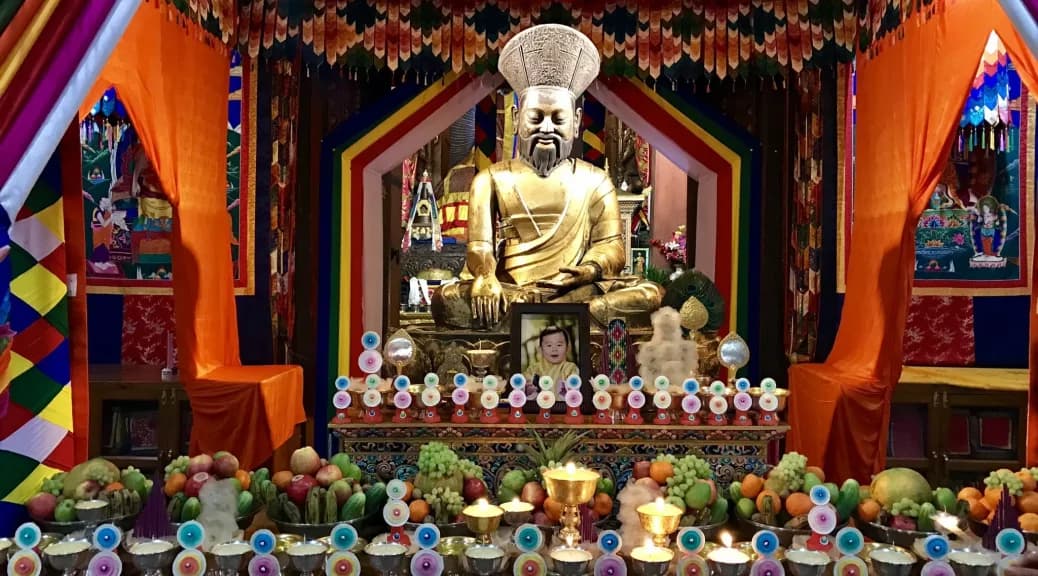
The Zhabdrung Ngawang Namgyal's Arrival in Bhutan
In 1616, Ngawang Namgyal — the 17th hierarch of the Drukpa Kagyu Ralung lineage — arrived in Bhutan from Tibet, fleeing the sectarian conflict at his ancestral seat of Ralung Monastery. His arrival is the foundational moment of the unified Bhutanese state: across the subsequent four decades he consolidated the principal Bhutanese valleys under unified institutional control, built the foundational dzongs that would house the new institutional framework, repelled multiple Tibetan invasions, codified the Bhutanese legal-and-administrative system, and established the Choesi dual-government framework that has operated continuously from his 17th-century institutional consolidation through the contemporary constitutional-democracy era.
historical · 1864-1865 · Deothang and the Duars belt (southern Bhutan / Assam-Bengal frontier)
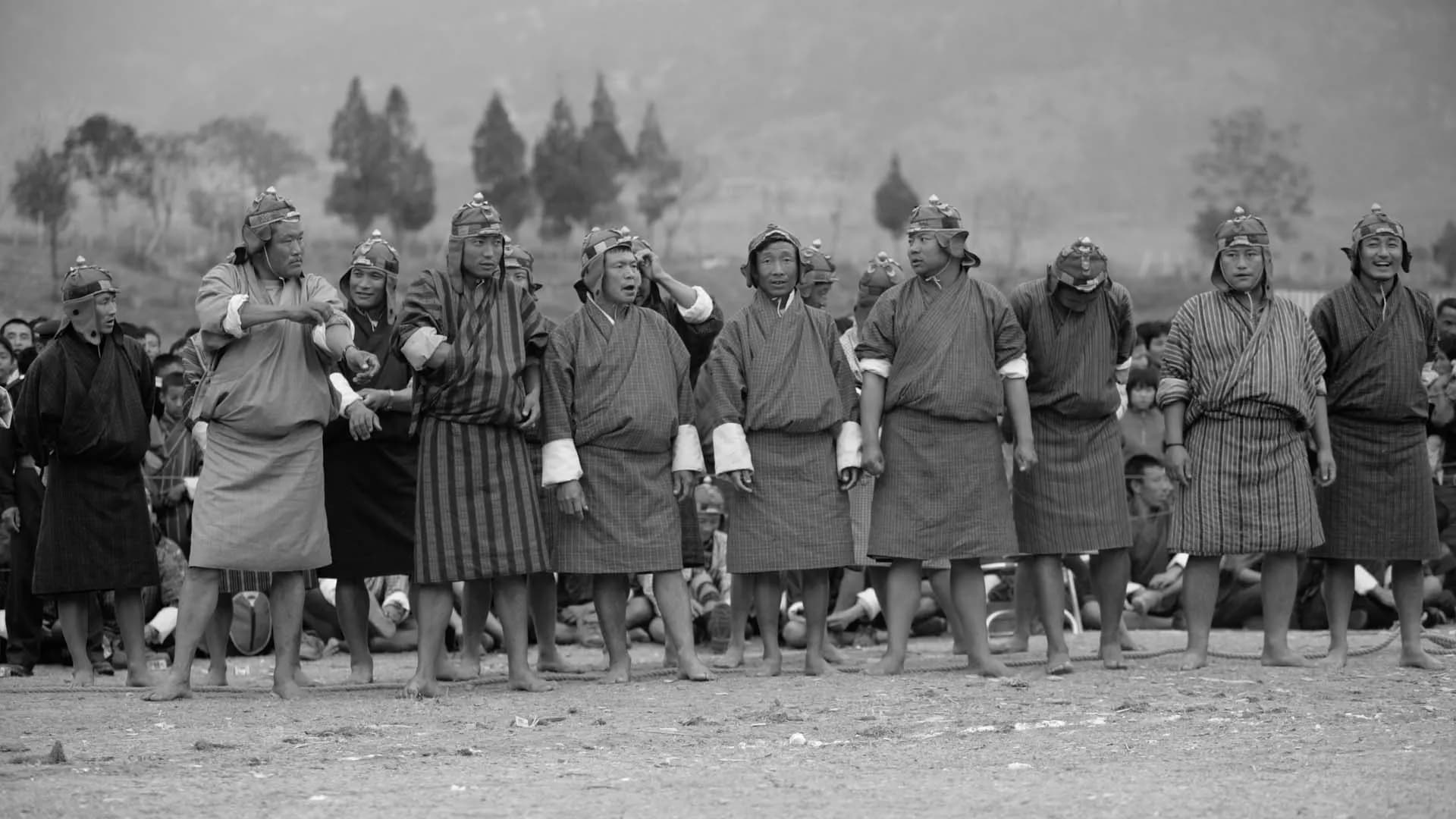
The Duar War
The Duar War of 1864-65 was the foundational conflict between Bhutan and British India over the Duars — the fertile foothill belt running along Bhutan's southern frontier. The war began when an Ashley Eden mission to Punakha collapsed in November 1864 under personal hostility from Trongsa Poenlop Jigme Namgyel; the British declared war; on 27 January 1865, after losing the first encounter at Deothang, Trongsa Poenlop Jigme Namgyel regrouped and routed a British column, capturing two field cannons. The war ended on 11 November 1865 with the Treaty of Sinchula — Bhutan ceded the Duars but received the annual British subsidy that funded the early state. The peace held until Indian independence in 1947.
historical · 1865 · Sinchula, on the Indo-Bhutan frontier
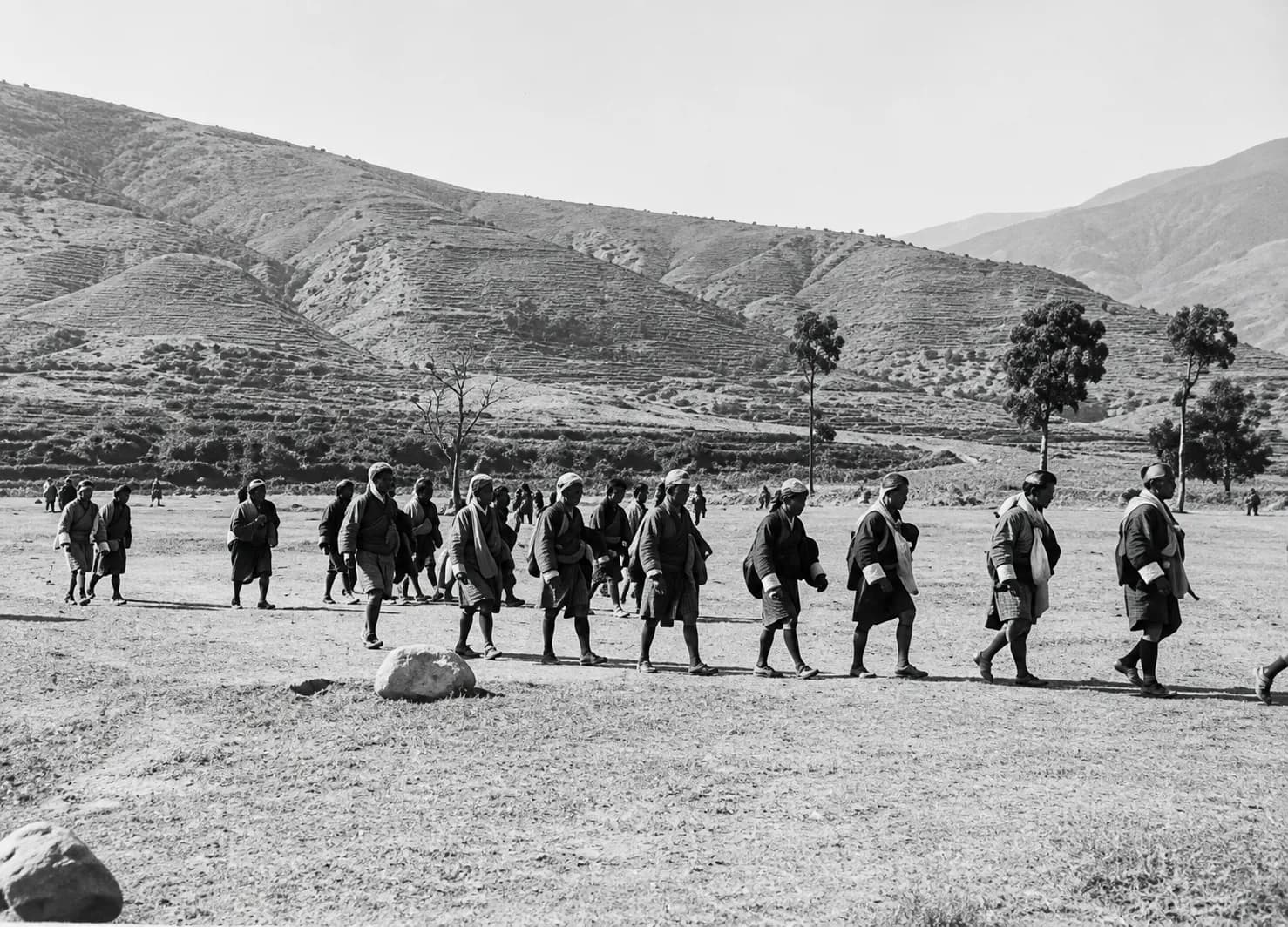
The Treaty of Sinchula
On 11 November 1865, the Treaty of Sinchula was signed at Sinchula on the Indo-Bhutan frontier, ending the Duar War between Bhutan and British India. Bhutan ceded the Bengal Duars (eleven Duars) to British India — confirming the earlier 1841 cession of the eighteen Assam Duars — and in exchange received an annual British subsidy of fifty thousand rupees, the principal external revenue stream of the early Bhutanese state. The treaty held for forty-five years until the 1910 Treaty of Punakha replaced it, and the broader settlement framework lasted until Indian independence in 1947.
historical · 1885 · Changlimithang ground, Thimphu
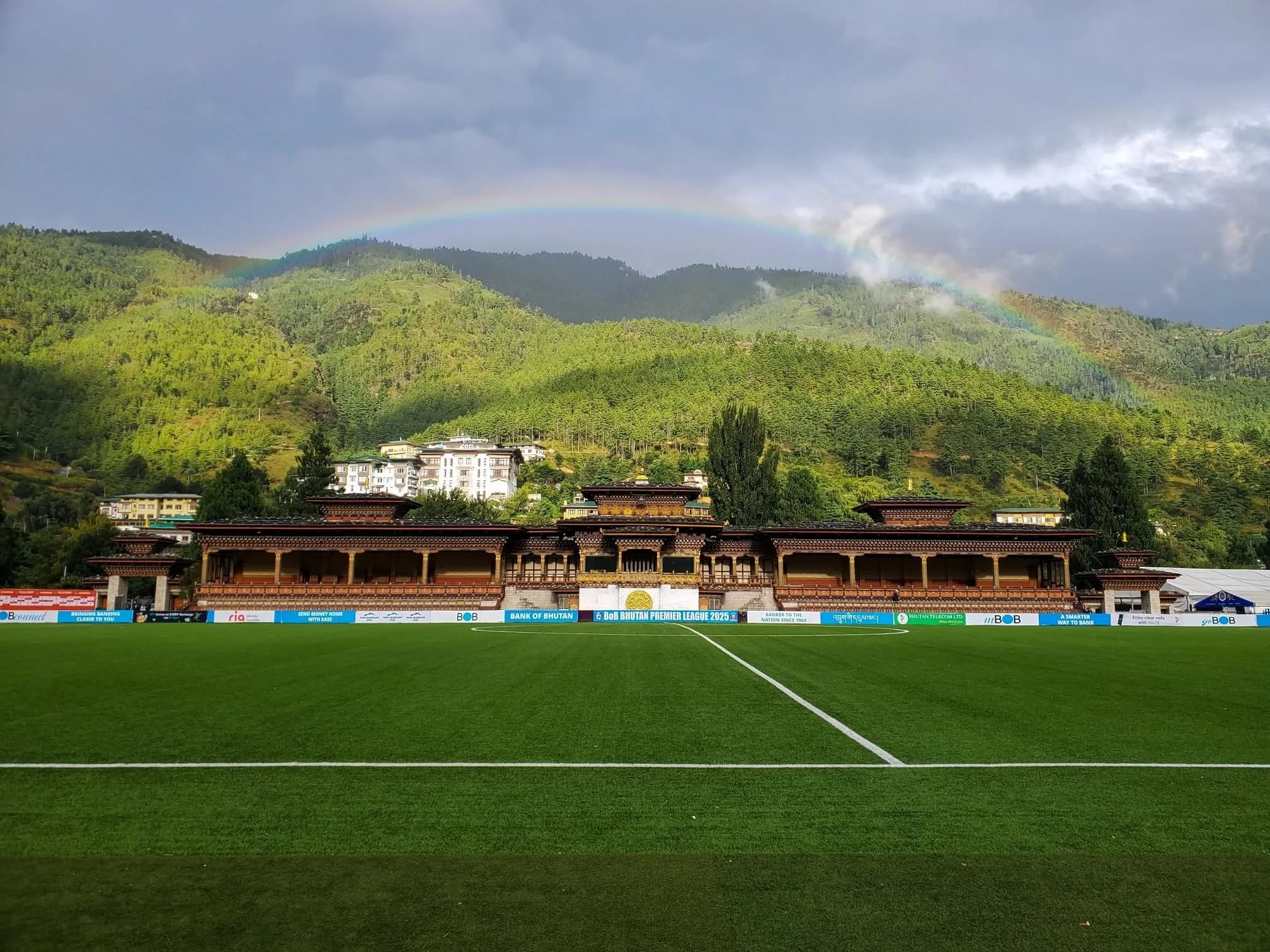
The Battle of Changlimithang
In February 1885 a confrontation at Changlimithang in Thimphu — between His Majesty Ugyen Wangchuck (then Trongsa Poenlop and Paro Poenlop) and a rival faction led by his adoptive brothers Phuentsho Dorji and Alu Dorji — ended a generation of civil conflict in Bhutan. The decisive moment came during an attempted mediation meal at Changlimithang: a scuffle among junior attendants escalated; Phuentsho Dorji was killed by Paro Poenlop Dawa Penjor; Alu Dorji fled to Tibet; His Majesty took control of Tashichoedzong. The 1885 settlement is the principal consolidation event between Trongsa Poenlop Jigme Namgyel's death in 1881 and the 1907 founding of the hereditary monarchy.
historical · 1904 · Chumbi Valley, Lhasa (Tibet)
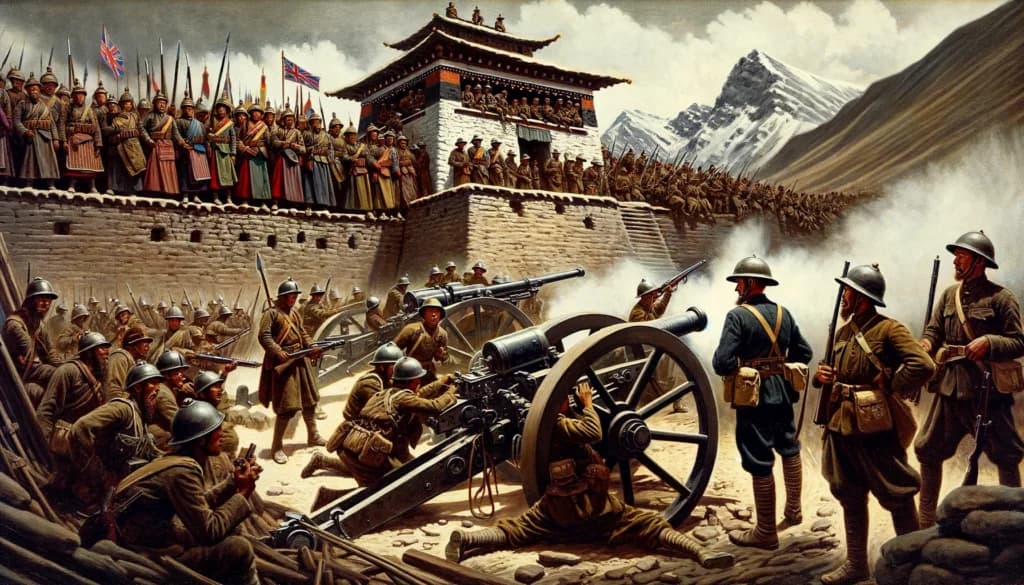
The 1904 Anglo-Tibetan Mediation
When the British Younghusband expedition advanced on Lhasa in 1903-04, His Majesty Ugyen Wangchuck, then Trongsa Poenlop and the paramount political figure of Bhutan, joined the British column as mediator — neither siding with the British force nor with the Tibetan defenders, but operating between the two powers across the long approach march from the Chumbi Valley to Lhasa. His Majesty entered Lhasa in full chibdrel ceremony in August 1904, wearing for the first time the raven-headed crown adapted from His father's battle helmet, and was the chief negotiator (alongside the Nepalese resident) of the Treaty signed at the Potala Palace on 7 September 1904. The diplomatic standing this won — Colonel Francis Younghusband described Him as 'straight and possessed of a natural authority' — was the foundation of British recognition that made the 1907 founding of the hereditary monarchy possible.
historical · 1907 · Punakha Dzong
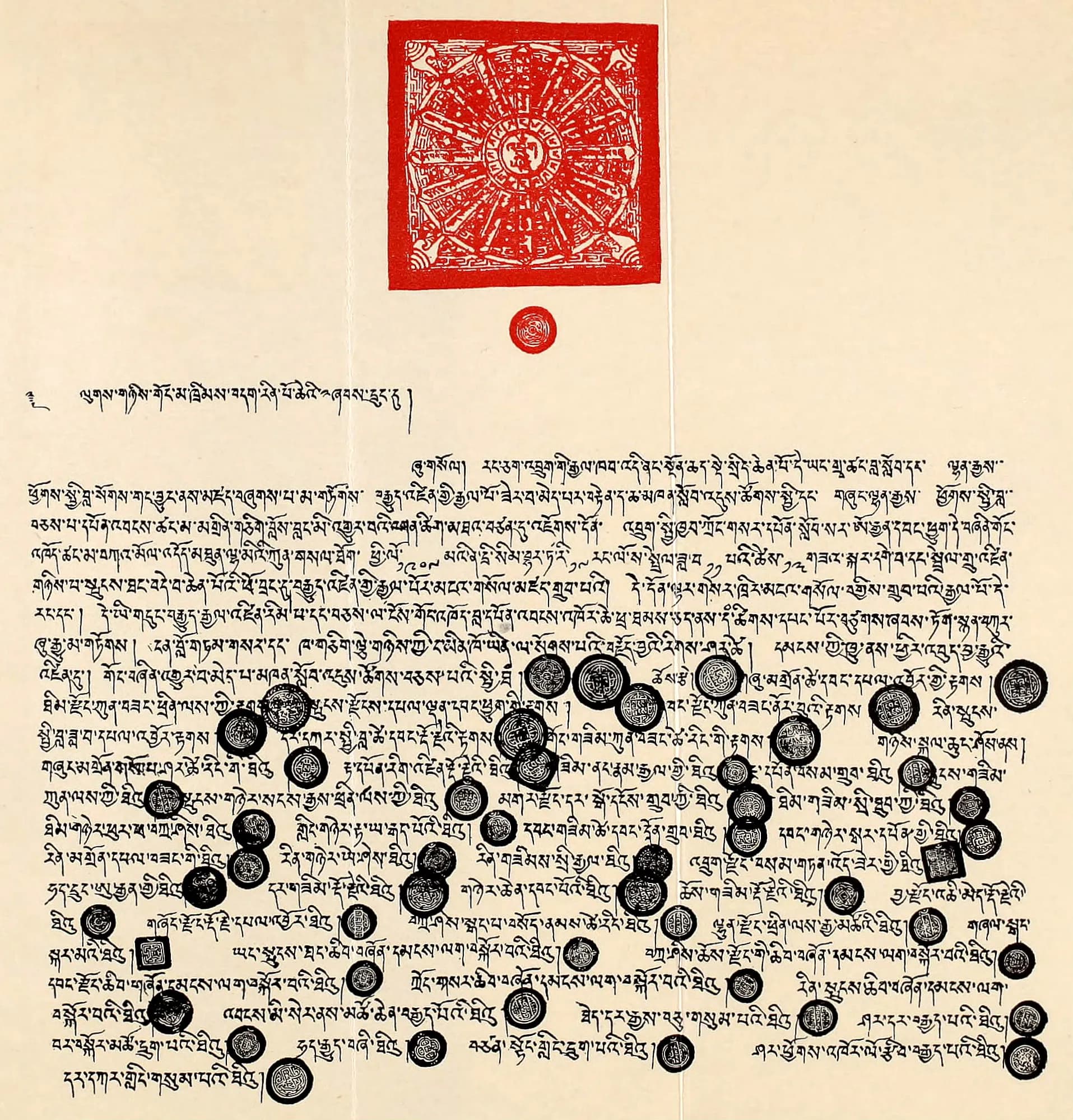
The Oath of Allegiance
On 17 December 1907 at Punakha Dzong, an assembly of the Lhengye Tshog, the Central Monk Body under the Je Khenpo, the principal poenlops and dzongpoens, and the senior government officials of Bhutan signed and sealed the Oath of Allegiance — unanimously electing His Majesty Ugyen Wangchuck as the First Druk Gyalpo and establishing the hereditary monarchy that continues to the present. The document itself, sealed in red with the Nga Chudrugma seal of Zhabdrung Ngawang Namgyal, is the founding artefact of the contemporary Bhutanese state. The date — 17 December — has been the Bhutanese National Day ever since.
historical · 1910 · Punakha Dzong
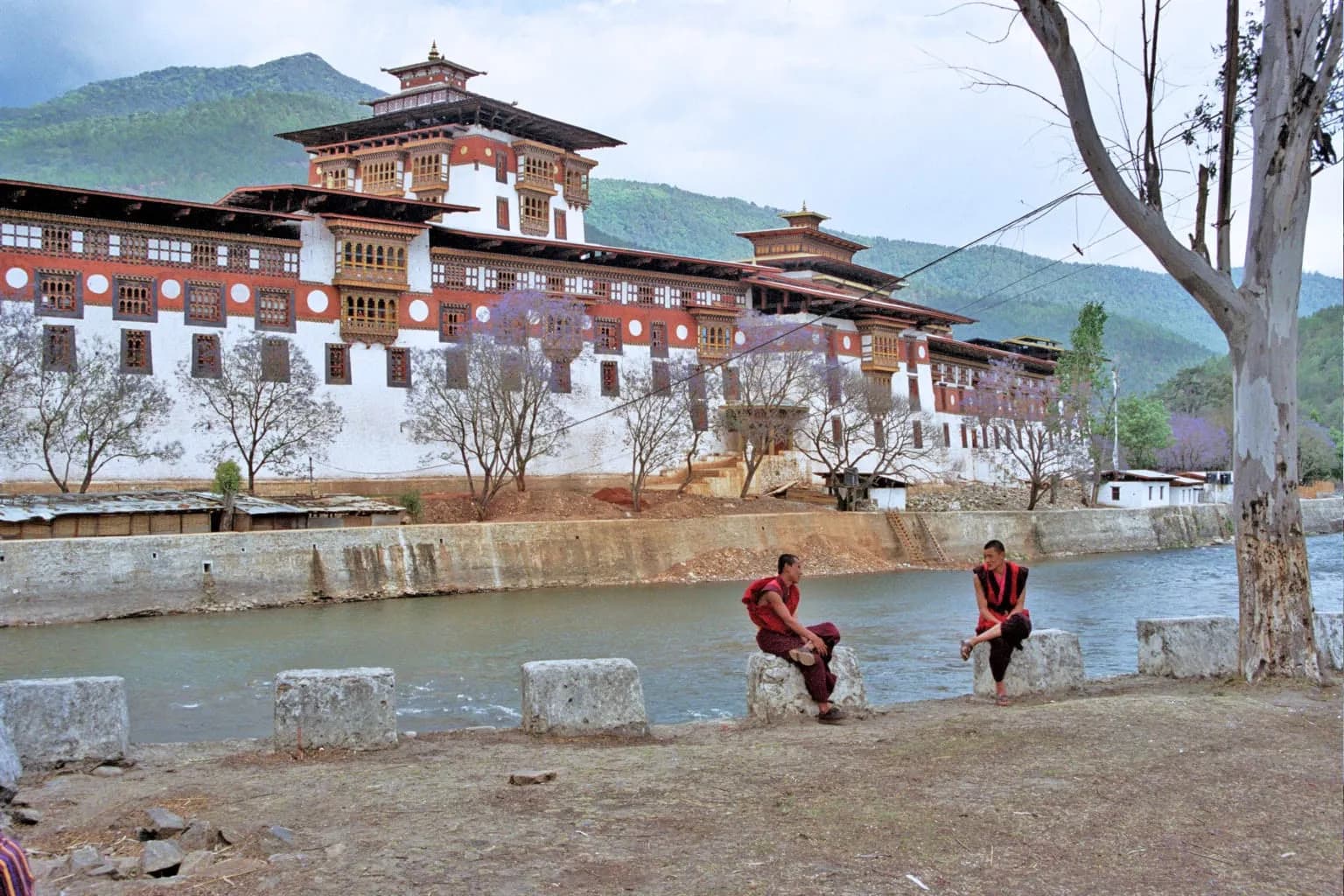
The Treaty of Punakha
On 8 January 1910 at Punakha Dzong, His Majesty Ugyen Wangchuck — the First Druk Gyalpo, two years into His reign — and Sir Charles Bell, the British Political Officer in Sikkim, signed the Treaty of Punakha. The treaty replaced the 1865 Treaty of Sinchula, doubled the annual British subsidy from fifty thousand to one hundred thousand rupees, and added a provision that Bhutan would be guided by British advice in external affairs — with the explicit understanding that British India would not interfere in Bhutanese internal affairs. The 1910 Treaty framed the Bhutan-British India relationship until Indian independence in 1947 and the 1949 Bhutan-India Treaty of Friendship that replaced it.
diplomatic-event · 1949 · Darjeeling, India
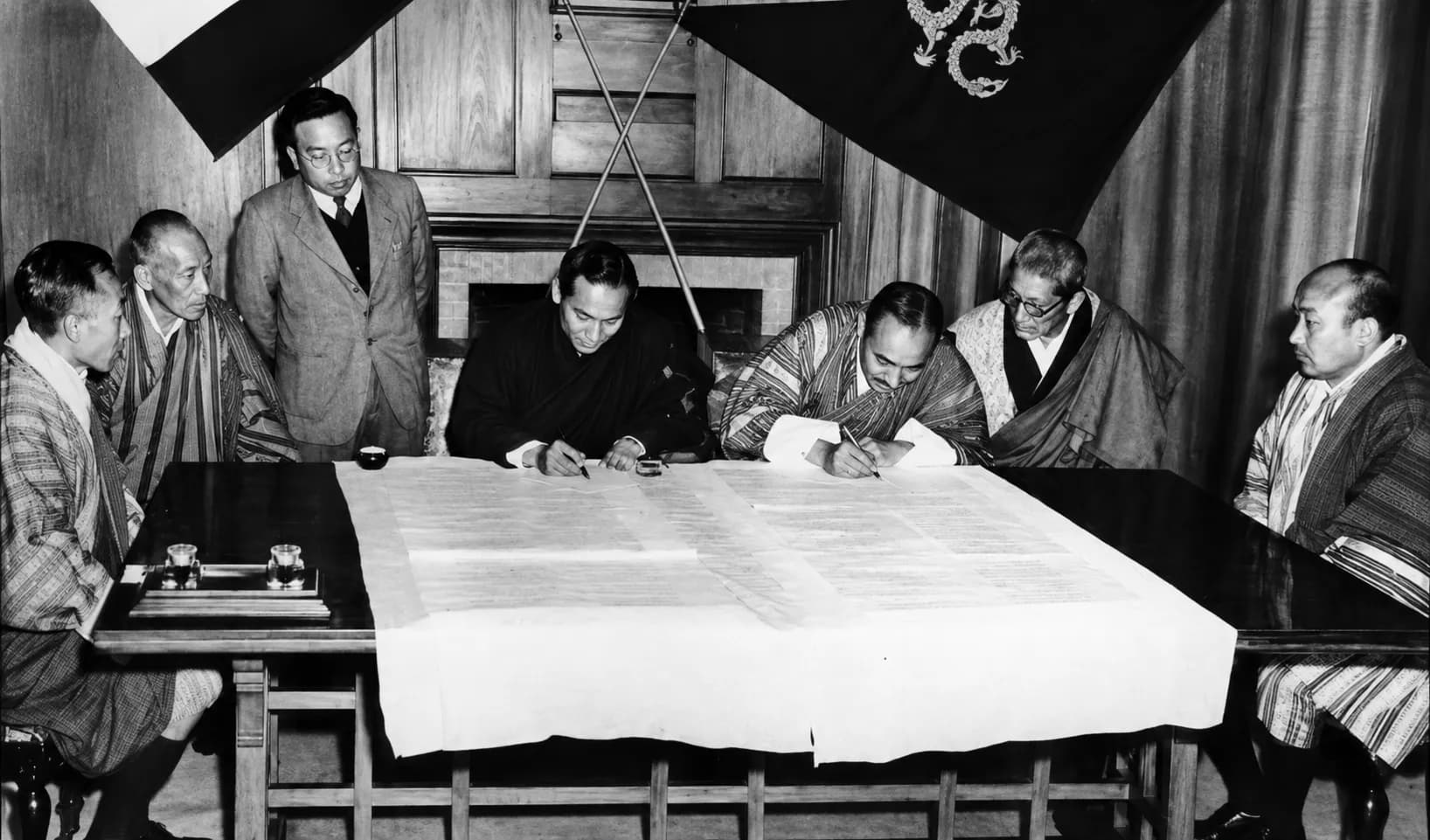
The Bhutan-India Treaty of Friendship
On 8 August 1949 in Darjeeling, His Majesty the Second Druk Gyalpo Jigme Wangchuck and the newly-independent Government of India signed the Bhutan-India Treaty of Friendship — the foundational bilateral framework that has shaped the Bhutan-India relationship across the subsequent decades. The treaty preserved substantial Bhutanese sovereignty while establishing the framework for the deep practical partnership (economic, security, cultural) that contemporary Bhutan and India operate within. The treaty was revised in 2007 to remove a clause that could have been read as constraining Bhutanese foreign-policy autonomy.
historical · 1950s · Across the kingdom
The Abolition of Slavery and Serfdom
In the opening years of His reign in the 1950s, His Majesty the Third Druk Gyalpo Jigme Dorji Wangchuck abolished slavery and serfdom across Bhutan — institutions that had existed since the 17th-century Zhabdrung period. The reform was undertaken by Royal kasho; freed individuals were required to settle in new gewogs (rather than remain in their previous regions) and were forbidden from taking property; landlords were not antagonised and the transition operated without serious social disruption. The Royal Government's secondary-school history records that 'a revolutionary transition took place in a mere few years' — the structural transformation of Bhutanese society into a fundamentally egalitarian register that the contemporary country still operates within.
historical · 1953 · Punakha Dzong / Tashichoedzong
The Founding of the Tshogdu (National Assembly)
In 1953, in the opening years of His reign, His Majesty the Third Druk Gyalpo Jigme Dorji Wangchuck founded the Tshogdu — Bhutan's first National Assembly. The new body had 130 elected members (later raised to 150 in 1968), convened twice a year, and served initially as an advisory chamber to the executive. By the 1968 royal-initiated amendment, Tshogdu decisions became final and binding without further Royal approval — the moment the Bhutanese legislative-executive separation came into being. The Tshogdu is the founding chamber of the constitutional-democracy arc that culminates in the 2008 Constitution.
historical · 1958 · Haa, Paro, Thimphu
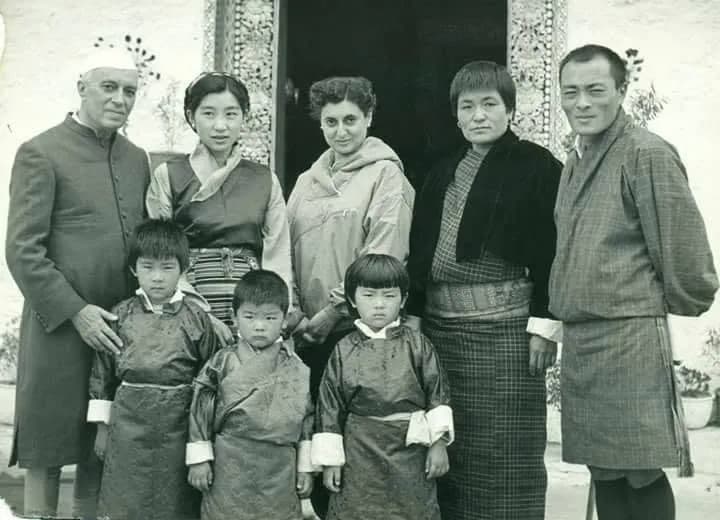
Prime Minister Nehru's Visit to Bhutan
In 1958 Prime Minister Jawaharlal Nehru of India travelled to Bhutan — the first state visit by the head of government of another country to the Royal Kingdom of Bhutan, and the diplomatic exchange that opened the country to the broader 20th-century world. The Prime Minister travelled from Gangtok in Sikkim through the Chumbi Valley, over the Jelela pass into Haa, and on to Paro, where He addressed a public meeting at Ugyen Pelri Palace. His Majesty the Third Druk Gyalpo Jigme Dorji Wangchuck received the Prime Minister; the conversation set in motion the planned development that would launch with the 1961 First Five-Year Plan, and ended the country's quiet two-century isolation.
historical · 1961 · Across the kingdom
The First Five-Year Plan
In 1961 His Majesty the Third Druk Gyalpo Jigme Dorji Wangchuck launched Bhutan's First Five-Year Plan — a 107-million-ngultrum modernisation programme financed entirely by India, focused on building the road network that would end the country's centuries of valley-by-valley isolation. By the end of the five years (1966) more than 1,700 kilometres of roads had been built — the Phuentsholing-Thimphu, Trongsa-Gelephu, Tsirang-Sarpang and Trashigang-Samdrup Jongkhar routes. The Bhutan Government Transport Service was established in 1962; postage stamps were issued from 1962; a Health Department with three hospitals and eleven dispensaries operated by plan end. The First Plan is the founding act of the modern Bhutanese state.
state-event · 1971 · United Nations Headquarters, New York / Royal Government of Bhutan, Thimphu
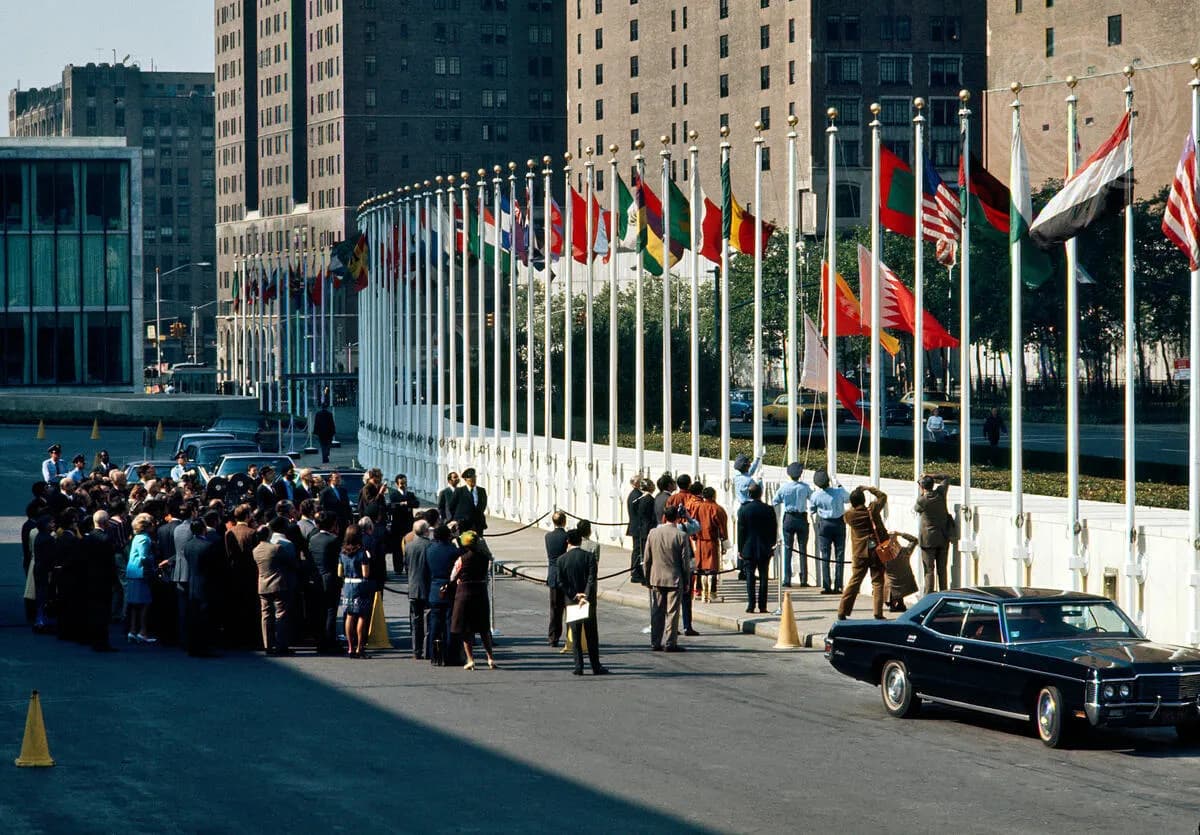
Bhutan's admission to the United Nations
Bhutan was admitted to the United Nations on 21 September 1971 as the organization's 128th member state, under the reign of His Majesty the Third Druk Gyalpo Jigme Dorji Wangchuck. The admission was the formal completion of the country's emergence from its centuries-long policy of self-isolation and marked the beginning of Bhutan's contemporary international engagement.
opening · 1974 · Thimphu / Paro
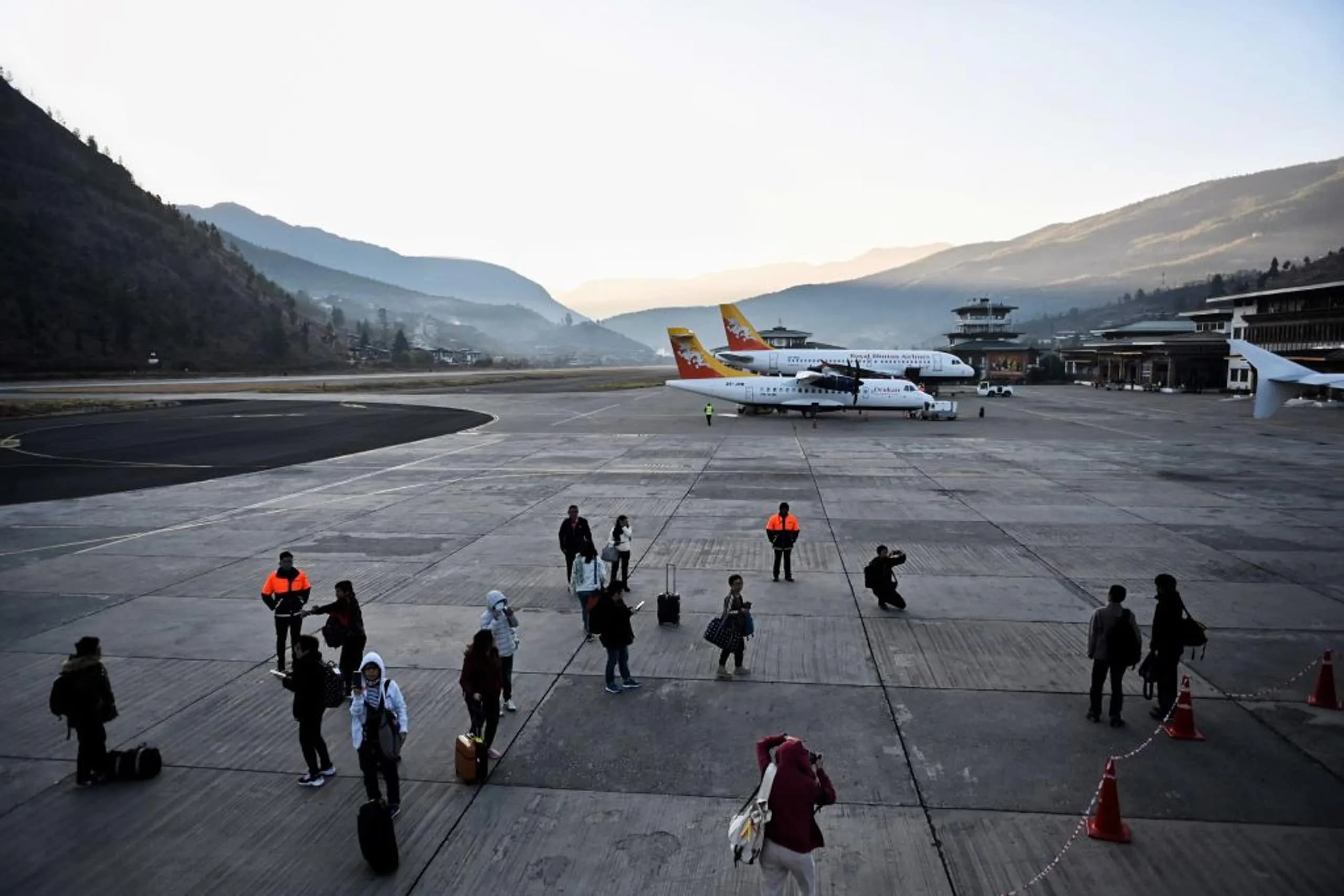
Bhutan opens to international tourism
Bhutan opened to international tourism in 1974 — the first international visitors arriving in June for the coronation of His Majesty the Fourth Druk Gyalpo Jigme Singye Wangchuck. The opening was deliberate: high-value, low-impact, the principles articulated under the Fourth King's emerging Gross National Happiness framework. Approximately 200 visitors arrived in the inaugural year; the policy framework that limited the volume continues, in evolved form, today.
coronation · 1974 · Tashichho Dzong, Thimphu
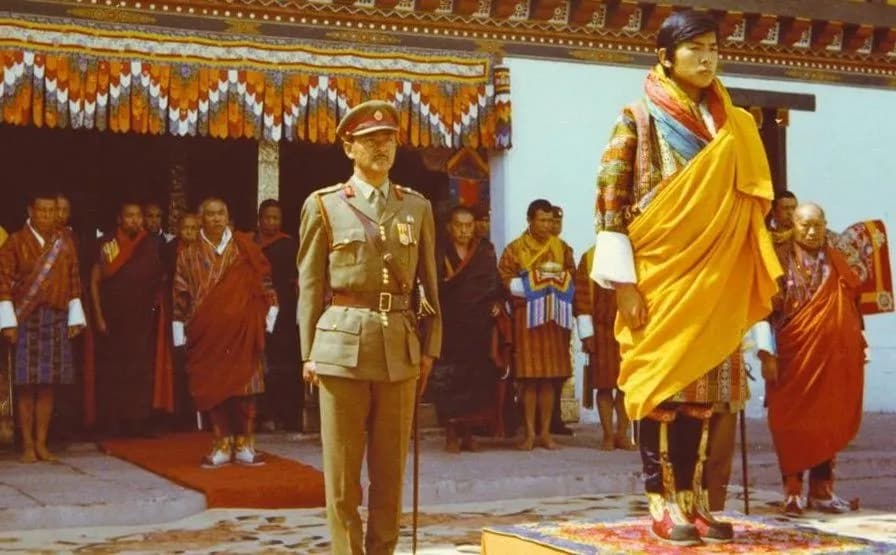
Coronation of His Majesty the Fourth Druk Gyalpo
On 2 June 1974, His Majesty Jigme Singye Wangchuck was formally crowned as the Fourth Druk Gyalpo of Bhutan at Tashichho Dzong in Thimphu — at the age of eighteen, the youngest monarch in the world at the time. The coronation marked the beginning of the reign that would define modern Bhutan: the articulation of Gross National Happiness, the deliberate opening to international tourism, the constitutional transition to democracy in 2008.
royal-event · 1998 · Tashichho Dzong, Thimphu
The 1998 Decision
In 1998, twenty-six years into His reign, His Majesty the Fourth Druk Gyalpo Jigme Singye Wangchuck dissolved the existing Cabinet, appointed a new one drawn from elected and nominated representatives, and declared that He would henceforth remain only as Head of State — not as head of government. The decision, undertaken by Royal kasho, voluntarily relinquished a substantial portion of the constitutional authority the King had held under the post-1907 framework. The Royal Government's secondary-school history records the 1998 decision as the principal beginning of 'the historic journey towards constitutional monarchy' that would culminate in the 2001 Constitution-drafting decree, the 2006 voluntary abdication, and the 2008 formal democracy.
royal-event · 2006 · Tashichho Dzong, Thimphu
The Voluntary Abdication of His Majesty the Fourth Druk Gyalpo
On 14 December 2006, His Majesty Jigme Singye Wangchuck, the Fourth Druk Gyalpo, voluntarily abdicated the throne in favour of His son, His Majesty Jigme Khesar Namgyel Wangchuck. The Royal Decree was announced earlier the same month (9 December), the formal handover took effect on 14 December, and His Majesty the Fifth Druk Gyalpo's formal coronation followed at Tashichho Dzong on 6 November 2008. The decision — internationally unprecedented in modern monarchy — was the principal enabling step for the 2008 constitutional democracy transition.
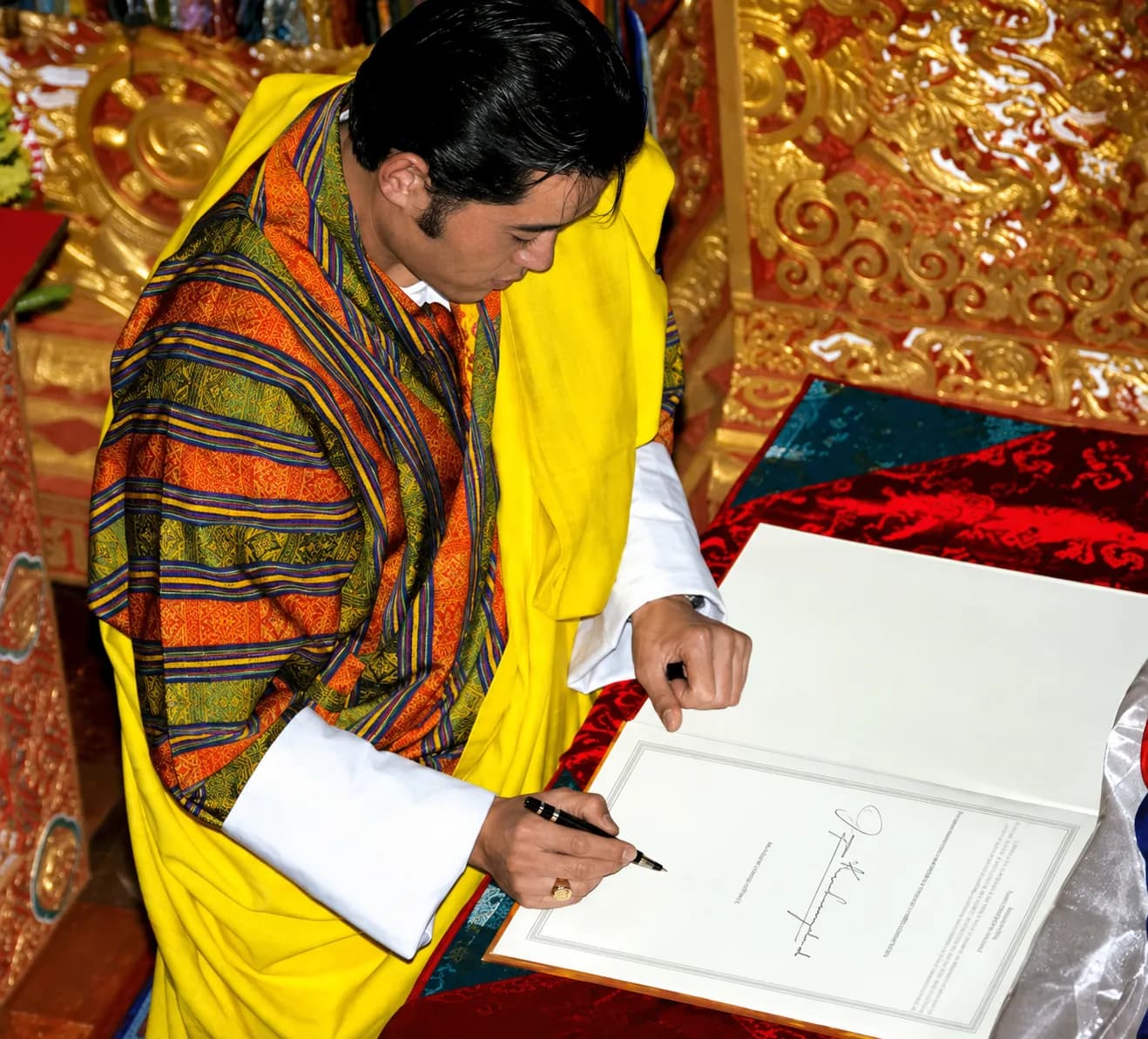
state-event · 2008 · Tashichho Dzong, Thimphu (Constitution signing); Royal Government, Thimphu (elections)
Bhutan's Constitutional Democracy Transition
Bhutan transitioned to constitutional democracy in 2008 — the new Constitution ratified on 18 July 2008 under the reign of His Majesty Jigme Khesar Namgyel Wangchuck, the Fifth Druk Gyalpo; the first democratic National Assembly and National Council elections held in March-April 2008. The transition was the deliberate institutional reform initiated under His Majesty the Fourth Druk Gyalpo and completed under the Fifth — Bhutan moving from absolute monarchy to constitutional monarchy with elected democratic government, while preserving the cultural-religious framework and the Gross National Happiness governance principle.
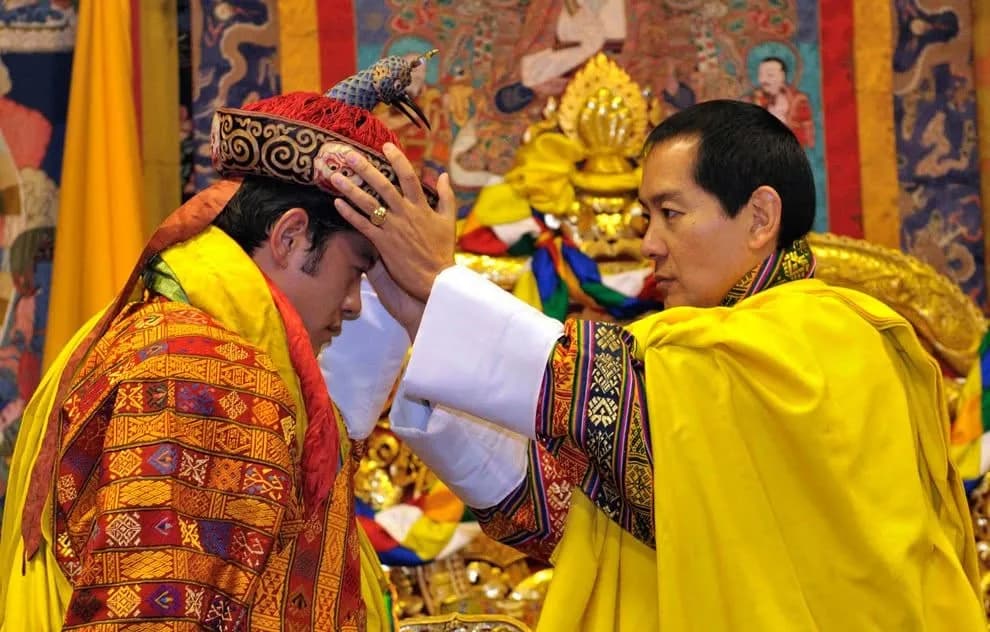
coronation · 2008 · Tashichho Dzong, Thimphu
The Formal Coronation of His Majesty the Fifth Druk Gyalpo
On 6 November 2008 at Tashichho Dzong in Thimphu, His Majesty Jigme Khesar Namgyel Wangchuck was formally crowned the Fifth Druk Gyalpo of Bhutan — completing the multi-year dynastic transition that began with His Majesty the Fourth Druk Gyalpo's voluntary abdication in December 2006 and continued through the March 2008 first democratic elections and the July 2008 Constitution ratification. The coronation date was deliberately chosen to coincide with the centenary of the Wangchuck dynasty (the 17 December 1907 founding marking the start of the centennial year). international attendance and press coverage marked the principal Bhutanese state event of the year.
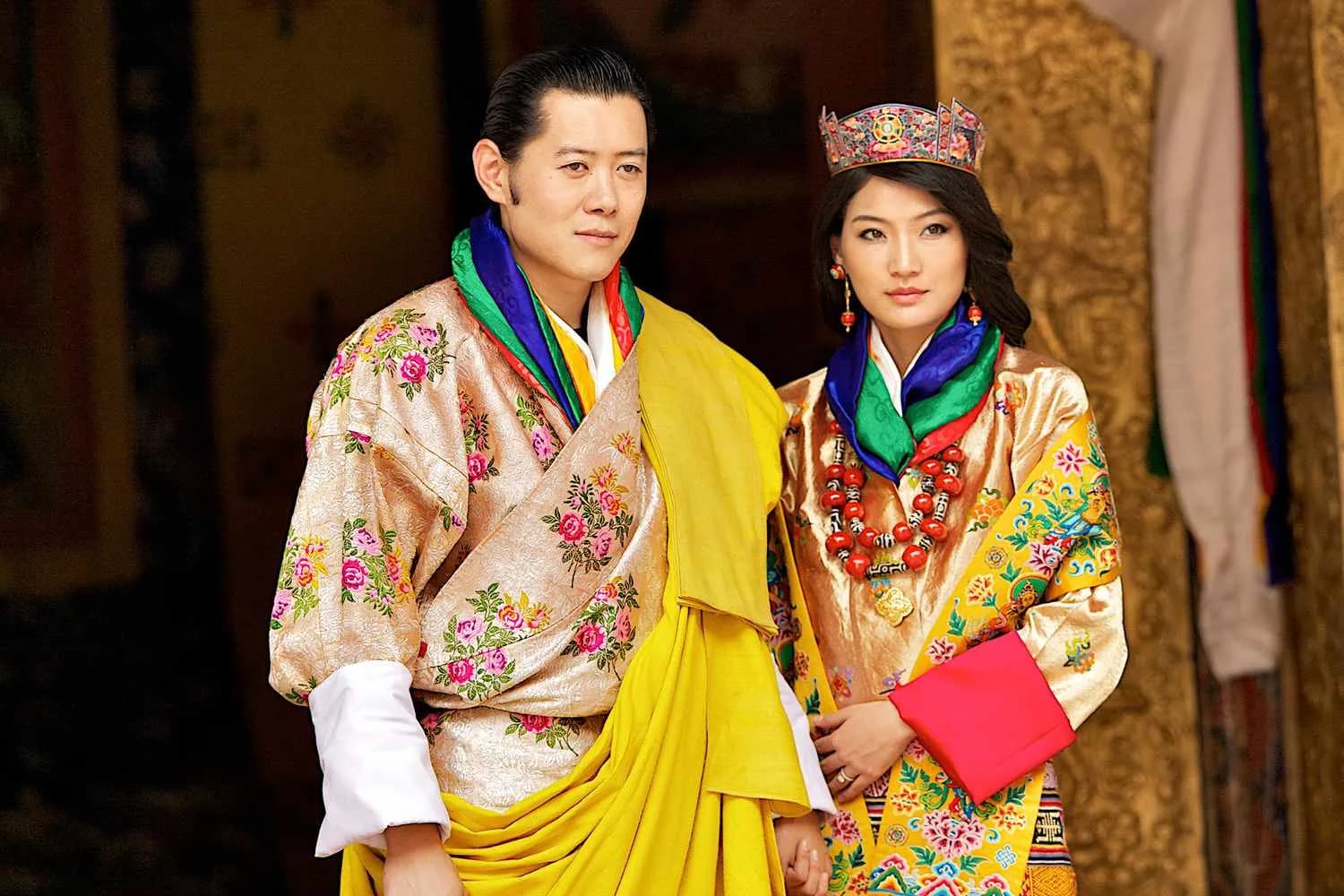
wedding · 2011 · Punakha Dzong, Punakha
The Royal Wedding of Their Majesties the Druk Gyalpo and Queen Jetsun Pema
On 13 October 2011 at Punakha Dzong, His Majesty Jigme Khesar Namgyel Wangchuck, the Fifth Druk Gyalpo, married Her Majesty Jetsun Pema Wangchuck — the principal Bhutanese royal wedding of the contemporary era. The ceremony at Punakha (the historical winter capital) was the principal state event of 2011; substantial international attendance and press coverage; the principal foundational moment of the contemporary Bhutanese royal household.
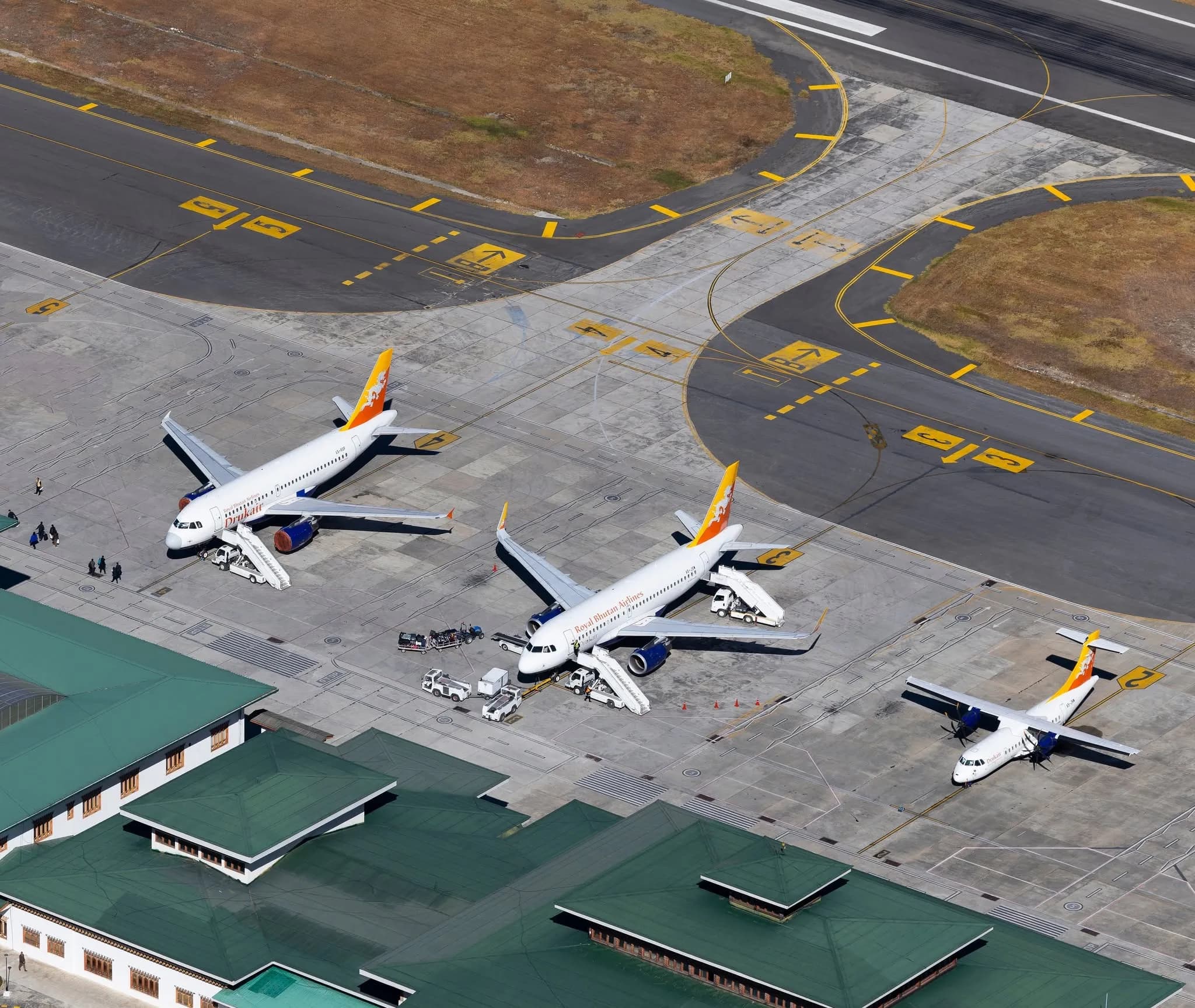
aviation-event · 2026 · Bhutan aviation infrastructure
Drukair on Verteil NDC
In May 2026, Drukair went live on the Verteil NDC (New Distribution Capability) platform — alongside the earlier Amadeus distribution agreement, the principal Bhutanese carrier became programmatically bookable end-to-end through international travel-tech infrastructure for the first time. The real NDC unlock is one of the more material recent changes to the contemporary Bhutanese travel-and-tourism infrastructure; the programmatic-booking tradition enables the bilateral integration that the contemporary international visitor flow benefits from. The meaningful event signals the contemporary modernisation of Bhutanese aviation distribution.

