The Tibetan-influenced spring pilgrimage festival
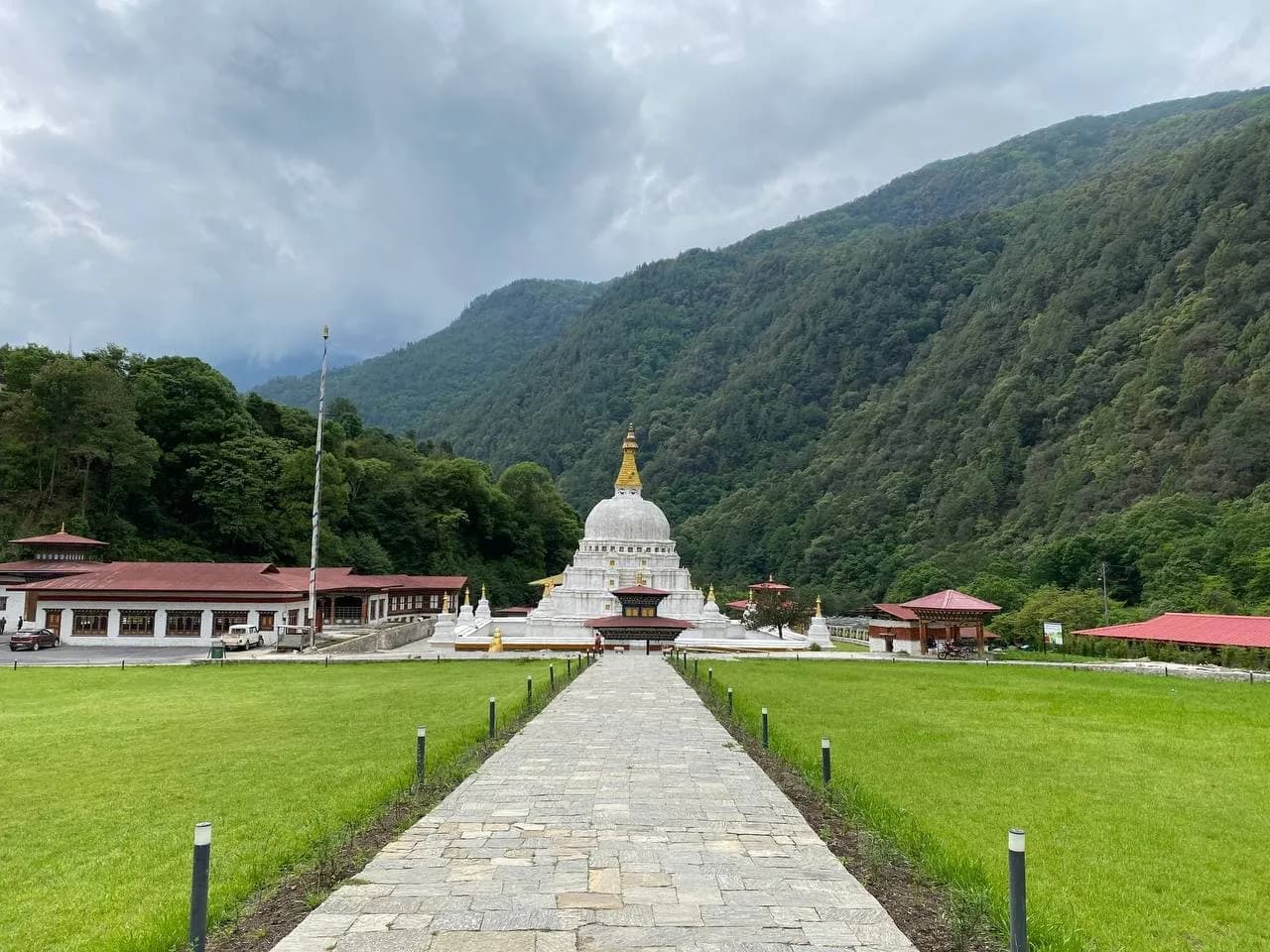
Chorten Kora — the Tibetan-style stupa of Trashiyangtse, with two pilgrimage windows fifteen days apart.
Chorten Kora is held annually at the great Tibetan-style stupa of Trashiyangtse, in two pilgrimage windows fifteen days apart in late February or early March. The first kora (Dakpa Kora) is principally attended by the Dakpa community from across the eastern border in Arunachal Pradesh; the second (Drupa Kora) is attended by Bhutanese pilgrims. The stupa was built in 1740, modelled on the Bodhnath stupa in Kathmandu.
- Next
- 23 March - 7 April 2027
- Duration
- 2 days
- Where
- Trashiyangtse
- Calendar
- Lunar, shifts yearly
- Venue
- Chorten Kora stupa, Trashiyangtse
- District
- Trashiyangtse
- Register
- kora
- Lunar pattern
- 15th day (Dakpa Kora) and 30th day (Drupa Kora) of the 1st Bhutanese lunar month
The stupa and the founding story
Chorten Kora was built in 1740 by Lama Ngawang Loday, a nephew of the Zhabdrung, modelled on the great Bodhnath stupa in Kathmandu. The Lama is held to have travelled to Nepal, carved a model of Bodhnath in a single radish, and brought the model back to Bhutan as the template for the stupa. The carved-radish detail explains the proportional differences between Chorten Kora and the original — the Bhutanese stupa is somewhat smaller and the proportions slightly altered, the radish having dried on the journey. The stupa is the principal Bhutanese expression of Tibetan stupa architecture and the focal point of the eastern Bhutanese pilgrimage calendar.
The two pilgrimage windows
The Dakpa Kora (15th day of the 1st lunar month) is the first window, principally attended by the Dakpa community from across the eastern border in Arunachal Pradesh — a community linguistically and culturally affiliated with eastern Bhutan, who traditionally cross the border for the pilgrimage. The Drupa Kora (30th day of the 1st lunar month) is the second, fifteen days later, principally attended by Bhutanese pilgrims. The fifteen-day gap is intentional — the two communities take separate windows to maintain the distinct traditions, and the festival's character shifts between the two days. The pilgrimage itself is a circumambulation of the stupa, beginning before dawn and continuing through the day.
What to expect as a visitor
The festival is principally a pilgrimage rather than a chams programme — there are no dzong-courtyard mask dances. The day is a circumambulation: pilgrims walk the kora (the path around the stupa) in clockwise direction, holding malas, spinning prayer wheels, chanting mantras. The Dakpa Kora day brings the visual distinction of the Dakpa community's traditional dress — different from the Bhutanese gho/kira, and a notable photographic. Trashiyangtse sits at 1,800 metres in the far north-east of Bhutan; the late-February / early-March timing falls in the Clear-Sky Bhutan window. The drive from Paro is two days minimum via the eastern circuit.
Dates
- 20264-19 March 2026
- 202723 March - 7 April 2027
- 202811-26 March 2028
The Bhutanese calendar is a distinct lunar system, not identical to the Tibetan or the broader Indian lunar calendars, and the Gregorian dates of every Bhutanese festival shift each year. The Royal Government's Department of Tourism publishes the official calendar each year, typically 6 to 12 months in advance. The dates below are our projection from the published lunar pattern (15th day (Dakpa Kora) and 30th day (Drupa Kora) of the 1st Bhutanese lunar month); we confirm each year against the Department of Tourism's release and update this page accordingly. Before you finalise travel dates, please confirm with our concierge.
What a visitor encounters
- The dakpa kora
- The first pilgrimage window. The Dakpa community from across the Indian border attends; the dress and language differ from the Bhutanese, and the photographic distinction is notable.
- The drupa kora
- The second pilgrimage window, fifteen days later. The Bhutanese pilgrimage; the local Trashiyangtse and broader-eastern community attends in full.
- The bodhnath comparison
- Chorten Kora is the principal Bhutanese expression of Tibetan stupa architecture, modelled on Bodhnath in Kathmandu. For visitors who have visited the Nepalese original, the comparison is striking.
- Combining with gom kora tshechu
- The Gom Kora Tshechu (9th–11th day of the 2nd lunar month) is held at the meditation cave 5km from the Chorten Kora stupa, typically a fortnight after the Drupa Kora. Some itineraries combine both — staying in Trashiyangtse for the late-February / early-March pilgrimage window and returning for the late-March / early-April Tshechu.
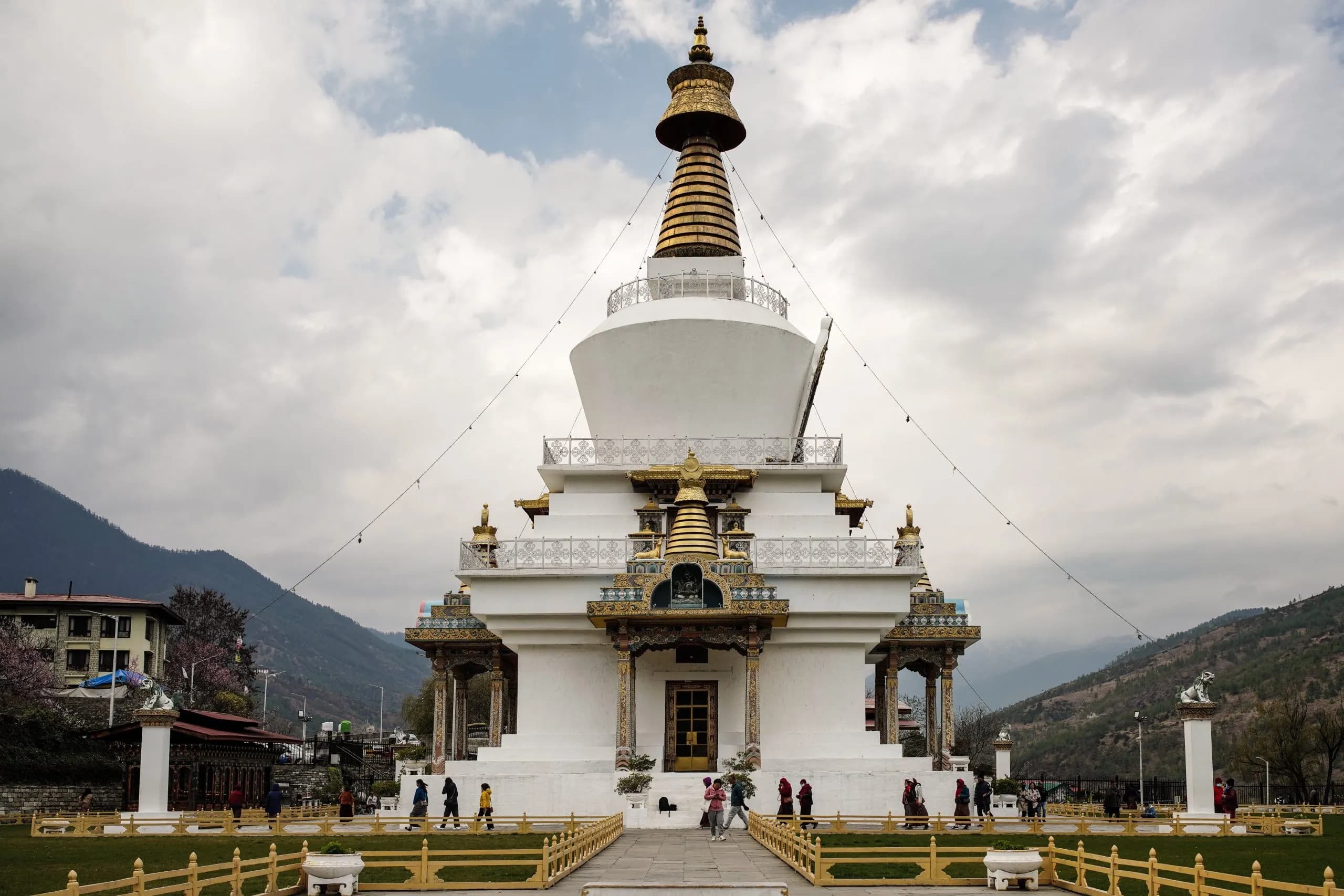
Monuments at and around this festival
Journeys around this festival
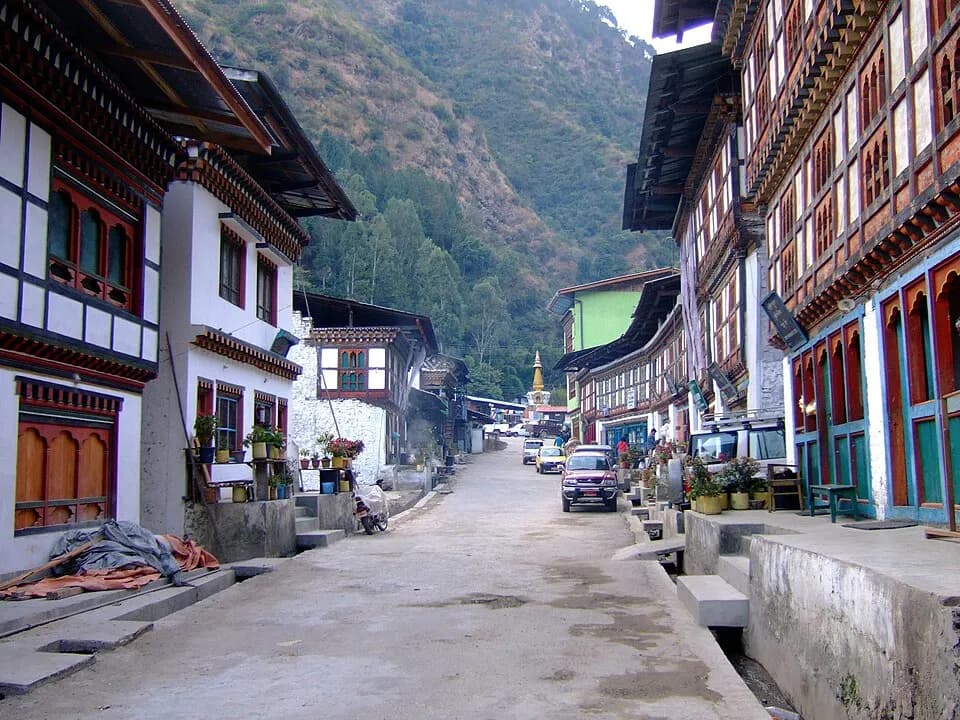 JourneyFourteen nights from Paro to Guwahati — the country as a single arc.A fourteen-night Bhutan east-to-west circuit exiting via Samdrup Jongkhar and Guwahati. The full eastern dzongkhags, the quieter half of the country.
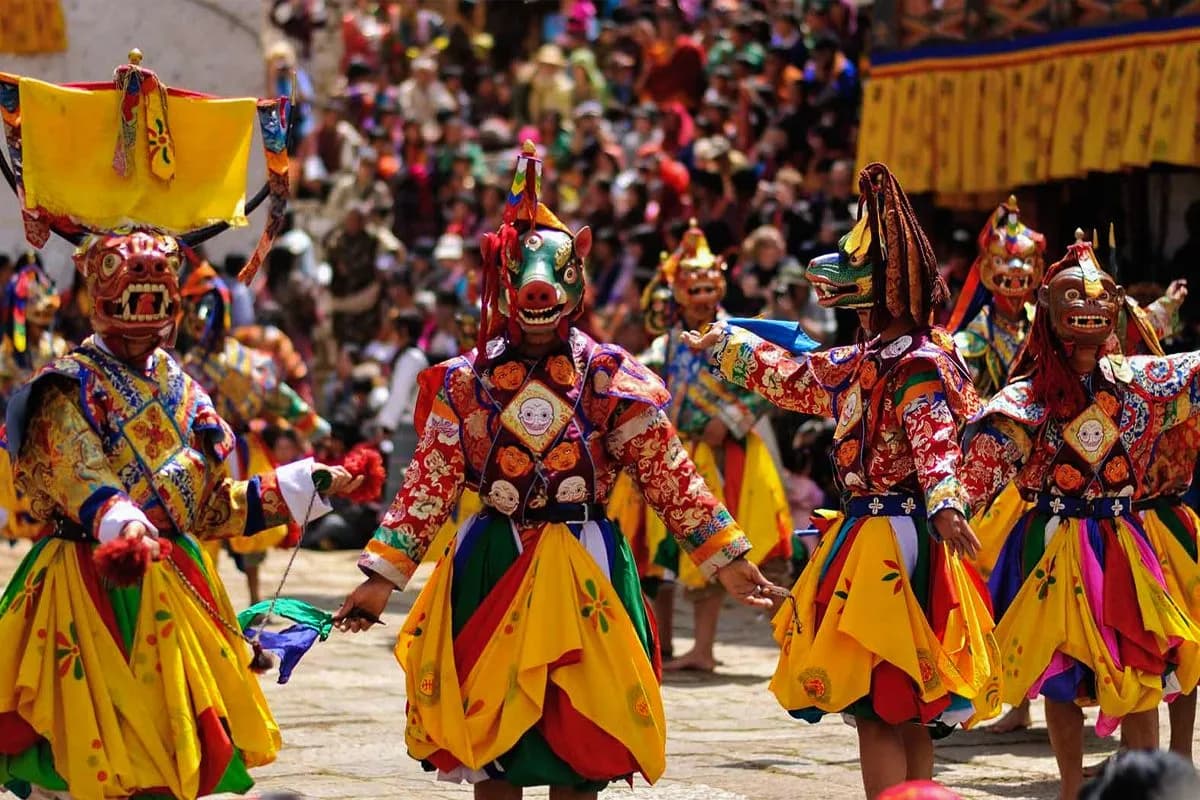 JourneyNine nights for the Paro Tshechu — the festival and the country around it.A nine-night Bhutan itinerary built around the Paro Tshechu — the spring mask-dance festival at Rinpung Dzong, with six days for the wider country.
Journeys that visit Chorten Kora
Frequently asked
- When exactly is Chorten Kora 2026?
- Two pilgrimage days fifteen days apart: Dakpa Kora on 4 March 2026 (15th day of the 1st lunar month), Drupa Kora on 19 March 2026 (30th day of the 1st lunar month). The dates shift each Gregorian year with the Bhutanese lunar calendar.
- Are the two pilgrimage windows different?
- Substantially. The Dakpa Kora is principally attended by the Dakpa community from across the Indian border in Arunachal Pradesh; the dress, language, and pilgrimage tradition are distinct. The Drupa Kora is the Bhutanese window. The festival's character is different across the two days; both are notable in their own right.
- Are there mask dances?
- Chorten Kora is principally a pilgrimage rather than a chams festival — the day's activity is circumambulation of the stupa, not mask-dance performance. For chams in eastern Bhutan, see the Gom Kora Tshechu at the nearby meditation cave (late March / early April) or the Trashigang Tshechu (late November / early December).
- Why is the stupa modelled on Bodhnath?
- Chorten Kora was built in 1740 by Lama Ngawang Loday, a nephew of the Zhabdrung. The Lama travelled to Nepal, carved a model of Bodhnath in a single radish, and brought the model back as the template — the carved-radish detail explains the proportional differences between Chorten Kora and the Bodhnath original.
- How do I get to Trashiyangtse?
- Approximately 2–3 days of driving from Paro via Thimphu, Bumthang, Mongar, and Trashigang. We typically combine Chorten Kora with the broader eastern circuit and build a 10–12 day itinerary that ends with a domestic Drukair flight from Yongphula (Trashigang) back to Paro.

