THE COUNTRY'S LARGEST INTERNATIONAL-VISITOR FESTIVAL, ATTENDED PROPERLY
Nine nights for the Paro Tshechu — the festival and the country around it.
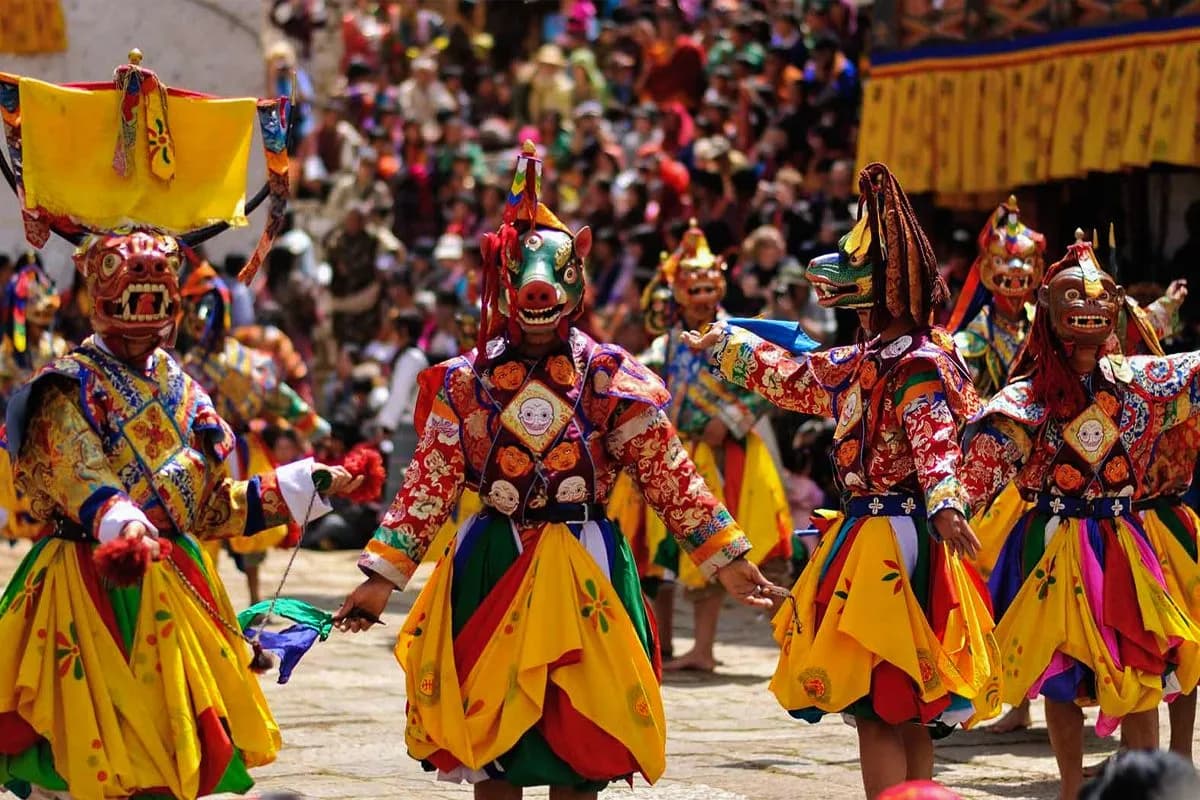
The Paro Tshechu falls in late March or early April, runs three days at Rinpung Dzong, and culminates in a pre-dawn thongdrel that is the most photographed Bhutanese image of the spring window. Nine nights — three for the festival itself, six for the country in its spring window.
9 nights · Luxury tier · from USD 18,000 per couple
- Nights
- 9
- From
- USD 18,000per couple
- Tier
- Luxury
- Best season
- Spring
- Suits
- Small group
- Departing
- Worldwide
Why this festival, and why this nine-night window
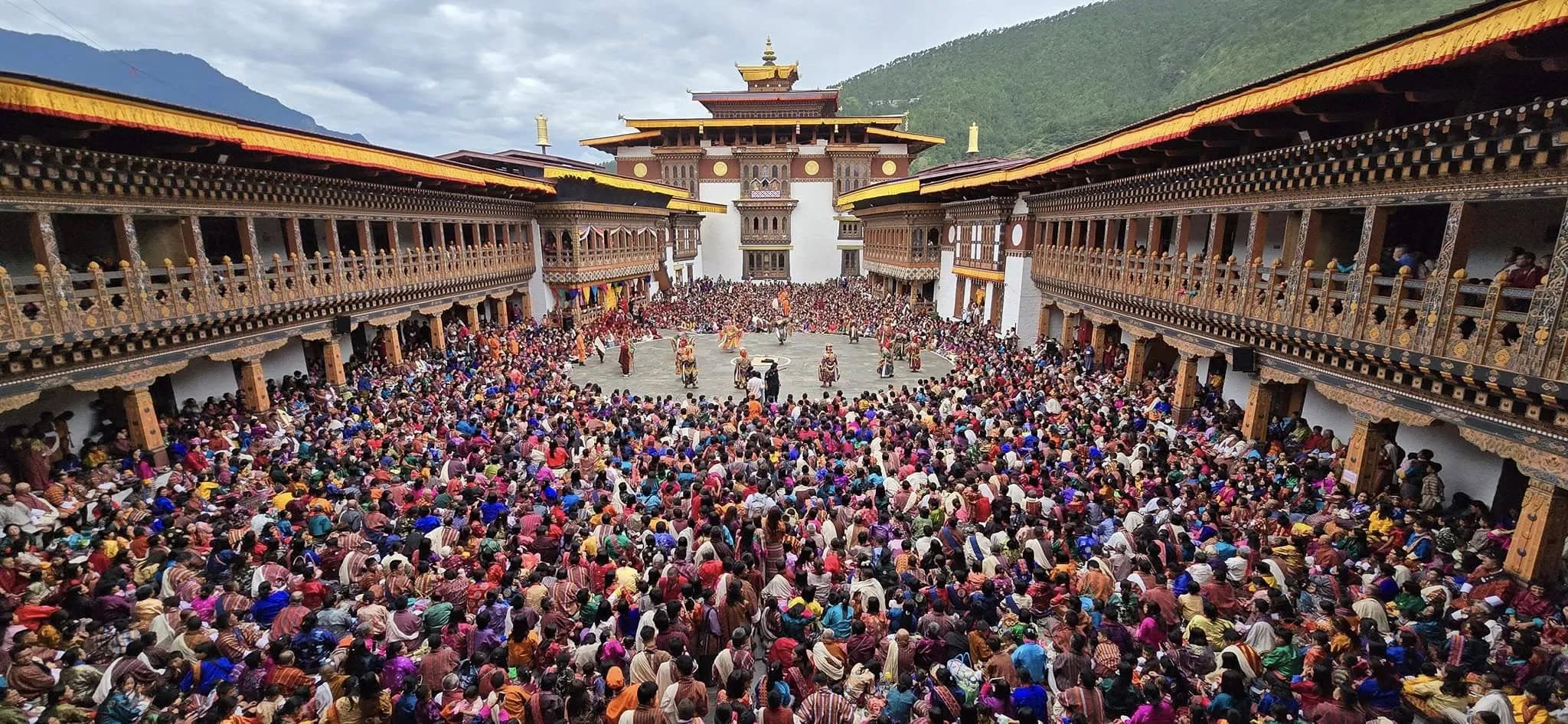
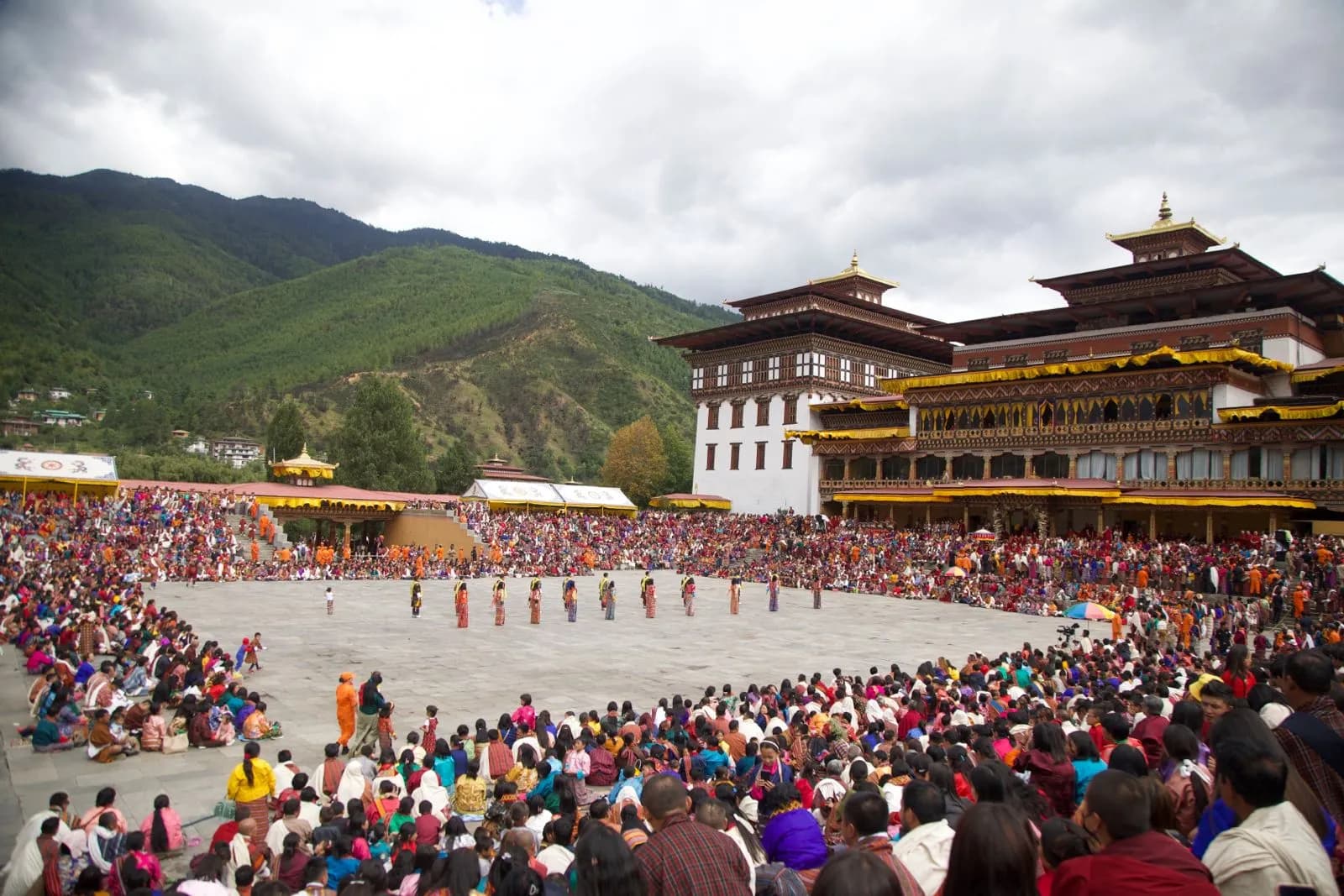
The Paro Tshechu — the eleventh through fifteenth days of the second Bhutanese lunar month, which falls in late March or early April — is the country's most international-visitor-accessible festival. Rinpung Dzong as the venue, the pre-dawn thongdrel on the final day, the spring weather with the rhododendron on the surrounding ridges, the festival cuisine and the community register all combining. The nine-night window gives you the full three-day festival plus six days for Thimphu, Punakha, and the cultural that the festival sits within.
What we do, and what we deliberately do not do
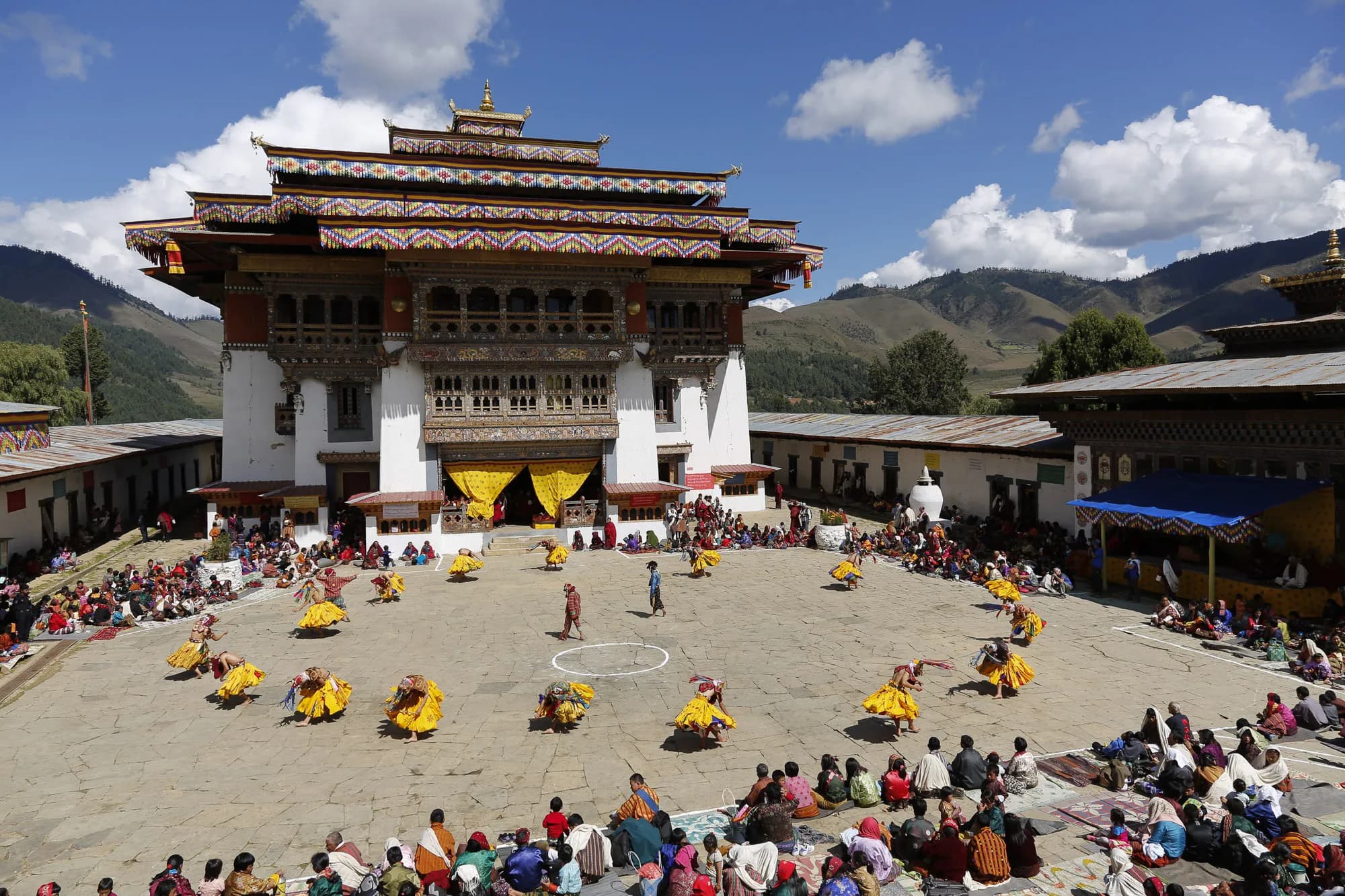
We arrive in Paro two days before the festival begins — to acclimatise, to walk Rinpung Dzong with the guide before the crowds arrive, and to set the foundation. We attend all three festival days. We do not race the climax — the thongdrel unfurling is at 4:30am on the third day; we are awake at 3:30 and at the dzong gates as they open. We then continue to Thimphu and Punakha for the post-festival quiet days — the country's most beautiful spring landscapes and the contrast that makes the festival memorable.
Who you'll be among, and who you'll travel with
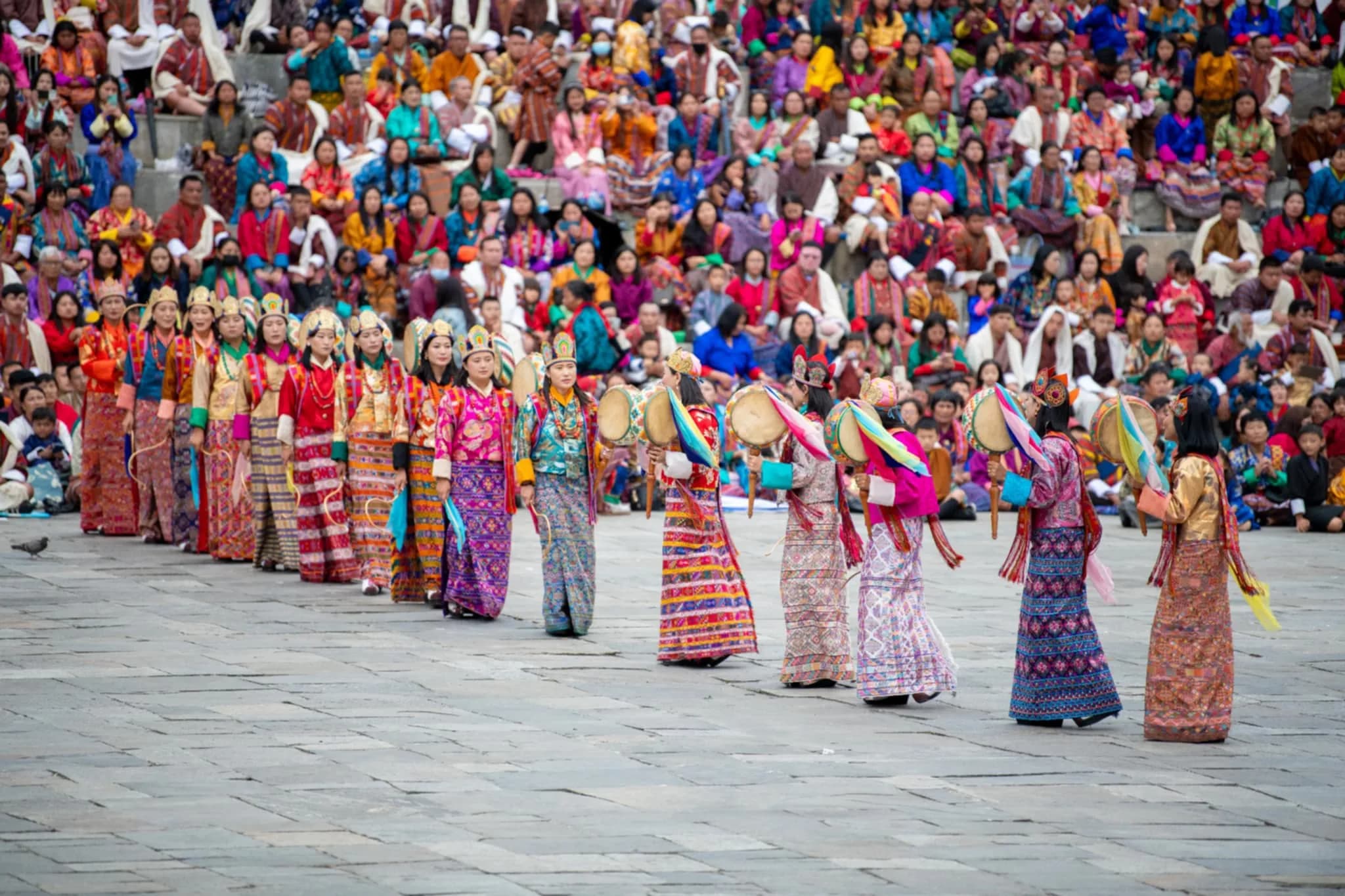
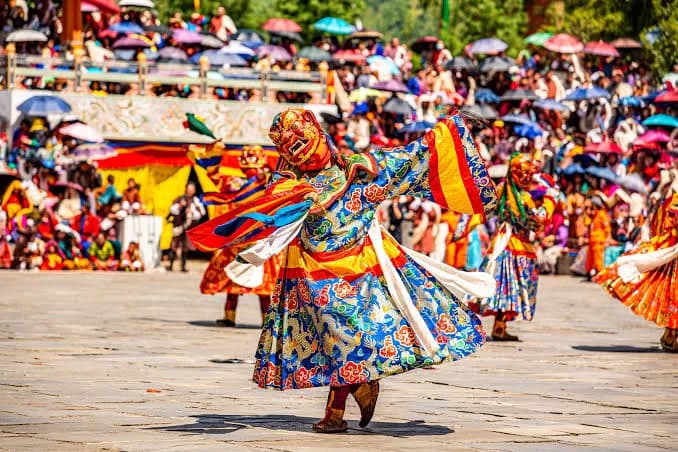
The Paro Tshechu is heavy with international visitors compared to most Bhutanese tshechus — typically several thousand attendees, including the international and the principal Bhutanese-family crowds dressed in their finest gho and kira. The atmosphere is communal-festival rather than reverent-private. Your guide is matched for festival fluency — most Bhutanese guides are confident with the festival programme, but we choose for the depth of cham-cycle knowledge so that the dances make sense rather than merely look impressive.
The route
A sample shape of the week
DAY 01
Arrival in Paro
Met in the arrivals hall, the lodge, an early supper before the festival begins.
DAY 02
Paro day before the festival
Rinpung Dzong walked quietly with the guide before the crowds; Kyichu Lhakhang in the afternoon; an early night.
DAY 03
Tshechu day 1 — Pholay Molay and the opening chams
Arrival at the dzong before mid-morning; the opening chams; the family-picnic atmosphere; the atsaras circulating among the crowd; an evening return to the lodge.
DAY 04
Tshechu day 2 — Drametse Ngacham and the principal chams
The full chams programme; the drum dance from Drametse; lunch in the dzong courtyard with the Bhutanese families; afternoon dances.
DAY 05
Tshechu day 3 — the pre-dawn thongdrel
Up at 3:30; at the dzong gates as they open; the thongdrel unfurled before sunrise; the brief blessing window; the dawn light on the courtyard; the morning back at the lodge for breakfast and a long rest.
DAY 06
Across to Thimphu — recovery and the cultural
Mid-morning transfer to the capital; afternoon at the Memorial Chorten and the Folk Heritage Museum; the dinner conversation about the festival.
DAY 07
Over Dochu La — into Punakha
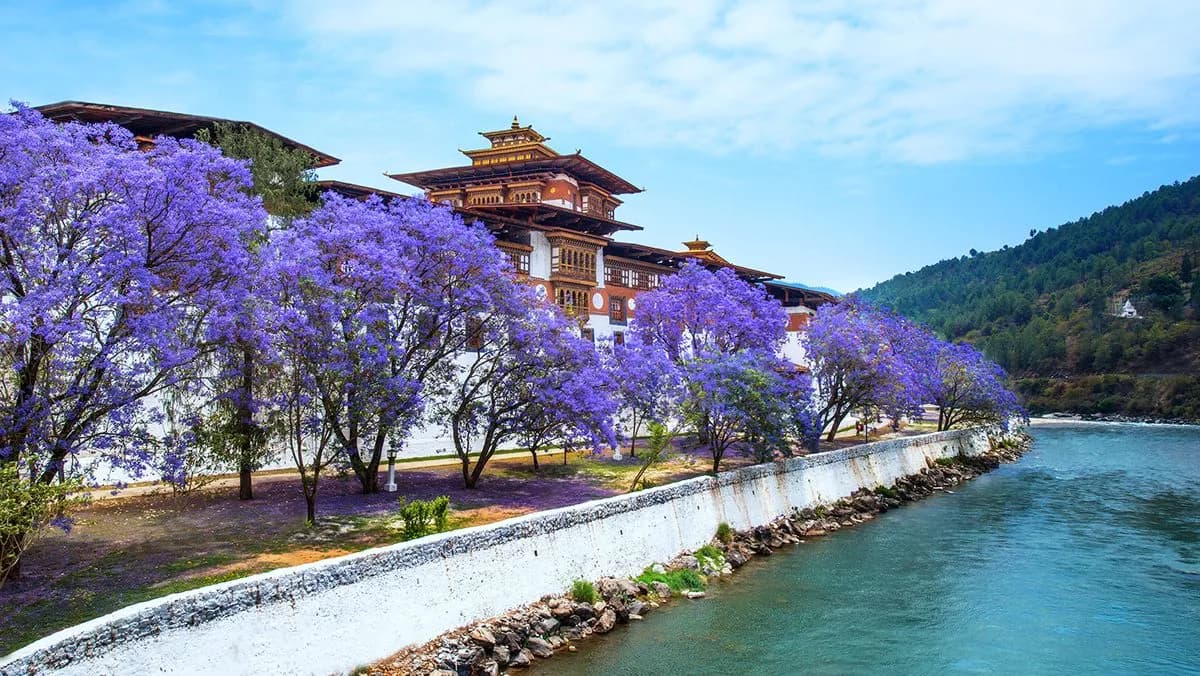
The 3,100m pass, the eastern Himalayan range; Punakha Dzong at the confluence; the warm-valley tradition after the dzong cold.
DAY 08
Punakha day
Chimi Lhakhang, the Mo Chhu walk, lunch at the riverside, the long afternoon.
DAY 09
Back to Paro
The drive back over the pass; Kyichu in the afternoon; the early supper; bags packed for the dawn flight.
DAY 10
Departure from Paro
Breakfast at the lodge, the guide walks you back to the terminal; the team writes a fortnight later.
The day-by-day above is illustrative. The proposal you receive is built around your dates, your pace and your interests, not this template.
Frequently asked
- When exactly does the Paro Tshechu fall?
- The festival is the 11th–15th days of the 2nd Bhutanese lunar month, which converts to late March or early April on the Gregorian calendar. The precise dates shift each year; the country's Department of Tourism publishes the festival calendar 6–12 months in advance. Book against the specific year's dates.
- How crowded is the Paro Tshechu?
- It is the most internationally-attended Bhutanese tshechu — several thousand attendees on the principal days. The Bhutanese family crowds are substantial and the atmosphere is communal-festival rather than intimate. For the most reverent, choose one of the smaller dzongkhag tshechus (Wangdue, Trongsa, Lhuentse) instead. For the most photographed, most accessible festival, Paro is the destination.
- What about the thongdrel — what is it and when?
- The thongdrel is the giant applique-and-embroidery thangka — perhaps 15 metres wide and 30 metres tall — depicting Guru Rinpoche in his eight manifestations. It is unfurled before dawn on the third day, displayed for a brief blessing window, and rolled back up before the sun touches it directly to protect the silk and gold thread. We arrive at the dzong gates as they open (typically 4–4:30am).
- What about the Sustainable Development Fee?
- Included across the nine nights — USD 100 per night per international visitor. The SDF funds the country's environmental protection, free citizen education, and free citizen healthcare.
Journeys you might also weigh
- 01Bhutan for the Thimphu TshechuA seven-night western-circuit journey built around the Thimphu Tshechu, the capital's largest autumn festival, held over three days in the courtyard of Tashichho Dzong. Paro and Punakha either side; a small group of travellers; a guide who can name each masked figure as it turns, and read the teaching inside the dance. Dates follow the Bhutanese lunar calendar and shift each year into September or October — published well ahead, confirmed in your proposal.7 nights
from $8,000 - 02Bhutan photography weekA small-group journey for serious photographers in the spring window (late March through April) — when the Paro valley is in cherry blossom, the Dochu La ridge is in rhododendron, the Paro Tshechu falls at Rinpung Dzong with the giant thongdrel unfurling at dawn, and the morning light off the Pa Chhu and Mo Chhu is the kind only this time of year produces.9 nights
from $18,000 - 03Bhutan in springA seven-night journey through Paro, Thimphu, Punakha and Gangtey timed to the spring bloom — Dochu La and the Phobjikha hills carpeted in red, pink and white, a walk through the colour rather than a glance from the car, and the festival window open if your dates fall right.7 nights
from $8,000
Begin when you're ready.
A few questions, or a conversation in your own words. A bespoke draft either way.

