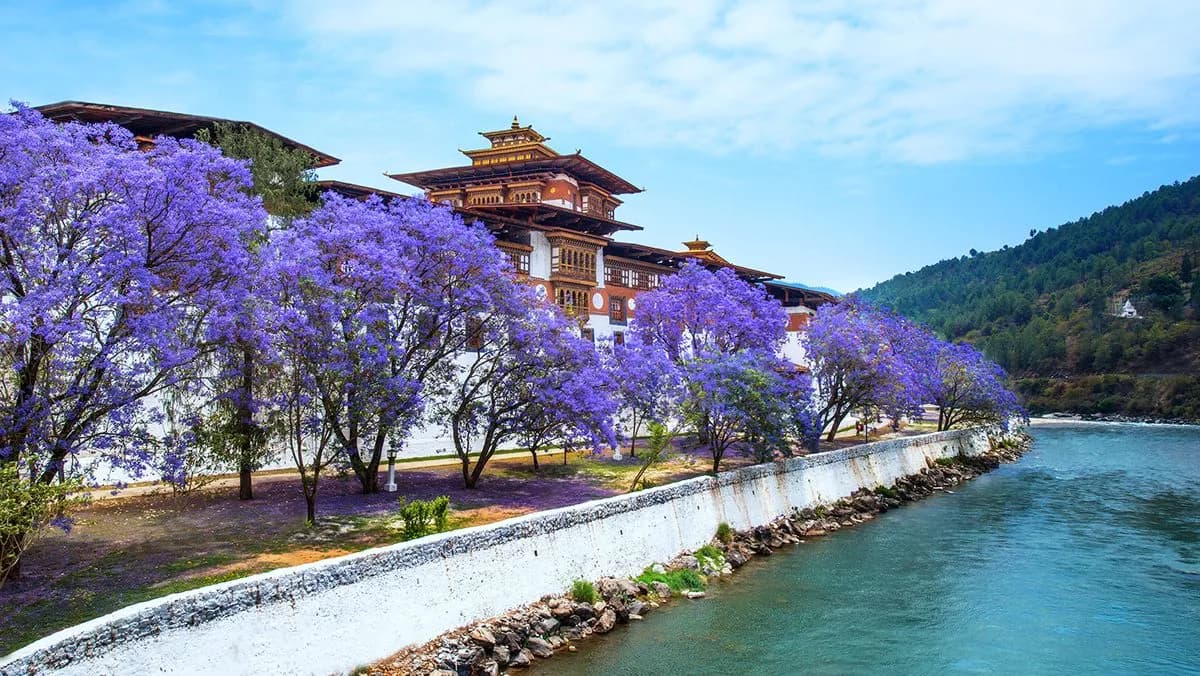
A SPRING JOURNEY
Rhododendron on the high passes — spring in Bhutan.
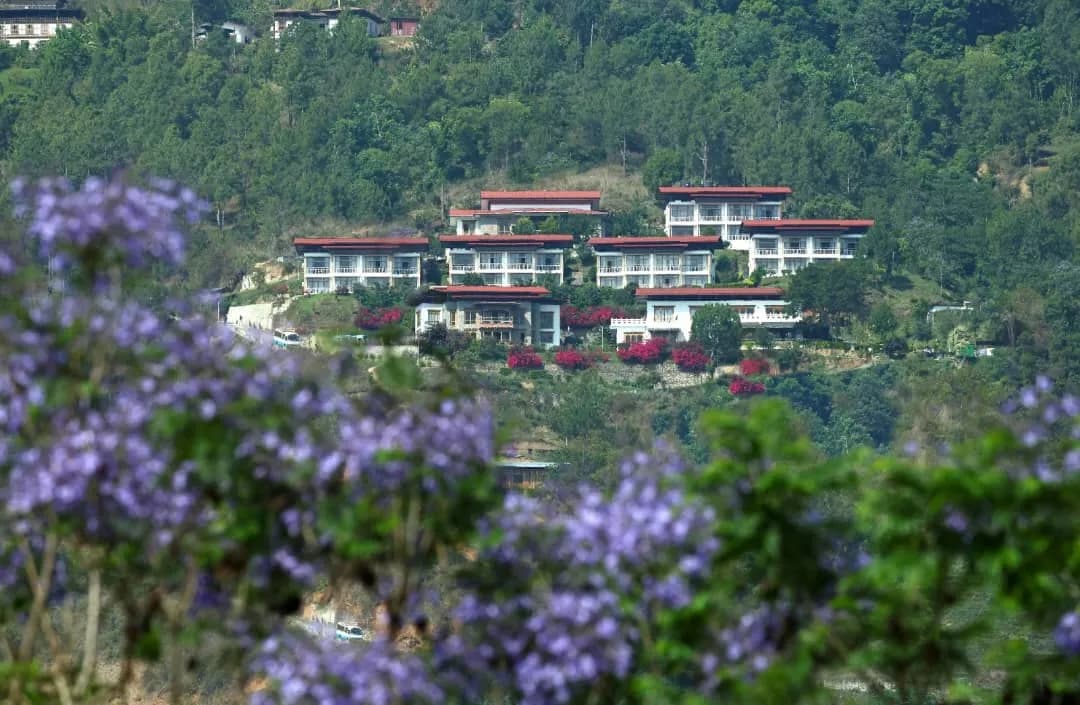
A seven-night journey through Paro, Thimphu, Punakha and Gangtey timed to the spring bloom — Dochu La and the Phobjikha hills carpeted in red, pink and white, a walk through the colour rather than a glance from the car, and the festival window open if your dates fall right.
7 nights · Luxury tier · from USD 8,000 per traveller
- Nights
- 7
- From
- USD 8,000per traveller
- Tier
- Luxury
- Best season
- Spring
- Suits
- Small group
- Departing
- Worldwide
When the bloom actually happens
Rhododendron is a flower of altitude, and Bhutan carries dozens of species up its ridges. The lower stands begin to turn from late March; the high passes — Dochu La at 3,100 metres, the hills above Phobjikha, the higher stretches of the Druk Path — hold their colour through April and into May, red giving way to pink and white as you climb. The bloom moves with the year and with the height, which is why we plan the route around it rather than hoping to catch it from a window.
A walk, not a drive-past
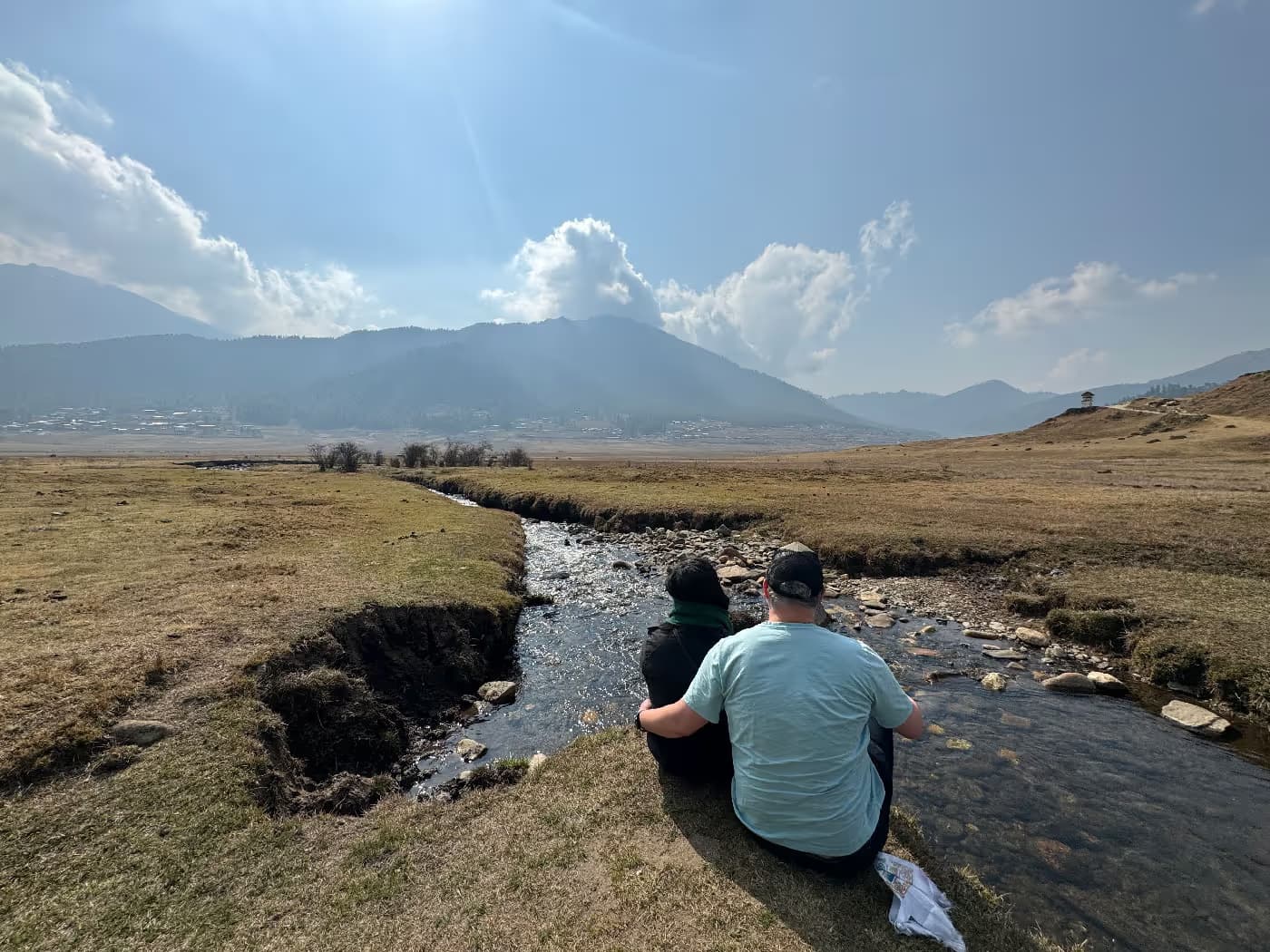
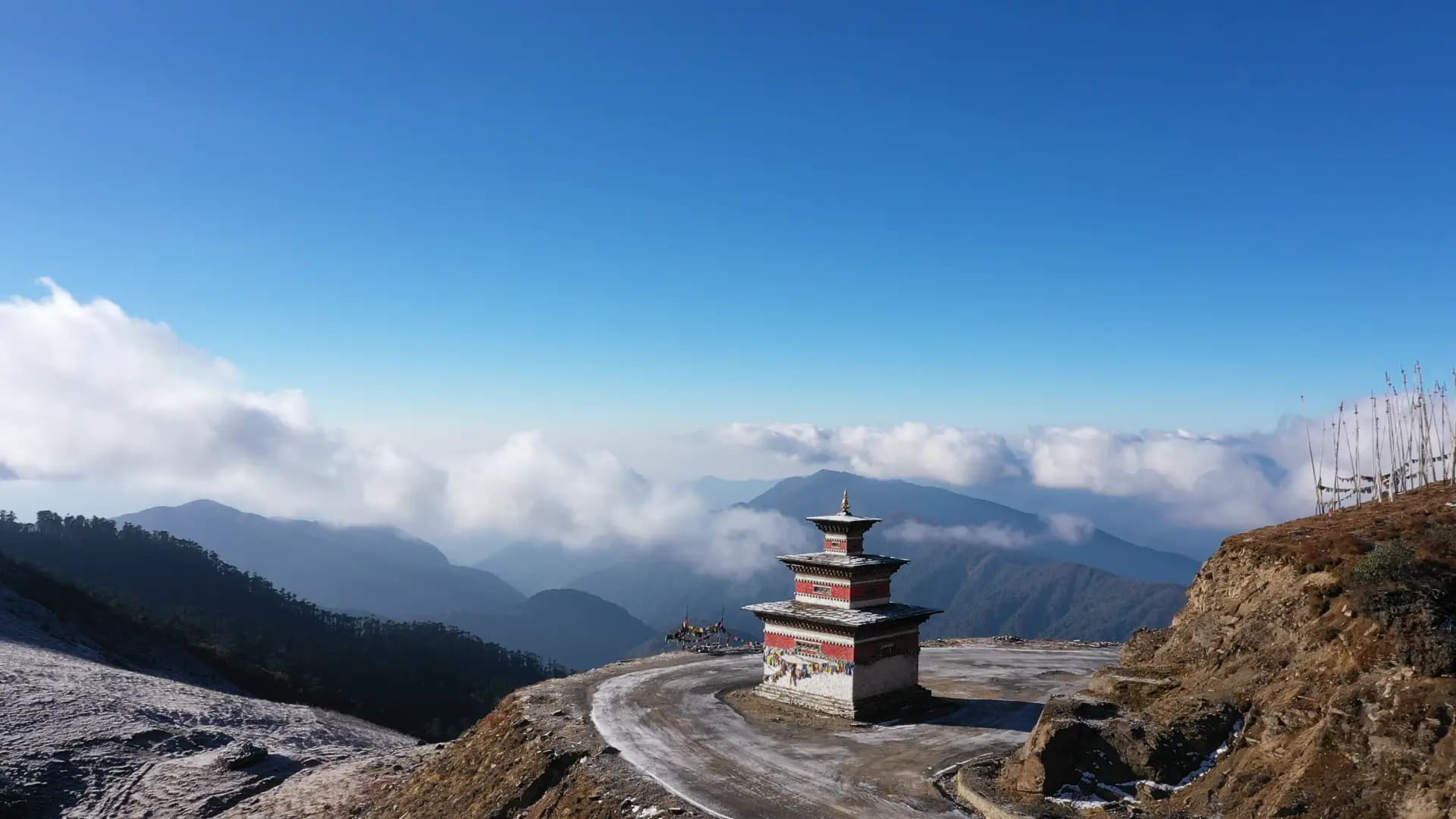
The colour is best met on foot. We build in a stretch of the Gangtey nature trail through Phobjikha — a gentle few hours down the valley among the stands — and time the crossing of Dochu La for the light, with space to walk a little among the 108 chortens and the flowering ridge behind them rather than pausing only for a photograph. The blue poppy, the national flower, is a rarer thing altogether — a high-scree alpine that opens later and higher than the rhododendron — and your guide will tell you where, in a given year, it might be found.
The festival window, if it aligns
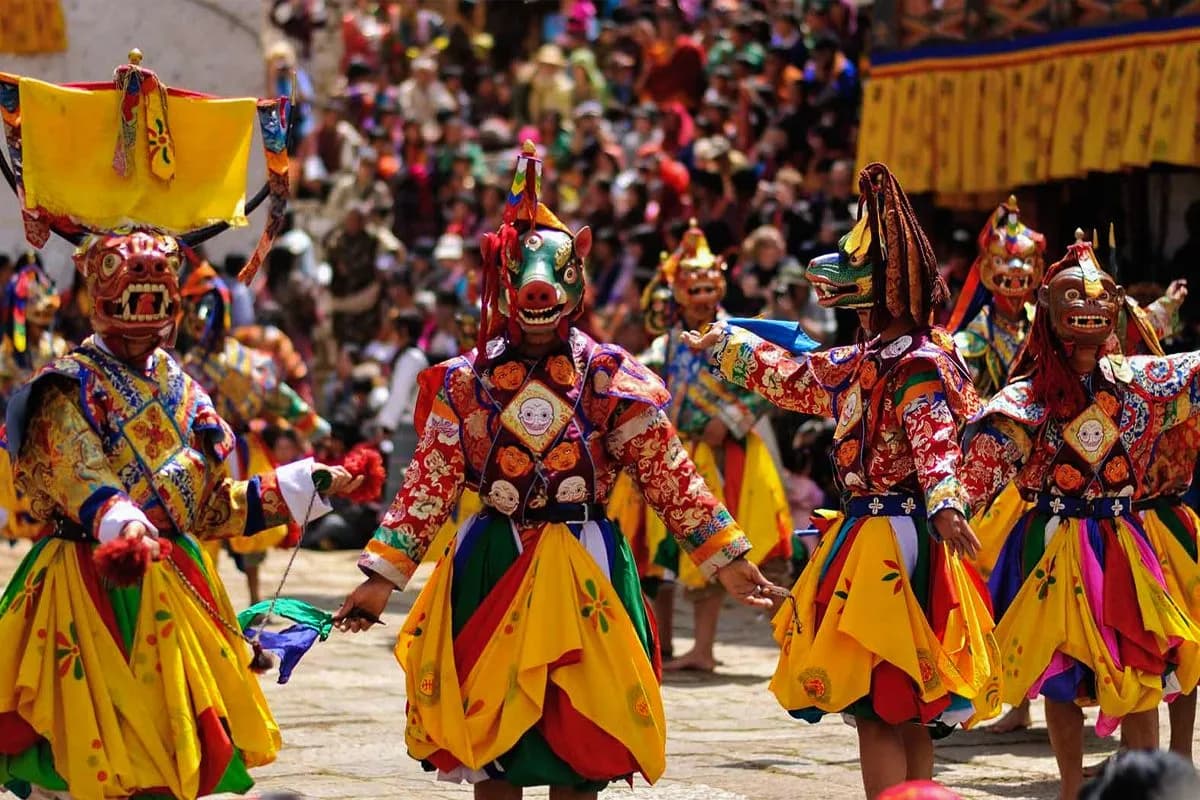
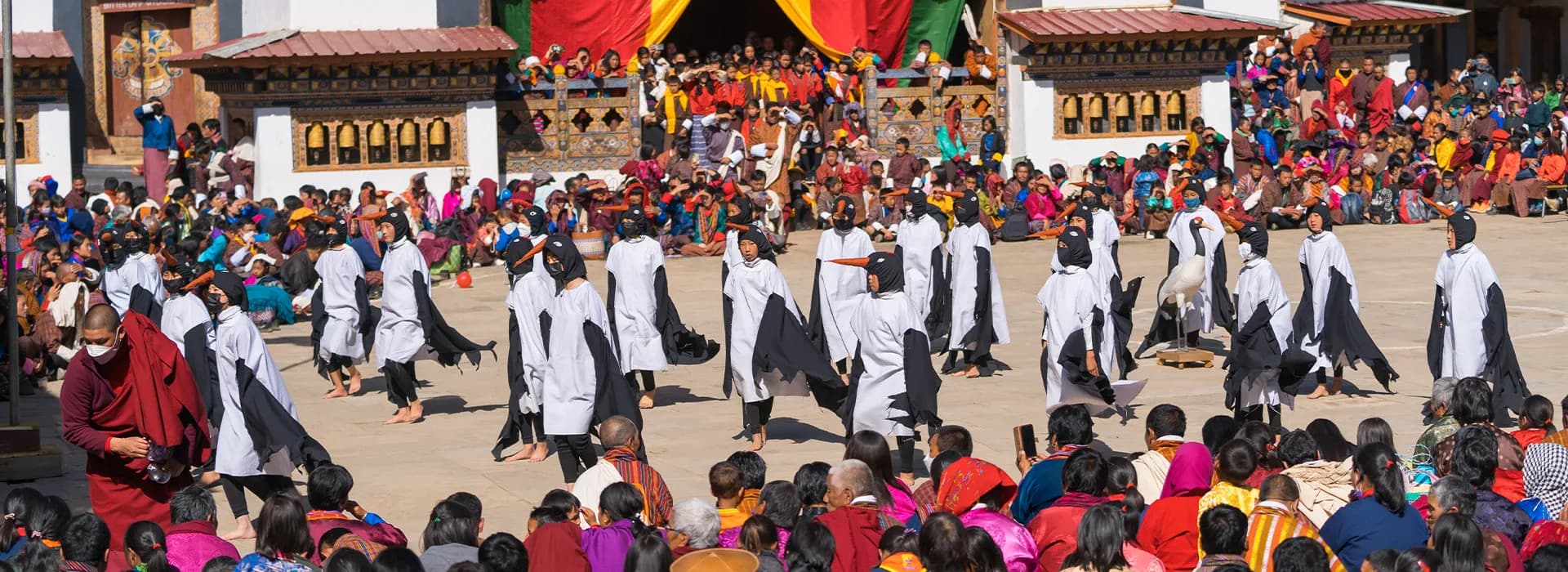
Spring is also a festival season, and the Paro Tshechu — one of the country's three most significant — often falls within it, typically between the last week of March and the third week of April. We will tell you in your proposal whether your travel dates land within it and shape the days accordingly: seating from where the cham dances read best, with a guide who can name each masked figure as it appears in the courtyard.
The route
A sample shape of the week
DAY 01
Paro arrival — the valley in spring
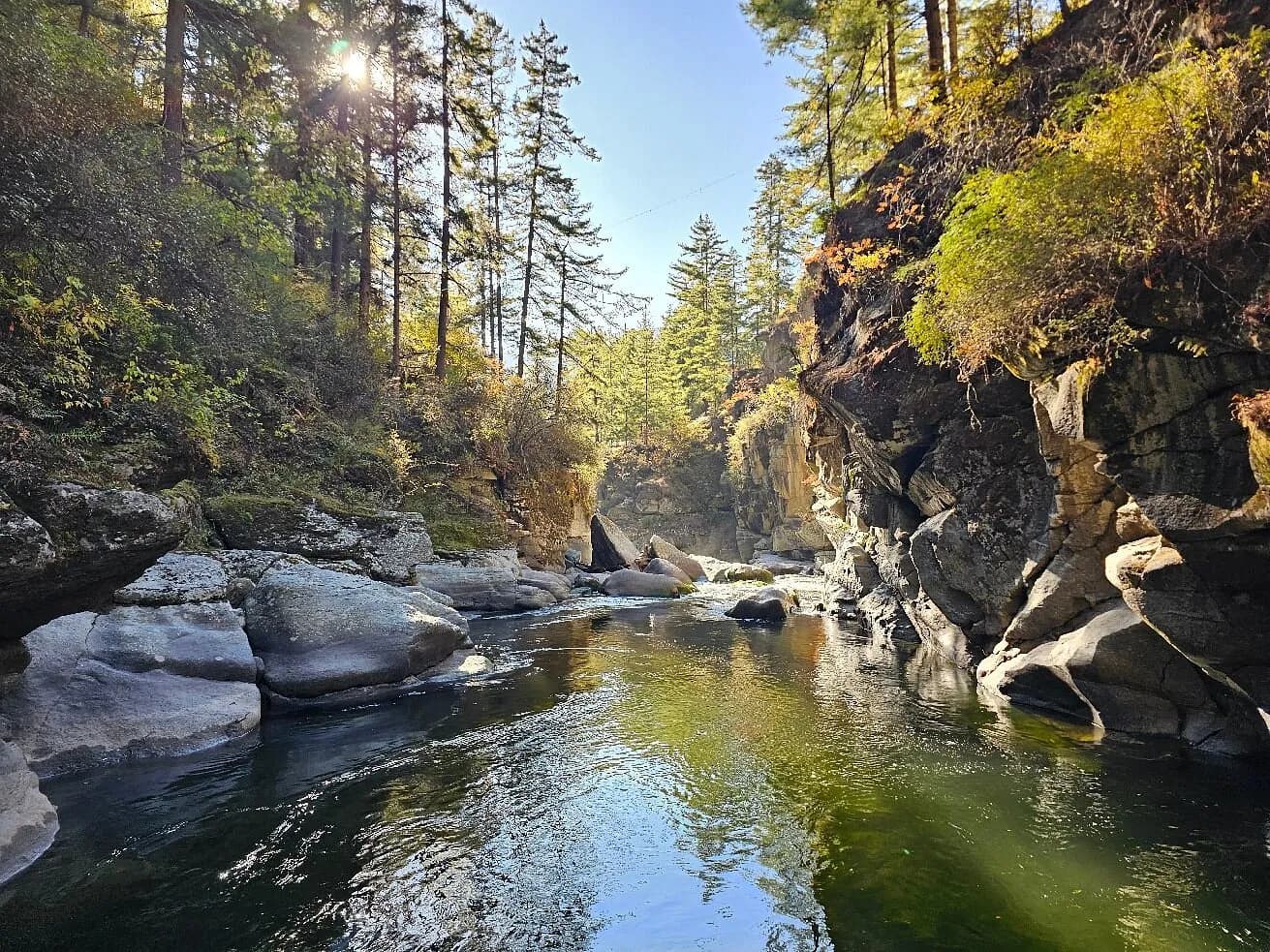
Met in the arrivals hall; the short way to the lodge; an unhurried walk along the Pa Chhu if the light holds, with the first rhododendron already showing on the slopes.
DAY 02
Paro Tshechu if dates align, or Kyichu Lhakhang
If a festival day, early seating for the cham dances; otherwise Kyichu Lhakhang and a quiet valley walk, the climb to Taktsang briefed for later in the week.
DAY 03
Across to Thimphu — the capital, slowly
The 54 kilometres to the capital, a little over an hour; Memorial Chorten in early light, the afternoon taken at its own pace.
DAY 04
Over Dochu La — the pass in colour
The 3,100-metre crossing at peak bloom, the eastern Himalaya behind the chortens on a clear morning, then down to Punakha, roughly three hours over the 75 kilometres.
DAY 05
On to Gangtey — the Phobjikha trail
Some 80 kilometres east, about three hours, into the glacial valley; an afternoon on the Gangtey nature trail among the rhododendron stands, the monastery on its spur above.
DAY 06
Back to Paro — ahead of Taktsang
The return drive with the passes in colour a second time; an early night at the lodge, the climb readied with your guide at tea.
DAY 07
The Tiger's Nest — and the way home
Taktsang Palphug at 3,120 metres, the switchbacks paced by your guide; a hot stone bath for the descent; the team writes a fortnight later.
The day-by-day above is illustrative. The proposal you receive is built around your dates, your pace and your interests, not this template.
Frequently asked
- Will the rhododendron be in bloom on our dates?
- The bloom shifts a week or two from year to year and rises with altitude, so different stands peak at different times. In your proposal we will tell you what to expect for your dates, and if it looks borderline we will suggest the week — and the heights — that give the best chance. As a rule the high passes hold their colour from mid-April into early May.
- Is the rhododendron the national flower of Bhutan?
- No — that is the blue poppy, Meconopsis, a rare alpine of the high screes that opens later and higher than the rhododendron. The rhododendron is the great spring spectacle of the passes and the lower ridges; the blue poppy is a quieter, harder-won sight, and your guide will know where it might be found in a given season.
- How much walking does this involve?
- These are light treks rather than expeditions — the Gangtey nature trail is a gentle few hours along the valley floor, and the Dochu La walk is a short stretch around the chortens and the flowering ridge. The one real climb is Taktsang on the last day, paced by your guide. Pacing throughout is set to how you actually travel, not the other way round.
- How does the flight to Bhutan work?
- Paro is the only airport, served by Drukair (KB) and Bhutan Airlines (B3), typically via Delhi, Kolkata, Kathmandu, Bangkok or Singapore. We advise on the international leg and ticket the Paro flight on your behalf at the prevailing rate; we hold a seat-block on the relevant route for confirmed bookings.
- What is the Sustainable Development Fee, and is it included?
- Yes. The SDF is USD 100 per night for each international adult visitor, set by the Royal Government of Bhutan. It funds free health care and education for Bhutanese citizens, conservation, and the upkeep of cultural sites, and it is included in your transparent price breakdown.
Journeys you might also weigh
- 01Bhutan Paro TshechuThe Paro Tshechu falls in late March or early April, runs three days at Rinpung Dzong, and culminates in a pre-dawn thongdrel that is the most photographed Bhutanese image of the spring window. Nine nights — three for the festival itself, six for the country in its spring window.9 nights
from $18,000 - 02The Black-Necked Crane FestivalAn eight-night Bhutan journey built around the Black-Necked Crane Festival at Gangtey on 11 November — the western circuit of Paro, Thimphu, and Punakha on either side of a day spent in the courtyard of Gangtey Goempa, where the rare cranes that winter in the glacial valley are honoured with schoolchildren's dances and the quiet work of their conservation.8 nights
from $8,000 - 03Bhutan cherry blossomsA seven-night Bhutan journey timed to the second week of April — wild cherry along the Paro and Thimphu rivers, rhododendron on Dochu La, jacaranda starting in Punakha. Light by 5:50, evenings unhurried.7 nights
from $13,000
Begin when you're ready.
A few questions, or a conversation in your own words. A bespoke draft either way.

