A FESTIVAL IN LATE AUTUMN
The cranes return to Phobjikha — and the valley keeps a day for them.
An eight-night Bhutan journey built around the Black-Necked Crane Festival at Gangtey on 11 November — the western circuit of Paro, Thimphu, and Punakha on either side of a day spent in the courtyard of Gangtey Goempa, where the rare cranes that winter in the glacial valley are honoured with schoolchildren's dances and the quiet work of their conservation.
8 nights · Luxury tier · from USD 8,000 per traveller
- Nights
- 8
- From
- USD 8,000per traveller
- Tier
- Luxury
- Best season
- Autumn
- Suits
- Small group
- Departing
- Worldwide
Why the eleventh of November
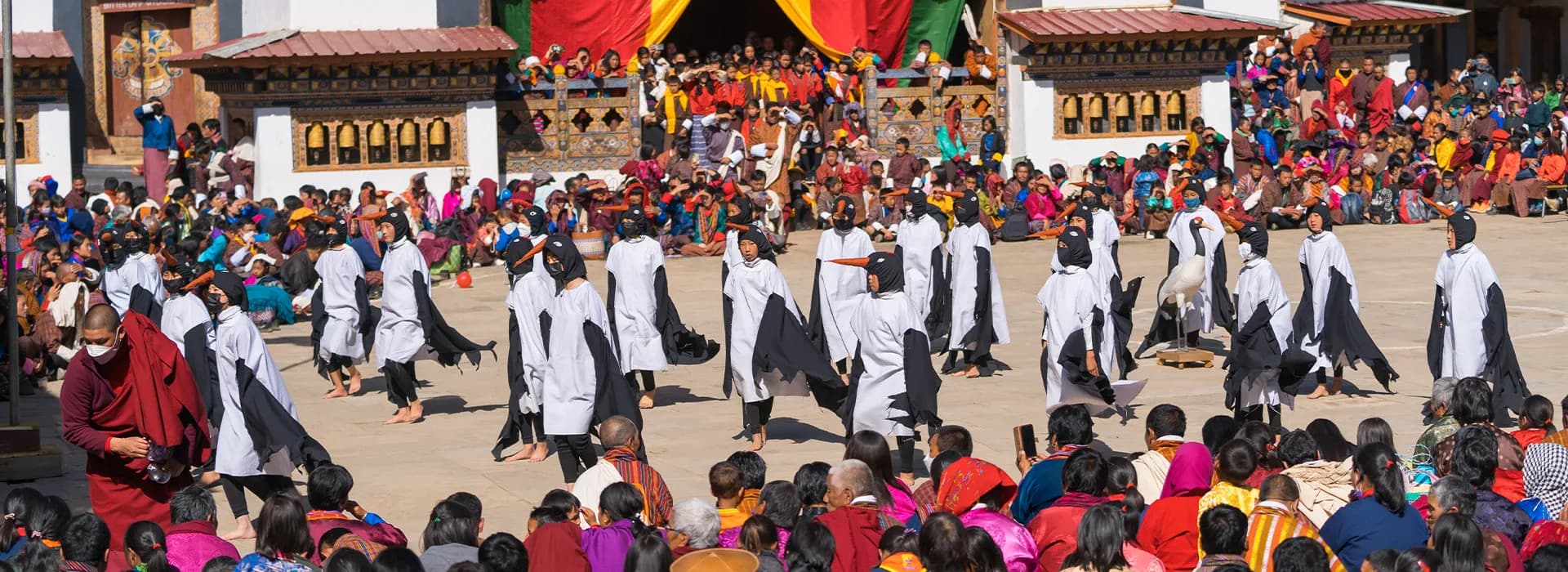
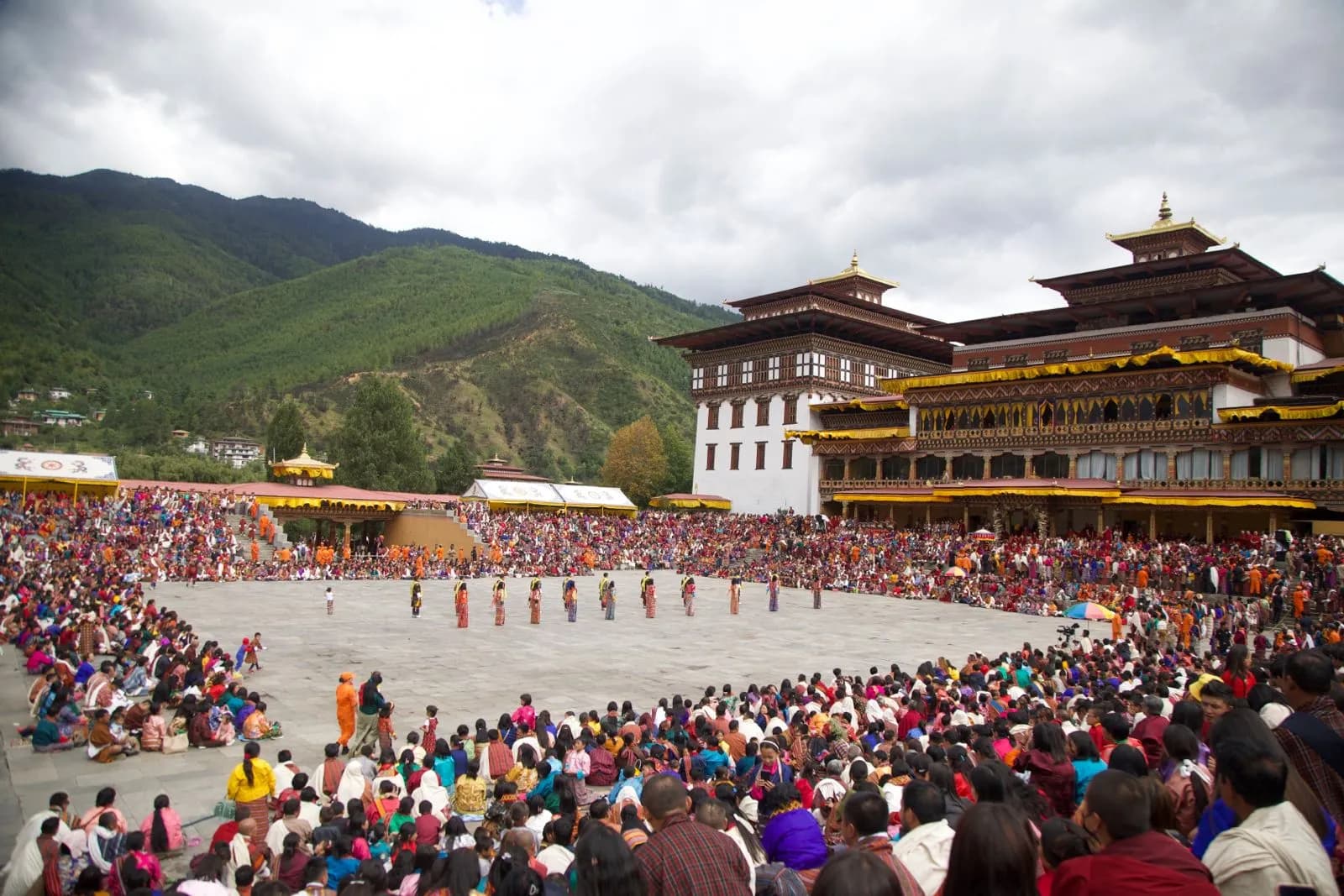
Each late October, as the high passes of the Tibetan plateau close, the black-necked cranes — Grus nigricollis, among the rarest cranes anywhere — fly south across the Himalaya to the broad glacial valley of Phobjikha, and stay until the middle of February. The valley keeps a single day for them. On 11 November the courtyard of Gangtey Goempa fills for the Black-Necked Crane Festival: folk dances, a beloved crane dance performed by local schoolchildren in costume, and a morning given over to the conservation work that the Royal Society for the Protection of Nature carries on in the valley year-round. It is one day; we build the week around it.
The valley, and the lore
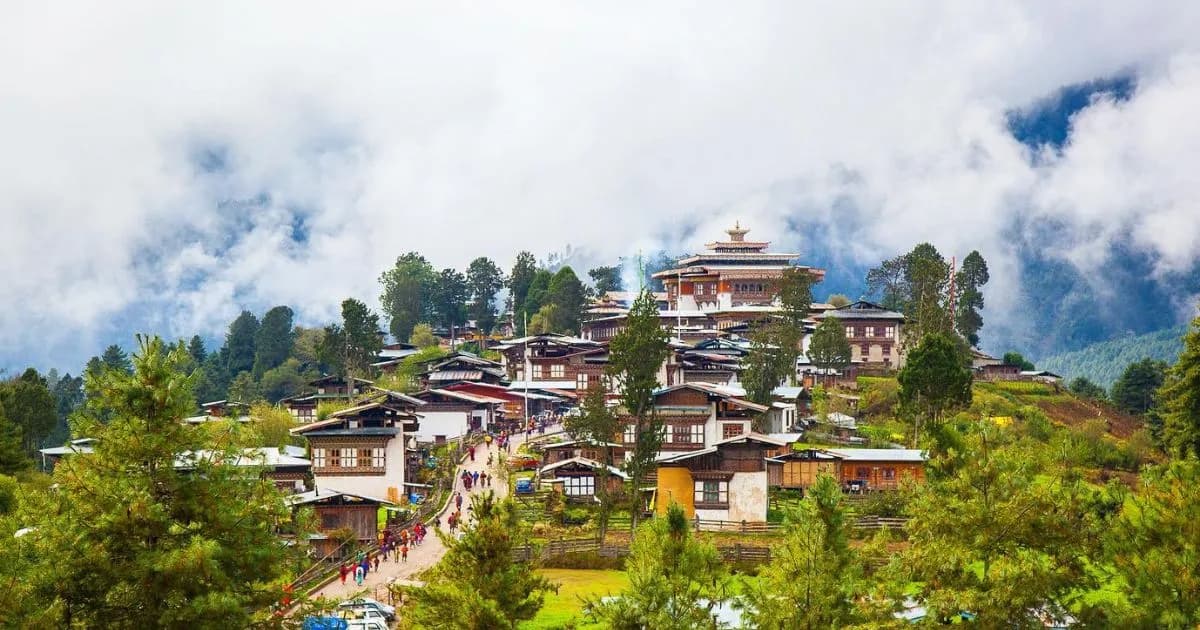
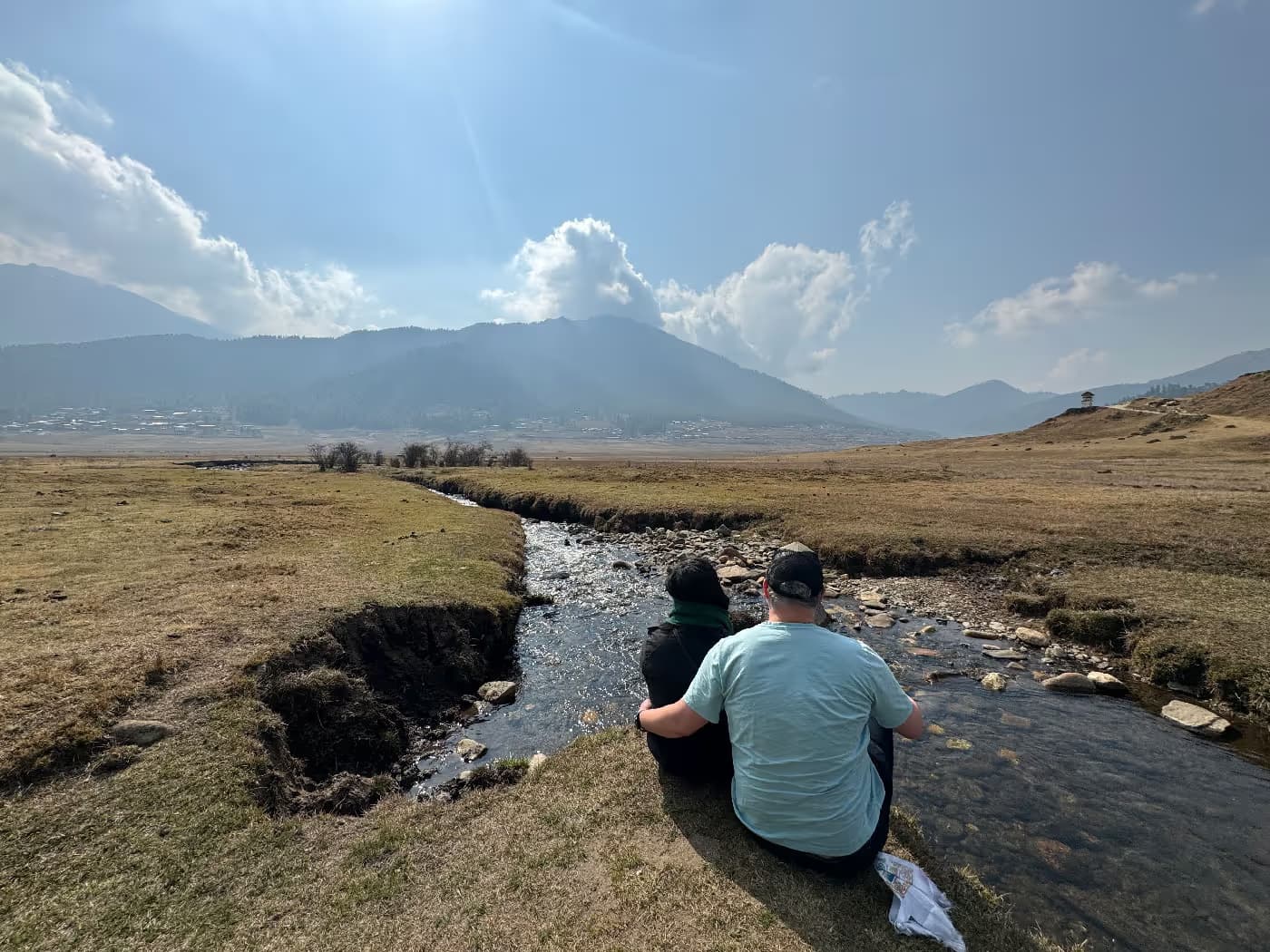
Phobjikha is a wide, treeless glacial bowl at around 2,900 metres — a shape rare in Bhutan, and a stillness with no real equivalent in the eastern Himalaya. Some hundreds of cranes feed in its meadows by day and roost on the open marsh at night. The Bhutanese revere them: it is said that on arriving, and again on leaving, the cranes circle Gangtey Goempa three times before settling, and the valley's people, who share the land with them, hold their winter presence as a blessing. The festival is the day the valley says so aloud.
The week around the festival
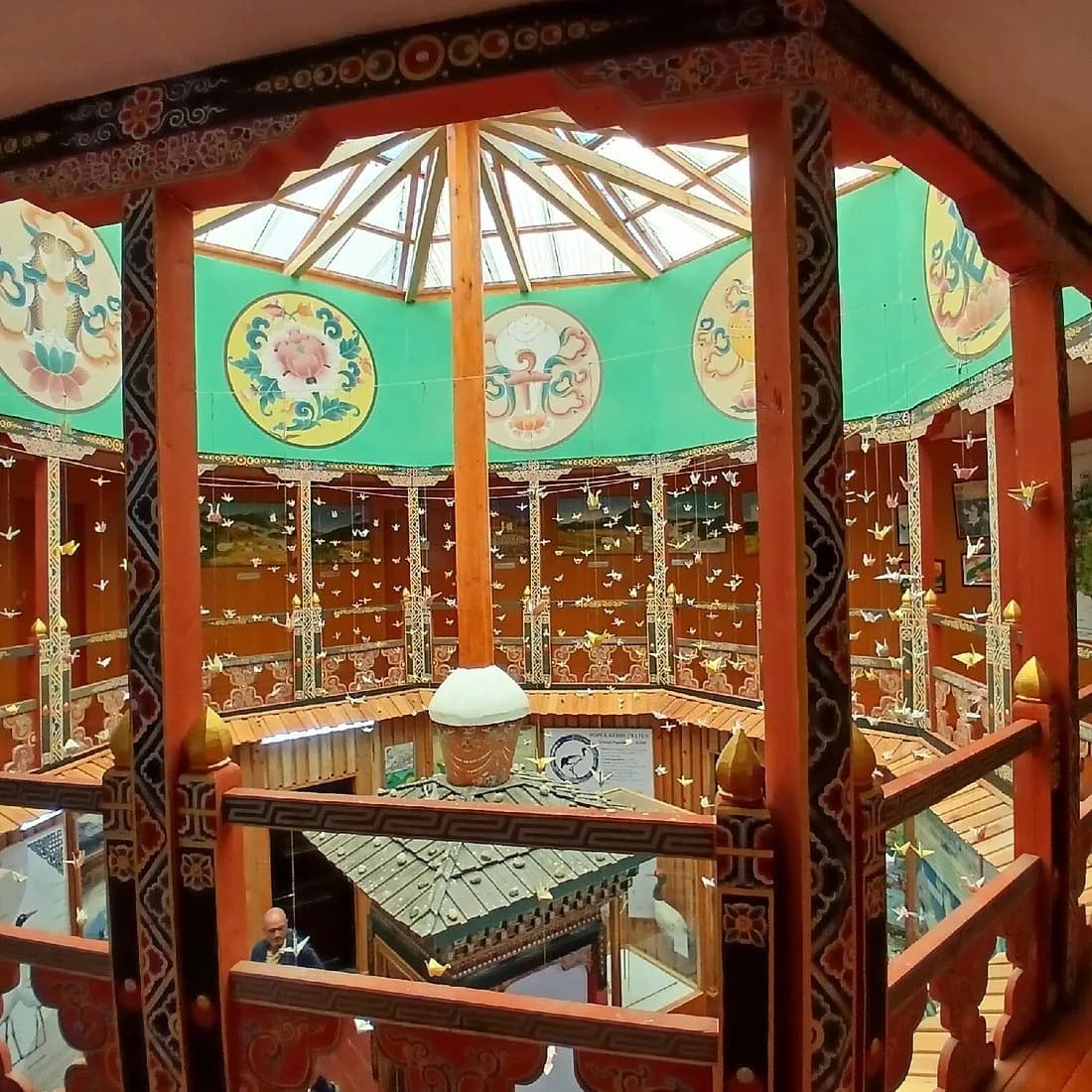
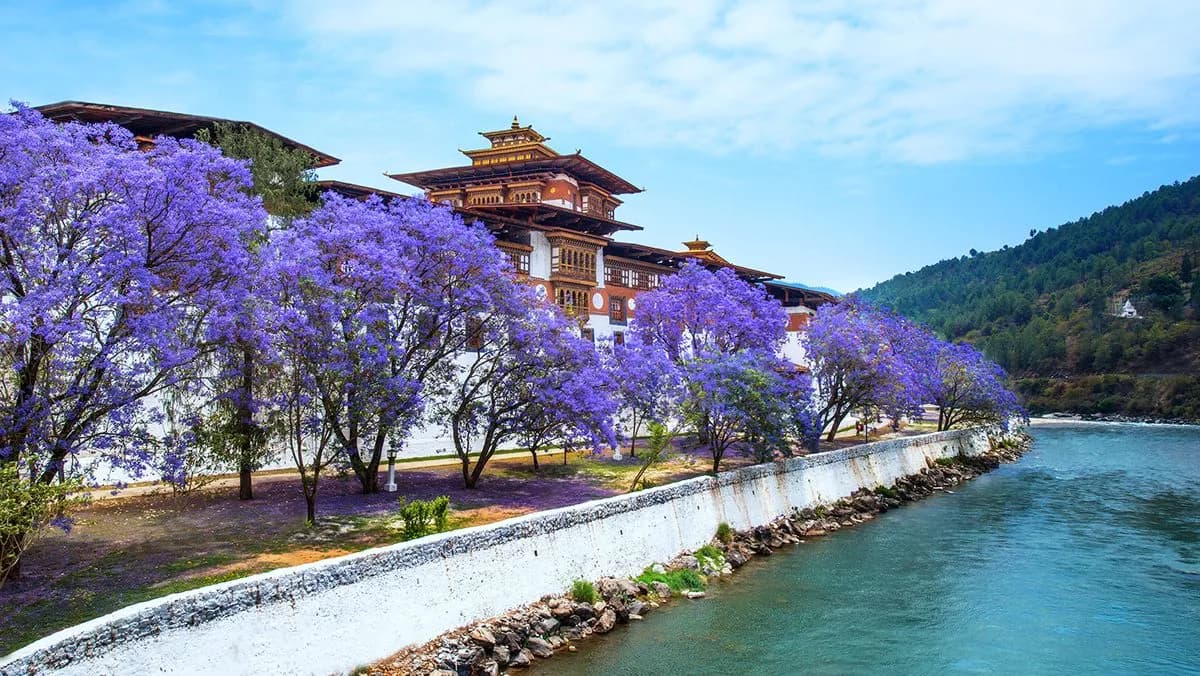
One festival day, six days of the western circuit, one travel day. We open in Paro for the arrival and the climb to Taktsang, cross to Thimphu for the capital taken slowly, then over Dochu La to Punakha at the confluence of the Mo and Pho Chhu. From Punakha it is 80 kilometres and about three hours east over the Lawa La into Phobjikha, where the festival, the Black-Necked Crane Information Centre, and the gentle Gangtey nature trail fill two unhurried days. Gangtey fills for the eleventh; we block valley lodges well ahead, and ask travellers to confirm at least 90 days out.
The route
A sample shape of the week
DAY 01
Paro arrival — fire lit by four
Met in arrivals; twenty minutes to the lodge; an unhurried walk to Rinpung Dzong if the light holds; early dinner and the week briefed.
DAY 02
Paro — Taktsang before the circuit begins
The climb to the Tiger's Nest paced by your guide; lunch at the cafeteria; a hot stone bath at the lodge for the descent.
DAY 03
Across to Thimphu — the capital, slowly
The Pa Chhu valley to the capital; Memorial Chorten in early light; the takin preserve and the great Buddha Dordenma above the city.
DAY 04
Over Dochu La to Punakha
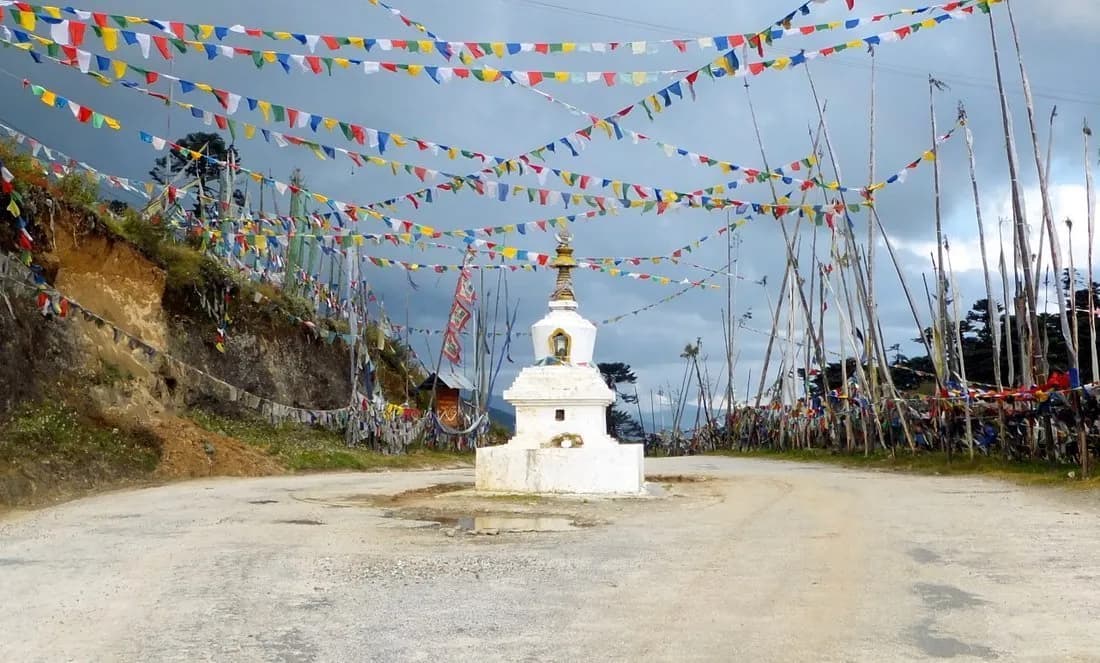
The 3,100-metre pass and its 108 chortens, the eastern Himalaya on a clear morning; down to Punakha; the dzong at the river confluence in late-afternoon light.
DAY 05
East to Phobjikha — the valley opens
Eighty kilometres and about three hours over the Lawa La; the descent into the broad glacial valley; the first cranes on the marsh as the afternoon cools.
DAY 06
The Black-Necked Crane Festival — Gangtey Goempa
The courtyard from mid-morning; folk dances and the schoolchildren's crane dance; the conservation address; a quiet afternoon as the valley settles.
DAY 07
Phobjikha — the information centre and the nature trail
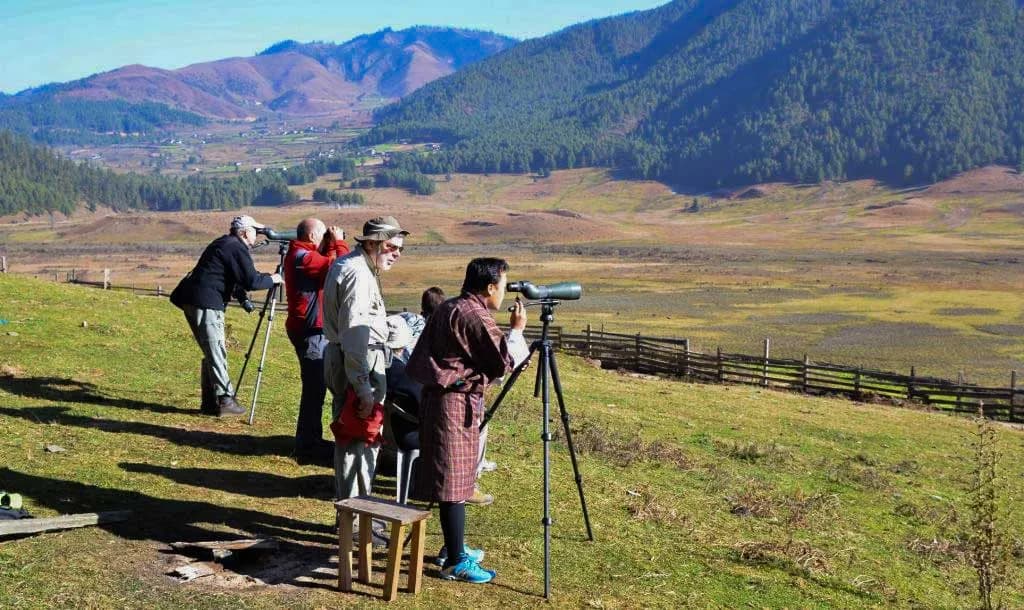
Spotting scopes at the Black-Necked Crane Information Centre at first light; the gentle Gangtey nature trail down through pine and Semchubara to the marsh; cranes calling across the valley floor.
DAY 08
Back to Paro and home
The long drive west over the passes; a last quiet Paro evening; the guide walks you back to the terminal for the morning flight.
The day-by-day above is illustrative. The proposal you receive is built around your dates, your pace and your interests, not this template.
Frequently asked
- When exactly is the Black-Necked Crane Festival?
- On 11 November each year, in the courtyard of Gangtey Goempa in the Phobjikha valley. It is a single day — folk and masked dances, a crane dance by local schoolchildren, and a conservation focus run with the Royal Society for the Protection of Nature. The journey is built around that day, with the western circuit on either side.
- When are the cranes actually in the valley?
- The black-necked cranes arrive in Phobjikha from late October and stay until the middle of February, having flown down from the Tibetan plateau for the winter. The eleventh of November falls early in that window, once the birds have settled — so the festival and the cranes coincide, and you see them on the marsh as well as honoured in the courtyard.
- How close can we get to the cranes?
- Not close, and deliberately so. The cranes are rare and easily disturbed, so they are watched from the Black-Necked Crane Information Centre's viewing gallery and designated points, through mounted spotting scopes, never approached across the marsh. The scopes give fine views; your guide and the centre's staff help you find the birds where they are feeding on any given day. Long-lens photography of the distant birds is welcome.
- How cold is Phobjikha in November?
- Genuinely cold — the valley is high, wide, and treeless, and nights drop below freezing by mid-November, though the midday sun is strong. The high passes are clear at this point in the year. Pack proper layers; the valley lodges are well heated, and a clear, cold morning with the cranes calling across the marsh is the season at its finest.
- Is eight nights the right length?
- It is. Eight gives two unhurried nights in Phobjikha — one for the festival, one for the information centre and the nature trail — with the western circuit of Paro, Thimphu, and Punakha properly paced around it. A shorter trip would rush either the valley or the circuit; this length asks nothing of you that the country does not reward.
Journeys you might also weigh
- 01Bhutan photography weekBhutan's clearest skies fall between mid-September and mid-November. This is a seven-night Bhutan journey built around the photographer's calendar — golden hour at Punakha Dzong, blue hour over Paro, and a guide who has carried tripods before.7 nights
from $9,500 - 02Bhutan for the Thimphu TshechuA seven-night western-circuit journey built around the Thimphu Tshechu, the capital's largest autumn festival, held over three days in the courtyard of Tashichho Dzong. Paro and Punakha either side; a small group of travellers; a guide who can name each masked figure as it turns, and read the teaching inside the dance. Dates follow the Bhutanese lunar calendar and shift each year into September or October — published well ahead, confirmed in your proposal.7 nights
from $8,000 - 03Bhutan in springA seven-night journey through Paro, Thimphu, Punakha and Gangtey timed to the spring bloom — Dochu La and the Phobjikha hills carpeted in red, pink and white, a walk through the colour rather than a glance from the car, and the festival window open if your dates fall right.7 nights
from $8,000
Begin when you're ready.
A few questions, or a conversation in your own words. A bespoke draft either way.

