THE CAPITAL'S GREAT AUTUMN FESTIVAL
Seven nights for the Thimphu Tshechu — the courtyard, the cham, the dawn thongdrel.
A seven-night western-circuit journey built around the Thimphu Tshechu, the capital's largest autumn festival, held over three days in the courtyard of Tashichho Dzong. Paro and Punakha either side; a small group of travellers; a guide who can name each masked figure as it turns, and read the teaching inside the dance. Dates follow the Bhutanese lunar calendar and shift each year into September or October — published well ahead, confirmed in your proposal.
7 nights · Luxury tier · from USD 8,000 per traveller
- Nights
- 7
- From
- USD 8,000per traveller
- Tier
- Luxury
- Best season
- Autumn
- Suits
- Small group
- Departing
- Worldwide
What the Thimphu Tshechu actually is
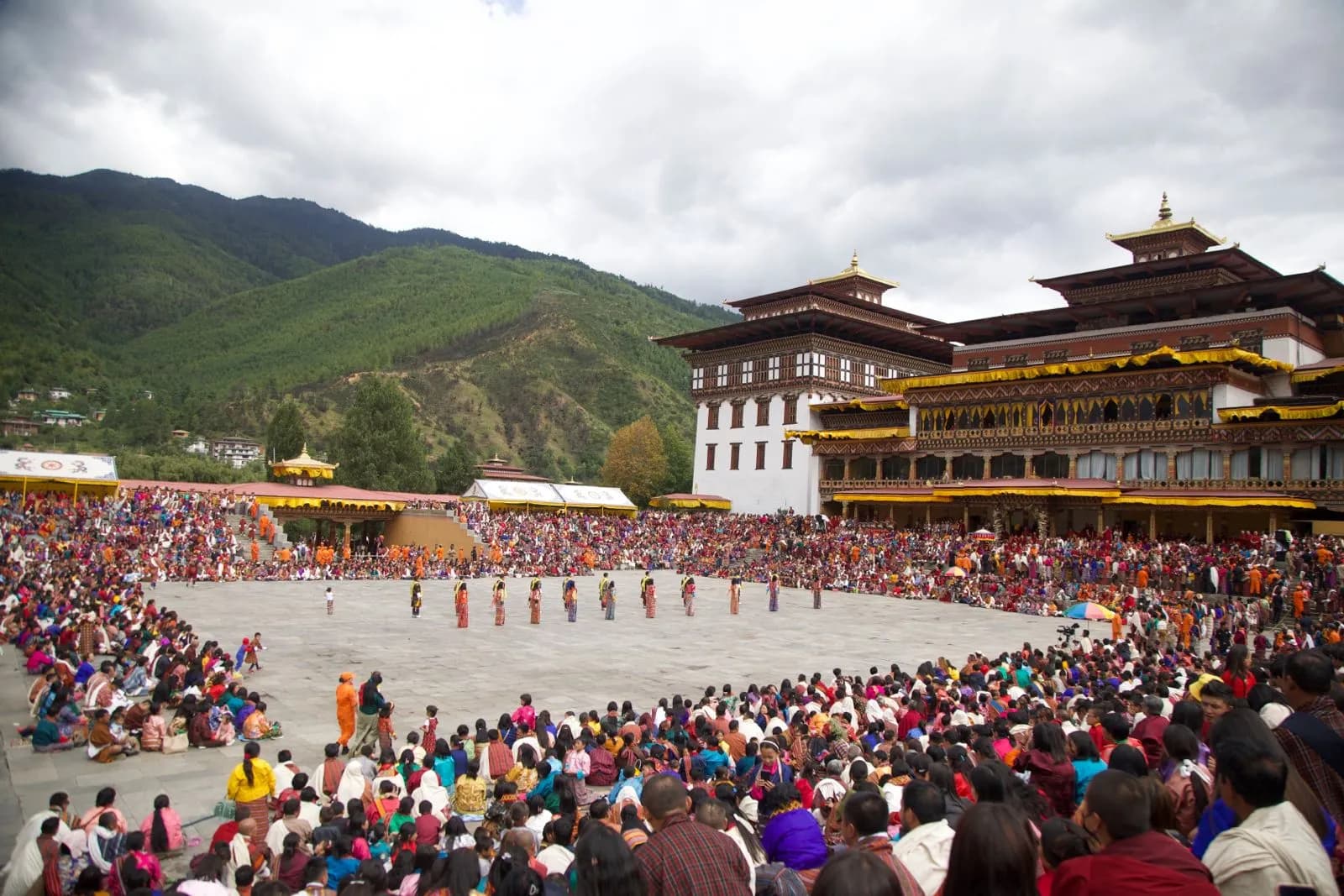
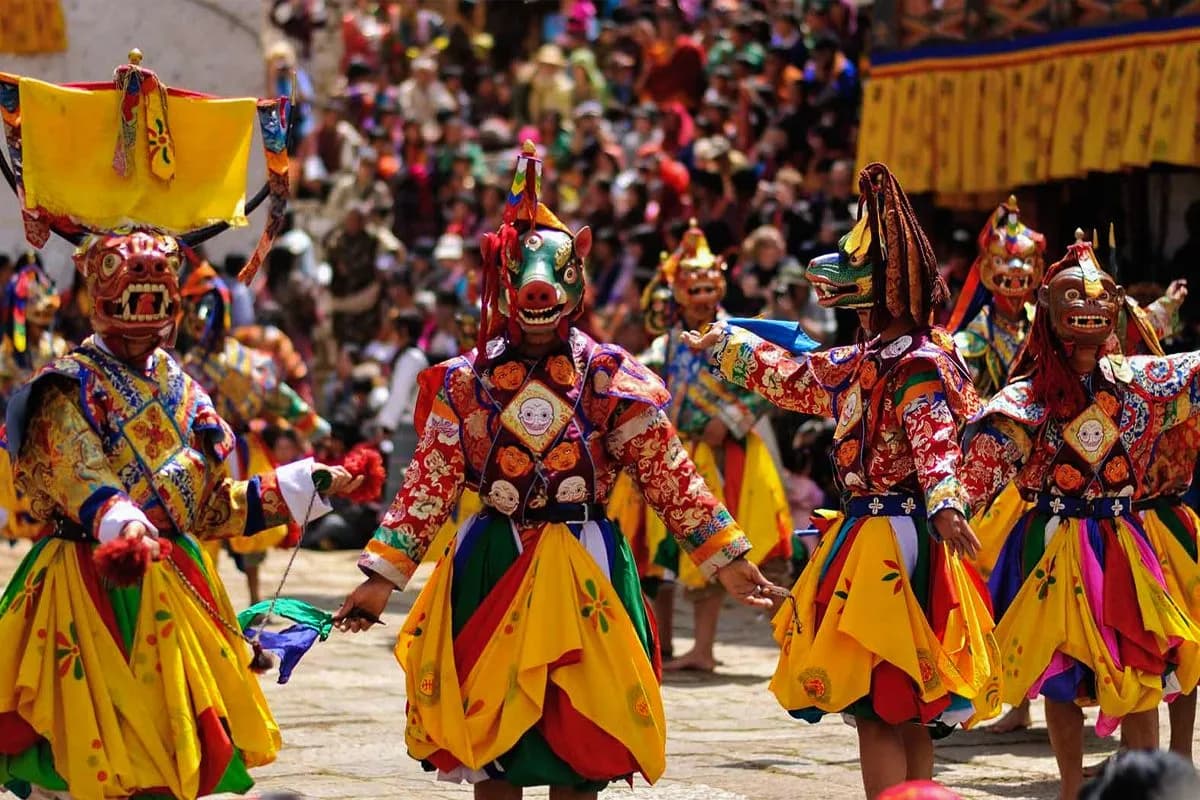
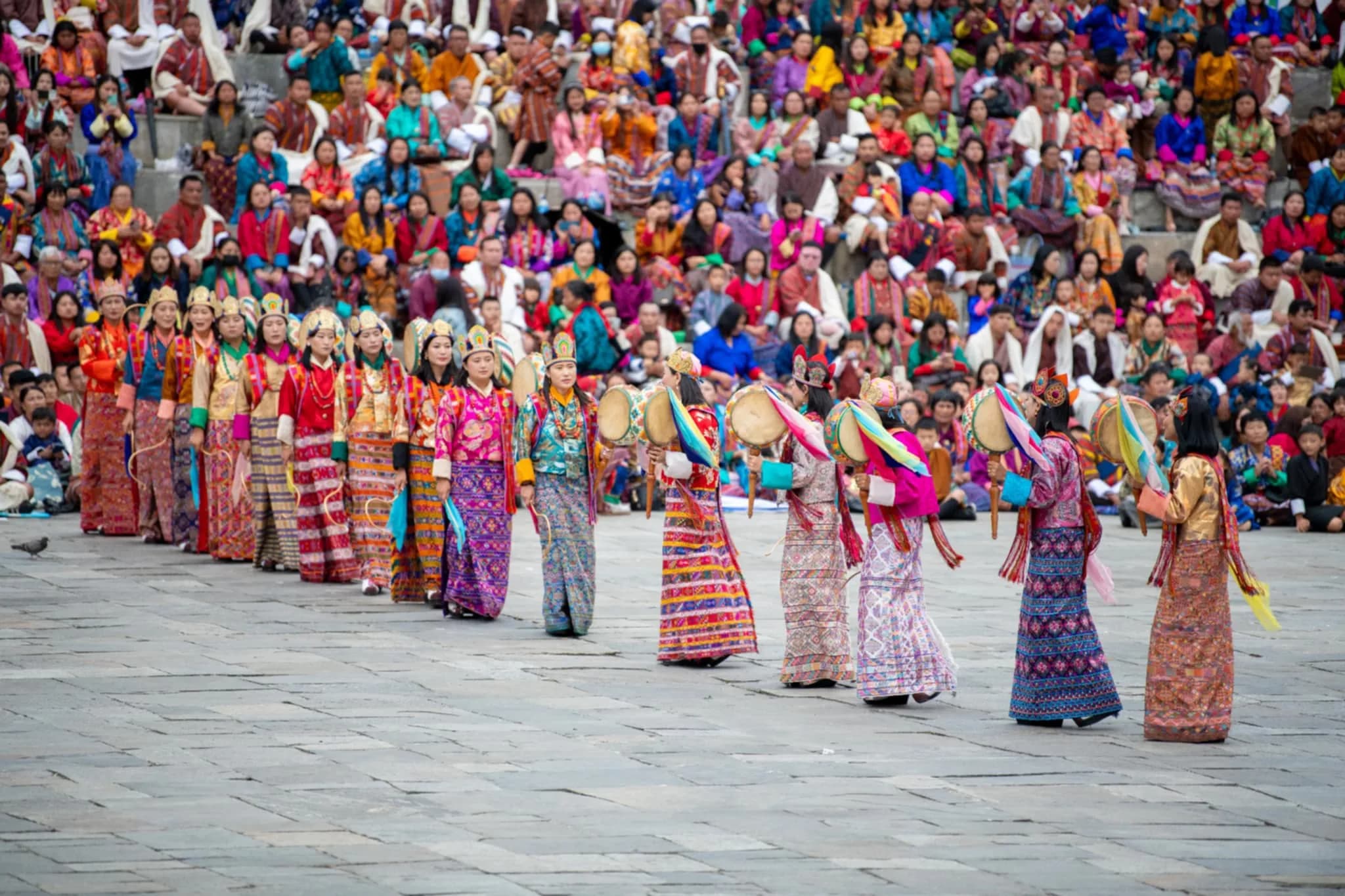
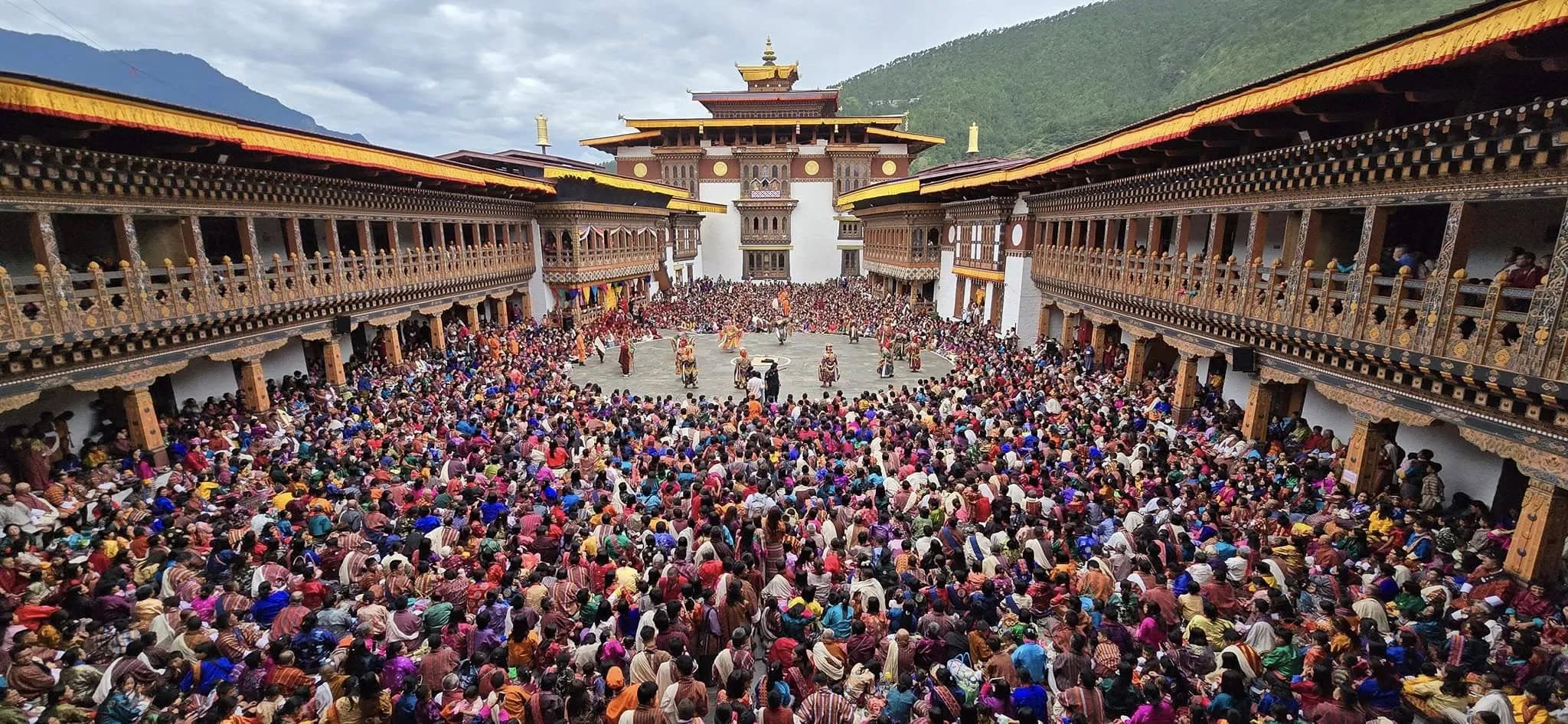
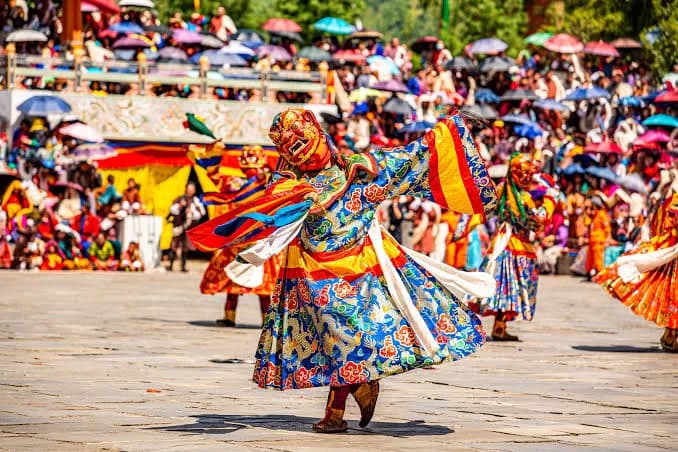
The Thimphu Tshechu is the capital's great autumn festival — three days in the courtyard of Tashichho Dzong, the seat of the central government on the western bank of the Wang Chhu, and the most-attended Bhutanese festival of the year. Families travel in from every corner of the country in their finest gho and kira; the courtyard fills by mid-morning. A tshechu is not a parade. Each cham — the masked dance performed by monks and laymen in heavy brocade and papier-mâché — is a teaching held for more than a millennium, performed on behalf of everyone present. Because the dates are set by the Bhutanese lunar calendar, they shift each year into September or October; the Department of Tourism publishes them well in advance, and we confirm the exact days in your proposal.
How a small group sees it well
We travel this week as a small group rather than a crowd of two — six or eight people who want the festival read to them, not merely shown. We secure seating in the Tashichho Dzong courtyard from where the cham reads best: close enough to hold the detail of each mask, far enough that the whole figure turns within the frame. Your guide names the Guru Tshengye as the eight manifestations appear, follows the Black Hat dancers and the Shawa Shachi, translates the song cycles between dances, and indicates when a camera should come down. The Royal Family typically attends one of the three days; when His Majesty is present the courtyard is at its fullest, and the custom is to rise as the Royal Family enters.
The dawn thongdrel, the Bhutanese way
The giant appliqué thongdrel — unfurled before dawn, displayed for a brief blessing, and rolled away before direct sun can touch the silk and gold thread — belongs to the Thimphu Drubchen, the ritual that runs in the same courtyard in the days immediately before the Tshechu. Attended together, the Drubchen and the Tshechu are how a Bhutanese family takes the festival; we time the week to catch the thongdrel dawn first and the cham cycle after. We are at the dzong gates as they open in the dark, and back at the lodge for a late breakfast and a long rest once the morning is done.
The western circuit, either side
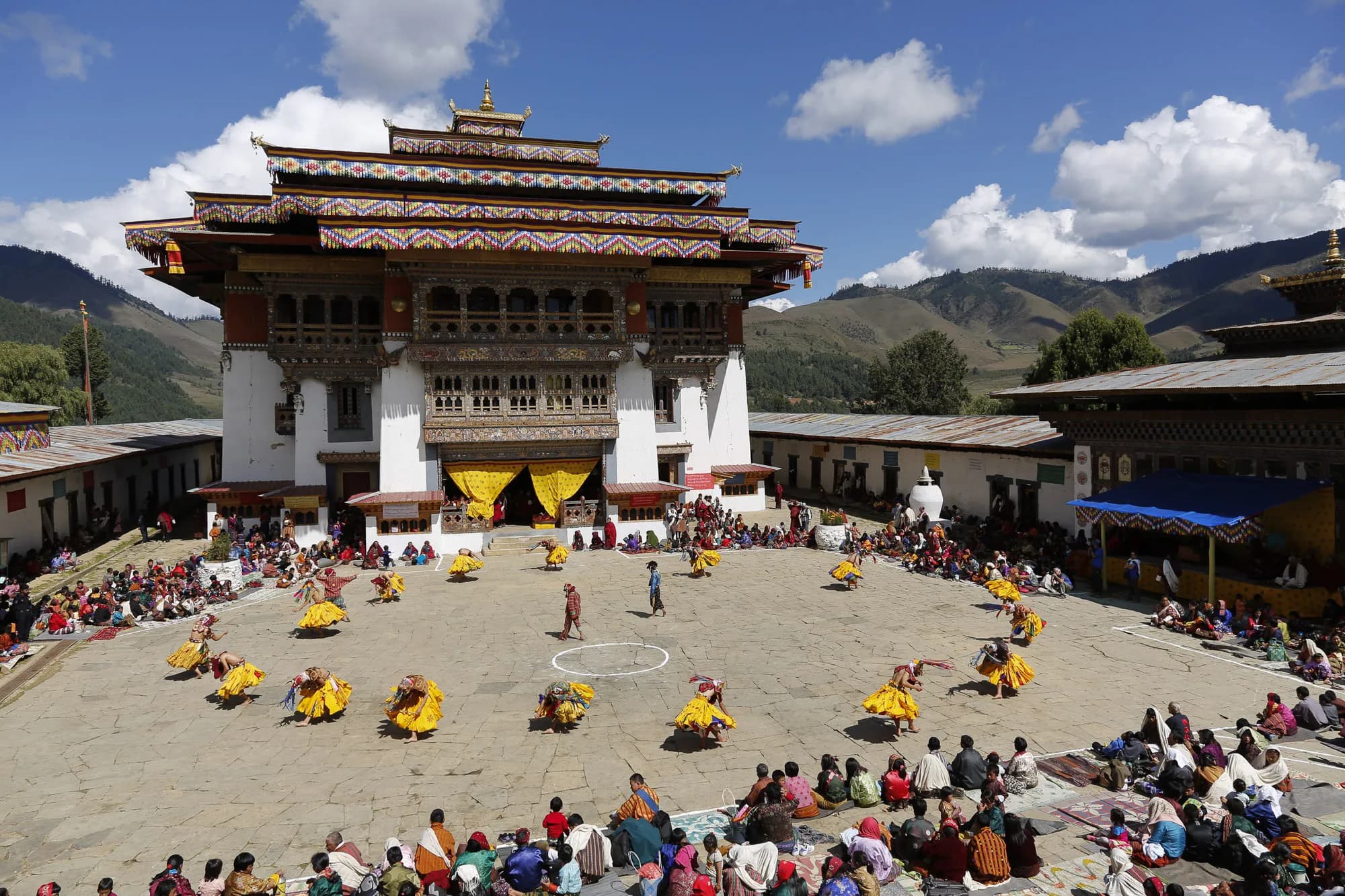
Two days hold the festival; the rest belong to the country it sits within. Paro for the arrival and the valley, settling before the crowds gather. Thimphu for the Tshechu itself and the capital taken slowly. Then over Dochu La — the pass at 3,100 metres, the eastern Himalayan range showing itself on a clear post-festival morning — to Punakha at its September best, the rice terraces of Lobesa turning and the dzong at the confluence of the Mo and Pho Chhu in late-afternoon light. One guide across the whole arc; a pace that asks nothing of you that you did not ask of it first.
The route
A sample shape of the week
DAY 01
Arrival in Paro — settling before the crowds
Met in the arrivals hall; the short drive to the lodge; an unhurried walk in the valley if the light holds; an early supper and the briefing for the week ahead.
DAY 02
Across to Thimphu — the capital, slowly
The 54-kilometre drive to the capital, around an hour and a quarter; the afternoon eased into the city; an early night before the festival days begin.
DAY 03
The thongdrel before dawn
Up in the dark; at the Tashichho Dzong gates as they open; the appliqué thongdrel unfurled and the brief blessing before sunrise; back to the lodge for a late breakfast and a long rest; the quieter part of the city in the afternoon.
DAY 04
Tshechu — a day in the courtyard
Seated by mid-morning where the cham reads best; the Guru Tshengye and the Black Hat dance through the day; the atsaras working the crowd; a quiet lunch off-site; the afternoon dances, then the lodge.
DAY 05
Over Dochu La to Punakha — recover quietly
The 75-kilometre drive over the 3,100-metre pass in clearer post-festival air, around three hours; the 108 chortens; arrival in Punakha by lunch; the dzong at golden hour.
DAY 06
A day in Punakha — paddies, bridge, long evening
The terraced rice of Lobesa; Chimi Lhakhang; a long riverside lunch; the suspension bridge when the wind has dropped; a slow lodge dinner.
DAY 07
Back to Paro and home — Taktsang on request
The drive back over the pass; either the climb to Taktsang at a measured pace or a quiet last day in the Paro valley; the early night before the dawn flight.
The day-by-day above is illustrative. The proposal you receive is built around your dates, your pace and your interests, not this template.
Frequently asked
- When exactly is the Thimphu Tshechu?
- It falls on the 10th to 12th day of the 8th month of the Bhutanese lunar calendar, which converts to late September or early October on the Gregorian calendar — so the precise dates shift each year. The Department of Tourism publishes the festival calendar well in advance, and we confirm the specific year's dates in your proposal. We build the week against those exact days, not a guess.
- Is there a thongdrel at the Thimphu Tshechu?
- Not at the Tshechu itself. The giant appliqué thongdrel is unfurled at the preceding Thimphu Drubchen, which runs in the same Tashichho Dzong courtyard in the days immediately before the Tshechu. Taken together, the Drubchen and the Tshechu are how a Bhutanese family attends; we time the week to catch the thongdrel dawn and the cham cycle both.
- Photography during the cham dances?
- Welcomed in the courtyard, with restraint at the moments the local custom signals — your guide will indicate when a camera should come down, and no flash at any point. Seating is held where the line of sight is clean, so long-lens work reads well. During the pre-dawn thongdrel, cameras are generally lowered for the blessing itself.
- How crowded is it, and why a small group?
- Bhutanese families travel in for the Tshechu and it is the most-attended festival in the country; the courtyard is dense and the city full. You should not expect quiet. A small group of six or eight, with seating secured well ahead and a guide reading each dance, is how the festival stays legible rather than overwhelming. Plan accommodation and dzong access many months out.
- What is the Sustainable Development Fee, and is it included?
- Yes. The SDF is USD 100 per night per international visitor, set by the Royal Government of Bhutan. It funds free health and education for Bhutanese citizens and the country's environmental protection, and is included in your transparent price breakdown across the seven nights.
- Could we attend the Paro Tshechu in spring instead?
- Yes — we run the same shape for the Paro Tshechu, typically late March or early April at Rinpung Dzong, where the thongdrel is part of the Tshechu itself. Paro draws the largest international share; Thimphu draws the largest crowd overall and the fuller sense of the capital at festival. We are happy to advise which suits you.
Journeys you might also weigh
- 01Bhutan photography weekBhutan's clearest skies fall between mid-September and mid-November. This is a seven-night Bhutan journey built around the photographer's calendar — golden hour at Punakha Dzong, blue hour over Paro, and a guide who has carried tripods before.7 nights
from $9,500 - 02Bhutan Paro TshechuThe Paro Tshechu falls in late March or early April, runs three days at Rinpung Dzong, and culminates in a pre-dawn thongdrel that is the most photographed Bhutanese image of the spring window. Nine nights — three for the festival itself, six for the country in its spring window.9 nights
from $18,000 - 03Thimphu TshechuA seven-night Bhutan journey timed to Thimphu's three-day autumn tshechu — second-tier seating from where the cham dances read best, a guide who can name each masked figure, and Punakha at its September peak.7 nights
from $13,000
Begin when you're ready.
A few questions, or a conversation in your own words. A bespoke draft either way.

