A FESTIVAL WEEK
Thimphu Tshechu, read properly.
A seven-night Bhutan journey timed to Thimphu's three-day autumn tshechu — second-tier seating from where the cham dances read best, a guide who can name each masked figure, and Punakha at its September peak.
7 nights · Luxury tier · from USD 13,000 per couple
- Nights
- 7
- From
- USD 13,000per couple
- Tier
- Luxury
- Best season
- Autumn
- Suits
- Couple
- Departing
- Worldwide
What a tshechu actually is
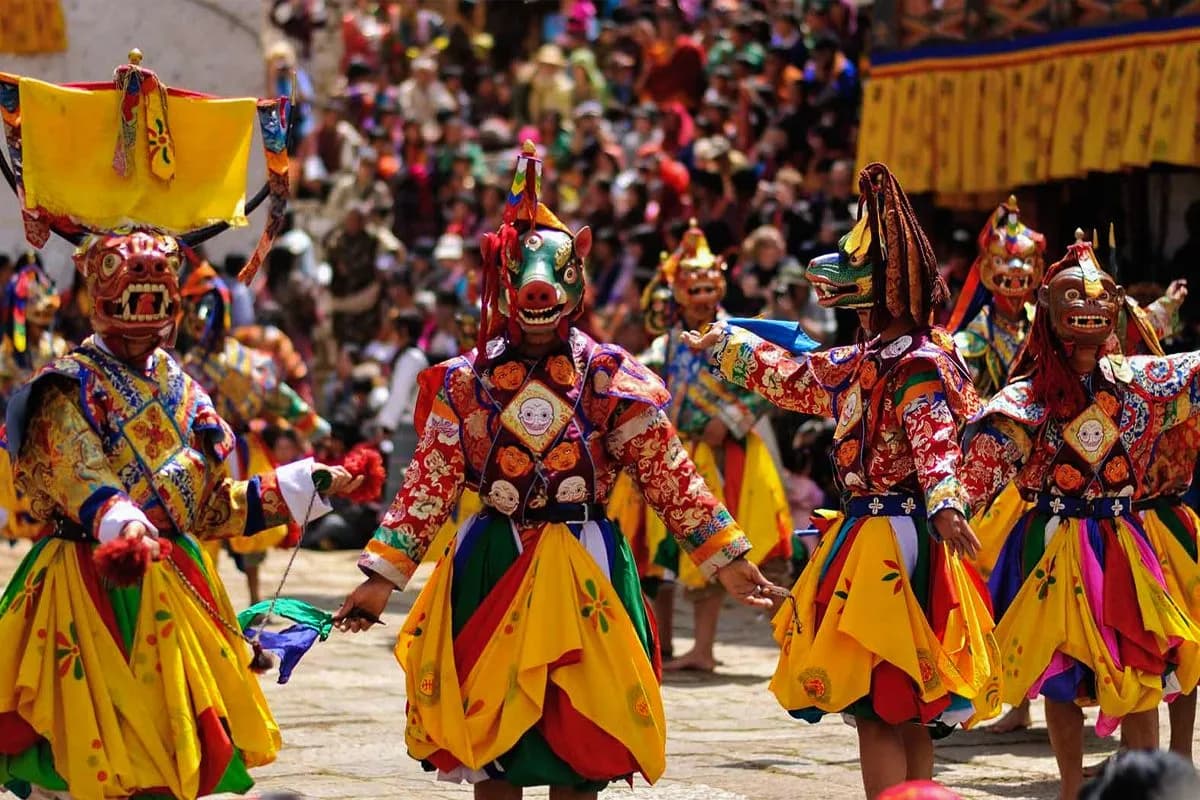
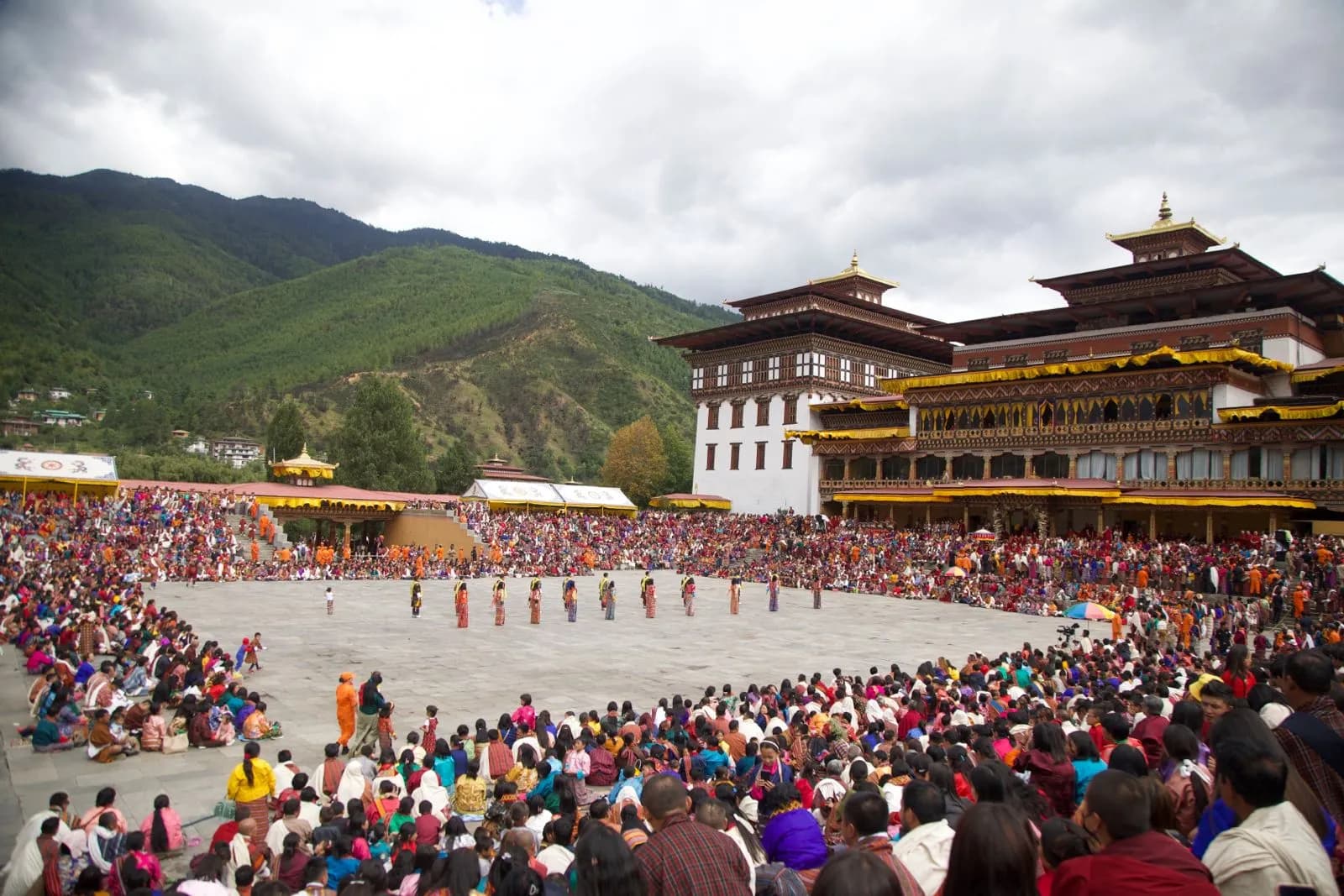
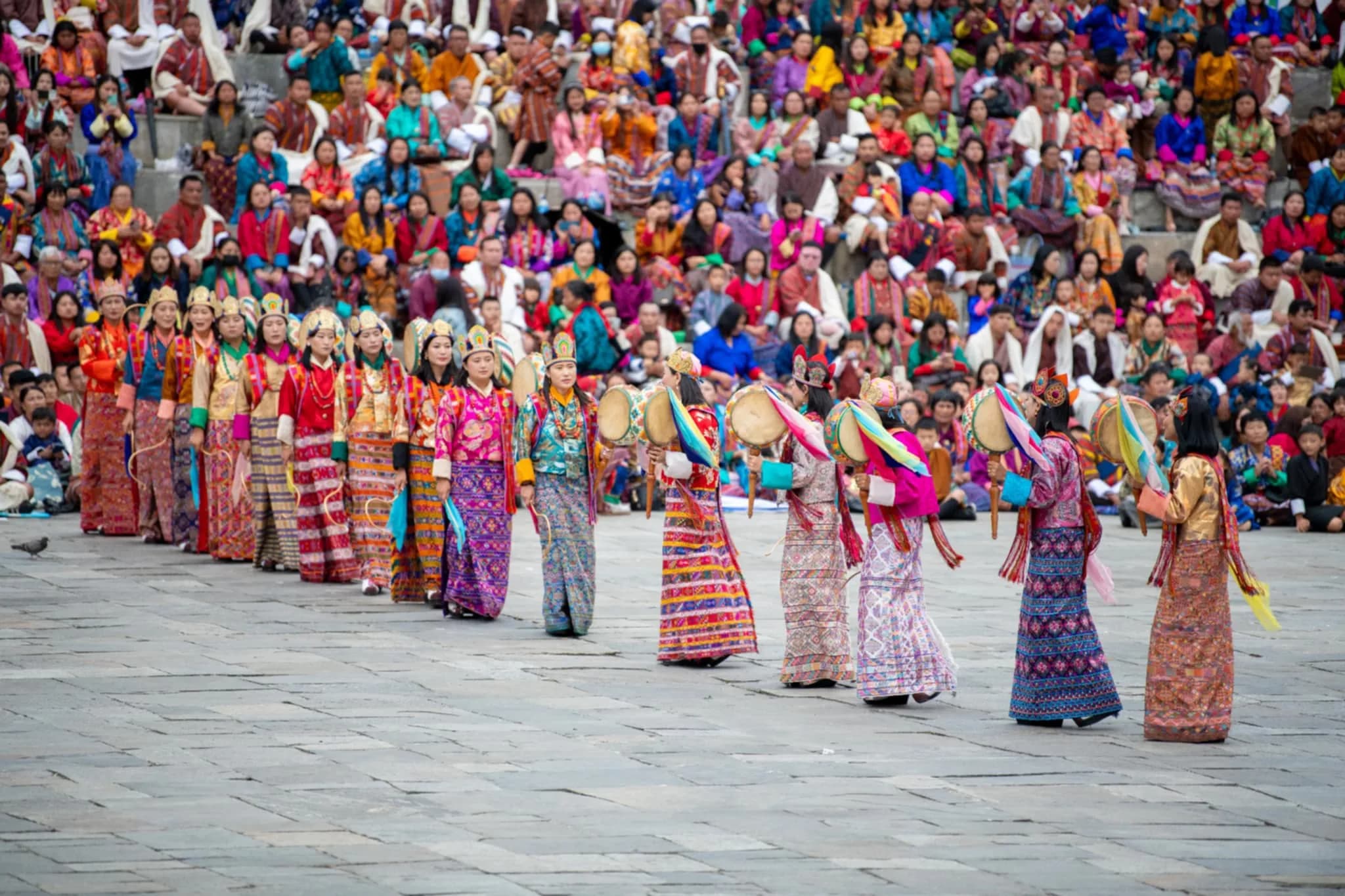
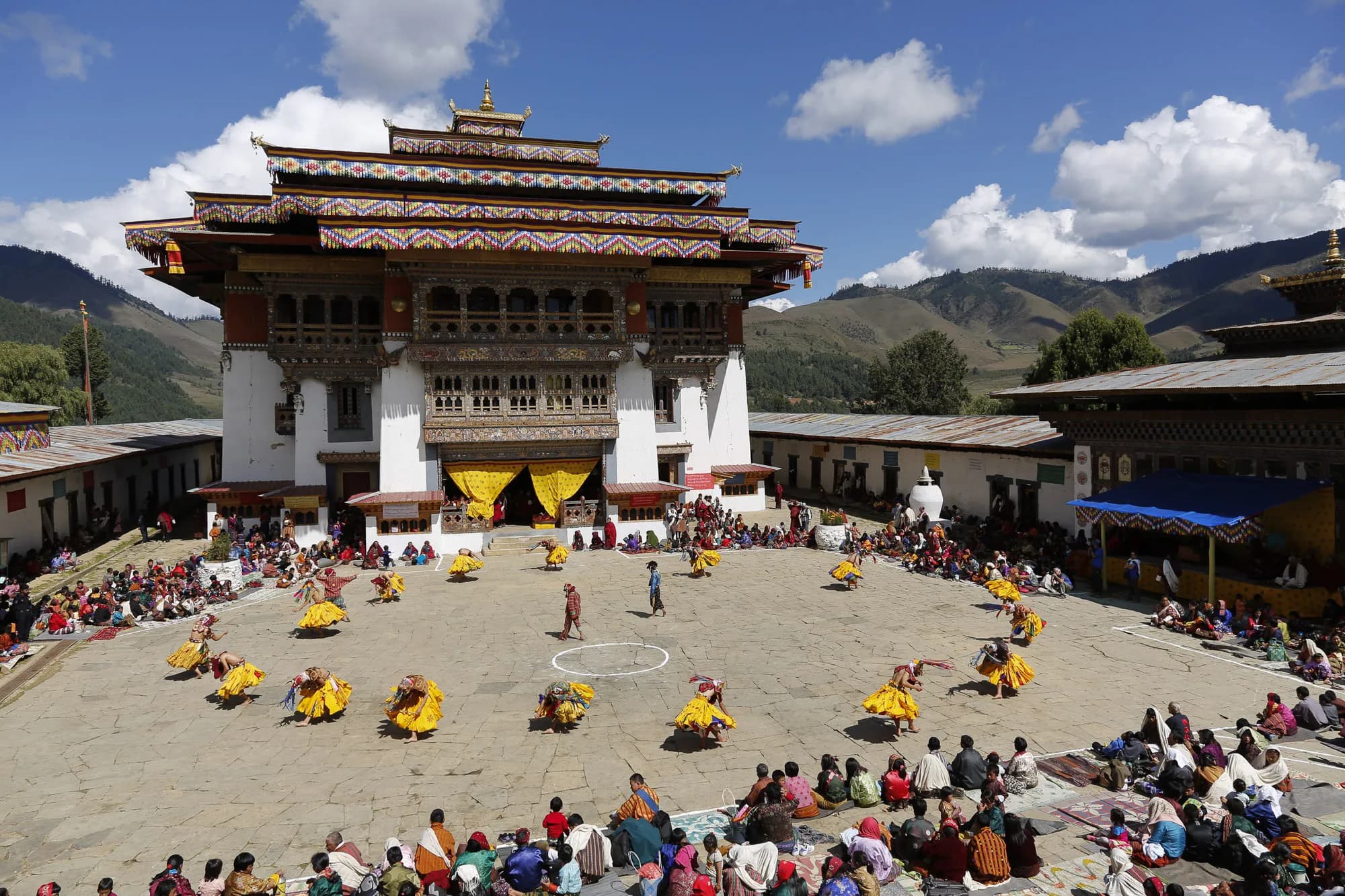
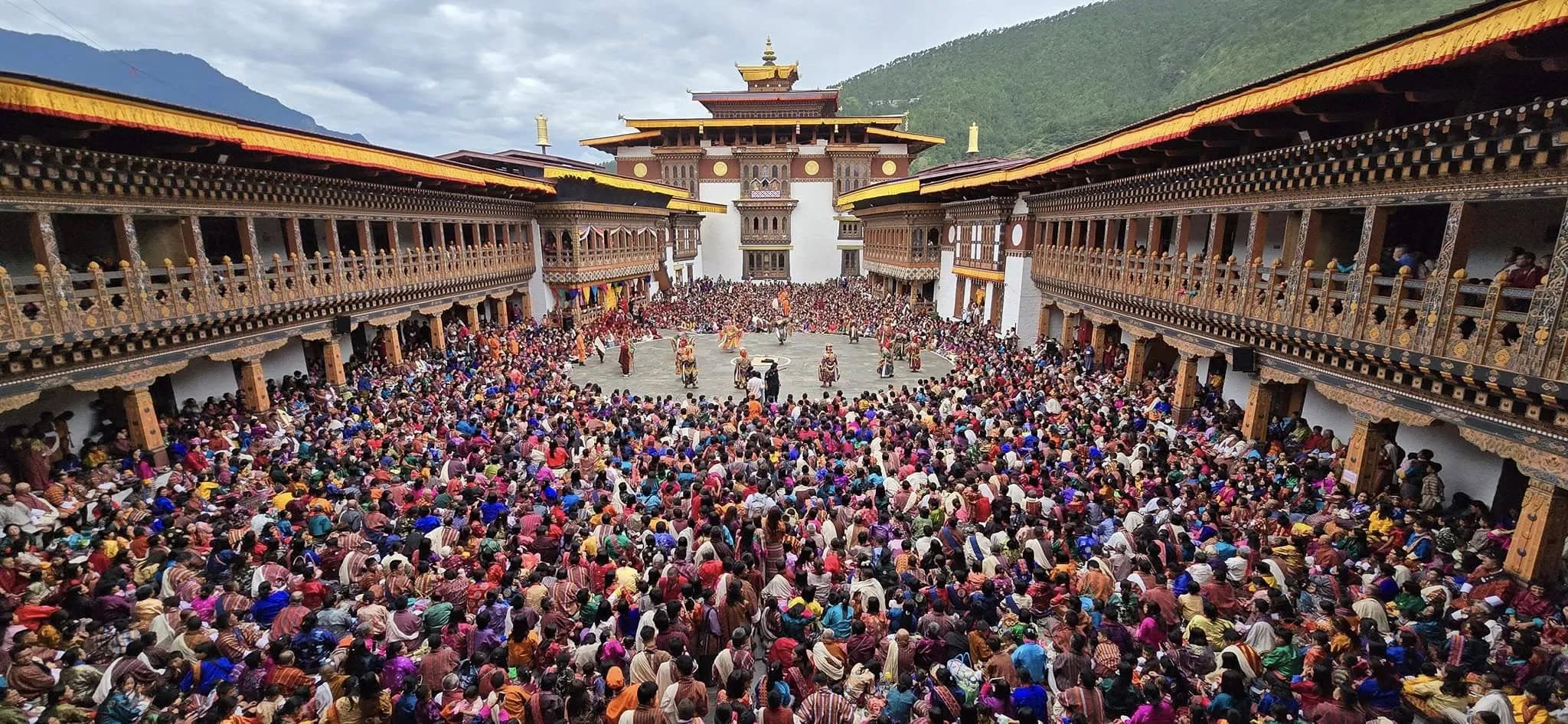
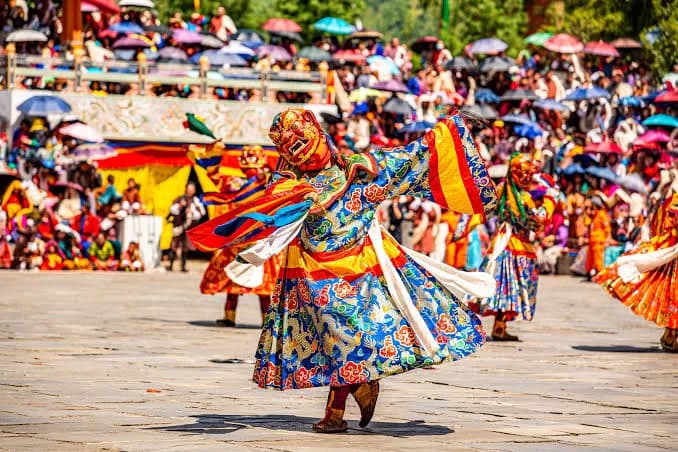
A tshechu is not a parade. It is a three-day religious festival held on the tenth day of a lunar month, performed in honour of Guru Rinpoche, with cham masked dances that retell teachings the country has held for more than a millennium. The Thimphu Tshechu — typically the last week of September or the first of October — is the second-largest in the country and the most accessible from Bhutan.
How we sit you
We hold second-tier seating in the Tashichho Dzong courtyard — the row from which the cham dances are best read, neither so close that you're inside the dance nor so far that the masks lose their detail. Your guide names each figure as it appears, translates the song cycles between dances, and tells you when to look away (there is a tradition that the deity dances draw their power from being seen).
The week around the festival
Two festival days, four ordinary days, one travel day. We use the non-festival days to balance: a quiet Paro afternoon, a Punakha overnight before the festival starts, a slow last day. The country fills for the tshechu; you want a week that doesn't feel like one too. We block lodges six months in advance for autumn tshechu travel — confirm 90+ days out.
The route
A sample shape of the week
DAY 01
Paro arrival — quiet before the festival
Met in arrivals; twenty minutes to the lodge; early dinner; the briefing for the week.
DAY 02
Across to Thimphu — afternoon of the eve
Drive into the capital; lodge afternoon; an early dinner before the tshechu begins tomorrow.
DAY 03
Tshechu — day one
Second-tier seating from 8:00; cham dances through the morning; lunch off-site; afternoon dances; evening at the lodge.
DAY 04
Tshechu — day two
Earlier start (the masked dances of the wrathful deities are morning); long lunch in a quieter quarter; afternoon dances or a rest at the lodge.
DAY 05
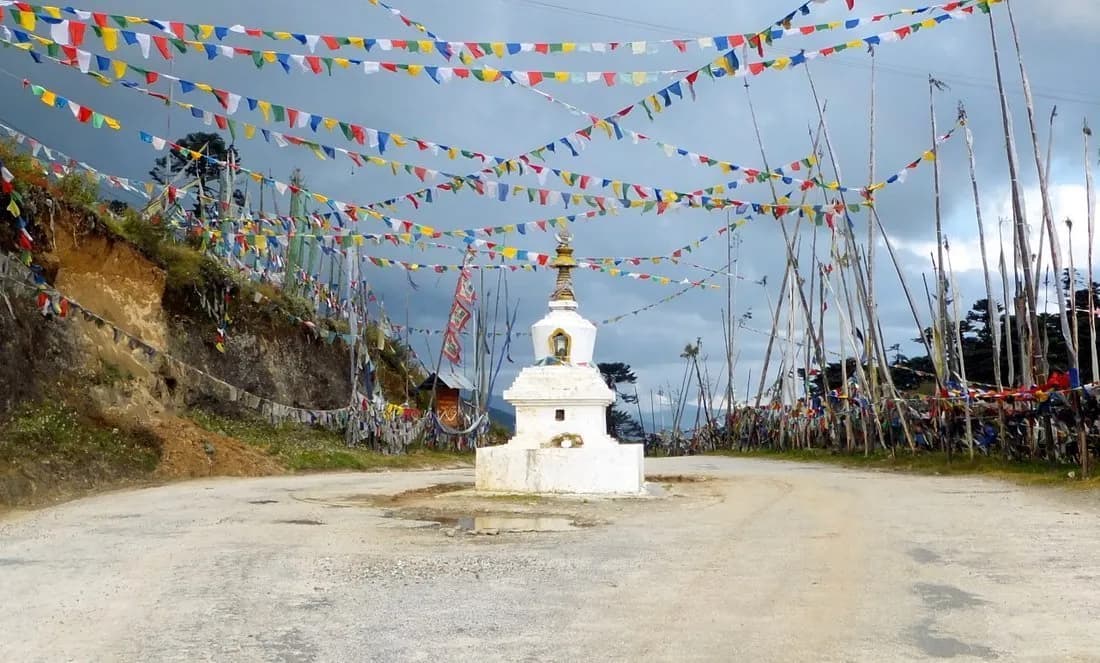
Over Dochu La to Punakha — recover quietly
Drive over the pass in clearer post-festival air; arrive Punakha by lunch; dzong at golden hour.
DAY 06
Punakha — paddies, bridge, long evening
Lobesa walk; the long suspension bridge; a long lodge dinner.
DAY 07
Back to Paro and home — Taktsang on request
Drive back; either Taktsang at pace or a quiet Paro last day; early flight.
The day-by-day above is illustrative. The proposal you receive is built around your dates, your pace and your interests, not this template.
Frequently asked
- When is the Thimphu Tshechu in 2026 and 2027?
- The tshechu falls on the 10th-12th day of the 8th month of the Bhutanese lunar calendar — for international travellers, late September or first week of October. Exact dates publish 12 months ahead through the Department of Tourism; we confirm in your proposal.
- Photography during the cham dances?
- Allowed in the courtyard; restricted in the inner sanctum during the deity-mask sequences. Your guide will indicate when to lower the camera. No flash. The second tier gives you a clean line of sight; long-lens work is welcomed.
- How crowded is it?
- Bhutanese families travel in for the tshechu and it is the country's most-attended cultural event. The international cohort is also at peak. We secure seating in advance; you should not expect quiet.
- Can we add Paro Tshechu in spring instead?
- Yes — we run the same shape for the Paro Tshechu (typically late March or first week of April). Paro is smaller and more accessible from the lodge; the masked dances are slightly different in repertoire.
Journeys you might also weigh
- 01Bhutan photography weekBhutan's clearest skies fall between mid-September and mid-November. This is a seven-night Bhutan journey built around the photographer's calendar — golden hour at Punakha Dzong, blue hour over Paro, and a guide who has carried tripods before.7 nights
from $9,500 - 02Bhutan for the Thimphu TshechuA seven-night western-circuit journey built around the Thimphu Tshechu, the capital's largest autumn festival, held over three days in the courtyard of Tashichho Dzong. Paro and Punakha either side; a small group of travellers; a guide who can name each masked figure as it turns, and read the teaching inside the dance. Dates follow the Bhutanese lunar calendar and shift each year into September or October — published well ahead, confirmed in your proposal.7 nights
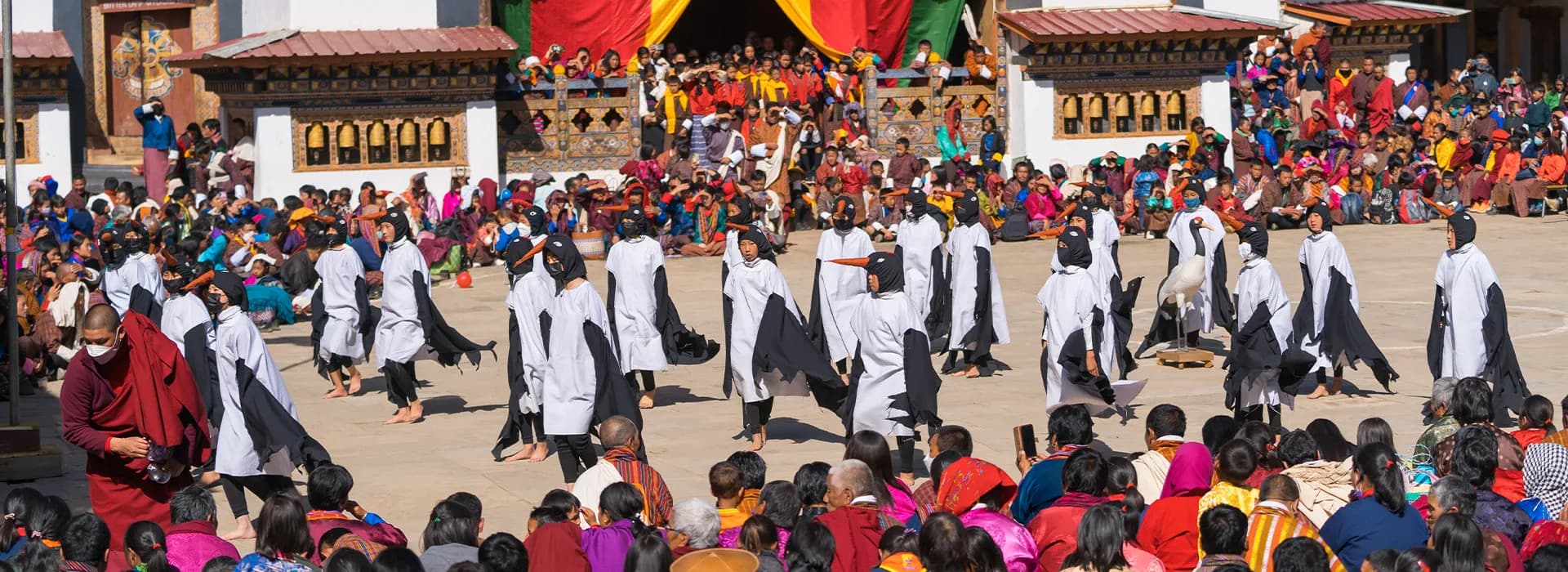
from $8,000 - 03The Black-Necked Crane FestivalAn eight-night Bhutan journey built around the Black-Necked Crane Festival at Gangtey on 11 November — the western circuit of Paro, Thimphu, and Punakha on either side of a day spent in the courtyard of Gangtey Goempa, where the rare cranes that winter in the glacial valley are honoured with schoolchildren's dances and the quiet work of their conservation.8 nights
from $8,000
Begin when you're ready.
A few questions, or a conversation in your own words. A bespoke draft either way.

