An eastern-Bhutan spring tshechu
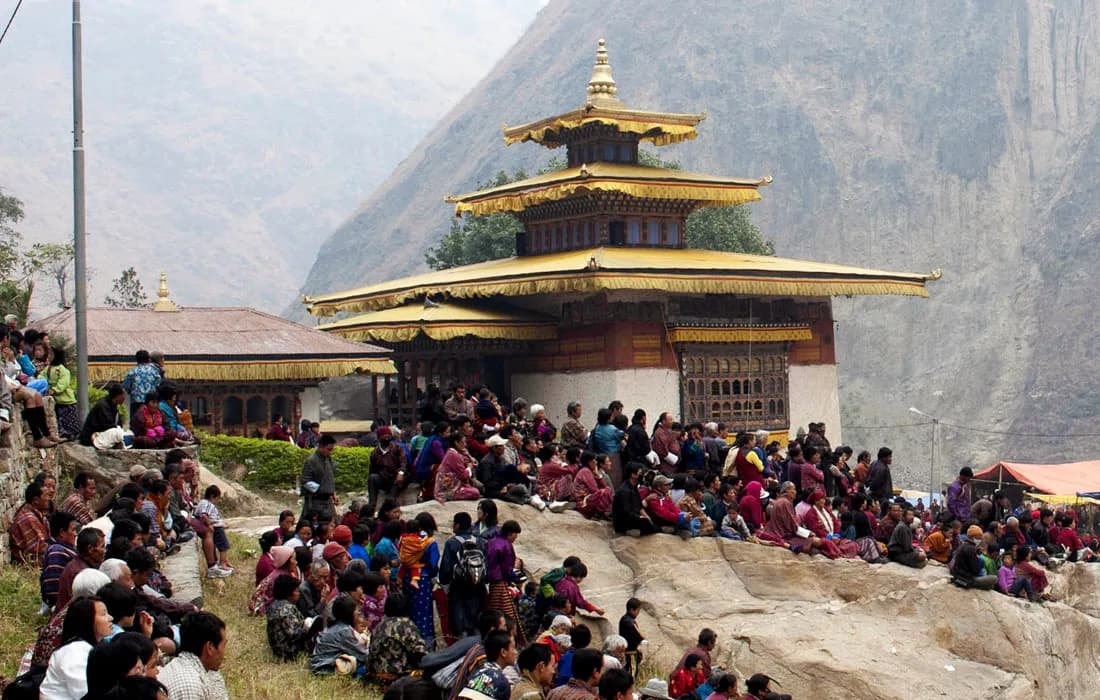
Gom Kora Tshechu — three days at the meditation cave of Guru Rinpoche, in the Trashiyangtse valley.
The Gom Kora Tshechu is held annually at Gom Kora Lhakhang in the Trashiyangtse dzongkhag of eastern Bhutan, typically in late March or early April. The lhakhang sits beside a meditation cave Guru Rinpoche is held to have used in the 8th century; the festival is one of the principal Bhutanese tshechus of the eastern circuit, with a strong pilgrimage tradition that continues through the night.
- Next
- 15-17 April 2027
- Duration
- 3 days
- Where
- Trashiyangtse
- Calendar
- Lunar, shifts yearly
- Venue
- Gom Kora Lhakhang, Trashiyangtse
- District
- Trashiyangtse
- Register
- tshechu
- Lunar pattern
- 9th–11th day of the 2nd Bhutanese lunar month
The Guru Rinpoche meditation cave
Gom Kora Lhakhang sits beside a large black-rock outcrop in the Trashiyangtse valley, beside the Drangme Chhu. Guru Rinpoche (Padmasambhava) is held to have meditated at this rock in the 8th century while travelling through the eastern Himalaya — leaving body-imprints in the stone, and a hidden treasure (terma) that was later retrieved. The lhakhang was founded in the 15th century to mark the site, and the surrounding meadow has been the venue for the annual Tshechu for centuries. The festival sits in the older, more pilgrimage-flavoured register of the eastern Bhutanese tradition.
The three-day programme
Day 1 opens with the chams and the protector-deity dances at the lhakhang. Day 2 brings the principal masked dances — the Phacham (the boar-headed cham of the Pema Lingpa lineage), the Drametse Ngacham, the cycle of Guru Rinpoche's eight manifestations. Day 3 — the principal day — runs through the night. Pilgrims circumambulate the black rock continuously, beginning the previous evening, and the chams are performed at the lhakhang's open meadow from dawn to dusk. The final blessing is the lhakhang's most-attended public moment of the year.
What to expect as a visitor
Trashiyangtse sits in the far north-east of Bhutan, at 1,800 metres. The drive from Paro is two days minimum (typically broken across three) via Thimphu, Bumthang, Mongar, and Trashigang. Domestic Drukair flights to Yongphula (the airport at Trashigang) reduce the drive — operating in clear-weather windows. The festival's photographic tradition is exceptional: the black-rock outcrop, the river, the lhakhang's painted woodwork, the pilgrims circumambulating through the night. International attendance is small; the festival is regional rather than international in character.
Dates
- 202626-28 March 2026
- 202715-17 April 2027
- 20283-5 April 2028
The Bhutanese calendar is a distinct lunar system, not identical to the Tibetan or the broader Indian lunar calendars, and the Gregorian dates of every Bhutanese festival shift each year. The Royal Government's Department of Tourism publishes the official calendar each year, typically 6 to 12 months in advance. The dates below are our projection from the published lunar pattern (9th–11th day of the 2nd Bhutanese lunar month); we confirm each year against the Department of Tourism's release and update this page accordingly. Before you finalise travel dates, please confirm with our concierge.
What a visitor encounters
- The black rock
- The principal sight at Gom Kora — a 30-metre black-rock outcrop beside the river, held to bear the body-imprints of Guru Rinpoche's meditation. Pilgrims circumambulate it through the festival's principal night.
- The night circumambulation
- On the final festival night, pilgrims circumambulate the black rock continuously from dusk to dawn. The atmosphere is reverent and the lit-lamp tradition is photographically distinctive.
- The eastern circuit
- Combine the Tshechu with the broader eastern circuit — Trashigang, the textile valleys of Khoma and Khaling, the Sakteng wildlife sanctuary (Brokpa community), and the trek to Merak. The eastern circuit is substantially less visited than the western, and the cultural is older.
- Accommodation in trashiyangtse
- Trashiyangtse has limited accommodation — Karma's Resort and Norjin Resort are the principal options. Most visitors base in Trashigang (3 hours' drive) at the Lingkhar Lodge or Druk Deothjung Resort and travel to Gom Kora for the festival days.
Monuments at and around this festival
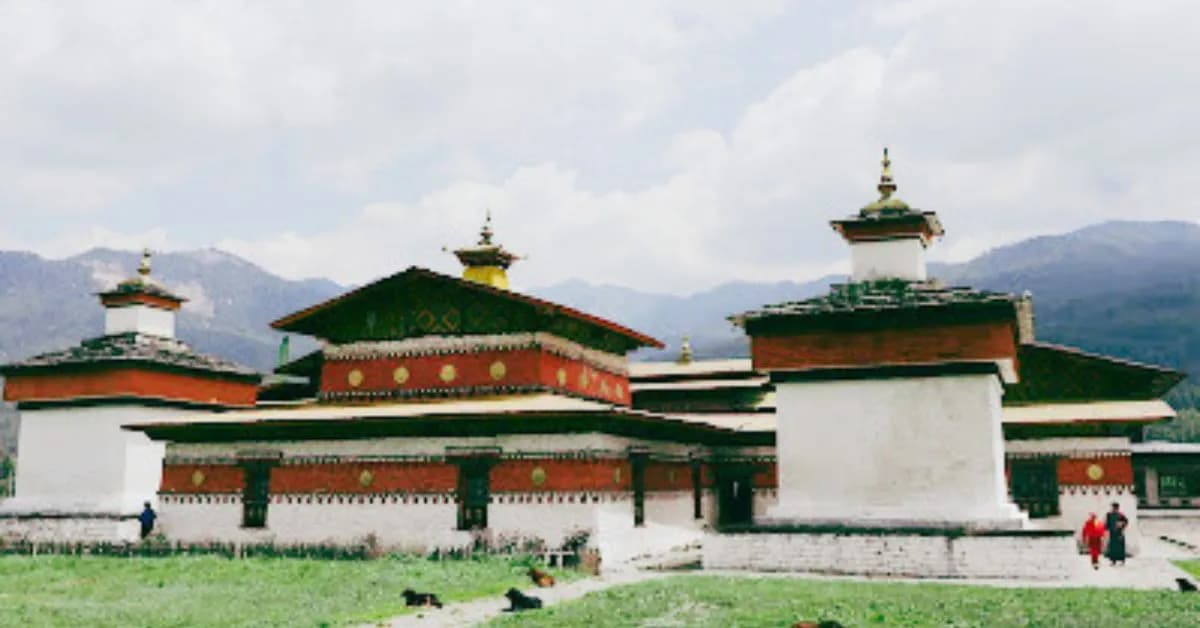 MonumentJambay Lhakhang — built by Songtsen Gampo to pin the left knee of the ogress whose body lay across the Himalaya.Jambay Lhakhang — Bhutan's oldest temple alongside Kyichu, founded by Songtsen Gampo in 659 CE. The Mewang fire ritual venue.
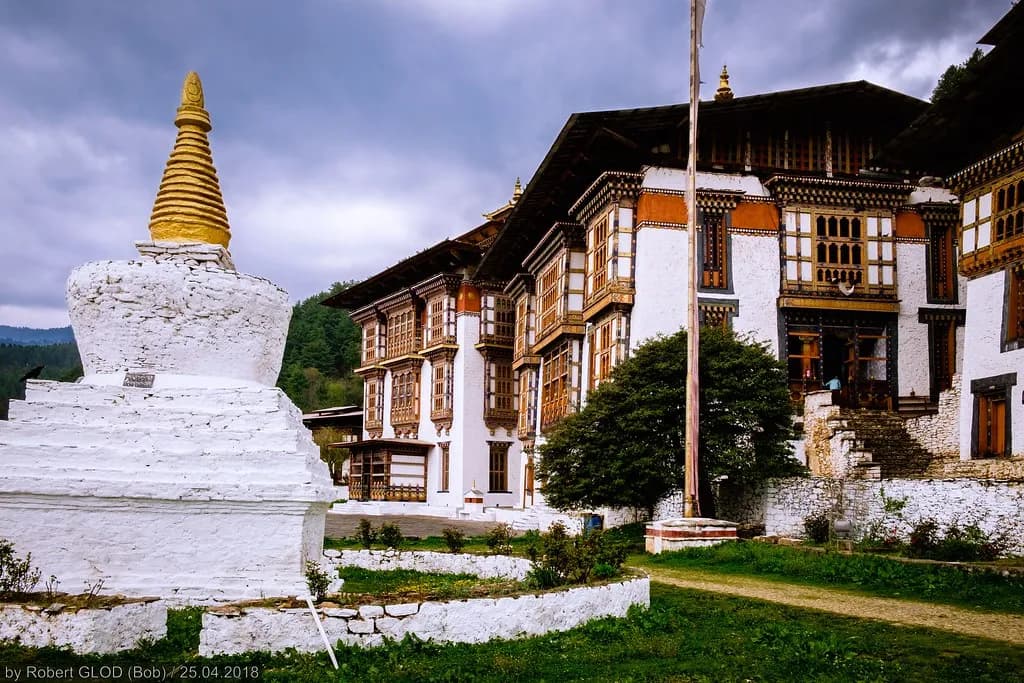 MonumentKurjey Lhakhang — the cliff cave bearing Guru Rinpoche's body imprint, in the Choekhor valley of Bumthang.Kurjey Lhakhang — the Bumthang cliff cave bearing Guru Rinpoche's body imprint. The three-temple complex, history, visiting.
Journeys around this festival
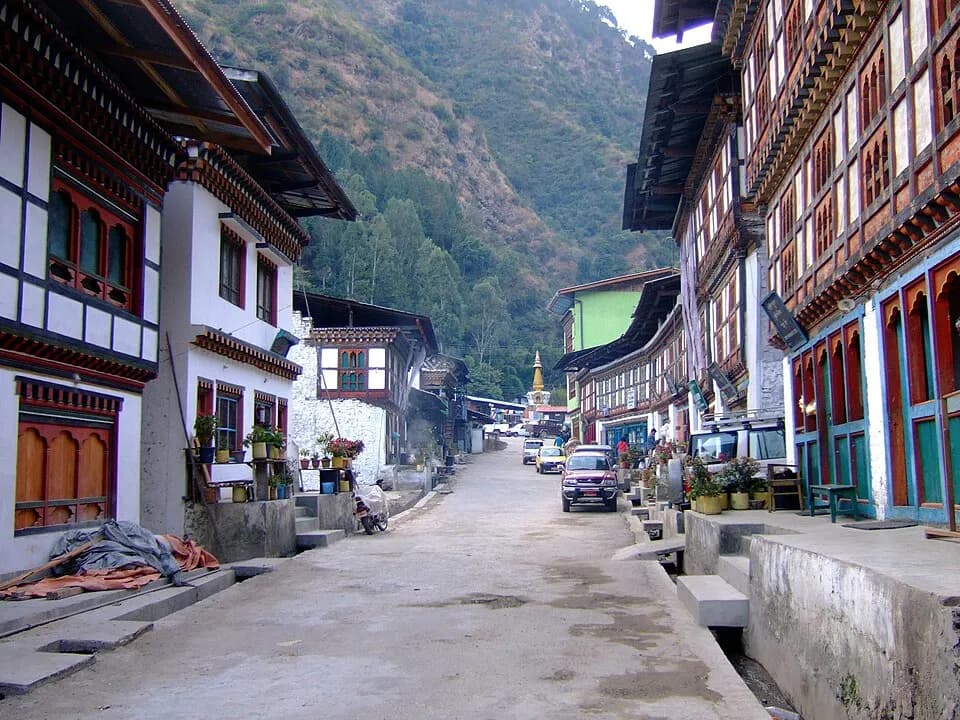 JourneyFourteen nights from Paro to Guwahati — the country as a single arc.A fourteen-night Bhutan east-to-west circuit exiting via Samdrup Jongkhar and Guwahati. The full eastern dzongkhags, the quieter half of the country.
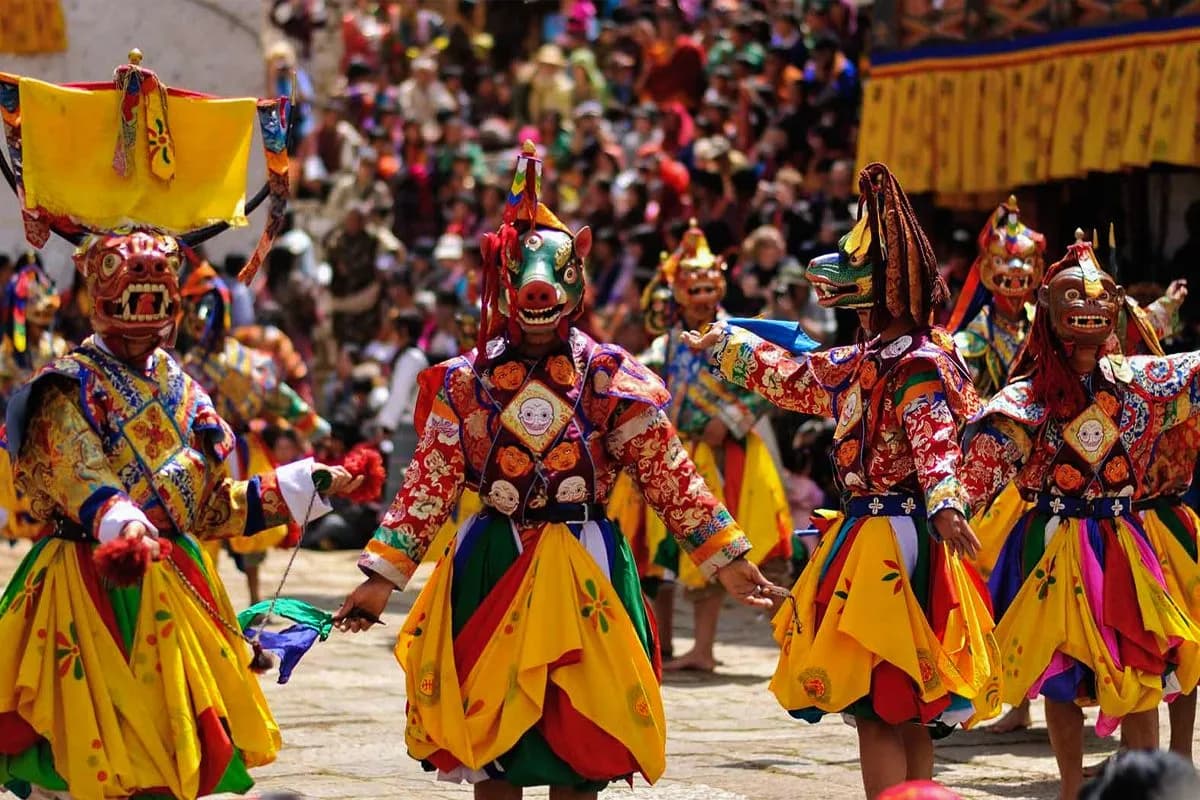 JourneyNine nights for the Paro Tshechu — the festival and the country around it.A nine-night Bhutan itinerary built around the Paro Tshechu — the spring mask-dance festival at Rinpung Dzong, with six days for the wider country.
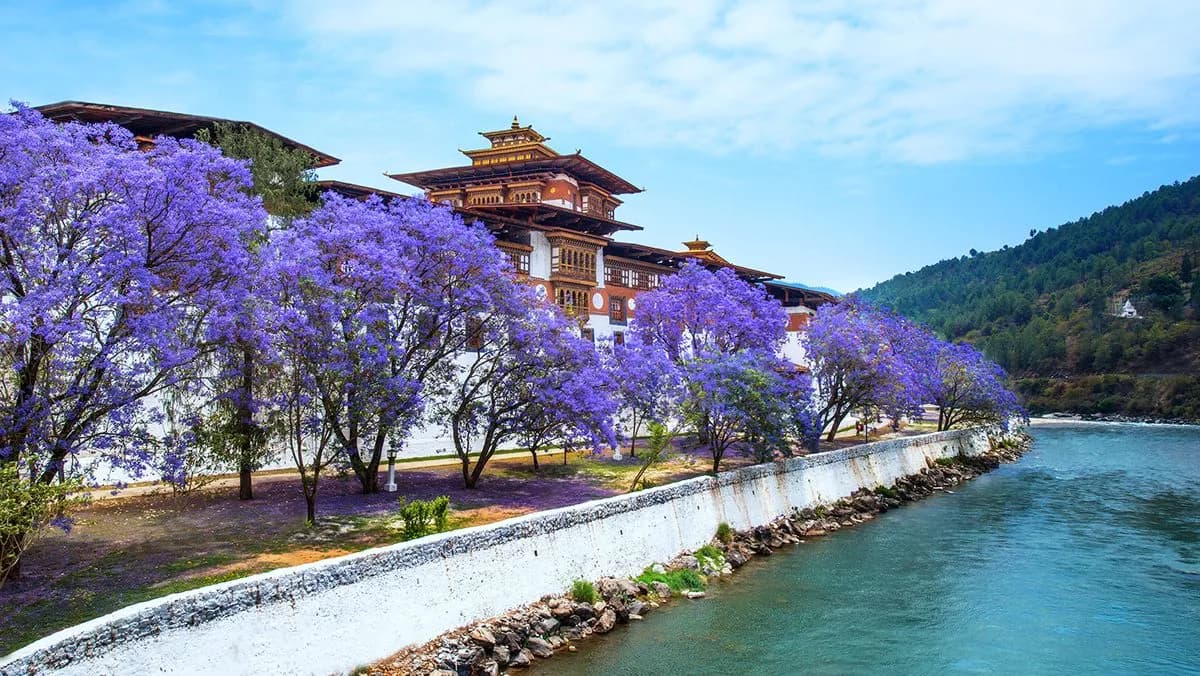 JourneyNine nights for the photographer's spring — cherry blossom, rhododendron, the Paro thongdrel at dawn.A nine-night Bhutan photography journey in the spring window — cherry blossom, rhododendron, the Paro Tshechu thongdrel unfurling at dawn at Rinpung Dzong.
Frequently asked
- When exactly is Gom Kora Tshechu 2026?
- 26–28 March 2026, per the Department of Tourism's published calendar. The dates are calculated from the Bhutanese lunar calendar (9th–11th day of the 2nd lunar month) and shift each Gregorian year.
- How does Gom Kora differ from the western tshechus?
- Older in character, smaller in scale, with a stronger pilgrimage. The all-night circumambulation of the black rock is unique to Gom Kora. The chams cycle includes the Phacham (boar-headed cham of the Pema Lingpa lineage), which is rare in the western dzongs.
- How do I get to Trashiyangtse?
- Approximately 2–3 days of driving from Paro via Thimphu, Bumthang, Mongar, and Trashigang. We typically combine the festival with the eastern circuit and build a 10–12 day itinerary that ends with a domestic Drukair flight from Yongphula (Trashigang) back to Paro. The eastern Bhutanese roads are improved substantially since 2020 but the journey remains a undertaking.
- Is the festival crowded?
- Substantially less crowded than the western tshechus. The international cohort is small, and the Bhutanese attendance is regional — the families of eastern Bhutan attend, but the cross-country diaspora visit is rare. The atmosphere is intimate.
- Should I plan the all-night circumambulation?
- Your guide will brief you on the timing and the protocol — the circumambulation runs continuously from dusk to dawn, and individual visitors join for whatever duration suits them. Many international visitors attend for two or three hours after dinner; some stay until midnight; only the most committed stay until dawn. The decision sits with you.

