Preparing
LoadingPreparing
Loading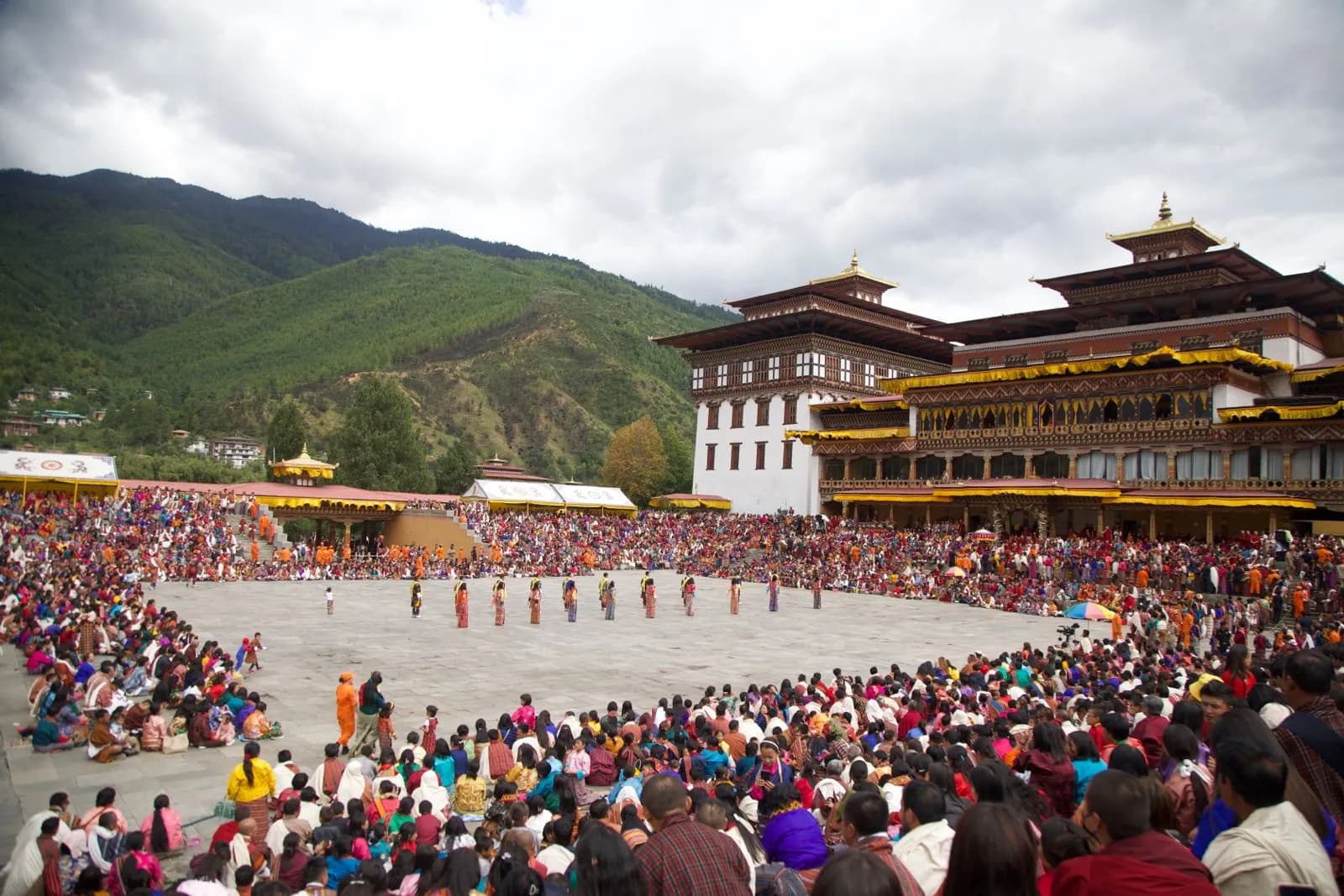
The principal autumn festival
The Thimphu Tshechu is the most-attended Bhutanese festival of the year — held annually at Tashichho Dzong, typically in late September or early October. Three days; no thongdrel at the Tshechu itself (the thongdrel sits at the preceding Drubchen), but the full chams cycle and the largest crowds of any festival in the country.
What a visitor encounters
The principal mask dances — the Pholay Molay, the Shawa Shachi, the Black Hat dance, and the cycle of Guru Rinpoche's eight manifestations. Atsaras work the crowd with ritual irreverence; the courtyard fills by mid-morning.
The Thimphu Drubchen runs the three days preceding the Tshechu; the thongdrel viewing is on the final Drubchen morning. Combining both gives six full festival days at the dzong — the Bhutanese, not the international one.
His Majesty the King and the Royal Family typically attend one of the three days. The presence is publicly known the day before. The local protocol is to rise when the Royal Family enters, and to dress in respectful clothing.
Thimphu lodges fill 3–6 months in advance for the Tshechu window. Amankora Thimphu, Le Méridien Thimphu, Pemako Thimphu, and the COMO Uma sister-property at Paro (combined with the drive over) are typically booked first.
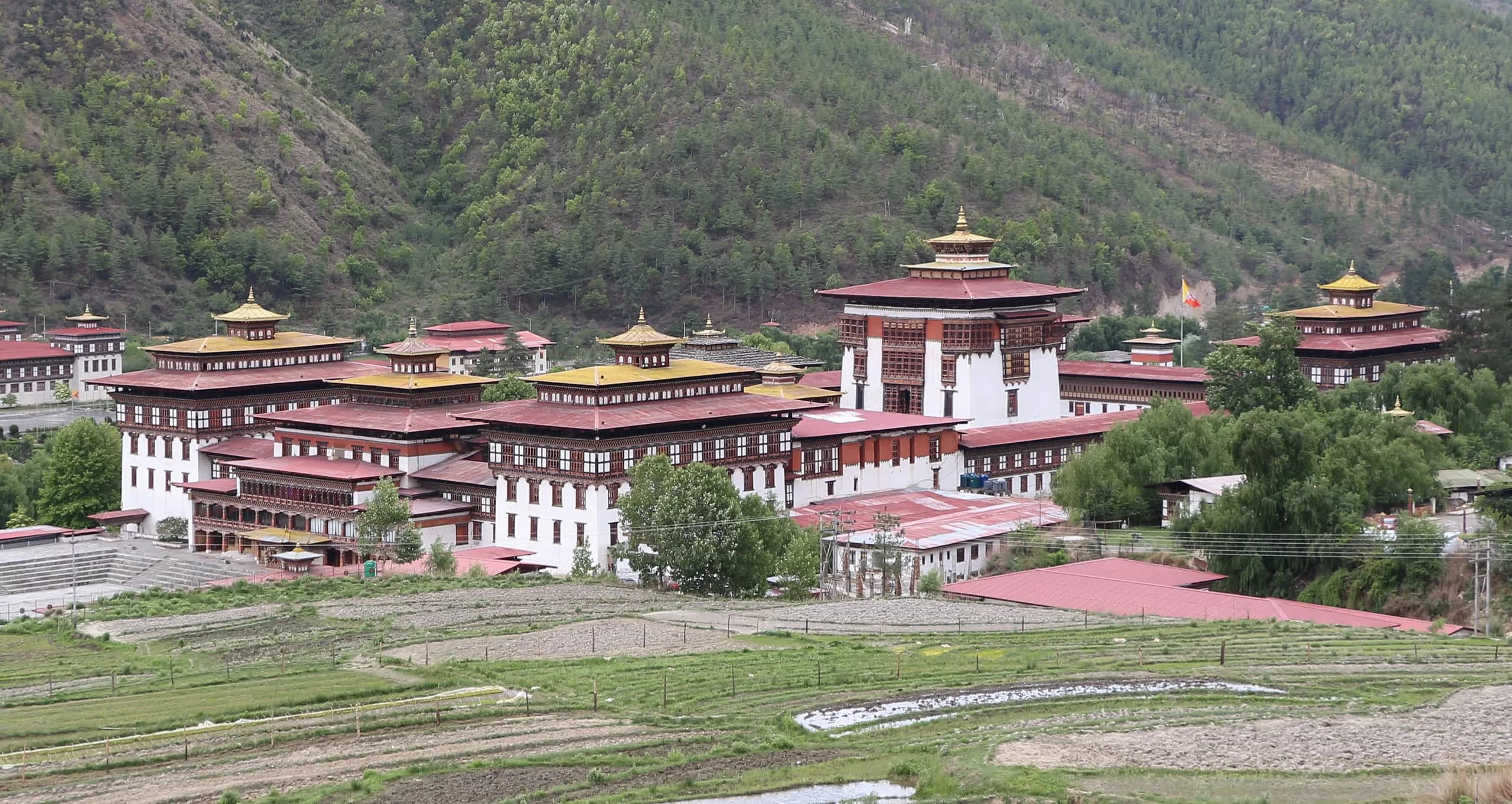
The Thimphu Tshechu is the country's largest annual festival by total attendance — drawing tens of thousands of Bhutanese families from every dzongkhag, alongside the international cohort visiting in the autumn window. It's held at Tashichho Dzong, the seat of the central government and the official residence of His Holiness the Je Khenpo (the Chief Abbot). The timing in late September or early October catches the prime autumn window — clear skies after the monsoon, the rice paddies in the western valleys turning gold, and the Himalayan peaks revealing themselves on the northern horizon.
Day 1 opens with the Shinje Chogyel and the protector-deity dances; the courtyard is set for the cycle of chams and the atsaras (masked clowns) move through the crowd. Day 2 brings the principal mask dances — the Pholay Molay (a comic courtship cham), the Shawa Shachi (the dance of the stag and the hounds), the Black Hat dance, and the Guru Tshengye (the eight manifestations of Guru Rinpoche). Day 3 closes with the Tungam — the dance of the wrathful deities — and the public blessing of the assembled community. Unlike Paro, there is no thongdrel at the Tshechu itself; the thongdrel viewing is held at the preceding Thimphu Drubchen (8th day of the 8th lunar month).
Bhutanese families arrive at dawn in their finest gho and kira; the dzong courtyard is densely seated and the atmosphere reverent-festive. Respectful clothing is required (shoulders and knees covered). Photography is permitted in the courtyard. The Royal Family typically attends one of the three days; when His Majesty is present, the courtyard is exceptionally crowded and the local protocol is to rise when the Royal Family enters. We recommend basing at a Thimphu lodge for the duration; the drive from the city centre to the dzong takes ten to fifteen minutes.
Dates by year
The Bhutanese calendar is a distinct lunar system, not identical to the Tibetan or the broader Indian lunar calendars, and the Gregorian dates of every Bhutanese festival shift each year. The Royal Government's Department of Tourism publishes the official calendar each year, typically 6 to 12 months in advance. The dates below are our projection from the published lunar pattern (10th–12th day of the 8th Bhutanese lunar month); we confirm each year against the Department of Tourism's release and update this page accordingly. Before you finalise travel dates, please confirm with our concierge.
| Year | Dates | Note |
|---|---|---|
| 2026 | 22-24 September 2026 | |
| 2027 | 11-13 October 2027 | |
| 2028 | 30 September - 2 October 2028 |
Common questions
22–24 September 2026, per the Department of Tourism's published calendar. The dates are calculated from the Bhutanese lunar calendar (10th–12th day of the 8th lunar month) and shift each year.
Yes by total attendance — Thimphu draws tens of thousands of Bhutanese plus the international cohort. Paro draws the largest international share. If atmosphere and Bhutanese community feel matter more than the photographic thongdrel moment, Thimphu is the principal Bhutanese cultural event of the year.
Not at the Tshechu itself. The thongdrel is unfurled at the preceding Thimphu Drubchen (8th day of the 8th lunar month). The Drubchen + Tshechu pair runs as a six-day sequence at Tashichho Dzong.
His Majesty the King and the Royal Family typically attend one day of the Tshechu. The presence is publicly known the day before. International visitors are welcome to attend; the protocol is to rise when the Royal Family enters.
Respectful clothing — shoulders and knees covered. Bhutanese attend in their finest gho and kira. International visitors don't need to wear the national dress, but smart casual covering shoulders and knees is expected. The dzong sits at 2,300 metres; the courtyard cools quickly in the late afternoon.
Monuments at and around this festival
Monument
Tashichho Dzong — the seat of Bhutan's central government and Je Khenpo summer residence in Thimphu. History, architecture, visiting.
Monument
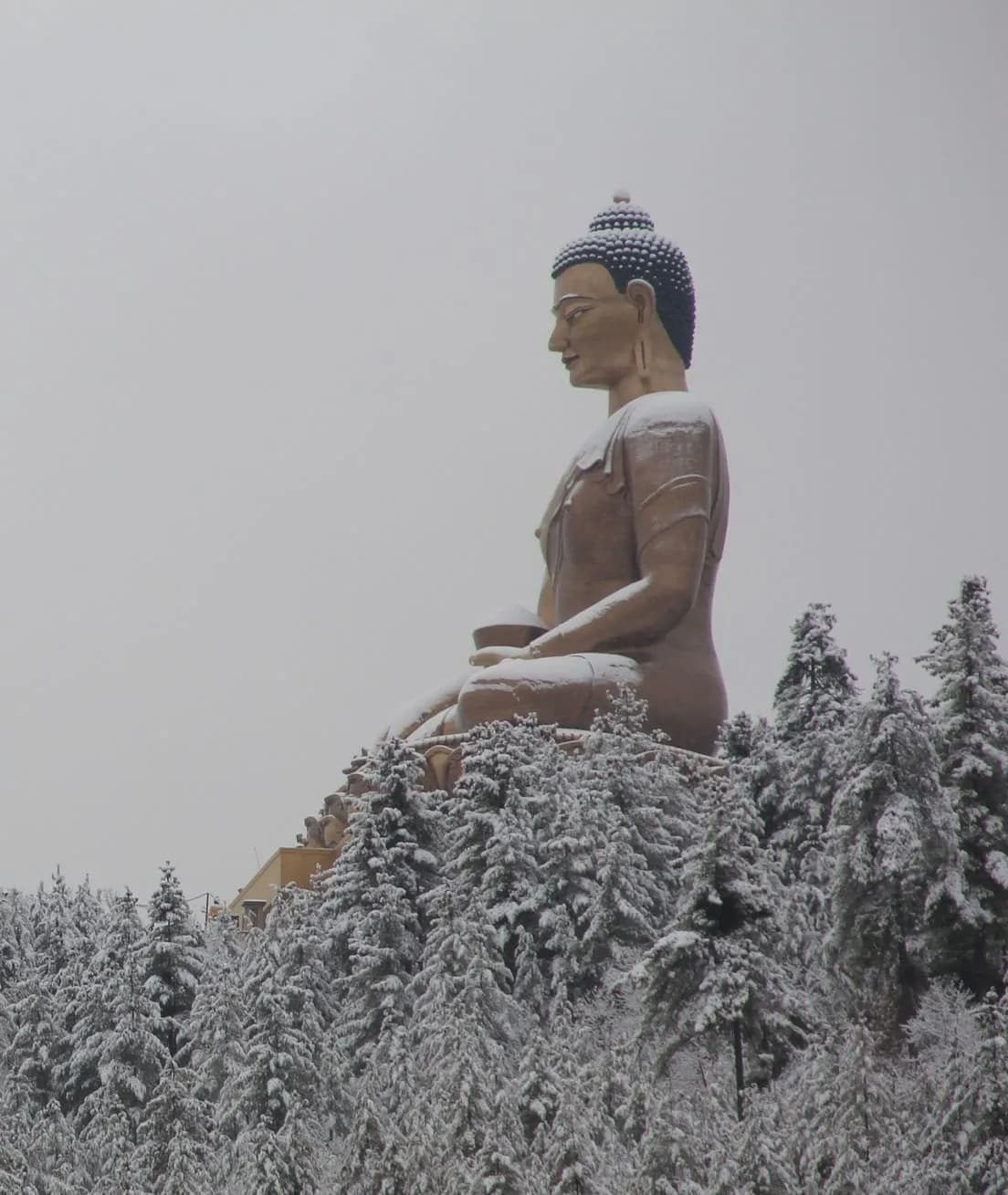
Buddha Dordenma — the 51.5-metre seated Buddha above Thimphu. The prophecy, the construction, the 125,000 smaller Buddhas inside. Visiting.
Monument
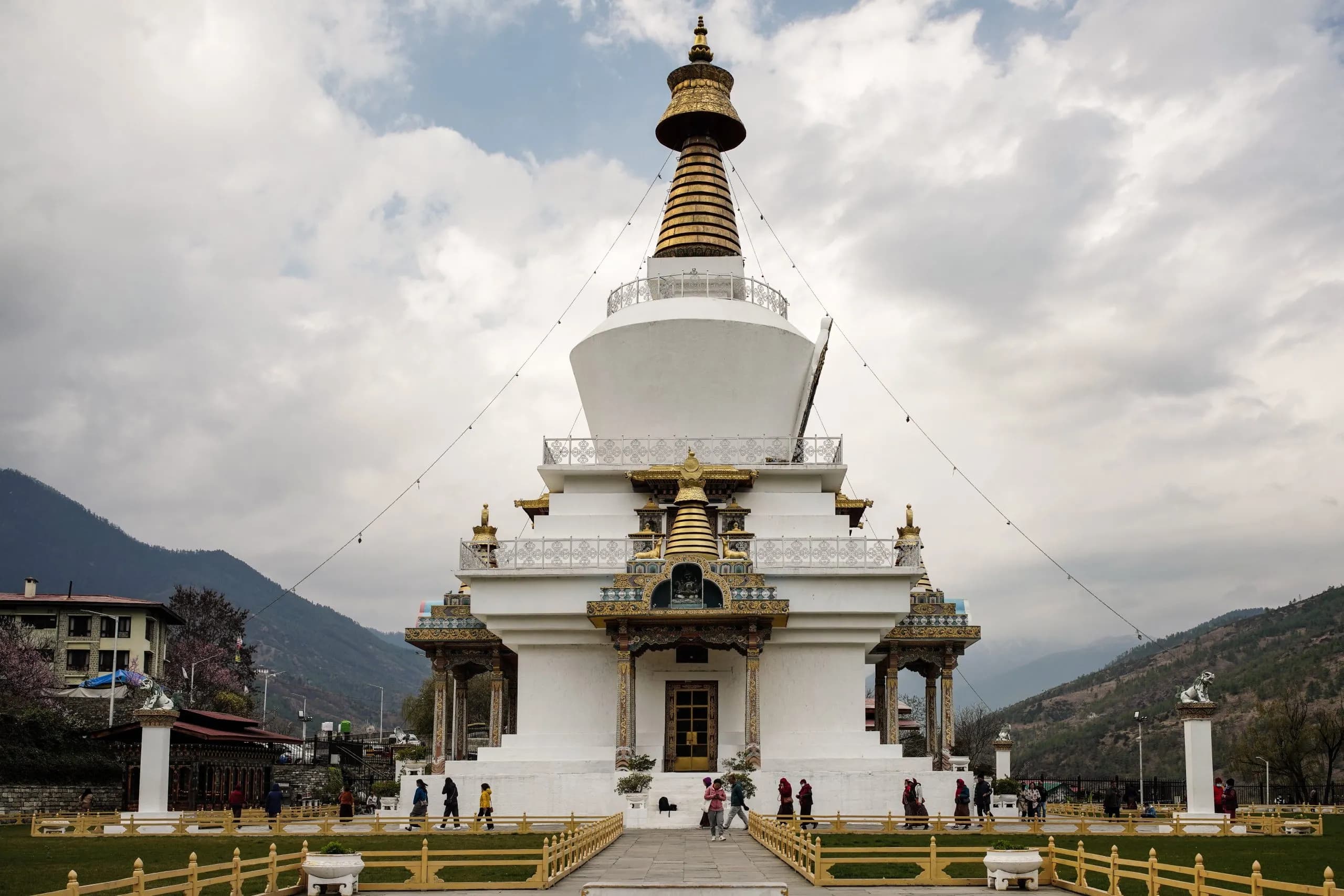
National Memorial Chorten — Thimphu, 1974, in memory of His Majesty the 3rd King. Architecture, daily pilgrimage, visiting.
Journeys around this festival
Journey
A seven-night Bhutan journey timed to the Thimphu Tshechu at Tashichho Dzong — cham dances, the dawn thongdrel, the western circuit through Paro and Punakha, a culturally fluent guide.
Journey
Bhutan from Singapore for the September school holiday — autumn-opening shoulder, six nights, family-friendly, pre-Thimphu Tshechu register.
Journey
A seven-night Bhutan journey timed to Thimphu Tshechu in autumn — second-tier seating, a culturally fluent guide, Bhutanese lodges.
Five questions. A bespoke draft back within a day or two.