Planning your Bhutan journey
Bhutan from Singapore — aligning the trip with the school holiday calendar.
Singapore's school calendar and long-weekend rhythm create natural Bhutan-travel windows for families, honeymooners, and the broader Singapore HNI segment. Some windows align well with Bhutan's strongest visiting seasons (December year-end, Chinese New Year); others require careful framing (the June school holiday lands in the early monsoon). Below: each Singapore long-holiday window mapped against the Bhutanese calendar, with the considered recommendation for each.
- Register
- season
The short answer
The strongest Singapore-Bhutan alignments are December year-end (Clear-Sky Bhutan, the National Day window, lowest visitor count) and Chinese New Year (often the Punakha Drubchen + Tshechu window). The March school holiday overlaps with Paro Tshechu (high demand pressure); plan early. The June school holiday lands in early monsoon (early June workable, late June onwards we discourage). September school holiday catches the autumn shoulder cleanly. Long weekends around Vesak (May), Hari Raya, Deepavali align with shoulder windows.
December year-end — the strongest Singapore-Bhutan alignment
Singapore school holidays run from mid-November through early January — six weeks across the year-end. This aligns perfectly with Clear-Sky Bhutan (December–February), Bhutan's most-reliable panoramic window: clear bright skies, the most-reliable Himalayan visibility of the year, the lowest visitor count, and the deepest sense of the country at its quietest. The Singapore family combination works — a 6-night Sun-Sat trip in mid-December puts you in Paro for Tiger's Nest, in Punakha for the warm valley, and in Thimphu for the 17 December National Day ceremony at Changlimithang in the presence of the Royal Family. The 13-night extended block opens Bumthang for the deep cultural. Daytime temperatures are mild (Thimphu 10-16°C, Punakha warmer at 15-22°C); mornings are cold (0 to -5°C in Thimphu) — pack warm layers. Demand from the Singapore market in this window is structurally high; book the December dates 4-6 months in advance for the better lodge configurations.
Chinese New Year — the Punakha Drubchen alignment
Chinese New Year typically gives Singaporeans a 4-day public holiday (Friday-Monday or Saturday-Tuesday depending on the year), extending to 8-12 days with school-holiday and bridge-day combinations. This often aligns with the Punakha Drubchen + Tshechu pair (8th-10th day of the 1st Bhutanese lunar month, typically late February or early March). The cultural moment is substantial — the Drubchen's Serda procession (the only historical military re-enactment in the Bhutanese festival calendar) plus the principal chams plus the pre-dawn thongdrel unfurling — with a fraction of the visitor pressure of the Paro Tshechu or Thimphu Tshechu. For Singapore families combining the CNY break with the school's pre-Term-1 window, this is the considered window. We recommend the 6-night Sun-Sat trip with 2 Paro, 1 Thimphu, 2 Punakha (covering the Drubchen days), 1 Paro return.
March school holiday — overlaps with Paro Tshechu pressure
Singapore's March school holiday is a single week, typically mid-March. This overlaps with the lead-up to the Paro Tshechu (late March or early April depending on the lunar calendar). The pre-Tshechu shoulder gives spring rhododendron at lower altitude, clear pre-monsoon weather, and the country at the moment of awakening; the Tshechu week itself has substantial demand pressure on lodges, Drukair seats, and ground transport. Our considered recommendation for Singapore families with a March-holiday booking: lock the Paro Tshechu week early (9-12 months ahead) if your dates fall on the festival, or book the pre-Tshechu shoulder for a quieter spring. The April-after-Tshechu shoulder is similarly attractive with the alpine rhododendron approaching peak. The smaller dzongkhag tshechus (Gangtey, Wangdue, Gom Kora in early April) give the festival with better availability.
June school holiday — the early-monsoon trade-off
Singapore's June school holiday is the longest — four full weeks. This lands in the early monsoon window for Bhutan, which requires careful framing. Early June (first 2 weeks) is the pre-monsoon shoulder — Royal Highlander Festival in Laya (23-24 October — note, this is *not* June), the alpine rhododendron at its highest range, the country green and vivid, with weather generally workable. Late June through early July is the heart of the Indian Monsoon and we actively discourage this window (sustained rain, road landslides, high-altitude treks closed, the Himalayan panorama obscured). The considered recommendation for Singapore families needing the June timing: target early June for the pre-monsoon shoulder, frame as the 'Green Bhutan' atmospheric experience rather than the panoramic-photographic one, expect occasional rain and adjust expectations accordingly. The trade-off: lower visitor count, the deepest green, and the most-flexible lodge availability of any school-holiday window.
September school holiday — the autumn shoulder
Singapore's September school holiday is a single week, typically mid-September. This catches the late-monsoon to autumn transition in Bhutan. The very early part of September (the first week) can still carry monsoon tails; mid-September clears progressively; by the third week the autumn clear-sky window typically opens. The Thimphu Tshechu lands in late September or early October most years, which puts demand pressure on the late-September dates. Our considered recommendation: target mid-September for the cleanest pre-Tshechu window (still warm, clearing, no festival pressure), or align with Thimphu Tshechu if cultural-festival exposure is the priority (9-12 month booking lead time). The smaller Gangtey Tshechu (early September depending on the lunar year) and Wangdue Tshechu (late September) offer alternatives.
Long-weekend windows — Vesak, Hari Raya, Deepavali
Singapore's other public holidays create natural long-weekend opportunities that, combined with leave days, support 6-10 night Bhutan trips. Vesak Day (May, the Buddha's birthday) — falls in the late-spring shoulder, warm and clear, with a meaningful religious resonance for the Buddhist visitor. Hari Raya Puasa (April-May, varies with the Islamic calendar) — late spring shoulder, similar to Vesak alignment. Hari Raya Haji (June-July, varies) — early monsoon, requires the same Green-Bhutan framing as the June school holiday. Deepavali (October-November) — falls in the autumn clear-sky window, often within a week of the Crane Festival (11 November); strong alignment for the cranes-in-Phobjikha visitor. Long-weekend trips are typically 5-6 nights (Friday-Sunday holiday + 2-3 leave days + travel days); the 6-night Sun-Sat Drukair cycle fits cleanly into the Vesak, Deepavali, and Hari Raya Puasa windows.
Booking lead time by Singapore window
The Singapore-market booking pressure varies sharply by window. December year-end and Chinese New Year: 4-6 months ahead is the standard lead time; 6-8 months for the December National Day week specifically. March school holiday: lock Paro Tshechu dates 9-12 months ahead; lock pre/post-Tshechu shoulder dates 3-4 months ahead. June school holiday (early June): 2-3 months is adequate due to softer demand. September school holiday: 3-4 months for non-Tshechu dates; 9-12 months if aligning with Thimphu Tshechu. Long-weekend trips (Vesak, Deepavali, Hari Raya): 2-3 months adequate except where the dates align with a festival peak.
Practical
- Strongest Singapore-Bhutan alignment
- December year-end (Clear-Sky Bhutan)
- Cultural-festival alignment
- Chinese New Year ↔ Punakha Drubchen + Tshechu
- March school holiday
- Overlaps Paro Tshechu pressure — book early or target shoulders
- June school holiday
- Early June workable; late June onwards we discourage (Indian Monsoon)
- September school holiday
- Autumn shoulder; mid-Sep cleanest
- Long-weekend fit
- Vesak (May), Deepavali (Oct-Nov), Hari Raya Puasa (Apr-May)
- Standard Singapore trip block
- 6 nights Sun-Sat or 13 nights extended
Festivals it mentions
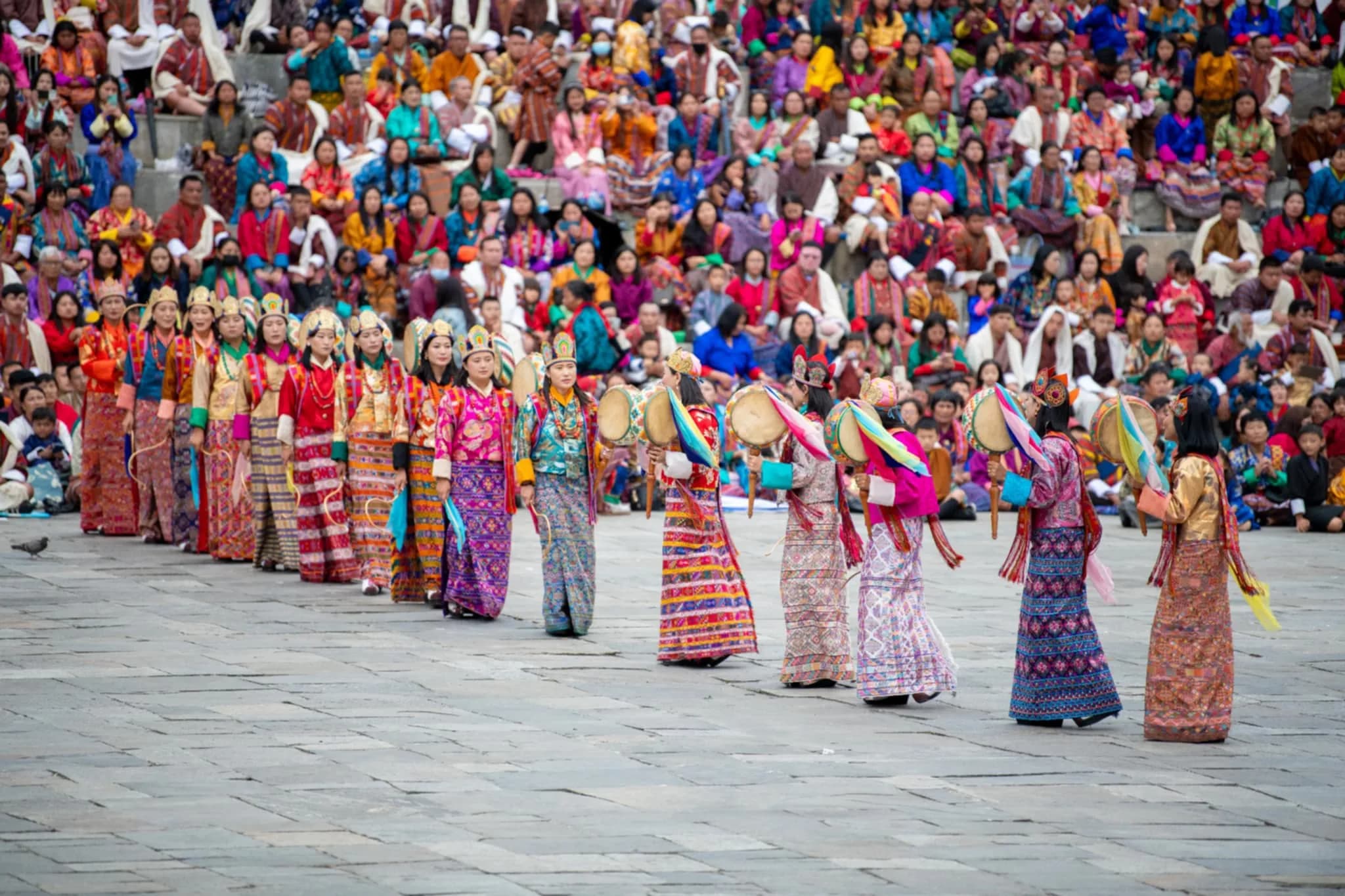 FestivalPunakha Drubchen & Tshechu — the Tibetan-invasion re-enactment, then the chams, at the most beautiful dzong in Bhutan.Punakha Drubchen & Tshechu — the late-winter festival pair at Punakha Dzong, with the Tibetan-invasion re-enactment. Dates, programme, what to expect.
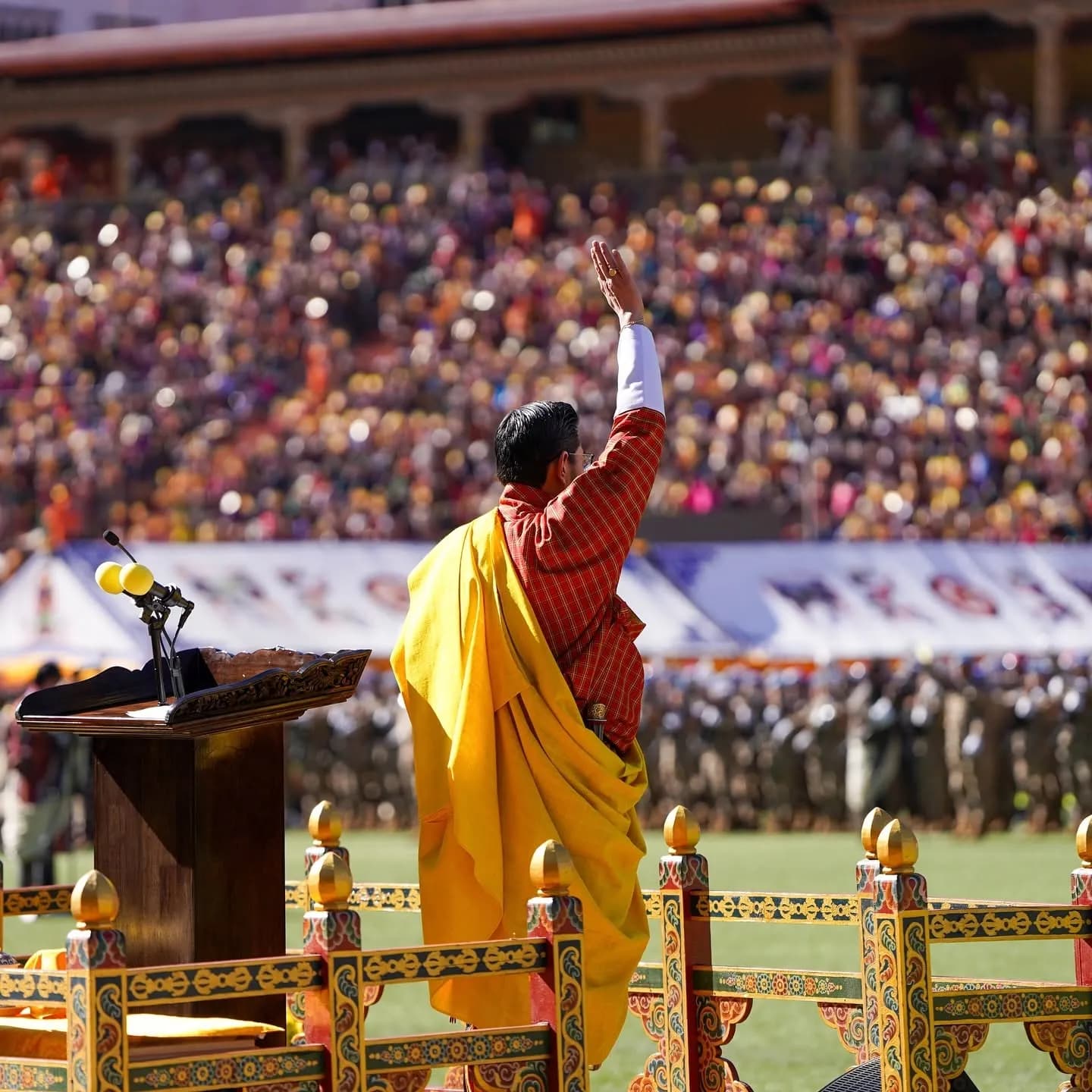 FestivalBhutan National Day — 17 December, the anniversary of the founding of the Wangchuck dynasty.Bhutan National Day — 17 December, founding of the Wangchuck dynasty (1907). The principal Royal ceremony at Changlimithang, Thimphu.
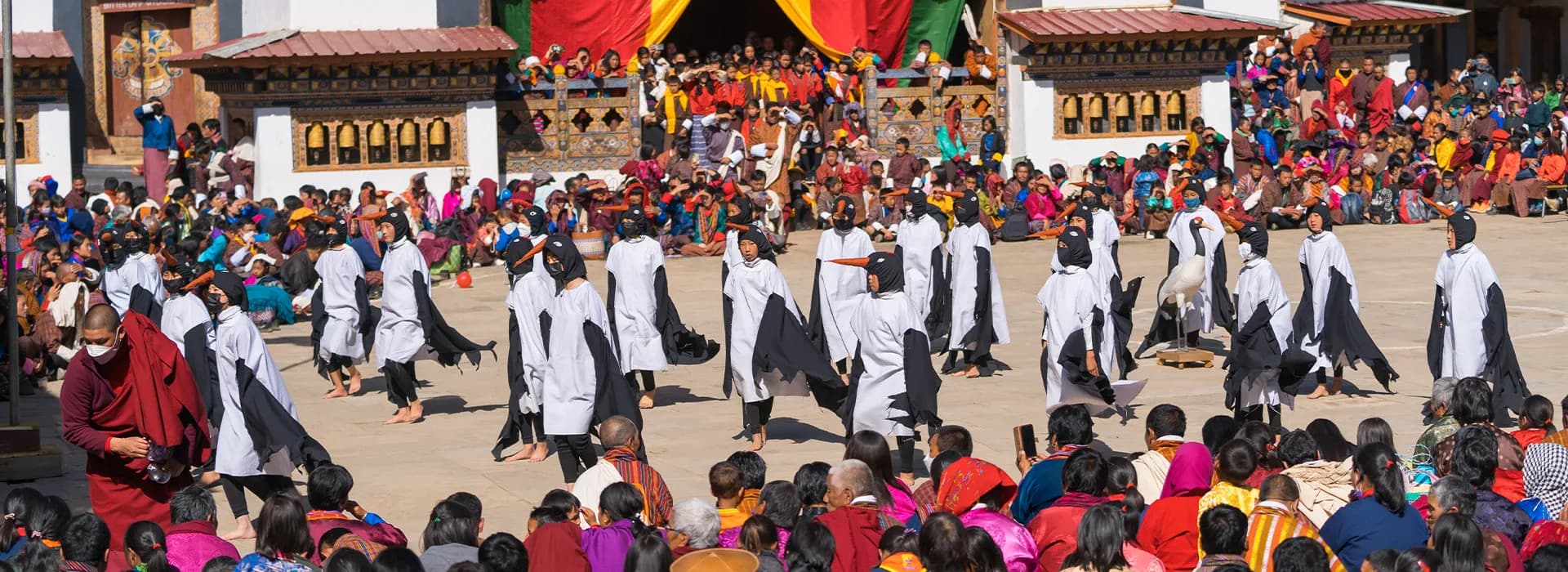 FestivalBlack-Necked Crane Festival — Phobjikha valley, 11 November, the cranes in the wintering meadows.Black-Necked Crane Festival — 11 November at Gangtey Goemba, Phobjikha. The cranes' return, the children's dances, the conservation register.
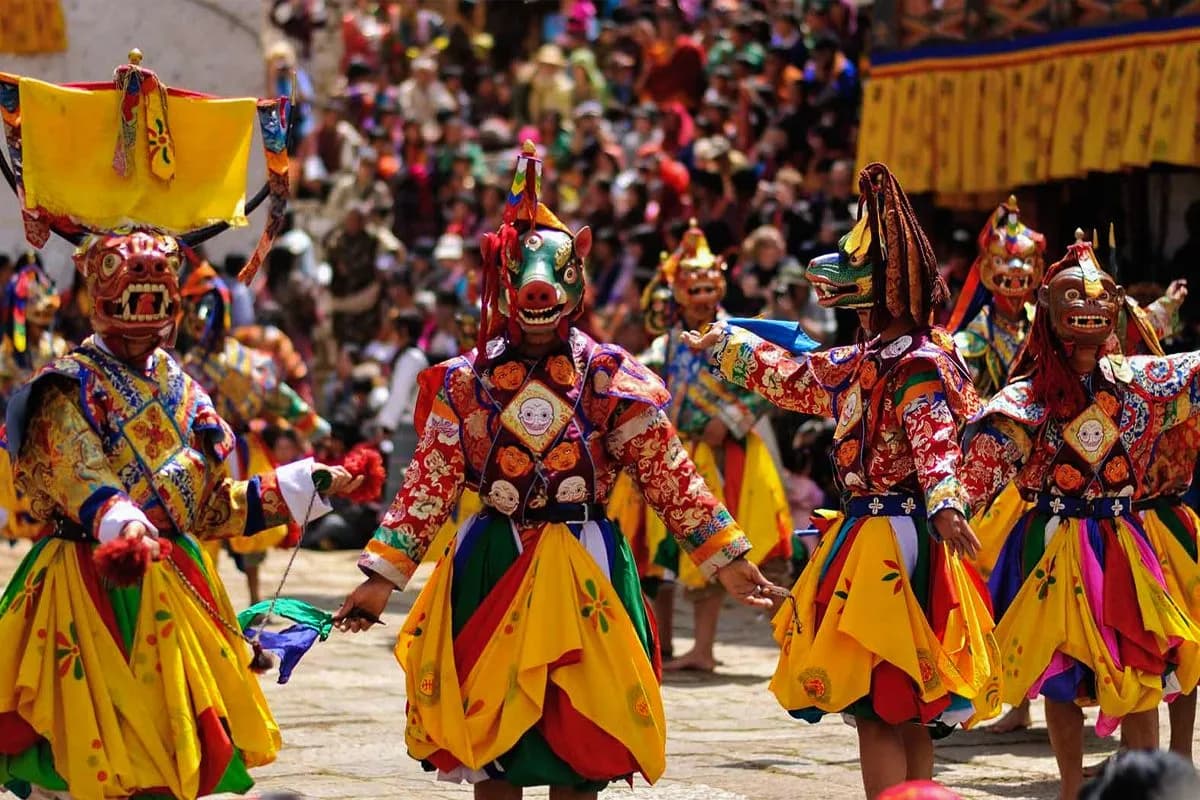 FestivalParo Tshechu — five days at Rinpung Dzong, with the pre-dawn thongdrel.Paro Tshechu — the principal spring festival at Rinpung Dzong. This year's dates, the programme, the pre-dawn thongdrel, what to expect for international visitors.
Journeys it informs
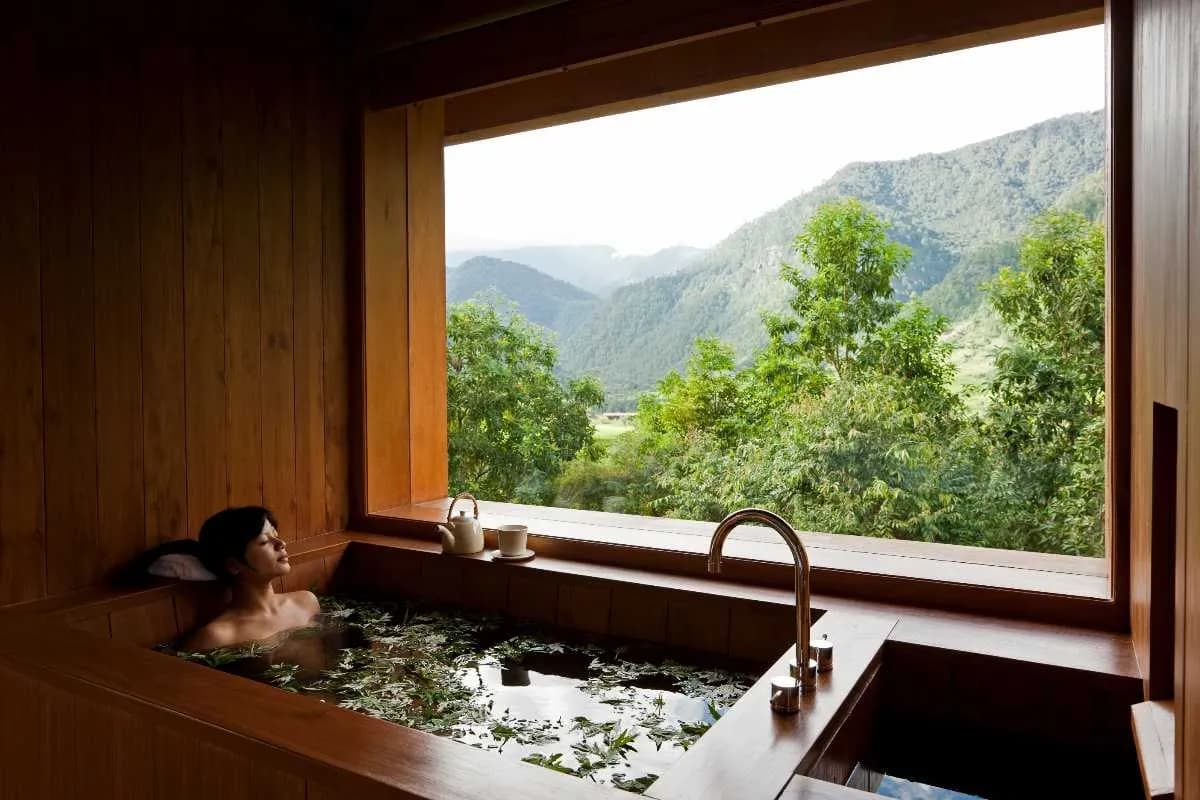 JourneySeven nights in Bhutan, on your terms.A private seven-night Bhutan honeymoon for couples flying from Singapore. Bhutanese lodges, a matched guide, transparent all-inclusive pricing.
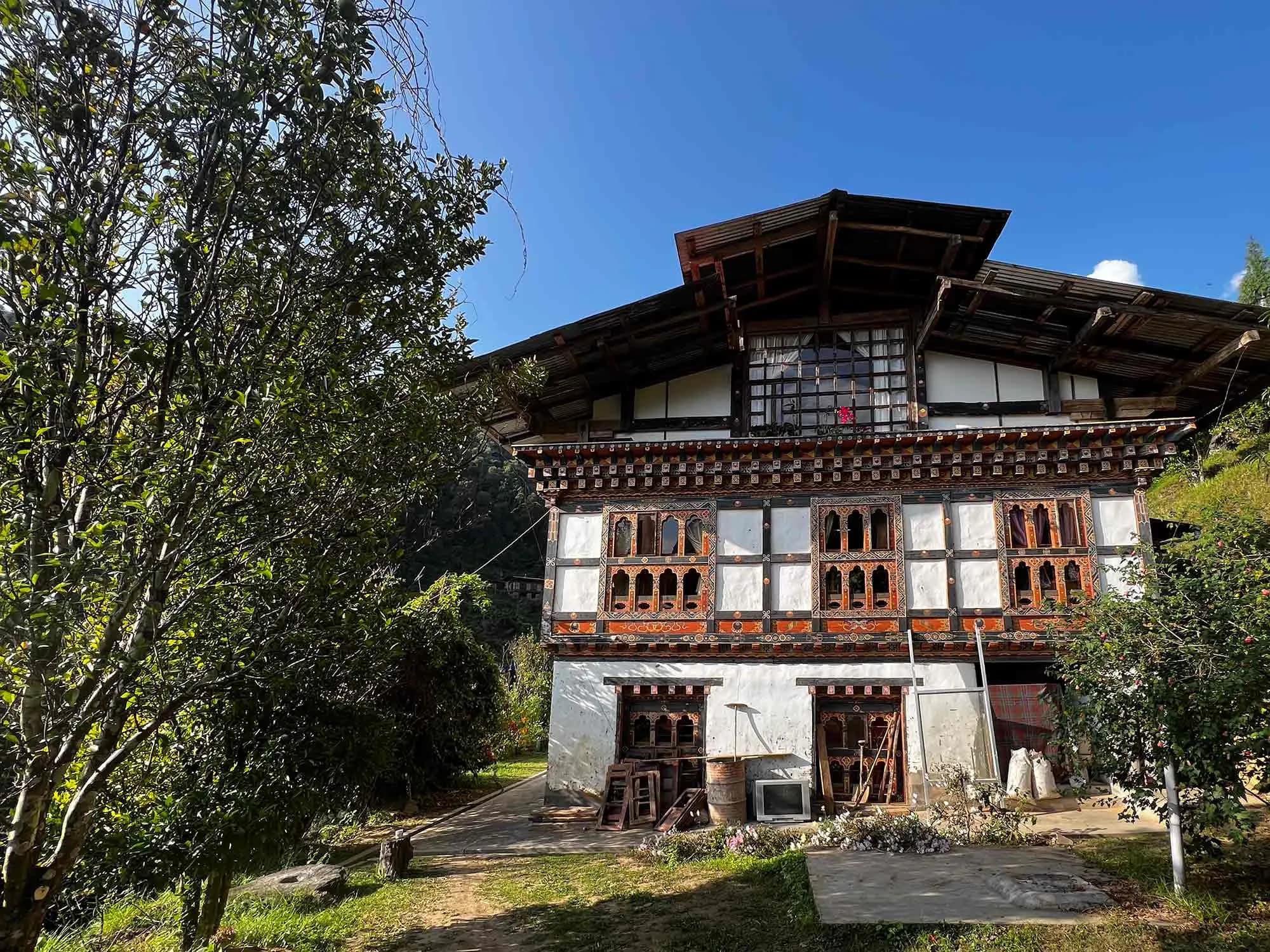 JourneyTen nights in Bhutan for the family — grandparents, parents, grandchildren, on one shared journey.A ten-night Bhutan trip for three-generation families from Singapore. Adjacent suites, matched knowledgeable guide, altitude-considered pacing, signature tier.
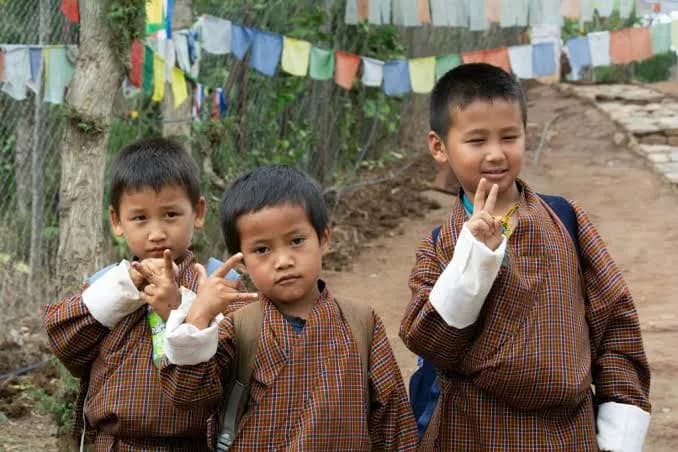 JourneyBhutan from Singapore for the year-end break — six nights of Clear-Sky Bhutan, the National Day window, the country at its quietest.Bhutan from Singapore for the year-end — Clear-Sky Bhutan, the National Day window, six nights Bhutan, Drukair direct.
Frequently asked
- When's the best Singapore school holiday to visit Bhutan?
- December year-end — by a significant margin. The Singapore school holiday runs through Bhutan's most-reliable panoramic window (Clear-Sky Bhutan), aligns with the 17 December National Day ceremony, and offers the lowest visitor count of the year. Chinese New Year is the close second — often overlapping with the Punakha Drubchen + Tshechu pair, with mild late-winter weather. The June school holiday requires careful framing because of the Indian Monsoon timing; early June works, late June onwards we discourage.
- Should I plan around Paro Tshechu in the March school holiday?
- Worth deciding deliberately. The Tshechu is the country's most-internationally-attended festival and a cultural moment — but the week of the festival puts substantial pressure on lodges, Drukair seats, and ground transport. Book 9-12 months in advance for the festival dates specifically. The smaller dzongkhag tshechus (Wangdue, Gangtey, Gom Kora) in March or early April give a similar cultural register with better availability. For first-time Singapore families, the pre-Tshechu or post-Tshechu shoulder weeks are increasingly our recommended choice.
- Is the June school holiday viable for Bhutan?
- Partially — the early-June window (first 2 weeks) is the pre-monsoon shoulder and works well for Singapore families framing the trip as the 'Green Bhutan' atmospheric experience. The country is at its most-vivid green, the visitor count is lower, lodge availability is excellent, and the weather is generally workable with occasional rain. Late June onwards (into July and August) is the heart of the Indian Monsoon, which we actively discourage. If June is the only timing your family can do, target the first 2 weeks and set the expectation toward atmosphere rather than panoramic clarity.
- Can I fit a long-weekend Bhutan trip?
- Yes, with the 6-night Drukair Sun-Sat cycle. Singapore long weekends (Chinese New Year, Vesak, Hari Raya, Deepavali) typically give 3-4 days of public holiday; combined with 2-3 leave days, the 6-night Sun-Sat Bhutan block fits cleanly. Shorter than 6 nights from Singapore is constrained by the Drukair schedule — the 6-night cycle is the practical minimum for a Singapore-Bhutan trip on the direct route.
- Do you offer Singapore-specific itineraries for these windows?
- Yes — see our Singapore-specific journey pages aligned with each principal window: the December year-end Clear-Sky Bhutan journey, the Chinese New Year Punakha-Drubchen journey, the school-holiday family circuits. The journey pages are the proposal starting points; the actual itinerary is tailored to your specific dates, party, and preferences in conversation with our concierge.

