Planning your Bhutan journey
Bhutan for solo female travellers — exceptionally safe, deeply respectful, frequently chosen.
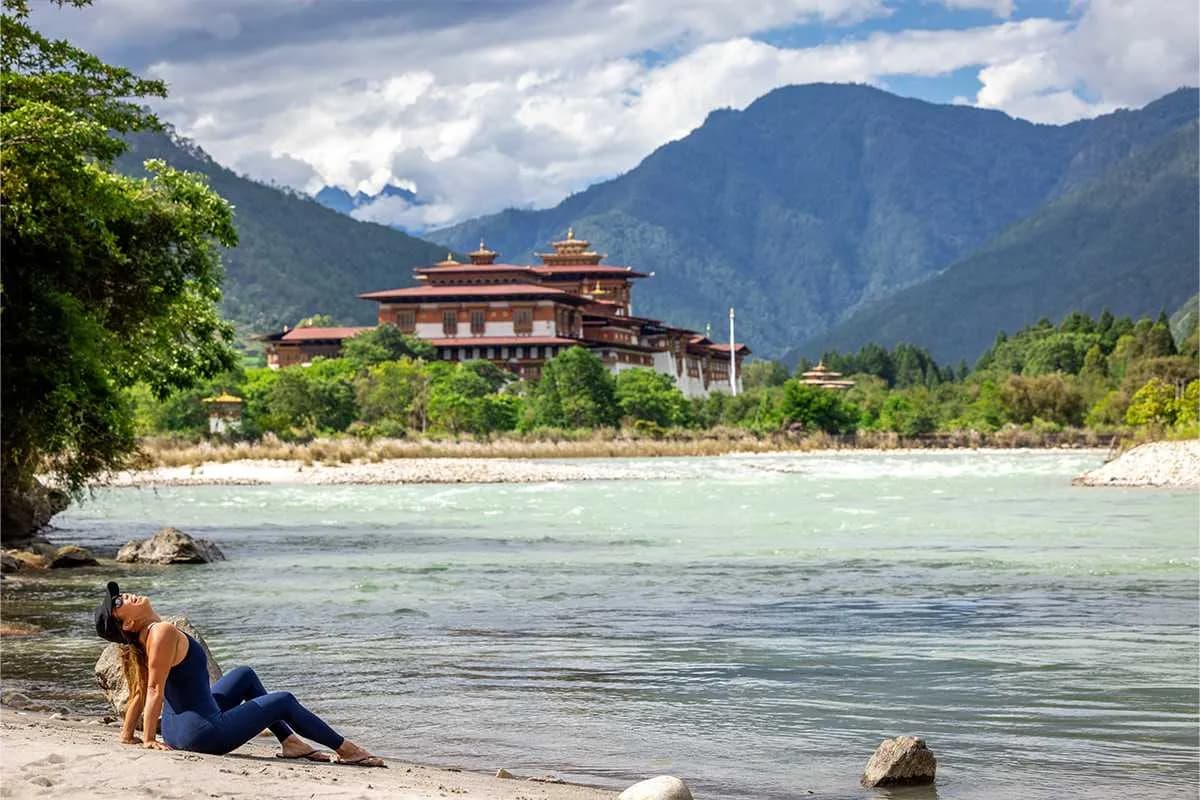
Bhutan is one of the safest destinations in Asia for solo female travellers — the US State Department's travel advisory rates Bhutan Level 1 ('exercise normal precautions', the lowest risk category), reported crime against international visitors is minimal, and the Bhutanese cultural register toward women is genuinely respectful. The operator framework (every visitor accompanied by a licensed guide and dedicated driver) provides an additional safety architecture that single travellers value particularly.
- Register
- logistics
The short answer
Bhutan is exceptionally safe for solo female travellers — US State Department Level 1, minimal crime against international visitors, deeply respectful cultural. The licensed-operator framework means every visitor is accompanied by a guide and driver, which provides additional safety architecture single travellers particularly value. Female guides are available on request. Dress is modest but not strict; the typical Bhutanese woman wears the kira (national dress) and international visitors in trousers + sleeves are appropriate.
The safety record
The US State Department travel advisory rates Bhutan Level 1 — 'exercise normal precautions', the lowest risk category, alongside Switzerland, Iceland, Japan, and a handful of other destinations. Reported crime against international visitors is minimal — the most-common incident reported by visitors is minor opportunistic theft (rare). Violent crime against international visitors is exceptionally rare; harassment of female travellers is reported substantially less often than in most Asian destinations. The Royal Bhutan Police maintain visible presence in the principal towns; the country's small population (~770,000) and tight social fabric make anonymous crime difficult.
The cultural register toward women
Bhutanese culture is matrilineal in inheritance (land and property traditionally pass through the female line) and the broader gender tradition is genuinely respectful. Women hold senior positions in the Royal Government, the monastic system (the Royal Grandmother and other senior royal women carry substantial religious authority), the private sector, and the judiciary. The cultural framing of women is closer to the Indian Subcontinent's traditional reverence than to the modern East Asian or Western European. Solo female visitors report consistently positive engagement with Bhutanese hosts, lodge staff, guides, and the general public. The Bhutanese male register toward women is restrained — direct staring, catcalling, and the broader patterns of harassment common in some Asian destinations are markedly absent.
The operator framework as safety architecture
Bhutan's mandatory licensed-operator framework — every international visitor must be booked through a Royal Government-licensed Bhutanese tour operator, and accompanied throughout by a licensed guide — creates a safety architecture that solo female travellers value particularly. There is no unaccompanied walking through anonymous cities, no public-transport navigation, no isolated late-night travel. The guide-and-driver pair are vetted by the Royal Government and rated by the operator. Lodge transfers, monument access, and daily logistics are arranged through the operator. The framework is sometimes criticised as restrictive for the broader visitor; for solo female travellers it is consistently appreciated.
Female guides — availability and the experience
Female guides are available on request in Bhutan, though they remain a minority of the licensed guide pool (perhaps 15-20% of the broader licensed-guide cohort as of 2026). The Royal Government has actively encouraged female participation in the tour-guide profession over the past decade through dedicated training programmes. Solo female travellers who prefer a female guide should request this at the proposal stage; we surface availability against the visitor's dates and routes. The cultural experience with a female guide is different from the male-guide standard — different access to the women-and-children parts of the social register (kitchen visits, mother's-room access, the female register at festivals). Many returning visitors specifically request female guides for the cultural depth this opens.
Dress, behaviour, and the practical
Dress: modest but not strict. The Bhutanese national dress for women is the kira (a wrapped-and-pinned ankle-length dress with a fitted jacket); international visitors are not expected to wear it. The standard international-visitor dress — trousers or long skirts, shoulders covered, sturdy walking shoes — is appropriate. For monastery and dzong visits, the protocol is firmer (long trousers/skirts below the knee, shoulders covered, no shorts or vests). Alcohol: drinking is acceptable for women in Bhutan; the cultural is restrained but not prohibitive. Smoking: tobacco use is restricted across Bhutan (the country aspires to be tobacco-free); the social register around smoking is unwelcoming. Photography: respectful of subjects; ask before photographing individuals, particularly women and children, particularly in rural areas. Solo dining: comfortable across all premium lodges; the lodge staff is accustomed to single travellers.
Practical
- US State Department advisory level
- Level 1 — exercise normal precautions
- Female guides available
- Yes, on request
- Operator framework
- Every visitor accompanied by licensed guide + driver throughout
- Cultural register
- Matrilineal inheritance; women hold senior positions across the public and private sectors
- Solo-female dining
- Comfortable at premium lodges
- Recommended dress
- Long trousers/skirts, sleeves, sturdy shoes; modest for monasteries
Festivals it mentions
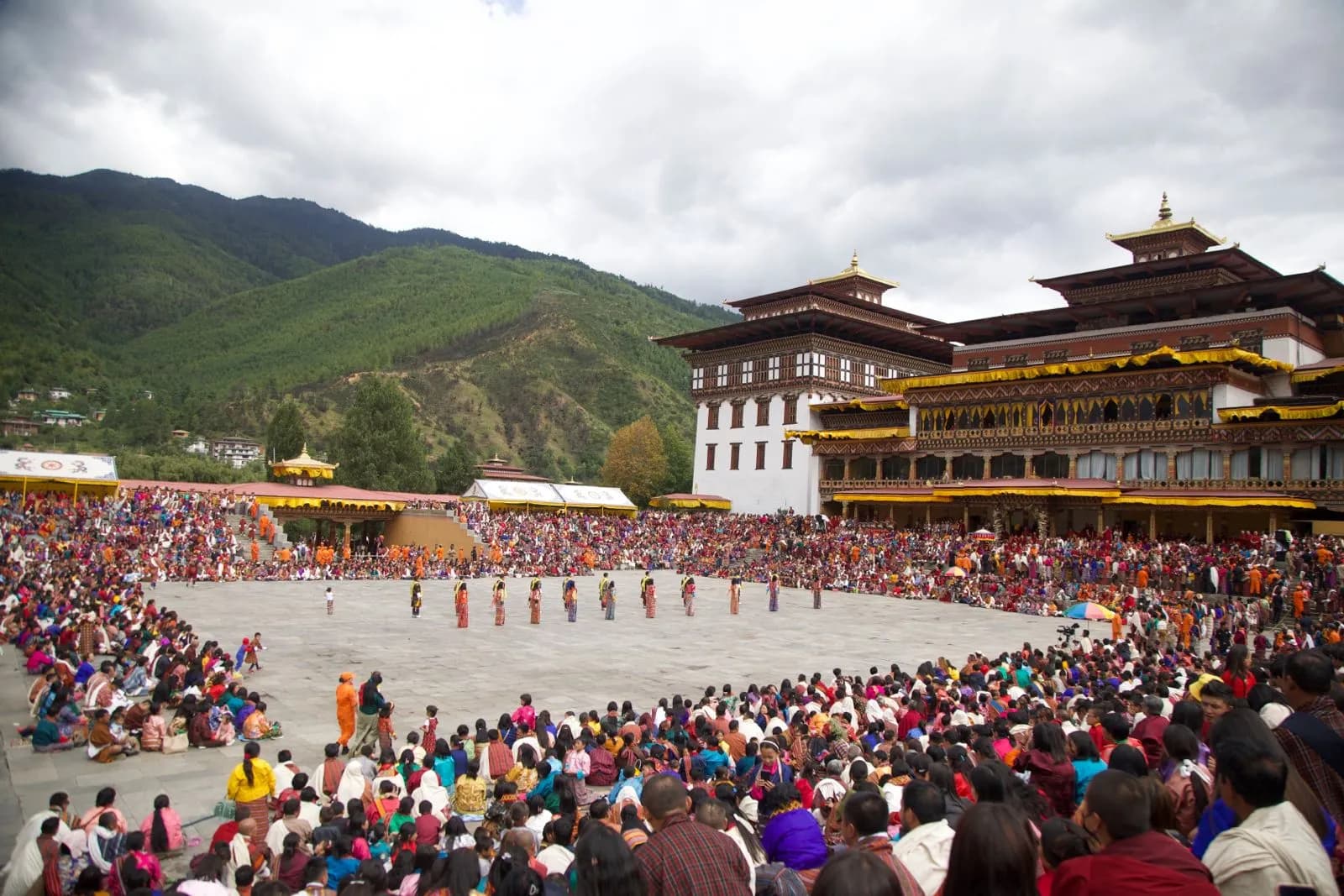 FestivalThimphu Tshechu — three days at Tashichho Dzong, the largest attendance of any Bhutanese festival.Thimphu Tshechu — the autumn festival at Tashichho Dzong, capital of Bhutan. This year's dates, the programme, what to expect as an international visitor.
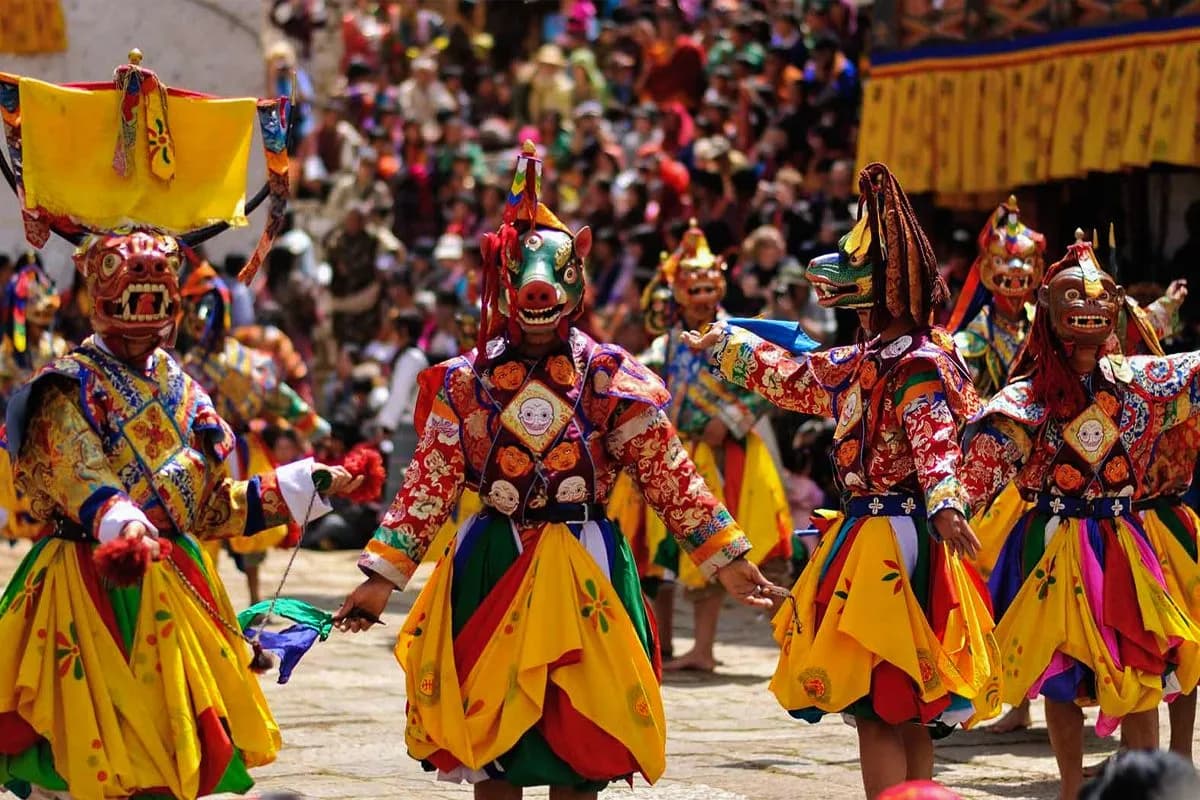 FestivalParo Tshechu — five days at Rinpung Dzong, with the pre-dawn thongdrel.Paro Tshechu — the principal spring festival at Rinpung Dzong. This year's dates, the programme, the pre-dawn thongdrel, what to expect for international visitors.
Journeys it informs
Frequently asked
- Is Bhutan safe for solo female travellers?
- Yes — exceptionally so. The US State Department rates Bhutan Level 1 (the lowest risk category); reported crime against international visitors is minimal; harassment of female travellers is reported substantially less often than in most Asian destinations. The mandatory licensed-operator framework provides additional safety architecture that solo female travellers consistently appreciate.
- Can I have a female guide?
- Yes, on request. Female guides are a minority of the licensed pool (~15-20%) but available across the principal routes. Request at the proposal stage; we surface availability against your dates. Many returning visitors find the female-guide cultural register different (better access to the women-and-children parts of the social fabric) and request it for that reason.
- What should I wear?
- Long trousers or skirts; shoulders covered; sturdy walking shoes. For monastery and dzong visits, modest dress is firmer (below the knee, sleeves, no shorts or vests). The Bhutanese national dress (kira) is for Bhutanese women; international visitors are not expected to wear it. Smart casual covering shoulders and knees is the typical visitor pattern.
- Is it normal to travel alone in Bhutan?
- Increasingly so. Solo travellers — both male and female — are a substantial and growing share of the international visitor base, particularly in the autumn and winter windows. The licensed-operator framework means there is no isolation: a guide and driver accompany throughout. Lodge dining, evening reading rooms, and the considered pace of Bhutanese travel accommodate solo travellers comfortably.
- What about altitude and health concerns as a solo traveller?
- Your guide carries a pulse oximeter and monitors any altitude-related symptoms; the operator maintains an emergency contact protocol for any solo traveller in the country. The Royal Government's Department of Tourism is similarly an emergency contact in extreme cases. We surface emergency contacts and the operator's 24-hour line at the start of every itinerary.
- Can I drink alcohol as a solo female traveller?
- Yes — drinking is acceptable for women in Bhutan; the cultural is restrained but not prohibitive. Lodge bars, restaurants in Thimphu and Paro, and the traditional ara (rice spirit) at village dining all serve solo female visitors without comment. The Bhutanese register around alcohol is moderation rather than restriction.

