Planning your Bhutan journey
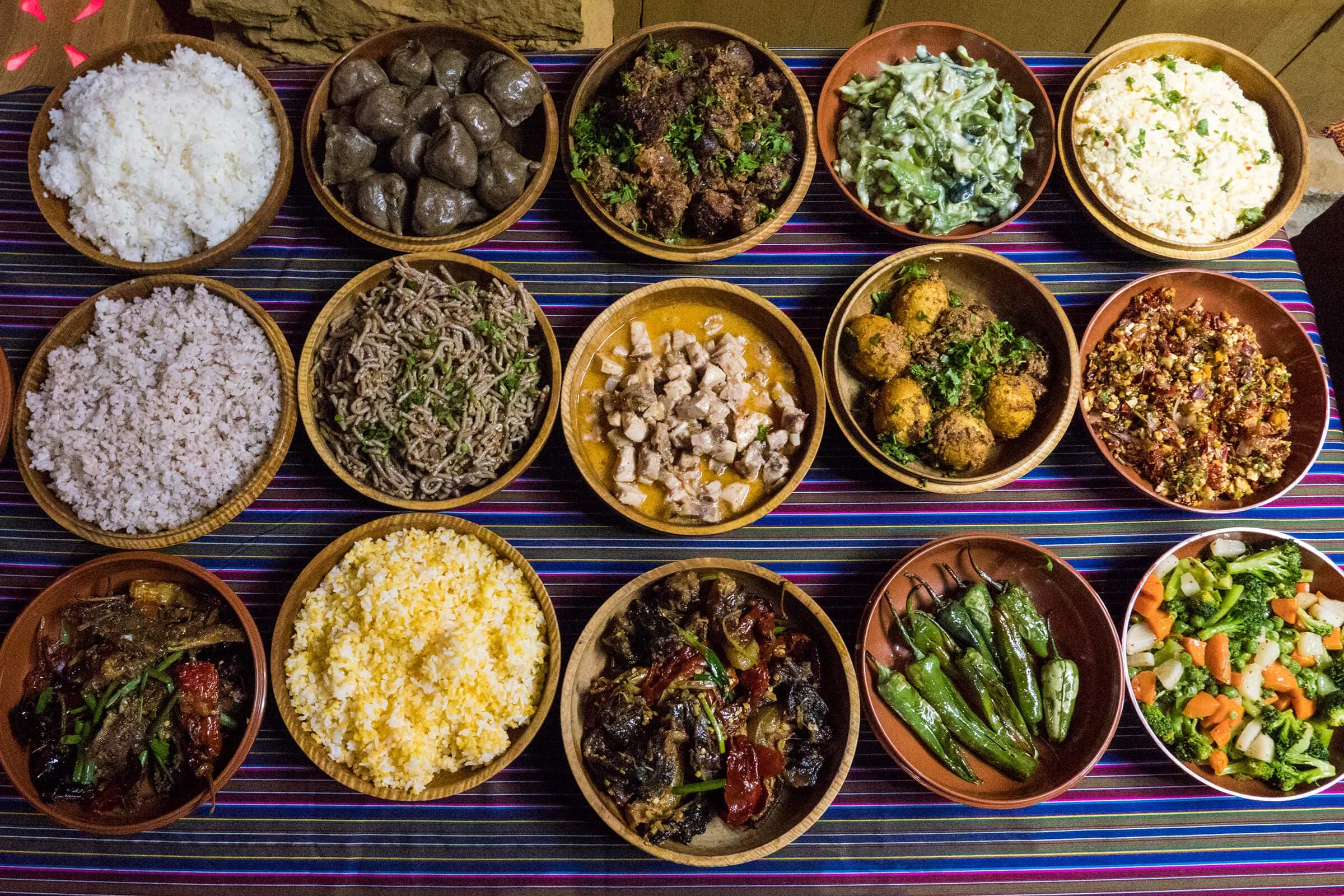
Bhutanese cuisine — red rice, chillies, yak cheese, and the country's distinctive heat.
Bhutanese food is centred on three foundations: red rice (the country's signature grain), datshi (cheese — typically a soft cow-milk cheese, used as the basis of most curries), and ema (chillies — used not as a condiment but as a vegetable in their own right). The result is a distinctive cuisine substantially hotter and more cheese-focused than the broader Himalayan range, with a culinary identity quite different from Indian, Tibetan, or Nepalese cooking.
- Register
- food
The short answer
The three foundations: red rice, datshi (cow-milk cheese), and ema (chillies). The signature dish is ema datshi — chillies cooked in cheese sauce. Other staples: kewa datshi (potato + cheese), shamu datshi (mushroom + cheese), paksha paa (pork curry), shakam (dried beef), and the eastern specialty of hogey (fermented mustard greens). Vegetarian and gluten-free options are available in most lodges. Heat level is genuinely high — the chilli is a vegetable, not a condiment.
The three foundations
[[red-rice|Eue chum (red rice)]] is the country's signature grain — a short-grain semi-milled variety with a russet-red bran layer, grown in the Paro and Wangdue valleys. It cooks softer than most red rice varieties and has a nutty-earthy flavour. Datshi is the cheese foundation — typically a soft, fresh cow-milk cheese with a texture between paneer and feta. Cheese is used as the body of most Bhutanese curries; the result is rich and substantial. Ema (chillies) — the Bhutanese palate uses chillies as a vegetable, not a condiment. Whole green or red chillies (typically the smaller, hotter varieties) are cooked into curries alongside the cheese. The combined effect is the cuisine's distinctive heat — hotter than what most international visitors expect.
Signature dishes
Ema datshi is the national dish — chillies cooked in cheese sauce, served with red rice. Every Bhutanese meal includes ema datshi; the visitor will encounter it multiple times. Kewa datshi (potato and cheese), shamu datshi (mushroom and cheese), olom datshi (cauliflower and cheese), and dolom datshi (broad-bean and cheese) are the principal vegetable variations. Paksha paa is the principal pork curry — pork belly slow-cooked with daikon radish, dried chillies, and onion. Shakam is the dried-beef preparation, served with chillies and onion. Goen hogo is the eastern Bhutanese-style sour-spiced vegetable preparation. Phaksha shakam combines the dried beef with the pork tradition in some eastern preparations.
Vegetarian, vegan, and gluten-free
Vegetarian visitors are well-catered: most Bhutanese cuisine is built on rice, cheese, and vegetables, with meat dishes as a side rather than the principal course. The datshi family of dishes is naturally vegetarian. Premium lodges accommodate vegetarian preferences without difficulty. Vegan visitors face a steeper curve because the cuisine is cheese-heavy; the premium lodges (Aman, Six Senses, COMO) handle vegan requests with advance notice and prepare alternative preparations. Gluten-free is comfortable — the staple grain is rice, the curries are typically gluten-free, and the noodle dishes (puta, hoenthay) can be flagged for gluten-free preparation. Religious dietary practices (kosher, halal) require advance notification; the premium lodges work with the operator to coordinate.
Tea, ara, and the broader drinks register
Suja (butter tea) is the traditional Bhutanese tea — strong tea churned with yak butter and salt. The taste is unfamiliar to most international visitors; a small cup is the polite gesture, finishing the cup is not expected. Ngaja (sweet tea) is the milky-sweet tea served in lodges and households — closer to Indian chai. Bhutanese coffee is small but growing — the Mountain Hazelnut Venture has Bhutan-grown coffee plantations now serving the better lodges. Ara is the traditional spirit — a strong distilled grain spirit (rice, wheat, or barley base) typically served warm. Approach with respect; the alcohol content is substantial. Bhutan also produces wine at the Bhutan Wine Company (a single estate in the Paro valley); the products are small-batch and worth the experience.
Where to eat
At the lodges: every premium lodge has a kitchen serving Bhutanese cuisine alongside continental and Indian options. Lunches and dinners at the lodge are the standard pattern; the kitchens accommodate dietary requirements. In the towns: Thimphu has a restaurant scene — the Folk Heritage Restaurant for traditional dining in a 19th-century farmhouse setting; Babesa Village Restaurant for traditional Bhutanese; Bukhari at Uma Paro for modern-Bhutanese fine dining; The Hub for Italian and continental. On the road: the Dochu La Cafe serves the warm-trout-noodle dish that has become a notable Bhutanese highway-food. The Bumthang valley has farm-to-table options at Wangdicholing Lodge and the local farm-houses. At the festivals: lunch is typically served in the dzong courtyard — Bhutanese families bring picnic baskets; visitors with guides are catered separately.
Practical
- Signature dish
- Ema datshi (chillies in cheese sauce) — encountered at every meal
- Staple grain
- Eue chum (red rice)
- Heat level
- Genuinely high — the chilli is a vegetable, not a condiment
- Vegetarian-friendly
- Yes, easily
- Vegan-friendly
- With advance notice
- Gluten-free-friendly
- Yes, comfortable
- Tap water
- Not potable — drink bottled or filtered water; lodges provide
Journeys it informs
 JourneyThimphu Tshechu, read properly.A seven-night Bhutan journey timed to Thimphu Tshechu in autumn — second-tier seating, a culturally fluent guide, Bhutanese lodges.
 JourneySeven nights in Bhutan, on your terms.A private seven-night Bhutan honeymoon for couples flying from Singapore. Bhutanese lodges, a matched guide, transparent all-inclusive pricing.
Frequently asked
- How spicy is Bhutanese food really?
- Hotter than most international visitors expect. The chilli is treated as a vegetable rather than a condiment — whole green and red chillies are cooked into curries in significant quantity. Premium lodges adjust the heat for international tastes if requested; the authentic Bhutanese tradition is genuinely fiery. Visitors who don't enjoy chilli should ask for ema-less versions of the principal dishes.
- Is there a lot of meat in Bhutanese food?
- Less than visitors often expect. The cuisine is built on rice, cheese, and vegetables; meat dishes (paksha paa for pork, shakam for dried beef) are sides rather than principals. The cultural framing — Bhutan is a Vajrayana Buddhist country — places restraint on meat consumption, and traditional Bhutanese households eat less meat than Indian or western households of comparable economic standing.
- Can I drink the water in Bhutan?
- No — tap water is not potable. Lodges provide bottled or filtered water freely. Restaurants serve filtered water. Carry a refillable bottle; refill stations at the lodges and most rest stops. The Royal Government's commitment to reducing single-use plastic has made refillable water bottle infrastructure widely available.
- What's butter tea like?
- Distinctive. Strong black tea churned with yak butter and salt, served warm. The taste combines tea, savoury fat, and salt in a register unfamiliar to most international visitors. The cultural protocol is to accept the cup offered and take a small sip; finishing the cup is not expected, refusing entirely is impolite. Many visitors come to enjoy suja over the course of a Bhutanese stay.
- Is Bhutanese food similar to Indian food?
- Less than the geography suggests. Bhutanese food is hotter, cheese-heavier, and rice-centred rather than wheat-bread-centred. The spice profile differs — less of the broader Indian spice palette (no cardamom, less garam masala), more of the chilli-as-vegetable. The closest comparable cuisine in international terms is, perhaps, Sichuan or Tibetan in spirit — heat-forward, simply-prepared, ingredient-centric.
- Can I take cooking classes in Bhutan?
- Yes — several lodges and tour operators offer cooking demonstrations and hands-on classes. The Folk Heritage Restaurant in Thimphu offers a class focused on the principal Bhutanese dishes. Premium lodges accommodate hands-on kitchen sessions on request. Most-requested dishes: ema datshi, paksha paa, suja preparation.

