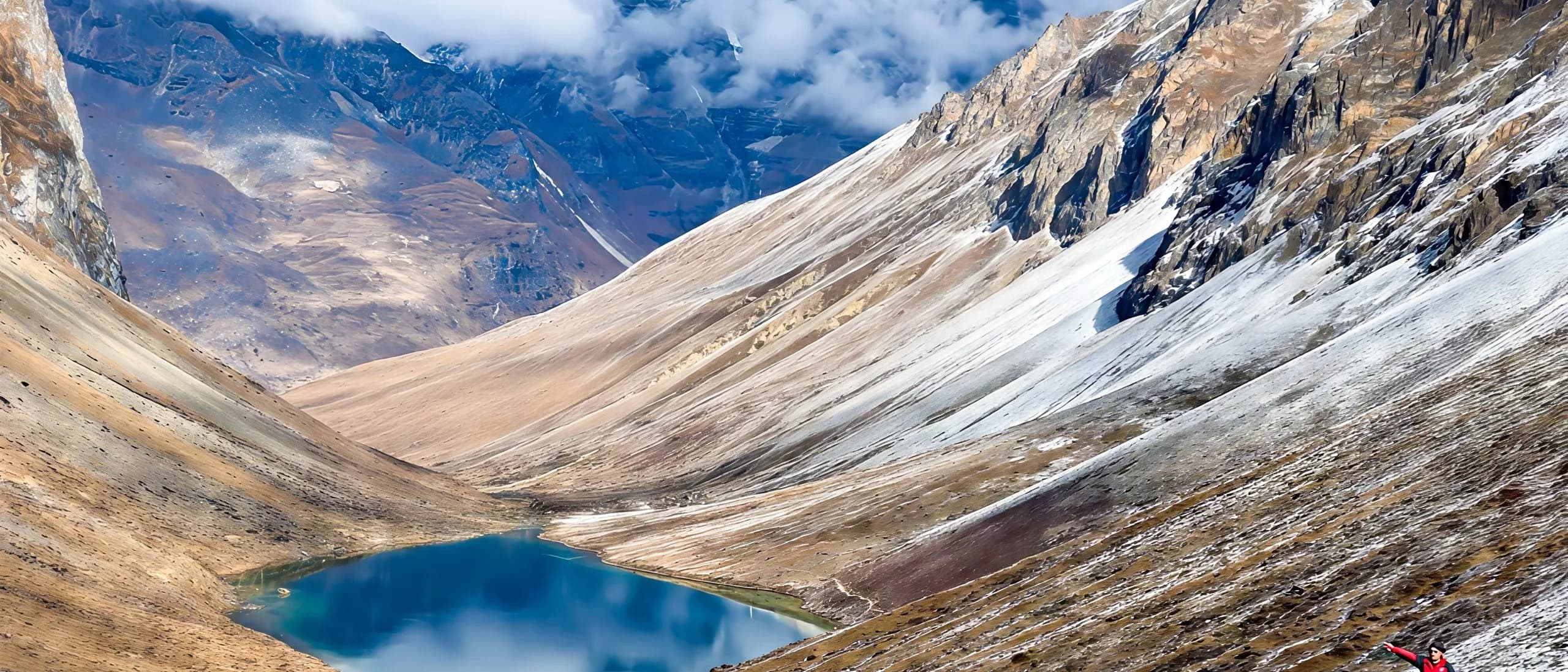
FOR THE TREKKER CONSIDERING NEPAL
Fourteen nights for the Chomolhari Trek — the Bhutanese alternative to Annapurna.
A small-group trek journey for travellers considering Annapurna Base Camp or the Annapurna Circuit. Bhutan's Chomolhari Trek — the country's most popular high-altitude trek — offers comparable Himalayan scale at considerably less crowded altitude, with the premium-tour-operator infrastructure that Bhutan's licensed system delivers and Nepal's commercial-trekking ecosystem cannot match.
14 nights · Signature tier · from USD 22,000 per traveller
- Nights
- 14
- From
- USD 22,000per traveller
- Tier
- Signature
- Best season
- Autumn
- Suits
- Small group
- Departing
- Worldwide
Why this matters for the Nepal-trekking considerer
If you're considering Annapurna Base Camp (ABC) or the Annapurna Circuit — and many premium-trekking travellers do consider these as the obvious Himalayan choices — Bhutan's Chomolhari Trek is the alternative you should know about. Here's the comparison. ABC has 40,000+ trekkers per year and the route shows it (tea-house bottlenecks, full lodges, the environmental pressure of mass commercial trekking). Chomolhari has perhaps 2,000 trekkers per year on the full route. Same scale of Himalayan landscape; one-twentieth the crowd. The Bhutanese licensed-operator framework means better trekking-team support (proper camp staffing, real medical-evacuation contingency, the food and equipment are not at tea-house standard but at full-camping-expedition standard with overstaffing by international standards). The cultural-religious depth of the Bhutanese trek is the differentiator — the route passes through working highland Buddhist communities (the Layap of Lingshi specifically), and the matched guide brings the cultural Nepal commercial trekking generally cannot.
The fourteen-night Chomolhari Trek shape
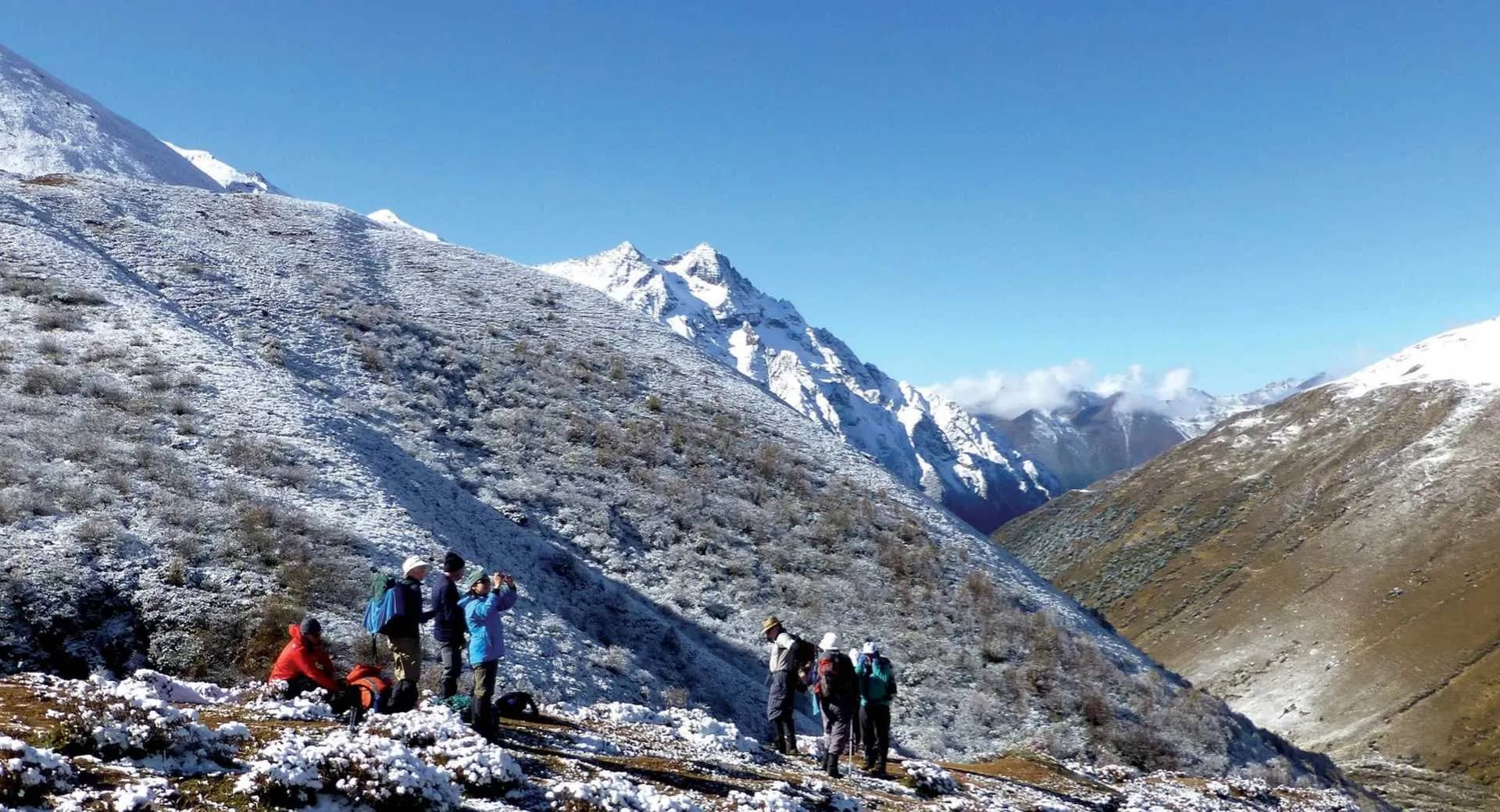
Three nights at the lodges in Paro and Thimphu to acclimatise and to handle the cultural orientation; five days at altitude on the trek itself (Drugyel ruins, Sharna, Soi Thangthangkha, Jangothang base camp at 4,080m, the optional Nyile La crossing at 4,890m, descent via Lingshi at 4,000m); three days descending and recovering at the lodges; three days for the Tiger's Nest climb and the country's principal cultural sites. Substantial; not for first-time trekkers but well within reach for experienced ones.
The trade-offs against Nepal
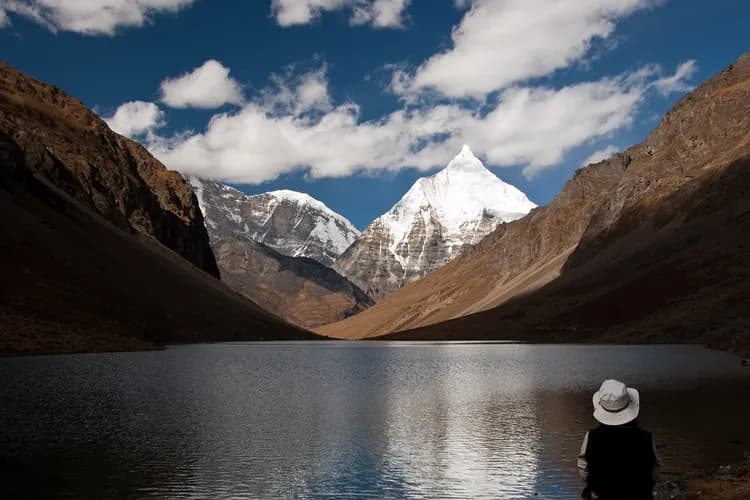
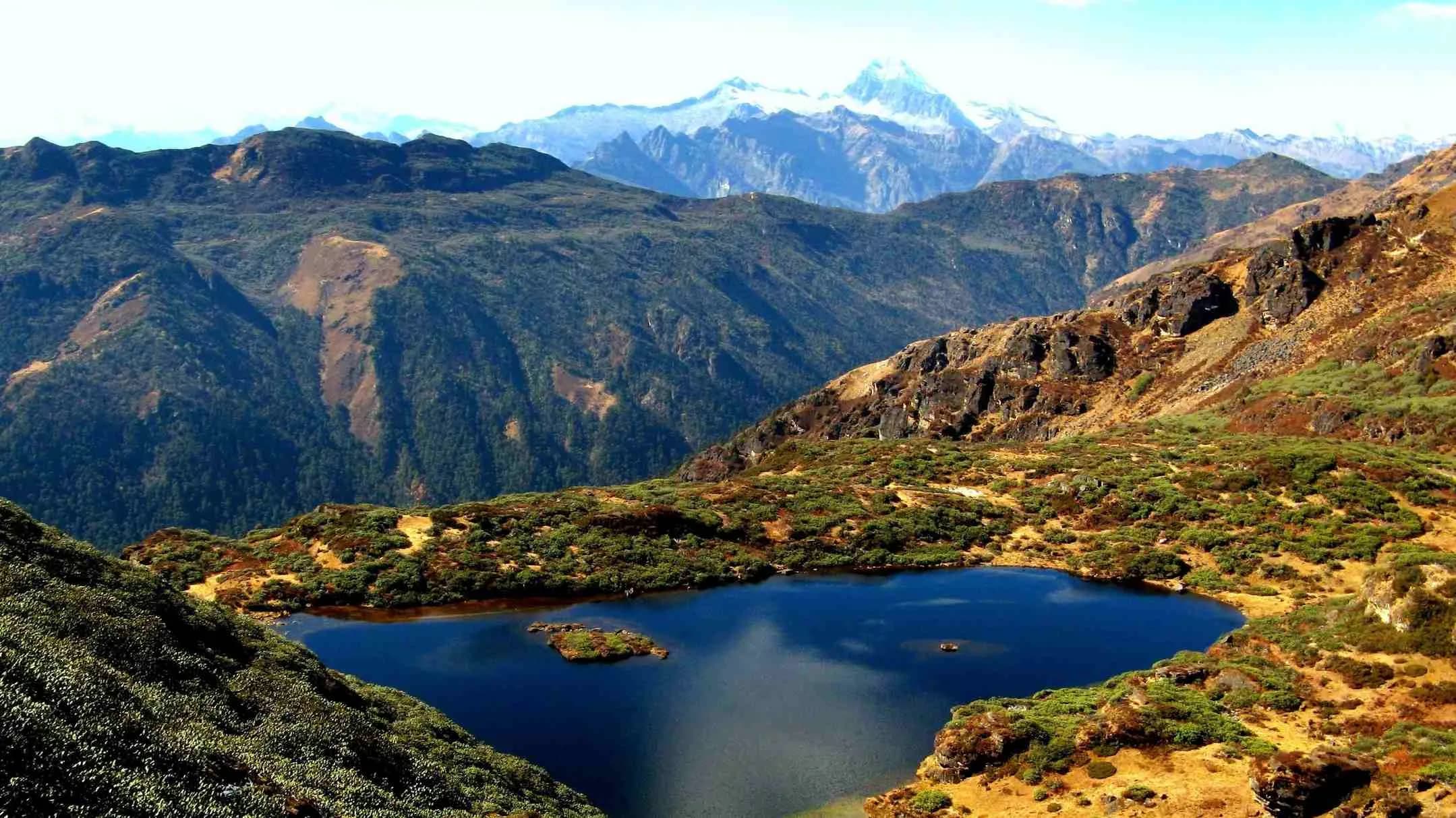
Honest comparison: Annapurna has more visitor infrastructure (tea houses, established commercial trekking) which means lower per-trip cost and more flexible departure dates. Chomolhari is more remote, requires substantial planning (we book the licensed-operator trek; no walk-up option), and costs more per traveller (the Bhutanese SDF + the trek-team staffing). What you get for the difference: fewer trekkers on the route, full-camping-expedition infrastructure rather than tea-house, the cultural-religious depth that Bhutan's licensed-guide framework delivers, and the photographed peaks of Chomolhari (7,326m), Jichu Drake (6,989m), and Tserim Kang (6,500m) at base-camp viewpoint.
The route
A sample shape of the week
DAY 01
Arrival in Paro
Met at PBH; twenty minutes to the lodge; an early supper.
DAY 02
Paro valley acclimatisation
A short walk up to Drugyel ruins and the head of the valley; gear check; a kit shakedown with the trek team in the afternoon.
DAY 03
Tiger's Nest — the warm-up climb
The Taktsang pilgrimage at gentle pace; the trek guide watches altitude response; back to the lodge for the long sleep.
DAY 04
Trek day 1 — Sharna camp (2,890m)
Drive to the Drugyel trailhead; the long valley climb through pine forest; six hours' walk to Sharna.
DAY 05
Trek day 2 — Soi Thangthangkha (3,610m)
The long valley day; first views of Chomolhari; six to seven hours' walking.
DAY 06
Trek day 3 — Jangothang (4,080m)
Three to four hours up to the base camp meadow; afternoon to acclimatise; the south face of Chomolhari directly above.
DAY 07
Jangothang rest day
Optional acclimatisation walk to the high lake; the meadow camp through the afternoon; alpenglow on Jichu Drake at sunset.
DAY 08
Trek day 5 — over Nyile La to Lingshi
The 4,890m pass crossing; six to seven hours of trekking; descent into the Lingshi valley and the Layap community.
DAY 09
Trek day 6 — Lingshi to Shodu
Down the Mo Chhu valley through alpine pastures; substantial elevation loss; five hours' walking.
DAY 10
Trek day 7 — Shodu to road head at Dolam Kencho
The last full trek day; six hours; the road head reached in the late afternoon.
DAY 11
Back to Paro — recovery
Drive back to Paro; hot stone bath; the long slow dinner the trekking team has earned.
DAY 12
Thimphu day — the cultural
Across to the capital; the Memorial Chorten, the Folk Heritage Museum, Centenary Farmers' Market.
DAY 13
Back to Paro — the last day
Kyichu Lhakhang in the afternoon; an early supper; bags packed for the dawn flight.
DAY 14
Departure from Paro
Breakfast at the lodge; the guide walks you back to the terminal; the team writes a fortnight later.
The day-by-day above is illustrative. The proposal you receive is built around your dates, your pace and your interests, not this template.
Frequently asked
- How does Chomolhari compare to Annapurna in fitness terms?
- Chomolhari is comparable in fitness terms to ABC (Annapurna Base Camp) — five days at altitude, daily walks of six to seven hours, cumulative ascent ~5,000 metres including the optional Nyile La crossing at 4,890m. ABC's altitude peaks at 4,130m (the base camp); Chomolhari's at 4,890m. ABC has more downhill on tea-house-paved trails; Chomolhari is mountain-meadow throughout. The Annapurna Circuit (Thorung La at 5,416m) is comparable to or slightly more demanding than Chomolhari. Previous high-altitude experience (above 4,000m) recommended for both.
- Can we climb Chomolhari itself?
- No. Bhutan's 1994 mountaineering moratorium (extended 2003) keeps all peaks above 6,000m closed to summit attempts. Chomolhari (7,326m) is sacred to the Bhutanese tradition; the moratorium is unlikely to be lifted. The trek goes to the base camp at Jangothang (4,080m), and the optional Nyile La crossing at 4,890m gives you the close-range visual. For mountaineering objectives, Nepal remains the available country.
- What about Manaslu, Mustang, or other Nepal alternatives?
- Reasonable comparisons. Manaslu Circuit (less commercial than Annapurna; ~10-14 days) is the nearest equivalent to Chomolhari in remoteness — both are less travelled than ABC. Upper Mustang (the restricted-area trek) is closer in cultural-religious register to Bhutan but the trekking is lower-altitude and the route is shorter. For trekkers genuinely choosing between trekking-cultural Himalayan experiences, Chomolhari is the Bhutan answer; Manaslu and Upper Mustang are the Nepal answers; pick on whether you want the Bhutanese licensed-operator infrastructure or the Nepalese tea-house-and-commercial approach.
- When does the Chomolhari window open and close?
- Two windows: October–early November (the autumn clarity) and April–early May (the spring window with rhododendron in bloom). The monsoon (June–September) closes the route; the winter (late November to March) is technically possible but snow on the passes is unpredictable. We recommend October specifically — the clearest skies, the most stable weather, the post-monsoon trail conditions.
Journeys you might also weigh
- 01Bhutan Chomolhari TrekFourteen nights — five at altitude, the rest in the lodges — taking the classic Bhutanese trek to the 4,080-metre meadow under Chomolhari and Jichu Drake, with the clear October light that the country's photographers wait the whole year for.14 nights
from $22,000 - 02Bhutan or LadakhA gracious comparison for the couple drawn to both. Ladakh is one of the great high-desert landscapes on earth — a stark, luminous plateau of gompas and ochre ridgelines. Bhutan is its green counterpart: a self-contained Himalayan kingdom of forested valleys at a gentler altitude, where Vajrayana Buddhism is lived rather than visited and every guest travels privately with a guide. This page is here to help you choose — and, if it is Bhutan, to show what a representative week across Paro, Thimphu, and Punakha looks like.7 nights
from $7,000 - 03Bhutan or NepalA fair comparison for the couple choosing between two remarkable countries. Nepal is the great trekking heartland of the Himalaya; Bhutan is the quieter, guided, culture-first one. This page is here to help you work out which fits — and, if it is Bhutan, what a representative week across Paro, Thimphu, and Punakha looks like.7 nights
from $7,000
Begin when you're ready.
A few questions, or a conversation in your own words. A bespoke draft either way.

