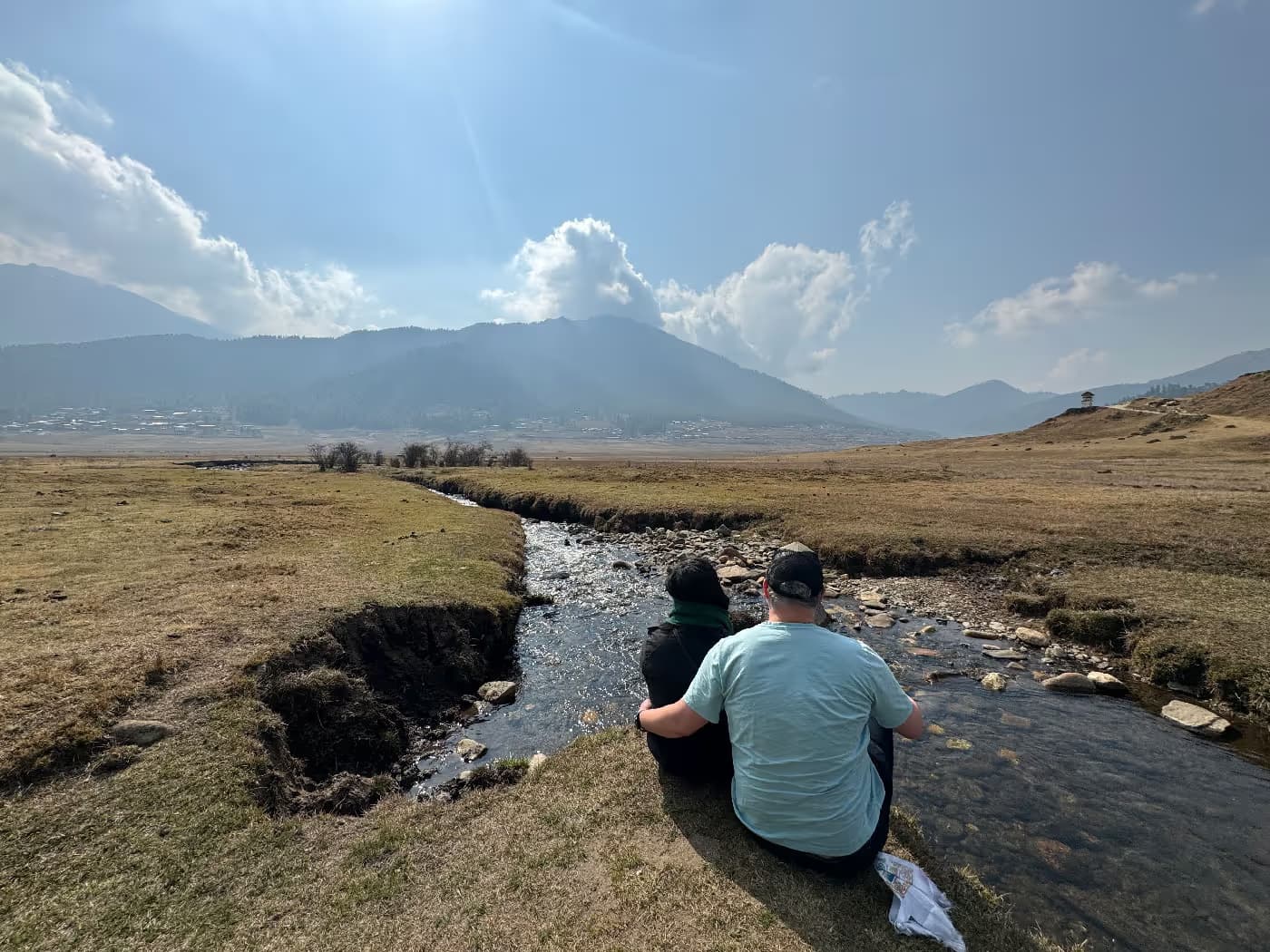
WINTER, QUIETLY
Bhutan in January — the clearest skies of the year.
A six-night Bhutan journey through the deep winter — Himalayan visibility most days, valleys emptied of international travellers, lodge dinners by the fire, and Punakha at its warmest microclimate.
6 nights · Luxury tier · from USD 11,000 per couple
- Nights
- 6
- From
- USD 11,000per couple
- Tier
- Luxury
- Best season
- Clear sky bhutan
- Suits
- Couple
- Departing
- Worldwide
Why winter is the photographer's other secret
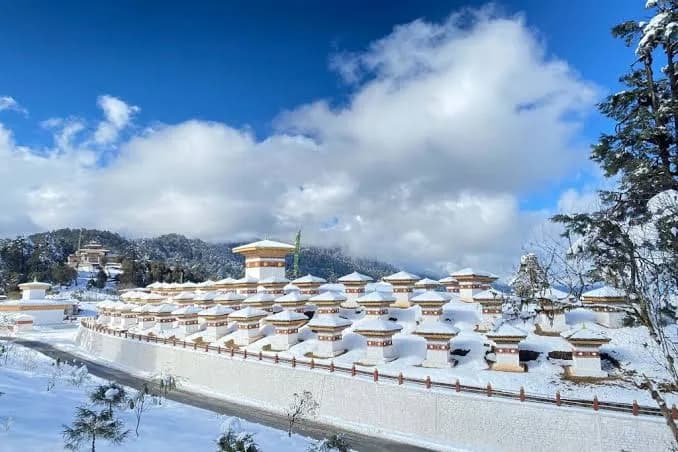
January is when Bhutan shows you what the rest of the year only hints at — Chomolhari from Paro on the right morning, snow on the upper ridges, mist that lifts faster in the dry air. The trade is cold: Paro starts the day at minus five, Thimphu at minus three, Punakha at five. By eleven you've earned a tea on a sunny terrace and the day belongs to you again.
Punakha is the warm valley
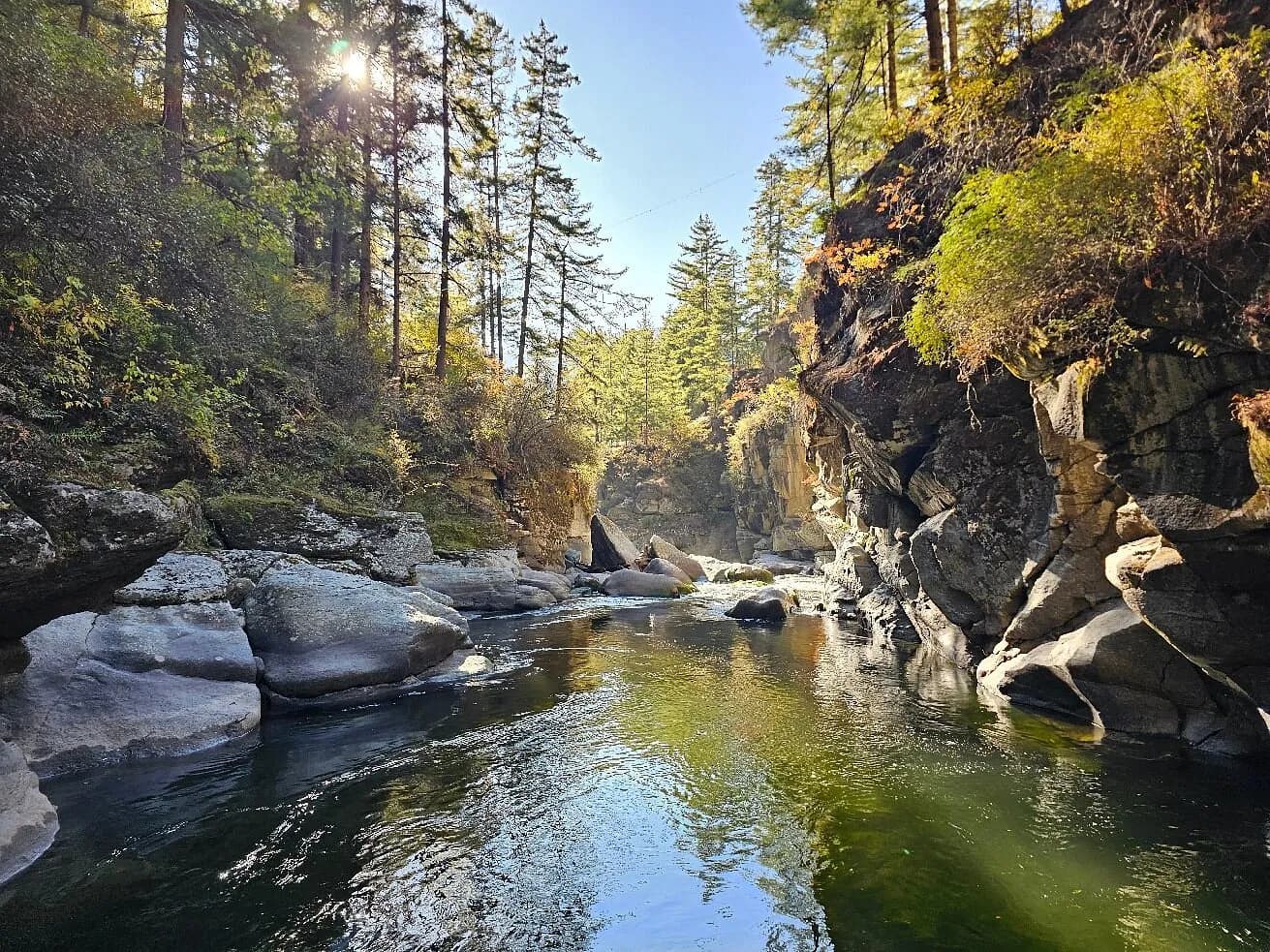
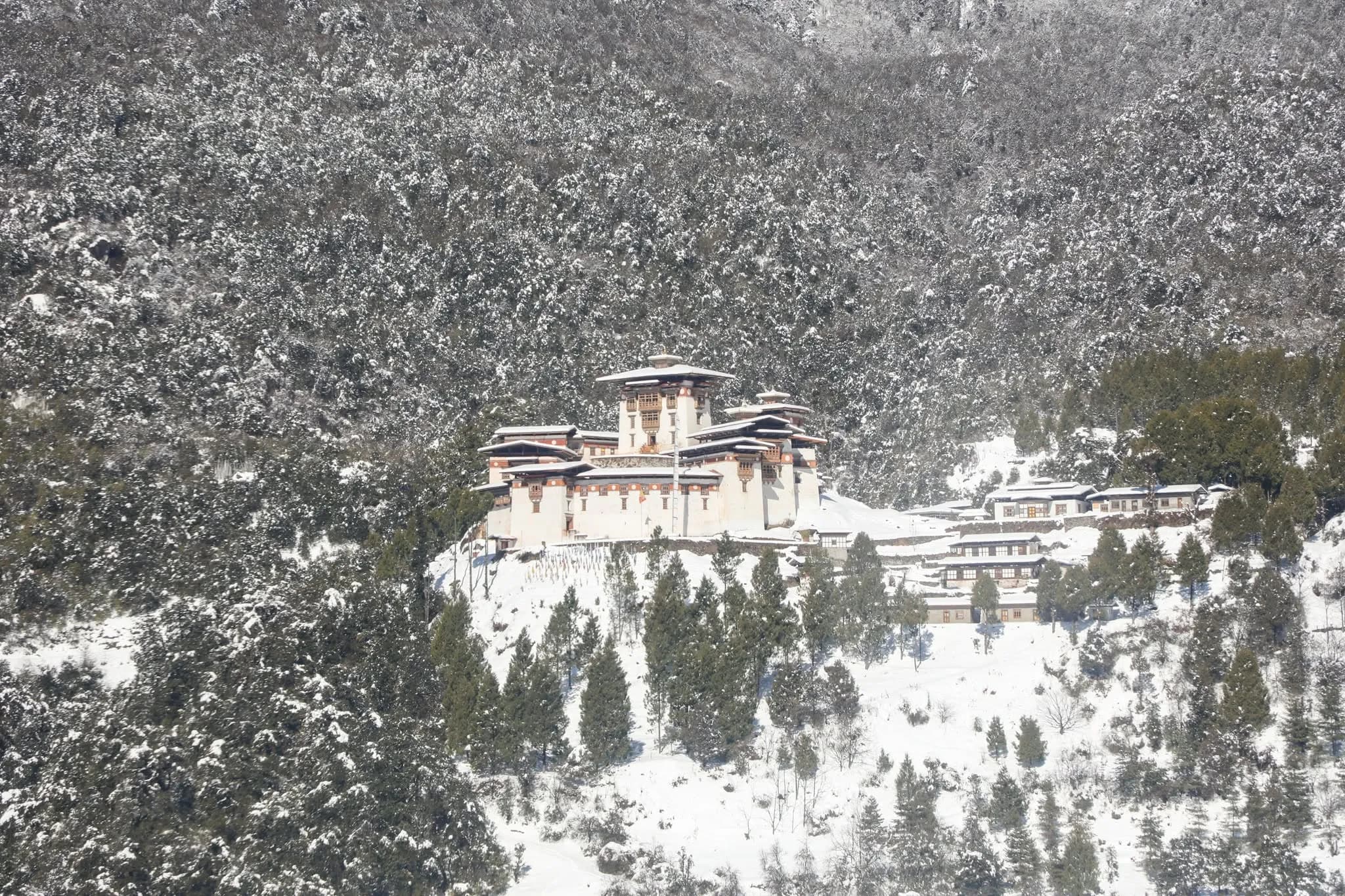
Punakha and the Mo Chhu sit at 1,200 metres — six hundred lower than Thimphu — and the microclimate is reliably the warmest on Bhutan through winter. We bias the journey to three nights in Punakha for January travellers, with the dzong in winter light at the confluence of two rivers and the suspension bridge in the warmer late afternoon.
What you can and cannot do in January
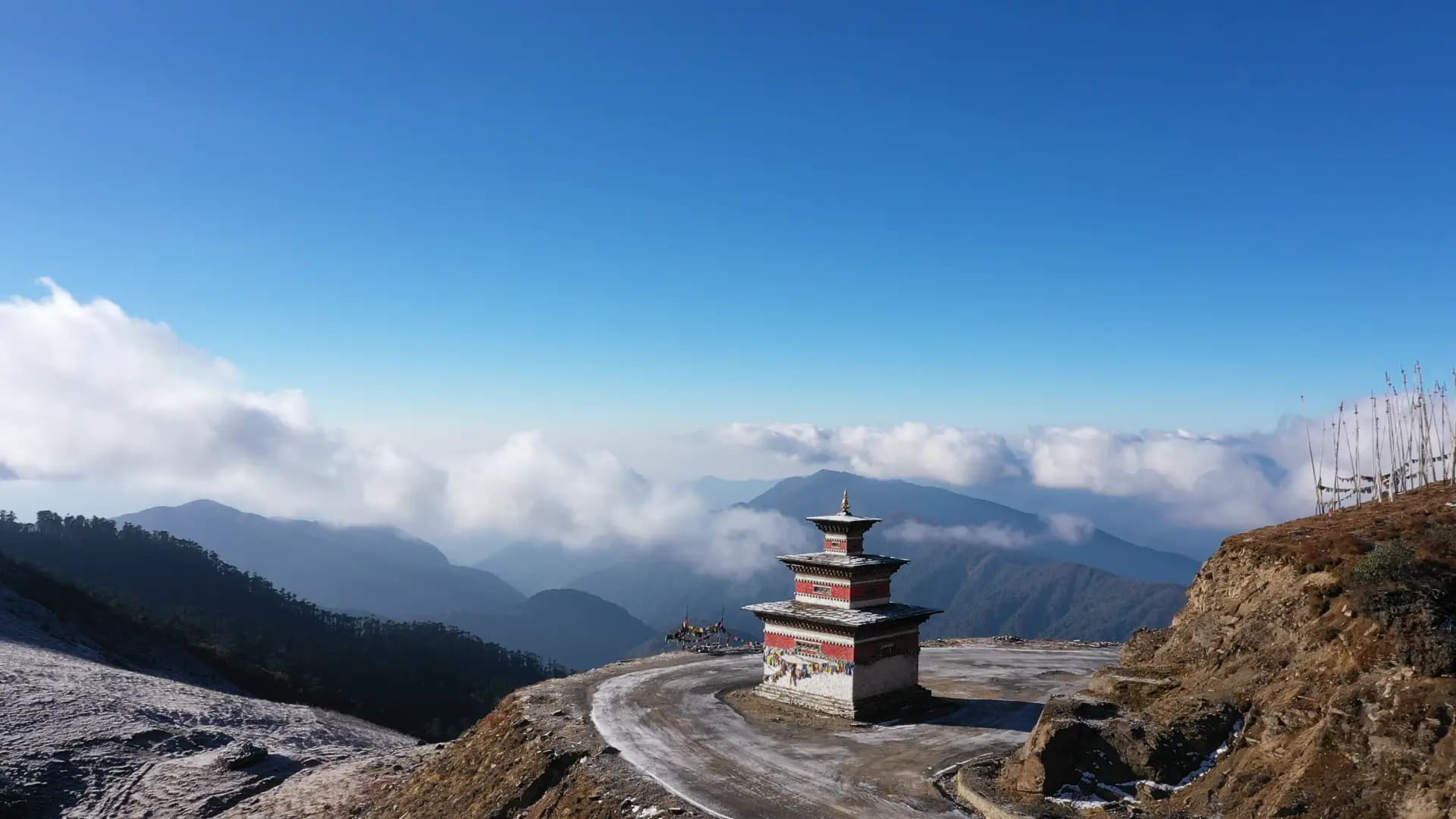
You can climb the Tiger's Nest — the path is clear; the upper monastery has crisp visibility; the cafeteria has a fire going. You cannot cross Dochu La if a January storm closes the pass; we hold a one-night buffer and an alternative routing through the southern road just in case. Festivals are quieter in January (none of the headline tshechus fall in this month) — which is why some travellers prefer it.

The route
A sample shape of the week
DAY 01
Paro arrival — fire and a stone bath
Met in arrivals; twenty minutes to the lodge; bath; early dinner with the fire lit.
DAY 02
Paro — the upper Pa Chhu and dzong
Late breakfast (cold mornings); Kyichu Lhakhang and the dzong from the upper bridge in winter light.
DAY 03
Across to Thimphu — Memorial Chorten under crisp sky
Drive into the capital; the chorten in cold afternoon light; lodge evening with the fire.
DAY 04
Over Dochu La (weather permitting) to Punakha
Cross the pass with the Himalayan range usually visible; arrive Punakha by lunch; the dzong at golden hour.
DAY 05
Punakha — paddies in winter rest, the long bridge
Lobesa walk; the suspension bridge in the warmer afternoon; long late lunch; a quieter evening.
DAY 06
Tiger's Nest and home
Drive back; the climb at your pace in the crisp morning; descent; lodge afternoon for the early flight.
The day-by-day above is illustrative. The proposal you receive is built around your dates, your pace and your interests, not this template.
Frequently asked
- How cold is too cold for the Tiger's Nest?
- The trail is comfortable in good thermal layers down to -8°C at first light, warming to around 0°C by mid-morning. The cafeteria has a fire. We don't climb in active snow; January historically averages two snow days in Paro, and we move them around.
- What if Dochu La closes?
- We hold a one-night Paro buffer at the start and a one-night Punakha buffer in the middle, and we have the southern routing through Phuentshogling–Punakha as a fallback (longer drive, used rarely). You won't lose Punakha to weather.
- Indoor vs. outdoor — what's the rhythm?
- Mornings outdoors (cold, dry, beautiful), afternoons either indoors near the fire or outdoors in the warmer Punakha valley. Most evenings are at the lodge; we don't push dinners in the cold.
- Is six nights enough or should we add a day?
- Six covers it cleanly. A seventh night usually goes to a second day in Punakha rather than a day anywhere else — the warmer valley earns its place in January.
Journeys you might also weigh
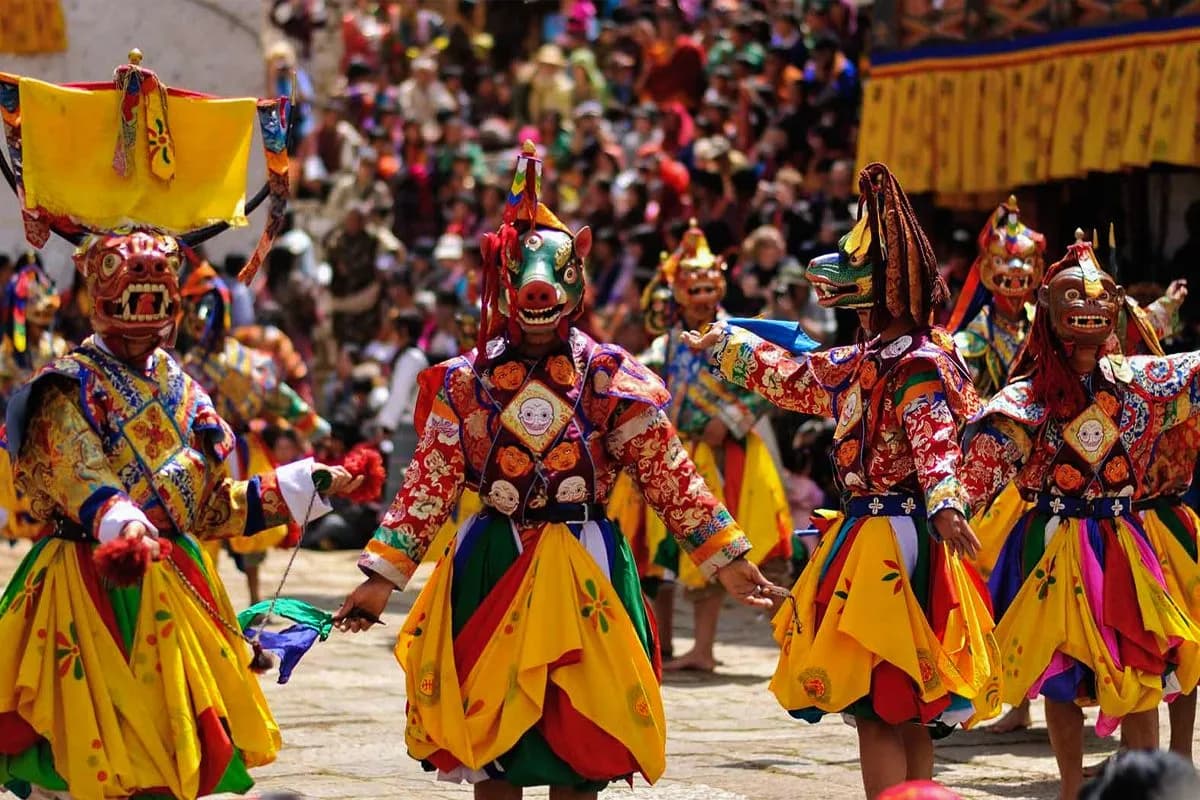
- 01Thimphu TshechuA seven-night Bhutan journey timed to Thimphu's three-day autumn tshechu — second-tier seating from where the cham dances read best, a guide who can name each masked figure, and Punakha at its September peak.7 nights
from $13,000 - 02Bhutan Paro TshechuThe Paro Tshechu falls in late March or early April, runs three days at Rinpung Dzong, and culminates in a pre-dawn thongdrel that is the most photographed Bhutanese image of the spring window. Nine nights — three for the festival itself, six for the country in its spring window.9 nights
from $18,000 - 03Bhutan photography weekBhutan's clearest skies fall between mid-September and mid-November. This is a seven-night Bhutan journey built around the photographer's calendar — golden hour at Punakha Dzong, blue hour over Paro, and a guide who has carried tripods before.7 nights
from $9,500
Begin when you're ready.
A few questions, or a conversation in your own words. A bespoke draft either way.
