DEPTH OVER A CHECKLIST
Eight nights in two valleys, on purpose.
A private Bhutan journey for the couple who would rather know a corner of the country than tick its sites — Paro and Punakha only, several nights in each, the days left unhurried. The same guide and driver throughout, long enough to come to know you. You will see fewer places, and we think you will feel a good deal more.
8 nights · Luxury tier · from USD 8,000 per traveller
- Nights
- 8
- From
- USD 8,000per traveller
- Tier
- Luxury
- Best season
- Autumn
- Suits
- Couple
- Departing
- Worldwide
The case for doing less
Most first journeys to Bhutan move briskly — Paro, Thimphu, Punakha, perhaps Gangtey, a valley a day and the camera always out. It is a fine way to take the measure of the country, and many travellers want exactly that. This is the other choice. Two valleys, four nights in each, and the deliberate decision to return to a dzong you loved on the second morning rather than drive on to a new one. We are plain about the trade. This is not the way to cover Bhutan; it is the way to come to know a corner of it, and the two are not the same journey.
What slow actually buys you
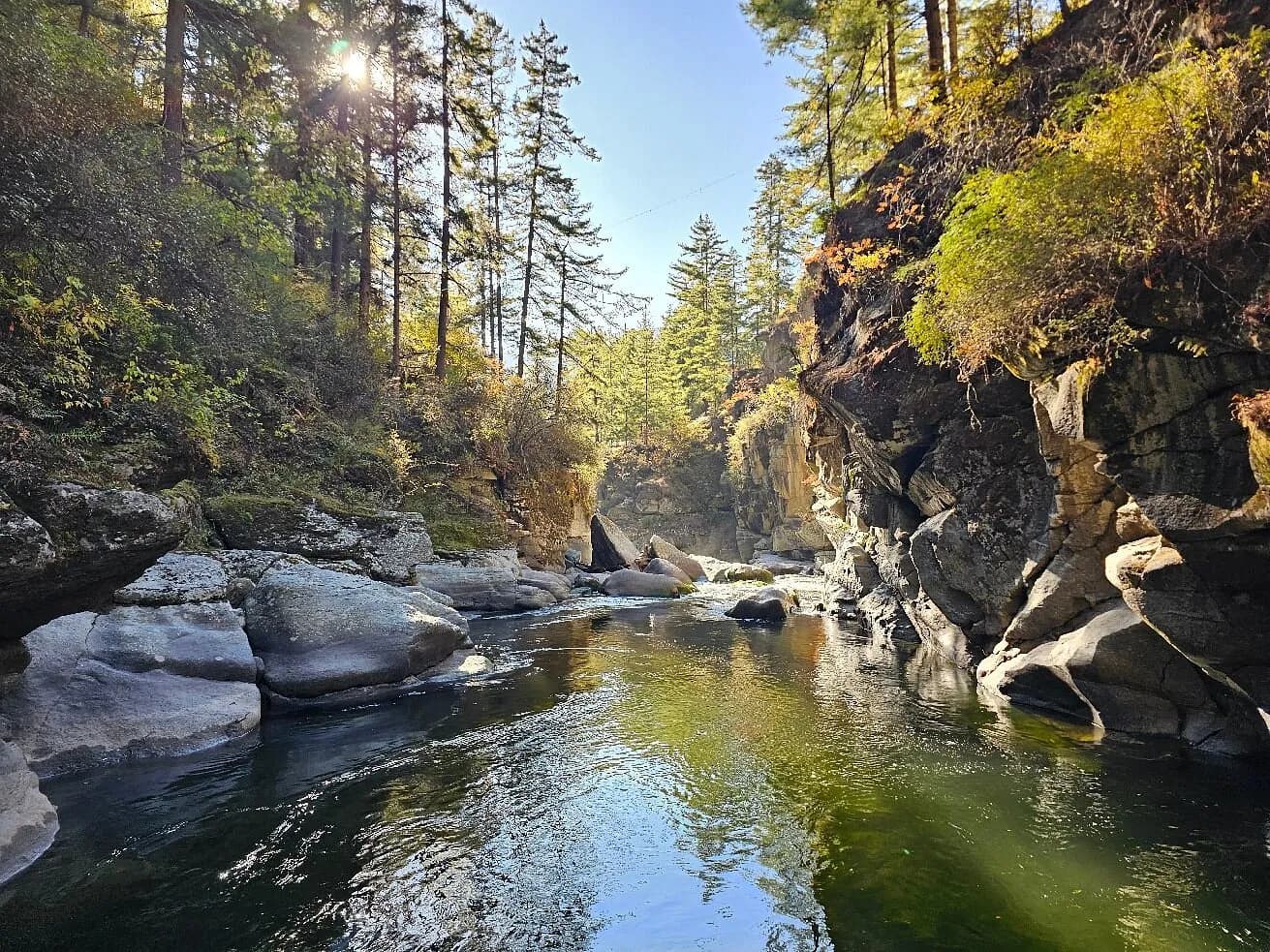
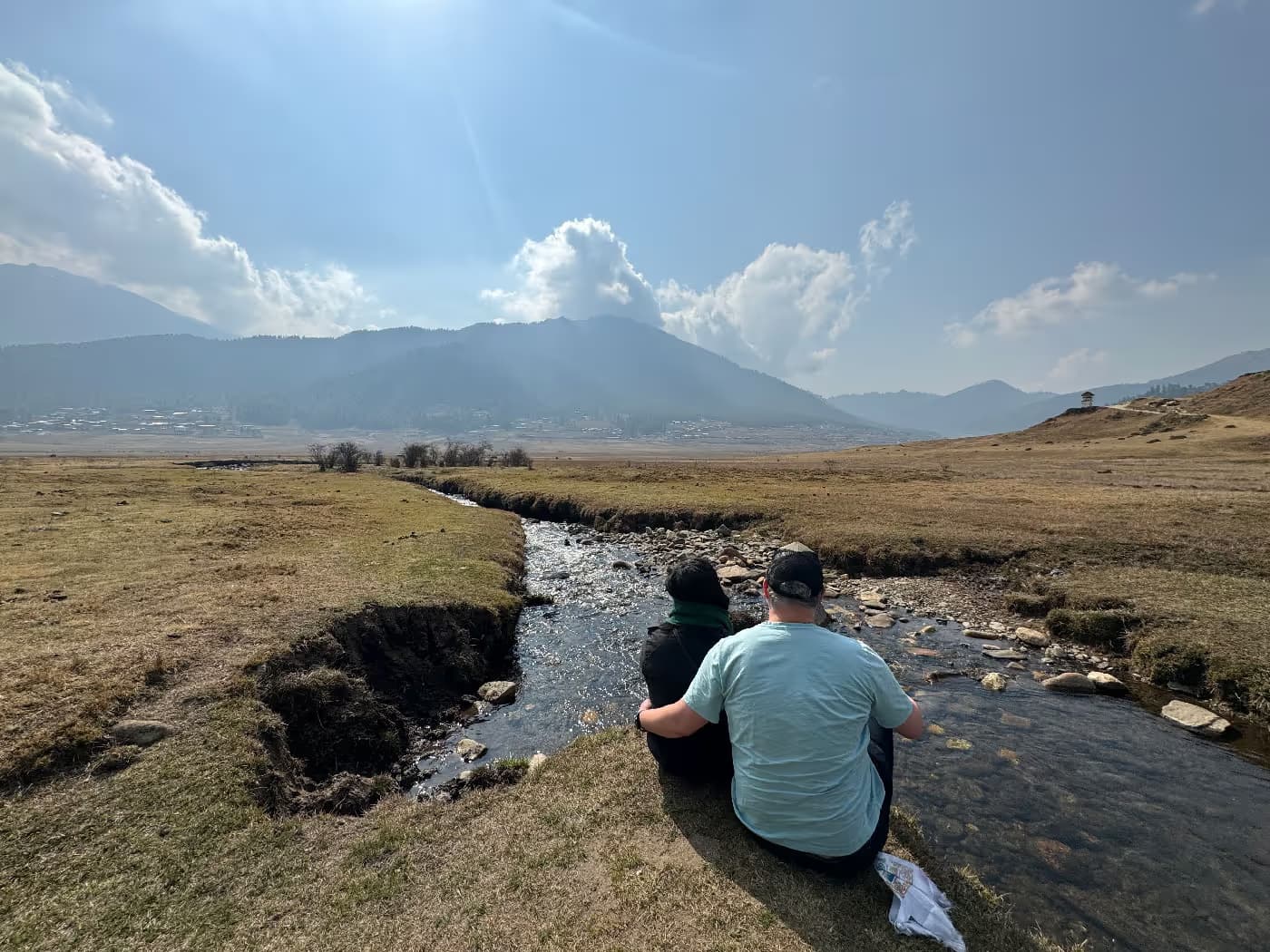
Mornings with nothing fixed, so a long walk along the Mo Chhu can become the whole of the day if it wants to. The same guide and the same driver for all eight nights, present long enough that by the third day the conversation has changed and the logistics have disappeared. A farmhouse afternoon in Lobesa with a family who farm the rice you can see from the window; an unhurried hour with a weaver or a maker of paper, watching rather than buying; the time to sit in Rinpung Dzong's courtyard until the light moves. None of it is rushed, because there is nowhere else to be that afternoon. The room between things is the point.
Why Paro and Punakha, and nothing further
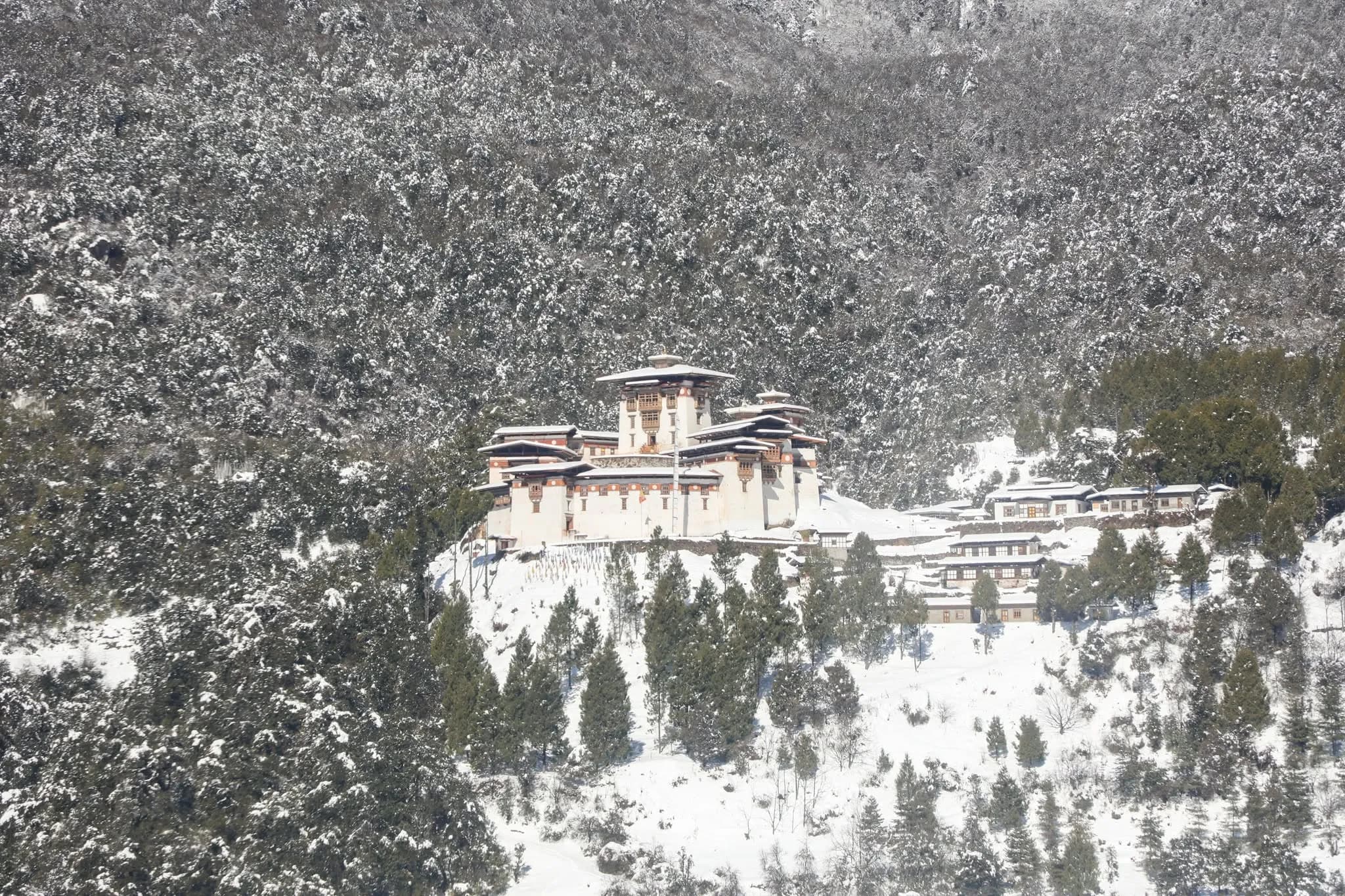
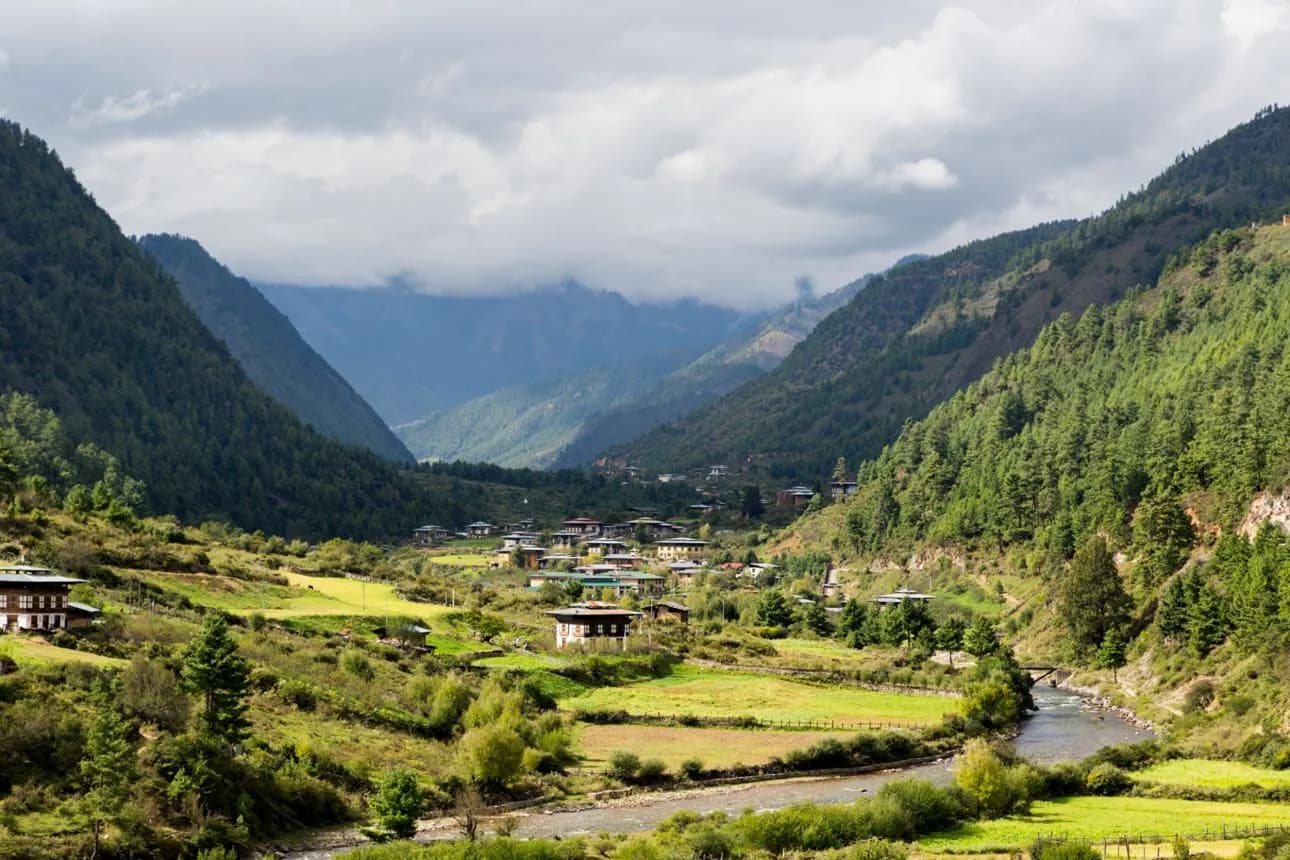
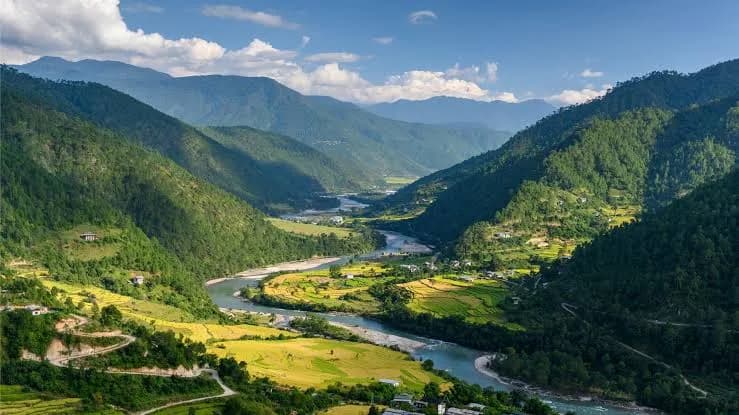
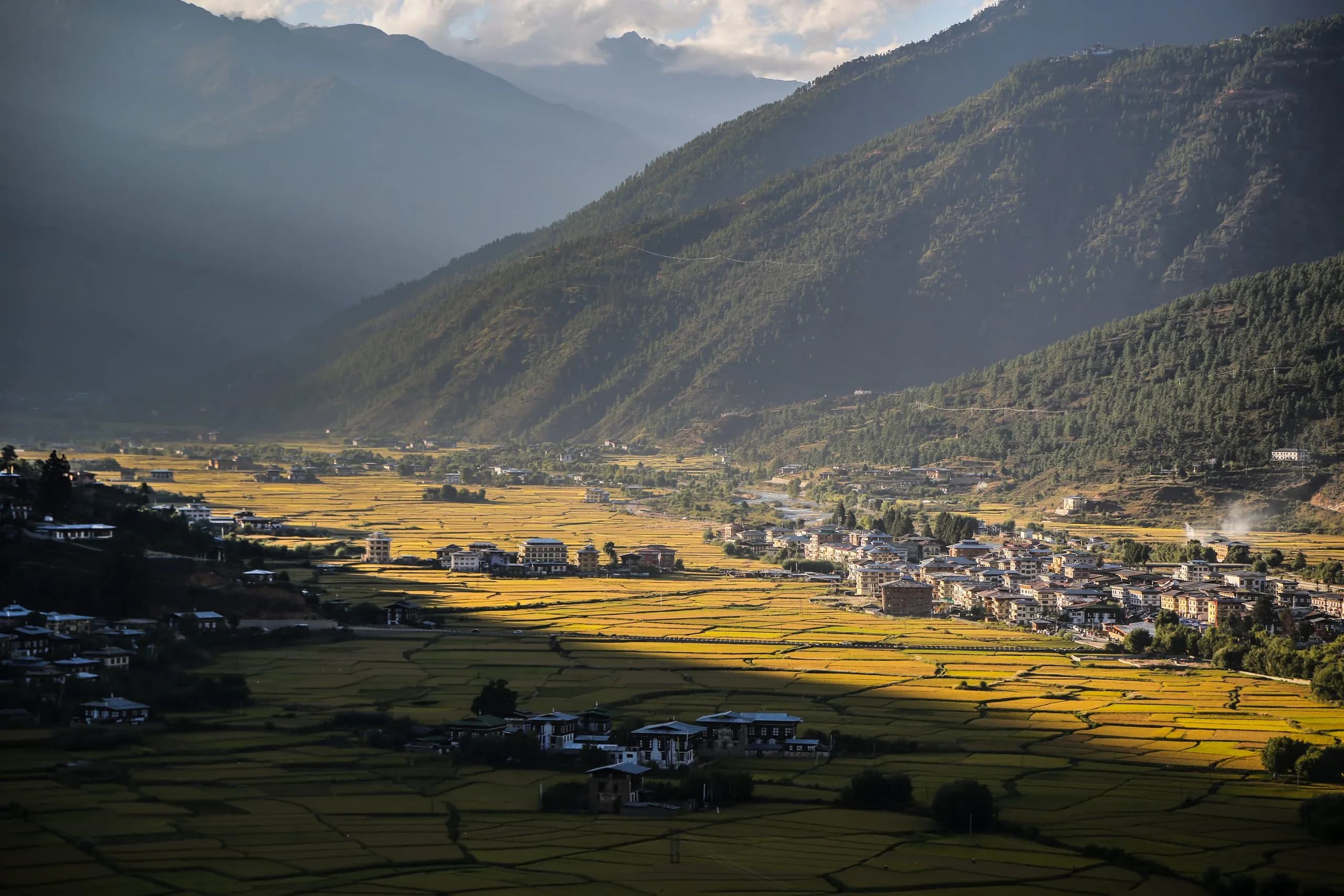
Paro holds the arrival, the valley, and the climb to Taktsang, and rewards a stay long enough to walk it properly rather than pass through. Punakha, over Dochu La at a lower and warmer elevation, has the loveliest dzong in the country at the confluence of the Mo and Pho Chhu, terraced rice, and a pace that slows of its own accord. Held to these two, the driving all but vanishes — one mountain crossing in the middle of the week, and otherwise short hops — and the days are given back to you. We do not pretend this is the comprehensive country. We are saying, with some conviction, that it is enough.
Who you'll travel with
One Bhutanese guide for the full eight nights, and the same driver throughout — matched from a small, carefully kept network for the particular ease this journey asks of them: to let a slow morning stay slow, to read when you would rather walk in quiet than be told things, and to carry every piece of the logistics so completely that you hold none of it. The guide is named in your proposal before you confirm, and we change the match if it does not feel right. By the last evening, the value of having travelled with one person long enough for them to know you is usually the thing guests mention first.
The route
A sample shape of the week
DAY 01
Arrival in Paro — and slowing down
Met in the arrivals hall, twenty minutes to the lodge, an unhurried walk along the Pa Chhu if the light holds; an early supper and an early night. Nothing asked of you on the first day but rest.
DAY 02
The Paro valley, on foot
Kyichu Lhakhang in the morning, then the upper valley toward Drukgyel at a walking pace; a long lunch; the afternoon left open for the terrace and the slow read of the place.
DAY 03
The Tiger's Nest — the right way
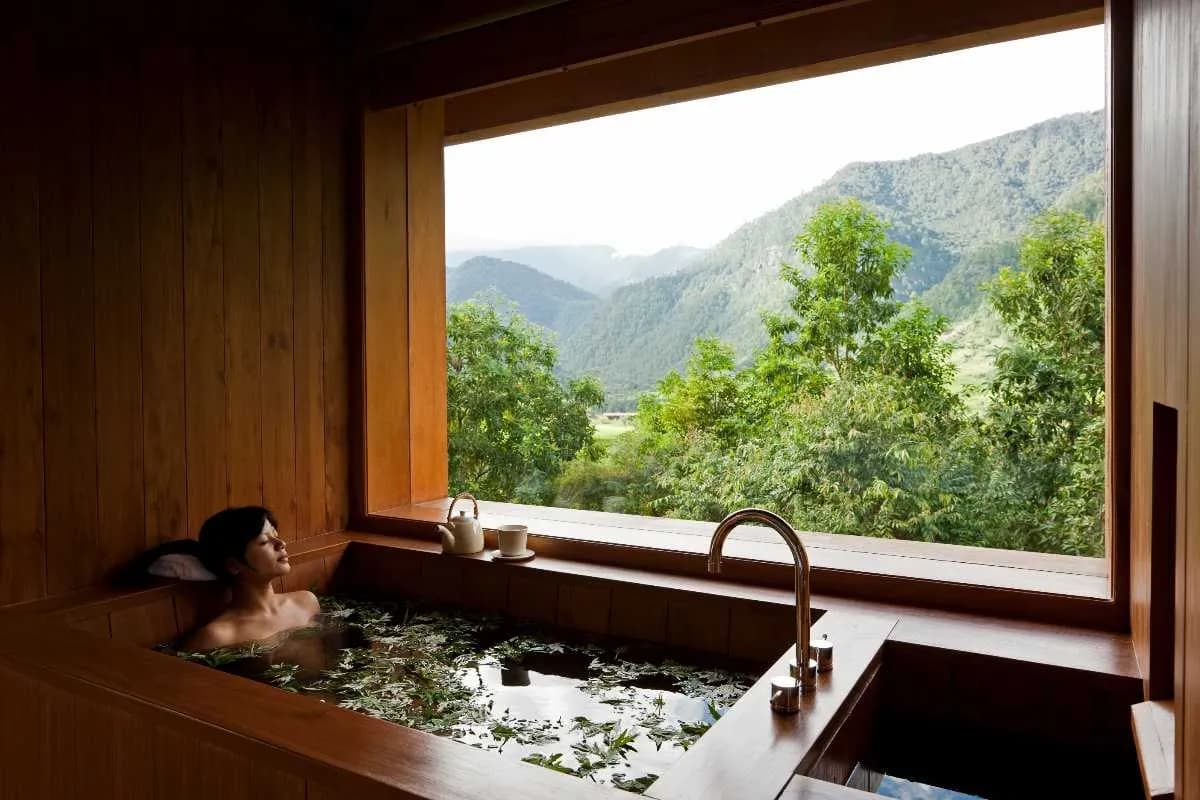
The switchbacks to Taktsang at 3,120 m, paced entirely by your guide and stopped as often as you like; the cafeteria for lunch; a hot stone bath at the lodge for the descent.
DAY 04
A second day in Paro — nothing fixed
No plan set at breakfast. Perhaps an hour with a maker of traditional paper, perhaps the dzong courtyard until the light moves, perhaps a return to a corner of yesterday that asked to be revisited.
DAY 05
Over Dochu La into Punakha
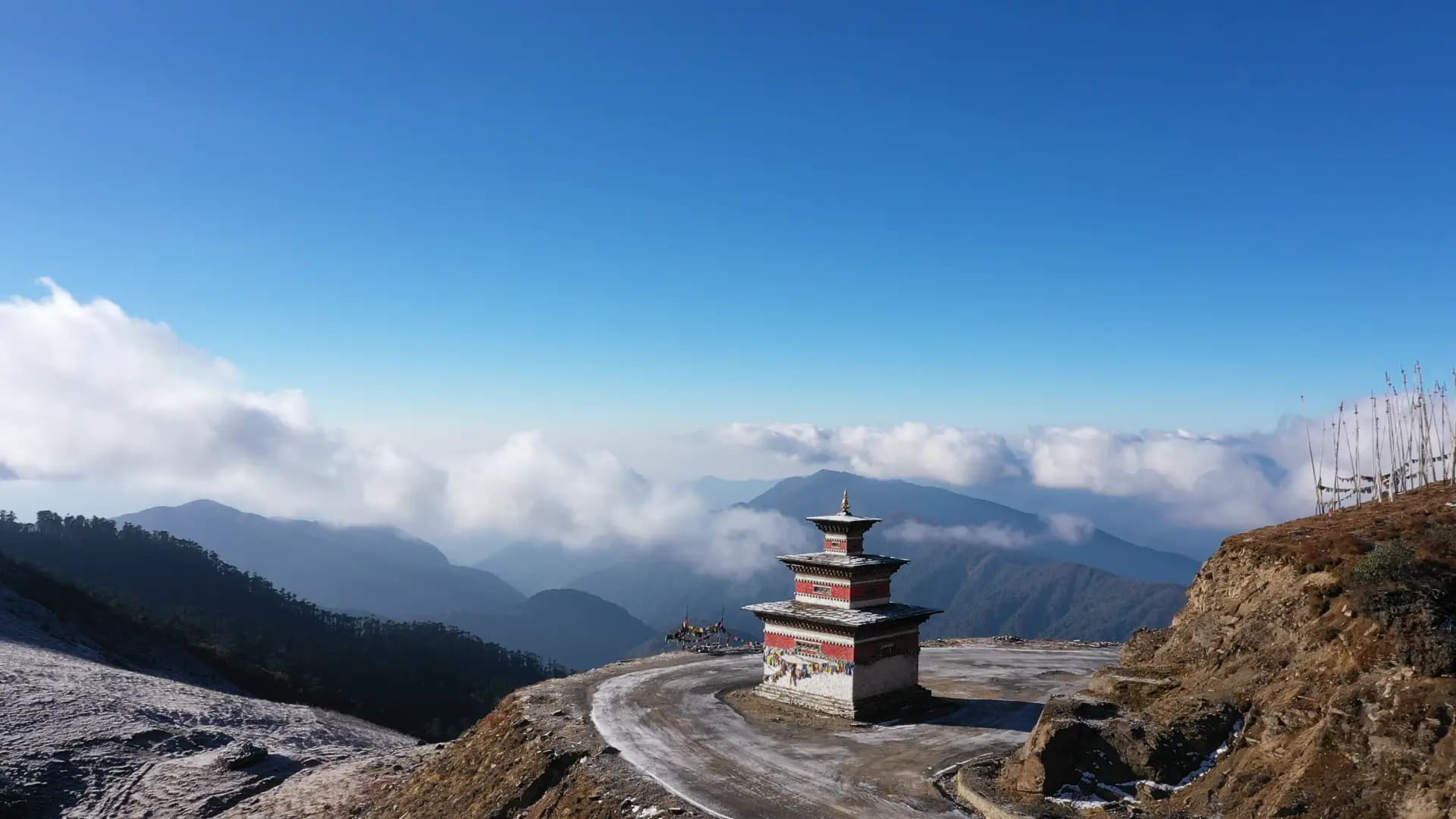
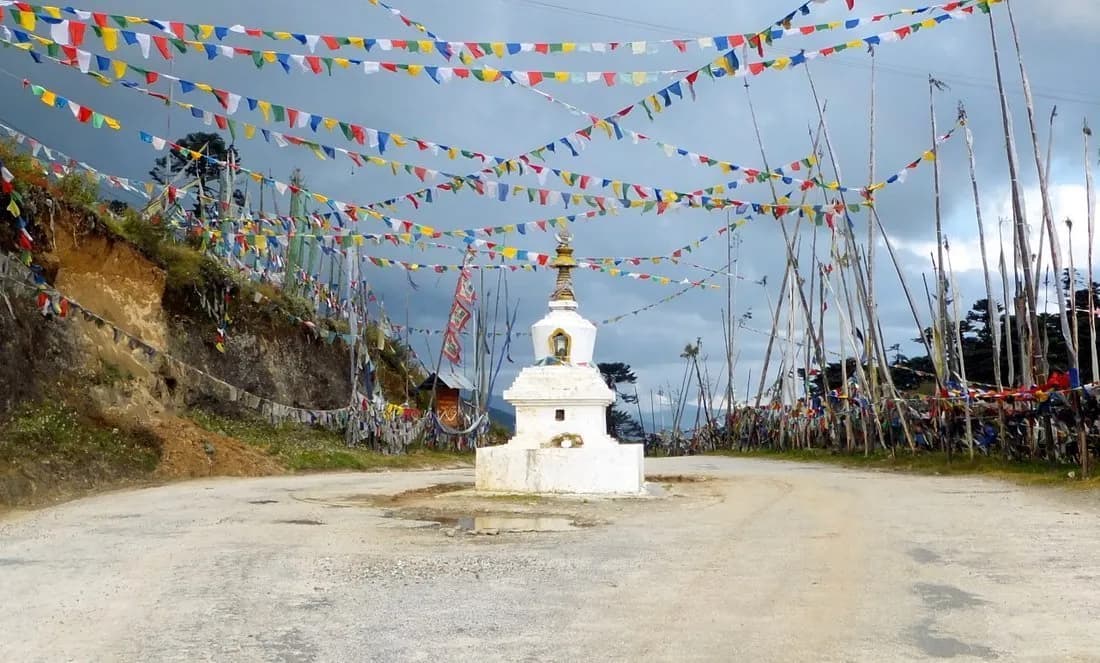
The 75 km over the 3,100 m pass, close to three hours; the 108 chortens and the eastern range on a clear morning; the descent into Punakha's warmth and the dzong at the confluence in late-afternoon light.
DAY 06
A day in Punakha — paddies and river
The unhurried walk across the Lobesa rice terraces to Chimi Lhakhang; a long riverside lunch; the suspension bridge over the Pho Chhu when the wind has dropped; a hot stone bath to close the day.
DAY 07
A farmhouse afternoon — Lobesa
A slow morning by the Mo Chhu, then an afternoon with a family who farm the valley's rice — the kitchen, the ara, the harvest in season — the kind of day that is about being somewhere rather than getting somewhere.
DAY 08
Back to Paro — and the flight home
The drive back over the pass with a final quiet stop; a last evening at the lodge in Paro; the guide and driver who have come to know you walk you to the terminal in the morning, and the team writes a fortnight later.
The day-by-day above is illustrative. The proposal you receive is built around your dates, your pace and your interests, not this template.
Frequently asked
- What is slow travel in Bhutan?
- It is the deliberate choice of depth over coverage — fewer valleys, more nights in each, and days with room left in them rather than filled. In practice it means returning to a dzong you loved instead of driving on to a new one, leaving mornings unplanned, keeping the same guide and driver for the whole journey, and giving an afternoon to a farmhouse or a craftsman rather than a checklist. Bhutan suits it particularly: the country already runs at this pace, and held to two valleys the driving all but disappears, so the time is genuinely yours.
- Won't I miss things?
- Yes — and we would rather say so plainly than pretend otherwise. Held to Paro and Punakha, you will not see Thimphu, nor Gangtey's glacial valley, nor the central heartland of Trongsa and Bumthang. What you trade for them is the thing a brisker week cannot buy: the second morning in a place, the unhurried hour, the guide who by the last evening knows how you travel. For the visitor who would rather know a corner of one country than pass through several, the trade is a good one. For the visitor who wants to take the full measure of Bhutan on a first visit, the western circuit is the better call, and the rest keeps for a return.
- How few places is too few?
- Two valleys over eight nights is about as concentrated as we would suggest, and it works because Paro and Punakha each hold enough to reward four unhurried nights — the arrival, the valley, and Taktsang in one; the dzong, the rice terraces, the river, and a farmhouse afternoon in the other. A single valley for the whole journey would tip into too little even at this pace. Our usual first-visit guidance keeps any one valley shorter than this; a slow journey deliberately settles past that, by design and by choice, with the extra nights given to the room between things rather than to a third or fourth stop. It is the one journey on which we recommend lingering longer than we otherwise would.
- What is the Sustainable Development Fee, and is it included?
- Yes. The SDF is USD 100 per night for each international adult, set by the Royal Government of Bhutan. It funds free health and education for Bhutanese citizens and the country's conservation commitments, and it is included in your transparent price breakdown across all eight nights.
Journeys you might also weigh
- 01How much does a trip to Bhutan cost?It is a fair thing to want settled before anything else, and we would rather set it out plainly than have you piece it together from a dozen half-answers. A Bhutan journey is priced as one figure that already carries the larger part of the trip — your private guide, your driver and vehicle, your lodging, most of your meals, monument and permit fees, and the Sustainable Development Fee of USD 100 per night for each international adult. International flights, any premium lodge upgrade, and personal spending sit outside it. Bhutan is not a budget destination and is not trying to be — that is a deliberate national choice, and below is what the choice buys, set against a representative western-circuit week.7 nights
from $6,000 - 02Bhutan for foundersA signature-tier seven-night journey for a single founder or a paired founder couple — built around the discipline of not being reachable, the Phobjikha valley as the destination instead of the side-trip, and the matched guide who has read this register often enough to hold it. The trip is not a holiday. It is the considered week away that lets the next year happen.7 nights
from $32,000 - 03Bhutan trip from AmsterdamA private Bhutan journey for couples flying from Amsterdam — Paro, Thimphu, Punakha, and back — with the long haul through a single Asian hub treated not as the price of the trip but as the first of its days. The distance is real. So is the slowing-down that begins the moment Schiphol is behind you.8 nights
from $16,000
Begin when you're ready.
A few questions, or a conversation in your own words. A bespoke draft either way.

