A Bhutanese temple
Changangkha Lhakhang — the oldest temple in Thimphu, where the valley's children are brought to be named.
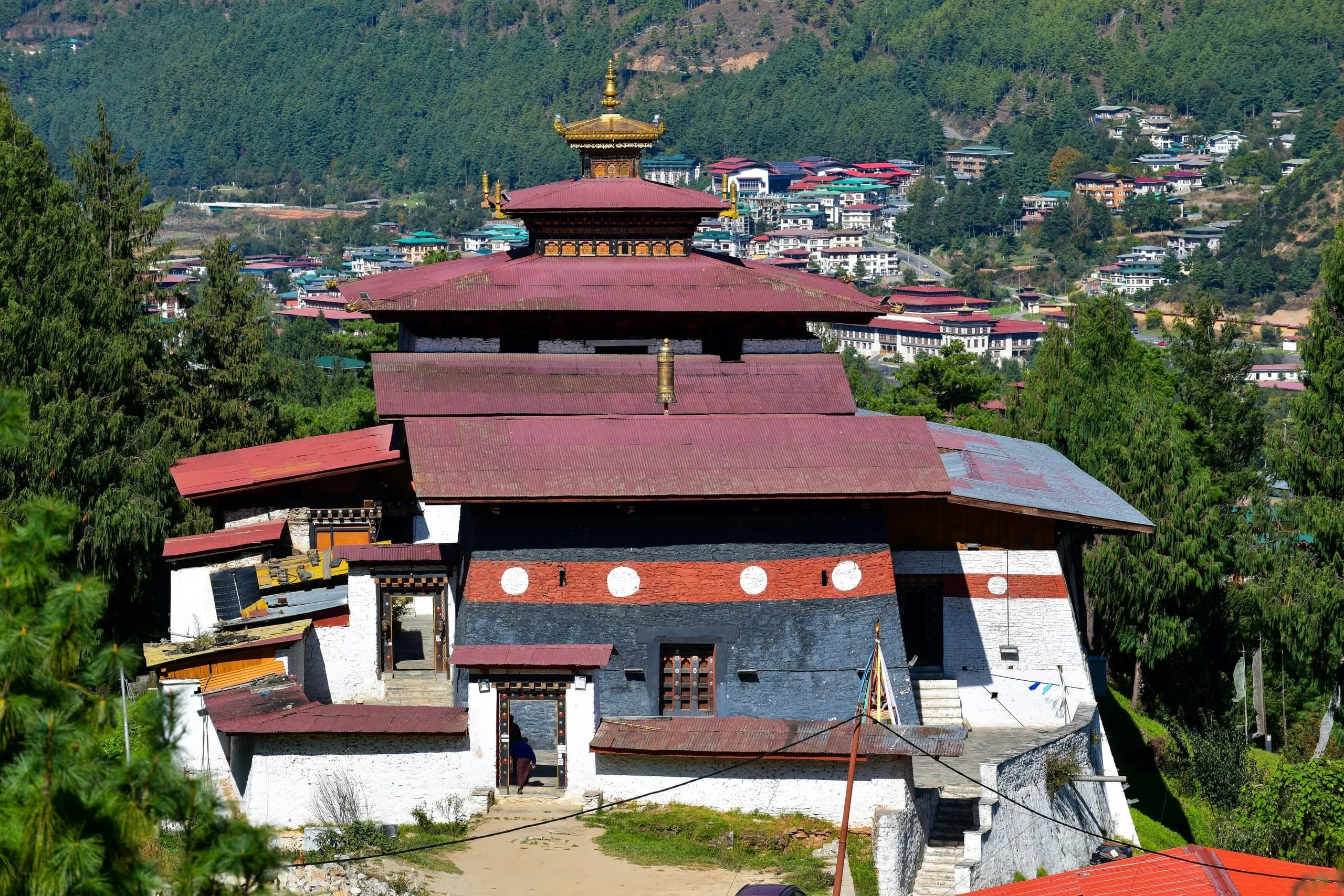
Changangkha Lhakhang stands on a ridge above the Thimphu valley, fortress-like, the oldest temple in the capital — established in the 12th to 13th century by the family of Lama Phajo Drukgom Zhigpo, the master who first brought the Drukpa Kagyu tradition to Bhutan. Its central image is Chenrezig, the bodhisattva of compassion, in the eleven-headed, thousand-armed form. For the families of Thimphu it is the temple of beginnings: newborns are carried up to Changangkha to be blessed, to receive a name from the astrologer-lama, and to be given a protective thread — which makes it not a relic but a living part of the city's daily life.
Also known as Changangkha · Changgangkha Lhakhang
- Location
- On the ridge above central Thimphu, Thimphu
- Founder
- The line of Lama Phajo Drukgom Zhigpo (12th–13th century)
- Elevation
- 2,400 m
- Kind
- lhakhang
The oldest temple in the capital
Changangkha is the oldest temple in Thimphu, established in the 12th to 13th century by the family of Lama Phajo Drukgom Zhigpo — the Tibetan master who carried the Drukpa Kagyu tradition into Bhutan in the 13th century and whose lineage shaped the valley's religious life. Set on a spur above the city, the lhakhang has the squat, fortress-like solidity of the oldest Bhutanese temples — thick whitewashed walls, small windows, a courtyard worn smooth by centuries of circumambulation. From its terrace the whole Thimphu valley opens below, the modern city spread under a temple that watched the valley long before it.
Chenrezig and the naming of children
The central image of Changangkha is Chenrezig — Avalokiteshvara, the bodhisattva of compassion — in the form with eleven heads and a thousand arms, each hand reaching out to the suffering of beings. It is to this temple that the families of Thimphu bring their newborn children: to be blessed before the image, to receive an auspicious name chosen by the resident astrologer-lama according to the day and stars of the birth, and to be given a protective cord or amulet to keep the child from harm. A visitor who comes in the morning will often share the temple with young parents and a swaddled baby — the oldest temple in the city carrying out its oldest function, the welcome of a new life.
What a visitor encounters
Changangkha is a working neighbourhood temple rather than a monument, and its atmosphere is the draw: the old people turning the long rows of prayer wheels along the outer wall, the butter lamps, the astrologer at his table, the valley view from the terrace. The matched guide reads the iconography of the Chenrezig image and the murals, and explains the naming tradition; visitors are received with the easy warmth of a place used to its own importance. It is one of the most rewarding short stops in Thimphu precisely because it is so alive.
Visiting
- Getting there
- Changangkha is on the ridge above central Thimphu, a short drive (and a final walk up) from the city centre — easily combined with the Memorial Chorten, the Takin Preserve, and the Buddha Dordenma into a Thimphu day. The matched guide arranges the stop, ideally in the morning when the naming blessings take place.
- What to see
- Allow 30–45 minutes for the temple, the prayer-wheel gallery, and the terrace view. Mornings are the liveliest, with families bringing children for naming and blessing; the matched guide explains the tradition and the Chenrezig iconography.
- Dress and protocol
- Standard temple protocol — shoulders and knees covered, shoes and hats removed before the shrine, no photography inside (the prayer wheels, courtyard, and valley view are freely photographable). If a naming blessing is under way, visitors keep a respectful distance and let the family's moment be theirs.
- Best time to visit
- Year-round, and at any time of day, though mornings carry the most life. The ridge is comfortable in every season; clear days give the finest view down the Thimphu valley from the terrace.
Journeys featuring this site
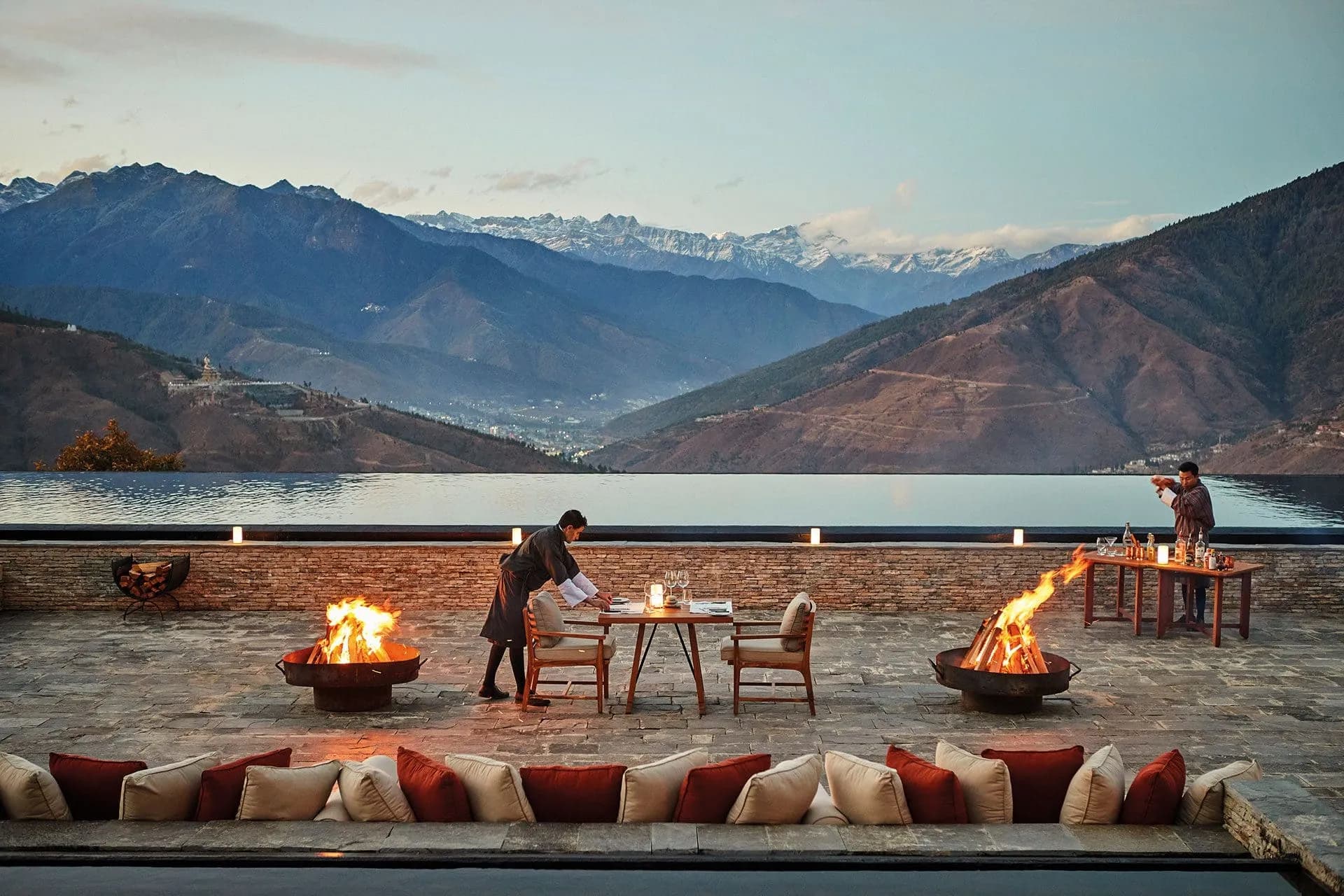 JourneyThe signature-tier Bhutan journey — private knowledgeable guide, the most considered lodge curation, helicopter or charter between valleys, exclusive-use arrangements where the season allows.The signature-tier Bhutan journey. Private knowledgeable guide, the most considered lodges, helicopter or PC-24 charter, exclusive-use arrangements. By invitation, from USD 14,000.
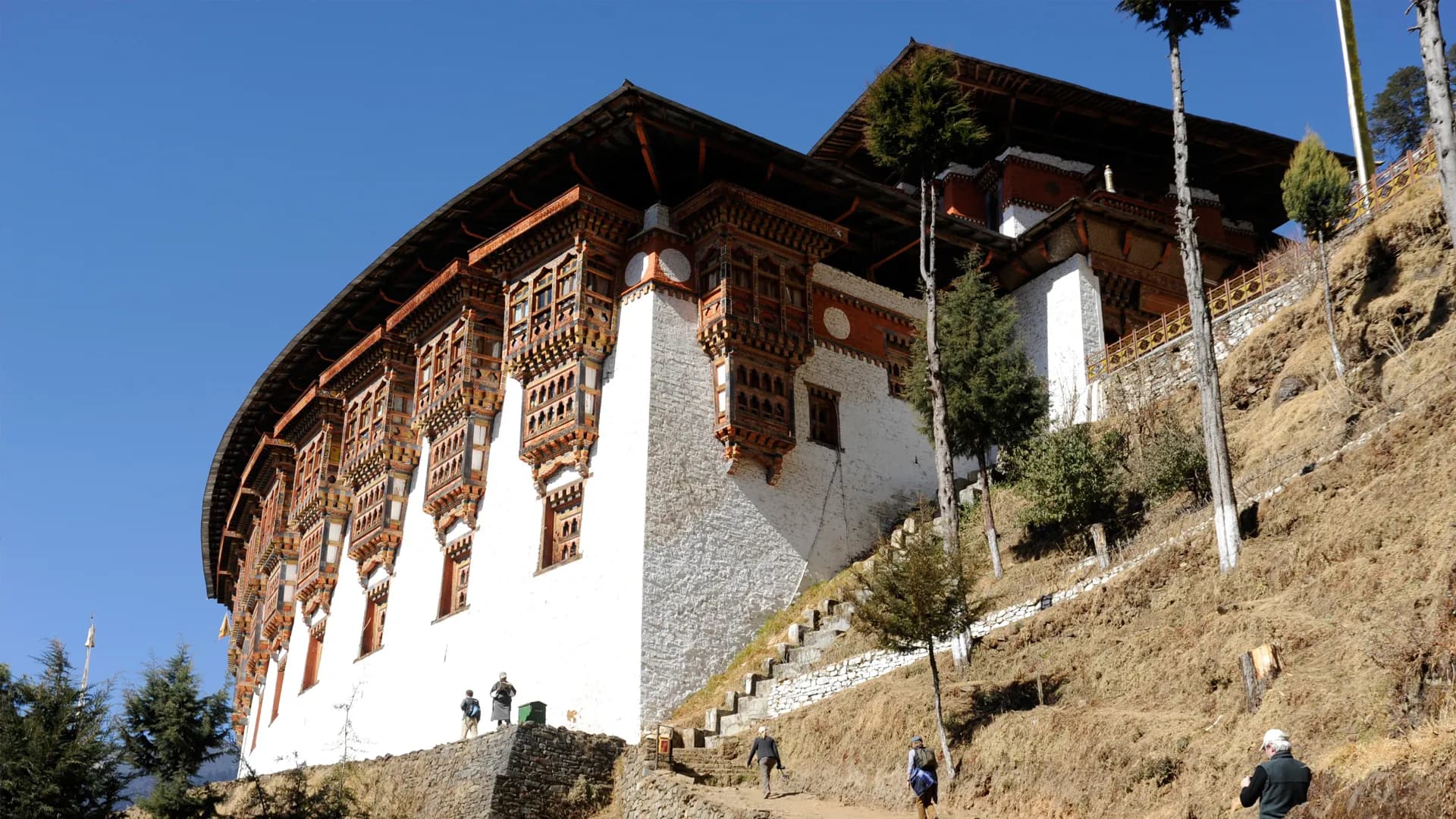 JourneyTen nights for the Buddhist pilgrim — the principal sites, with monastic context.A ten-night Bhutan Buddhist pilgrimage for Asian-Buddhist travellers. Monastic context; matched monastic-trained guide; Bumthang religious circuit.
Journeys that visit Changangkha Lhakhang
Frequently asked
- Why do Thimphu families bring babies to Changangkha?
- Because it is the valley's oldest and most auspicious temple, presided over by Chenrezig, the bodhisattva of compassion. Newborns are brought here to be blessed, to receive a name chosen by the resident astrologer-lama according to the day and stars of their birth, and to be given a protective thread or amulet. It is a living tradition a visitor can witness on most mornings.
- How old is Changangkha Lhakhang?
- It is the oldest temple in Thimphu, established in the 12th to 13th century by the family of Lama Phajo Drukgom Zhigpo, who brought the Drukpa Kagyu tradition to Bhutan. Its fortress-like form is typical of the very oldest Bhutanese temples.
- Is it worth visiting among Thimphu's bigger sights?
- Yes — its appeal is exactly that it is small and alive rather than grand. The naming blessings, the old people at the prayer wheels, the valley view, and the eleven-headed Chenrezig image make it one of the most atmospheric short stops in the capital. It pairs naturally with the Memorial Chorten and the Takin Preserve.

