A Bhutanese stupa
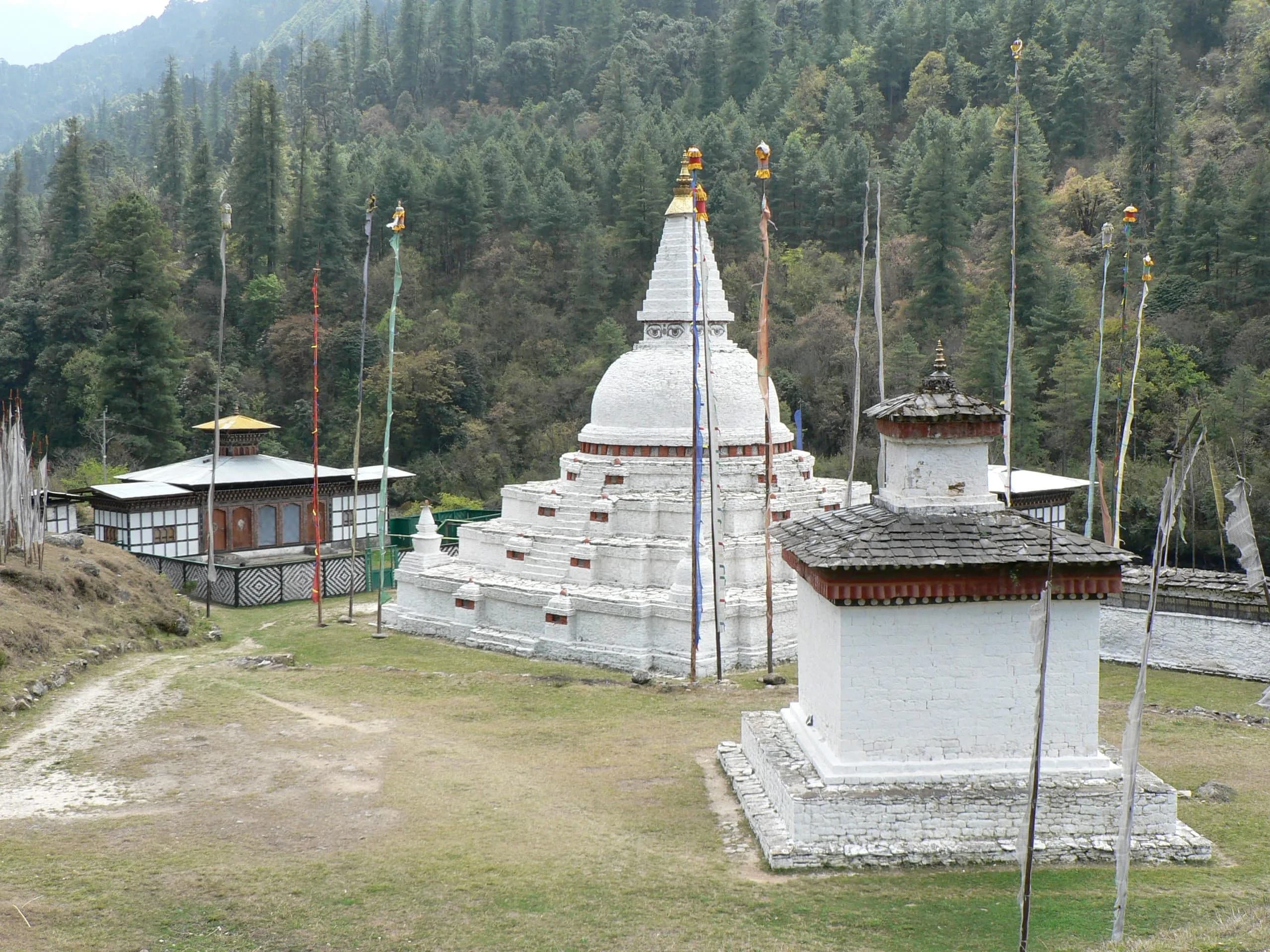
Chendebji Chorten — a great white stupa in the Nepali style, its painted eyes watching the road to Trongsa.
On the long, lonely road between Pele La and Trongsa, where a river runs through a fold of the hills, the white dome of Chendebji Chorten rises beside the water — a large stupa built in the style of Boudhanath in Kathmandu, its tower painted on all four sides with the watchful eyes of the Buddha. Raised in the 18th or 19th century to subdue a demon that troubled the spot, it is the great landmark of the central highway, a place every traveller pauses, and one of the few stupas in Bhutan built in the distinctive Nepali form rather than the local Bhutanese one.
Also known as Chendebji · Chorten Chendebji
- Location
- By the river on the road between Pele La and Trongsa, Trongsa
- Elevation
- 2,400 m
- Kind
- stupa
The watching eyes
Chendebji is built in the Nepali style — modelled on the great stupa of Boudhanath in Kathmandu, with a broad white dome and a square tower above it painted on all four sides with the all-seeing eyes of the Buddha, gazing out across the valley. This form is rare in Bhutan, where stupas usually follow the local Bhutanese pattern, and it gives Chendebji its distinctive, faintly otherworldly presence by the river. Tradition holds that it was built to subdue and pin down a demon that haunted the spot — the recurring Bhutanese motif of the sacred structure raised to pacify a troubled place — and that the relics of the harmful spirit lie beneath it.
A landmark of the central road
Chendebji is the great landmark of the long central highway between the western valleys and Trongsa. The road over Pele La and down towards the centre is remote and sparsely settled, and the white stupa by the river — often the first substantial structure for many miles — is the natural place for every traveller to pause, stretch, and take in the river, the prayer wheels, and the watching eyes. A newer Bhutanese-style chorten and a small cluster of prayer wheels and walls have grown up beside the old Nepali one, so the spot offers both styles side by side. For the visitor, it is a welcome and atmospheric break on the demanding drive, and a fine introduction to central Bhutan.
On the way to Trongsa
Chendebji lies a little before Trongsa on the descent from Pele La, so it falls naturally on the journey into central and eastern Bhutan. Beyond it the road continues to Trongsa, whose great ridge-strung dzong — the longest in the country and the ancestral seat of the royal dynasty — is the first major landmark of the centre. The stupa and the dzong together mark the traveller's arrival in the heart of the country, after the long crossing of the Black Mountains. The matched guide pauses at Chendebji on the way through, reading the watching eyes and the founding story.
Visiting
- Getting there
- Chendebji is on the main highway between Pele La (or Phobjikha) and Trongsa, by the river — passed by every traveller making the journey into central or eastern Bhutan. No detour is needed; the matched guide pauses here on the drive.
- What to see
- The large white Nepali-style stupa with its painted Buddha-eyes, the river, the prayer wheels, and the newer Bhutanese-style chorten beside it. A short stop of 15–20 minutes is the usual pause — a welcome break on the long central drive. Visitors circumambulate the stupa clockwise.
- Protocol
- The stupa is sacred; visitors walk around it clockwise and treat it with the ordinary respect of a religious site. Photography is welcome — the watching eyes and the riverside setting are the highlight. There is sometimes a small café or rest stop nearby.
- Best time to visit
- Year-round — it is simply on the road, passed in any season on the central-and-eastern journey. The river runs highest after the monsoon; the light on the white stupa is loveliest in the morning.
Journeys featuring this site
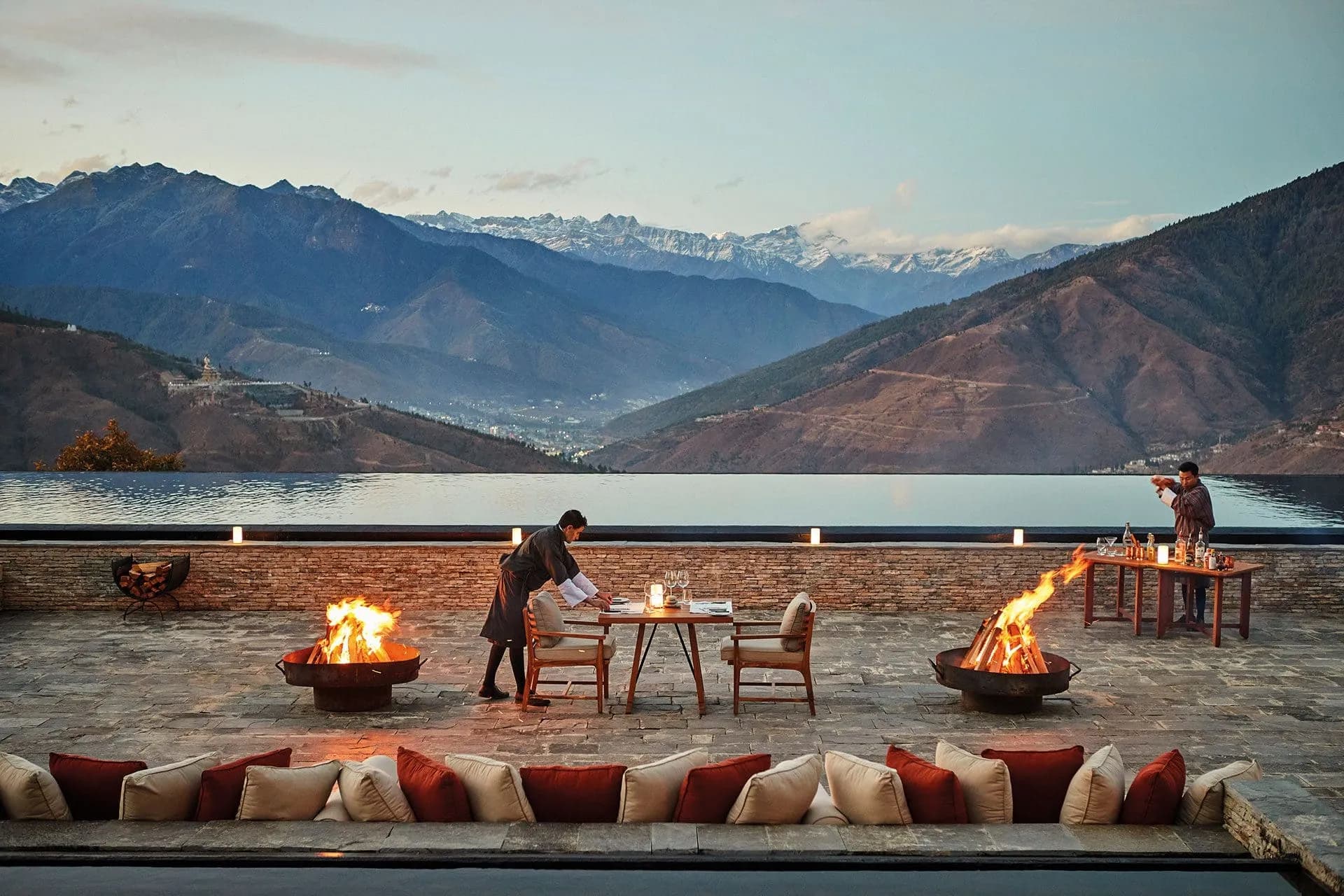 JourneyThe signature-tier Bhutan journey — private knowledgeable guide, the most considered lodge curation, helicopter or charter between valleys, exclusive-use arrangements where the season allows.The signature-tier Bhutan journey. Private knowledgeable guide, the most considered lodges, helicopter or PC-24 charter, exclusive-use arrangements. By invitation, from USD 14,000.
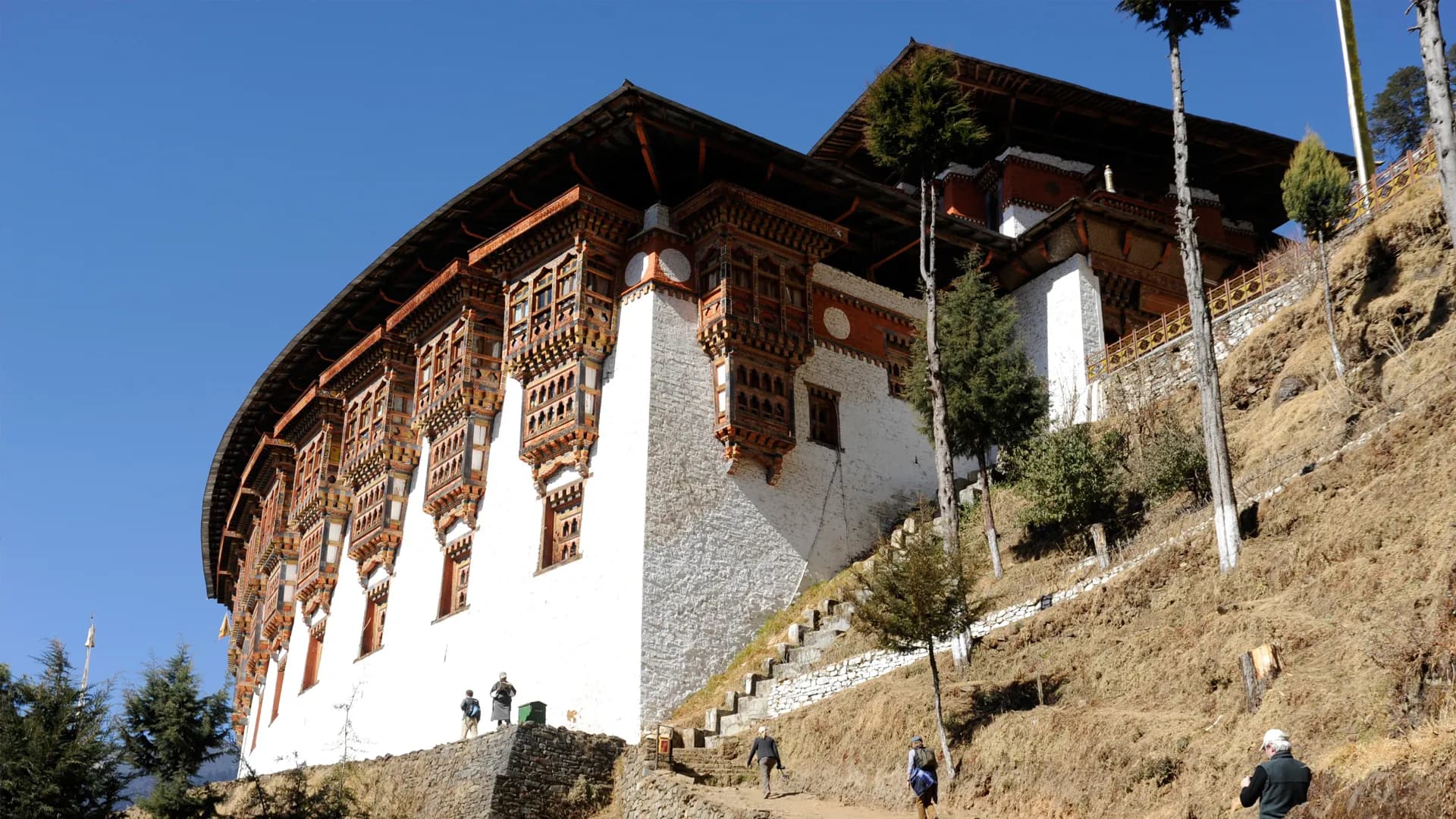 JourneyTen nights for the Buddhist pilgrim — the principal sites, with monastic context.A ten-night Bhutan Buddhist pilgrimage for Asian-Buddhist travellers. Monastic context; matched monastic-trained guide; Bumthang religious circuit.
Frequently asked
- Why does Chendebji Chorten have eyes painted on it?
- Because it is built in the Nepali style, modelled on the great stupa of Boudhanath in Kathmandu, whose square tower is painted on all four sides with the all-seeing eyes of the Buddha. This form is rare in Bhutan, where stupas usually follow the local pattern, and it gives Chendebji its distinctive presence. The stupa was built to subdue a demon that troubled the spot.
- Where is Chendebji Chorten?
- On the long central highway between Pele La and Trongsa, by a river in a remote fold of the hills — the great landmark of that drive, and the natural place for every traveller to pause on the journey into central and eastern Bhutan. It lies a little before Trongsa on the descent from the pass.
- Is it worth stopping?
- Yes — it is a welcome and atmospheric break on the demanding central drive, a rare Nepali-style stupa with watching eyes, set beside a river with prayer wheels and a newer Bhutanese chorten alongside. A short pause to walk around it and take in the setting is part of the journey into central Bhutan.

