A Bhutanese wildlife reserve
Motithang Takin Preserve — where a visitor meets the takin, Bhutan's strange and beloved national animal.
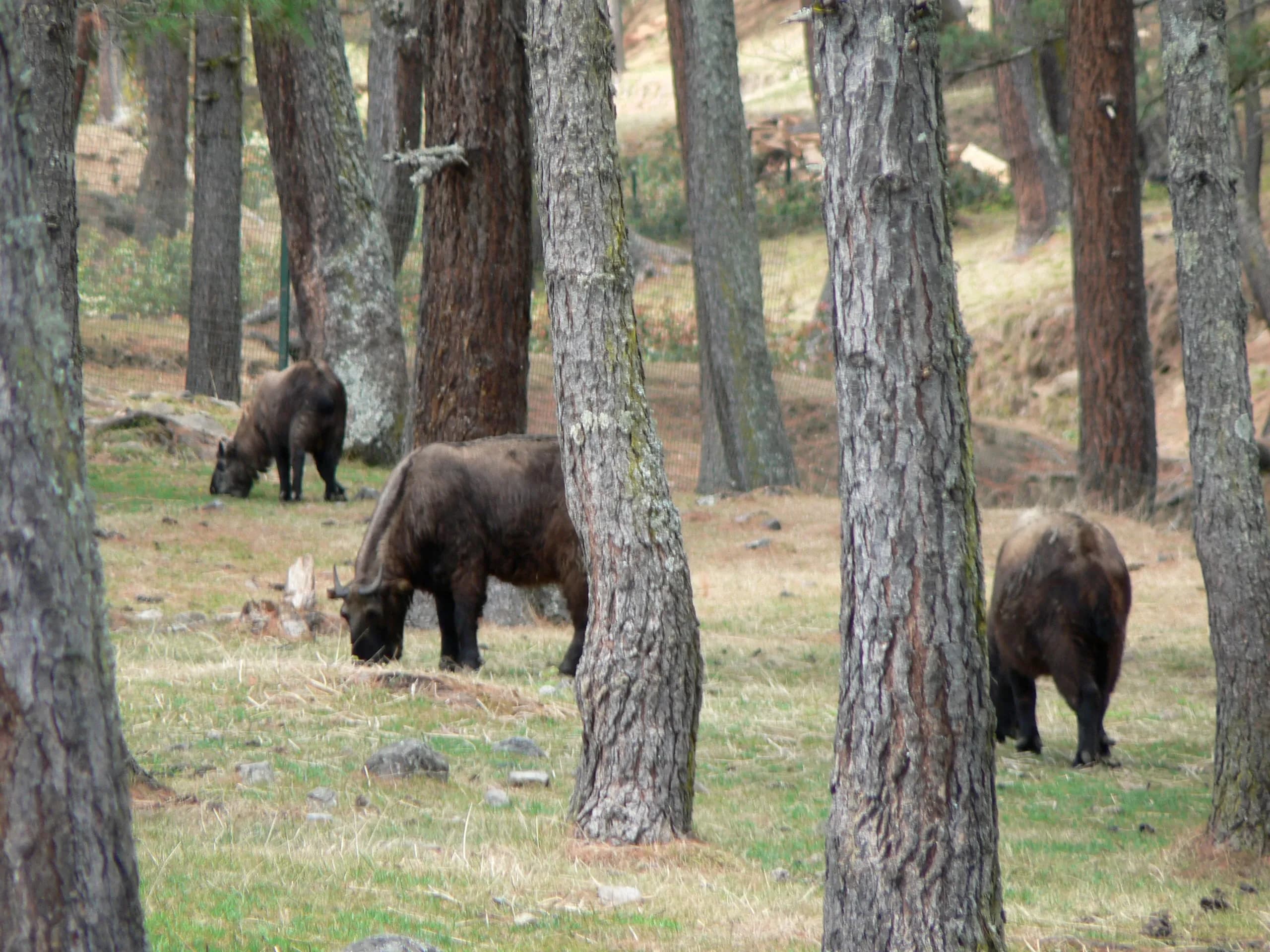
In the forested Motithang hills above Thimphu, a fenced reserve protects a small herd of takin — the national animal of Bhutan, and one of the oddest large mammals in the world: a heavyset, goat-antelope of the high Himalaya, often likened to a creature assembled from spare parts. The Bhutanese trace it to a miracle of the 'divine madman' Drukpa Kunley, who is said to have made it from a goat's head and a cow's bones. The preserve exists because of a very Bhutanese decision: when a small zoo was disbanded as unbecoming of a Buddhist country, the released takin would not leave, so a stretch of their own forest was given to them.
Also known as Takin Preserve · Motithang Takin Reserve
- Location
- Motithang, above western Thimphu, Thimphu
- Elevation
- 2,600 m
- Kind
- nature-reserve
The takin
The takin (Budorcas taxicolor) is the national animal of Bhutan and one of the most unusual large mammals of the Himalaya — a stocky, shaggy, hooved creature, somewhere between a wild goat, an antelope, and a small ox, with a humped nose and a heavy body built for steep alpine slopes. In the wild it lives high on the northern mountainsides, moving with the seasons between the alpine meadows and the forest. Few visitors will ever see one in the wild, which is why the Motithang preserve matters: it is the reliable place to stand a few metres from the animal that a Bhutanese will name, without hesitation, as the strangest and most cherished beast in the country.
The divine madman's creature
The Bhutanese love of the takin is bound up with the legend of Drukpa Kunley, the 15th-century 'divine madman' whose unorthodox, irreverent teaching is woven through the country's religious imagination. Asked to perform a miracle, the story goes, he ate a whole goat and a whole cow, then set the goat's head upon the cow's bones and brought the creature to life — the takin, which has carried its mismatched look ever since. Whether or not a visitor takes the tale literally, it captures something true about how Bhutan holds its national symbols: with affection and humour rather than solemnity.
Why the preserve exists
The preserve owes its existence to a characteristically Bhutanese turn. A small zoo once kept takin and other animals in Thimphu; in time it was judged that keeping wild animals caged was not fitting for a Buddhist country, and the animals were released to return to the wild. Most did — but the takin, tame and unbothered, took to wandering the streets of the capital instead, and a solution was found that suited everyone: a stretch of their own Motithang forest was fenced as a protected reserve, large enough for the herd to live in something close to their natural ground, where visitors could see them without the animals being caged. It is conservation in the Bhutanese key — pragmatic, gentle, and a little wry.
Visiting
- Getting there
- The preserve is in the Motithang area on the western hillside above Thimphu, a short drive from the city centre — easily combined with the Buddha Dordenma, Changangkha Lhakhang, and the Memorial Chorten into a Thimphu day. The matched guide arranges the stop.
- What to expect
- A walking path runs along the fence line through the pine forest, and the takin are usually grazing within view; patience and a quiet approach give the best sightings. Allow 30–45 minutes. The setting is genuine forest rather than a zoo enclosure, so a sighting is a matter of a little luck and timing, which the guide helps with.
- Protocol
- This is a protected reserve, not a petting zoo — visitors stay on the path, keep their voices low, and do not feed the animals. Photography is welcome. Mornings and late afternoons, when the takin are most active, give the best chances.
- Best time to visit
- Year-round, and at any time the reserve is open, with early morning and late afternoon the most rewarding for active animals. The forest setting is pleasant in every season.
Journeys featuring this site
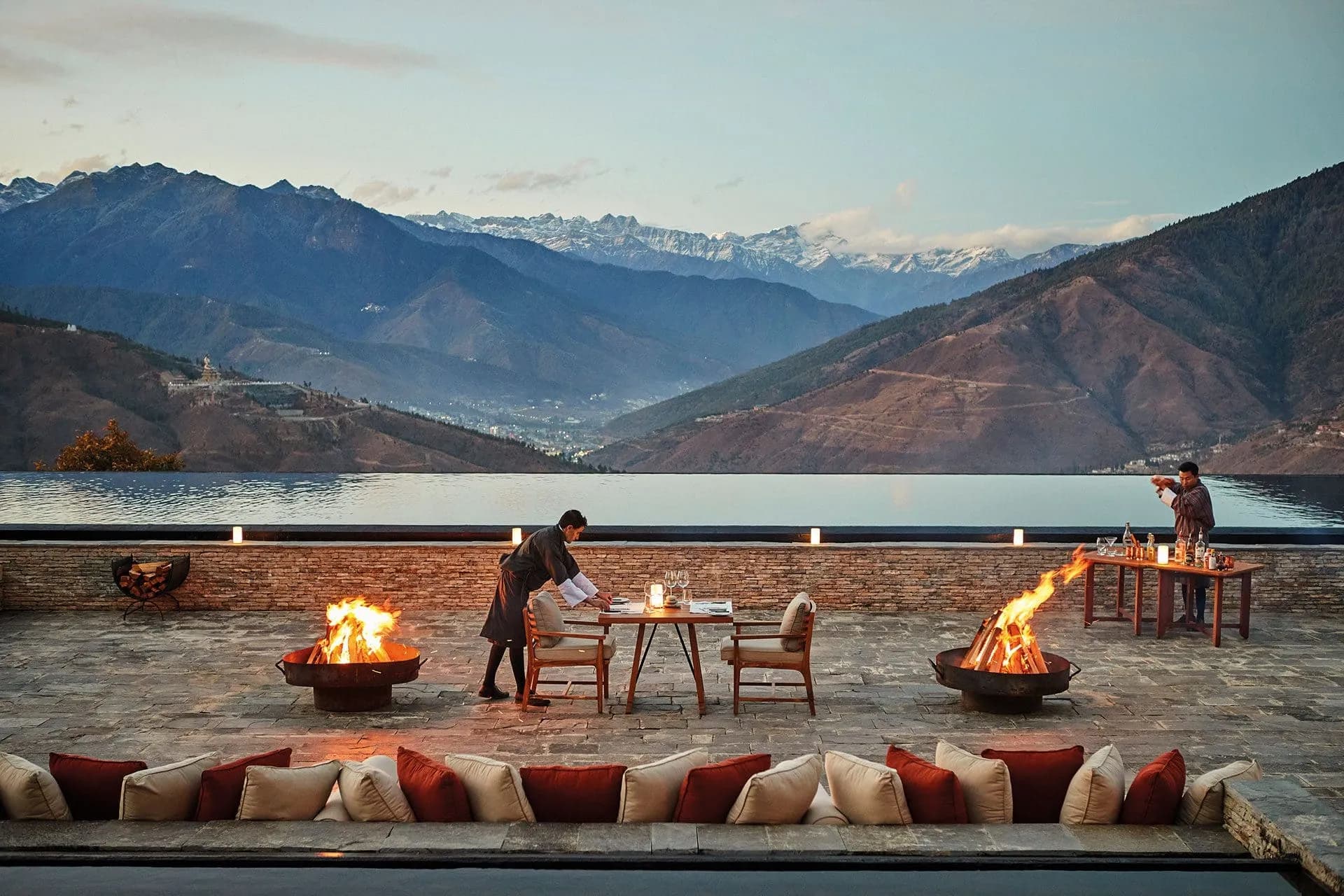 JourneyThe signature-tier Bhutan journey — private knowledgeable guide, the most considered lodge curation, helicopter or charter between valleys, exclusive-use arrangements where the season allows.The signature-tier Bhutan journey. Private knowledgeable guide, the most considered lodges, helicopter or PC-24 charter, exclusive-use arrangements. By invitation, from USD 14,000.
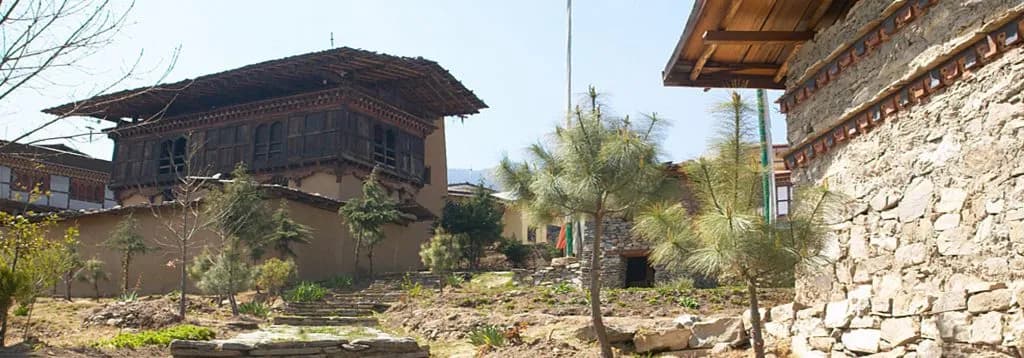 JourneyA family week in Bhutan, paced for everyone.A seven-night Bhutan family trip from Hong Kong. Bhutanese lodges, light treks for children 7+, a family-tested guide, transparent pricing.
Journeys that visit Motithang Takin Preserve
Frequently asked
- What is a takin?
- The national animal of Bhutan — a large, stocky goat-antelope of the high Himalaya (Budorcas taxicolor), with a humped nose, shaggy coat, and a heavy body built for steep alpine slopes. It is one of the more unusual large mammals in the world, and the Bhutanese hold it in great affection, partly through the legend that the 'divine madman' Drukpa Kunley created it from a goat's head and a cow's bones.
- Why are the takin kept in a preserve and not a zoo?
- Because Bhutan judged that caging wild animals did not befit a Buddhist country and disbanded its small zoo, releasing the animals. The takin, tame and content, wandered into the streets of Thimphu instead of leaving — so a stretch of their own Motithang forest was fenced as a protected reserve where they could live naturally and visitors could still see them. It is a very Bhutanese solution.
- Will I definitely see a takin?
- Almost always, though they roam a genuine forest reserve rather than a small enclosure, so a sighting takes a little patience and timing. The walking path runs along the fence through the pines, and the matched guide knows the spots and times — mornings and late afternoons — where the herd is most often in view.

