A Bhutanese monastic college
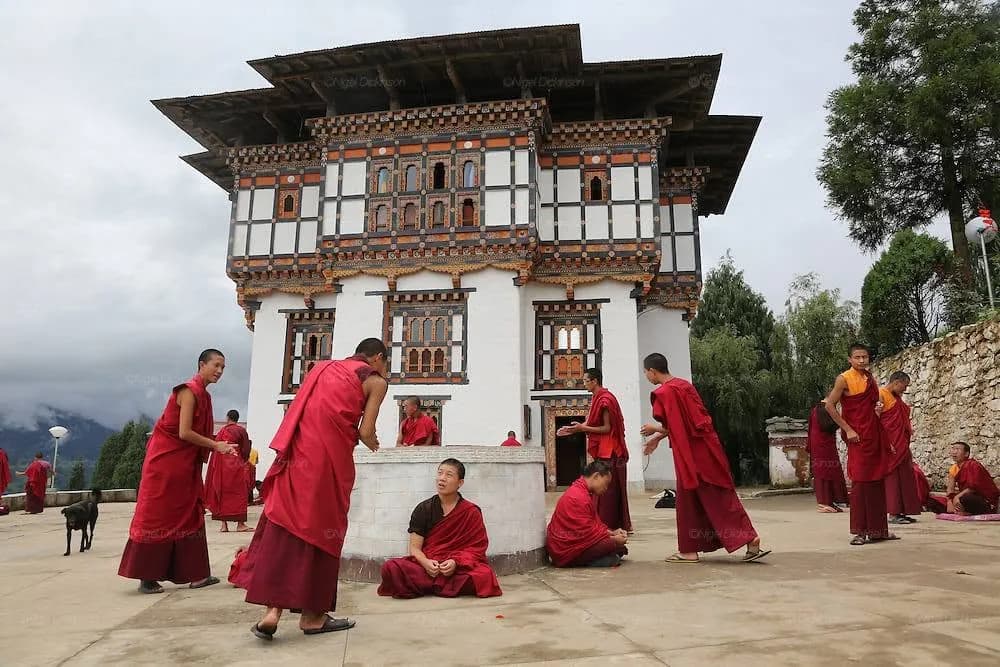
Nalanda Buddhist Institute — an 18th-century monastic college on a ridge above the Punakha valley.
On a quiet ridge above the Punakha valley stands the Nalanda Buddhist Institute — Daley Goenpa — a monastic college founded in the 18th century by Bhutan's ninth Je Khenpo, Shakya Rinchen, and named for the great Nalanda university of ancient India, the fountainhead of Buddhist learning. It is a working shedra, where young monks pursue the long course of philosophical study, set in a peaceful, little-visited spot away from the valley's busier sights. For visitors drawn to the scholarly tradition of Bhutanese Buddhism — and to the quieter corners of the Punakha countryside — it is a rewarding and serene stop.
Also known as Daley Goenpa · Dalida · Nalanda Buddhist College
- Location
- On a ridge above the Punakha valley, Punakha
- Founded
- 1757
- Founder
- Shakya Rinchen, the ninth Je Khenpo
- Elevation
- 1,600 m
- Kind
- monastery
A college named for Nalanda
The institute takes its name from Nalanda — the great monastic university of ancient India, the most renowned centre of Buddhist learning in the world for a thousand years, where the philosophers whose works still anchor the tradition studied and taught. To name a Bhutanese college after it is to claim a place in that long lineage of scholarship, and the choice reflects the institute's purpose: serious study. It was founded in the 18th century by Shakya Rinchen, the ninth Je Khenpo (the chief abbot of Bhutan and head of the central monk body), as a place for the rigorous training of monks in the philosophy and scriptures of the tradition.
A working shedra
Nalanda is a shedra — a monastic college of higher Buddhist study — and it remains a living institution, home to young monks working through the long curriculum of logic, philosophy, and scripture that produces the country's learned teachers. The atmosphere is one of quiet study rather than ceremony: the debate courtyard, the classes, the disciplined daily round. Set on its ridge above the warm Punakha valley, away from the dzong and the busier sights, it has the secluded character that such places of study seek. A visit is a glimpse of the scholarly engine of Bhutanese Buddhism, the counterpart to the meditation retreats — learning rather than silence, but the same deep seriousness.
The setting
Part of Nalanda's appeal is simply where it is: on a peaceful ridge in the Punakha countryside, reached by a short drive up from the valley, with views over the terraced fields and the hills. It is little-visited, which suits both its scholarly purpose and the visitor who wants to step off the main circuit into a quieter Bhutan. It can be combined with the other Punakha sights — the dzong, the suspension bridge, the temples — into a fuller exploration of the valley, adding the dimension of the scholarly tradition to the more famous monuments.
Visiting
- Getting there
- Nalanda is reached by a short drive up from the Punakha valley floor to its ridge — part of a fuller Punakha day for visitors who want to step beyond the headline sights. The matched guide arranges the visit.
- What to see
- The monastic college, its shrine halls, and the ridge setting; where the shedra is in session, the young monks at their studies. Allow 30–45 minutes. The matched guide explains the institute's history and the scholarly tradition.
- Dress and protocol
- Standard monastery protocol — shoulders and knees covered, shoes and hats removed before the shrines, no photography inside. As a working college, the register is quiet and respectful; the guide indicates the areas open to visitors.
- Best time to visit
- Year-round — the lower-ridge elevation above the warm Punakha valley is comfortable in every season. It pairs naturally with the dzong, the suspension bridge, and the valley's temples.
Journeys featuring this site
 JourneyThe signature-tier Bhutan journey — private knowledgeable guide, the most considered lodge curation, helicopter or charter between valleys, exclusive-use arrangements where the season allows.The signature-tier Bhutan journey. Private knowledgeable guide, the most considered lodges, helicopter or PC-24 charter, exclusive-use arrangements. By invitation, from USD 14,000.
 JourneyTen nights for the Buddhist pilgrim — the principal sites, with monastic context.A ten-night Bhutan Buddhist pilgrimage for Asian-Buddhist travellers. Monastic context; matched monastic-trained guide; Bumthang religious circuit.
Frequently asked
- What is the Nalanda Buddhist Institute?
- A monastic college (shedra) above the Punakha valley, founded in the 18th century by Bhutan's ninth Je Khenpo, Shakya Rinchen, and named for the great Nalanda university of ancient India. It is a working place of higher Buddhist study, where young monks pursue the long course of philosophy and scripture that produces the country's learned teachers.
- Why is it named after Nalanda in India?
- Nalanda was the most renowned centre of Buddhist learning in the world for a thousand years, where the philosophers whose works still anchor the tradition studied. To name a Bhutanese college after it is to claim a place in that lineage of scholarship and to signal the institute's serious purpose — rigorous study rather than ceremony.
- Is it worth visiting?
- For visitors drawn to the scholarly side of Bhutanese Buddhism, and to the quieter corners of the Punakha countryside, yes — it is a serene, little-visited ridge college that adds the dimension of the learning tradition to the valley's more famous monuments. It pairs naturally with the dzong, the suspension bridge, and Talo.

