A Bhutanese arts institute
The National Institute for Zorig Chusum — where young Bhutanese learn the thirteen traditional arts and crafts.
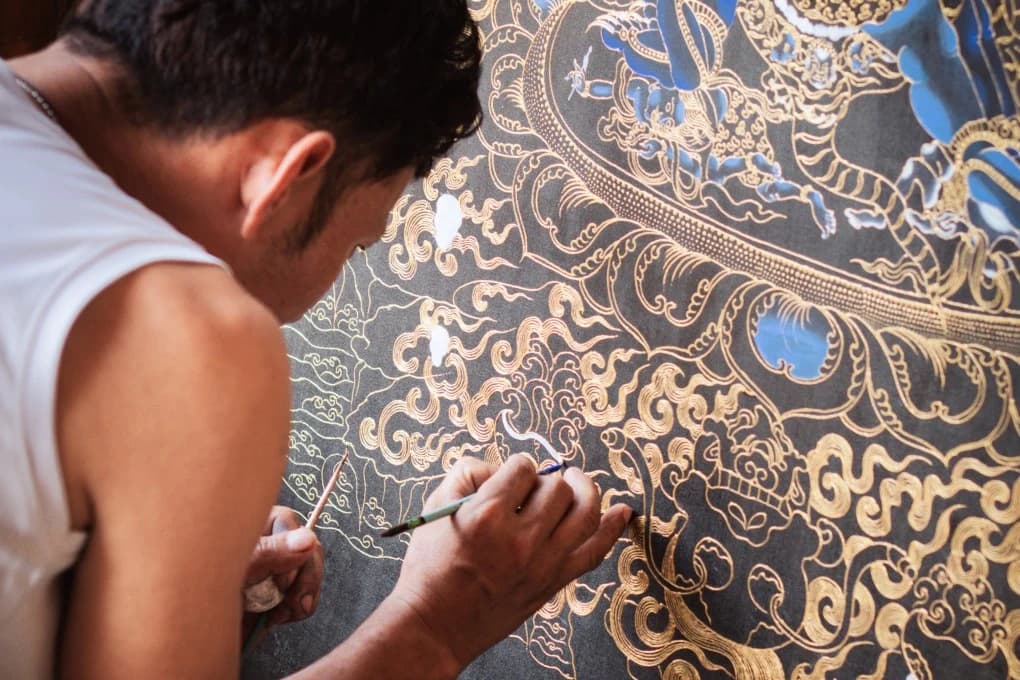
In Thimphu, the National Institute for Zorig Chusum — often called simply 'the painting school' — is where the country's traditional arts are kept alive, taught to young Bhutanese across the long years of apprenticeship that mastery demands. Zorig Chusum, 'the thirteen arts and crafts', is the formal canon of Bhutanese skilled craft: painting, sculpture, wood-carving, embroidery, weaving, metalwork, and more. A visitor may walk the studios and watch the students at work — drawing the proportioned deities of a thangka, carving a mask, casting a bronze — and see the unbroken transmission of a living tradition rather than a museum's relics.
Also known as Zorig Chusum · the painting school · Institute for the Thirteen Arts
- Location
- Central Thimphu, Thimphu
- Elevation
- 2,330 m
- Kind
- craft-institute
The thirteen arts
Zorig Chusum is the formal canon of Bhutanese craft — the thirteen traditional arts and crafts codified, by long tradition, as the skilled disciplines that sustain the country's material and religious culture. They include painting (lhazo, the art of the thangka and the temple mural); sculpture and clay statuary (jinzo); wood, slate, and stone carving (parzo); casting and metalwork (lugzo); embroidery and appliqué (tshemzo); weaving (thagzo); woodturning, blacksmithing, papermaking, bamboo-work, and more. Together they are the hands behind everything a visitor admires in Bhutan — the painted dzong, the carved window, the woven kira, the bronze image — and the institute exists to ensure those hands are never lost.
The school
The National Institute for Zorig Chusum trains young Bhutanese in these arts across courses that run for years, in the apprenticeship manner that such mastery requires — a student of painting, for instance, learning first the strict iconometric proportions by which a deity must be drawn before ever being allowed to colour. The institute is a working school, not a performance: in its studios, ranks of students sit at their boards and benches, absorbed in their drawing, carving, and stitching, under the eye of master craftsmen. To visit is to see a tradition being transmitted before your eyes, and to understand the discipline behind the beauty — the years of copying and correction that stand behind a single finished thangka.
What a visitor encounters
A visit to the institute is one of the most rewarding cultural stops in Thimphu, precisely because it is alive and unstaged. Walking the studios, a visitor watches students at each of the arts — the painters with their fine brushes and proportioned grids, the carvers releasing a mask from a block, the embroiderers building an appliqué image stitch by stitch, the sculptors at their clay. There is usually a small showroom where the students' finished work can be bought, directly supporting the school and the artists. For anyone interested in how Bhutan makes the beauty it is full of, it is the essential stop — and a fine complement to the National Museum and the Folk Heritage Museum.
Visiting
- Getting there
- The institute is in central Thimphu, an easy stop on any Thimphu day, close to the other city sights. The matched guide arranges the visit during the school's working hours, when the students are at their benches.
- When to go
- The studios are active during the school term and working hours (typically weekday daytime, outside the holidays); the matched guide confirms the institute is in session, as it is far less rewarding when the students are away. Allow 45 minutes to an hour to walk the studios and the showroom.
- Protocol
- Visitors watch quietly and do not disturb the students at their work; photography is usually permitted in the studios with courtesy, but the guide confirms the current rule. Buying from the student showroom directly supports the school and the young artists.
- Best time to visit
- Year-round during term time and working hours; the institute is indoor and weather-independent. Avoid the school holidays, when the studios are empty and the visit loses its point — the guide times the stop accordingly.
Journeys featuring this site
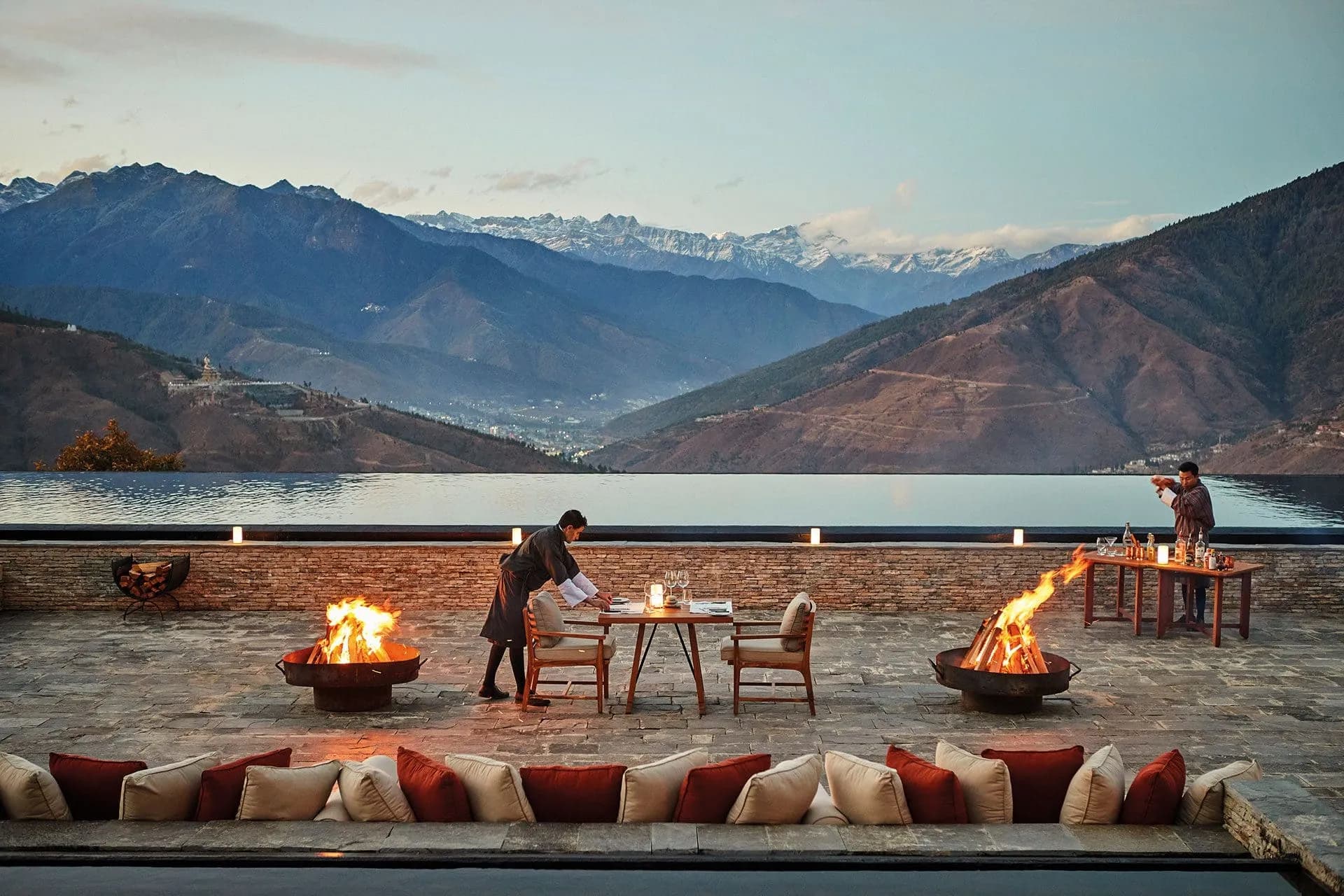 JourneyThe signature-tier Bhutan journey — private knowledgeable guide, the most considered lodge curation, helicopter or charter between valleys, exclusive-use arrangements where the season allows.The signature-tier Bhutan journey. Private knowledgeable guide, the most considered lodges, helicopter or PC-24 charter, exclusive-use arrangements. By invitation, from USD 14,000.
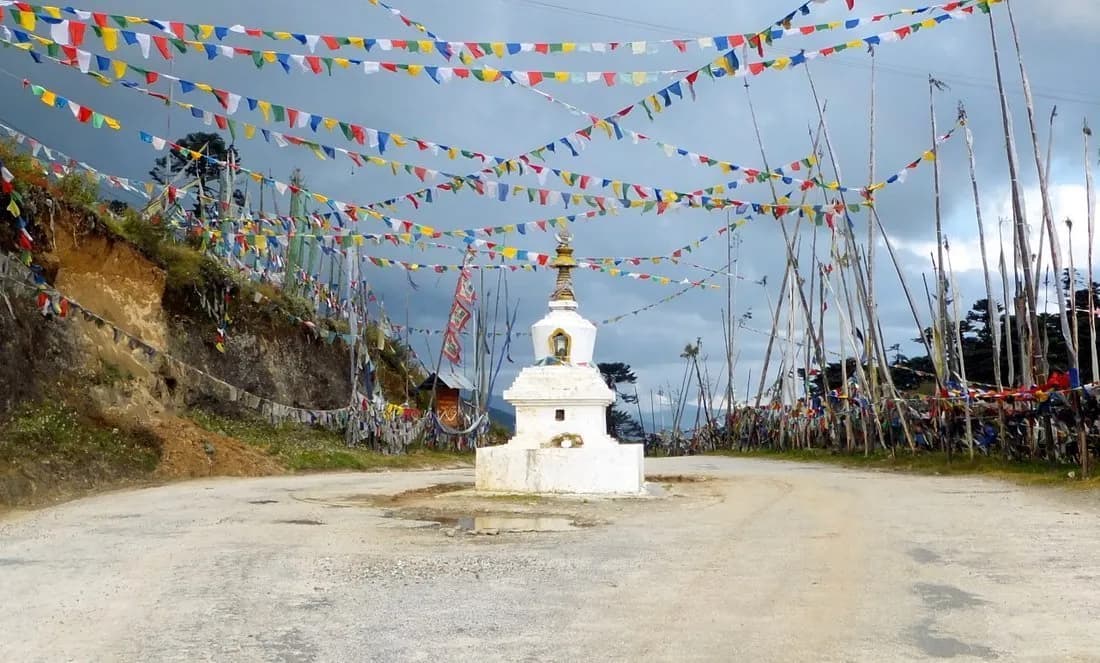 JourneyOctober light, Bhutan, a week.A seven-night Bhutan photography journey in October — Bhutan, golden-hour access at Punakha Dzong, a tripod-friendly guide, and transparent pricing.
Journeys that visit The National Institute for Zorig Chusum
Frequently asked
- What is Zorig Chusum?
- 'The thirteen arts and crafts' — the formal canon of Bhutanese traditional skilled craft, including painting (the thangka and mural art), sculpture, wood and slate carving, metal casting, embroidery, weaving, papermaking, and more. They are the disciplines behind everything a visitor admires in Bhutan, from the painted dzong to the woven kira, and the National Institute exists to teach and preserve them.
- Can I watch the students at work?
- Yes — that is the point of the visit. The institute is a working school, and visitors walk the studios to see students at each of the arts: painters at their proportioned grids, carvers releasing a mask from a block, embroiderers building an appliqué image. It is an unstaged glimpse of a living tradition being transmitted as it happens.
- When is the best time to visit?
- During the school term and working hours, when the students are at their benches — the matched guide confirms the institute is in session, since it is far less rewarding during the holidays. Allow about an hour for the studios and the showroom, where students' finished work can be bought in support of the school.

