A CRAFT-LED JOURNEY
Bhutan arts and crafts journey — Eight nights in Bhutan, read through the hands that make it.
A small-group Bhutan journey for travellers who want the country through its craftsmen — the thirteen traditional arts taught at the National Institute for Zorig Chusum, a thangka painter at the proportioned grid, a carver releasing a mask from a block, a dzong read for how it was built rather than only admired. Paro, Thimphu, Punakha, and back, with the days kept generous so that a workshop runs to its own length and a maker or two is met properly rather than glimpsed.
8 nights · Luxury tier · from USD 8,000 per traveller
- Nights
- 8
- From
- USD 8,000per traveller
- Tier
- Luxury
- Best season
- Autumn
- Suits
- Small group
- Departing
- Worldwide
Why eight nights, and not fewer
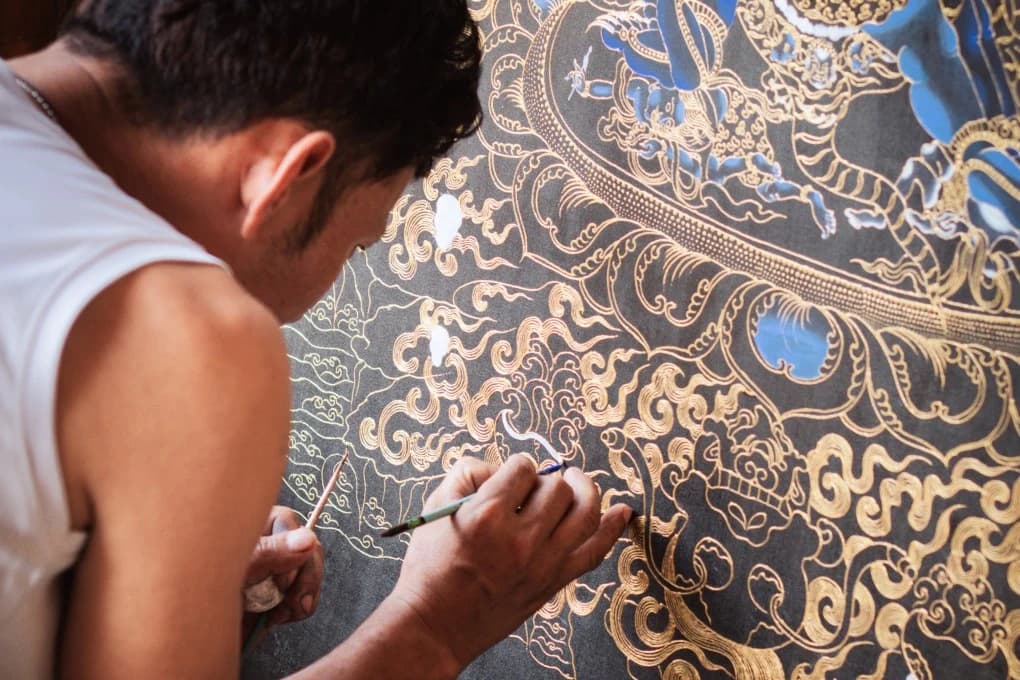
The craft of Bhutan does not reward the hurried. A thangka painter spends the first years of an apprenticeship learning only the iconometric grid — the fixed proportions by which a deity must be set down — before a brush is allowed near colour, and a half-hour at his shoulder teaches more than a morning spent walking past the finished work in a temple. Eight nights across Paro, Thimphu, and Punakha gives the workshops room to run long, leaves an afternoon free when a maker is willing to keep talking, and holds the founder's pacing — Paro and Thimphu no more than three nights each, Punakha no more than two — so the week never tips into a march.
The thirteen arts, met as living work
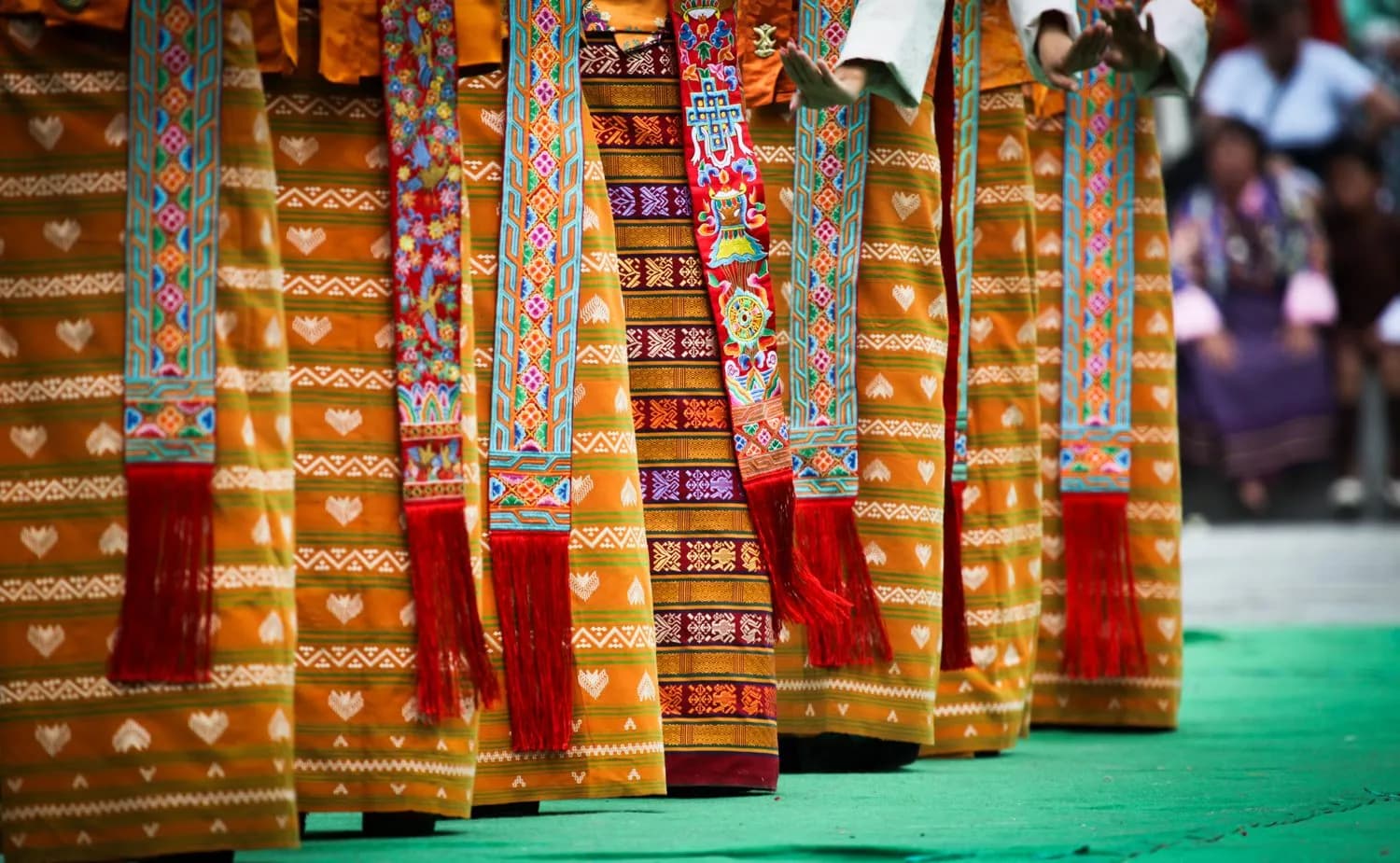
Zorig Chusum is the formal canon of Bhutanese craft — the thirteen traditional arts and crafts, among them lhadri (painting, the thangka and the temple mural), shagzo (wood-turning), parzo (carving in wood, slate, and stone), statue-making in clay and cast bronze, deh-sho (the handmade paper beaten from daphne bark), thagzo (weaving), and the calligraphy of the Uchen and Joyig scripts taught alongside them. At the National Institute for Zorig Chusum in Thimphu — known to most simply as the painting school — young Bhutanese learn these across the long apprenticeship that mastery asks, and a visitor walks the studios while the work is in hand rather than viewing it behind glass. The point of this journey is to meet the people doing it: the painter, the carver, the papermaker, the weaver, the master builder whose craft holds a dzong together without a single nail.
Who you'll travel with
One Bhutanese guide for the full week — matched from a small, carefully curated network, chosen for a genuine fluency in the crafts and the introductions that open a workshop door rather than a showroom counter. The guide who reads a thangka the way an art historian reads a brushstroke, who can name the daphne bark drying on a paper-maker's frame and the script a calligrapher is cutting, is the difference between a tour and a short apprenticeship by observation. The guide is named in your proposal before you confirm, and we change the match if it does not feel right.
The route
A sample shape of the week
DAY 01
Arrival in Paro — the eye adjusts
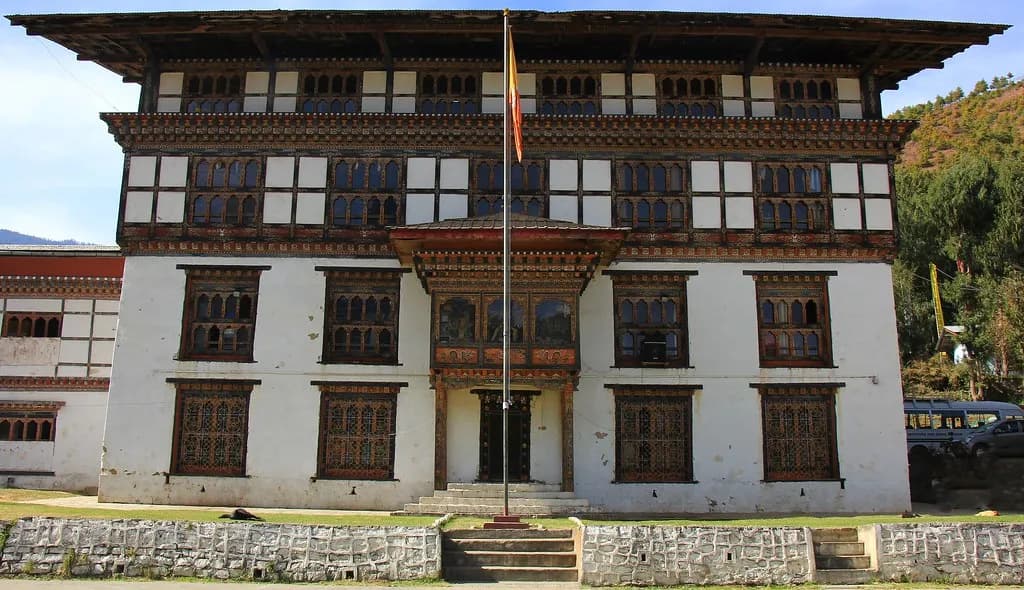
Met in the arrivals hall, twenty minutes to the lodge; an unhurried first walk to Rinpung Dzong if the light holds, the guide reading the painted window frames and carved brackets as an introduction to the week.
DAY 02
Paro — Kyichu Lhakhang and the painter's eye
Kyichu Lhakhang in the morning, one of the country's oldest temples, read for its murals and the iconography behind them; an afternoon with a local thangka painter at the proportioned grid.
DAY 03
Across to Thimphu — the painting school
The Pa Chhu valley to the capital; a long visit to the National Institute for Zorig Chusum in working session, watching students at painting, carving, and embroidery under the master craftsmen.
DAY 04
Thimphu — paper, carving, and the cast bronze
A morning at a deh-sho papermaking workshop, daphne bark to finished sheet; an afternoon with a wood-carver and at a foundry where statues are cast and gilded.
DAY 05
Thimphu — weaving and the script
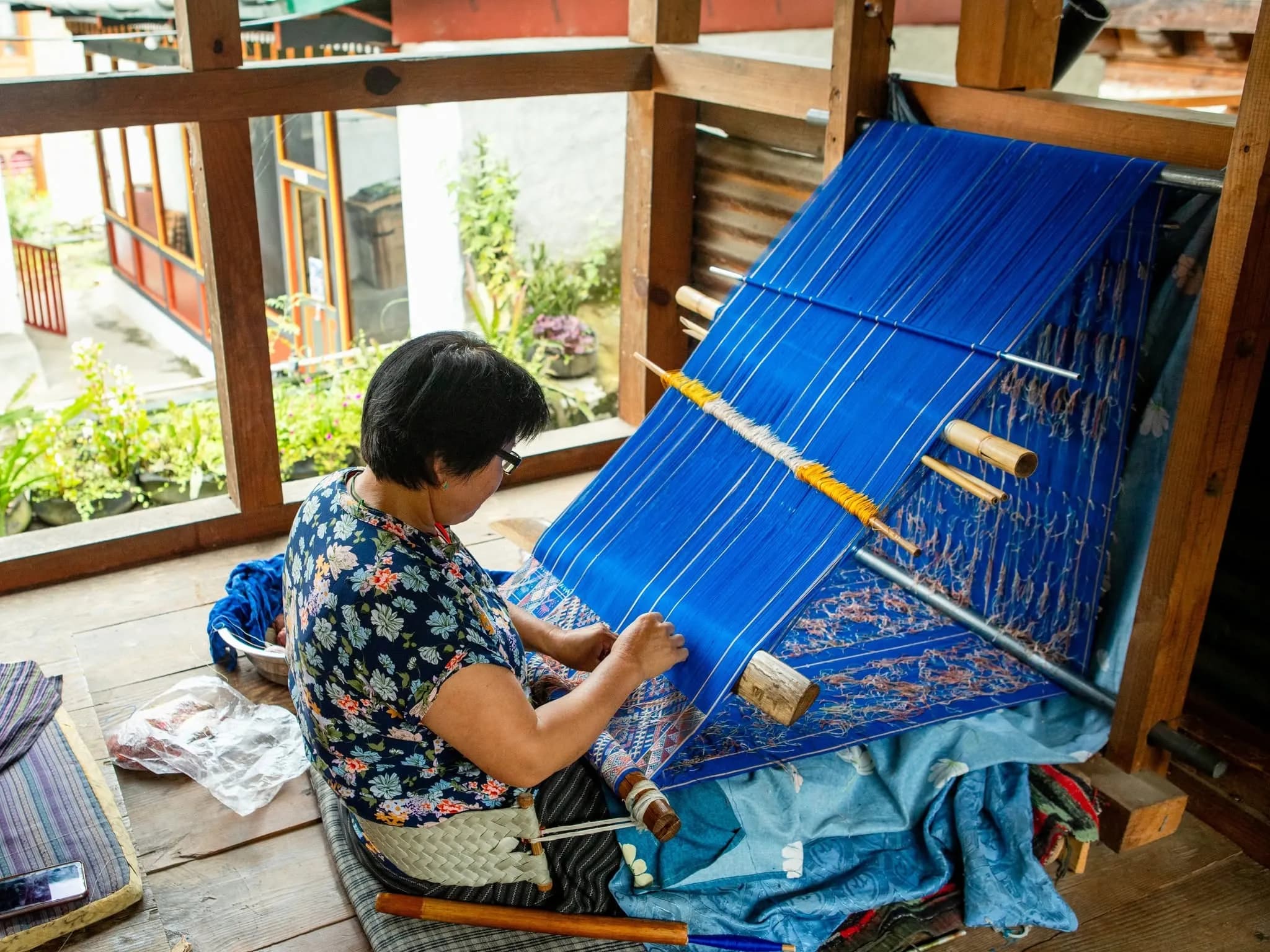
The National Textile Museum and the Royal Textile Academy at the right hour, the backstrap loom watched at close range; an afternoon with a calligrapher cutting the Uchen and Joyig scripts.
DAY 06
Over Dochu La to Punakha — the dzong as craft
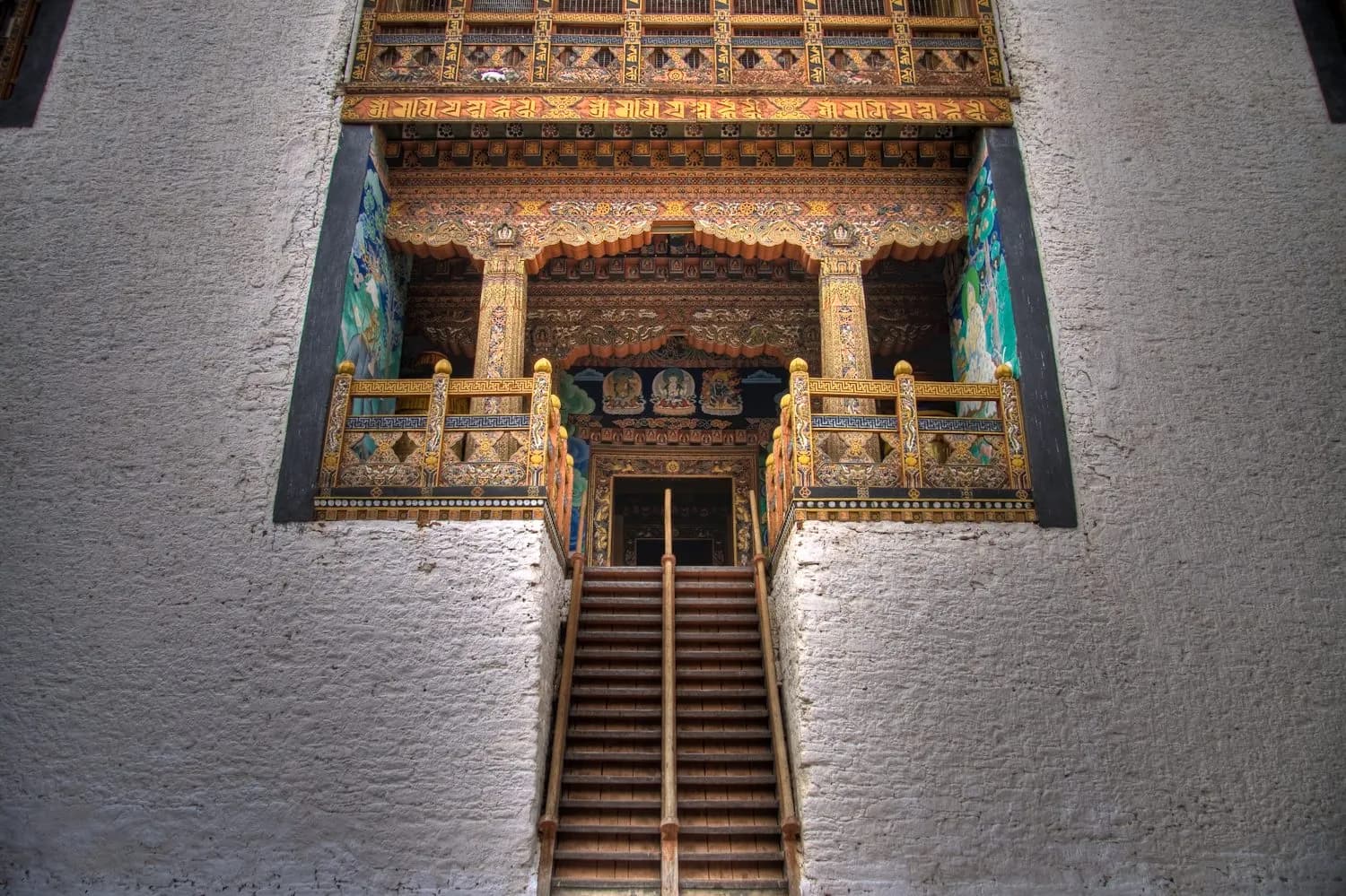
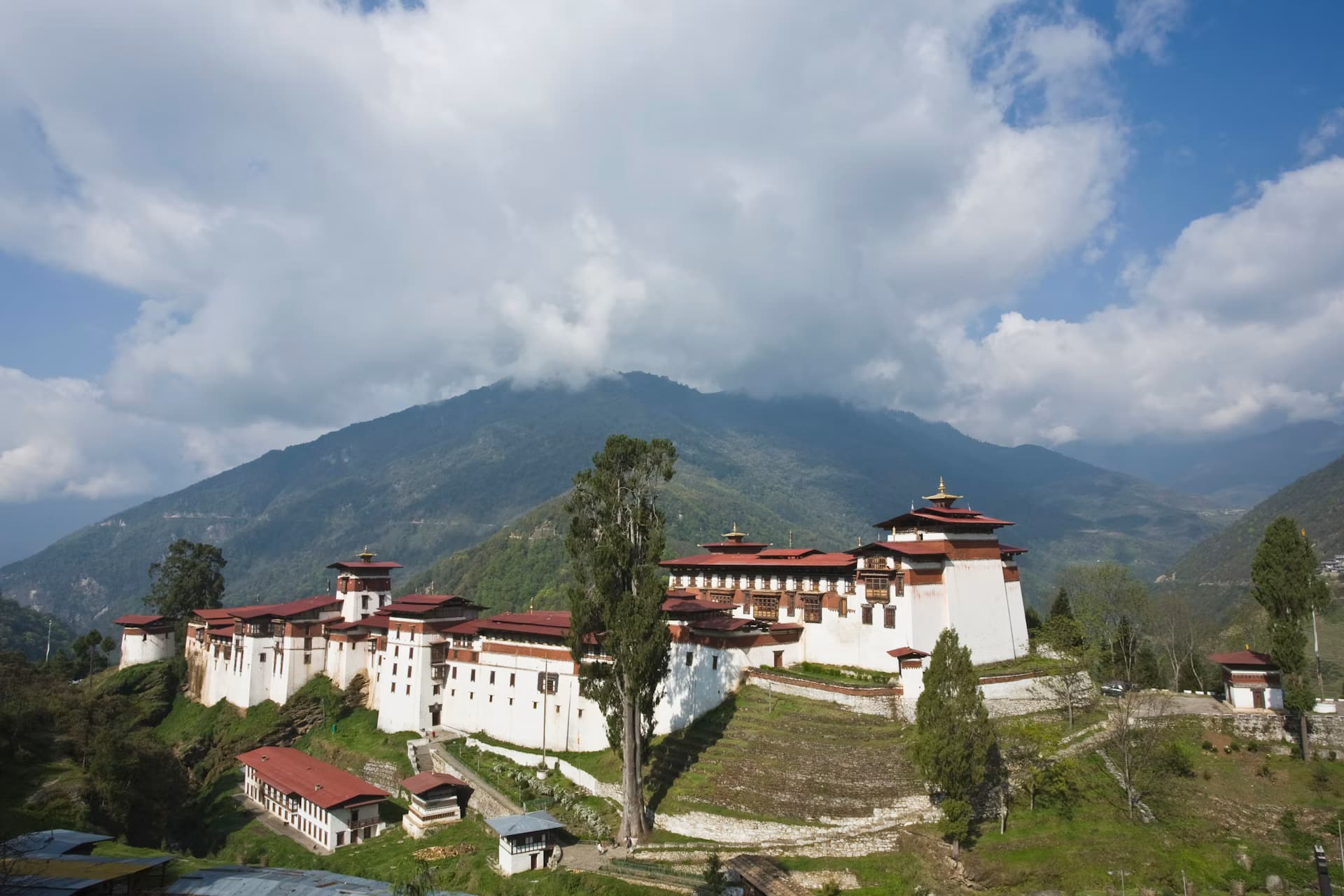
The 3,100-metre pass and the 108 chortens; down to Punakha Dzong in late-afternoon light, read for its rammed earth, its timber joinery, and the master builder's work that holds it without nails.
DAY 07
Punakha — a maker met properly
A morning across the rice paddies of Lobesa; an arranged-ahead visit to a weaver or carver in the valley, the kind of meeting that runs to its own length; a long riverside lunch.
DAY 08
Back to Paro — the week settles
The drive back over the pass; a final unhurried afternoon, perhaps a last workshop or the showroom of a maker met earlier in the week, ahead of the morning flight.
The day-by-day above is illustrative. The proposal you receive is built around your dates, your pace and your interests, not this template.
Frequently asked
- What is Zorig Chusum, and where do we see it?
- Zorig Chusum is 'the thirteen arts and crafts' — the formal canon of Bhutanese skilled craft, among them painting, sculpture and statue-making, wood and slate carving, weaving, embroidery, papermaking, and calligraphy. The natural home for an introduction is the National Institute for Zorig Chusum in Thimphu, the school where young Bhutanese learn these arts across years of apprenticeship; from there the week opens out to individual makers in Paro, Thimphu, and the Punakha valley.
- Will we actually meet the makers, or only watch demonstrations?
- Meet them. The journey is built around introductions at working studios and homes rather than staged demonstrations — the thangka painter at the grid, the deh-sho papermaker at the drying frame, the weaver at the backstrap loom, the carver at the block. The guide makes the introduction and translates; what follows is a conversation, and where a maker is willing the visit runs to its own length rather than a fixed clock.
- Can we try a craft ourselves, or commission a piece?
- Both can be arranged. A half-day at the loom or an hour learning the first strokes of thangka colour are rewarding as participation, if not as mastery; and a piece may be commissioned from a maker met during the week — a woven kira, a carved panel, a small painted work — paid in part on agreement and the balance on completion, shipped from Bhutan. Note the lead time, as a serious weaving or thangka can take many months. Tell us in your intake and we build it into the proposal.
- Why read the dzong for how it is built?
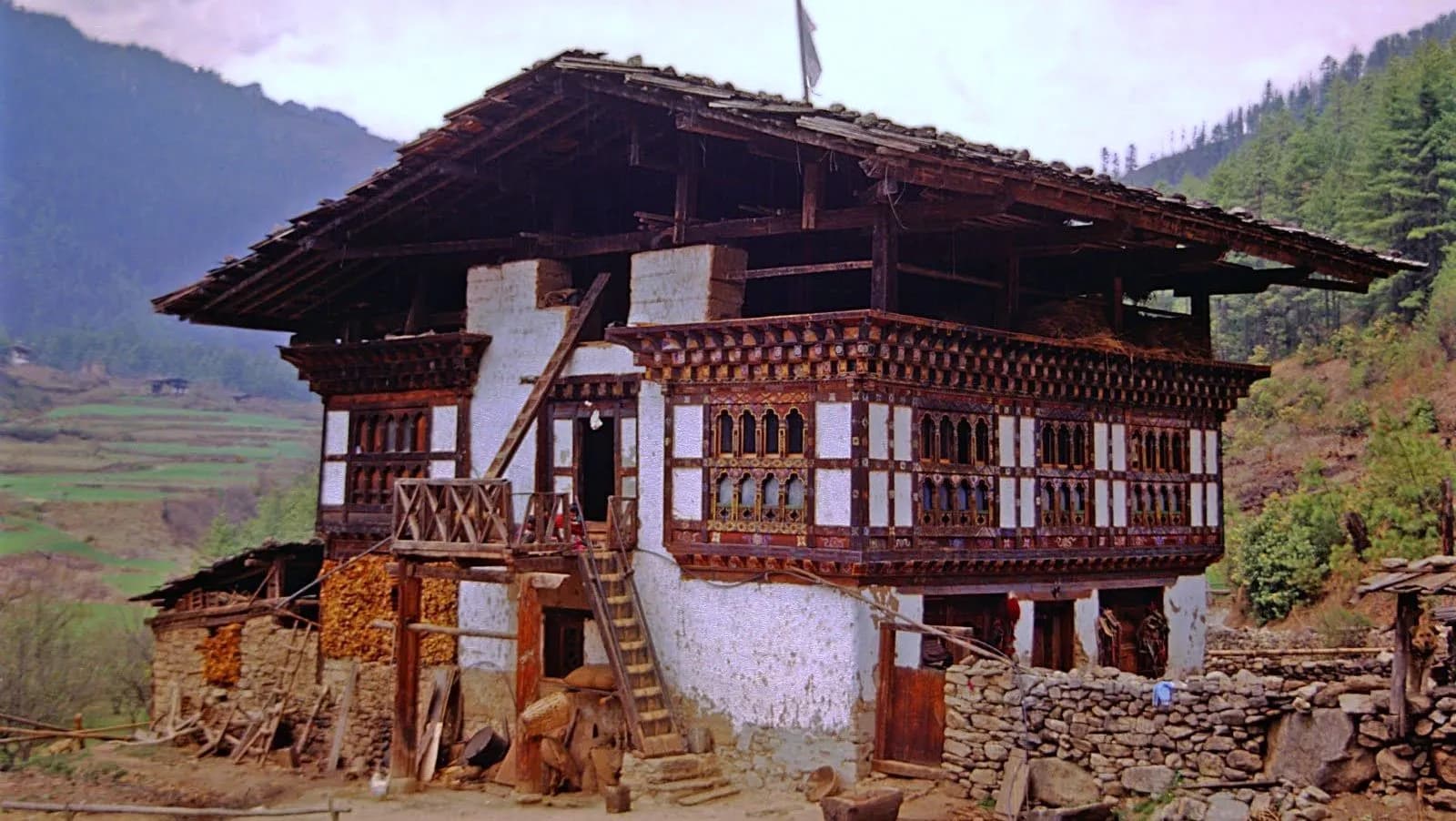
- Because the architecture is itself one of the thirteen arts in practice. A dzong is raised in rammed earth and timber by a master builder, or zowe, working without formal drawings and without a single nail in the joinery; the battered white walls, the carved window frames, and the painted brackets are the same crafts seen separately in the studios, here at the scale of a building. Punakha Dzong, at the confluence of the Mo and Pho Chhu, is among the finest examples in the country to read this way.
- Is autumn the right season for this journey?
- October and November give the clearest skies and the steadiest light for studio visits and for photographing finished work, and the workshops keep their ordinary working rhythm. April is the second window, with the rhododendron and longer evenings. The studios at the National Institute for Zorig Chusum are indoor and weather-independent, though we time the visit to the school term rather than the holidays, when the benches are empty and the visit loses its point.
Journeys you might also weigh
- 01Bhutan history and heritage journeyA small-group Bhutan journey for travellers who want the country's history where it actually stands — in the dzongs that built the state and the museums that hold its memory. Simtokha, the first dzong of all; the National Museum in the round Ta Dzong above Paro; Punakha, the former winter capital where the kings are still crowned; and Trongsa, the ancestral seat from which the royal house arose, its own Ta Dzong telling the Wangchuck story room by room. Paro, Thimphu, Punakha, and Trongsa, paced so that a gallery is given its hour and a dzong is read rather than only photographed.8 nights
from $9,000 - 02The Druk Path TrekThe classic high route between the two valleys: five or six days on the ridgeline that people walked long before there was a road, past alpine lakes and through rhododendron, camped with a full crew at the considered Bhutanese pace. The best first multi-day trek in the country, bookended by Taktsang and an easy descent into the capital.8 nights
from $9,000 - 03A Bhutan culinary journeyAn eight-night journey for a couple who travel by the table — Paro, Thimphu, Punakha, and on to the central heartland of Bumthang. Ema datshi and the Bhutanese love of the chilli; red rice in the lower valleys and buckwheat in the high ones; a farmhouse meal cooked over a wood stove; a cooking lesson with your hands in the dough; the cheese and the unfiltered wheat beer of the Bumthang Swiss Farm; suja by the fire; a hot stone bath at the end of the cold days; and the considered, season-close kitchens of the lodges between.8 nights
from $16,000
Begin when you're ready.
A few questions, or a conversation in your own words. A bespoke draft either way.

