EIGHT NIGHTS, LED BY THE TABLE
A Bhutan culinary journey — the chilli, the red rice, the buckwheat of Bumthang.
An eight-night journey for a couple who travel by the table — Paro, Thimphu, Punakha, and on to the central heartland of Bumthang. Ema datshi and the Bhutanese love of the chilli; red rice in the lower valleys and buckwheat in the high ones; a farmhouse meal cooked over a wood stove; a cooking lesson with your hands in the dough; the cheese and the unfiltered wheat beer of the Bumthang Swiss Farm; suja by the fire; a hot stone bath at the end of the cold days; and the considered, season-close kitchens of the lodges between.
8 nights · Luxury tier · from USD 16,000 per couple
- Nights
- 8
- From
- USD 16,000per couple
- Tier
- Luxury
- Best season
- Autumn
- Suits
- Couple
- Departing
- Worldwide
Why eight nights, and why the table leads
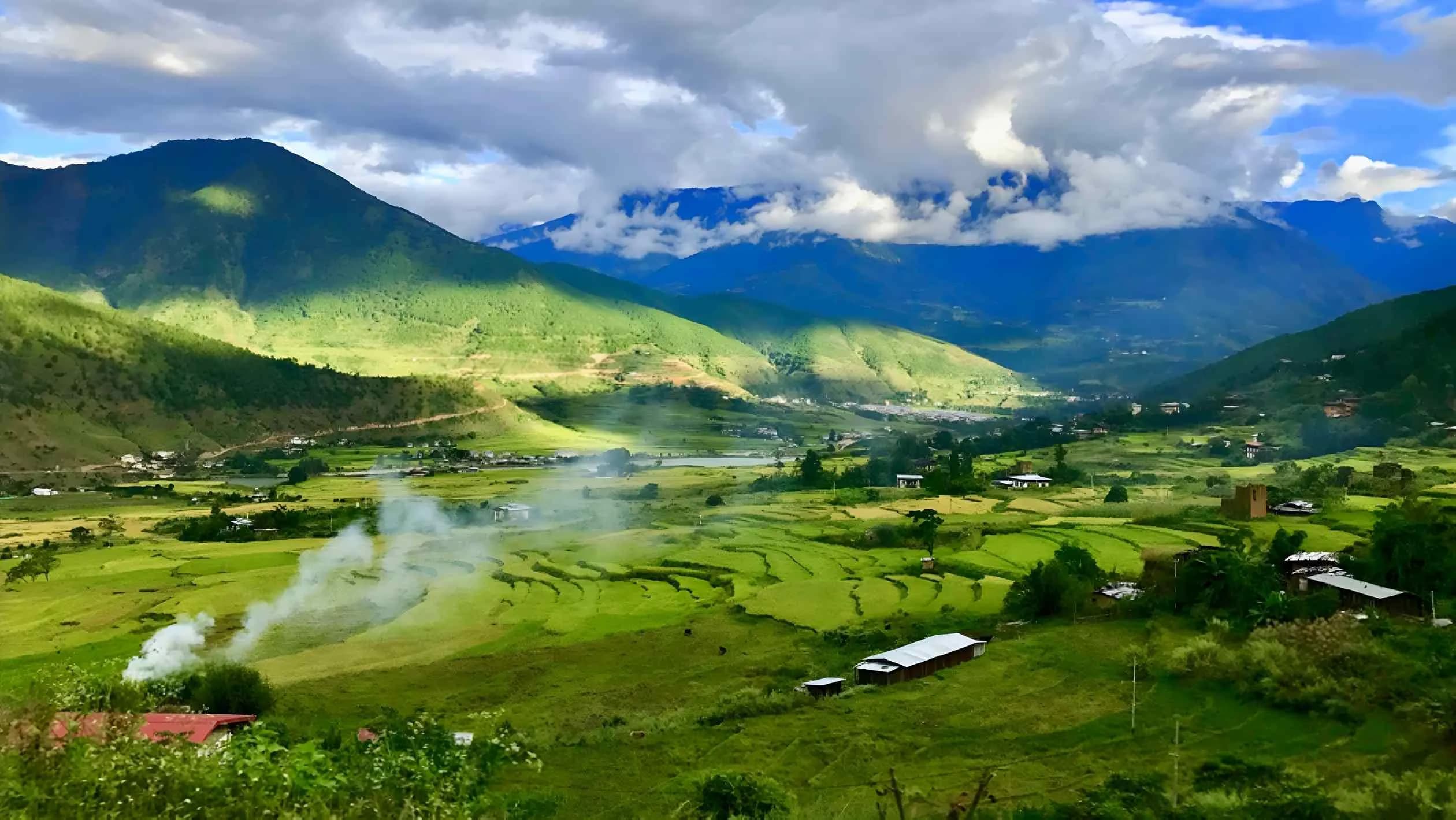
Bhutanese food is honest, seasonal, and close to the farm — the pleasure is in that, not in any invented fine-dining scene. To eat it properly you have to travel a little, because the country changes its plate as you go: the warm lower valleys give you red rice and the chilli at full strength; the high central heartland of Bumthang gives you buckwheat, dairy, and a cheese-and-ale story you would not expect to find in the eastern Himalaya. Eight nights — Paro, Thimphu, Punakha, then the day's drive east to Bumthang — is the shape that reaches the buckwheat country without rushing the road, and brings you home over the same passes with the taste of the place properly settled.
What the week tends to look like
Two nights in Paro for the arrival, the markets, and an early walk to Rinpung Dzong; two in Thimphu for the capital's kitchens and a first cooking lesson; one over Dochu La in Punakha at the river confluence, with a long farmhouse lunch among the Lobesa paddies; then east to Bumthang for three nights in the buckwheat heartland — the Swiss Farm, the khuli pancakes, a farmhouse supper, and the temple circuit between meals. We hold the founder's gentle pacing through it, and we adjust within an hour either way to suit how you actually travel and how you like to eat.
What you will actually eat
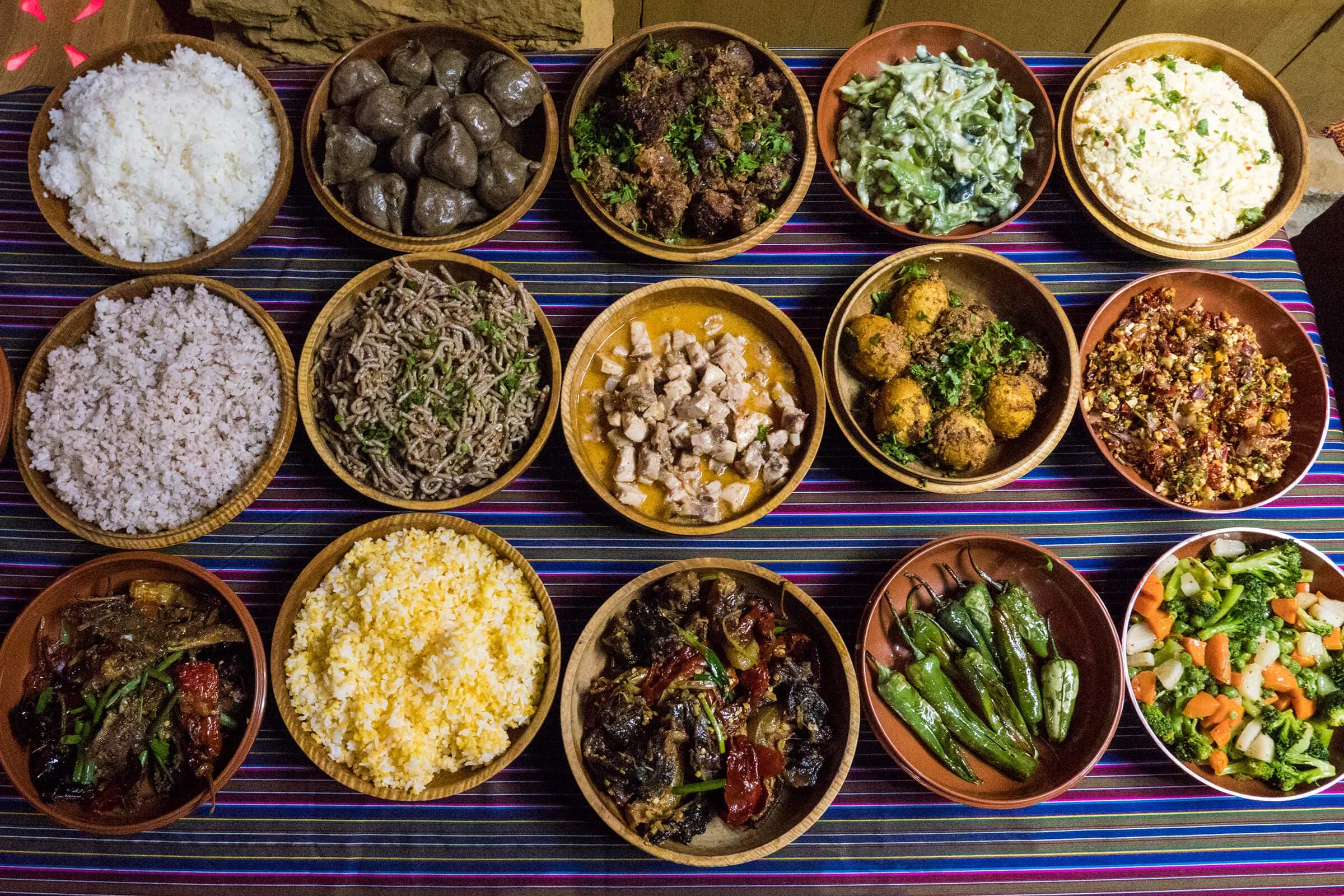
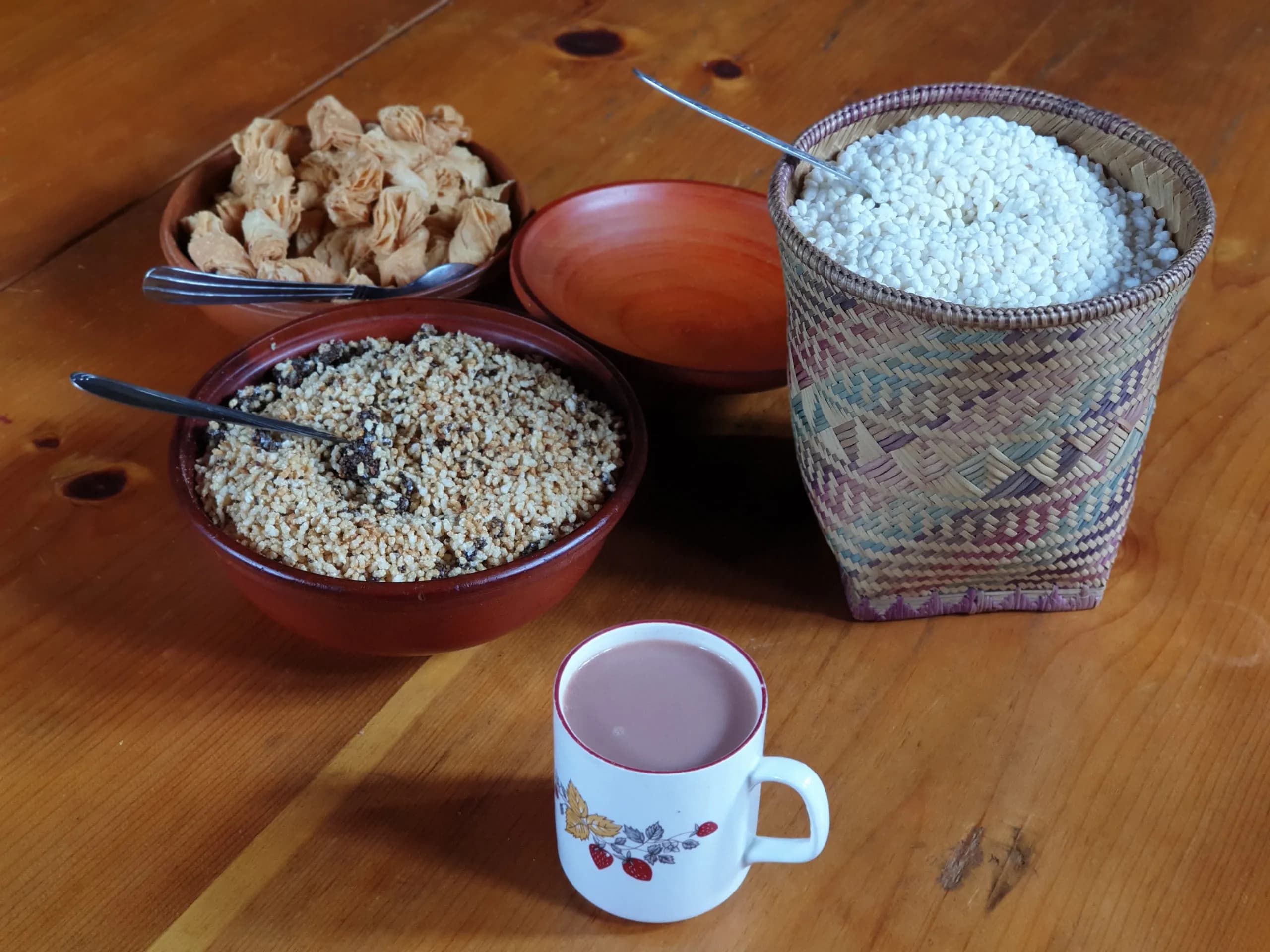
Ema datshi first — the national dish, in which chillies are cooked as a vegetable in their own right rather than used as a spice, softened with the local datshi cheese; it is hotter than most visitors expect, and we calibrate the heat with you rather than for you. Red rice from the lower valleys, nutty and pink, alongside the dried-and-fresh river fish, the buckwheat of Bumthang in its two forms — khuli, the soft pancakes, and puta, the grey buckwheat noodles — the firm Alpine-style cheeses of the Swiss Farm and its Red Panda wheat beer, suja the salted butter tea churned in a wooden dongmo, and the considered kitchens of the lodges, which read the season closely and cook what the valley is giving that week. The matched guide carries the doma and the cultural notes; nothing here is performed for you, and all of it is true to the place.
The route
A sample shape of the week
DAY 01
Arrival in Paro — the first table
Met in the arrivals hall, twenty minutes to the lodge, an unhurried walk to Rinpung Dzong if the light holds; a first supper of ema datshi and red rice, the chilli pitched gently to begin.
DAY 02
Paro — the market, the cheese, the chilli
The weekend market for the dried chillies strung in red curtains, the datshi, the fresh river greens; an afternoon introduction to the kitchen at the lodge, and the first measured climb of the chilli at dinner.
DAY 03
Across to Thimphu — a cooking lesson
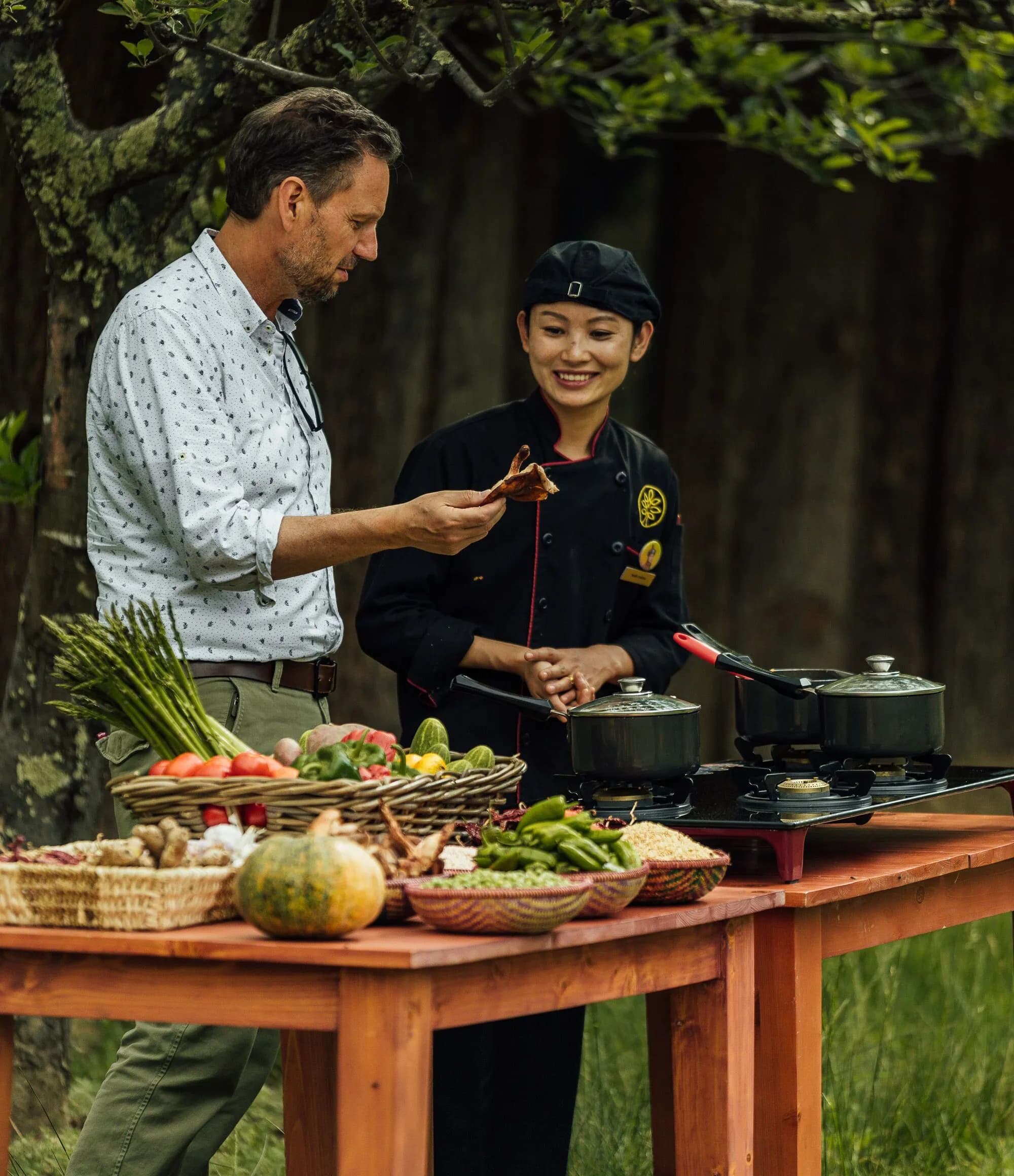
The Pa Chhu valley to the capital; the Centenary Farmers' Market on its riverbank, then a cooking lesson — ema datshi from the ground up, red rice, kewa datshi — with your hands in it, not watching from a stool.
DAY 04
Thimphu — the capital's kitchens, slowly
Memorial Chorten in early light; the Folk Heritage Museum kitchen and its suja demonstration churned in the dongmo; a long lunch of the capital's better Bhutanese cooking, and a quiet evening.
DAY 05
Over Dochu La to Punakha — a farmhouse lunch
The 3,100-metre pass and its 108 chortens, the range on a clear day; down into the warm Punakha valley for a long farmhouse lunch among the Lobesa paddies, red rice and river fish, the suspension bridge when the wind has dropped.
DAY 06
East to Bumthang — into the buckwheat heartland
The long, beautiful drive east over Pele La and the Yotong La into the high central valleys; arrival in Bumthang by late afternoon, a first supper of khuli pancakes and puta noodles, a hot stone bath against the mountain cold.
DAY 07
Bumthang — the Swiss Farm, cheese and ale
The Choekhor temple circuit between meals — Jakar Dzong, Kurjey Lhakhang — then the Bumthang Swiss Farm for the Gouda-style and Emmental-style cheeses and a fresh, unfiltered Red Panda wheat beer, with the Maurer family's Swiss-Bhutanese story.
DAY 08
Bumthang — a farmhouse meal, the buckwheat properly
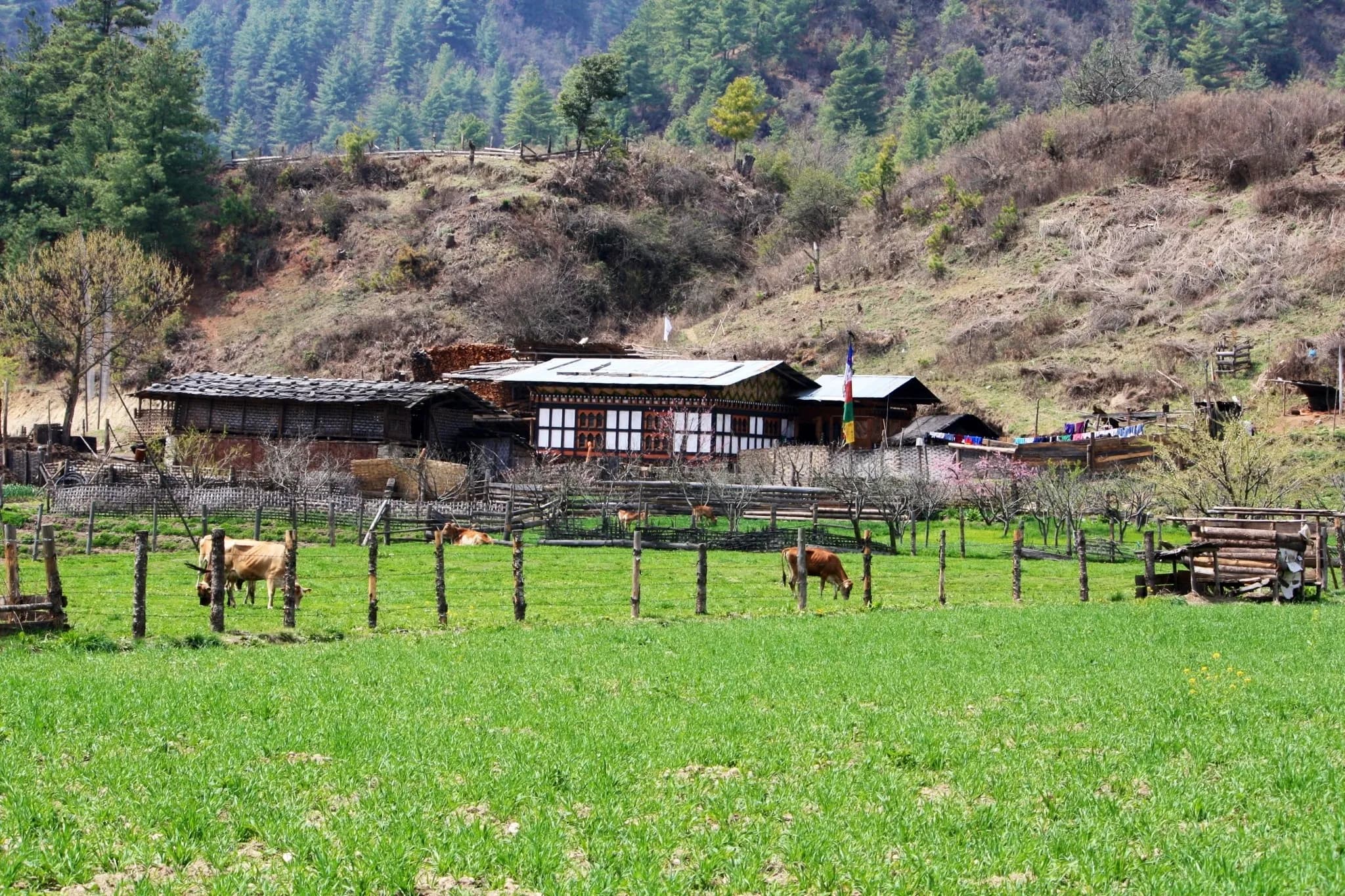
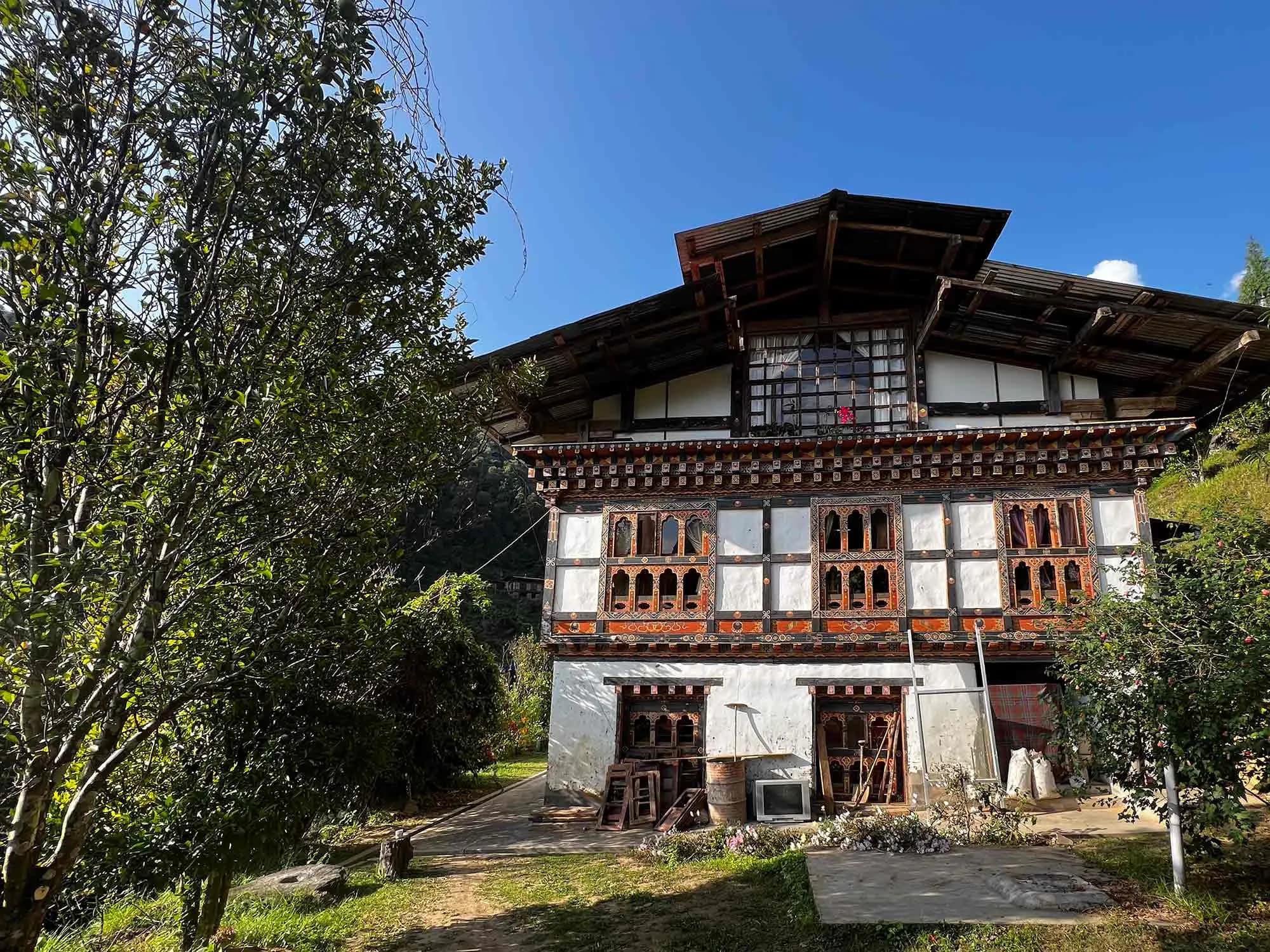
A morning among the buckwheat fields and a working farmhouse; a farmhouse meal cooked over the wood stove — buckwheat both ways, ema datshi, the apple of the valley to finish; a last quiet evening in the heartland.
DAY 09
Back towards Paro, and home
The drive west over the passes, or the short Bumthang–Paro flight where the schedule allows; a final night near Paro before the early departure, and the team writes a fortnight later.
The day-by-day above is illustrative. The proposal you receive is built around your dates, your pace and your interests, not this template.
Frequently asked
- Is Bhutanese food very hot?
- Ema datshi — the national dish — treats the chilli as a vegetable cooked in its own right rather than as a seasoning, so yes, it carries real heat, more than most visitors expect at first. The pleasure is that the heat is honest and the cooking around it is gentle: the datshi cheese softens it, red rice steadies it, and most kitchens will pitch the chilli to your taste without being asked twice. We calibrate the heat with you across the week, and there is always a milder kewa datshi (potato and cheese) or shamu datshi (mushroom) alongside.
- Will I find a fine-dining scene in Bhutan?
- Not in the sense a city traveller might mean, and that is rather the point. Bhutanese food is seasonal, farm-close, and unfussy — red rice, the chilli, river fish, buckwheat in the high valleys, dairy and apples. What the premium lodges add is a considered kitchen that reads the season closely and cooks what the valley is giving that week, rather than an imported menu. The journey is built around that honesty: a farmhouse meal over a wood stove, a cooking lesson with your hands in it, the cheese-and-ale farm in Bumthang — the pleasures are real and close to the ground.
- What makes Bumthang worth the drive east?
- Bumthang is the central heartland — the high cluster of valleys you reach on eight nights and above, a long day's drive east of Punakha over the Pele La and the Yotong La. It is buckwheat country: the soft khuli pancakes and the grey puta noodles you will not meet so readily further west. It is also the home of the Bumthang Swiss Farm, the legacy of a Swiss agronomist who settled in the valley and brought Alpine cheese-making and brewing — the firm Gouda-style and Emmental-style cheeses, and the unfiltered Red Panda wheat beer, poured fresh after a cold day. For a traveller who eats their way through a country, it is the heart of the journey.
- What is suja, and the hot stone bath?
- Suja is the Bhutanese butter tea — fermented brick tea, butter (traditionally yak butter), and salt, churned together in a wooden dongmo until it turns smooth. The salted, buttery register is unfamiliar at first and grows on most visitors over a cup or two; it is offered the moment you arrive at a household, and accepting it is part of the welcome. The hot stone bath — menchu — is the farmhouse's own restorative: river stones heated in a fire and lowered into a wooden tub of water and artemisia, the most welcome thing after a cold day in the high valleys. Both feature through the week, and both are part of the table as much as the kitchen.
- How does the flight to Bhutan work?
- All flights to Bhutan land at Paro, the country's only airport, operated by Drukair (KB) and Bhutan Airlines (B3), typically via a regional hub. We advise on the routing and ticket the Paro sector on your behalf at the prevailing rate, and we arrange everything within Bhutan — the lodges, the matched guide, the in-country logistics, the visa, and the Sustainable Development Fee of USD 100 per night, which is set by the Royal Government of Bhutan and included transparently in your price breakdown.
Journeys you might also weigh
- 01Bhutan arts and crafts journeyA small-group Bhutan journey for travellers who want the country through its craftsmen — the thirteen traditional arts taught at the National Institute for Zorig Chusum, a thangka painter at the proportioned grid, a carver releasing a mask from a block, a dzong read for how it was built rather than only admired. Paro, Thimphu, Punakha, and back, with the days kept generous so that a workshop runs to its own length and a maker or two is met properly rather than glimpsed.8 nights
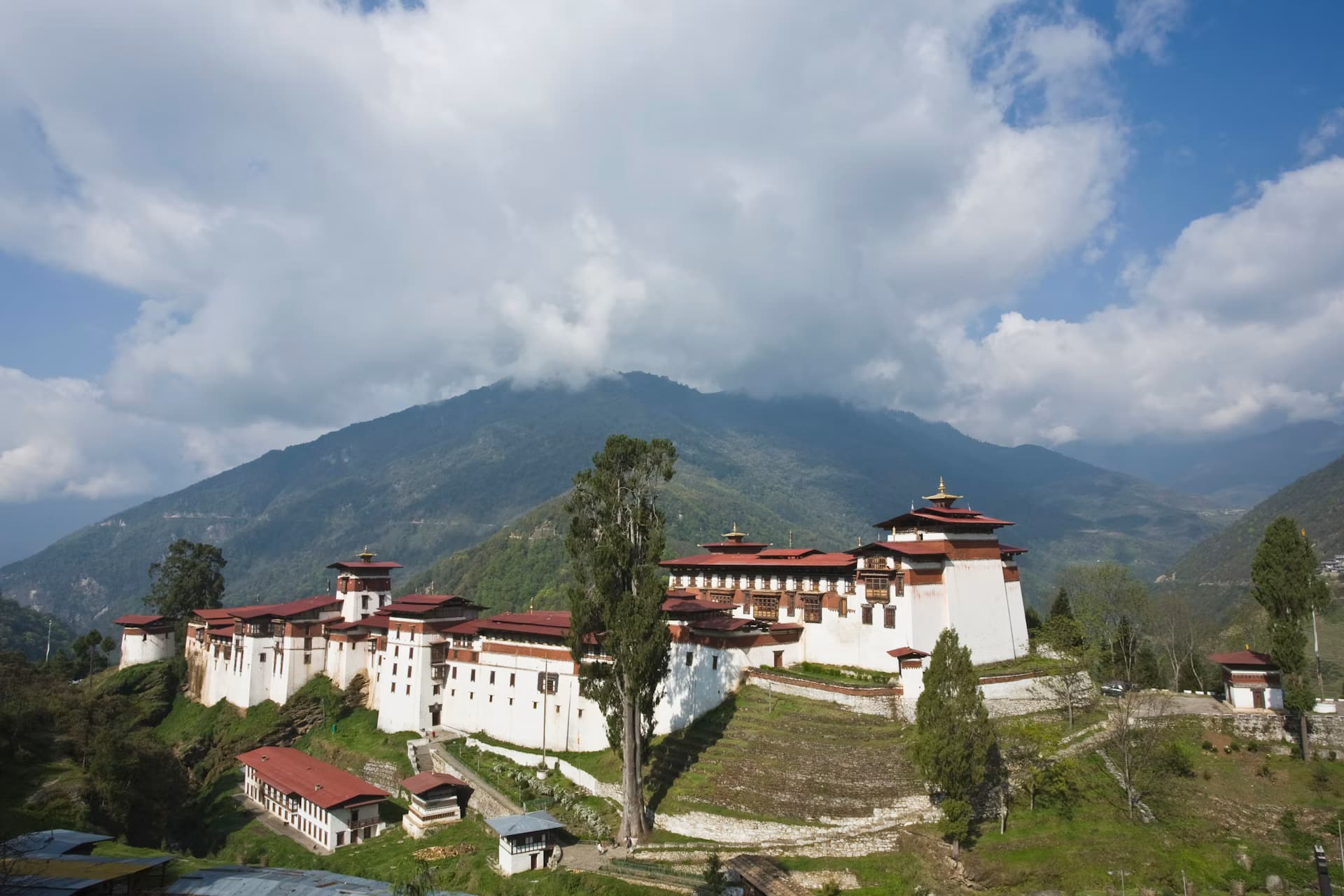
from $8,000 - 02Bhutan history and heritage journeyA small-group Bhutan journey for travellers who want the country's history where it actually stands — in the dzongs that built the state and the museums that hold its memory. Simtokha, the first dzong of all; the National Museum in the round Ta Dzong above Paro; Punakha, the former winter capital where the kings are still crowned; and Trongsa, the ancestral seat from which the royal house arose, its own Ta Dzong telling the Wangchuck story room by room. Paro, Thimphu, Punakha, and Trongsa, paced so that a gallery is given its hour and a dzong is read rather than only photographed.8 nights
from $9,000 - 03Bhutan wellness retreatA Bhutan wellness journey for the traveller who has done the spa-and-yoga context elsewhere and wants something with cultural and traditional depth. Sowa Rigpa (the Bhutanese-Tibetan traditional medicine system), hot stone baths in the menchu tradition, considered Bhutanese cuisine, generous unhurried pacing, the flagship wellness lodges. Ten nights typical; luxury or signature tier.10 nights
from $22,000
Begin when you're ready.
A few questions, or a conversation in your own words. A bespoke draft either way.

