A HERITAGE-LED JOURNEY
Bhutan history and heritage journey — Eight nights in Bhutan, the country read through its dzongs and museums.
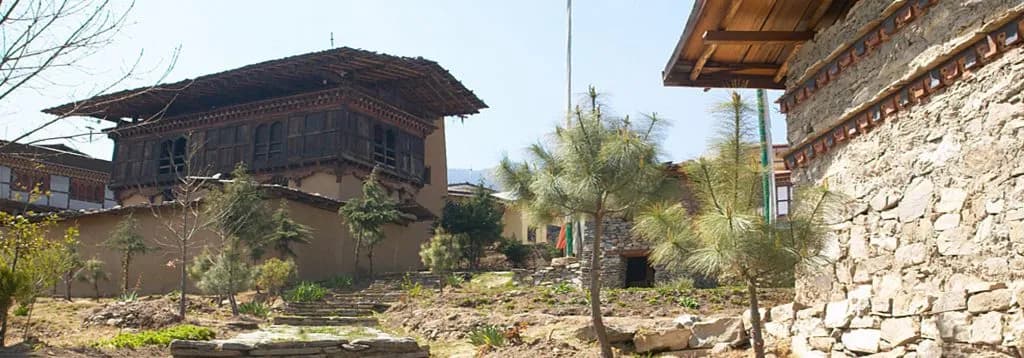
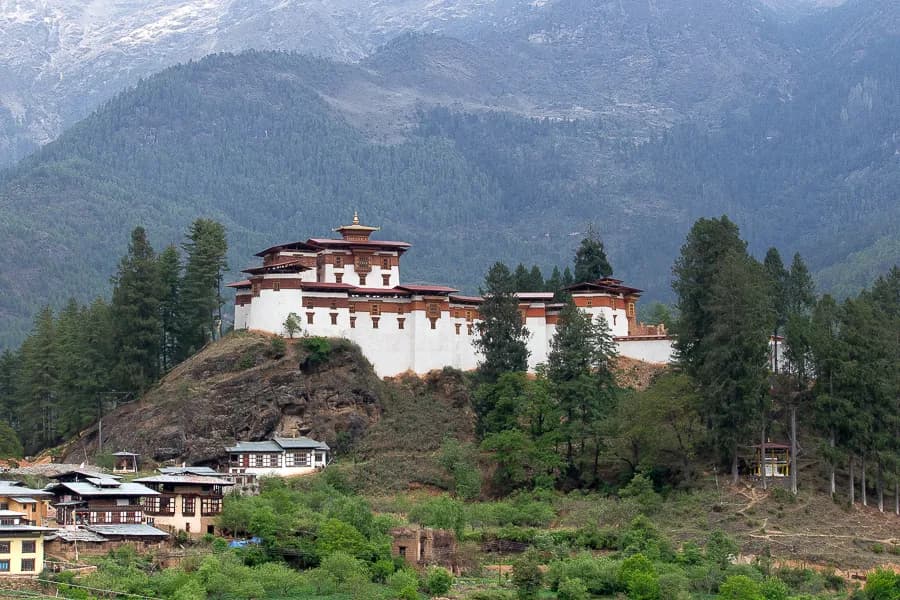
A small-group Bhutan journey for travellers who want the country's history where it actually stands — in the dzongs that built the state and the museums that hold its memory. Simtokha, the first dzong of all; the National Museum in the round Ta Dzong above Paro; Punakha, the former winter capital where the kings are still crowned; and Trongsa, the ancestral seat from which the royal house arose, its own Ta Dzong telling the Wangchuck story room by room. Paro, Thimphu, Punakha, and Trongsa, paced so that a gallery is given its hour and a dzong is read rather than only photographed.
8 nights · Luxury tier · from USD 9,000 per traveller
- Nights
- 8
- From
- USD 9,000per traveller
- Tier
- Luxury
- Best season
- Autumn
- Suits
- Small group
- Departing
- Worldwide
Why eight nights, and read in this order
Bhutanese history is not kept behind glass; it is kept in the buildings that made the country and is still in daily use within them. To read it well asks a little patience and the right sequence. This journey begins where the dzong tradition itself begins — Simtokha, built by the Zhabdrung Ngawang Namgyal in 1629, the oldest dzong still standing — then sets a frame for everything that follows at the National Museum of Bhutan above Paro, before drawing the thread westward and inland: Punakha, the former winter capital and the coronation site to this day, and Trongsa, the ancestral seat from which the royal house rose. Eight nights across Paro, Thimphu, Punakha, and Trongsa gives each its proper length and holds the founder's pacing — Paro and Thimphu no more than three nights each, Punakha no more than two — so the week stays a reading rather than a march.
The dzong as the argument of the state
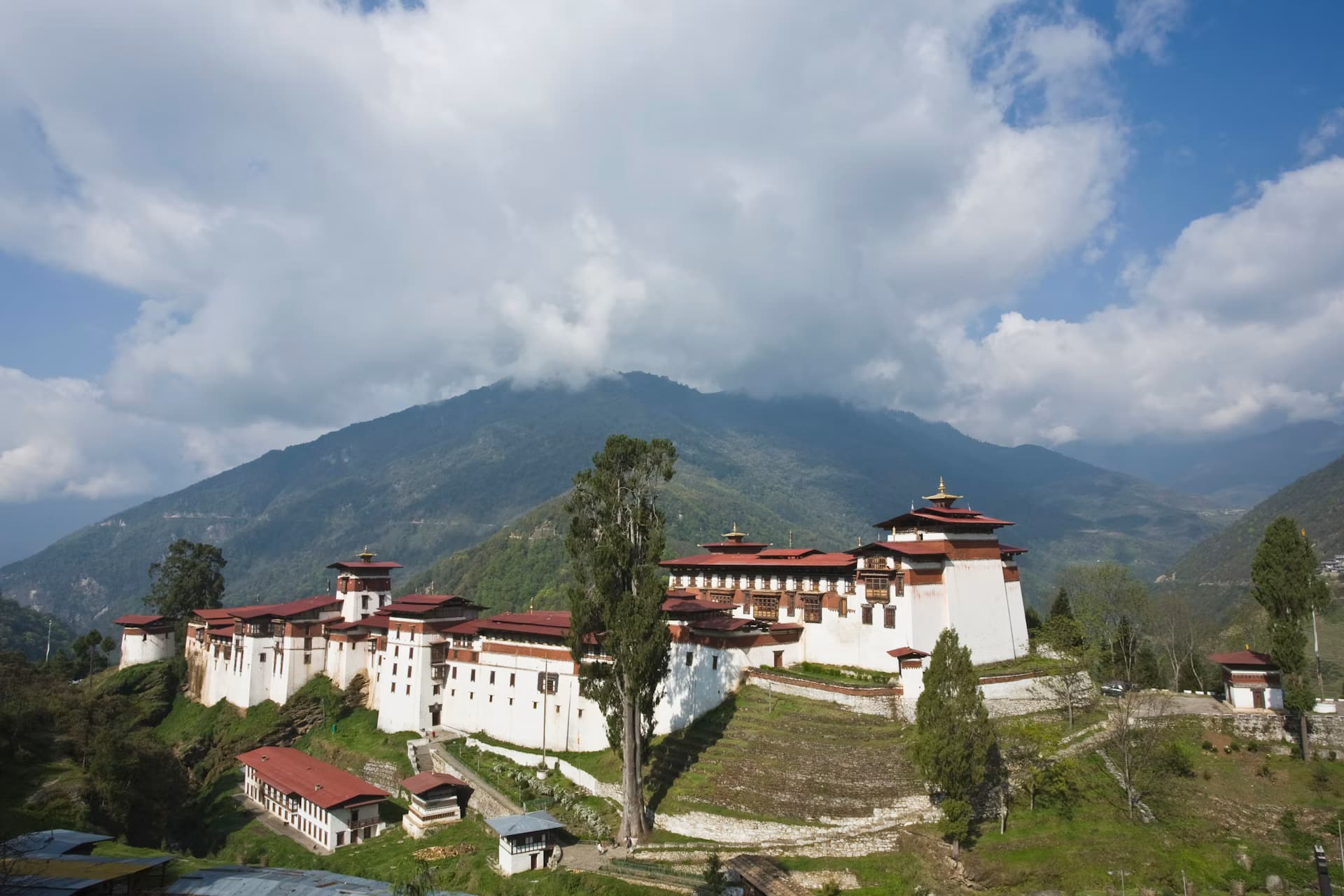
The dzong is the single most Bhutanese form of building, and the country's history is largely the history of what was decided inside its walls. When the Zhabdrung Ngawang Namgyal arrived in 1616 and set about drawing the warring valleys under one authority, the dzong — fortress, monastery, and seat of administration in one — was his chief instrument; Simtokha, raised in 1629, was the first. Every later dzong descends from that model, and each carried real power: Punakha as the seat of government through the centuries; Trongsa commanding the only road between western and eastern Bhutan, its governorship the most powerful provincial title in the land. Read in turn, the dzongs are not a series of monuments but the argument of the Bhutanese state, set down in rammed earth and timber and still being made.
Two Ta Dzongs, two ways of holding memory
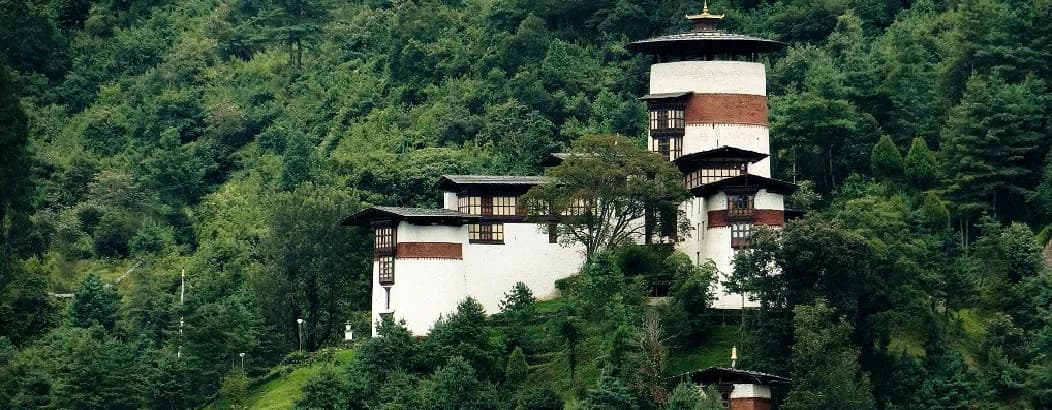
A ta dzong is a watchtower — the high, often round fort raised above a dzong to guard it — and on this journey two of them have become the country's principal museums. The round Ta Dzong above Rinpung Dzong in Paro, built in 1649, was converted in 1968 under His Majesty the Third Druk Gyalpo Jigme Dorji Wangchuck into the National Museum of Bhutan, the principal national collection of thangka, bronze, textile, and arms. The Ta Dzong above Trongsa was opened in 2008 as the museum that traces the Wangchuck dynasty from its origins through to His Majesty the present King. One museum frames the whole arc of Bhutanese art and faith; the other tells the story of the royal house in the place it began. Visited within a single journey, they are the country explaining itself.
Who you'll travel with
One Bhutanese guide for the full week — matched from a small, carefully curated network, chosen for a genuine command of the history and the patience to let a gallery or a dzong courtyard run to its own length. The guide who can read a thangka's iconography, place a carved slate at Simtokha within the tradition, and walk the Trongsa museum naming the reigns in order is the difference between passing through a building and understanding why it stands. Honorific and protocol around the royal portraits and the shrines are second nature to a good Bhutanese guide, and are quietly briefed before each visit. The guide is named in your proposal before you confirm, and we change the match if it does not feel right.
The route
A sample shape of the week
DAY 01
Arrival in Paro — the frame is set
Met in the arrivals hall, twenty minutes to the lodge; an unhurried first walk to Rinpung Dzong if the light holds, the guide reading the carved window frames and painted brackets as a first lesson in how a dzong is built and what it was for.
DAY 02
Paro — the National Museum in the Ta Dzong
A long morning in the round Ta Dzong above Rinpung Dzong, now the National Museum of Bhutan — thangka, bronze statuary, textile, arms, and the celebrated postage stamps; the walk down to Rinpung Dzong afterward, the whole arc of the country's art set out before the journey deepens.
DAY 03
Across to Thimphu — Simtokha, the first dzong
The Pa Chhu valley to the capital, with the stop the day is built around: Simtokha Dzong, raised by the Zhabdrung in 1629, the oldest dzong in the country, read for its carved-slate reliefs and its place at the very beginning of the tradition.
DAY 04
Thimphu — the capital, taken slowly
Tashichho Dzong, the seat of government, in the right light; the National Memorial Chorten among the circumambulating faithful; the National Textile Museum at an unhurried hour, the weaving traditions read as part of the same heritage.
DAY 05
Over Dochu La to Punakha — the former winter capital
The 3,100-metre pass and the 108 chortens; down the 75 kilometres to Punakha Dzong at the confluence of the Mo and Pho Chhu, the seat of government through the centuries and the coronation site of the kings, read in late-afternoon light.
DAY 06
Punakha to Trongsa — the road that made a governor
West and inland over the Pele La toward central Bhutan, the country opening out; arrival in Trongsa on its high ridge above the Mangde Chhu gorge, the ancestral seat of the royal house, with the dzong read across the gorge in the evening as the roofs stagger along the spur.
DAY 07
Trongsa — the Wangchuck story, room by room
The dzong in the morning, the largest in the country, from which every Crown Prince has governed before the throne; the Ta Dzong museum above it through the afternoon, the dynasty traced from its origins to His Majesty the present King — service to the people the thread that runs through every reign.
DAY 08
Trongsa toward Paro — the week settles
The long, handsome drive back west, the passes recrossed in clear morning air; a final unhurried stop as the road allows, ahead of the onward flight, the country's history now read in the order it was made.
The day-by-day above is illustrative. The proposal you receive is built around your dates, your pace and your interests, not this template.
Frequently asked
- Which dzong is the oldest, and do we see it?
- Simtokha Dzong, on a ridge a few kilometres south of Thimphu, is the oldest dzong still standing in Bhutan — the first that Zhabdrung Ngawang Namgyal built, in 1629, at the beginning of the dzong tradition. We read it on the third day, on the way into the capital, both for its carved-slate reliefs among the finest old stone carvings in the country and because it frames every later dzong on the journey: Punakha, Tashichho, and Trongsa all descend from the model Simtokha began.
- What is a Ta Dzong, and why do two of them feature so heavily?
- A ta dzong is a watchtower — the higher, often round fort raised above a dzong to guard it. On this journey two of them have become the country's principal museums. The round Ta Dzong above Rinpung Dzong in Paro, built in 1649, holds the National Museum of Bhutan, the principal national collection; the Ta Dzong above Trongsa, opened as a museum in 2008, tells the story of the Wangchuck dynasty in the place the royal house arose. Reading both within one journey is the point — one frames the country's art and faith, the other its royal history.
- Why is Trongsa called the ancestral seat of the royal dynasty?
- Trongsa Dzong commands the only road between western and eastern Bhutan, and its governorship — the Trongsa Penlop — was the most powerful provincial title in the country. His Majesty Ugyen Wangchuck held that office before he was chosen as the First Druk Gyalpo when the assembled monks and officials founded the hereditary monarchy in 1907. By a tradition continued to His Majesty the present King, every Crown Prince of Bhutan serves as Trongsa Penlop before ascending the throne, which is why Trongsa is held as the ancestral seat of the royal house.
- How is the founding of the monarchy framed on this journey?
- With the reverence it is held in by Bhutanese themselves. On 17 December 1907, after a long period of internal conflict, an assembly of senior monks and officials chose His Majesty Ugyen Wangchuck, then the Trongsa Penlop, as the First Druk Gyalpo, and the hereditary monarchy began. The date is now the National Day. The thread we follow at Trongsa is service: each Druk Gyalpo across the generations is remembered for what was given to the people and the country's wellbeing — the roads and schools, the opening to the wider world, the philosophy of Gross National Happiness — rather than for institutional achievement alone.
- Why include Punakha on a history journey rather than only Paro and Thimphu?
- Because Punakha is where much of the country's government was decided. The dzong at the confluence of the Mo and Pho Chhu was the former winter capital and the seat of government through the centuries, and it remains the coronation site of the kings — among the most significant buildings in the whole arc of Bhutanese history. It is 75 kilometres and about three hours from Thimphu over Dochu La at 3,100 metres, a drive that is itself part of the reading as the western valleys give way to the warmer Punakha basin.
- Is autumn the right season for a heritage journey?
- October and November give the clearest skies and the steadiest light — for the drive over Dochu La and the Pele La, for photographing Trongsa Dzong across its gorge, and for the long valley views the journey crosses. The museums are indoor and weather-independent in any season, but the autumn light is what makes the dzong courtyards and the central passes worth the unhurried pace. April is the second window, with the rhododendron in and longer evenings. We steer away from the deep monsoon of July and August, when the high passes can be made cloud-bound.
Journeys you might also weigh
- 01Bhutan arts and crafts journeyA small-group Bhutan journey for travellers who want the country through its craftsmen — the thirteen traditional arts taught at the National Institute for Zorig Chusum, a thangka painter at the proportioned grid, a carver releasing a mask from a block, a dzong read for how it was built rather than only admired. Paro, Thimphu, Punakha, and back, with the days kept generous so that a workshop runs to its own length and a maker or two is met properly rather than glimpsed.8 nights
from $8,000 - 02The Druk Path TrekThe classic high route between the two valleys: five or six days on the ridgeline that people walked long before there was a road, past alpine lakes and through rhododendron, camped with a full crew at the considered Bhutanese pace. The best first multi-day trek in the country, bookended by Taktsang and an easy descent into the capital.8 nights
from $9,000 - 03A Bhutan culinary journeyAn eight-night journey for a couple who travel by the table — Paro, Thimphu, Punakha, and on to the central heartland of Bumthang. Ema datshi and the Bhutanese love of the chilli; red rice in the lower valleys and buckwheat in the high ones; a farmhouse meal cooked over a wood stove; a cooking lesson with your hands in the dough; the cheese and the unfiltered wheat beer of the Bumthang Swiss Farm; suja by the fire; a hot stone bath at the end of the cold days; and the considered, season-close kitchens of the lodges between.8 nights
from $16,000
Begin when you're ready.
A few questions, or a conversation in your own words. A bespoke draft either way.

