A Bhutanese landmark
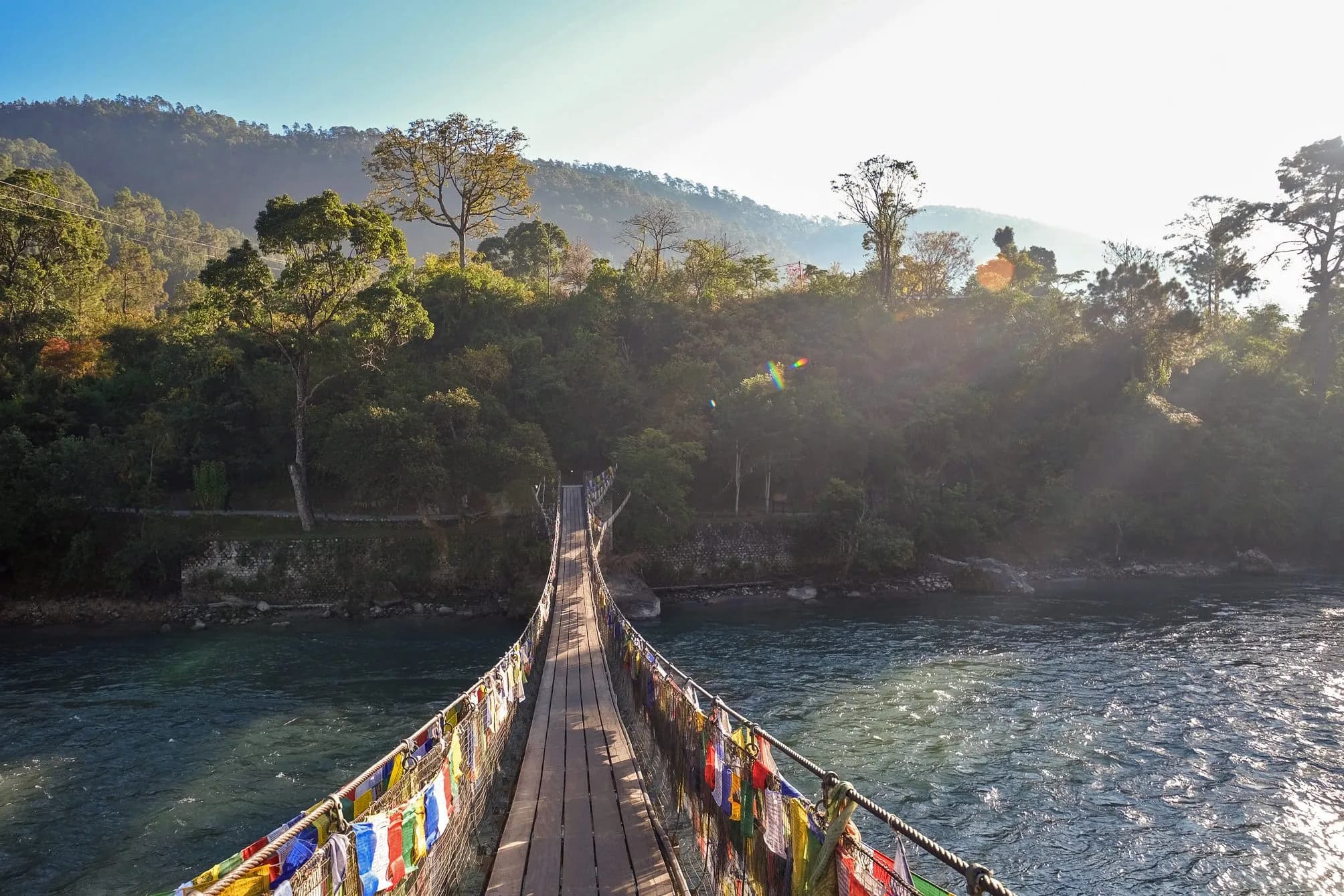
Punakha Suspension Bridge — one of the longest footbridges in Bhutan, swaying under a thousand prayer flags over the Pho Chhu.
Just downstream of Punakha Dzong, a long suspension footbridge crosses the Pho Chhu — the 'father river' — linking the dzong's meadows to the villages and rice terraces on the far bank. Among the longest such bridges in the country, it hangs draped in prayer flags that stream in the river wind, swaying gently underfoot as the green water runs below. It is both a working village crossing and one of the most photographed spots in the Punakha valley, and it is the start of the riverside walk up to the Khamsum Yulley Namgyal Chorten.
Also known as Punakha Bridge · Pho Chhu suspension bridge
- Location
- Over the Pho Chhu, downstream of Punakha Dzong, Punakha
- Elevation
- 1,240 m
- Kind
- landmark
The crossing
The bridge spans the Pho Chhu — the 'father river', one of the two rivers whose confluence cradles Punakha Dzong — just below the dzong itself. It is among the longest suspension footbridges in Bhutan, a slender deck slung between towers and hung thick with prayer flags that the river wind keeps in constant motion. To walk across is to feel the gentle sway of the cables and to see the dzong, the rice terraces, and the green river open around you. For the villages on the far bank it is simply the way home; for the visitor it is one of the loveliest few minutes in the valley.
The view and the walk
The bridge gives the finest low-angle view back to Punakha Dzong and along the river, and it is the natural start of the walk up the far bank to the Khamsum Yulley Namgyal Chorten — the elegant four-storey temple-stupa on its hill above the rice fields, built by the royal family. Many visitors cross the bridge, take the riverside path through the paddies, and climb to the chorten, making a half-day that joins two of Punakha's loveliest sights into a single gentle outing. The prayer flags overhead carry their mantras into the wind with every step — the bridge itself a kind of moving prayer.
A working bridge, not a stunt
It is worth saying that the bridge is not a contrivance for visitors but a genuine piece of village infrastructure, of the kind that has knitted Bhutan's river valleys together for centuries — the modern steel-cable descendant of the iron-chain bridges that the saint Thangtong Gyalpo strung across these same rivers in the 15th century. The prayer flags, the sway, and the river below are not staged; they are simply how a Bhutanese valley crosses its water. That ordinariness is part of the charm: a visitor shares the deck with farmers, schoolchildren, and the occasional laden pony.
Visiting
- Getting there
- The bridge is a short distance downstream of Punakha Dzong, reached on foot from the dzong's car park or the riverside road — an easy add-on to the Punakha Dzong visit. The matched guide arranges it, usually pairing the crossing with the walk to Khamsum Yulley Namgyal Chorten.
- Crossing it
- The crossing takes only a few minutes each way; the deck sways gently, which is part of the experience but worth knowing for anyone uneasy with heights or movement. It is open and free, with no time restriction. Allow a half-day if combining with the chorten walk on the far bank.
- What to bring
- Comfortable shoes and, in the warmer months, sun protection — the Punakha valley sits low and warm. The bridge is exposed, so a hat and water help on a bright day. Photography is welcome and rewarded; the light is best in the morning.
- Best time to visit
- Year-round. Punakha's low elevation makes it warm and pleasant when the higher valleys are cold, so the bridge is a fine winter outing. Spring (jacaranda in bloom around the valley) and autumn (clear skies, harvest in the paddies) are especially lovely.
Journeys featuring this site
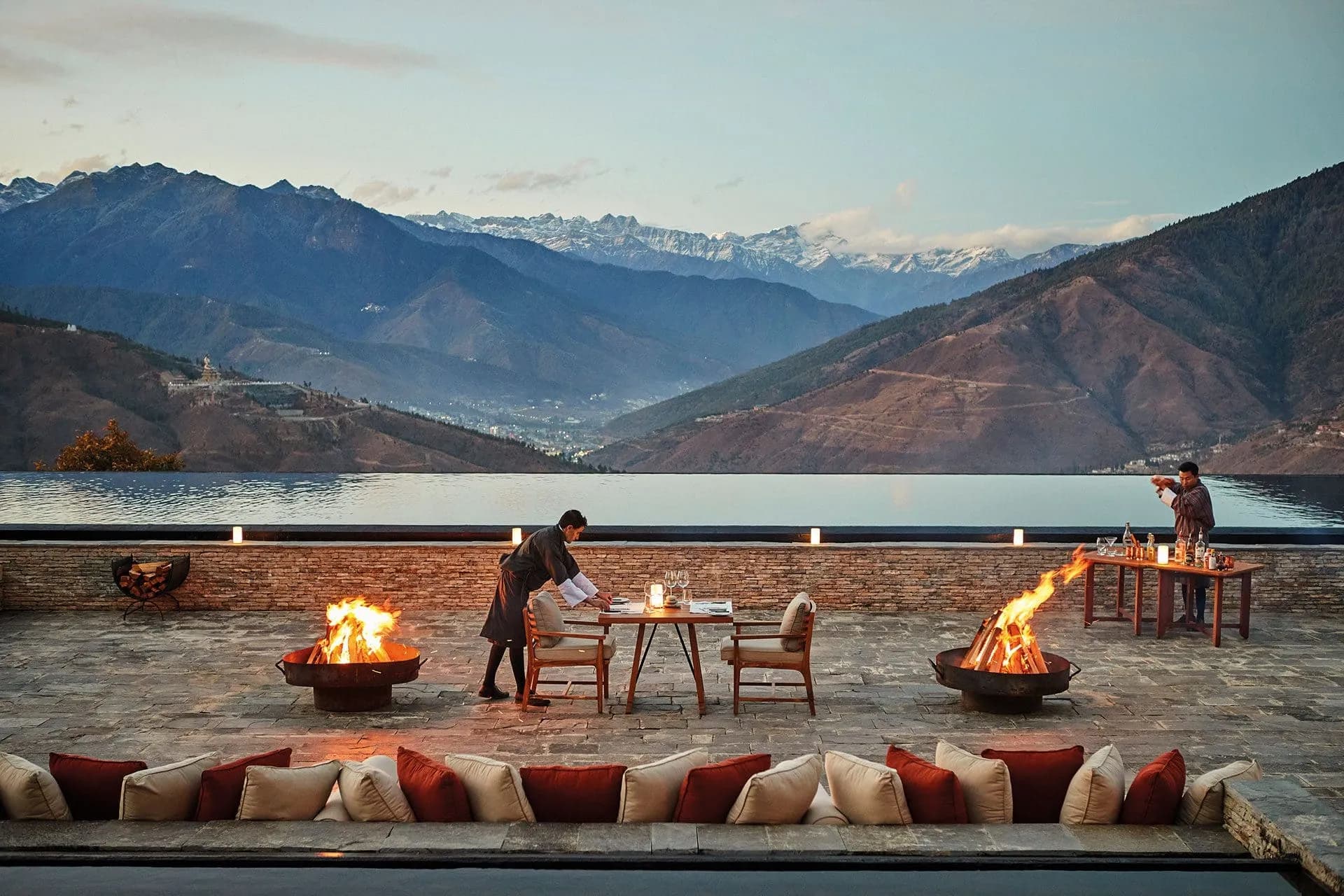 JourneyThe signature-tier Bhutan journey — private knowledgeable guide, the most considered lodge curation, helicopter or charter between valleys, exclusive-use arrangements where the season allows.The signature-tier Bhutan journey. Private knowledgeable guide, the most considered lodges, helicopter or PC-24 charter, exclusive-use arrangements. By invitation, from USD 14,000.
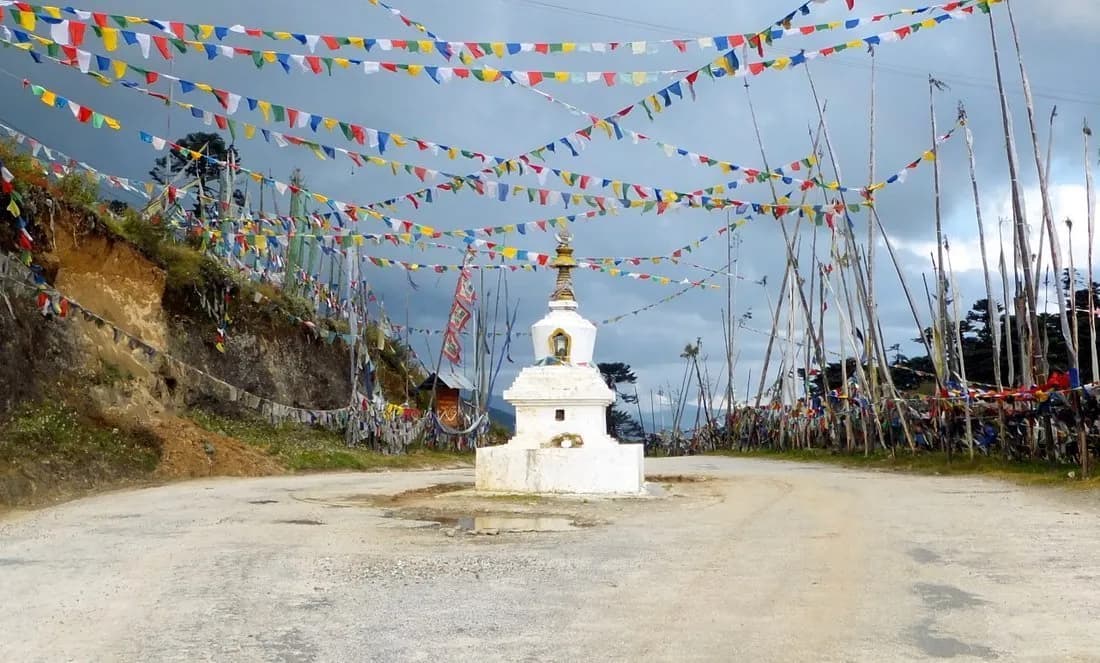 JourneyOctober light, Bhutan, a week.A seven-night Bhutan photography journey in October — Bhutan, golden-hour access at Punakha Dzong, a tripod-friendly guide, and transparent pricing.
Journeys that visit Punakha Suspension Bridge
Frequently asked
- Is the Punakha Suspension Bridge safe to cross?
- Yes — it is a sound, regularly used village footbridge, modern steel cable rather than anything precarious. It does sway gently underfoot, which is part of the experience but worth knowing for anyone uneasy with movement or heights. Thousands cross it without concern, including local schoolchildren and farmers.
- What is there to do at the bridge?
- Cross it for the prayer-flag-draped walk and the fine view back to Punakha Dzong, and use it as the start of the gentle riverside walk up to the Khamsum Yulley Namgyal Chorten on the far bank. Together the bridge and the chorten make one of Punakha's loveliest half-days.
- How long does it take?
- Crossing the bridge is only a few minutes each way. If you combine it with the walk to Khamsum Yulley Namgyal Chorten across the river — the usual arrangement — allow a half-day for the round outing at a gentle pace.

