A Bhutanese temple
Thangbi Lhakhang — a 15th-century temple north of Kurjey, famous for its fire-blessing festival.
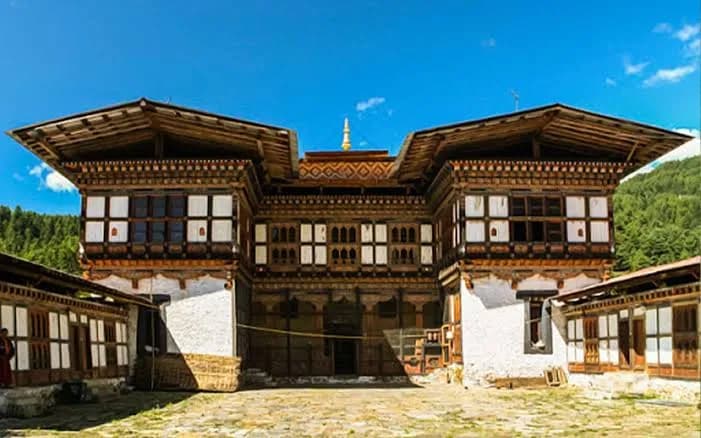
North of Kurjey Lhakhang in the Choekhor valley of Bumthang, across the Chamkhar river and among the fields, Thangbi Lhakhang is a serene 15th-century temple founded by a master of the Karma Kagyu tradition and later linked to the great Bumthang treasure-revealer Pema Lingpa. It is best known for its winter festival, the Thangbi Mani, which culminates in a fire-blessing — the worshippers running through a gateway of flame to be cleansed of the year's misfortune. A quiet, old, and atmospheric temple away from the busier Bumthang sights, it rewards the visitor who reaches it.
Also known as Thangbi Goemba · Thangbi
- Location
- North of Kurjey, Choekhor valley, Bumthang
- Founded
- 1470
- Elevation
- 2,700 m
- Kind
- lhakhang
An old temple of the Choekhor valley
Thangbi Lhakhang was founded in the 15th century by a master of the Karma Kagyu school — one of the principal lineages of Tibetan Buddhism — and later passed into association with Pema Lingpa, the Bumthang-born treasure-revealer whose presence runs through the whole valley. It stands north of Kurjey Lhakhang in the broad Choekhor valley, across the Chamkhar river and among the fields and farms, in the quieter upper reaches away from the main cluster of Bumthang's great temples. Old, modest, and atmospheric, it holds fine old images and murals, and it carries the layered religious history typical of Bumthang, where the Nyingma and Kagyu traditions and the Pema Lingpa lineage are woven together across the centuries.
The fire-blessing festival
Thangbi is best known for its winter festival, the Thangbi Mani, held in the cold months and drawing the surrounding villages to the temple. Its most striking moment is the fire-blessing: a great gateway of burning brush is lit, and the worshippers — and the brave among the visitors — run through the flames as they die down, a rite held to purify them of the misfortune and obstacles of the passing year. It is a dramatic and deeply felt ceremony, of the kind that gives the Bumthang festivals their particular power, and it is one of the reasons a visitor times a winter Bumthang journey to coincide with it.
Reaching it
Thangbi lies in the upper Choekhor valley, reached by a drive and a short walk across the Chamkhar river — beyond the main Bumthang temple circuit of Kurjey, Jambay, and Tamshing, in the quieter farmland to the north. The walk to it, through the fields with the valley opening around, is part of its appeal, and it can be combined with the nearby Ngang Lhakhang further up the valley. For the visitor who has seen the great central temples and wants the quieter, older corners of Bumthang, Thangbi is a rewarding addition — an old temple in a peaceful setting, with a fire-blessing festival that few who witness it forget.
Visiting
- Getting there
- Thangbi is in the upper Choekhor valley north of Kurjey, reached by a drive and a short walk across the Chamkhar river — beyond the main Bumthang temple circuit, in the quieter farmland. The matched guide arranges the visit, often with the nearby Ngang Lhakhang.
- What to see
- The old temple with its images and murals, and the peaceful upper-valley setting. Allow 30–45 minutes plus the short walk. Visitors who time a winter journey to the Thangbi Mani festival can witness the fire-blessing — a highlight of the Bumthang winter.
- Dress and protocol
- Standard temple protocol — shoulders and knees covered, shoes and hats removed before the shrine, no photography inside. At the festival, visitors follow the guide's lead on where to stand and whether to take part in the fire-blessing run.
- Best time to visit
- Year-round for the temple, with the winter Thangbi Mani festival the special draw. The Bumthang autumn and spring are loveliest for the walk; the valley is high and cold in winter, when the festival is held — warm layers essential.
Journeys featuring this site
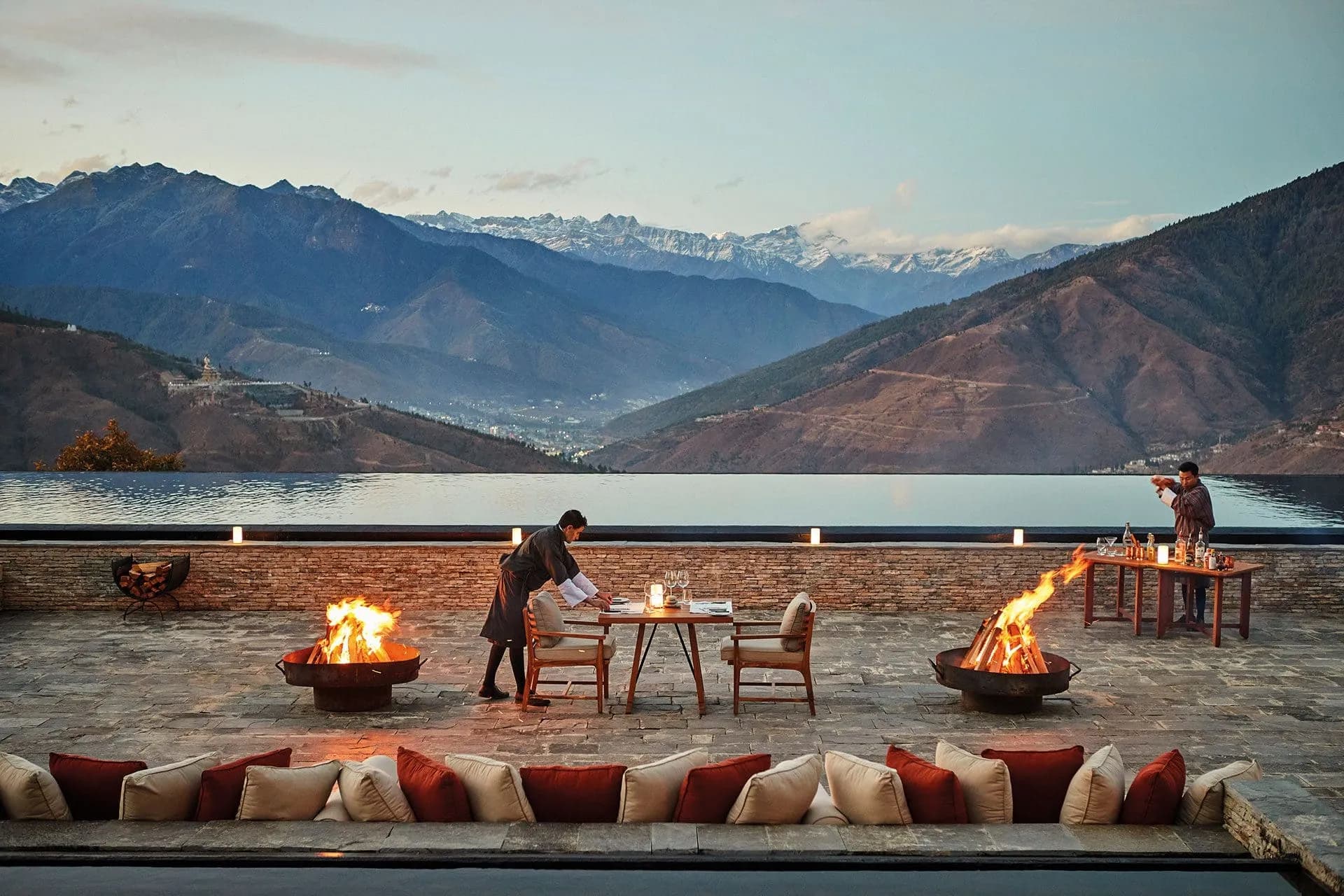 JourneyThe signature-tier Bhutan journey — private knowledgeable guide, the most considered lodge curation, helicopter or charter between valleys, exclusive-use arrangements where the season allows.The signature-tier Bhutan journey. Private knowledgeable guide, the most considered lodges, helicopter or PC-24 charter, exclusive-use arrangements. By invitation, from USD 14,000.
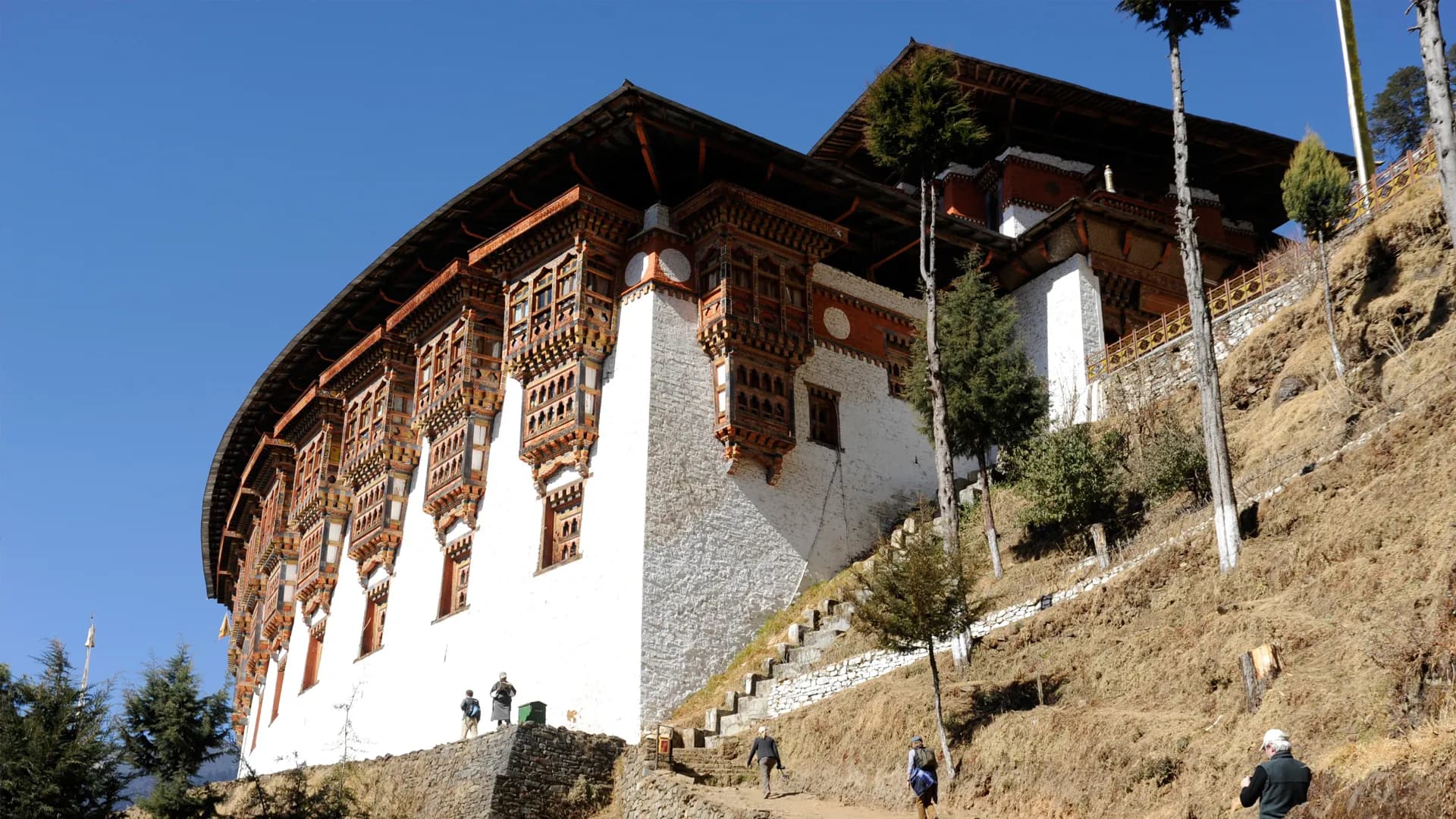 JourneyTen nights for the Buddhist pilgrim — the principal sites, with monastic context.A ten-night Bhutan Buddhist pilgrimage for Asian-Buddhist travellers. Monastic context; matched monastic-trained guide; Bumthang religious circuit.
Frequently asked
- What is the Thangbi Mani festival?
- The winter festival of Thangbi Lhakhang, drawing the surrounding villages to the temple, whose most striking moment is a fire-blessing: a gateway of burning brush is lit and worshippers run through the dying flames to be purified of the year's misfortune. It is a dramatic, deeply felt ceremony, and a reason to time a winter Bumthang journey to it.
- How old is Thangbi Lhakhang?
- It was founded in the 15th century by a master of the Karma Kagyu tradition, and later became associated with Pema Lingpa, the Bumthang-born treasure-revealer. It is one of the older temples of the Choekhor valley, holding fine old images and murals, with the layered religious history typical of Bumthang.
- Is it worth the walk beyond the main temples?
- For the visitor who has seen the great central temples (Kurjey, Jambay, Tamshing) and wants the quieter, older corners of Bumthang, yes — Thangbi is an atmospheric old temple in a peaceful upper-valley setting, reached by a pleasant walk across the river, and it pairs with the nearby Ngang Lhakhang. The fire-blessing festival, for those who can time it, is unforgettable.

