A Bhutanese monastery
Tharpaling Monastery — the high Nyingma seat where the great master Longchenpa taught.
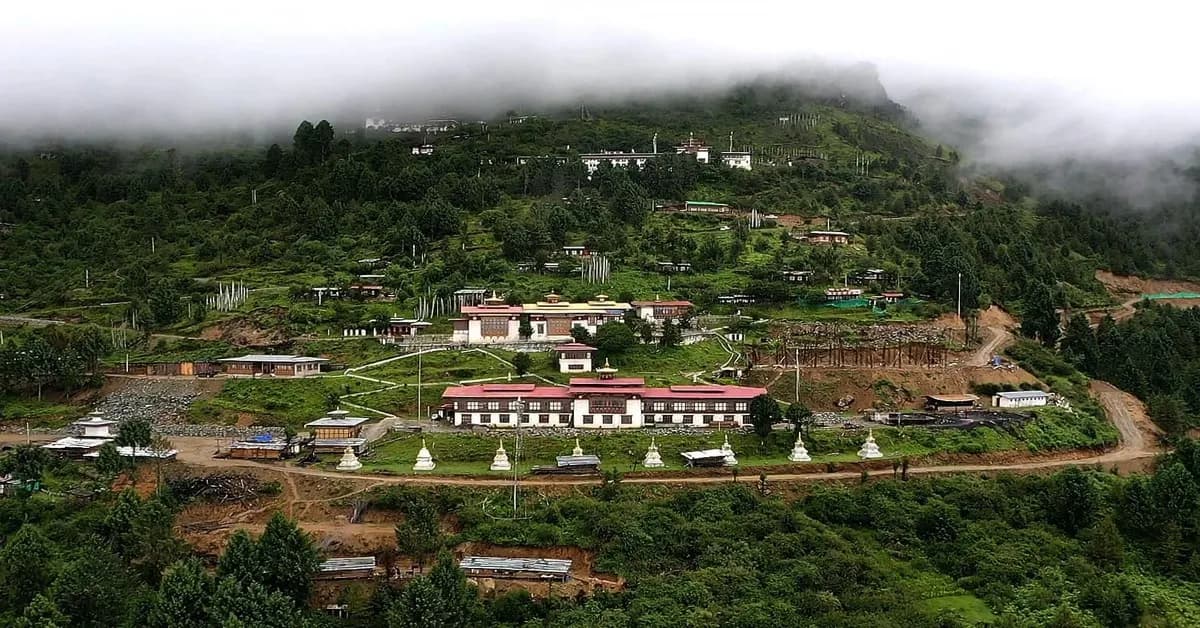
High on the mountainside above the Chumey valley of Bumthang, at around 3,600 metres, Tharpaling is one of the principal Nyingma monasteries of Bhutan — the seat established by Longchen Rabjam, the towering 14th-century master known as Longchenpa, who meditated, wrote, and taught here during his years in the country. A large and active monastic community still studies on the slope, the white buildings stepping up the mountain beneath the peak, with the whole Chumey valley falling away below. For visitors drawn to the contemplative tradition and the high places, Tharpaling is among Bumthang's most rewarding and least-crowded sites.
Also known as Thharpaling · Tharpaling Goemba
- Location
- High above the Chumey valley, Bumthang
- Founder
- Longchen Rabjam (Longchenpa), 14th century
- Elevation
- 3,600 m
- Kind
- monastery
Longchenpa's seat
Tharpaling is bound to one of the greatest names in Himalayan Buddhism: Longchen Rabjam (1308–1364), the master known as Longchenpa, whose writings on the Dzogchen teachings of the Nyingma tradition are among the most revered in all of Tibetan Buddhism. Driven from Tibet by a political quarrel, Longchenpa spent years in Bhutan, and it was here above the Chumey valley that he established Tharpaling — meditating, composing, and teaching on the high slope. To visit is to come to one of the places where the Nyingma tradition put down deep roots in Bhutanese soil, sanctified by the presence of a master whose works are still studied across the Buddhist world.
The monastery on the mountain
Tharpaling is no quiet ruin but a large and active monastic community — the white buildings of the monastery and its college stepping up the steep mountainside at around 3,600 metres, home to monks pursuing the long Nyingma course of study and practice. Above and around it are meditation hermitages and the related sites of Choedrak and Zhambala, where retreatants withdraw into the high solitude. The setting is the substance of the place: the thin clear air, the prayer flags on the ridge, the whole sweep of the Chumey valley and the central Bhutanese mountains laid out below. It is a working centre of the contemplative life in a setting that explains why such a life is sought here.
Why a visitor comes
Tharpaling rewards the visitor willing to climb a little higher than the valley-floor temples — for the master's legacy, for the active monastic life, and above all for the high, spacious setting that the lower sites cannot offer. It sits in the Chumey valley, the western of Bumthang's four valleys and the first reached on the drive in from Trongsa, near the yathra-weaving village of Zugney. For those with an interest in the Nyingma tradition and the Dzogchen teachings, or simply for the magnificent high vantage over central Bhutan, it is one of Bumthang's quiet highlights.
Visiting
- Getting there
- Tharpaling is reached by a climbing side road off the Chumey valley, a rough but driveable track up the mountainside, followed by a short walk to the monastery. From Jakar it is around an hour and a half; the matched guide arranges the drive and advises on the road, which can be affected by weather at the elevation.
- What to see
- The monastery and its college, the shrine halls, and the high ridge with its prayer flags and valley panorama; energetic visitors can walk up towards the Choedrak hermitage above. Allow 1.5–2 hours including the walking. The matched guide adds the context of Longchenpa and the Nyingma tradition.
- Altitude and protocol
- At around 3,600 metres, Tharpaling is high — visitors take the walking gently and watch for the effects of altitude. Standard monastery protocol applies: shoulders and knees covered, shoes and hats removed before the shrines, no photography inside, the quiet register of an active monastic community.
- Best time to visit
- Spring through autumn (April–November) is the reliable window; the high road can be difficult in deep winter snow, and the guide confirms access before the day. Clear weather gives the magnificent views that are half the reason to make the climb.
Journeys featuring this site
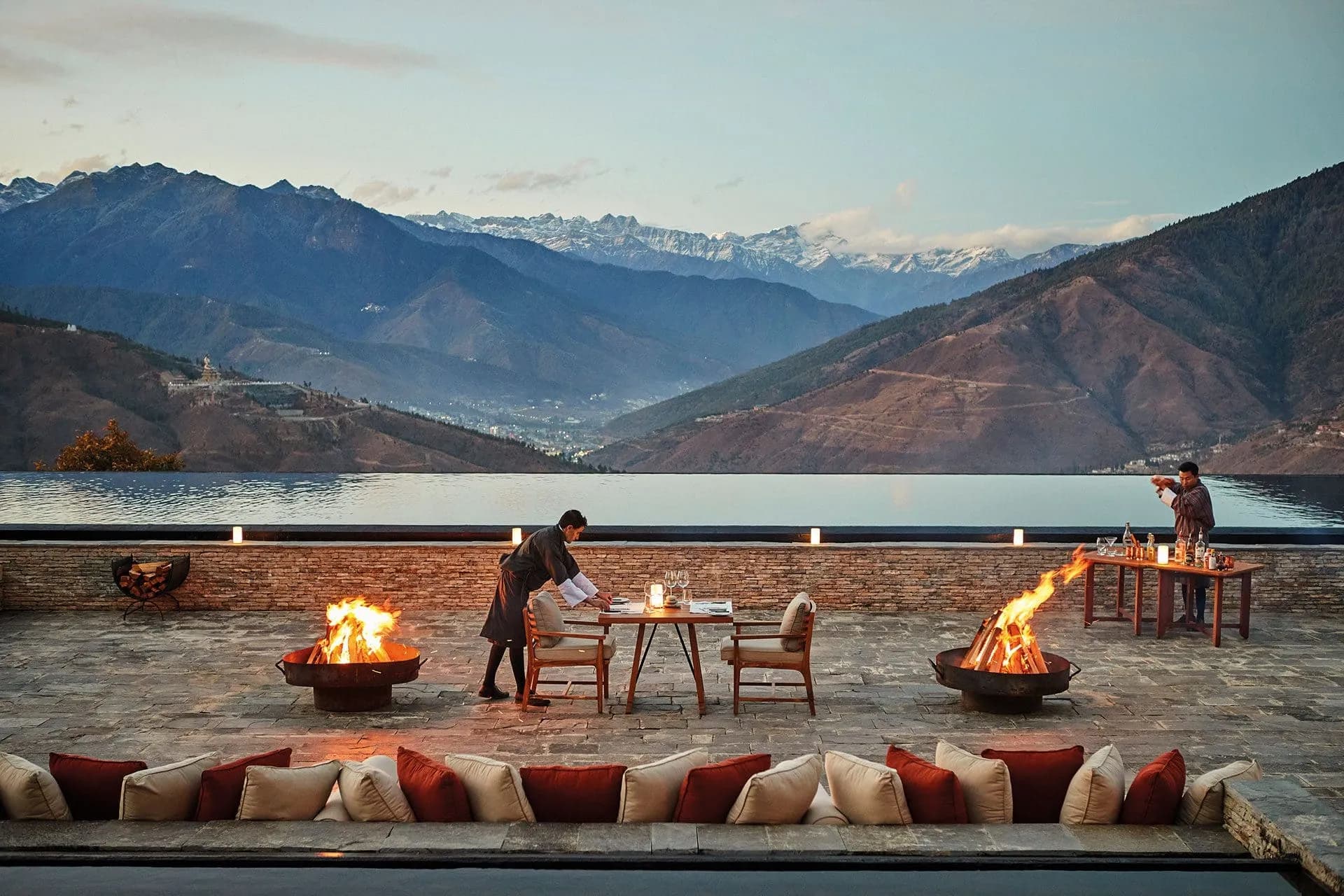 JourneyThe signature-tier Bhutan journey — private knowledgeable guide, the most considered lodge curation, helicopter or charter between valleys, exclusive-use arrangements where the season allows.The signature-tier Bhutan journey. Private knowledgeable guide, the most considered lodges, helicopter or PC-24 charter, exclusive-use arrangements. By invitation, from USD 14,000.
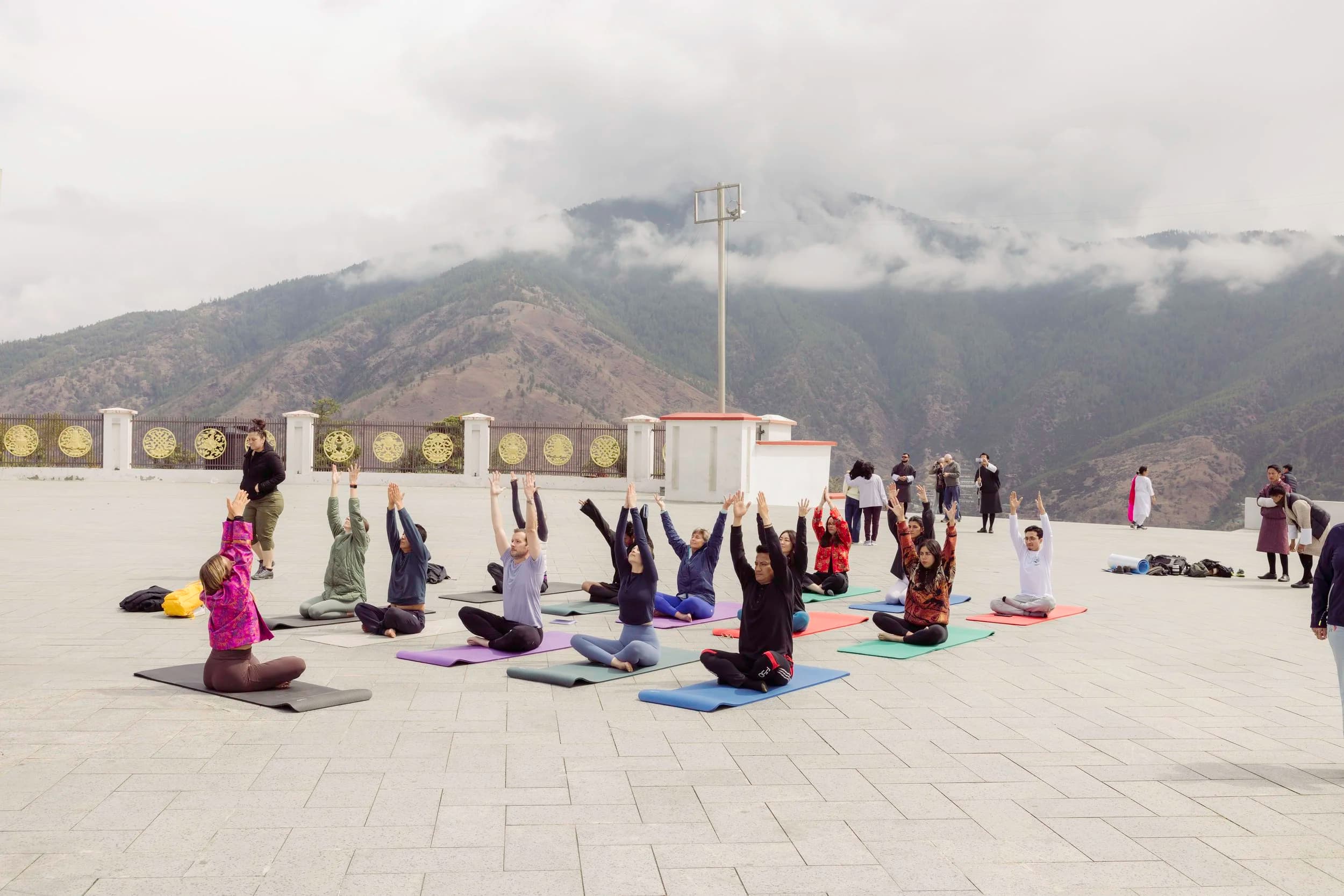 JourneySeven nights with a monastic guide, in the still season.A seven-night Bhutan meditation retreat through Clear-Sky Bhutan (Dec–Feb). Daily sittings with a monastic-trained guide, hot stone baths, no festival noise.
Frequently asked
- Who was Longchenpa, and why does Tharpaling matter?
- Longchen Rabjam (1308–1364), known as Longchenpa, was one of the greatest masters of the Nyingma tradition, whose writings on the Dzogchen teachings are revered across Tibetan Buddhism. During years spent in Bhutan he established Tharpaling above the Chumey valley, meditating, writing, and teaching here. The monastery is therefore one of the principal Nyingma seats in the country, sanctified by his presence.
- Is Tharpaling hard to reach?
- It takes a climb — a rough but driveable side road up the Chumey mountainside and a short walk, about an hour and a half from Jakar, to around 3,600 metres. The altitude and the road mean it asks a little more than the valley-floor temples, but it rewards the effort with an active monastery, the master's legacy, and a magnificent high setting. The guide advises on the road and the weather.
- What makes it worth the climb?
- Three things: the legacy of Longchenpa, one of Buddhism's greatest masters; the living monastic community studying the Nyingma tradition on the slope; and the high, spacious setting over the Chumey valley and the central Bhutanese mountains that the lower sites cannot match. For those drawn to the contemplative tradition or simply to the high places, it is among Bumthang's quiet highlights.

