A Bhutanese mountain pass
Thrumshing La — at 3,780 metres, the second-highest road pass in Bhutan and the gateway to the east.
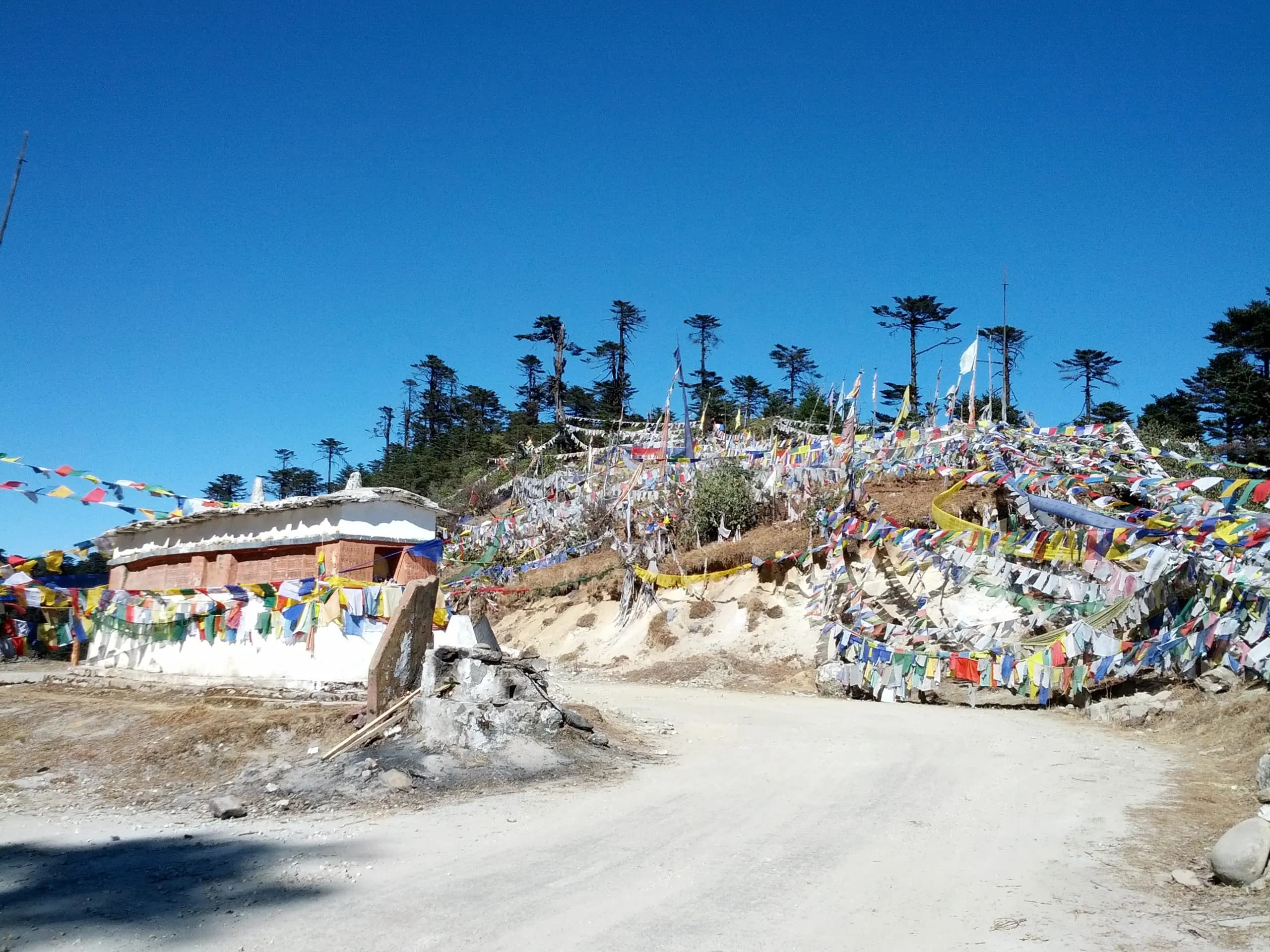
Thrumshing La, at 3,780 metres, is the second-highest pass a road crosses in Bhutan — the great height between Bumthang and Mongar that opens the way into the country's remote and little-travelled east. It crowns Thrumshingla National Park, a wilderness of fir and rhododendron forest famous for its birdlife, and the descent beyond is one of the most dramatic in the country: a vertiginous plunge of thousands of metres down through changing forest into the deep valleys of the east. For the few who travel beyond Bumthang, Thrumshing La is the threshold of a wilder, older Bhutan.
Also known as Thrumshingla · Thrimshing La · Thrumshing La pass
- Location
- On the road between Bumthang and Mongar, Bumthang
- Elevation
- 3,780 m
- Kind
- mountain-pass
The gateway to the east
Thrumshing La is the threshold of eastern Bhutan — the high pass between the Bumthang region and Mongar, beyond which lies the deep, rugged, and little-visited east of the country. At 3,780 metres it is the second-highest pass a road crosses in Bhutan, after only the high crossings of the far interior, and it carries a real sense of remoteness: few visitors travel this far, and to stand at the prayer-flag saddle is to be at the edge of the familiar country, looking out towards the wilder valleys beyond. The crossing marks the boundary between the cultural worlds of central and eastern Bhutan, where the language, the weaving, and the rhythm of life begin to change.
Thrumshingla National Park
The pass crowns Thrumshingla National Park, one of the country's principal protected areas — a wilderness of old fir and hemlock forest, rhododendron, and high meadow that is among the richest birding grounds in the Himalaya. The park shelters the rare Himalayan monal and blood pheasant, the red panda, and a great diversity of forest birds; for serious birders it is one of the highlights of any eastern journey. The forest around the pass is deep and often misted, the prayer flags at the top giving way on every side to wooded ridges receding into the distance — a landscape that feels genuinely remote in a way the western valleys do not.
The dramatic descent
What makes Thrumshing La unforgettable is less the pass itself than what follows it: the descent towards Mongar is one of the most dramatic stretches of road in Bhutan, dropping thousands of metres in a series of switchbacks down a near-vertical mountainside, the forest changing band by band as the altitude falls, waterfalls threading the cliffs, the deep eastern valleys opening below. It is a long and demanding drive, and a spectacular one — the kind of road that reminds a traveller how mountainous and how vast this small country is. For visitors making the journey east, Thrumshing La and its descent are among the great experiences of the trip.
Visiting
- Getting there
- Thrumshing La is crossed on the highway between Bumthang (Jakar) and Mongar, deep into an eastern journey — several hours' drive from Jakar, with the long descent to Mongar beyond. There is no detour; the road runs over the top. The matched guide crosses it only on the longer central-and-eastern itineraries.
- What to expect
- A high, often misty forest saddle marked by a chorten and prayer flags, surrounded by the wilderness of Thrumshingla National Park, followed by one of the country's most dramatic descents. Warm layers are essential at the elevation. The whole Bumthang-to-Mongar drive is long; the guide paces it with stops.
- Conditions and birdlife
- Snow and cloud can affect the pass, particularly in winter; the matched guide advises on conditions. For birders, the park around the pass is a highlight — the guide can arrange an unhurried birding pace through the forest. The descent road, while sound, is steep and winding; visitors prone to motion sickness should mention it.
- Best time to visit
- Spring (rhododendron and active birdlife) and autumn (clear air) are the finest; the pass is crossable in any season the road is open, though winter snow can close it. The east as a whole is best in the drier months, October to April.
Journeys featuring this site
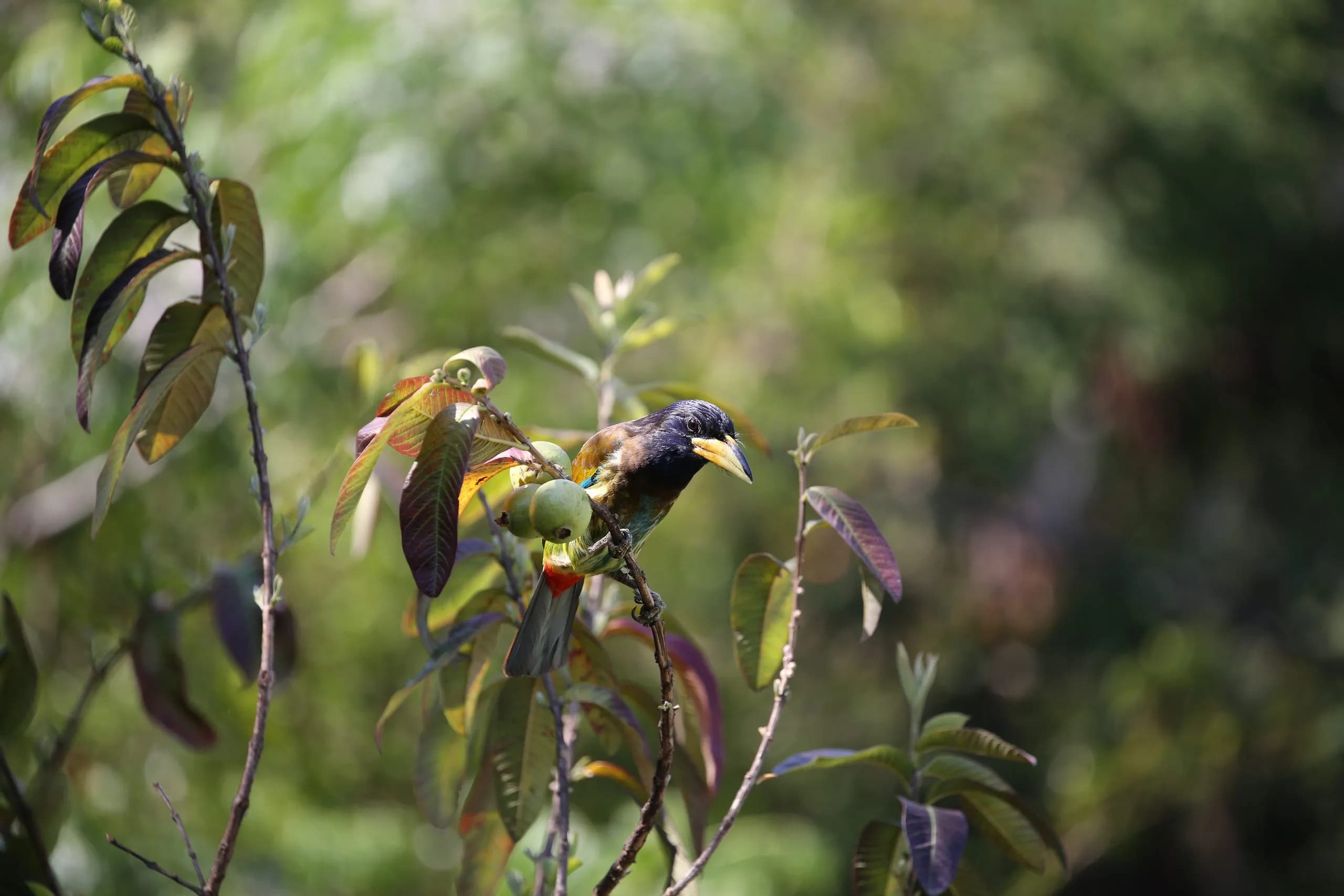 JourneyEight nights for the country's principal endemics — cranes at Phobjikha, the heron on the Punatsangchhu, the hornbills in the broadleaf belt.An eight-night Bhutan birding journey targeting the principal endemics — black-necked cranes at Phobjikha, white-bellied heron, hornbills, the beautiful nuthatch.
 JourneyThe signature-tier Bhutan journey — private knowledgeable guide, the most considered lodge curation, helicopter or charter between valleys, exclusive-use arrangements where the season allows.The signature-tier Bhutan journey. Private knowledgeable guide, the most considered lodges, helicopter or PC-24 charter, exclusive-use arrangements. By invitation, from USD 14,000.
Journeys that visit Thrumshing La
Frequently asked
- How high is Thrumshing La?
- 3,780 metres — the second-highest pass a road crosses in Bhutan, between Bumthang and Mongar. It is the gateway from central Bhutan into the remote, little-visited east, and crowns Thrumshingla National Park.
- What makes the crossing memorable?
- Two things: the sense of remoteness — few visitors travel this far east, and the pass marks the threshold of a wilder, older Bhutan — and the dramatic descent beyond, one of the most spectacular stretches of road in the country, dropping thousands of metres in switchbacks down a near-vertical mountainside into the deep eastern valleys.
- Is Thrumshing La good for birdwatching?
- Yes — Thrumshingla National Park around the pass is among the richest birding grounds in the Himalaya, sheltering the Himalayan monal, blood pheasant, and a great diversity of forest birds, along with the red panda. For serious birders it is one of the highlights of any eastern journey, and the guide can arrange an unhurried birding pace.

