A Bhutanese manor museum
Ugyen Choling — a noble family's manor in the Tang valley, preserved as a rare museum of old Bhutanese life.
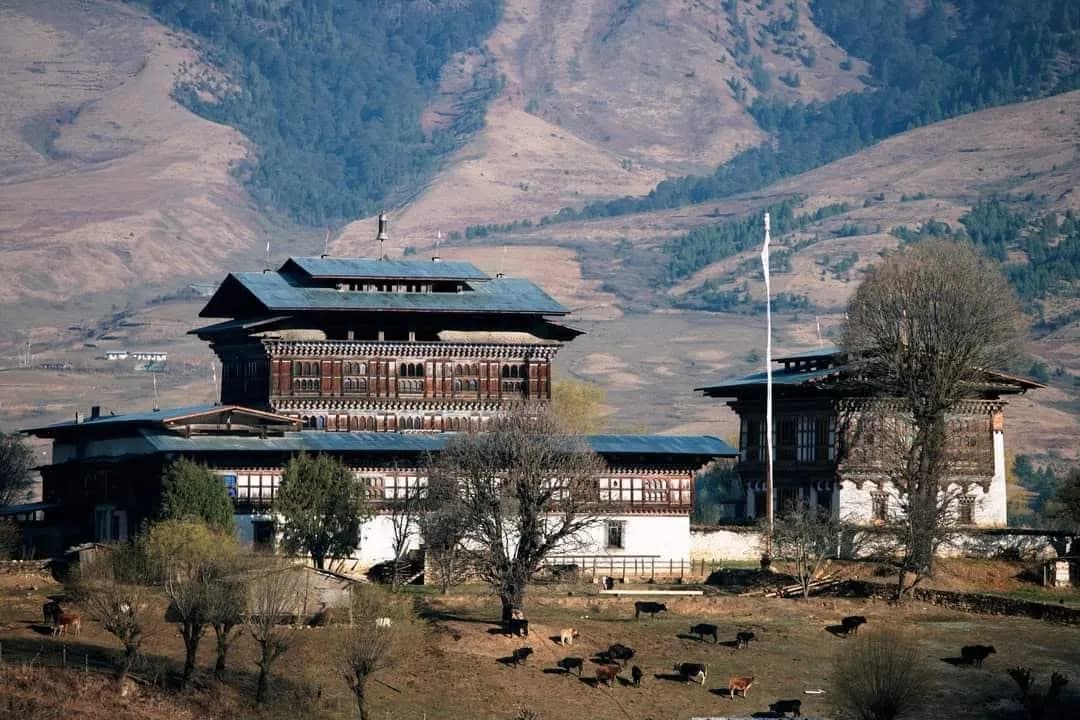
On a hill above the remote Tang valley of Bumthang stands Ugyen Choling, the manor seat of a family descended from the great treasure-revealer Dorji Lingpa. Rather than let the old house empty out as the modern world arrived, the family turned it into a private museum — preserving intact the rooms, objects, tools, books, and religious treasures of a Bhutanese noble household across the centuries. It is one of the very few places in the country where a visitor can step inside the domestic and administrative world of the old aristocracy: the kitchen, the granary, the master's quarters, the temple, the printing blocks — daily life made visible.
Also known as Ogyen Choling · Ugyen Choling Museum · Ogyen Choling Palace
- Location
- On a hill above the Tang valley, Bumthang
- Founder
- The family line of the terton Dorji Lingpa
- Elevation
- 2,900 m
- Kind
- manor-museum
A noble house preserved
Ugyen Choling is the ancestral manor of a family that traces its line to Dorji Lingpa (1346–1405), one of the five great treasure-revealers of the Nyingma tradition. For centuries it was the seat of a choeje — a hereditary noble-religious household — that held authority over the Tang valley, combining the roles of landlord, administrator, and religious patron. When the modern era began to hollow out such houses across Bhutan, the family of Ugyen Choling made an unusual choice: rather than abandon or sell the manor, they preserved it whole and opened it as a museum, so that the texture of a vanishing way of life would not be lost. The result is a place of rare intimacy and authenticity.
Daily life made visible
What makes Ugyen Choling exceptional is that it preserves not the grand and ceremonial but the ordinary: the kitchen with its hearth and vessels, the granary and the storerooms, the master's and the women's quarters, the looms and the farm tools, the household temple, and — a particular treasure — the library and the wooden printing blocks with which the family produced religious texts. Walking the rooms, a visitor sees how a Bhutanese noble household actually lived: how it cooked, slept, worshipped, governed, and kept its records, across the long centuries before roads and electricity reached the Tang valley. Few museums anywhere convey domestic history so directly, because few are the actual house, kept as it was.
The Tang valley setting
Ugyen Choling sits on a hill above the Tang valley, the most remote and pastoral of Bumthang's four valleys — a landscape of high pasture, scattered farms, and the slow Tang river, reached by a side road and a short walk up to the manor. The remoteness is part of the visit: this is not a museum on a tour-bus circuit but a house at the end of a valley, and reaching it feels like a small journey into the older Bhutan it preserves. The same Tang valley holds Mebar Tsho, the Burning Lake of Pema Lingpa, so the two can be combined into a day that joins the valley's sacred and domestic histories.
Visiting
- Getting there
- Ugyen Choling is in the Tang valley, reached by a drive up the side road from the Bumthang (Choekhor) valley — roughly an hour and a half from Jakar — followed by a short walk up the hill to the manor. The matched guide arranges the drive, often combining it with Mebar Tsho in the same Tang-valley day.
- What to see
- Allow 1–1.5 hours to walk the manor's rooms and exhibits — the living quarters, kitchen, granary, temple, library, and printing blocks. The museum is thoughtfully laid out with explanation, and the matched guide adds the context of how a choeje household lived and governed. There is a small guesthouse and café run by the family.
- Protocol
- As a private family museum and an active household temple, the usual courtesies apply — shoes removed where indicated, no photography in the shrine, voices kept low. A visit directly supports the family's preservation of the manor, which is part of its purpose.
- Best time to visit
- Year-round, with the Bumthang seasons — autumn (clear skies, buckwheat harvest) and spring (blossom) the loveliest. The Tang valley is high and can be cold; a warm layer is useful. The remoteness means the visit pairs best with at least a few nights in Bumthang.
Journeys featuring this site
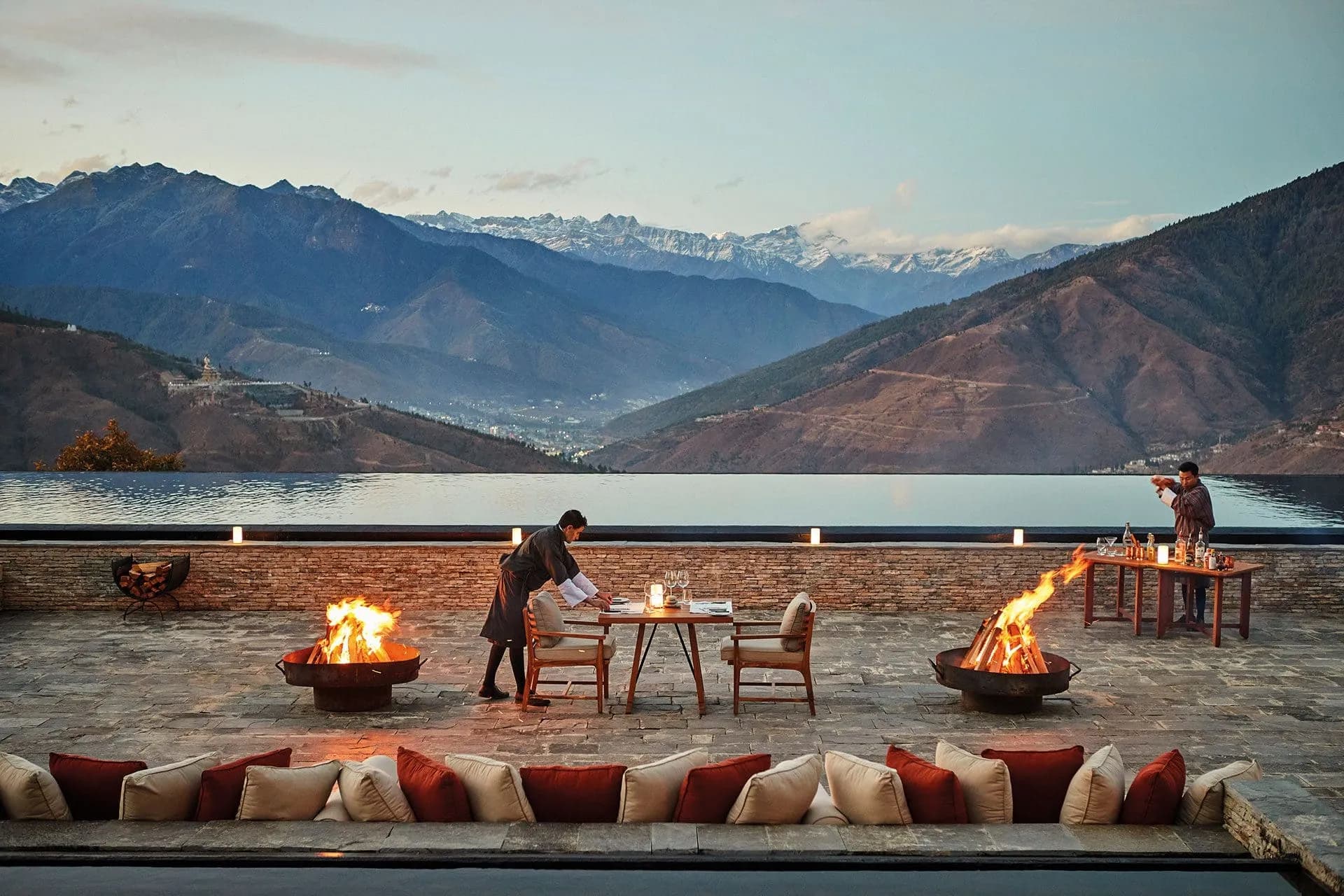 JourneyThe signature-tier Bhutan journey — private knowledgeable guide, the most considered lodge curation, helicopter or charter between valleys, exclusive-use arrangements where the season allows.The signature-tier Bhutan journey. Private knowledgeable guide, the most considered lodges, helicopter or PC-24 charter, exclusive-use arrangements. By invitation, from USD 14,000.
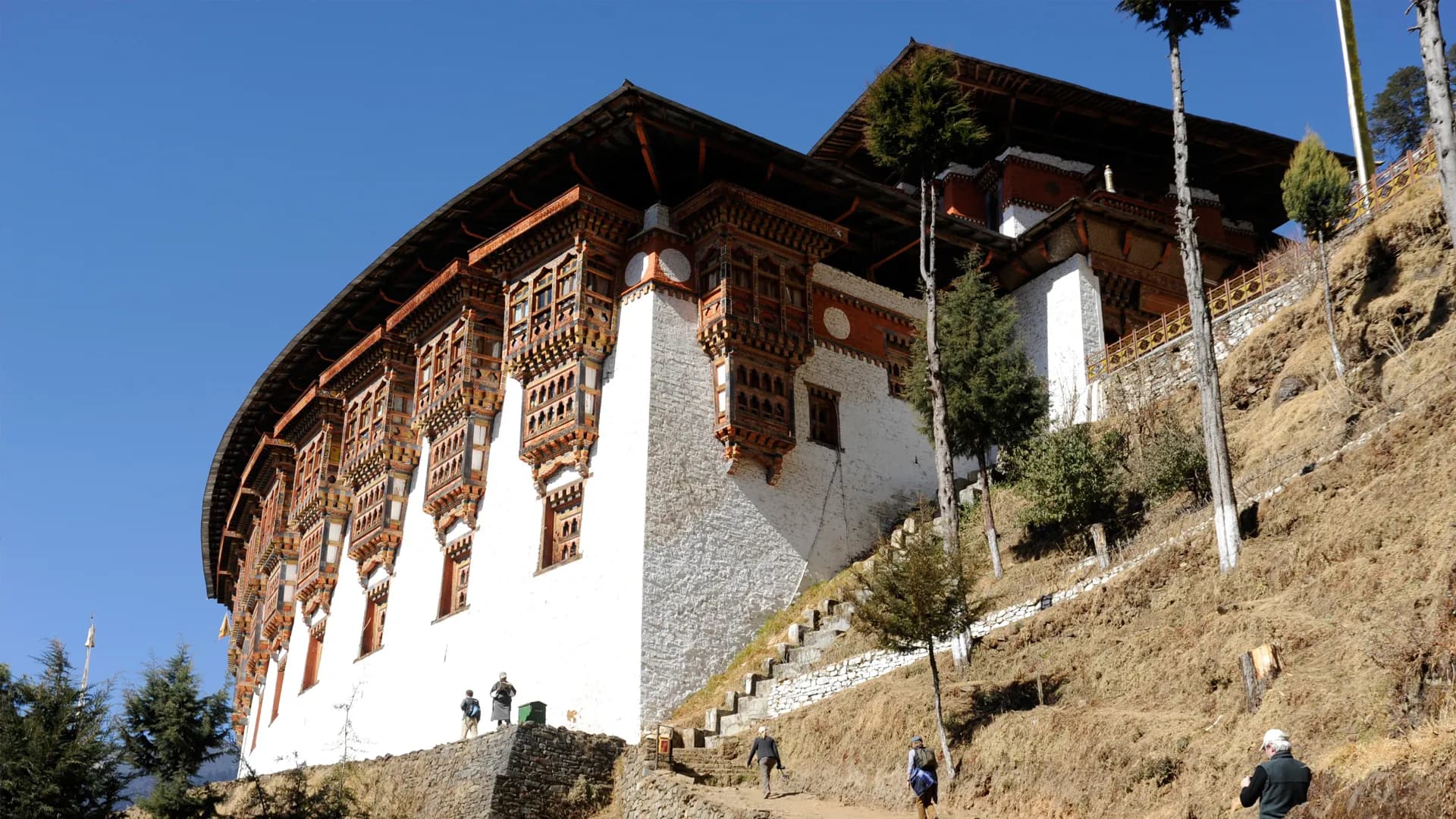 JourneyTen nights for the Buddhist pilgrim — the principal sites, with monastic context.A ten-night Bhutan Buddhist pilgrimage for Asian-Buddhist travellers. Monastic context; matched monastic-trained guide; Bumthang religious circuit.
Journeys that visit Ugyen Choling
Frequently asked
- What is Ugyen Choling?
- The ancestral manor of a Bhutanese noble-religious family descended from the treasure-revealer Dorji Lingpa, in the remote Tang valley of Bumthang — preserved whole by the family and opened as a private museum. It is one of the very few places where a visitor can step inside the actual domestic and administrative world of the old Bhutanese aristocracy, with the rooms, objects, library, and printing blocks kept as they were.
- Why is it special among Bhutan's museums?
- Because it is the actual house, preserved intact, rather than a collection assembled in a gallery. It conveys ordinary daily life — the kitchen, granary, sleeping quarters, household temple, looms, and printing blocks — with a directness few museums anywhere can match. For visitors interested in how Bhutan lived before the modern era, it is uniquely vivid.
- Can it be combined with other Tang valley sights?
- Yes — the Tang valley also holds Mebar Tsho, the Burning Lake associated with the treasure-revealer Pema Lingpa, and the two are naturally combined into a single Tang-valley day from Jakar. The matched guide arranges the drive and the timing.

