A Bhutanese dzongkhag
Lhuentse — the eastern silk-weaving heartland, the kishuthara tradition, the Wangchuck ancestral home.
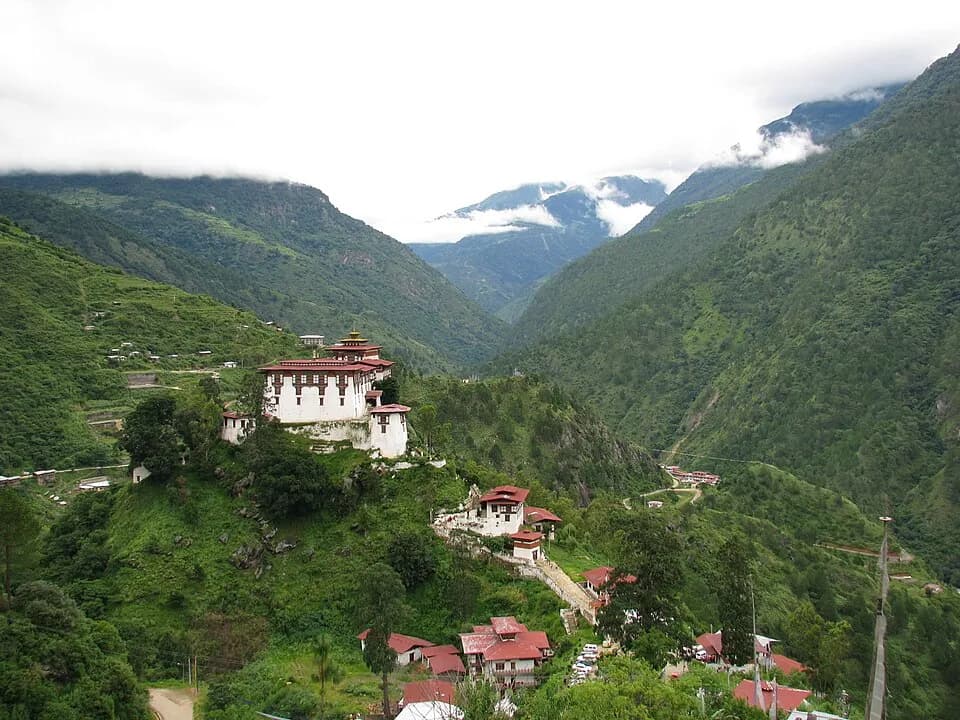
Lhuentse is one of the more remote and culturally Bhutanese dzongkhags — the eastern silk-weaving heartland (the kishuthara tradition, the most-prized Bhutanese textile form), the ancestral home region of the Wangchuck dynasty (the royal family traces its origins through Kurtoe), the principal location of the Khoma valley's master weavers. Lhuentse Dzong sits dramatically on a high spur above the Kuri Chhu river. Access is by long road from Mongar; the cultural-textile tradition makes the journey rewarding for visitors with serious interest.
- District
- Lhuentse
- Altitude
- 1,700 m
- Kind
- dzongkhag
- Coordinates
- 27.663, 91.183
- Also known as
- Lhuentse Dzongkhag, Kurtoe
The kishuthara silk-weaving tradition
Lhuentse is the unrivalled centre of Bhutanese silk weaving. The kishuthara — the supplementary-weft silk-brocade kira (women's national dress) — is the most-prized form in the Bhutanese textile tradition, with the finest examples taking 6-12 months to weave on the traditional backstrap loom and pricing in the USD 5,000-20,000+ range. The Khoma valley, a sub-valley about 25km from Lhuentse town, is the principal master-weavers' settlement; every household maintains a backstrap loom and the weaving tradition is the principal economic and cultural register of the valley. The matched guide arranges visits to working weavers' households — visitors can observe the weaving process at every stage (silk dyeing, warping, supplementary-weft technique), and serious-collectors-tier visitors can commission new pieces. The Royal Textile Academy in Thimphu draws on the Khoma tradition.
The Wangchuck ancestral connection
Lhuentse — and particularly the Kurtoe region — is the ancestral home of the Wangchuck dynasty. His Majesty the First Druk Gyalpo Ugyen Wangchuck's family traces its origins through the Kurtoe lineage; the connection to Lhuentse remains foundational to the royal-family narrative. The Dungkar Dzong (now in ruins) was the ancestral seat. The royal family's continued connection to Lhuentse is part of the cultural that makes the dzongkhag particularly significant in the Bhutanese institutional tradition.
Lhuentse Dzong — the dramatic spur fortress
Lhuentse Dzong sits dramatically on a high spur above the Kuri Chhu river. The dzong was founded in 1654 by Trongsa Penlop Minjur Tempa (under the Zhabdrung's authority); it houses both the dzongkhag administrative offices and the regional monk body. The principal religious imagery includes the rare Tshering Chhog Nga (the five long-life goddesses) and substantial early Drukpa Kagyu lineage paintings. Visitor access is via the road from the valley floor — the approach drive includes the slow climb up to the spur and the architectural reveals progressively. The dzong is among the more dramatically-sited in the country.
Visiting
- Access — long eastern road
- Lhuentse is accessible by road from Mongar (approximately 3-4 hours via the Kuri Chhu valley road), which is reached via the eastern circuit from Bumthang (the Bumthang-Mongar road over Thrumshing La 3,750m is a substantial 7-8 hour drive, often broken with an overnight at Sengor or at Yongkola). The full Paro-Lhuentse drive across the country is a 2-3 day undertaking. Domestic flights from Paro to Yongphula (eastern Bhutan) shorten the journey; the matched guide handles the routing.
- Where to stay
- Standard government-rated hotels in Lhuentse town. No premium-tier lodgings in the dzongkhag as of 2026. For comfort, most visitors base in Mongar (which has slightly better hotel options) and visit Lhuentse on long day-trips, or break the journey overnight in the Khoma valley with a weaving-family homestay (arranged by the matched guide).
- Best window
- October-May for the eastern routes (June-September monsoon affects the road conditions across the eastern circuit). The Khoma valley weaving tradition is year-round but the most-accessible weeks are November-March when weavers are at the looms during the long winter.
Where to go next
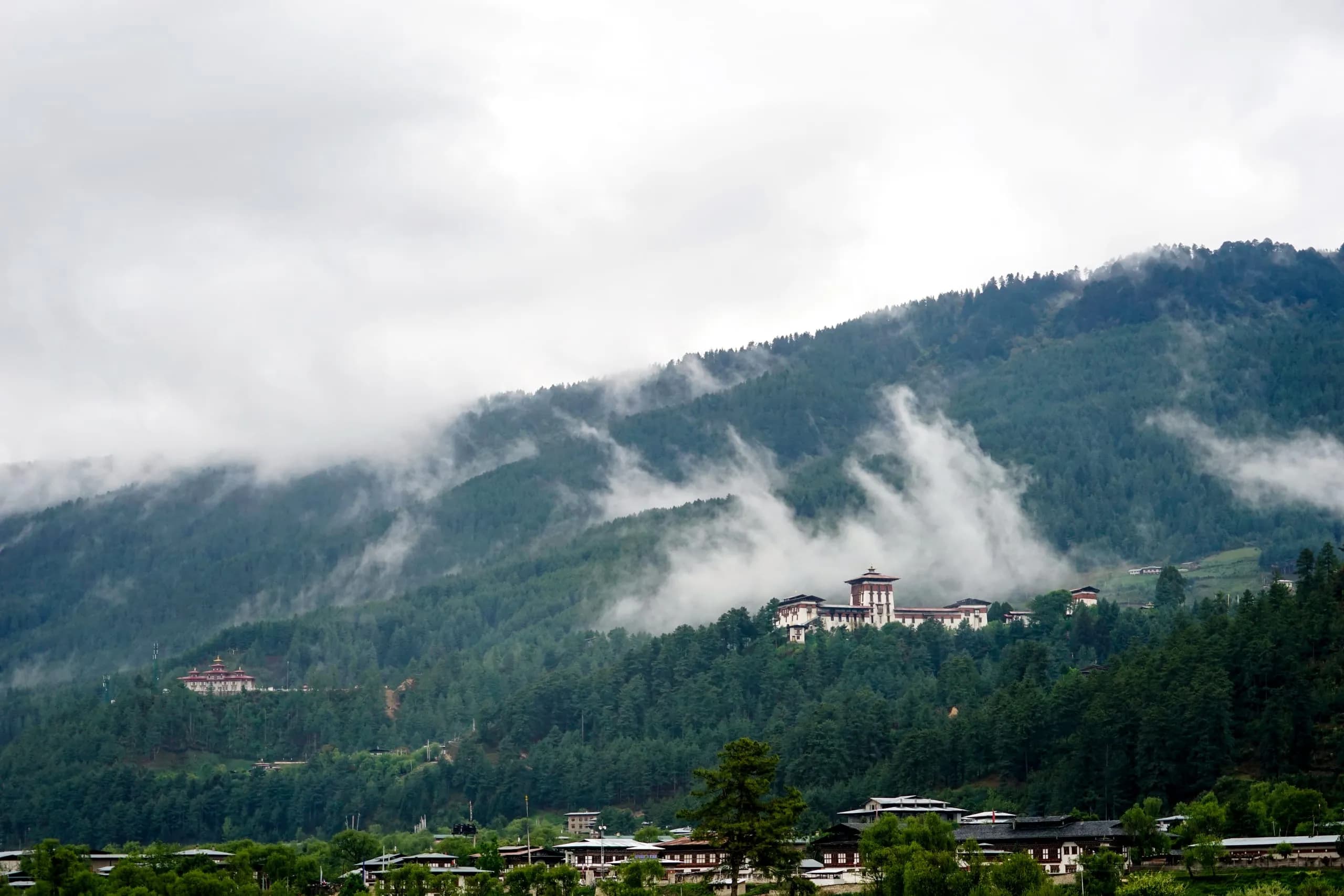 PlaceBumthang — Bhutan's spiritual heartland, the four valleys, the densest religious circuit in the country.Bumthang — the four central valleys, Bhutan's spiritual heartland. Kurjey, Jambay, Tamshing, Mebar Tsho. The densest religious circuit in the country.
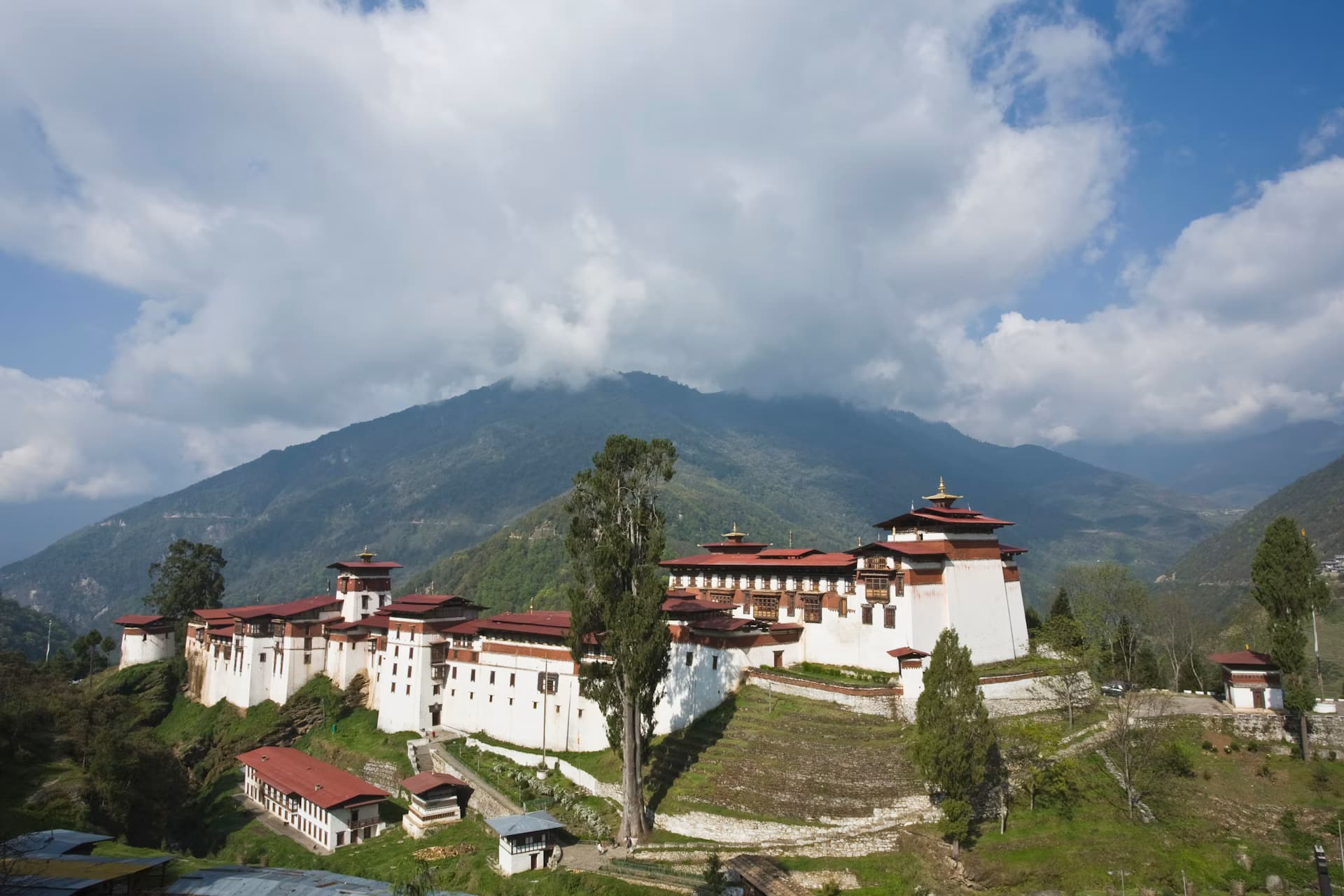 PlaceTrongsa — the ancestral seat of the Wangchuck royal dynasty.Trongsa — the ancestral seat of the Wangchuck royal dynasty. The longest dzong in Bhutan above the Mangde Chhu gorge; the Ta Dzong museum.
Journeys through here
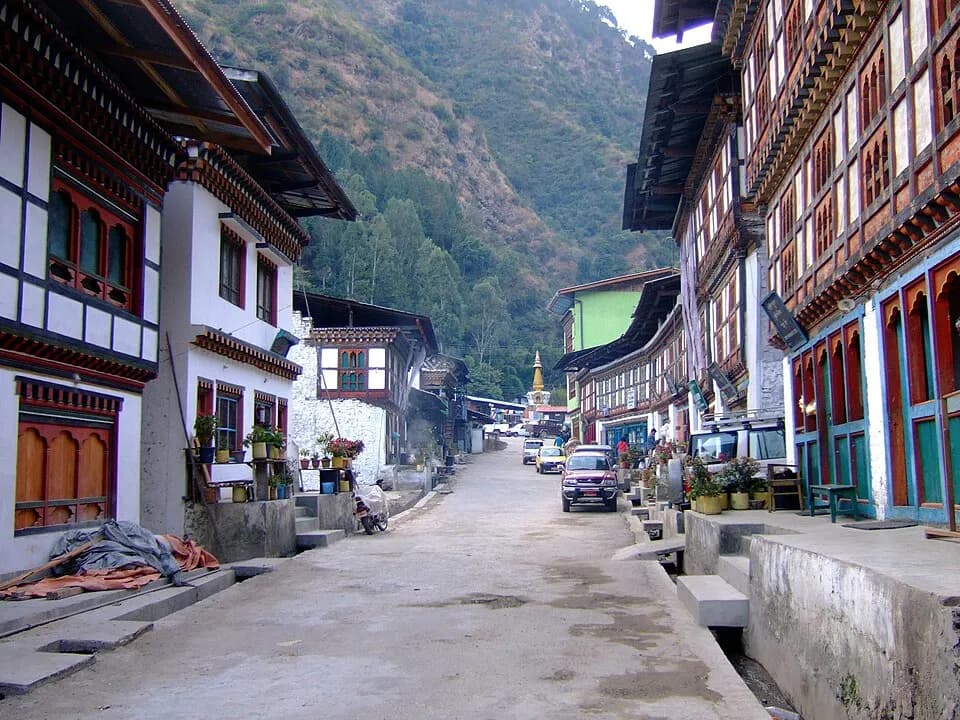 JourneyFourteen nights from Paro to Guwahati — the country as a single arc.A fourteen-night Bhutan east-to-west circuit exiting via Samdrup Jongkhar and Guwahati. The full eastern dzongkhags, the quieter half of the country.
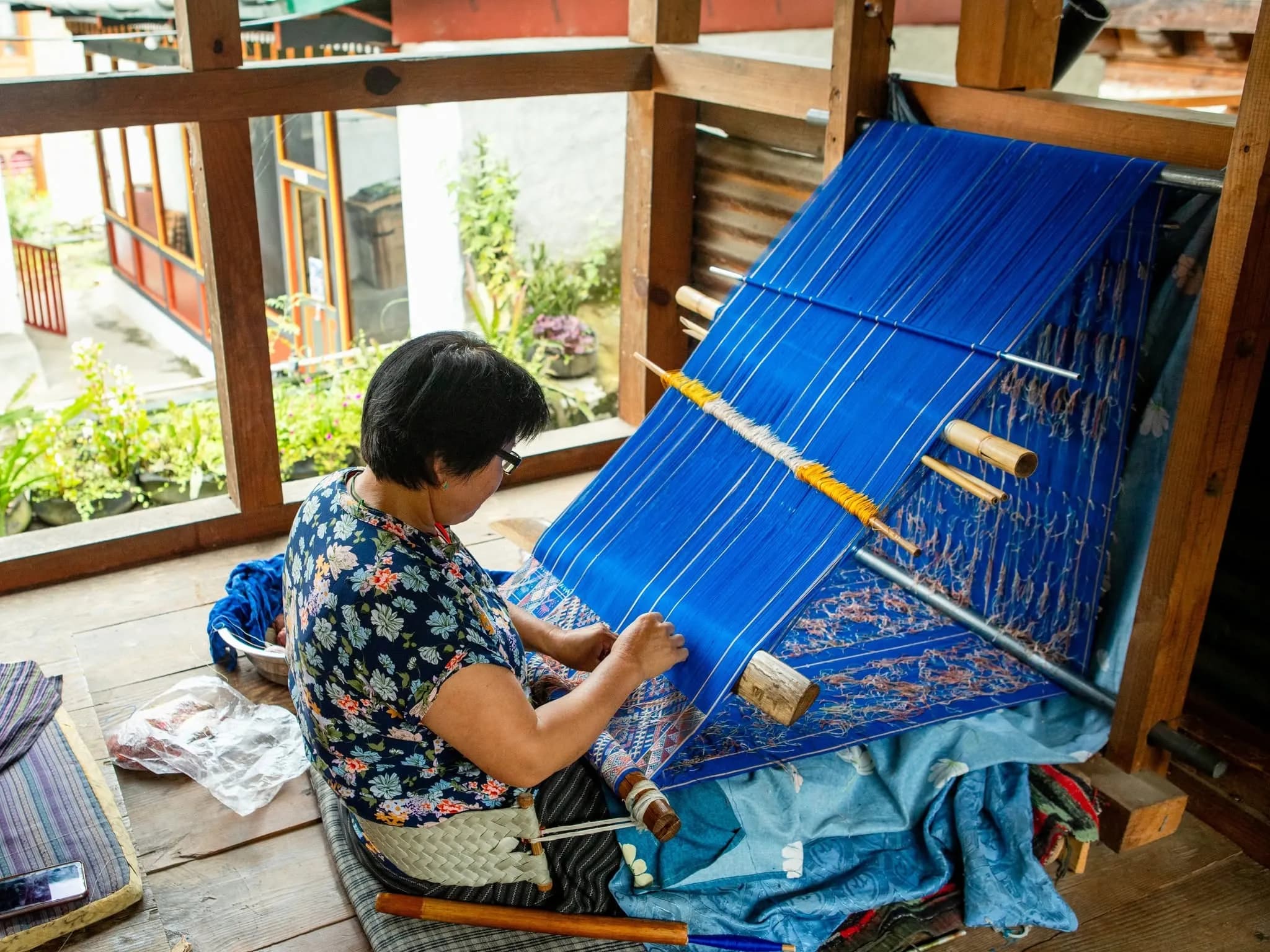 JourneyBhutan, read through its weaving.A seven-night Bhutan textile tour — Bhutanese workshop visits, master weaver introductions, and a guide who reads cloth the way an art historian reads brushwork.
Frequently asked
- Is Lhuentse worth the long drive?
- For visitors with serious interest in Bhutanese textiles, yes — the Khoma valley weaving tradition is unmatched and the kishuthara tradition is at its origin here. For general cultural visitors without a textile focus, the journey is substantial relative to the additional cultural register beyond what Bumthang and the western valleys provide. The matched guide briefs honestly on the trade-off.
- Can I buy a kishuthara directly from a weaver?
- Yes. The matched guide arranges direct visits to working weavers' households in the Khoma valley. Prices for completed pieces typically USD 800-5,000 for standard-grade work; master-weaver commissions take 6-12 months and price at USD 5,000-20,000+. Visitors should be prepared for the price — the kishuthara is among the more-textile artworks worldwide and the master-weaver pieces are not budget souvenirs.
- Is the Wangchuck connection something visitors actually encounter?
- Yes, contextually. The matched guide explains the royal-family connection during the dzongkhag visit; the Dungkar ruins are visitable for those with deep interest. The connection is part of the cultural rather than a heavily-marked tourism site.

