The Bhutanese royal house
The Wangchuck dynasty — the hereditary monarchy of Bhutan since 17 December 1907.
The Wangchuck dynasty is the hereditary monarchy of Bhutan — established on 17 December 1907 when His Majesty Ugyen Wangchuck was unanimously elected the First Druk Gyalpo by an assembly of senior monks, government officials, and dzongpens at Punakha Dzong. Five generations across five reigning monarchs (1907 to present), each substantially shaping the country across their respective reigns. The dynasty is the principal contemporary institutional continuity of the Bhutanese state.
- Register
- institution
- Also known as
- Wangchuck monarchy, Bhutanese royal family, House of Wangchuck
In short
The Wangchuck dynasty has been the hereditary monarchy of Bhutan since 17 December 1907, with five Druk Gyalpos across five generations. The dynasty is the principal institutional continuity of the contemporary Bhutanese state; descended from Pema Lingpa through the body-incarnation line.
The five reigning monarchs
His Majesty the First Druk Gyalpo Ugyen Wangchuck (reigned 1907-1926) — the founding monarch, crowned 17 December 1907 at Punakha Dzong, the unifier of the modern Bhutanese state after a century of intermittent civil conflict. His Majesty the Second Druk Gyalpo Jigme Wangchuck (reigned 1926-1952) — His Majesty Ugyen Wangchuck's son; consolidated the institutional foundation; ruled principally from Wangduecholing Palace in Bumthang (built by His grandfather, Trongsa Poenlop Jigme Namgyel, on the 1857 Shamkhar battlefield and inherited through His father), and Himself built Tashi Choeling at Domkhar (1937) and Kuenga Rabten Palace on the Mangde Chhu, where His Majesty passed away in March 1952. His Majesty the Third Druk Gyalpo Jigme Dorji Wangchuck (reigned 1952-1972) — the modernising king who abolished slavery, established the National Assembly, led the UN admission. His Majesty the Fourth Druk Gyalpo Jigme Singye Wangchuck (reigned 1972-2006) — the GNH king who deliberately opened Bhutan to international tourism, drafted the 2008 Constitution, and voluntarily abdicated. His Majesty the Fifth Druk Gyalpo Jigme Khesar Namgyel Wangchuck (reigning since 2006, formally crowned 2008) — the contemporary monarch operating the constitutional democracy framework.
The dynastic genealogy
The Wangchuck dynasty traces its religious-political legitimation through several historical lineages. Pema Lingpa connection — the dynasty descends from Pema Lingpa (1450-1521), the great Bhutanese terton, through the body-incarnation line; the connection is foundational to the dynasty's religious-political authority. Trongsa Penlop connection — His Majesty Ugyen Wangchuck served as Trongsa Penlop (governor of Trongsa) before the 1907 coronation; the Trongsa role had been the most powerful provincial title in the country since the 17th century. Every subsequent Druk Gyalpo has served as Trongsa Penlop before coronation, marking Trongsa as the dynastic ancestral seat. The 1907 election — the dynasty's establishment by unanimous election (not conquest or inheritance) by the assembly of senior monks, government officials, and dzongpens; the institutional structure of the election is the dynasty's principal legitimating framework.
The contemporary royal family
His Majesty the Fifth Druk Gyalpo Jigme Khesar Namgyel Wangchuck married Her Majesty Jetsun Pema Wangchuck on 13 October 2011 at Punakha Dzong. Their Majesties have three children: His Royal Highness Crown Prince Jigme Namgyel Wangchuck (the Druk Gyalsey, born 2016, the future Sixth Druk Gyalpo); HRH Prince Jigme Ugyen Wangchuck (born 2020); HRH Princess Sonam Yangden Wangchuck (born 2023). His Majesty the Fourth Druk Gyalpo retains the title of King Father and continues in a respected non-political role. His Majesty's wives — Her Majesty the Queen Mother Ashi Tshering Pem, Ashi Tshering Yangdon, Ashi Sangay Choden, and Ashi Dorji Wangmo — are senior royal-family figures with substantial cultural-and-philanthropic roles. The dynasty's contemporary tradition is widely admired internationally and is part of the country's soft-power register.
Where a visitor encounters the dynasty today
Throughout the country. The royal portraits — Their Majesties with the three royal children, alongside His Majesty the Fourth Druk Gyalpo and the previous monarchs — are in every dzong, lodge, government building, restaurant, and substantial Bhutanese home. The Royal Heritage Museum at the Trongsa Ta Dzong traces the dynasty from the founding through the contemporary period; an essential visit for visitors with serious interest in the dynastic narrative. The National Day on 17 December commemorates the 1907 founding. The Bhutanese cultural register holds the royal family in deep reverence — visitors are encouraged to follow the same protocol when speaking with Bhutanese citizens.
Related ideas
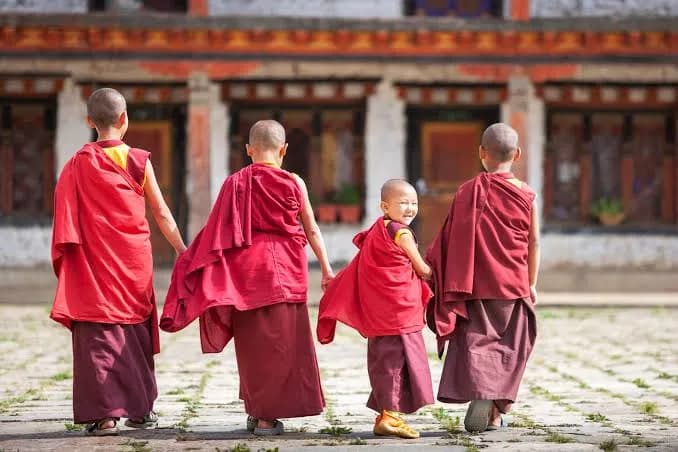 ThemeGross National Happiness — the framework that shapes the country a visitor encounters.Gross National Happiness — the Bhutanese development philosophy articulated by the Fourth Druk Gyalpo at His 1974 coronation as the first of nine guiding goals. Four pillars, nine measurement domains, constitutional grounding.
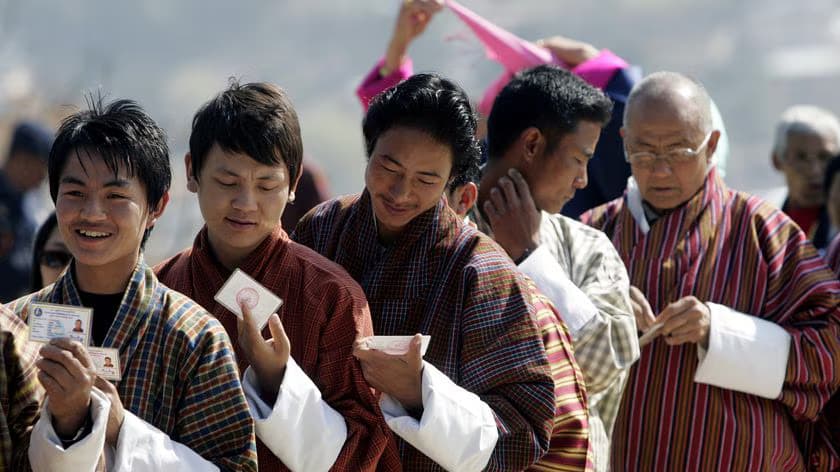 ThemeBhutanese democracy — the constitutional monarchy, the 2008 transition, the contemporary state.Bhutanese democracy — the constitutional monarchy, the 2008 transition, the National Assembly, the political party landscape. A distinctive Asian democracy.
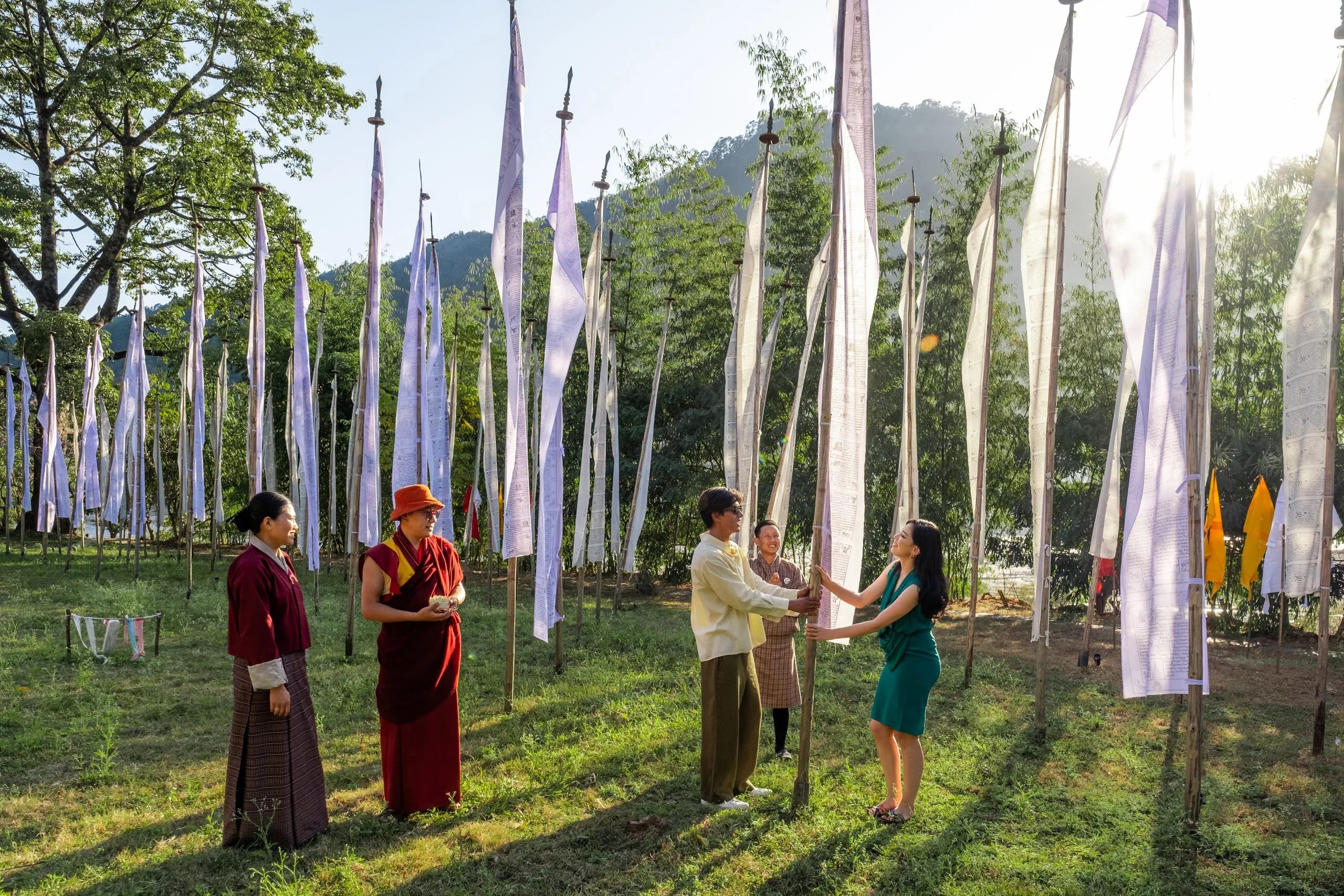 ThemeVajrayana Buddhism — the substance of every dzong, every monastery, every tshechu.Vajrayana Buddhism — the branch of Buddhism that shapes Bhutanese religious life. Drukpa Kagyu, Nyingma, Guru Rinpoche; mantra, mandala, deity yoga.
Where to see it
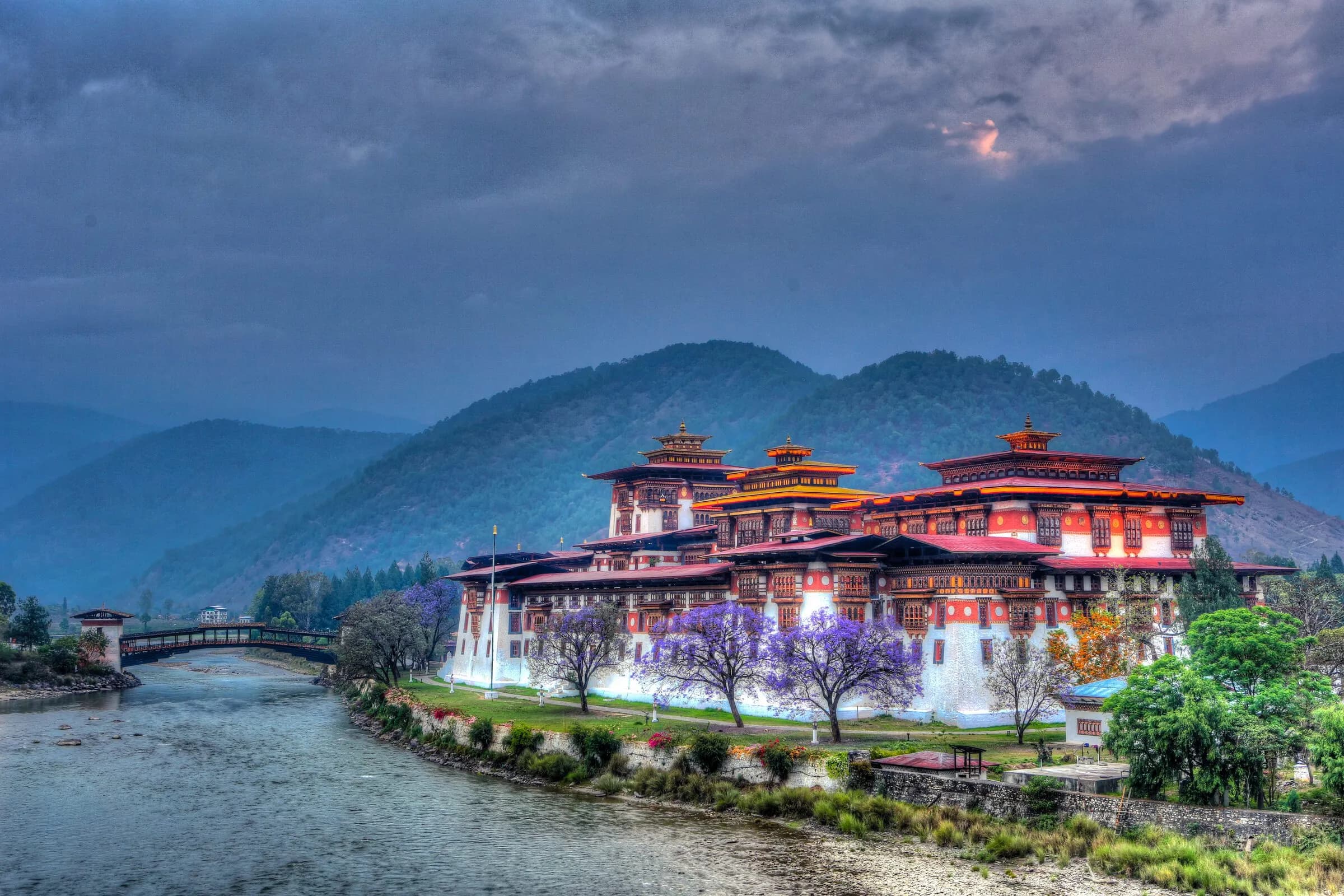 MonumentPunakha Dzong — Pungtang Dechen Phodrang, founded 1638 at the confluence of the father and mother rivers.Punakha Dzong — the Palace of Great Happiness, founded 1638. The history, the architecture, what to expect on a visit.
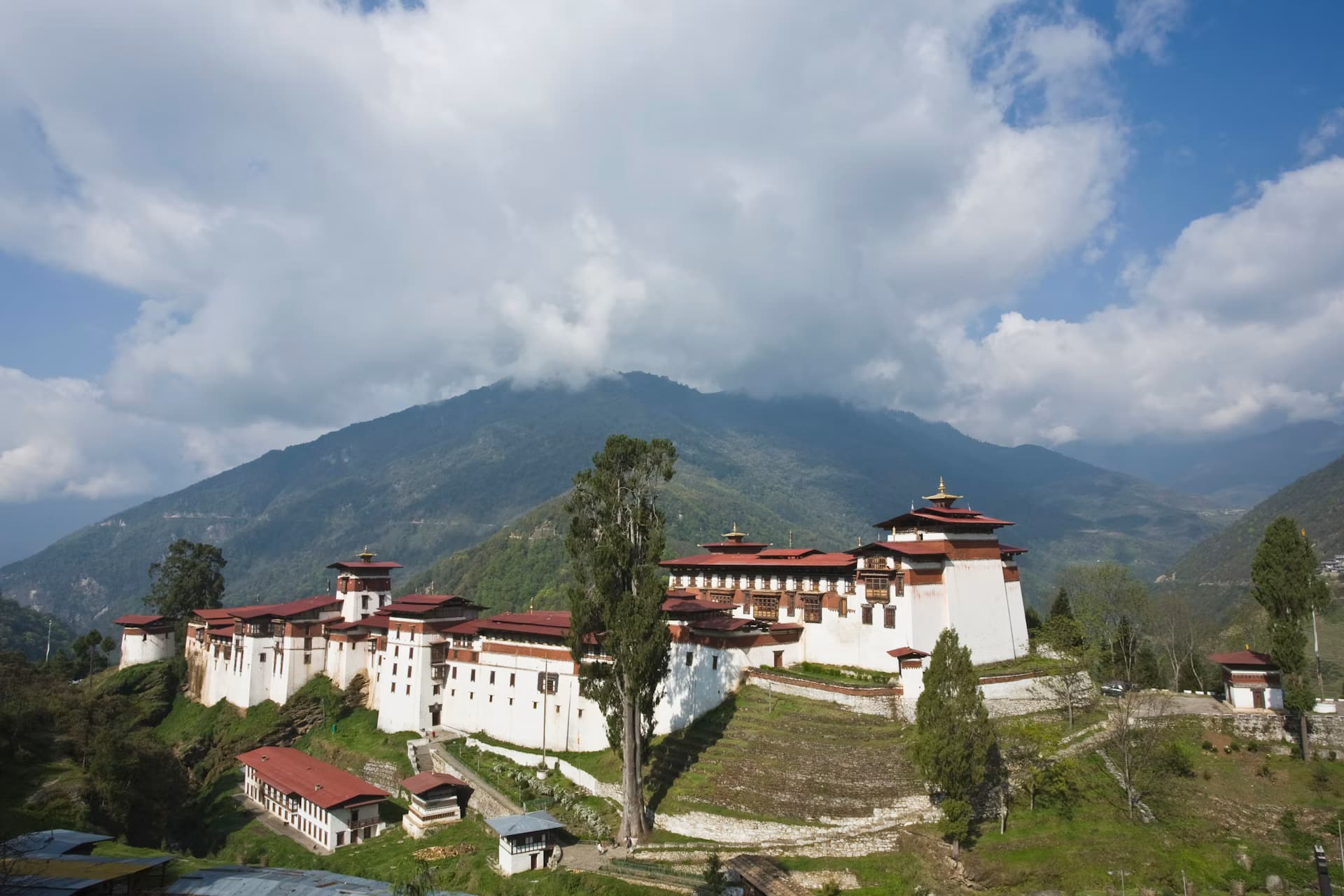 MonumentTrongsa Dzong — the largest dzong in Bhutan, on the high ridge above the Mangde Chhu gorge.Trongsa Dzong — the ancestral seat of the Wangchuck dynasty, the largest dzong in Bhutan. History, the Royal History Museum, visiting.
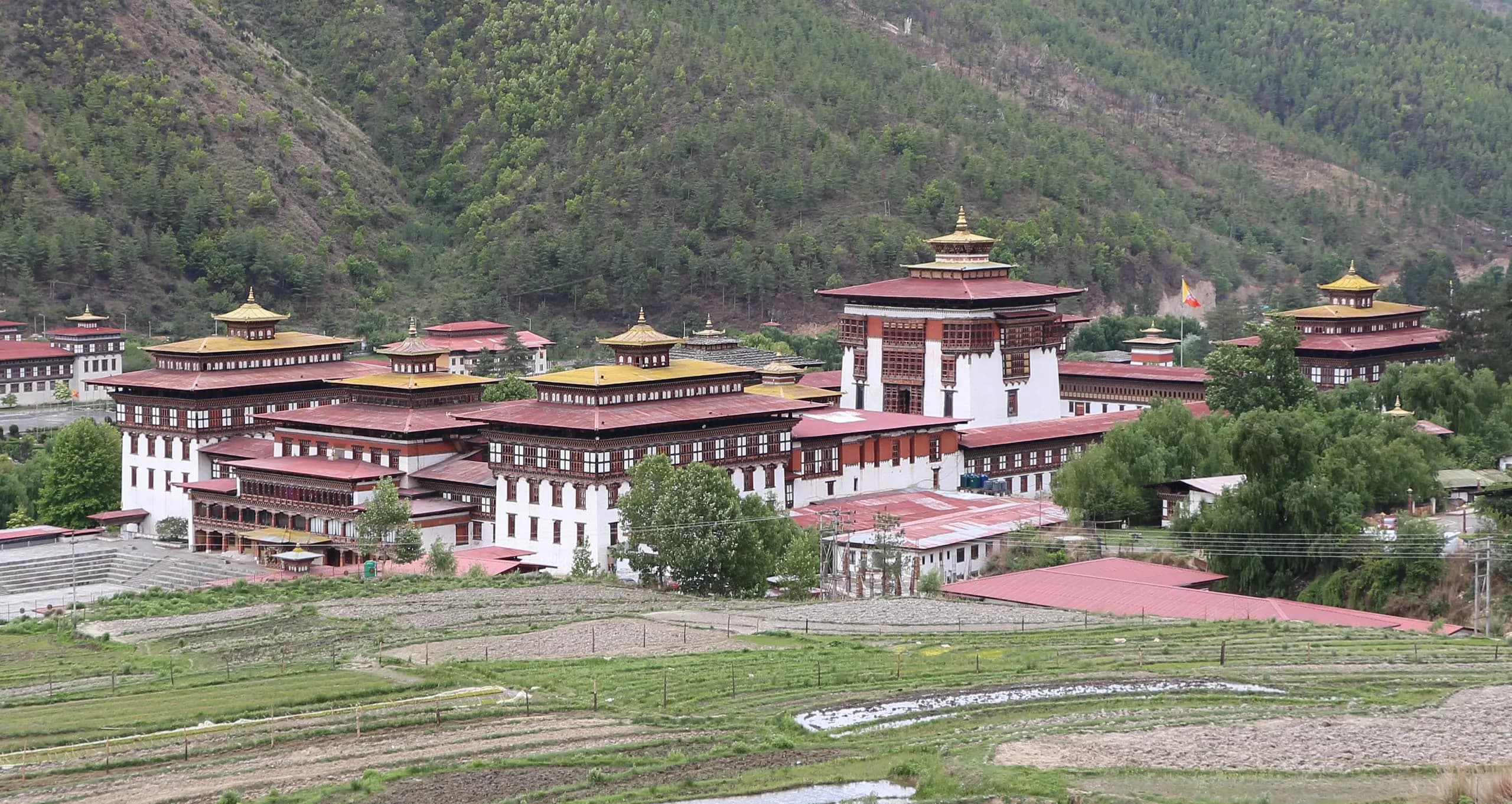 MonumentTashichho Dzong — the fortress of the auspicious religion, at the heart of Thimphu.Tashichho Dzong — the seat of Bhutan's central government and Je Khenpo summer residence in Thimphu. History, architecture, visiting.
Journeys built around it
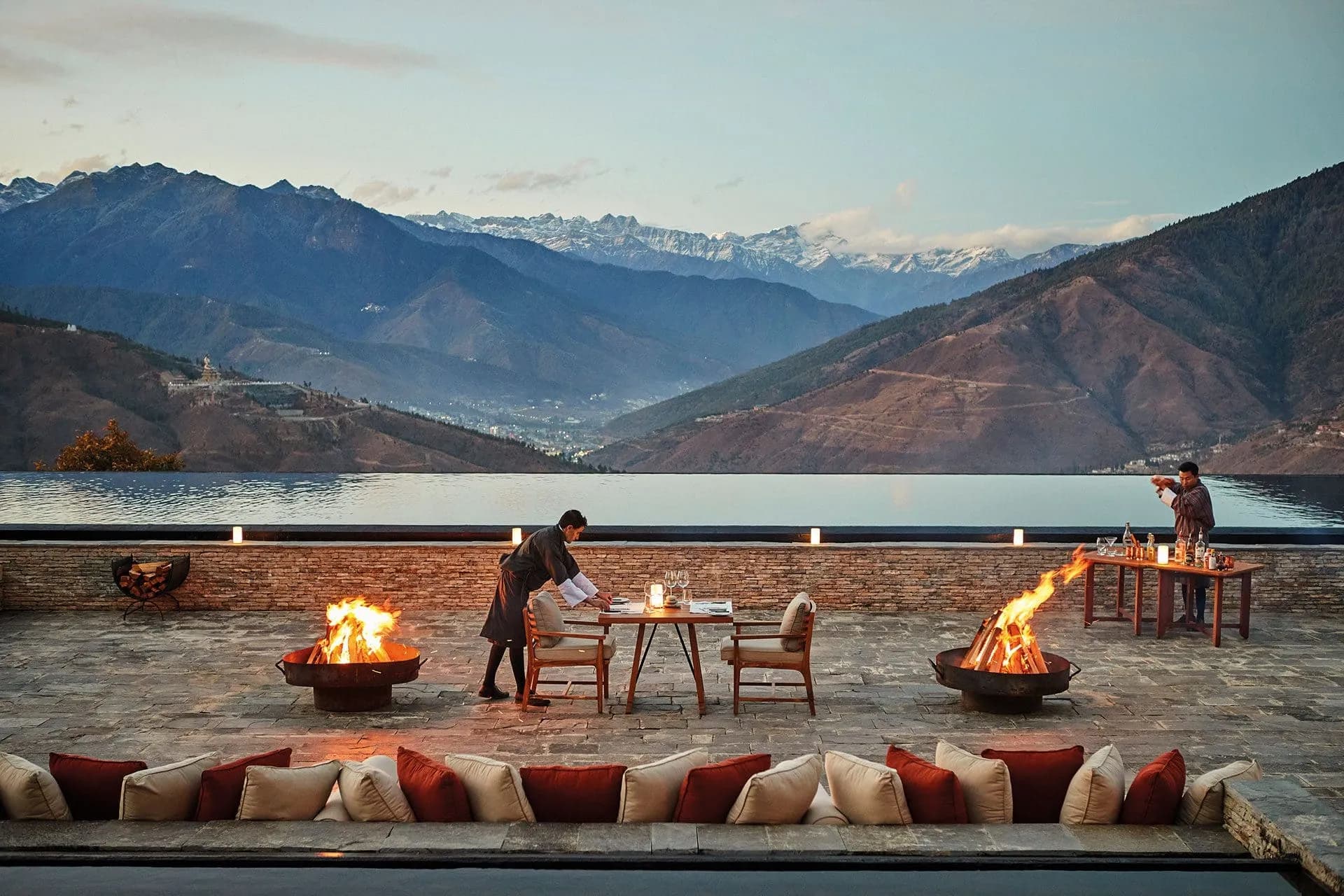
Journeys that visit The Wangchuck dynasty
Frequently asked
- Is the Wangchuck dynasty the only royal family in Bhutan?
- Yes. The Wangchuck dynasty has been the hereditary monarchy since 1907; before 1907 the Choesi institutional structure under the Zhabdrung lineage and the principal penlops was the political framework, but the Wangchuck dynasty is the only royal-family register in contemporary Bhutan.
- Who will be the next Druk Gyalpo?
- His Royal Highness Crown Prince Jigme Namgyel Wangchuck (born 2016), the elder son of Their Majesties the Fifth Druk Gyalpo and Queen Jetsun Pema. The 2008 Constitution provides for mandatory abdication at age 65 (institutionalising the voluntary-abdication precedent set by His Majesty the Fourth Druk Gyalpo); His Majesty the Fifth Druk Gyalpo will likely transition the throne to the Crown Prince in the 2040s.
- Can I meet the royal family?
- No — arranged audiences with the royal family are essentially never available to international visitors. Visitors may occasionally see Their Majesties at major public events (the principal tshechus, the National Day, royal state visits), but the encounter is observational rather than personal.

