Bhutanese traditions
The cultural, religious, and institutional traditions that shape Bhutan.
Bhutan is read most rewardingly through its enduring traditions: the Vajrayana Buddhism that organises civic and monastic life, the Gross National Happiness framework that organises governance, the archery, the cuisine, the textile, the calendar. A compendium below, A to Z.
- Themes
- 19
All themes, alphabetical
craft2
craft
Bhutanese architecture
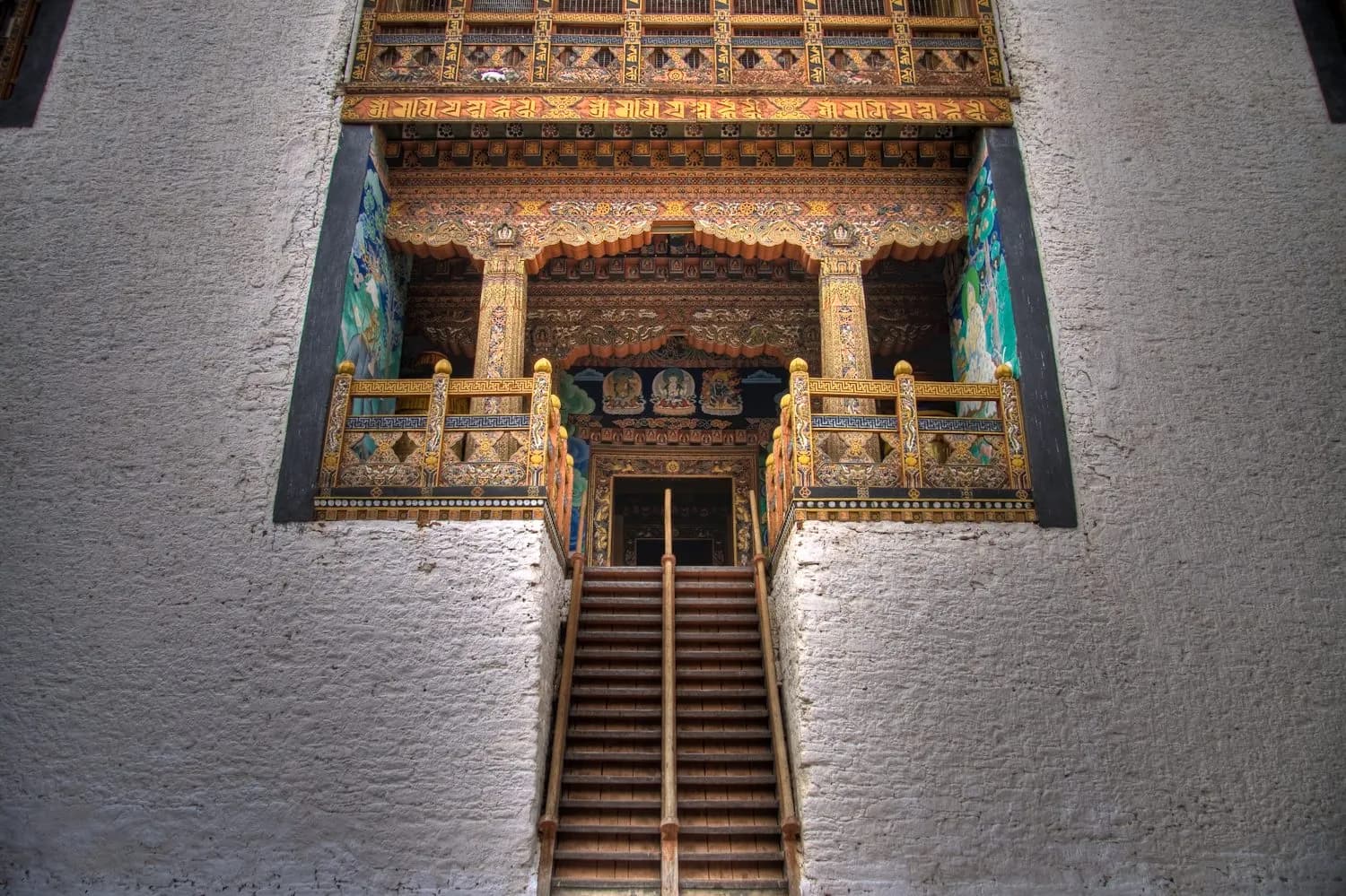
Bhutanese architecture is among the most distinctive and continuously living architectural traditions in the Himalayan region — the dzong as the canonical building type, the lhakhang (temple) at every scale, the vernacular farmhouse tradition. The white-and-wood facade material palette, the steep-roof profiles, the decorative window frames, the courtyard layouts — all operating today in the contemporary construction register as much as in the historical sites.
craft
Bhutanese textiles
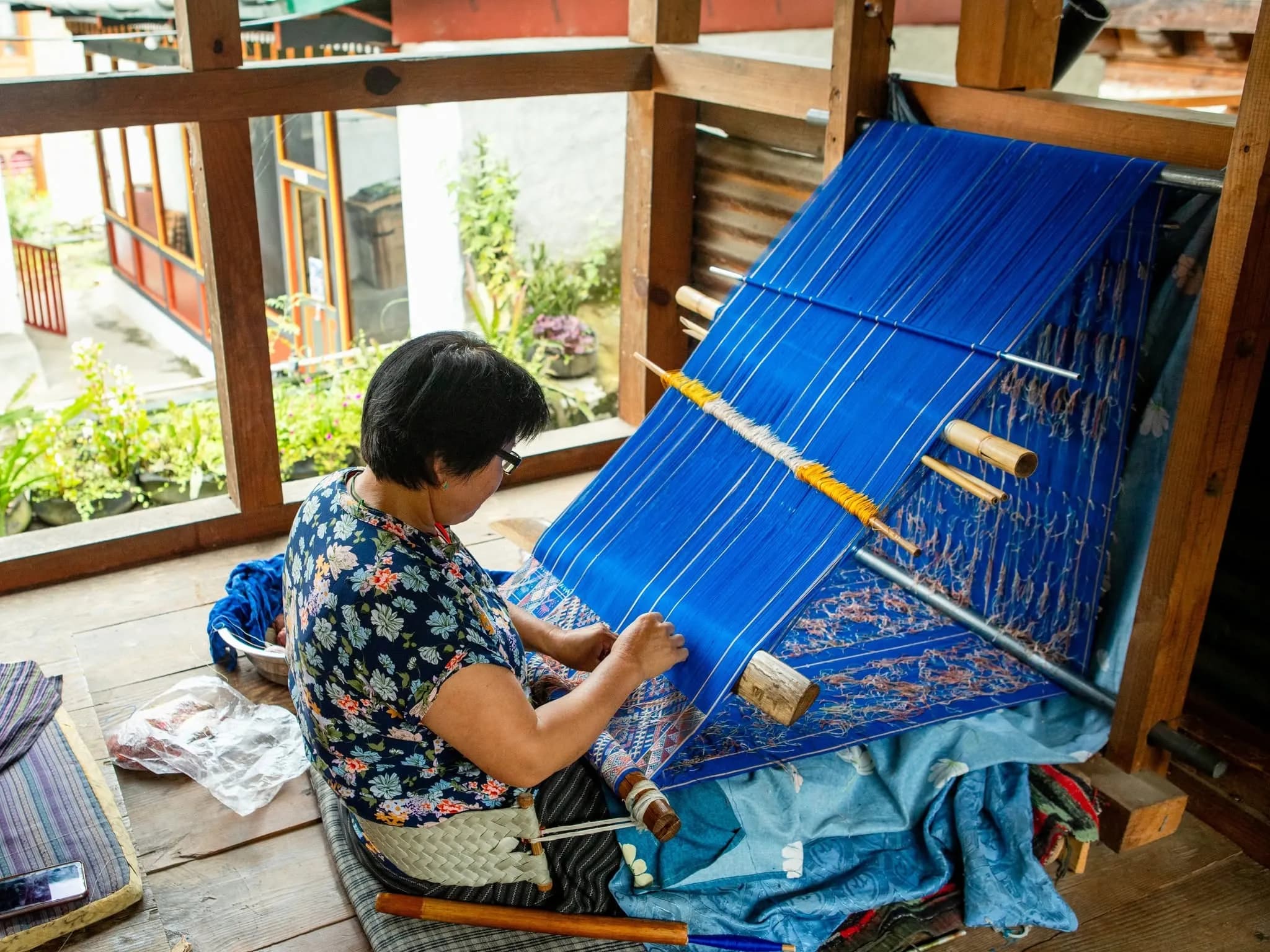
Bhutanese weaving is the country's principal living craft tradition — backstrap and pedal looms in every dzongkhag producing the kira (women's wrap dress), gho (men's robe), and ceremonial silks that constitute the country's national dress. The tradition is alive in a way that craft traditions elsewhere in the Himalaya are increasingly not.
cuisine1
culture2
culture
Bhutanese names
Most Bhutanese carry two names and no surname. The names are not passed down from a parent but given a short while after birth by a lama, drawn from the Buddhist tradition — a quality, a deity, a day, a blessing. A visitor notices it within a day: your guide and your driver may share a name, and two people called Dorji are almost certainly not related. It is one of the quietly distinctive things about the country, and one of the first that makes a traveller feel they have arrived somewhere genuinely different.
culture
Driglam Namzha
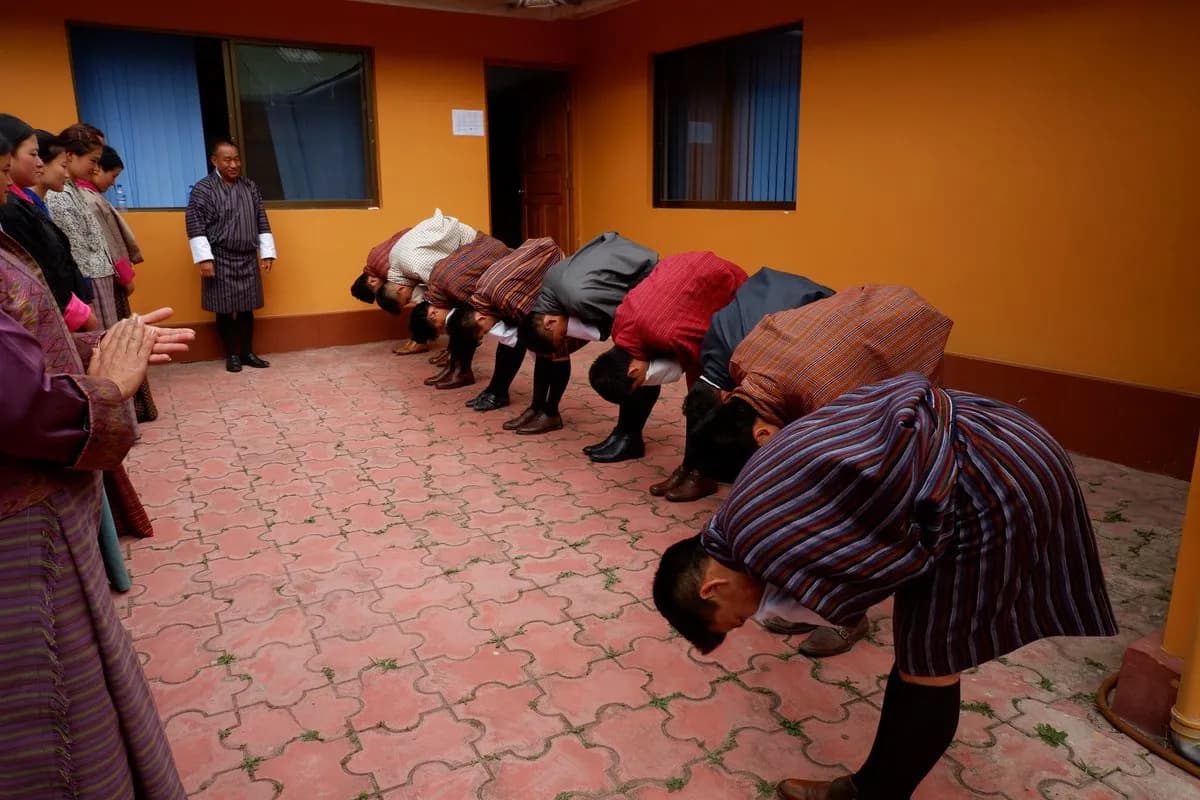
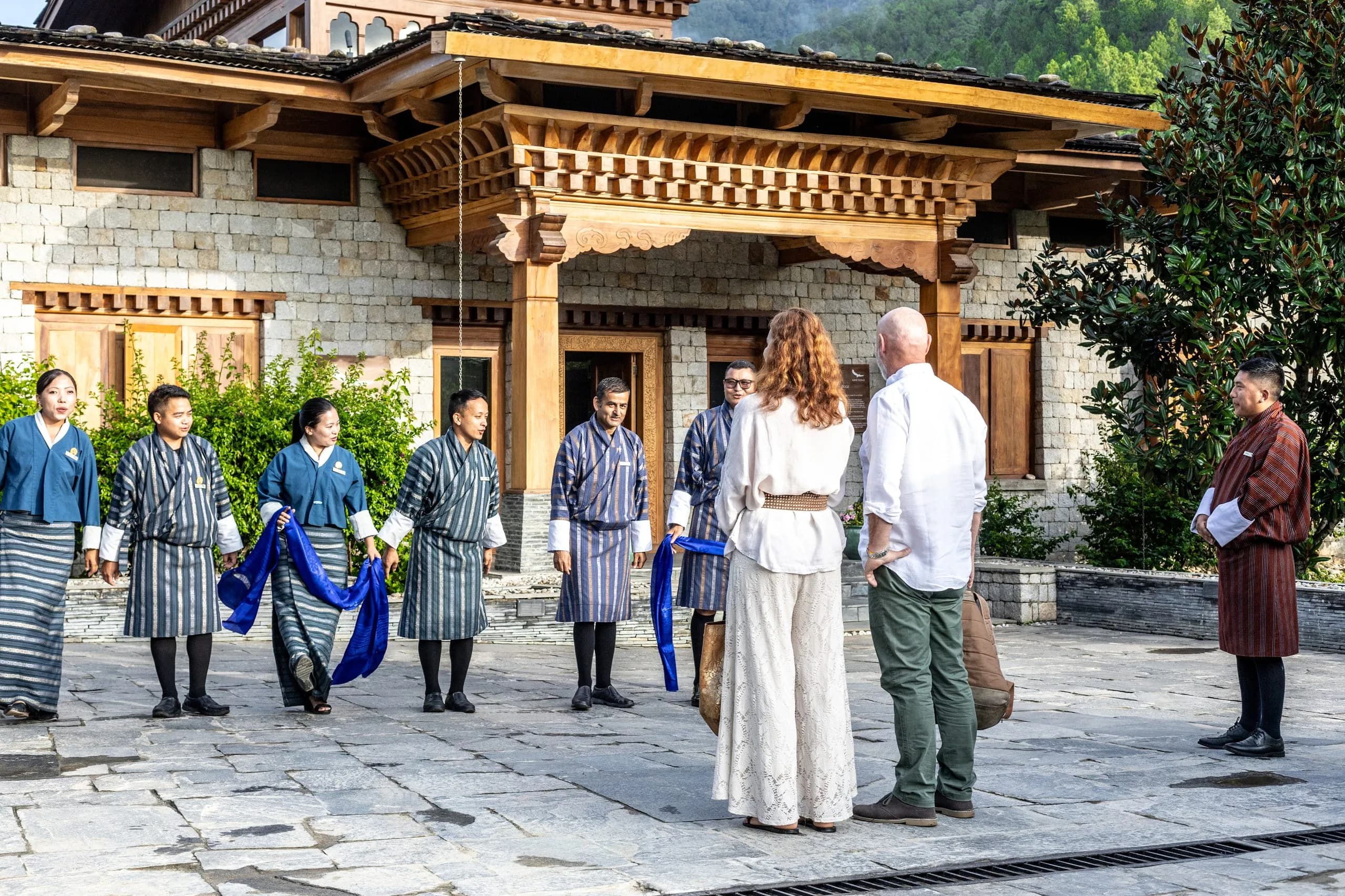
Driglam Namzha is the Bhutanese code of etiquette and conduct — 'the way of harmony', a body of custom that quietly governs how one dresses for a dzong, behaves in a temple, addresses an elder, and receives a guest. A visitor rarely hears it named, yet feels it everywhere: in the grace with which a guide slips off his shoes at a chapel door, the scarf a man puts on to enter a fortress, the unhurried courtesy of an offered cup of tea. Far from a set of rules to be memorised, it is the gentle choreography of Bhutanese life — and a traveller need only follow the guide's lead to move through it with ease.
institution6
institution
Bhutan-India relations
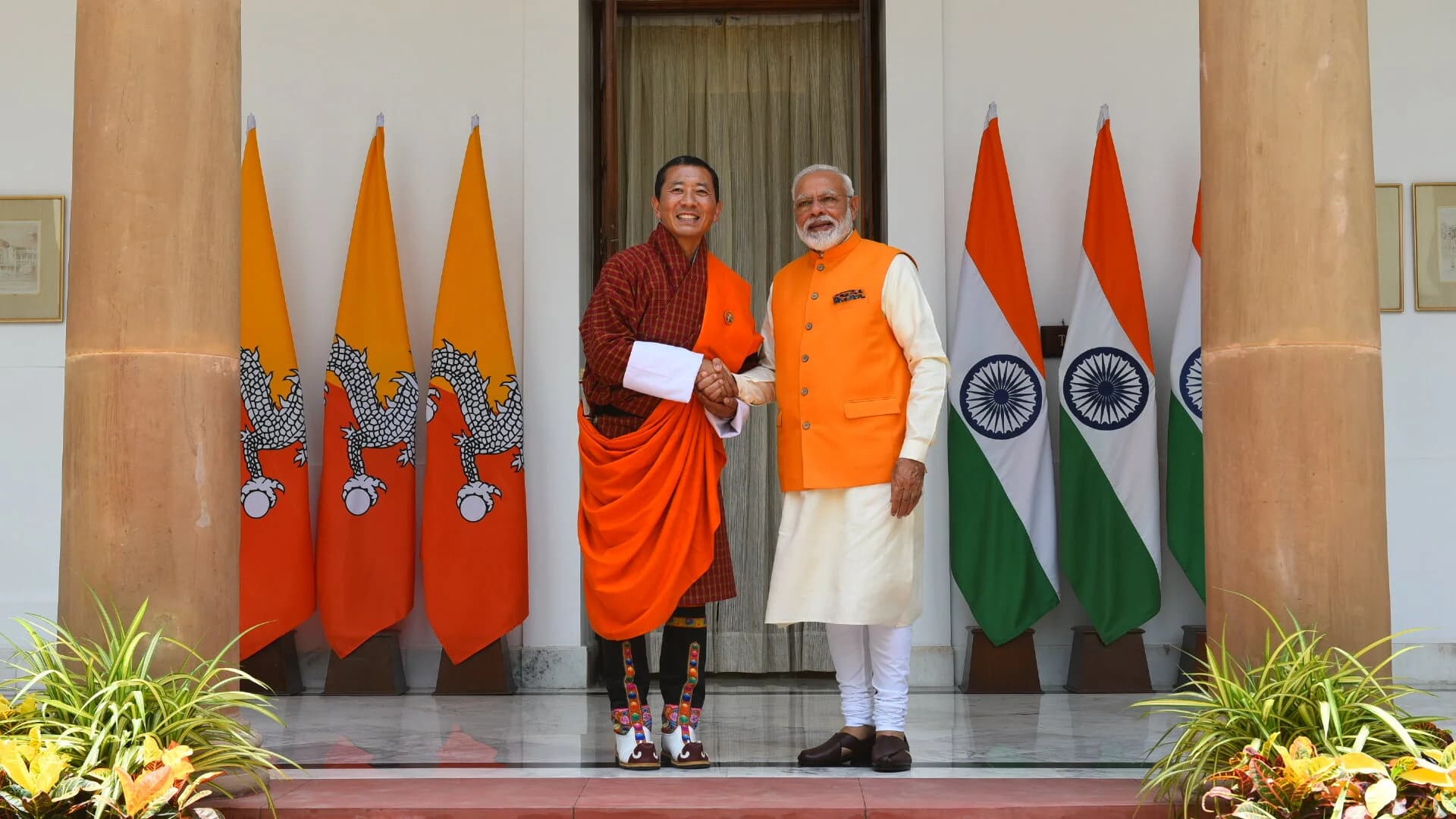
The Bhutan-India relationship is the foundational bilateral relationship of contemporary Bhutan — the 1949 Treaty of Friendship and the 2007 revision define the framework; India is by a wide margin Bhutan's principal trading partner, principal development partner, and principal security partner. The relationship operates on the principle of full sovereignty for Bhutan combined with deep practical integration — the Indian rupee circulates freely alongside the Bhutanese ngultrum at parity, the Bhutan-India hydropower partnership is the principal export-revenue engine, and the open Bhutan-India border (the country's only land border for non-Indian visitors) shapes the contemporary tourism register.
institution
Bhutanese democracy
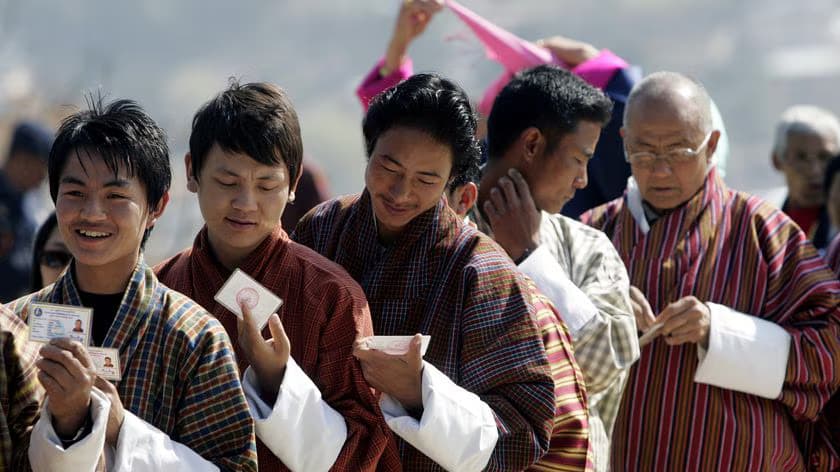
Bhutan transitioned from absolute monarchy to constitutional monarchy with elected democratic government in 2008 — a deliberately structured transition initiated under His Majesty the Fourth Druk Gyalpo and completed under His Majesty the Fifth Druk Gyalpo. The constitutional framework preserves the cultural and religious institutional structure while establishing the elected National Assembly and National Council as the principal legislative bodies. One of the more distinctive constitutional democracies in Asia.
institution
Carbon-negative Bhutan
Bhutan is one of three carbon-negative countries in the world (alongside Suriname and Panama) — the country absorbs more carbon dioxide than it emits, a function of the constitutional 60% minimum forest cover (Article 5 of the 2008 Constitution), the hydropower-based energy system, the small industrial base, and the conservation infrastructure that protects over 50% of the country's territory. The carbon-negative status is the most-distinctive feature of Bhutan's international environmental; His Majesty the Fourth Druk Gyalpo articulated the underlying philosophy decades before the contemporary climate framing made it internationally visible.
institution
Gross National Happiness
Gross National Happiness is the development philosophy by which His Majesty Jigme Singye Wangchuck, the Fourth Druk Gyalpo, set the country walking in 1972 — and the single concept most associated with Bhutan in international thought ever since. The often-quoted formulation is His Majesty's: 'Gross National Happiness is more important than Gross National Product.' What a visitor finds on arriving is, in a real sense, the country GNH has produced.
institution
The Bhutanese lunar calendar
The Bhutanese lunar calendar (Bhutanese: nyitse — 'time-counting') is the cultural-religious framework that organises the country's annual rhythm — the dates of all principal tshechu and drubchen festivals, the auspicious days for important undertakings, the astrologically-significant moments of every year. Distinct from the Tibetan and Indian lunar systems; computed annually by the Bhutanese astrological tradition; sets dates that shift across the Gregorian calendar year to year.
institution
The Wangchuck dynasty
The Wangchuck dynasty is the hereditary monarchy of Bhutan — established on 17 December 1907 when His Majesty Ugyen Wangchuck was unanimously elected the First Druk Gyalpo by an assembly of senior monks, government officials, and dzongpens at Punakha Dzong. Five generations across five reigning monarchs (1907 to present), each substantially shaping the country across their respective reigns. The dynasty is the principal contemporary institutional continuity of the Bhutanese state.
language1
religion1
tradition6
tradition
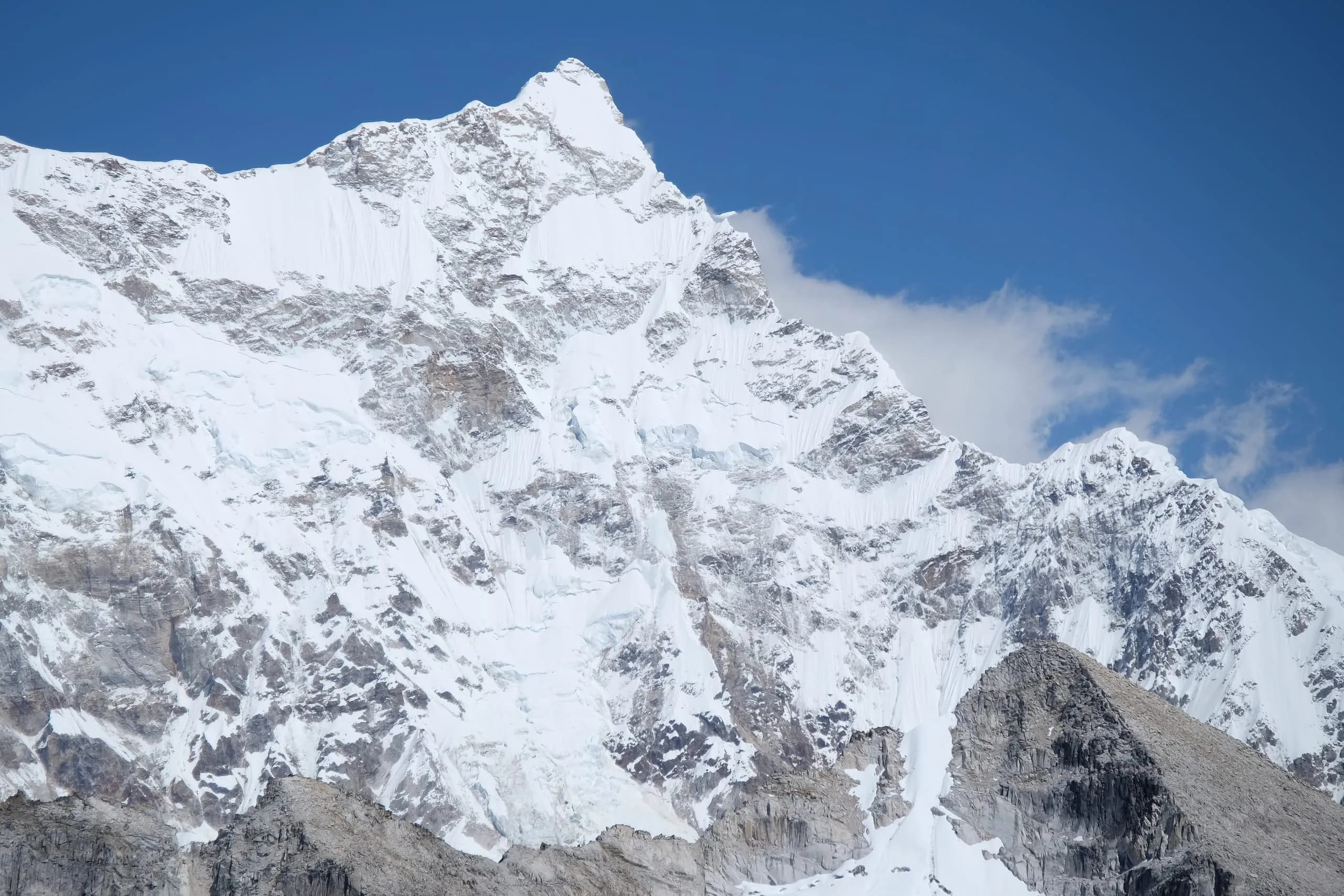
Bhutanese mountains
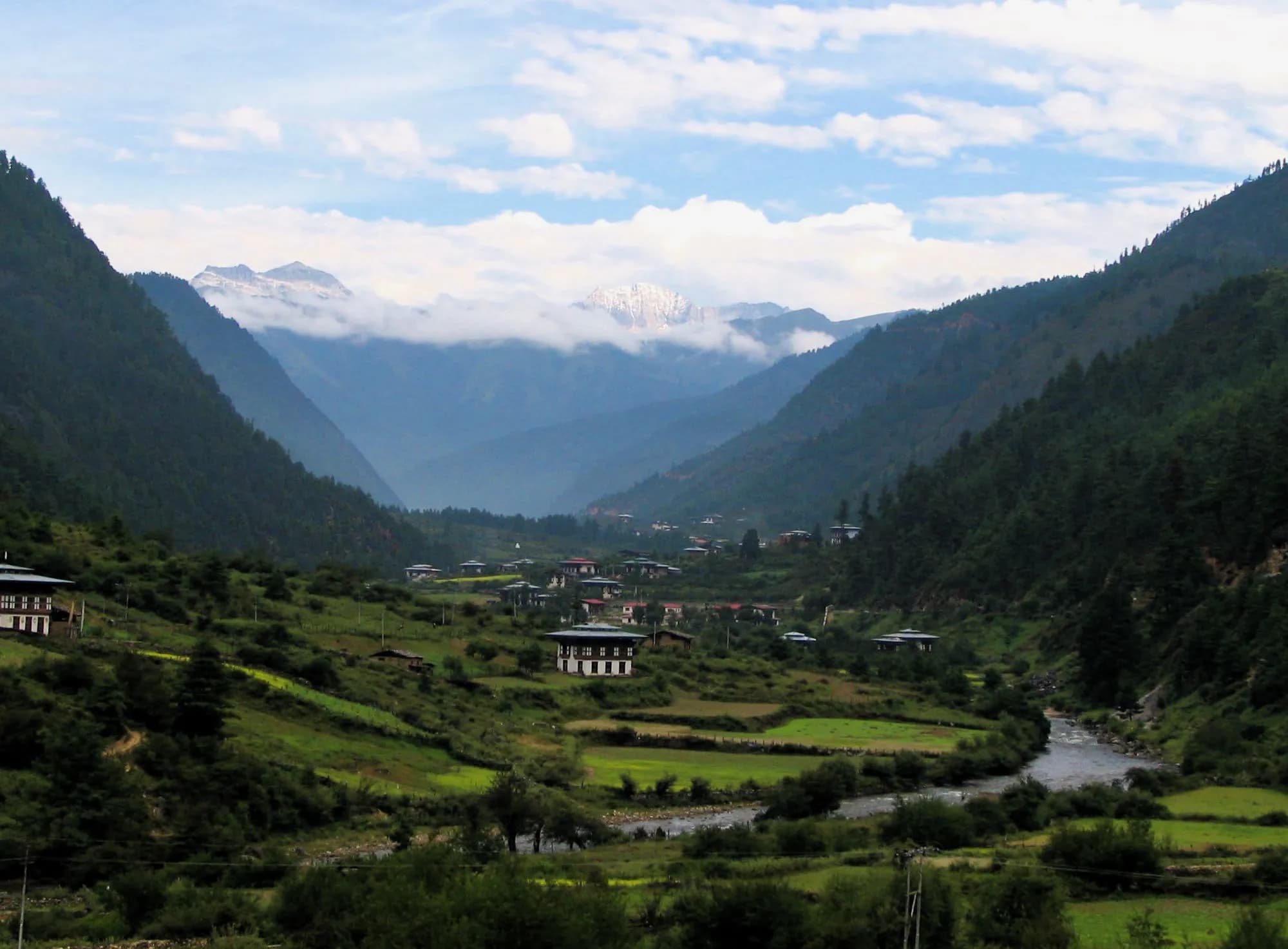
Bhutan's principal mountains sit on the northern border with Tibet — substantial 7,000m+ peaks across the Eastern Himalaya including Gangkhar Puensum (7,570m, the highest peak in Bhutan and the highest unclimbed mountain in the world), Jhomolhari (7,326m, the sacred mountain), Jichu Drake (6,989m), Masagang (7,158m), Tsendagang (7,300m), and Kula Kangri (7,538m, on the Bhutan-China border). The closed-summit tradition — Bhutanese law prohibits climbing above 6,000m since 2003 (and effectively all major peaks since 1994) — preserves the sacred character of the principal peaks. Visitors access the mountains through trekking, photography from the principal viewpoints, and pilgrimage at the foothill religious sites.
tradition
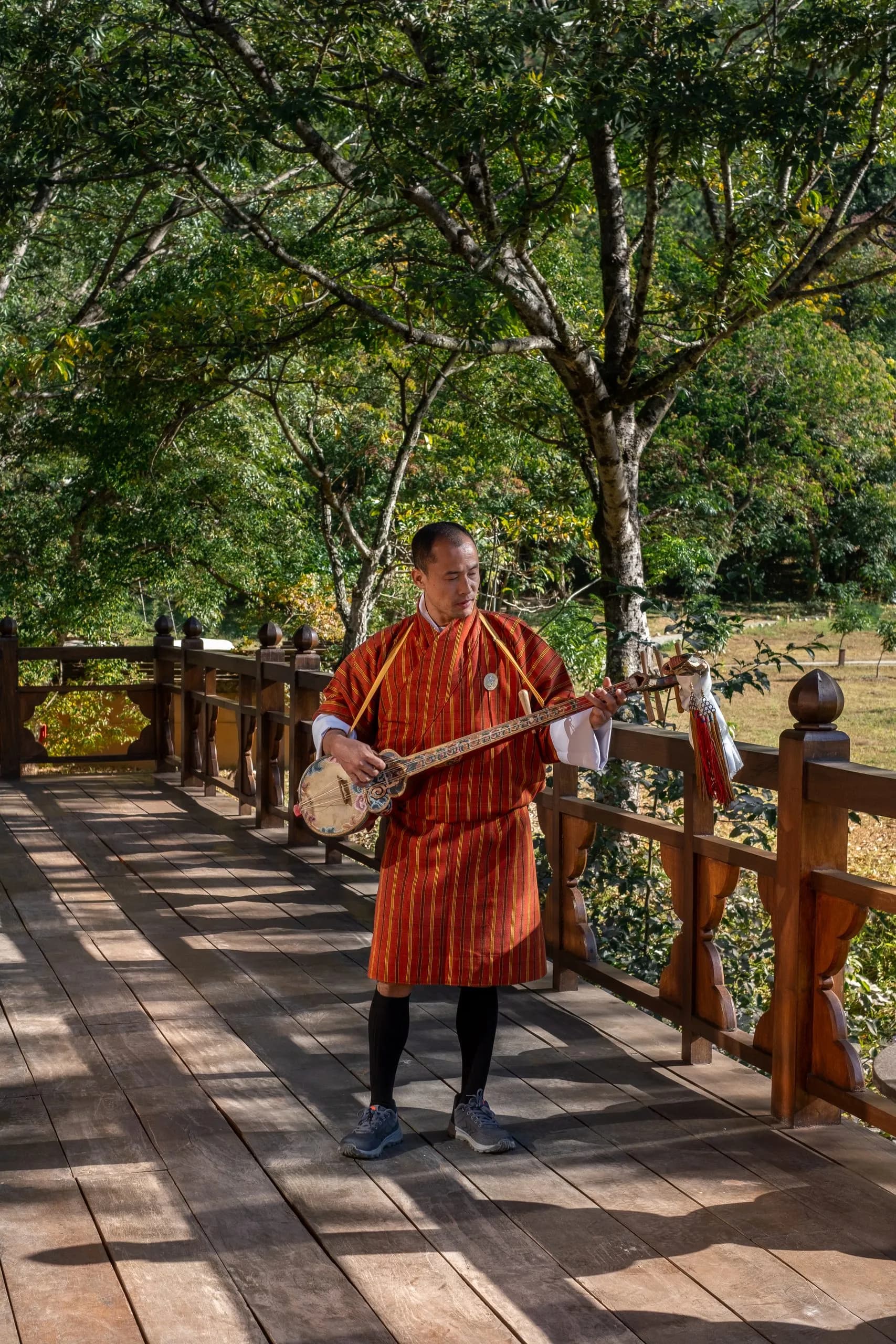
Bhutanese music and dance
Bhutanese music and dance operate across several registers — the principal cham sacred-mask dance tradition at the tshechu festivals (covered separately at [[cham-mask-dance|the Cham entry]]), the folk-music and folk-dance tradition that operates at village and household level, the contemporary Bhutanese popular-music tradition that has developed across the post-2000 era, and the religious-music tradition (the dungchen long horns, the gyaling oboes, the liturgical drumming). The dranyen — the seven-stringed lute that is the principal Bhutanese folk instrument — is the centrepiece of the folk-music tradition; the principal folk-dance forms operate alongside the sacred cham register at festival celebrations and village gatherings.
tradition
Bhutanese national dress
Bhutanese national dress is one of the most-immediately-visible cultural distinctions a visitor encounters. The gho (men's knee-length wraparound robe) and the kira (women's long wraparound dress with the tego jacket and rachu shoulder-cloth) are not ceremonial or festival-only — they are the daily dress worn by every Bhutanese citizen in school, government office, religious site, and most public settings. The tradition is alive at every scale of contemporary Bhutanese life.
tradition
Cham
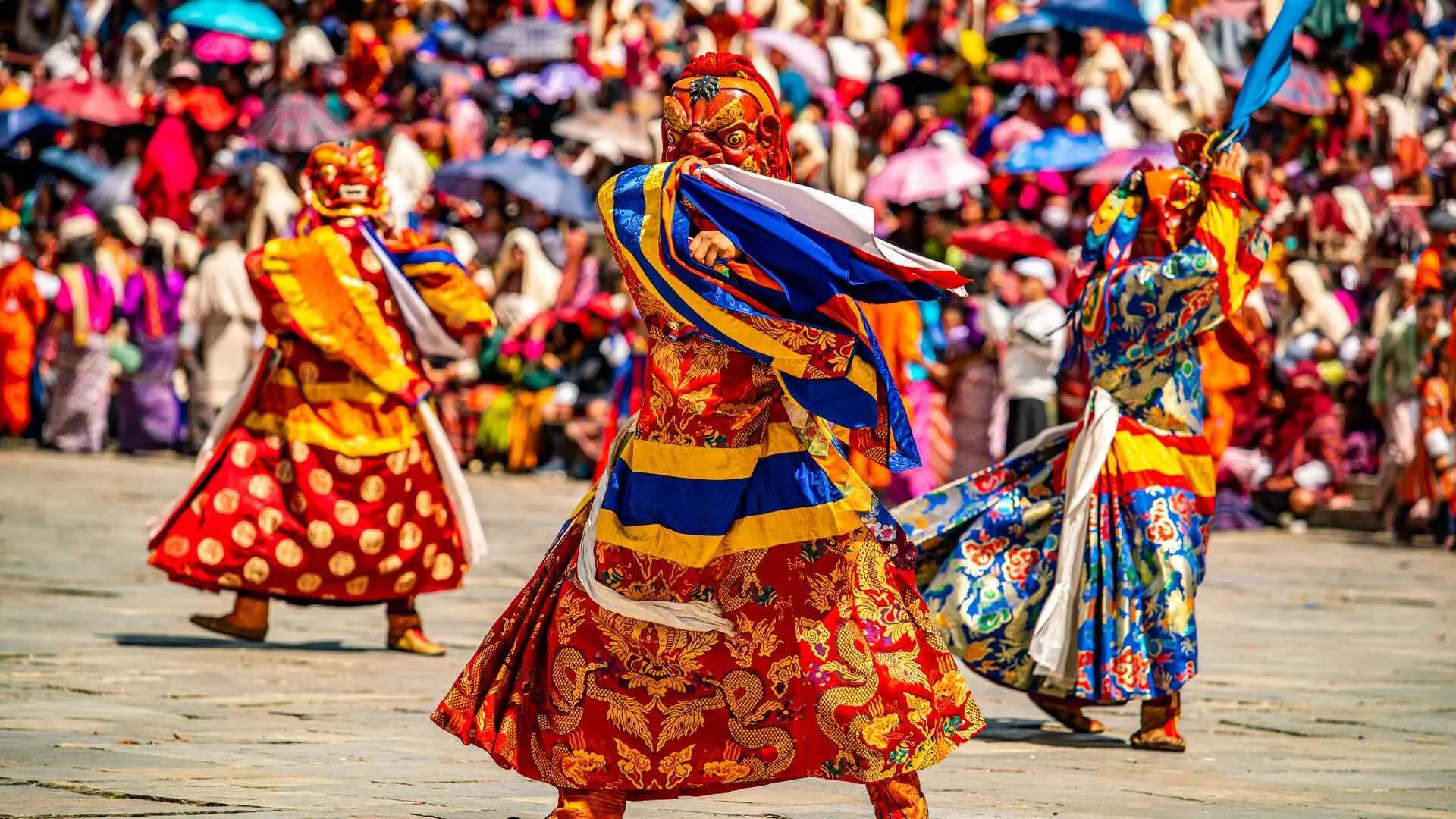
Cham is the sacred masked dance tradition that forms the principal expression of every tshechu festival — the costumed monk-dancers in elaborate brocades and substantial papier-mâché masks, moving through the dzong courtyards across multi-day festival programmes. Each dance is a complete ritual liturgy with Vajrayana-Buddhist symbolic content; the visual tradition is one of the most-distinctive and most-photographed cultural images of Bhutan. UNESCO recognised the Drametse Nga Cham as an Intangible Cultural Heritage in 2008.
tradition
Sowa Rigpa
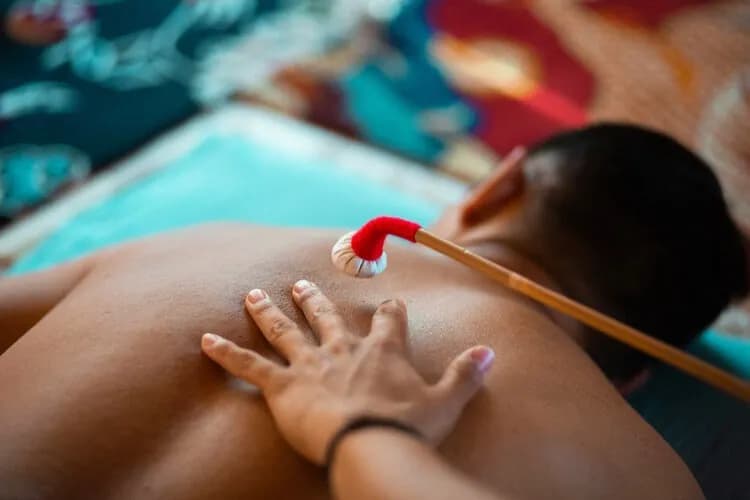
Sowa Rigpa — literally 'the science of healing' — is the Bhutanese-Tibetan traditional medicine tradition that has operated continuously in the country for centuries and is institutionally integrated into the contemporary national health system. The National Institute for Traditional Medicine in Thimphu trains the country's amchi (traditional medicine practitioners); over fifty traditional medicine units across the dzongkhags provide free Sowa Rigpa consultation alongside biomedical care; the Bhutanese herbal-and-mineral pharmacopoeia draws on the Himalayan medicinal-plant register at scale.
tradition
The Drukpa Kagyu
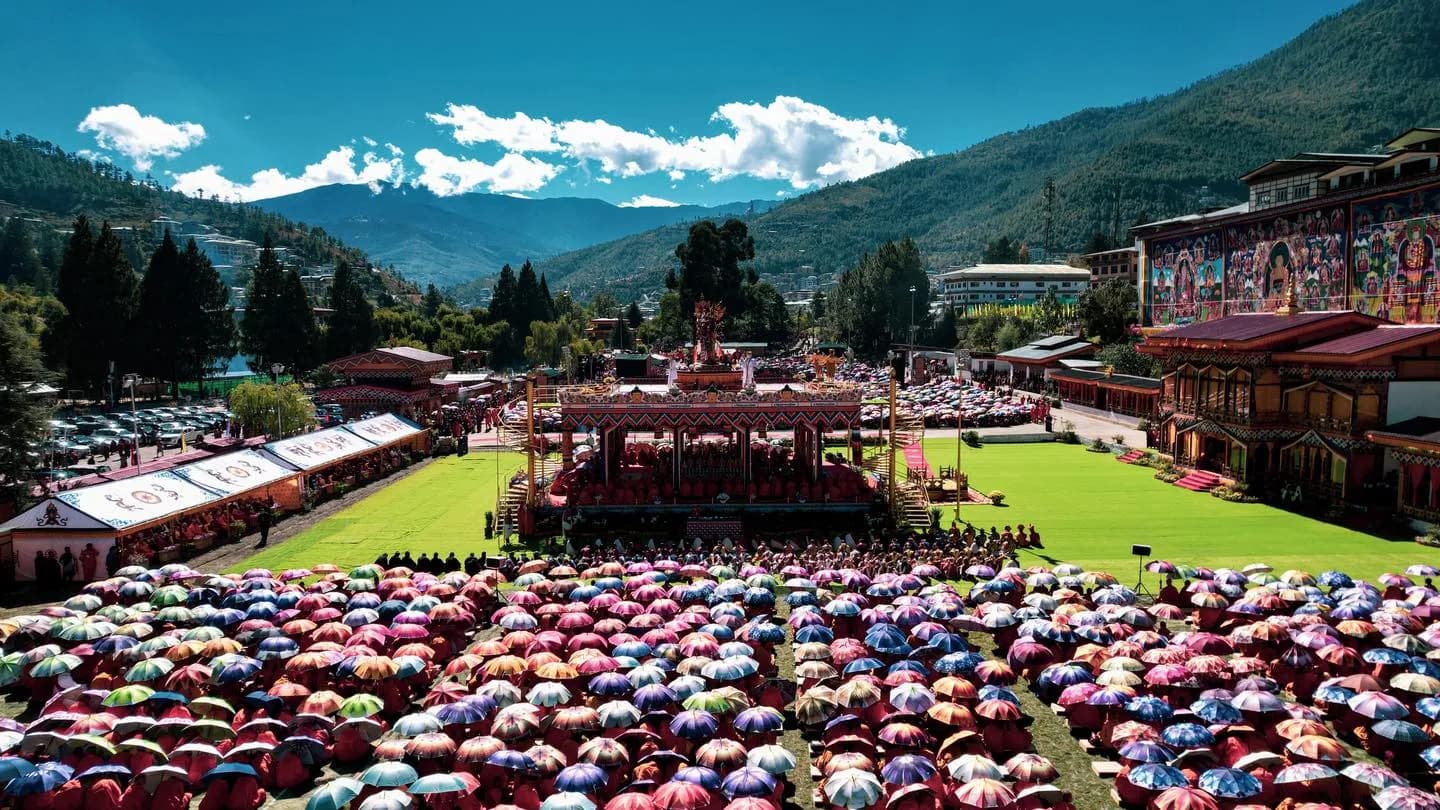
The Drukpa Kagyu is the principal Vajrayana-Buddhist tradition of Bhutan — the dominant institutional tradition through which the country's central monk body (the Zhung Dratshang) operates, the lineage that the Zhabdrung Ngawang Namgyal brought to Bhutan in the 17th century, the foundational ground of the country's name (Druk Yul — the land of the Drukpa). Bhutanese Vajrayana is a combination of the Drukpa Kagyu institutional tradition with the older Nyingma tradition (principally through Guru Rinpoche and Pema Lingpa); the Drukpa is the dominant institutional tradition at the state level.

